Arewa

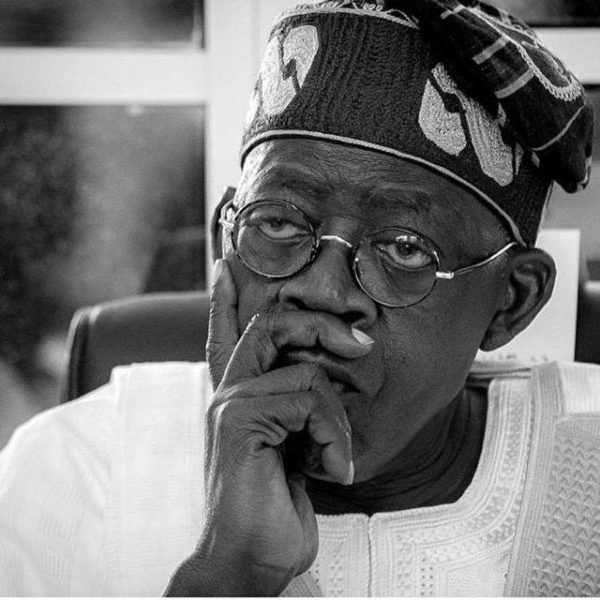
Hardship: President Tinubu, please listen to Arewa Economic Forum

By Haroon Aremu

Nigeria’s current economic woes are not isolated incidents but rather the peak of years of systemic challenges and policy missteps. From the decline of industries in the 1990s to the era of military rule marked by corruption and mismanagement, the nation has weathered numerous storms on its path to progress. 

In the vibrant tapestry of Nigeria’s economic history, the 1980s stood as a golden era marked by robust growth, industrialization, and promise. However, the echoes of prosperity have gradually faded into the stark reality of economic downturns, leaving the populace grappling with unprecedented challenges.

The 1980s witnessed Nigeria’s emergence as an economic powerhouse, fueled by oil revenue and ambitious development projects. With a thriving manufacturing sector, a stable currency that cannot be competed with and strategic investments in infrastructure, the nation seemed poised for enduring prosperity. 

However, the dawn of the new millennium brought with it a stark reality check as the nation grappled with a series of economic setbacks that threatened to undo decades of progress. Mismanagement, corruption, and global market fluctuations emerged as formidable adversaries, eroding confidence in Nigeria’s economic prowess and exposing deep-seated vulnerabilities. 

While well-intentioned, the decision to remove fuel subsidies proved to be a double-edged sword, unleashing a torrent of consequences that reverberated throughout society. The subsequent free fall of the Naira sent shockwaves through the economy, triggering a cascade of hardships that tested the populace’s resilience. 

Hyperinflation ran rampant, rendering incomes inadequate and purchasing power a distant memory. Faced with dwindling resources and mounting uncertainty, Nigerians found themselves thrust into a desperate struggle for survival.

To understand the gravity of Nigeria’s economic predicament, one must delve into its root causes, which are as deep-seated as they are complex. Corruption, a scourge that has plagued the nation for decades, continues to gnaw away at its foundations, siphoning off resources meant for public good and fostering an environment of impunity.

Inefficiency and a lack of diversification further compound the problem, leaving Nigeria’s economy dangerously reliant on oil revenue—a precarious position exacerbated by volatile global markets and shifting geopolitical dynamics. 

Despite ample opportunities for growth and development in sectors such as agriculture and manufacturing, inadequate investment and strategic planning have stymied progress and perpetuated cycles of poverty.

The failure to address these systemic issues has left Nigeria vulnerable to external shocks and internal instability, undermining efforts to achieve sustainable development and improve the lives of its citizens. Without decisive action and a concerted effort to address the root causes of its economic woes, Nigeria risks being trapped in a cycle of decline, with far-reaching consequences for generations to come.

Amidst this economic quagmire, the Arewa Economic Forum (AEF) emerges as a beacon of hope, advocating for pragmatic solutions to stem the tide of despair. In a recent press briefing that took place at PRNigeria Centre Abuja, Chairman Ibrahim Shehu Dandakata delivered a compelling call to action, urging a rethink of subsidy removal policies and proactive measures to address the pressing issues at hand.

The AEF highlights the adverse effects of fuel subsidy removal on the populace, citing the widening gap between state allocations and tangible improvements in livelihoods. Calling for a reversal of the subsidy removal policy, the forum emphasizes the need for accountable governance and targeted interventions to alleviate the suffering of the masses.

In a comprehensive approach to economic revitalization, the AEF advocates for strategic investments in agriculture and artisanal mining. By harnessing the potential of these sectors, the nation can unlock opportunities for job creation and sustainable development, empowering local communities and diversifying the economy.

Recognizing the detrimental impact of forex crises on the economy, the AEF calls for decisive action to stabilize the Naira and curb illicit financial practices. Proposals include banning the use of dollars for domestic transactions and cracking down on currency hoarding, signalling a commitment to restoring confidence in the national currency.

At the heart of Nigeria’s economic resurgence lies a renewed focus on education and skills development. The AEF emphasizes the importance of equipping the youth with practical skills and knowledge that align with market demands, fostering a generation of innovators and problem-solvers poised to drive sustainable growth.

To President Tinubu, As the leader of our great nation, the burden of Nigeria’s economic hardship weighs heavily on your shoulders. In these trying times, we implore you to remain steadfast in your commitment to steering the country towards prosperity. The recent press briefing by the Arewa Economic Forum underscores the urgency of the situation and the need for decisive action.

The removal of fuel subsidies has inflicted untold suffering on the populace, exacerbating inflation and widening the gap between the rich and the poor. We urge you to heed the call for policy reversal and prioritize the welfare of the Nigerian people above all else. Your leadership in this critical moment will determine the trajectory of our nation’s future.

Solving Nigeria’s economic woes is not the sole responsibility of the government; it requires collective effort and sacrifice from all stakeholders. Citizens must hold their leaders accountable, demand transparency, and actively participate in nation-building initiatives. Only through unity and collaboration can we overcome the challenges that lie ahead. 

As Nigeria stands at a crossroads, the imperative for decisive action has never been clearer. The Arewa Economic Forum’s impassioned plea for reform resonates across the nation, igniting fervour for change and renewal. It is a call to reclaim Nigeria’s economic destiny, guided by foresight, resilience, and a shared commitment to prosperity for all.

In conclusion, let us remain prayerful and hopeful that Nigeria will emerge stronger from this economic downturn. With resilience, determination, and a shared vision for a brighter future, we can overcome adversity and build a nation where prosperity is accessible to all. God bless Nigeria.

Haroon Aremu Abiodun is a youth corps member with PRNigeria Centre, Abuja.

The rise of women’s indecency on social media

By Abbas Datti

Both Islamic and Hausa traditions instruct women to cover up their bodies and guard against indecency when it comes to dressing. But sadly, in the modern age of social media, the issue of indecent exposure of bodies by women on TikTok, Instagram, Facebook and other social media platforms has become a problematic issue.

It is sad to note that the ease with which social media allows people to post whatever content they wish to share has created and exposed potential Nicki Minajs and Rahama Sadaus living in the comfort zones of our different homes.

While many women use social media platforms to express themselves and market their commodities for trade, some choose to show their bodies for public viewing. One wonders how this Indecent exposure emerged, raising questions about the potential consequences and societal well-being

We must blame Hausa Kannywood actresses and Nollywood celebrities for promoting this indecency to boost their social media handles and gather many more followers. It has now become a usual trend, particularly on TikTok, to see girls of different age brackets dancing and shaking their asse, exposing their naked cleavages, thereby promoting provocative sexual desires in our youths. 

The portrayal of the woman’s body has recently found its way into public spaces through various social media platforms, prompting discussions on one’s reputation and its impacts on younger audiences.

This phenomenon has also sparked discussions on the responsibility of social media platforms to regulate content, with calls for stricter guidelines to maintain a balance between freedom of expression and preventing the normalisation of explicit content.

As conversations evolve, finding common ground that respects individual expression while considering the broader societal impact remains challenging. The digital age demands ongoing regulations about the changing norms and ethics of online behaviour, urging individuals, influencers, and platforms to reflect on their roles in shaping the online landscape.

Abbas Datti writes from Kano via abbasdatti448@gmail.com.

Abductors insist on N100m of ransom for Kaduna doctor, family

 By Sabiu Abdullahi 

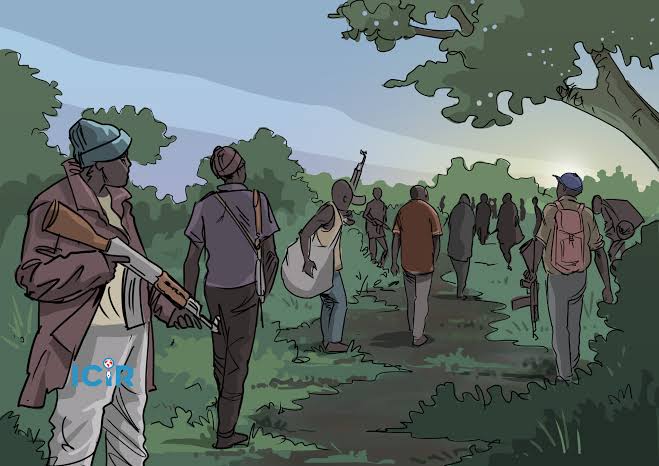
The abduction of Kaduna-based ophthalmologist Ganiya Olawale-Popoola, her husband Nurudeen Popola, and their 16-year-old guest AbdulMugniy Folaranmi has taken a grim twist as reports indicate the abductors are unyielding in their demand for a N100 million ransom, one month after the initial kidnapping. 

Despite the family’s earnest attempts to negotiate a reduction in the ransom, the kidnappers have held their ground, insisting on the hefty sum.

The kidnappers, who allegedly broke into the ophthalmologist’s residence on December 27, 2023, at 1 a.m., took the doctor, her husband, and their teenage guest. 

Communication from the kidnappers only commenced on the fourth day, with a demand for N100 million for the release of the victims.

The family source revealed that the kidnappers threatened to harm the couple if the ransom wasn’t paid by January 18, reasserting their demand on Friday. 

Despite the family’s plea to consider a reduced amount, such as the N20 million they were able to raise, the kidnappers remained unyielding.

The family is now grappling with the situation, expressing confusion about the way forward. Efforts by the family to seek assistance from the Air Force and police authorities yielded assurances of ongoing endeavours to secure the victims’ release without harm.

However, the family, facing exhaustion, has called on the Nigerian government to intervene, as they find it impossible to meet the demanded ransom. 

In response to inquiries, Kaduna State Police Public Relations Officer Mansir Hassan affirmed that the police are actively working to secure the release of the abductees without casualties.

He underscored the commitment to rescuing victims from abductors and emphasised efforts to prevent harm during the rescue operation.

Skills acquisition and the rise of Arewa female entrepreneurs

By Aminu Mohammed

The article was inspired by a video on Nelly Agbogu’s Facebook page, also known as Naijabrandchick. In the video Aisha Falke of Northern Hibiscus created, she urged female vendors in the Northern region to take advantage of the NBC Trade Fair, scheduled to be held in Kano on February 4, to showcase their products to potential buyers.

This caught my attention, and I scrolled through Nelly’s Facebook page to learn more about the programme. I was impressed by the quality of content and creativity displayed by different female vendors from the North. They were soliciting for patronage of their products during the forthcoming trade fair. I was pleased to see that many young female entrepreneurs from the North are now engaged in small businesses and have embraced the spirit of self-reliance.

I also observed the activities of many northern female vendors on Instagram, TikTok, and Facebook, such as Maryam Gatawa and Aisha Abubakar. These vendors sell items ranging from well-packaged local food to products consumed by people every day.

Growth of Female Entrepreneurs

I am impressed by Maryam Gatawa’s sale of many of our local food items, such as beef jerky, powdered garlic and date, garin kunun tsamiya made from powdered millet, and garin dan wake (bean dumplings), all of which are well-packaged. This surge in the number of young women engaged in various businesses gladdens my heart and is an indication that things are changing in the north, unlike before. I am still using the bean dumplings I bought during my visit to Nigeria last year.

Some northern female entrepreneurs, such as Aisha Falke and others, have encouraged Arewa women to start small businesses by organising workshops, seminars, and training in Abuja, Kaduna, and Kano. However, more needs to be done to encourage our women to imbibe the spirit of self-reliance.

I have always encouraged my younger sisters to engage in small businesses. They are all engaged in small businesses and other activities that earn them money. There is nothing like financial independence and the ability to take responsibility for one’s life by involving oneself in a productive venture.

Small-scale and medium businesses are critical for the growth of any economy, as they employ one or more people and create jobs. Encouraging many young people to pursue entrepreneurship for their economic emancipation is vital. Any activity that generates income and enables one to earn a livelihood should not be looked down upon. You cannot escape poverty when you are not willing to do the so-called “dirty jobs”.

Need for Change in Mindset

It is essential to note that the North is currently facing a dire situation due to the mindset of its people. The youth must change their mindset about salaried jobs and embrace entrepreneurship. Over-reliance on government jobs has made things worse for us and led to the region’s retrogression. We cannot move forward as a society when most youths do not want to engage in small businesses or trade to earn a livelihood. Most of our graduates look down upon people doing vocational skills while roaming the streets looking for jobs. They prefer to remain idle rather than engage in a vocational skill.

The progress and development of the North depend on a productive population skilled in various aspects of human endeavour. We cannot make meaningful progress when most youths who graduate from university brandish their certificates without any skills to help them survive. It is vital to acquire both education and skills to survive in the new economy. I have spent money to acquire digital marketing skills despite my academic qualifications.

I still reiterate that the Northern youth should focus on acquiring digital skills, and those not interested should learn vocational skills. Stop dwelling in the past and embrace change. The era of looking for public sector jobs is over. The economic situation in Nigeria, which has been worsened by inflation and stagnant income, warrants the need for young men to engage in small businesses to earn a livelihood.

I have a nephew, Kabiru, who graduated from Bayero University Kano a few years ago. He decided to take the bull by the horns after the service year to learn furniture making rather than roam around looking for a job. Kabiru is now fully engaged in furniture making and has four employees who support him in his shop. I gave him a job to do for me during my visit to Nigeria last year, and he executed it to my satisfaction. Today, Kabiru is doing very well in his vocation, while some of his friends are still searching the streets for jobs.

Of course, not everyone can be an entrepreneur or run a small business, but we cannot continue to cling to the past and expect any progress in our region. Our young men should stop wasting time chasing certificates without commensurate skill. They should stop waiting for their relatives to help them secure government jobs as they are no longer tenable.

Necessity of Skill Development 

There are several free resources available on platforms such as YouTube, Google, Coursera, Udemy, Simplilearn and others, which can be used to learn a variety of skills like digital marketing, data science, web development and more. Those not interested in acquiring such skills must focus on vocational skills like fashion designing, furniture making, baking, plumbing, etc. Those who have the financial resources can also consider small-scale businesses or farming.

We must encourage our women to engage in entrepreneurship and strive to acquire education and critical skills that can help them manage their businesses better. We cannot afford to have many ignorant and unproductive people in our society. It is important to promote girl-child education and discourage the Almajiri system. We cannot have millions of children roaming the streets without proper education that will enable them to live a productive life.

As January 2024 draws close, our youth should wake up and become more productive. Instead of wasting their time sitting under trees with friends in their neighbourhood during productive hours, they should go and learn a skill or trade that can enable them to contribute to the economy of their community. I wish you the best of luck as you strive to improve your life.

Aminu Mohammed wrote this article from Ingolstadt-Bayern, Germany. He can be reached at gravity23n@gmail.com.

Northern governors outraged by attacks on Plateau communities

By Uzair Adam Imam 

The Northern Governors Forum today strongly denounced the Christmas Eve attacks on communities in Bokkos and Barkin-Ladi Local Government Areas of Plateau State. 

The Chairman of the Forum, Gov. Inuwa Yahaya of Gombe State, described the attacks as reprehensible and heinous. 

Gov. Yahya expressed disgust on behalf of the 19 governors in the northern parts of Nigeria. 

He expressed the forum’s deepest condolences to the affected families and communities, as well as the government and people of Plateau. 

“It is disheartening to hear of the loss of more than 100 lives and the destruction of property that occurred during these attacks, especially when people were preparing to celebrate Christmas. 

“Such acts of violence are not only cowardly but also run counter to the spirit of unity and coexistence that our region upholds. 

“We must all prioritise peace and harmonious living in our communities. Now, more than ever, we must reaffirm our commitment to peaceful coexistence and solidarity regardless of our differences. 

“We must unite in our commitment to peace and security, and stand firm against all forms of violence and divisions,” the chairman said in a statement issued in Gombe by his media aide, Mr Ismaila Uba-Misilli.

Yahaya commended Gov. Caleb Mutfwang of Plateau for his leadership in handling the situation in the aftermath of the attacks. 

The northern governors assured Mutfwang of their solidarity and support in the face of adversity. 

They pledged to work together to ensure lasting peace in Plateau State. They stand united in their commitment to peace and stability.

A serious humour: Bello Galadanchi’s comedy skit for social commentary

By Sa’id Sa’ad

Earlier this year – when Bello Galadanci’s videos were becoming popular on digital platforms – a colleague posted a video of his skit on his WhatsApp status. From what might be a simple curiosity, I asked him if he knew who the person was – of course, expecting him to at least know a bit – but he replied that he did not know him beyond his not-so-much-funny recent “comedy skits.”

That was weeks after the publication of my recent essay, A Crack on Hadiza Gabon’s Wall: Humanizing Northern Nigeria Storytelling, where I described what the show meant to storytelling in Northern Nigeria and the impact of what I called “hypocritical denial and intentional lack of acknowledgement” from the northern community. As it has always been, I bumped into a tweet where a young person from “northern” Nigeria condemned the entire comedy skits made by Bello Galadanci. If I weren’t from the North, I would have wondered why Northern consumers always find a way to devalue Northern content creators in whatever discipline. But I didn’t, because I understood the game. So. Well. It is nothing to raise a brow at, mainly because, as creatives, criticism as such is often expected, “Thanks for the PR” was the short response Galadanchi gave him.

Even with the recent trooping of young creators into the skit-making industry in Nigeria, majorly due to its financial and digital-popularity lakes tunnelled by TikTok, Instagram and YouTube, one could guess accurately – as most other useful or even useless “developmental” growth – that adoption of content creation as a business by young people in Northern Nigeria, came very late, as well. It is difficult to mention by name – the northern skit creators who began early – and still maintain the same consistency as one would mention Taoma or Aproko Doctor or Mr. Macaroni from the South. Only Galadanchi and a few others still retain their craft consistently.

Many young people in northern Nigeria continue to comment, criticise, or label Bello Galadanchi and his skits in multiple ways.

Aside from the unpopular northern Nigeria population that perceives his skit as the “working-for-the-white” theory (or the painting north black belief), and the many who – due to educational standards and exposure – fail to comprehend the satirical nature of his contents, most of those who do not find him funny do so due to Broda-Shaggying or Sabinufying Galadanchi’s skit.

Unlike most skit makers in Nigeria, whose focus is majorly only on sowing laughter and entertainment into the market and reaping their golds, built on creative juice – Galadanchi’s contents are meant for social and political commentary using humour and satire. Backed by journalism, creative, and educationalist careers, it might seem almost impossible for Galadanchi – even by himself – to create non-questionable or fluid content only meant for laughter because creatives are muscled with the hunger to correct and change using their art. His could be simplified as addressing serious problems without being too serious.

Therefore, this makes it difficult for those Broda-Shaggying and Sabinufying him to comprehend the content as, thus, they expect a consciously endowed full-length comedy. I don’t mean to belittle content created by skit makers whose conscious aim is to create a hundred-percent comedy piece. However, expecting an all-comedy-induced piece from a skit maker whose purpose is challenging social and political ills using humour could be as good as expecting something from nothing.

While writing this essay, I shared on WhatsApp status a short clip from an interview Bello Galadanchi granted CGTN where he sat on stairs with three other Chinese, in a swagger-spirited looks with polished accent and blonde hair. Most GenZ’s (respectfully) responded to have known him only through his comedy and never “expected” him to be this “polished”, so far away from what they expected Dan Bello (his character) to be.

That means most of those who denigrate his content would have been from their “expected lens” through which they measure him to be. As argued in my previous essay above – could this also be what I called “hypocritical denial and intentional lack of acknowledgement” of the northern population for contents and creators coming from the north? Because, of course, what Bello Galandanchi is doing for northern Nigeria-specific social and political issues is what Aproko Doctor is exactly doing for Nigeria’s health sector and health-related issues.

Though satire could emerge in professional, amateur, elitist, and popular forms, those who do not comprehend his satire might also be due to their level of comprehension rather than the perceived educational standard or exposure. However, I believe both play a role here. Of course, satire is meant to use humour and irony to criticise, as in the case of the Nigerian writer Elnathan John with his famous book, Be(com)ing Nigerian. However, because Galadanci focuses on the “North”, he is quickly labelled with the “working-for-the-white theory”.

Perhaps if Elnathan’s book was a digital piece as Galadanci’s – and produced in the same form and language – the same label could have been blanketed for him, too. Sometimes, the theory sounds a lot like a comedy skit as well because even a deported northerner fighting the cause of his people – in any way different from the (usual) northern norms – would be considered brainwashed to work for the whites.

More so, those who do not comprehend the satire in the contents are often blindfolded from seeing the patriotism in these pieces. If not for a deep love for a people, I wonder how one would continue to create these provocative contents that question deep political ills in the region. While also soaking insults from young people in the same region who barely understood the depth of what his craft was uprooting.

However, looking at his pieces of art critically (beyond Broda-Shaggying them), how they are deeply immersed in satire and sheer creativity, one could vividly tell how varying it is from the contents created by other skit makers. If other skit makers called theirs “contents”, a creative could easily describe Galadanchi’s as a “piece of art”. The beauty in the work is so immense that one could smell creative fragrances all over the place.

Imagine if the digital youths in the north focus on – if not creating – promoting creators from the region rather than policing social media in the holy name of the north. Imagine if we all question the system in the individual creative juices deposited in us. Imagine if we learn to place a market value on the creators and contents from the north rather than wasting our time watching these wayward girls crowd-chasing nonsense on TikTok in Hausa and serving them to your screen back-to-back. Imagine if we focus on the problems rather than those who help us understand the problem. Imagine if we don’t call for the heads of those who create alphabets to remind us of where we are.

Galadanchi didn’t just find questioning the ill social and political system for Nigerians in Nigeria. He has lived with the system, experienced the system and carried dozens of scars from the system to wherever the world took him.

If these pieces of art are what come out from creatives whom the ill Nigerian system has wounded, then very soon, the Bello Galadanchi in all of us will prevail.

Sa’id Sa’ad is a Nigerian writer, poet, and playwright from Maiduguri. He won the Peace Panel Short Story Prize 2018 and the NFC Essay Prize 2018. He tweets @saidsaadwrites and can be reached directly via saidsaadabubakar@gmail.com.

A truly blessed son of the North and a proud Nigerian

By Usman Muhammad Salihu

As a genuinely blessed son of the North and a proud Nigerian, I am honoured to be part of a rich and diverse culture that has contributed significantly to the growth and development of Nigeria. From our unique customs and traditions to our rich history, the North is a region that has stood the test of time and remains a force to be reckoned with in the country.

Growing up in the North, I was exposed to a different way of life from other parts of Nigeria. I was taught to respect my elders, to honour my ancestors, and to always put family first. These values have stayed with me throughout my life and have helped shape the person I am today.

One of the things I am most proud of as a Nigerian is our ability to come together as a people, regardless of our differences. We may speak different languages, have different beliefs, and come from other parts of the country, but when it comes to matters of national importance, we stand united as one.

As a truly blessed son of the North, I have witnessed firsthand the resilience and determination of the Nigerian people. We have faced our fair share of challenges over the years but have always come out stronger on the other side. This is a testament to the spirit and resilience of our people, and it is something that makes me incredibly proud to be a Nigerian.

Overall, being a truly blessed son of the North is a great privilege I do not take for granted. I am honoured to be part of a rich and diverse culture that has contributed so much to the growth and development of our great nation. May we continue to work together towards a better future for ourselves and future generations.

Usman Muhammad Salihu can be reached via muhammadu5363@gmail.com.

Is Tinubu’s gov’t behind the fear-monger of occultic women in Arewa?

By Aminah M. Abubakar 

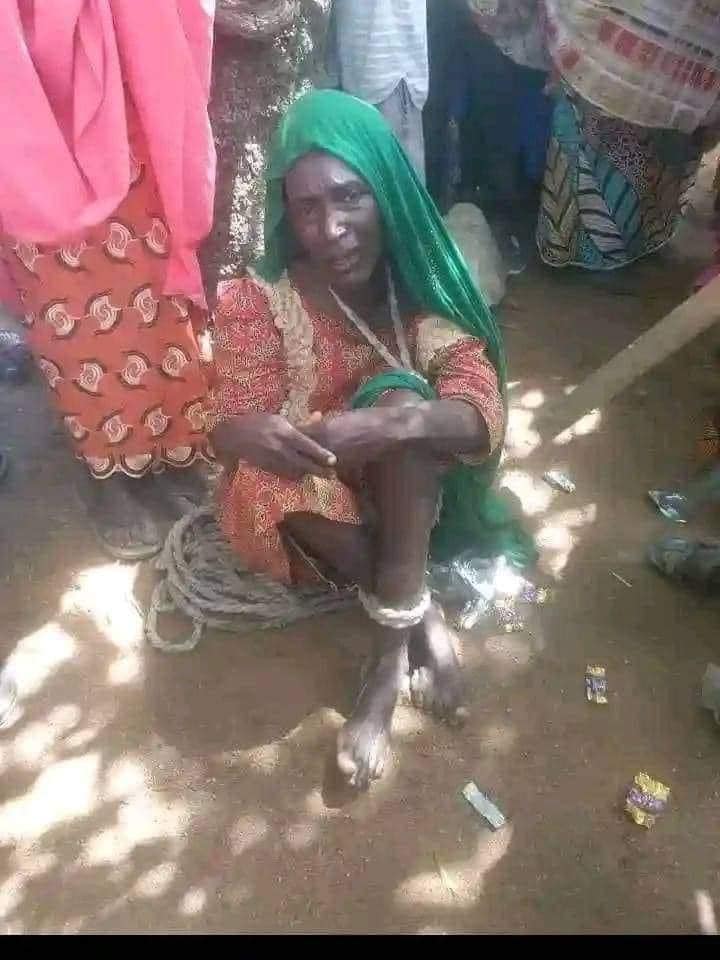
The crackdown on women begging for alms or food in Arewa communities has raised questions and fears of human rights violations. Attacks on innocent women, based on fear-mongering claims of a group of women trained as cultists to carry out nefarious missions, are becoming increasingly alarming.

Several audio clips circulating on social media alleged that about 100 women were trained by a secret society group to infiltrate Arewa communities, posing as beggars or impoverished individuals needing financial assistance. It is claimed that if you allow them into your home and offer any assistance, whether money or food, you will instantly collapse or die.

How was this baseless and manipulative statement conceived?

Who is responsible for perpetuating the fear-mongering that endangers women’s lives in Northern Nigeria?

Why do many, including the educated class, believe such a narrative paves the way for the blatant abuse of vulnerable women?

Why haven’t religious scholars and traditional leaders investigated to uncover the truth behind this notorious fear-mongering, which poses a threat to innocent women struggling with poverty and hunger?

At times of every new power shift in Nigeria, there has been different tribulation and tension. Hence, rumourmongers have a role to play in creating chaos and instability.

Islam condemns rumour-mongering. It is well known that Islam enjoins its followers to act cautiously and verify any story or news that comes to them according to Shari’ah because Allah says in the noble Qur’an:

“Believers, when a dishonest  person brings you a piece of news, carefully ascertain its truth, lest you should hurt a people in ignorance and afterwards you become regretful for what you have done.” ~ Surah Al-Hujuraat 49:6.

While I may be mistaken, my instincts compel me to question the authenticity of the initial stories that struck fear into the hearts of people, creating tension and distrust towards women seeking financial assistance at a time when most families struggle to afford decent food.

I wonder if the fabricated fear-mongering was aimed at silencing people and preventing them from voicing their grievances toward government policies that exacerbated the existing economic breakdown caused by the previous administration. It’s always difficult to discern the extent to which those in power will go to manipulate and conceal their shortcomings.

Just two days ago, I witnessed a disturbing video on Facebook where two destitute women were mercilessly beaten by a group of teenage boys for no apparent reason other than their quest for food or to visit another community. Similar incidents can be found on WhatsApp groups, where women have been stripped almost naked and beaten by groups of youths over flimsy allegations, such as causing the collapse of someone merely through conversation. Treating vulnerable women is unjust and unwarranted, as any form of human rights violation is profoundly concerning and illegal.

Those who pushed the fabricated narrative that 100 or 1000 occultic women were capable of killing people by simply greeting or begging have now created the violent “monsters” that are now taking advantage of the situation to attack or even kill poor women – widows & mothers whose means of survival depend only on going out to beg for food or financial support.

We are all aware that the harsh economic situation created by the new government has increased the number of people seeking food and financial assistance. This group includes mentally ill and poverty-stricken citizens. Millions of Nigerian families have been enduring significant hardships due to the new government’s policies and are unsurprised.

It has always been the usual norm in Nigeria: the politicians and elites live in luxury, indulging in the finest pleasures – lavishly eating the best whenever they desire, living in luxurious homes they build, while the ordinary citizens who entrusted politicians with their votes suffer from poverty and the consequences of self-serving decisions made by the elites.

I hope this brief piece sheds light on the fabricated fear-mongering prevailing in Arewa communities, emphasising the gravity of human rights violations. It also underscores how impoverished and hungry women have been made scapegoats by a nonsensical false alarm intended to divert attention from the harsh economic realities that adversely affect people’s health and well-being.

Aminah M. Abubakar sent the article via mbubakar.minah@gmail.com. She can also be contacted via her X handle (formally known as Twitter): @MinahMbubakar11.

Industrialisation of the North: The future

By Muhammad Sani Usman

Somebody was shocked that the revenue of Zenith Bank as of 2022, which is N945 billion, is greater than the internally generated revenue of northern states combined. Literally, Zenith Bank alone is more financially buoyant than northern Nigeria. And he was lamenting about the poor inclusion of northerners in such investments in their states.

Kaduna is taking the lead in investments in the North, but her (Kaduna) IGR is not up to one hundred billion Naira; it is half of that. Even the profit after tax of Zenith is bigger than the economic cities of Kano and Kaduna. These two states are not up to N100 billion altogether.

I told him, “Investing in banking is highly industrious. But our northern billionaires have no business with anything “Knowledge-based economy”. What they know is to hoard dollars, buy shares, and run over a baby company/factory, as in acquisition.

Prof Murtala Sagagi of the Economics Department of Bayero University, Kano, told us, “While conducting a survey about the percentage of non-inclusion of Kano people to most of the fine-investments in food and beverages, logistics, and Banking Industries, one manager of one famous company told him, “When they try to recruit graduates for trainee positions; they expect them to be meticulous in training before they think of absorbing them fully as staff.

But you’ll employ someone as an assistant quality control officer or sales personnel, but his/her performance index will shock you unless you change your mindset seriously. Industries require expertise to run; you can’t employ someone you can’t fire or are lazy.”

There was another testimony last week. I was discussing with an auditor of one of the best companies in Northern Nigeria. The guy told me they had recruited a new customer care representative, and he was deployed to that branch, but all the time, the guy was not working; even the invoice that he was supposed to do, he couldn’t.

Unknown to the guy, a letter was sent from the headquarter for monitoring and evaluation of his performance by the senior staff of that organisation. My guy is among the people to vouch for him, i.e., whether he would be retained as permanent staff.

However, this is not limited to banking or the mentioned industries; this is about the lackadaisical attitude of our politicians about not creating factors that will favour industrialisation in the North. The A-K-K gas project is among the hope we have for the future of the North. Let’s wait and see!

Muhammad Sani Usman an industrial chemist who advocates good governance and Sustainable development goals. He writes from Zaria via Muhdusman1999@gmail.com.

Please, hide my identity

By Abubakar Suleiman

If you are conversant with the Arewa cyberspace, it will be surprising if you are unaware of the cliché, “Please, hide my identity.” It has gained so much currency (or notoriety) on Instagram, Facebook and Twitter. And it is mainly followed up with bad news, especially related to relationships and marriages – cases of incest, infidelity, marriage battery, heartbreaks and others.

People usually send their relationship or marital problems to popular social media pages or handles managed by self-styled marriage counsellors. These counsellors or opinion shapers then subject the problems to the public for solutions while hiding the identity of the sender of these problems.

Surprisingly, these people who found themselves in a toxic relationship or abusive marriage have parents or guardians who married them off to their spouses. Still, they many times seem to bypass them for advice or counselling.

They also rarely approach certified marriage counsellors or therapists for solutions. Therefore, the problem is thrown to the public, and with too many disjointed ideas or solutions, sieving the best solution to the peculiar problem becomes complicated.

Not so fast; how are we even sure these stories or problems are true? What if someone sits in the comfort of their room or basement and concocts these unfounded narratives to make the stories trend? Many people don’t check the logical validity or fallacy of these stories.

Social media gave everyone a platform to air or voice out their views. The problem with the advent of these platforms is not the access to information but rather the processing of information. Many people find it uneasy to check the authenticity of stories or the validity of statistics.

The blowback or unintended consequence of this ‘hide my identity’ trend is that it has made many young people consume many negative stories, thereby fuelling suspicion between both genders. Moreover, stories of successful and happy marriages have been in short supply. Therefore, some young people no longer see marriage as a worthwhile endeavour wherein you invest your patience, energy and prayers.

On the one hand, love movies from Nollywood, Bollywood or Kannywood made young people see marriage or relationship as a perfect bed of roses or land of Eldorado instead of the cocktail of happiness, sadness, compromises and sacrifices that it is.

On the other hand, ‘hide my identity’ stories have increasingly made partners or lovers dine with each other with a very long spoon. Each sees the other as a veiled threat or a potentially dangerous person. These trends have created overnight feminists and misogynists.

The above backdrop does not downplay the effects of abusive or toxic marriages or relationships that appropriate authorities could reasonably address – parents, guardians, certified counsellors or the court. However, young people must be guided on what marriage entails, its prospects and its challenges. They need a direction or triangulation amidst a plethora of negative information and scary marital or relationship stories.

They should also be fed with successful marital examples or stories and the possibility of a happy marriage. And this makes parenting a more difficult task in our contemporary world.

The last time I checked around, we still had more good homes than broken ones. But, unfortunately, the familiar stories of abusive marriages or relationships are just the case of bad news flying more than the good ones.

Check out families around you, your pairs, neighbours, colleagues at the workplace or married classmates. You’ll understand that except for the usual day-to-day challenges in marriage, they are relatively not bad as it is being portrayed. However, we can canvass for improvements, coping mechanisms or detailed exit plans for worst scenarios. Therefore, ‘hide my identity’ stories are many times fabricated stories or isolated cases than the whole.

Abubakar Suleiman wrote from Kaduna and can be contacted via abusuleiman06@gmail.com.