APC

Former Oyo State governor, Alao-Akala, is dead

By Ahmad Deedat Zakari


A former governor of Oyo State, Christopher Alao-Akala, is dead.


Alao-Akala died on Wednesday at the age of 71. The sad development was confirmed by the Publicity Secretary of the state chapter of the ruling party, the All Progressive Congress, APC, Dr Olatunde Abdulazeez.


Dr Olatunde, in affirming the news, said, “The news of his death is out. He did his best for the state, May his soul rest in peace.”


Mr Alao-Akala was the governor of Oyo State from January 12, 2006, to December 12, 2006. He was also elected on the platform of the Peoples Democratic Party, PDP, in 2007 as the Executive Governor of Oyo State, where he served till May 2011.

Tinubu meets Buhari, declares interest to contest for president

By Ahmad Deedat Zakari

Asiwaju Bola Ahmed Tinubu, the National Leader of the All Progress Congress (APC), met President Muhammadu Buhari behind closed doors at the Presidential Villa, Abuja, Monday.

When asked by newsmen if he had informed the president of his intention to run for the presidency, he replied in the affirmative. He, however, said he is yet to tell Nigerians because he is still consulting.

The National Party Leader reportedly said:” I have informed the President of my ambition, but I have not informed Nigerians yet; I’m still consulting.”

Mr Tinubu, who is known to be politically savvy, also described his ambition as lifelong while answering questions from journalists.

Buhari hints on successor

By Ahmad Deedat Zakari.

President Muhammadu, on Wednesday, while granting an interview on Channels TV, reportedly said he had a favourite successor.

The President, whose tenure will be over in less than two years, dropped the bombshell during an exclusive interview on Channels TV on Wednesday, January 5, 2022.

However, the president refused to state who the favourite successor was on the ground of their safety.

The President, in his own words, ” I wouldn’t (mention the name of my favourite successor) because he may be eliminated if I do. I better keep that a secret.”

The interview has generated ripples and different reactions across the political spectrum in the country.

Expect more job opportunities in 2022, Buhari tells Nigerians

By Uzair Adam Imam


President Muhammadu Buhari has confirmed that new jobs are on the way for Nigerians in the new year, 2022.


The president made this public in his new year message to Nigerians, adding that his administration would deploy ICT (Information and Communications Technology) platforms.


According to Buhari, the purpose of job creation is to ensure the diversification of the economy to support other emerging sectors.


Senate President Ahmad Lawan also asked Nigerians to continue having faith in the country and its democratic institutions.


The National Leader of the All Progressives Congress (APC), Asiwaju Bola Tinubu, said that given the way Nigerians fought to contain the COVID-19 pandemic, there is no doubt that they can equally “stand up to problems that seek to shackle us.”


Speaking about security challenges in the country, Buhari promised that government would not relent in tackling the problem citing the “number of insurgents and bandits who have willingly surrendered to our security forces and continue to do so through various channels and the Safe Corridor created for that purpose.”


“The persistent insecurity in certain parts of the country may have threatened to unravel the incremental gains achieved in the real sectors of the economy and in the administration’s overall objective to position the nation on the irreversible trajectory of sustainable growth and progress, but I assure you that we will remain resolute in our commitments and shall continue to press ahead with our programmes and plans,” he added.

Have we not reverted to the ugly old days?

By Abba Muhammad Tawfik

The prime priority of every government is always to ensure the safety of its people by providing adequate food and security and other necessities of life to make a pleasant bustling of it (life). However, the inability to reach that satisfactorily had made Nigerians call it an anathema on President Goodluck Jonathan’s stewardship and pinned him with the harsh tags of incompetence and murderer in northern Nigeria. For that, we prayed consistently and did everything practically possible within the sphere of our human influence until we had him ejected from power.


General Muhammadu Buhari is very well acquainted with his antique military stature of rational thoughts. And, of course, zero tolerance to nonsense and his political confederates in APC wooed us by the “change” cliche. They strategized their political expedition by accentuating majorly on Jonathan’s incompetence to ensure the security of life and property in the Northeastern states of the nation.


As hapless and helpless as we were with our lives at the grabs and pangs of insurgents, we put our complete trust in Buhari and APC, with the expectation and hope of fulfilling their promises of strengthening security setbacks and restoring peace in the nation. As a result, APC attained the peak of our love and succeeded with the power of our lives and thumbs.


Early in their (APC) administration, as they vowed before God and the good people of Nigeria of addressing the security challenges, we can honestly say that the waterloo of Nigerian enemies was celebrated. Normalcy was restored in most Northeastern states like Adamawa, Gombe, Bauchi, Yobe, and Borno, which were then wrecked by detonations and eruptions of improvised explosive devices.


Expectations often fail, and most often, most of their promises fail. The accomplishment of the war being waged furiously against insurgents turned out to be a mirage. It was short-lived, and insurgence spread its tentacles ubiquitously across the nation.


Up to now, a two hour thirty minutes drive from Damaturu to the once known “Home of peace” is like penetrating through the boundaries of the “Bermuda triangle” despite having an airforce base that is well equipped with military fighter jets in Maiduguri. The road will be barricaded for hours, and people would be wantonly slaughtered like animals in abattoir by insensate humanlike beasts without any intervention.

Sadly, the enormity of the matter is that even those who have taken the solemn oath and are saddled with the heavy responsibility of protecting the lives of innocent Nigerians are not spared.


Moreover, the country’s Northwest and the Northcentral segments have also responded to the topsy-turvydom of insecurity and have become a furnace hell on earth. The Kaduna–Abuja road remains a highway of death where people are daily being mercilessly forced to breathe in death and exhale life and stripped of their chattels by kidnappers. 


One of the worst tribulations that betide one in today’s Nigeria is being a resident of Zamfara, Sokoto, or Katsina. The daily news reaching us from the region is that of kidnappings. Bandit terrorists bathe in the bloodstream of innocent souls, turning wives into widows and children into orphans.

Despite the economic hardship in the country,  one has to struggle to fulfil Darwin’s law of survival. But, unfortunately, only our vital forces dearly pay the cost of so doing. May Allah, in His infinite mercy, restore peace to our dear nation. Amen. 


Abba Muhammad Tawfiq is a 500L Medical Rehabilitation student at the University of Maiduguri. He can be reached via abbamuhammadtawfiq@gmail.com.

Nigeria: A nation with nominal Commander-in-Chief

By Amiru Halilu
“Nearly all men can stand adversity, but if you want to test a man’s character, give him power.” – Abraham Lincoln. 
When insecurity and ineptitude became the hallmark of former President Jonathan’s administration, Nigerians opted for a greener pasture in APC in 2015. People hoped that the candidate featured by the then major opposition party, APC, would be a leader with a big picture and capacity to overcome the deep-seated insecurity that bedevilled the country. Why? He depicted himself as someone, who was actuated by altruistic desire. But, sadly, President Buhari has never been that someone.
In less than one year in office, his ineptitude and lack of competence became apparent. At present, Nigerians feel like a lost cause, trapped in a lacklustre, ennui, directionless and uninspiring leadership. We have been bearing the brunt of his gross incompetence, cluelessness and nonchalant attitude towards compelling issues and burning problems. Nigerians now feel what it means to have a president who is so wildly unable to fulfil his responsibilities.
To Buhari, being a president is just to occupy the highest office in the land, chairing executive council meetings, delivering empty speeches, sitting at the comfort of the presidential Villa while assenting to bills that have nothing to do with citizen’s well-being, junketing from one country to another dissipating our little resources and wooing ghost investors. These are the major duties Buhari has been performing as a president and the requirements of being a president in his school of thought.
From the day former President Jonathan and President Buhari were inaugurated as the fourth and fifth democratically elected president of the Federal Republic of Nigeria, ‘competence’ got missing from the country’s leadership code. What do I mean by “competence?” The Oxford English Dictionary defines it as “the ability to do something successfully or efficiently.” What has Buhari done impeccably to distinguish himself from his predecessor? Virtually nothing! To some extent, he ends up making his predecessor a hero in the eyes of many.
Nigeria is technically at war yet, we have an intellectually handicapped president, who doesn’t even have accurate information of what is happening around the nation, who cannot do serious preparation of any kind, who has hollowed out the government, filled critical posts with lackeys and selfish money-grubbers, and who has taken governance like sophomoric kid stuff. Buhari has been behaving like a president of the most peaceful nation on earth, where citizens go to bed with their two eyes closed.
What is the essence of a president under whose stewardship the country becomes a shrink tree with dead branches. Anything that will make Nigeria a subject of ridicule in the comity of nations is happening under this amateurish government. So many embarrassing events that had caused the resignation of government officials in live and breathing countries had already occurred in this lethargic and non-functional regime yet, no one was sacked because the president is grossly incompetent; he accommodates mediocre and appreciates mediocrity.
Buhari’s leadership is characterised by disappointment, uncertainty, instability — occasion by emotional trauma, grief, sorrow and misery. The only dividend his administration is paying to Nigerians is precious living. The most disastrous event now in Nigeria is travelling by road. His so much indifference to the burning topic of the day — insecurity had set off a wave of opportunities for high-profile criminals to graduate from armed robbery to kidnapping.
Travellers are unsure of getting to their final destination without being kidnapped and taken to the bush in exchange for ransom. Just as other countries are progressing in other walks of life, ours is vice-versa. Northern Nigeria is about to be taken over by armed bandits and other terrorist groups, and Buhari is leaving a dangerous vacuum filled by increased attack after attack after attack! Incessant killings are gradually becoming a daily routine in northern Nigeria.
Education, the backbone of any developed society, is under a serious threat as many schools were compelled to close down owing to a series of kidnappings. Farming, the only recourse to abject penury, was since crippled by gruesome murders. Most of the farmers who have access to their farms have met the demands of the armed bandits operating in their respective areas.
When a nation had a nominal commander in chief, it’s doom.
Amiru Halilu writes from Kaduna and can be reached through haliluamiru@gmail.com or @AmiruHalilu.

Harvest of parallel party congresses

By Abdulrazak Iliyasu Sansani

It is harvest time, where farmers all over the country harvest their crops. Some have already harvested the early maturing varieties of crops, while others are counting days to commence harvesting, or at least have started preparations for the harvesting of Agricultural produce after toiling, expending funds, and hoping of getting bumper harvest as a reward for everything.

It is an akin experience in Nigerian politics, where navigating through the political minefields entail passing the energy-sapping, complex, and rough terrains before reaching the point of achieving one’s political aspirations in Africa’s biggest democracy. It presents all the drudgery involved with manual farming and requires all the technical know-how needed to deliver the immaculate service of mechanised farming.

On  Saturday, October 16, 2021, the All Progressives Congress (APC), the governing party of Nigeria conducted their state congress in most states of the country, having done the same thing at ward and local government levels all over the country earlier. The main opposition party, the People’s Democratic Party (PDP) also went to the poll in a few of the states they were yet to elect their state executives elections namely: Adamawa, Kwara, Oyo, etc.

It was a hectic weekend. One that lived to its billing in most parts of the country. Postponements, cancellations, parallel congresses, declaration of winners, and the blatant gloating by those who purportedly won the elections in both parties, especially the APC which held congresses in more states. The APC state congress had to be called off in Taraba State to avert a grave security challenge that might have occurred, with the avalanche of thugs armed to the teeth and with their assumed battle-tested amulets, charms, etc, seen a few days to the day of the state congress in Jalingo. A decision I applauded whoever had a hand in it.

Parallel congresses held in so many states: Akwa Ibom, Kano, Ogun, Osun, Oyo, etc. Ogun is one state I guessed few would be astonished to learn that this happened. As there was no love lost between the governor, Prince Dapo Abiodun and his predecessor Senator Ibinkule Amosun. The DSS shielding the President caught in the midst of the two divergent political interests, at the last Presidential campaign rally in Abeokuta is still fresh in our minds. It was least anticipated that they won’t do anything to assert who truly holds the ace in Ogun politics.

In Kano where the good and hard-working people of Kano have always prided themselves to eclipse whatever anyone comes with to the ancient and historical state.  It indeed aptly lived up to that. As the people of Kano would always say, ‘Siyasar Kano Sai Dan Kano,’ which loosely translated as, the politics of Kano only a person from Kano would comprehend. Hence, I do solemnly affirm that this is not an attempt to stamp my expertise in Kano politics or anywhere, but a patriotic layman’s endeavour to effect changes in the weighty challenge to our democracy posed by parallel congresses across the country, which undermines it.

Parallel Congresses are colossal drawbacks to our internal democracy, which remains the basis of our external democracy. Both intra-party and inter-party democracy proceed to build a good nation when well nurtured. Unfortunately, it is the alternative to development that the harvest of these parallel congresses will reap for the people in dire need of development. What a sad reality for the brilliant and shrewd populace of Africa’s biggest economy.

We have seen these parallel Congresses across parties in Nigeria. It is not condemned to one party in Nigeria, though it is more prominent in the two parties with the highest members in Nigeria if at all we can determine genuine card-carrying members: APC and PDP. This clearly shows that these are the parties with the biggest stakes. Thus, the reason for ‘the battle for the soul of the party’. It points to the fact that drastic measures have to be taken to effectively address the conundrum. I must state that it is only a conundrum because there aren’t strong laws that strictly sanction those who engage in holding parallel congresses and other actions which we view to be less significant but have severe consequences on our democracy.

With the consequences already in the centre of commerce, Kano: reforms are long overdue. All our institutions have to be strengthened to checkmate the far-reaching implications to our democracy, which Nigerian power craving elite go beyond the limit set by our laws or cash in where it is silent on weighty issues. Legislation should be enacted in such a way that gives no room for parallel congresses. For having parallel Congress anywhere is an obvious admission of failure of our institutions, especially our laws of which the parties are products.

There can’t be two leaders of a single party at the same. Then why is it becoming more fashionable by every period of congress in the two major parties in Nigeria? Given that politicians are motivated by their ambitions, but would it still maintain its lure, if stiff punishments are in place for anyone whose actions lead to having parallel congress and other anomalies that belittle our democracy? It is highly unlikely.

All in all, injustice, greed, weak laws, disregard for standard and proper practice, and lack of stiff punishment among other issues are at the centre of its all. Therefore, when some people who believe they are or are rightly the leaders of a party based on the party’s constitution deny others a fair shot at achieving their ambitions and the authorities back then. Then it is bound to persuade them to seek whatever means to actualise their ambitions, especially when they are certain about the gross inadequacies of our institutions. Being fully aware that hardly would the offenders be penalised. They resort to whatever would lead them to success. This is a damning indictment of our system, institutions, and a sad commentary on our democracy. This has to change to a democratic nation that is firmly built on standards and strong institutions that are deeply rooted in conventional democratic practices.

Abdulrazak Iliyasu Sansani wrote from Turaki B, Jalingo, Taraba State.

The Kano APC ship on the verge of capsizing

By Musa Sa’adu

Political parties remain the only vehicle or platforms for candidates/politicians to aspire for political offices. This, however, leads to the emergence of various interest groups within a party. The groups work harmoniously together to pursue their common goals. However, the success or otherwise of a political party depends mainly on how the stakeholders manage these interest groups in the distribution of party positions, party tickets, appointments and the traditional largesse as the case may be. Failure to do these for any reason has, on so many instances, led to the internal party crises.

Kano APC faces the formidable opposition PDP-Kwankwasiyya that is waxing power to unseat them. Yet, the party is bedevilled with internal crises that by day slim and reduce its electoral chances comes 2023. Internal party crises are the primary driving force that negatively affect party performance in a poll. Before governorship elections in Kano that spring surprises are born out of internal party squabble and wranglings.

The 1983 election that produced Senator Sabo Bakinzuwo against a well-performing Governor Abubakar Rimi, seeking reelection resulted fromf party crises. The PRP crises that metamoposed into ‘Tabo‘ and ‘Santsi‘ factions, led by Malam Aminu Kano and Rimi respectively, forced Rimi as a sitting Governor to dump PRP for NPP to seek reelection. However, this was one of the cardinal reasons behind his Waterloo despite his performance in office throughout Kano and Jigawa.

In the botched Third Republic, one can learn a lesson from it. The popular and well-accepted SDP lost the Governorship election to NRC due to the internal crises in SDP, which was an offshoot of Santsi and Tabo from the Second Republic. After about three primary elections that produced an independent candidate, Engr. Magaji Abdullahi against Aminu Inuwa of Santsi faction and Ahmad Rufa’i of Tabo faction. The wrong choice of Ahmad Rufa’i as running mate to Magaji Abdullahi led to Santsi group to revolt and enter an agreement with NRC candidate Kabiru Gaya. This development changed the election outcome in favour of the NRC candidate.

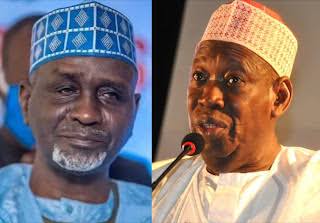
Senator Rabiu Musa Kwankwaso, Malam Ibrahim Shekarau and, of course, Dr Abdullahi Umar Ganduje are no doubt the principal actors of the Fourth Republic Kano politics. The three have benefited and suffered the consequences of internal party crises.

Our memories are still intact on how the political hullabaloo, shenaniganism and internal party wranglings ruined the reelection bid of Governor Kwankwaso during the 2003 Governorship election. The defection of Danhassan, crises between Kwankwaso and some members of the National Assembly, notably the then speaker of the House Of Representatives, Hon. Ghali Na-Abba and perhaps General Buhari factor were among the contributing factors that led to the Kwankwaso/Ganduje downfall and the emergence of Malam Shekarau.

Likewise, Shekarau suffered the repercussions of internal party crises; his anointed candidate Salisu Sagir Takai was defeated by Kwankwaso/Ganduje. The crises between Shekarau and his deputy, Abdullahi Gwarzo, popularly known as Ruwa Baba, the over fifty thousand votes garnered by him during the Governorship election, has smoothly leveraged the second coming of Kwankwaso and Ganduje in the 2011 election.

The current turmoil rocking the Kano APC is a cause of concern to any committed party member. The internal crises that paved the way for two parallel conventions that produced Abdullahi Abbas and Haruna Zago representing Ganduje and Shekarau led factions respectively will create a hole that will gradually sink the Kano APC ship, and neither the Ganduje nor Shekarau will survive the mishaps including their supporters.

In politics, number matters; everyone is important! Don’t tell me someone who’s Governor for eight years and a serving senator doesn’t have political influence, and these G-7 members, as they fondly called themselves, are blessed with sturdy supporters and resources to bankroll political movements that can make or mar an election.

With the Tuesday court verdict favouring the Shekarau-led faction and considering the nature of Nigerian litigation processes, I’m afraid that whichever faction the pendulum swings and even if they won the general polls, the replica of Zamfara 2019 is imminent.

Both Ganduje and Shekarau should tread with caution; there is still time. They shouldn’t listen to the sycophants instigating the crises. Let them sit, discuss and iron out the grey and problematic areas and find out political solutions; otherwise, Kwankwaso will send them to political oblivion.

Musa Sa’adu wrote from Sumaila and can be reached through musasaadu0181@gmail.com.

How Kano officials locked up SAN who represented Shekarau faction

By Uzair Adam Imam

The lawyer who was reported to have played a vital role in the victory of Malam Ibrahim Shekarau faction of the All Progressives Congress (APC) in Kano State, Mr Nureini Jimoh, was locked up in his chamber by the government officials hours ago.

Reports have it that the Federal High Court in Abuja dissolved the excos of Governor Abdullahi Ganduje’s APC faction, taking that of Shekarau.

On Wednesday, December 1, 2021, police and officials of the Kano State government stormed Jimoh’s chamber at 16c Murtala Mohammed Way, Kano.

The officials sealed off the building while Mr Jimoh and his staff were inside the building, making it a thing of surprise to many.

However, the building was later unsealed after outrage from the Kano branch of the Nigerian Bar Association (NBA) and media reports.

Hassan Idris, the team leader, has disclosed that they were instructed by the Permanent Secretary from the ministry to unlock the premises.

Speaking at the scene, the Kano Police Spokesman, Abdullahi Haruna Kiyawa, said he was there to confirm the involvement of police as being reported by the media.

On power rotation, Nigeria should face reality

By Aliyu Ammani Junior

Leadership has been one of the common unbalanced difficulties in Nigeria’s political space since independence: 1964 Federal Election Crisis, January 1966 coup, 1966 counter-coup, Nigeria/Biafra civil war, Gideon Orkar’s failed coup, post-June 12 political crisis, and more. All in one way or another—linkable to one part’s sentiment of being marginalized, omitted, or denied the sense of representation.

Ideally, merit, competency, integrity, and capacity are the benchmarks in selecting a leader, not a power rotation or sharing formula. Nevertheless, the situation in Nigeria, a complex country of multiethnic and multi-religious organizations with uneven federalism that is almost consolidated, is not about competency, merit, integrity, and capacity.

A centralized structure ravaged by agitation, deep suspicion of fear of ethnic and religious hegemony demands a rotating power between north and south to accommodate the emotions and sentiments of these regions and their people. Providing a rotation formula would go a long way in sustaining a united Nigeria considering the existing deep divisions among Nigerians. It will produce fairness, equality, equity, justice, a sense of possession, and identification.

Unless a requisite equate is attained, where every part and tribe has developed a sense of possession, identification, and the federalism is no longer leaning; Nigeria will always require a practical formula for unifying the diverging segments that formed ‘The Federal Republic Of Nigeria.’

The fault of power rotation is theoretical and unrealistic; some argue that it is ‘undemocratic’ because it deprives certain people with competence, capacity, and experience the right to be voted—for when zoning does not favour their locus. There is no universal structure of democracy; what is universal about democracy is the basic principles that guide it. The focus of democratic practical demands remains locally confined. As a substantial social value, democracy has complex and diverse considerations and needs. Therefore, it should be hacked to suit local conditions and circumstances.

It is deceiving and tricky to limit the democratic system to mechanical conditions (popular will) without referring to instrumental conditions like the blanket sense of identity—inclusiveness—possession from every component.

Another narrowed argument against the rotating formula is that it is ineffectual and of no help – since a typical citizen from the leader’s zone is not better comforted ‘materialistically’ than other citizens from distant zones. Realistically, it is restricting, reducing, and neo-Marxist to limit the decisive quest of political aspirations and struggles to ‘distribution of resources’ without appreciating other factors; recognition, possession, and sense of identification. In a heterogeneous populace, it is significant to feel represented and connected by having someone from your spot and its experience, occupying a high post (including the office of the President) at least—in a while.

As earlier acknowledged, in usual events—merit, competency, integrity, and capacity should be ‘benchmarks’ in deciding a leader, not a formula. Undeniably, the merit, competency, integrity, and capacity test is a dubious and probable trial.  With a power rotating procedure, the questionable and possible trial remains untouched. Except that something is going to be fixed, every portion will develop a sense of possession, identification, and responsibility “I played: it’s time for someone.”


Aliyu Ammani Junior

Kaduna, Nigeria.