APC

2023 elections, Katsina and the curse of anointment

By Salisu Yusuf

When President Ibrahim Badamasi Babangida created Katsina State in 1987, we were full of hopes and euphoria that this fledgeling state would fastly grow and prosper from the grips of a complex Kaduna State. The late singer Mamman Shata aptly captured this mood in his popular song “Allah raya Jihar Katsina.” Fortunately, successive military administrations of Governors Abdullahi Sarki Mukhtar (1987/88), Lawrence Onoja (1988/89), and John Madaki (1989/92) gave us the belief as Katsina became the envy of its neighbouring states. But then the curse of anointment sets in.

During the 1991 general elections, Alhaji Sa’idu Barda of NRC (who controversially became the governor) contested against Alhaji Umaru Musa Yar’adua of SDP. The latter was so popular that no candidate could beat him in a free and fair poll, thanks to the social leverage his older brother, Alhaji Shehu Musa Yar’adua, wielded. 

Alhaji Umaru Musa Yar’adua was about to win the contest when President Babangida intervened and asked the electoral commission to declare Sa’idu Barda the winner. 

President Babangida had a grudge against Shehu Musa ‘Ya’adua. Hence the annulment of the first presidential election in which the late ‘Yar’dua of SDP was leading. The rest, they say, is history. Even though Governor Sa’idu Barda was anointed, he was a gentleman though he lacked ideas and focus. 

From November 1993 to May 1999, during the rules of General Sani Abacha and General Abdulsalam Abubakar, there were three military governors: Emmanuel Acholono (1993/1996), Sama’ila Chama (1996/1998) and Joseph Akaagerger (1998/1999). They ruled but performed less than the first three crops of the military.

Governor Umaru Musa Yar’adua (1999/2007) was the only unanointed governor Katsina has had yet. Although he had his weak links, he was the people’s darling. Public service was politicised as PDP membership guaranteed the executives, political appointees and thugs to go beyond the ethical and the conventional.

Governor ‘Yar’adua (un)knowingly nurtured those politicians who introduced political brigandage in Katsina political space; late Abba Sayyadi Rumah, the immediate past secretary to the Katsina State Government, Alhaji Mustapha Inuwa, etc., were his political disciples. 

However, Governor Yar’adua spearheaded the transformation of the modern Katsina State. He built the famous Umaru Musa Yar’adua University, the new Katsina master plan, College of Legal, Daura, State Secretariat, Katsina Eye Center, Turai Hospital, etc. His legacies are numerous to mention.

Around 2014 when President Obasanjo singlehandedly anointed Late Governor ‘Yar’dua to contest the presidential seat during the 2015 General Election, he further asked ‘Yar’adua to field an unknown figure in the person of Alhaji Ibrahim Shema to contest the governorship seat. ‘Yar’adua had rooted for Alhaji Aminu Masari, the then speaker of the House of Representatives. Umaru had no choice but to oblige because he was also a product of anointment. Obasanjo was also settling a political score because, in 1999, Speaker Masari had vehemently opposed Obasanjo’s tenure elongation. 

Though Governor Shema too performed miracles, it was during his term that corruption was institutionalised. His subsequent trials under the EFCC concerning the Local Government Joint Account fund are a testimony. Shema was so arrogant and daring that he called those outside the PDP cockroaches who deserved to be killed if they interfered with election matters. 

Governor Masari was also a product of anointment though he was also a victim of anointment. During the 2014 APC primaries, the late Senator Kanti Bello was about to win the governorship ticket when the exercise was hijacked in favour of Masari by the so-called Abuja politicians. These people pressurised then General (retd.) Muhammadu Buhari to intervene. Subsequently, the election was skewed in favour of Masari. Late Senator Kanti could not forgive Masari until his sudden death in 2017. 

Legacies are hard to point out in the seven years of the current APC government. So many people taunt the government that its only legacies are the refurbished traffic circles (roundabouts) in Katsina and the painting of schools in APC colours. Katsina State is today indebted to the World Bank and the IMF.

However, one salient advantage of Masari’s government is political tolerance. The government has given the people the right to political affiliation, which was lacking during the PDP.

For Katsina, the anointment curse continues as Governor Masari points to Alhaji Abba Masanawa, the immediate past Managing Director of the Nigerian Security Printing and Minting Company, Abuja as his anointed successor. 

Only time will tell when Katsina will be free from the grips of anointment.

Salisu Yusuf wrote from Katsina via salisuyusuf111@gmail.com.

Tension in Kano APC as Garo mulls over defection to NNPP

By Uzair Adam Imam 

Another political crisis is rocking the Kano chapter of All Progressives Congress (APC) as the endorsed deputy governorship candidate, Murtala Sule Garo, is reportedly mulling over defection to the New Nigeria People’s Party (NNPP).

Governor Abdullahi Umar Ganduje endorsed Garo to pair with the current deputy governor, Nasiru Yusuf Gawuna, as governor in the 2023 gubernatorial election.

However, Garo was said to have felt slighted following a peace parley between Governor Ganduje and his political arch-enemy, Senator Barau Jibrin.

Recall that Ganduje had reconciled with Barau and agreed to step down for him for the Kano North senatorial ticket after the senator abandoned his gubernatorial ambition. 

According to a source who preferred not to be named, Garo plans to discuss the issue with his associates for a final decision.

He said, “he is planning to meet with his associates and make [a] concrete decision, but he is still very sad about the development (Barau back in the fold), but he has not defected or abandoned the ticket,” one source, who asked not to be named, said.

2023: Who is pushing for Jonathan’s presidency?

By Ibrahim Mustapha Pambegua

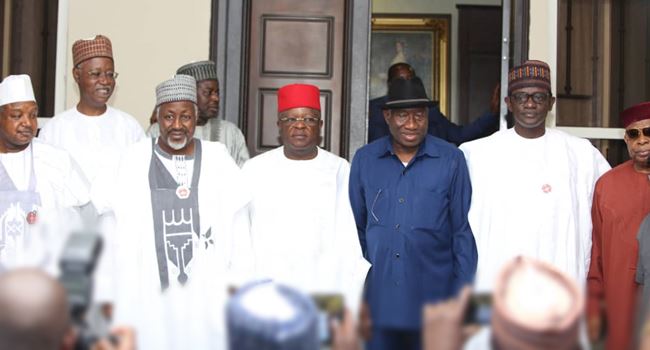
After an initial denial of rumours that he would join the ruling party, the former Nigerian president, Goodluck Jonathan, has finally ditched his party. However, after long speculations, his defection to APC has continued to elicit mixed reactions in the country.

Before his defection, many signals emerged that the former president had stopped attending activities organised by his former party. The Bayelsa state’s gubernatorial election conducted in 2020, whose former party lost to APC before a court ruled in its favour, suggested Jonathan’s indifference to PDP affairs. Does Jonathan’s defection have to do with how the party treats him during and after the 2015 general elections?

While the former president might have lost the 2015 election due to the zoning arrangements of PDP, which he disregarded and refused to abide by, the betrayal and backstabbing that ensued among trusted party loyalists led to his resounding defeat remains fresh in his mind.

The emergence of a new PDP split group led by Atiku Abubakar, Bukola Saraki, Aminu Waziri Tambuwal and other heavy party juggernauts who abandoned him at the tail end of the party’s convention had wreaked great havoc on his re-election bid. With these politicians who deserted him returning to PDP, Jonathan would not feel comfortable staying with them.

As a former president, Jonathan should be the party’s leader. However, Nelson Wike, Rivers State governor, has hijacked the party and has since been calling the shot. Wike and his surrogates have firmly controlled the party and failed to consult or engage the former president on the party’s decisions.

The inability of PDP to respect or recognise Jonathan as their leader must have dampened his morale and forced him to change his mind. One imagined how the former president, who was a governor, a vice president and president under PDP, could suddenly ditch his benefactor.

The former APC national chairman, extraordinary convention committee, Mai-Mala Buni, must take credit for Jonathan’s defection. The Yobe state governor, during his stint as chairman, visited and subsequently wooed him to APC. Do Malam Buni and his co-travellers sign a pact that they would throw their weight behind his presidential ambition if he joins the party? Jonathan did not only join the ruling party but also bought nomination form through the northern youth group.

Goodluck Jonathan’s presidential ambition has raised some critical questions. First, is the ruling party toeing the dangerous path of PDP by jettisoning its zoning arrangement? With Buhari completing his tenure, one will advise for equity and justice. There is a need for power to be shifted to the South.

Also, during its recent convention, APC opted for Abdullahi Adamu, a northerner, as the National chairman. This development has further buttressed that the South will produce the next president. Moreover, with Jonathan joining the presidential race, what will be the future of southwest politicians, especially Bola Ahmed Tinubu, who sees his contest as a lifetime ambition. It is no understatement to say that President Muhammadu Buhari’s victories in 2015 and 2019 are to the credit of Tinubu and other southwest politicians.

If APC fields Jonathan, the southwest politicians will unite and reject the party. To them, having played second fiddle in the previous elections, the 2023 ticket should be exclusively reserved for them. But, on the other hand, if the ticket is not given to them, there is every tendency of anti-party, as these politicians will ally with either PDP or Kwankwaso’s NNPP to ensure APC loses the election in the region.

Second, who and who are dragging or promoting Jonathan’s presidency and their motives? It was reported that Jonathan’s presidency had two northern governors’ tacit support. One from the northwest and the other one from the northeast. If their plan works as scheduled, Jonathan promised to pick one of them as running mate.

The legal technicalities that may await the former president will unarguably discourage APC from giving him its ticket. Jonathan took an oath of office twice.  If he is allowed to contest and luckily wins the poll, Jonathan will take his third oath of office, which is unconstitutional. This will open up serious court litigations.

What will happen if the opposition PDP finally settles for Atiku Abubakar as their candidate? Will APC stick to Jonathan’s presidency? The former president had received accolades globally for conducting a free and fair election in 2015. Jonathan was the first African president who conceded defeat and called and congratulated the winner even before the result was announced.

Since he left office, his diplomacy performances have endeared him to many Nigerians. However, the former president should have kept a low profile, continued his diplomacy engagement, and advised the country where necessary. With the former president throwing his hat in the ring, what will be his fate during and after the 2023 general elections?

Ibrahim Mustapha Pambegua wrote from Kaduna state via imustapha650@gmail.com.
Shehu Sani decries money politics

By Ahmad Deedat Zakari

Shehu Sani, a former Senator representing Kaduna Central, has decried extortion of aspirants in political parties ahead of the 2023 elections in Nigeria.

On Wednesday, May 18, 2022, Shehu Sani took to his verified Twitter handle to subtly express his displeasure regarding the extortion of aspirants in his party, the People’s Democratic Party (PDP) and others.

“Pay for Form. Pay for Submission of Form. Pay for Screening. Pay or “contribute” for venue and logistics for Primaries. Pay delegates. I’m not supposed to write this, but I have to; Extortionist Tollgates or Checkpoints to power,” Sani tweeted. 

In January, the former senator declared his interest in contesting for the Kaduna State governorship seat. He has consequently obtained his nomination and expression of interest forms.

EFCC probes political parties’ finances, seeks INEC’s assistance

By Muhammad Sabiu

The Economic and Financial Crimes Commission (EFCC) has begun a quiet probe into the finances of the country’s 18 political parties and presidential candidates.

This came after applicants vying for various political posts in the parties paid exorbitant fees for expressions of interest and nomination papers.

As a result, in a letter, with reference number CB.3383/EFCC/HOPS/HQ/VOL.1/28, titled, ‘Investigation activities’,  the anti-corruption organization has requested that the Independent National Electoral Commission provide it with the bank accounts and other financial information of political parties.

It also demanded that the managing directors of Access Bank and Polaris Bank disclose information on the 14 accounts held by the All Progressives Congress, the Peoples Democratic Party, and another group suspected of being linked to the opposition party.

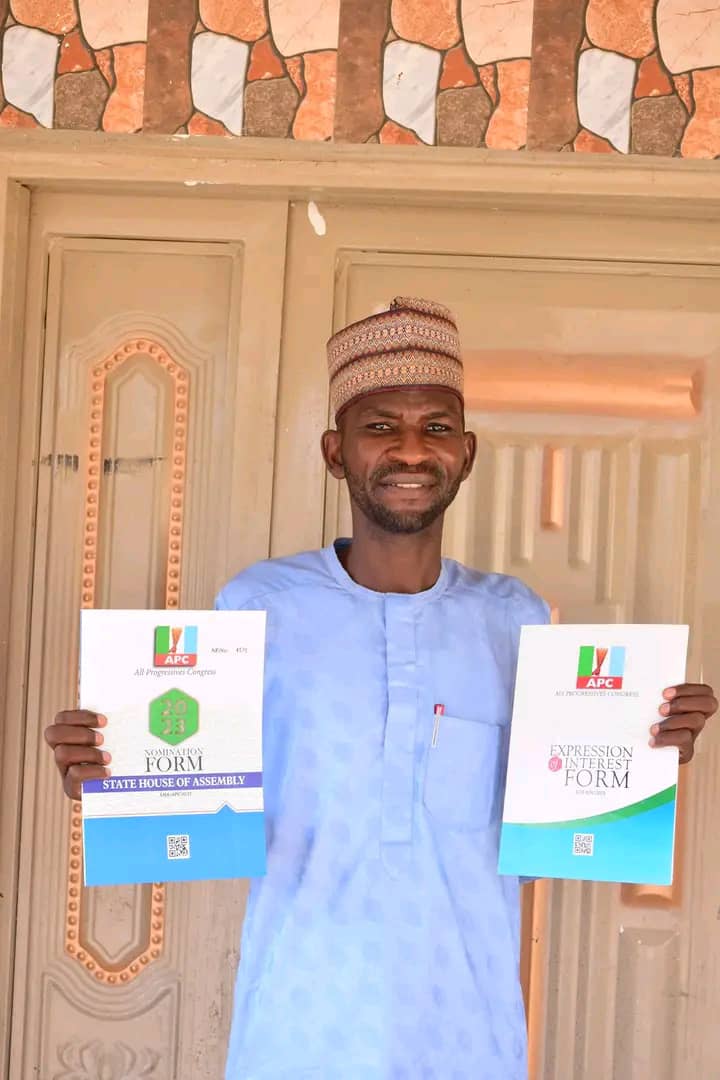
The ruling APC sold presidential forms for N100 million, while the main opposition party sold them for N40 million. In addition, APC governorship candidates paid N50 million, while those declaring for the Senate, House of Representatives, and state legislatures paid N20 million, N10 million, and N2 million, respectively, for their nomination and declaration of interest forms.

The PDP, on the other hand, sold gubernatorial forms for N21 million, Senate forms for N3.5 million, House of Representatives forms for N2.5 million, and state Houses of Assembly forms for N600,000.

While the minor parties paid lower rates for their forms, many Nigerians were outraged by the hefty nomination fees required by the two leading parties, which Transparency International described as a kind of money laundering.

Last week, on Channels Television’s Politics Today, EFCC Chairman Abdulrasheed Bawa hinted that the agency will monitor campaign finances, particularly the authenticity of monies used to acquire nomination forms ahead of the 2023 general elections.

Kano APC Crisis: Presidency summons Ganduje, Shekarau

Ibrahim Nasidi Saal

The Presidency has stepped into the ongoing crisis in the Kano chapter of All Progressives Congress (APC) between Governor Abdullahi Umar Ganduje and Senator Ibrahim Shekarau, The Daily Reality reliably gathered.

A source familiar with the development said the Presidency dispatched a jet Friday night from Abuja to Kano to convey Ganduje and Shekarau for an emergency meeting towards resolving the crisis.

The meeting is said to be a major part of the plan to forestall the planned decamping of Shekarau to the new but fast-growing New Nigeria People’s Party (NNPP).

The NNPP is led by another former governor of Kano and leader of the Kwankwasiyya Movement, Dr Rabiu Musa Kwankwaso.

Many bigwigs of the APC and the opposition People’s Democratic Party (PDP) have been joining the party. Shekarau was expected to formally announce his decamping to the party on Saturday.

However, late Friday evening, Governor Ganduje visited the former governor at his Mudunbawa Kano residence in what sources said was a last-minute attempt to stop the planned decamping.

Sources said it was after the closed-door meeting that they started making arrangements to jet off to Abuja.

People in Kano State are keenly observing all the political moves of the giant political gladiators and are desperately waiting for the 2023 elections.

2023: Bulus raises hope for APC in Southern Kaduna 

By Sumayyah Auwal Usman

As the 2023 elections draw near, the two big parties, the ruling All Progressives Congress (APC) and the Peoples’ Democratic Party (PDP), parade several contenders for the Kaduna South Senatorial seat. 

Being one of the strongest senatorial zones for the PDP since 1999, the aspiration of APC bigwigs from the zone is challenging PDP’s dominance. As a result, political pundits opined that next year’s senatorial election in the zone will be a fierce contest between PDP and APC.

For the APC, political observers believe that the expression of interest of Honourable Bulus Banquo Audu is receiving a massive boost in the zone. He’s believed to be one of the most experienced and most politically savvy APC politicians in Southern Kaduna that could defeat other contestants and amass votes for APC in the forthcoming election.

As a grassroot politician, Bulus played a critical role when APC won the seat of member House of Representatives in Kachia/Kagarko Constituency in 2019. Recently, his political influence paved the way for a more remarkable outcome for APC in the last local government elections. He wields enormous influence among the Christian communities in the zone.

Investigations revealed that the recent mass defection of members of the PDP to APC in the zone is not unconnected with Hon. Bulus’ senatorial ambition. One major determinant of which party wins an elective position at the end of the day is the choice of the party candidate. With the changing political atmosphere in Southern Kaduna, any party that makes the mistake of presenting a weak candidate or person with questionable character will undoubtedly lose the election.

Adamu Garba dumps APC

By Ahmad Deedat Zakari.

Adamu J. Garba, a tech-entrepreneur and former presidential aspirant on the platform of the All Progressives Congress (APC), has left the party.

Garba tweeted a video of himself removing the APC flag in his office on Wednesday, May 11.

He captioned the video, saying, “We joined APC for the sake of Nigerians, now that all is not looking straight. We believe only Allah is the Guarantor & Grantor of Authority. He never ever gives up on the betterment of humans. Trusting in Him, following His Guide, we bow out of APC in peace. The flag is down.”

Garba’s dramatic exit from the APC is coming a day after his withdrawal from the presidential race on the party’s platform.

Recall that Garba in a press release announcing his withdrawal, he told his supporters that it is the beginning of their political journey and that they should wait for further directives.

Three more Kano Assembly members dump APC, join NNPP

By Ibrahim Nasidi Saal

Days after nine Kano State House of Assembly members defected from the opposition Peoples Democratic Party, PDP to New Nigeria People’s Party, NNPP, three more lawmakers have dumped the ruling All Progressives Congress APC, for the new party.

On Wednesday, a spokesman for the Assembly, Uba Abdullahi, announced their defection, citing three separate letters the legislators sent to the speaker, Hamisu Chidari.

According to the statement, the members notified the House of their defection from the ruling APC to NNPP through the letters dated May 5, officially received by the House.

The defecting lawmakers are:

Hon.Abdullahi Iliyasu-Yaryasa, member representing Tudunwada Constituency;

Hon.Muhammed Bello Butu-Butu, member representing Tofa/Rimin Gado Constituency.

Hon.Kabiru Yusuf Ismail, member representing Madobi Constituency.

Will President Buhari, Emefiele sacrifice CBN for the 2023 Presidency? 

By Ibraheem Abdullateef

Ahead of the 2023 presidential elections in Nigeria, the race for the ticket of the All Progressives Congress (APC) has never been so terribly chaotic and funny. Pegged at an outrageous N100 million naira, no less than 25 aspirants have obtained the nomination and expression of interest forms as of Friday 6, May 2022 to contest in the primaries later in the month. As Nigerians, including the media and the CSOs, were still debating the moral rectitude and leadership capacity of the long list of contenders, the news hit the airwaves on Thursday that the Central Bank Governor of Nigeria (CBN) Godwin Emefiele has also obtained the form by proxy. 

There is no word fit to describe this action, not even anomaly. CBN Governor Godwin Emefiele is taking Nigerians and Nigeria for a ride with his presidential bid. By the extant Central Bank of Nigeria Act 2007, the Bank is an independent, apolitical body and whoever is the Governor is not allowed to be partisan. The series of political-related activities, consultative meetings, and branding in his name would vitiate the law and ethics of professionalism, and it makes a mockery of the public image of the nation’s apex financial and monetary authority in the international community. 

As if to forestall quackery, the section 8 (1) which is on Appointment, Qualification, and Remuneration of Governor and Deputy Governor of the CBN says both of them “shall be persons of recognised financial experience and shall be appointed by the president subject to confirmation by the Senate on such terms and conditions as may be set out in their respective letters of appointment.” 

While corroborating it, the next section in the Act, Section 9, on full devotion to the service of the bank, says “Governor and Deputy Governors shall devote the whole of their time to the service of the Bank and while holding office shall not engage in any full or part-time employment or vocation whether remunerated or not except such personal or charitable causes as may be determined by the Board and which do not conflict with or detract from their full-time duties.” 

Yet, the CBN Governor, Godwin Emefiele, has continued to pursue a presidential bid under the APC. What started a few months back recently reached a crescendo when pictures of about 50 well-branded campaign vehicles hit social media. It also followed the hosting of banners, including rallies across the nation. Despite denying the ambition in April, the eventual purchase of the nomination and expression of interest forms less than two weeks to party primaries show that Emefiele is partisan and has been involved in activities, not in tandem with his office. This impunity is unprecedented. It is not unexpected the outrage of Nigerians, condemning what is perceived as immoral and unethical behaviour. 

As a Nigerian, the 1999 constitution allows Godwin Emefiele the right to pursue any political ambition. But to pursue a presidential bid without resigning, may erode the confidence of investors, international partners, business magnates, and other stakeholders in the financial sectors in the Bank, thereby affecting the economy. Many Nigerians have begun to wonder if the weakening Naira values, including the introduction of policies like E-Naira and banning cryptocurrencies, were not informed by decisions influenced by partisan interests. Regardless of the intentions, the moment Emefiele submits his nomination and expressions of interest form, he must not spend a minute longer as the CBN Governor, unless it becomes a sad precedent to other officeholders, further bastarding the national institutions. 

While spelling out conditions for disqualification and cessation of appointment, section 11 (2) (f) of the CBN act empowers the president to remove the governor. The CBN governor may also be relieved of his appointment if he is “guilty of a serious misconduct about his duty under this Act.” By being openly partisan, it is enough ground for the Board or the National Assembly to summon and question the professionalism and ethics of Godwin Emefiele, in relation to this stewardship. 

The only way Emefiele stays in office is to dissociate himself from this development. If truly he has an ambition and would rather face it squarely, he should vacate the office immediately (provided that he has given at least three months’ notice in writing to the president of his intention to do so). It is not the time to keep mute and be evasive. It is rather a moment to prove a test of character and integrity. President Muhammadu Buhari must address the issue and take positive action to salvage the sanctity of the nation’s foremost financial and economic authority now. 

Ibraheem Abdullateef is a Nigerian youth leader and freelance journalist. He tweets at @_ibraheemlateef.