APC

“Bring Back Dokaji” to APC is an unnecessary exercise 

By Mukhtar Jarmajo

In a democratic system, individuals have the right to associate with any political party of their choice. This right is enshrined in the Nigerian Constitution, and it guarantees the freedom of political association to every citizen of the country.

Recently, there have been efforts to call back Halliru Dauda Jika, a former member of the All Progressives Congress (APC) in Bauchi state, who left the party to pitch his tent with the New Nigeria Peoples Party (NNPP) ahead of the 2023 general elections. Reliable sources close to Jika said he decamped from the APC because he felt he deserved the party’s governorship ticket, having funded the party since 2019.

However, it should be noted that the call-back efforts are unnecessary and uncalled for since the person in question has the constitutional right to be in any political party he so desires. Jika has the right to leave the APC and join another party, just as he now has the right to rejoin the party as an ordinary member.

It is crucial to understand that political parties are voluntary associations individuals join based on their beliefs, ideologies, and interests. Therefore, deciding to join or leave a political party is a personal choice everyone should respect.

The call-back movement seems driven by people who were likely his supporters while in the APC. However, if these people genuinely believe in the ideology of the APC, then they should work towards strengthening the party by promoting its values and ideals.

All should respect the constitutional right to political association, and call-back movements should cease, especially when they are unnecessary and uncalled for. Instead, political parties should focus on strengthening their values and ideals, and individuals should be free to join or leave any party without fear of persecution or intimidation.

Jarmajo wrote from Wuse Zone 2, Abuja. 

Open Letter to President-Elect Bola Tinubu: A Golden Ticket to Presidency Success

By Group Captain Sadeeq Garba Shehu (rtd.)

When new executives with a change mandate take over an organisation, they typically invest time in reshaping its strategy and determining the kind of culture needed to succeed. Those choices guide other decisions, including who their senior managers will be and how the leaders will allocate their time. Sadly many neglect the key factor that will help determine their effectiveness: the administrative system that guides day-to-day operations in their offices. This system ensures that leaders make the most of their limited time, that information arrives at the right point in their decision-making process, and that follow-up happens without their having to check. Many new executives default to the system they’ve inherited. Often there’s a better way to handle the information flow necessary for a President to succeed—and very often, a chief of staff (CoS) can play an essential role.

The CoS to the President is a political appointee of the president who does not require Senate confirmation and who serves at the pleasure of the President. While not a legally required role, Since President Obasanjo, all Nigerian civilian presidents have appointed a chief of staff. President Obasanjo had Gen Abdullahi Mohammed, while President Umaru Musa Yar’Adua had Gbolade Osinowo. The position was temporarily absent between 18 September 2008 – 17 May 2010 when President Yaradua sacked Osinowo and never appointed a replacement. President Goodluck Jonathan had Mike Oghiadomhe and Jones Arogbofa. President Muhammadu Buhari had the late Abba Kyari, and after his demise, the current CoS Prof Ibrahim Gambari. The position of CoS to the President is widely recognised as one of great power and influence, owing to daily contact with the President and control of the Office of the President. Almost all, if not all, governors in Nigeria now have a Chief of Staff, and many ministers have them.    

The CoS role originated in the military and dated back centuries. Cicero, the Roman politician and orator, used a slave named Tiro, who, according to Cicero’s biographer Zach Bankston, served as a secretary, a financial overseer, and a political strategist. Andrew Roberts’s Napoleon: A Life describes the vital role that Louis-Alexandre Berthier played in assisting Napoleon at the height of his powers. The historians Ron Chernow and Joseph Ellis have described the CoS–like a role that Alexander Hamilton played for George Washington. These people aren’t to be confused with the personal secretaries or aides-de-camp that each leader also had. Rather, they were close advisers who handled the most-delicate strategic matters and became trusted confidants. While the Chief of staff is a role that started in the military, and now, we can see it in most industries and sectors.

WHAT DOES A CHIEF OF STAFF FOR THE PRESIDENT DO? 

While there is no one-size-fits-all when it comes to describing the duties of a CoS in Nigeria, and each incumbent had wielded / not wielded power according to his personality and the relationship he has with his principal, the President, or the style of the President, their primary duties are making time, information, and decision-making for Mr President more effective. In other words, a CoS to Presidents helps Presidents become the best version of themselves.

The role of the chief of staff is not about dealing with administrative tasks only as he is not a PA. A CoS does not manage the President’s day-to-day schedule. The chief of staff is a leader. He/she makes high-level decisions, strategizes processes, and sets policies by devising meaningful plans and generating useful ideas, anticipating problems, and coming up with new solutions.

Paraphrasing Patrick Aylward, who breaks down the job of any CoS into five categories, I would say the job of the CoS to the President can be summed up as:

1. An air traffic controller for the President and his cabinet controlling the flow of people into the President’s office. 

2. An integrator connecting MDAs’ work streams that would otherwise remain siloed, breeding inter-ministerial/inter-agency squabbles, duplication, overlap and fragmentation.

3. A communicator linking the Presidency team and the broader FG apparatus. 

4. An honest broker and truth-teller when the President needs a wide-ranging view without turf/mandate considerations.

5. A confidant without an organisational or personal agenda-His agenda being only that of Mr President.

An effective and successful CoS to the President should be able to translate the above five categories can be translated into tasks and duties.

REQUIREMENTS OF AN EFFECTIVE AND SUCCESSFUL CoS: SKILLS AND PERSONAL QUALITIES 

The main responsibility of CoS is to help the President stay organised, which will allow him to give time to more important A items. This requires a good understanding of the business of government, effective communication skills, and the ability to manage projects and relationships. It also requires the skill to anticipate and avoid problems, add value to the President’s vision, and be intelligent on the organisational and political levels. The CoS must be excellent in the management of important projects. The ability to simplify complicated tasks, strategic thinking and problem analysis is one of their strongest suits, and they should know how to see things through, from idea to execution, even when the President himself forgets.

The best skill one would have for any position is being effective in getting the right things done. In his book The Effective Executive, Peter Drucker argues that effectiveness derives from a set of five practices anyone can learn: managing time; focusing on results (what to contribute to an organisation); building on strengths; concentrating on top priorities; and making effective decisions. Experts are agreed that the above five skills or practices are extremely useful when it comes to the chief of staff position.

Managing time: When it comes to time, presidents find it challenging to have enough of their time at their disposal and available for important matters, which do make a difference. They can get easily distracted, and leaving little time to focus on strategy is usually the outcome. A good chief of staff helps presidents record, manage, and consolidate time and reallocating time through doing, delegating, and deferring non-urgent tasks and cuts unproductive demands on time. CoS helps diagnose time wastage (e.g., excess of meetings) and communicates where the President’s time should be spent to key stakeholders.

Focusing on results: Most executives focus on efforts rather than results.. An excellent CoS redirects the President’s attention towards contribution by focusing on direct results, building values, and developing people.

Building on strengths: Presidents might not be fully aware of all the available strength points (the strengths of associates, the strengths of individual ministers and cabinet members, and even the President’s own strengths). Excellent CoS helps the President conduct strength assessments to fully comprehend the team’s strengths and how to manage them best. CoS can help redesign jobs to attract and scout the right people and talents, recognise those with weak performances, especially managers, and initiate action plans.  

Concentrating on top priorities: The need to prioritise and focus on major opportunities is the very core of a President’s job. This is what delivers results. Successful Presidents need to eliminate anything that is not worth doing and concentrate on the tasks that, if done perfectly, will make a difference. A successful CoS prepares and facilitates strategic planning processes and encourages the President to drop processes before they begin to decline. CoS leads or co-leads strategic initiatives and aims for what makes a difference rather than what is easy and safe to do.

Reaching effective decisions: With the chief of staff handling a considerable number of tasks, the President will have more time to think through big decisions, with the CoS serving as a reliable sounding board by testing opinions against facts. Without the help of a quality CoS, the President may make rash decisions, will not study the consequences of a decision before making one, and may be indecisive most of the time. An effective CoS gathers different teams’ perspectives to help Mr President understand the implications and helps direct the President to make decisions only when there is a disagreement, test opinions against facts, and compare the effort done and the risk of not taking action versus taking action.

Managing Meetings: Holding meetings is an integral part of the chief of staff’s responsibilities. Meetings represent a great demand on the President’s time, and the role of the chief of staff is to help the President never allow meetings to become the main demand on his time. To effectively manage meetings is a crucial part of the role of a chief of staff, as this chief of staff must not only manage the meeting but the people, agenda, objective, goal, strategies, and measures. To do this, the CoS must ensure all relevant MDA representatives are in the room, at the table, and participating while ensuring that meetings are designed to move the business forward with timed actions against goals. So, effectively managing team meetings is an important job requirement for the role. 

The most sophisticated chiefs of staff also assist the President in thinking through and setting policies—and making sure they are implemented. They anticipate problems and are especially sensitive to issues that require diplomacy. They function as extra eyes and ears by pointing out political potholes their bosses may not recognise (especially if the bosses are new to the company). Importantly, a CoS acts with the implicit imprimatur of the President—something that calls for humility, maturity, and situational sensitivity.

Regardless of specific responsibilities, a CoS can help a leader achieve sharp gains in productivity and impact. The CEO to the President helps the leader become better organised, with more time for A items; Manages important projects well; Helps President and his Cabinet navigate through uncertainty and risk. Required capabilities include: Can do project management, Can manage relationships, Communicating well, Organising the President’s office, Can simplify complexity, Does strategic thinking and problem analysis, Can manage the process of idea to execution, Can anticipate and avert problems, Can grasp and adding value to the president’s vision, Has organisational and political intelligence, ability to research on a full range of topics. A good CoS knows which relationships are most important to the leader’s agenda. Being organised and disciplined, showing attention to detail, and following up doggedly to ensure the right results. Ability to see what pressures the leader faces in pushing for changes and to find ways to lessen them. Finally, communication skills are crucial because the CoS must help refine the leader’s message and ensure that it is understood by the right audiences. 

WHAT KIND OF CoS SHOULD THE PRESIDENT-ELECT LOOK FOR? 

So far in the CoS role , we have seen Gen Abdullahi Mohammed (OBJ), Gbolade Osinowo (Yaradua) Mike Oghiadomhe and Jones Arogbofa (GEJ) , Abba Kyari and Prof Ibrahim Gambari (PMB) , each with his different style , the powers he wielded , and based on the style of his Principal . With respect, the most enduring name, for good or bad (depending on who you ask) is that of late Abba Kyari. Many agree there were fewer inter-ministerial squabbles and less confusion in the Presidency when Kyari was around. He left a legacy and a reputation of a rigid gate-keeper for PMB, qualities that several analysts believe are required of a CoS to the President. During the last days of his presidency, Barack Obama observed: ‘One of the things I’ve learned is that the big breakthroughs are typically the result of a lot of grunt work—just a whole lot of blocking and tackling.’ Grunt work is what chiefs of staff do.” Richard Nixon’s first chief of staff, H. R. Haldeman, garnered a reputation in Washington for the iron hand he wielded in the position—famously referring to himself as “the president’s son-of-a-bitch”, he was a rigid gatekeeper who would frequently meet with administration officials in place of the president, and then report himself to Nixon on the officials’ talking points.

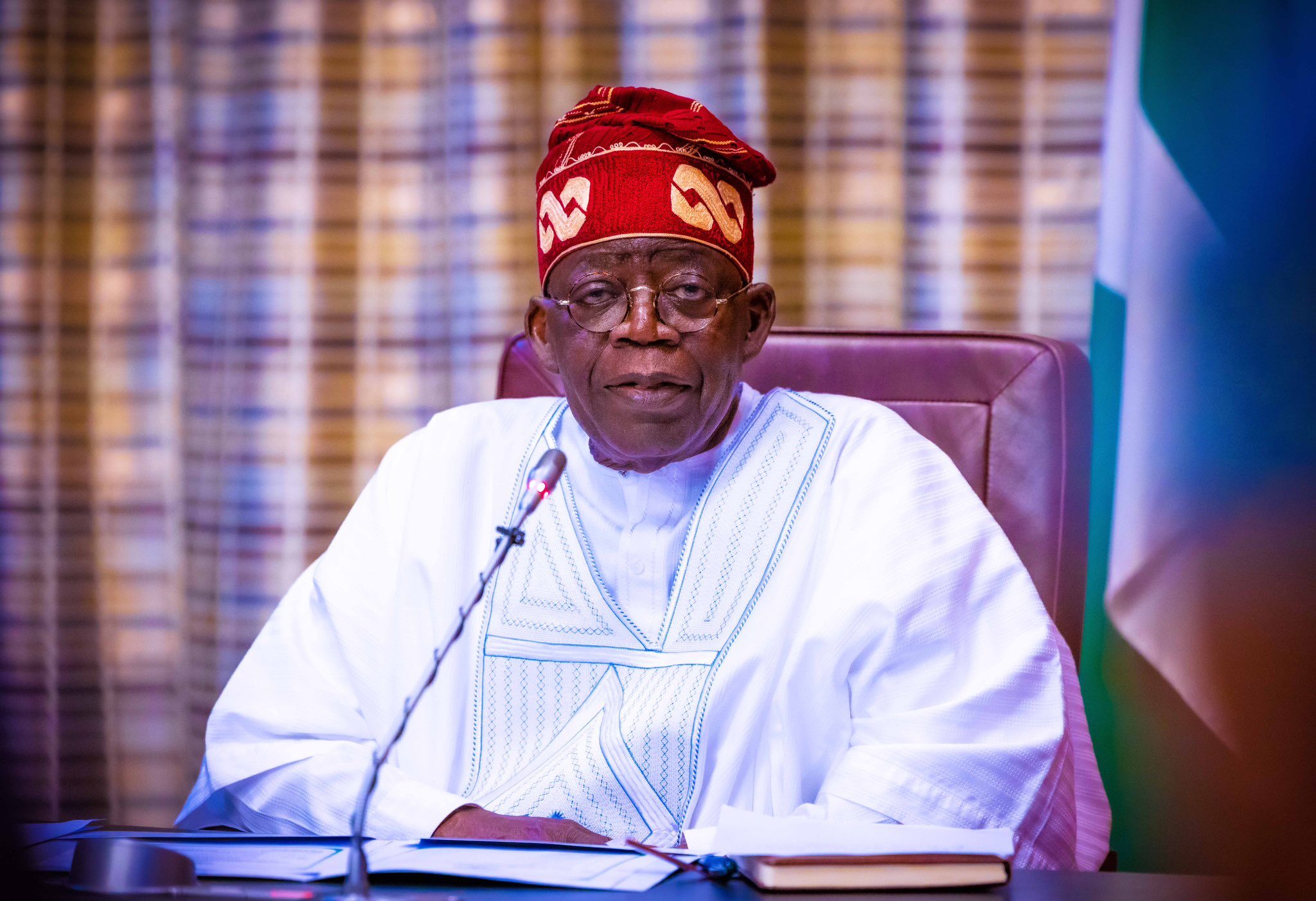
Everyone requires help to achieve his or her highest potential and to sustain the effort it takes to lead a complex organisation. The right chief of staff can be an important source of assistance to leaders who are pushing their organisations and themselves to ever better performance. President-elect Bola Ahmed Tinubu, in looking for a CoS, should look for all the qualities enumerated here but in addition, look for that person that also has the capacity and personality to be a rigid gatekeeper and, like Nixon’s CoS Haldeman and PMB’s CoS late Abba Kyari be “the president’s son-of-a-bitch”. But to be an effective CoS, the President must also empower the CoS. Both Nixon’s Haldeman and PMB’s Kyari have empowered CoS.

Group Captain Sadeeq Garba Shehu (rtd.) is a Private Security Consultant and member APC PCC Security Committee.

Open letter to Mallam Adamu Adamu

By Mukhtar Jarmajo

Sir, you are aware that the 2023 general elections have come and gone and the dust it has raised in the Bauchi State All Progressives Congress (APC) is yet to settle. Also given that you are one of the prominent leaders of the party who definitely call the shots, most of the issues at hand clearly have your name, among others, written on them. It is therefore only right that you open up and clear the air on the grey areas where you are alleged to have worked in different dimensions with your party. This is important not only because it will help in making sure that your statesmanship and gentlemanly statue remain intact, but also because it will see to it that posterity remembers you as a true party man. 

Honorable minister, it is alleged that you did not support the APC governorship candidate in Bauchi State, retired Air Marshall Sadique Baba Abubakar in the just concluded general elections. It is also alleged that you did not support him because of the following reasons: 1. If the APC in Bauchi State gets a governor, you will seize to be the party leader in the state. You are therefore comfortable with the present arrangement; 2. If he becomes governor, Air Marshall Sadique Baba Abubakar may not be submissive to you unlike the present governor who you are alleged to have been working together with; and 3. The Katagum factor. 

While it is very difficult to believe all these allegations because of your known principles of altruism, you will do a great deal of service to your political party, the APC, if you clear the air especially when certain reasons are used to back the allegations. They are: 1. Throughout the campaign period, you did not attend any of the party’s rallies in Bauchi State; 2. The Bauchi State APC Chairman, who allegedly was brought by you from the Social Democratic Party (SDP), has also not been on ground to discharge his responsibilities. It was alleged that you were together in Abuja; 3. In contravention to the agreement that a state governorship aspirant was to coordinate the APC Presidential Campaign Council in his state, you allegedly worked day and night to replace Air Marshall Sadique Baba Abubakar with your friend; and 4. It is not yet clear whether or not you were in Azare, your home town, both during the presidential and governorship elections to vote.

With all these at hand, it is alleged that Mallam Adamu Adamu, the Honorable Minister of Education in an APC led administration worked hard to ensure that the APC presidential candidate, Asiwaju Bola Ahmed Tinubu lost Bauchi to PDP’s Atiku Abubakar. Similarly, you allegedly worked to ensure that most of those who vied positions to the national assembly in Bauchi State did not win. Certainly, this scenario is difficult to understand just as the entire picture is hardly legible. But you are in the best position to clear the air. 

Jarmajo wrote from Kukadi/Gundari Ward, Misau Local Government. 

Dr Nasiru Yusuf Gawuna has paid his dues

By Ibrahim Siraj Adhama, Ph.D.

The governorship election in Kano has come and gone. The battle has finally been won and lost. No doubt it will go down as one of the most keenly contested guber elections in our State in recent history. At the end of it, a winner emerged in the person of NNPP’s Abba Kabir Yusuf, alias Abba Gida-Gida. While congratulating him, his party and his teeming supporters, it is our collective prayer that Almighty Allah will give him the courage, wisdom, guidance and tenacity to lead Kano to greater heights.

Not unexpectedly, the March 18th election has left in its wake several talking points that will continue to dominate public discussion and intrigues that may take years to unravel. Its outcome will go a long way in shaping the future of Kano politics for a long time to come. Questions will continue to be raised about the legality or otherwise of the returning officer’s result declaration when it appeared there were more registered voters affected by cancellations than the margin of lead between the two candidates with the highest number of votes against the provisions of the 2022 Electoral Act and INEC election guidelines. Not a few people will be tempted to suggest a spectre of legitimacy haunting governor-elect Abba’s declaration arising from that controversy until all doubts are justifiably cleared.

The purpose of this piece, however, is to x-ray the governorship contest vis-a-vis the heroic performance of His Excellency Nasiru Yusuf Gawuna, candidate of the ruling APC, who, despite not winning the big prize, has given a very good account of himself as a great and promising young leader and politician with immense rich and potential. All fair analysts will give it to him that he had fought a good fight.

It is safe to argue that no candidate of a ruling party has gone into an election with many odds working against him as Gawuna in the just-concluded election. From his living under the burdensome shadow of Governor Abdullahi Umar Ganduje to widespread disillusionment against his party, APC, across the levels, from Kwankwasiyya’s massive followership and unflinching determination to effect a change to highly biased and unfriendly media, Gawuna’s task of winning could not be more daunting.

Gawuna contested the election as Ganduje’s backed candidate and a possible successor. One needs to understand how unpopular Ganduje’s government has become to appreciate how much of a liability that was. Ganduje had been practically on a mission to cultivate as many enemies as possible for himself, his administration, his party, his family and everything associated with him. Ganduje had, for a better part of his administration, pressed the self-destruct button.

Ganduje’s controversial land grab and conversion policy, his poor handling of education and students’ welfare, the falling standard of healthcare and poor state of hospitals in the State, his mismanagement of A Daidaita Sahu cyclists, his apparent lack of empathy towards such vulnerable groups as junior workers, pensioners and retirees, his failure to provide leadership towards resolving his party’s internal wranglings thereby causing the defection of key members to opposition parties, among other terrible blunders and unforced errors, Governor Ganduje has made things a lot easier for the opposition NNPP.

With Ganduje, you needed no enemy; he was his government’s number one detractor and his party’s foremost de-campaigner. His largely self-inflicted injury had overshadowed his modest achievements, especially in peace and security, urban renewal, expansion of economic opportunities and general infrastructural development. Hardly do people take note of these achievements.

Consequently, the opposition succeeded in making every declaration of support for Nasiru Gawuna as an endorsement of Ganduje’s litany of “atrocities”. Efforts to prove that the Deputy Governor might not himself be happy with Ganduje’s ways and will almost certainly correct those mistakes, given a chance, were taken with a pinch of salt. Many who campaigned for him faced the daunting challenge of convincing other voters that he would act differently. It’s that difficult!

As the ruling party in control of the centre, the APC did not help matters either. In a move that had the potential of jeopardizing the chances of the party’s candidates nationwide, the Federal Government announced a plan to redesign the country’s currency ostensibly to curb vote-buying and payment of ransom to bandits and kidnappers. This policy, coming on the eve of general elections, fueled speculations within the ruling party itself that certain fifth columnists close to President Muhammadu Buhari were part of a plot to rock the ship of the APC, considering how unprecedented cash crunch riled up already suffering Nigerian masses against the ruling party. Though APC has somehow managed to win the Presidential election and maintain control in most States, the damage done by this ill-advised policy to the party’s electoral fortune could just be imagined.

That His Excellency, Deputy Governor Nasiru Yusuf Gawuna, was able to score nearly nine hundred thousand votes is no mean feat given these circumstances. For me, he should be grateful to Almighty Allah, who made it possible for him to harvest this massive figure in spite of all attempts to rubbish him or undermine his chances using Ganduje’s failures. This feat is majorly attributable to his ability to connect well with some key segments of society who stood by him.

In appreciating Gawuna’s performance, though, I pay little heed to reports of widespread vote-buying. This is due to the realization that both NNPP and APC were culprits; available evidence has shown that the two major parties had tried different tricks at voter inducement. And as experts would say, vote-buying itself works on nothing, and it mostly targets undecided voters.

Since his foray into politics 20 or so years ago, Gawuna has been rising and rising. The outcome of this election represents a temporary setback which does not in any way signify his downfall as naysayers would want to believe. For careful observers of his trajectory in politics, it’s just a matter of time before he recovers and continues to rise higher and higher. Let his detractors know that the man is not going down anytime soon.

With the highest number of votes obtained by an APC gubernatorial candidate anywhere in Nigeria, Gawuna looks set for something very great, especially with an APC federal government of Asiwaju Bola Tinubu in place. No doubt, Gawuna will be an invaluable asset in Jagaban’s cabinet, going by experience. After serving for 20 years as Local Government chairman, commissioner and deputy governor, who knows if Allah is preparing him for national service? Only time will tell, and our prayers are with him now and always!

Dr Ibrahim Siraj Adhama is a Senior Lecturer from the Department of Mass Communication, Bayero University, Kano and can be reached through isiraj.mac@buk.edu.ng.

Stop construction in public places – Kano Gov-elect warns residents

By Uzair Adam Imam

The Kano State Governor-elect, His Excellency, Engr. Abba Kabir Yusuf, has warned residents to stop any ongoing building in public places in the state.

The Govenor-elect also strongly cautioned that anyone who contravenes this warning is doing it at his or her own risk.

He made this warning in a statement Thursday by his Chief Press Secretary, Sanusi Bature Dawakin-Tofa.

There have been popular outrages by the citizens in the state over the selling of some parts of schools and hospitals by Govenor Abdullahi Umar Ganduje.

The statement read, “You are advised to discontinue any construction work on public land within and around the following: All schools in the State, all religious and cultural sites in the State, all hospitals in the State, all graveyards in the State, and along the city walls of Kano.

“You are also advised to discontinue the demolition of, and the construction on, all existing public buildings belonging to the government and people of Kano State.

This Advisory is issued in the public interest, effective from today Thursday 30th March, 2023 till further notice. Any contravener does so at his/her on risk, please,” the statement concluded.

An open letter to the President-elect and APC’s National Working Community

By Mu’azu Ibn Abdallah

Firstly, I would like to begin by congratulating you on the success of the APC in the recently concluded national elections in which the party won the presidency and majority of seats in both the upper and lower chambers of the national assembly, and also the majority of the governorships and state assembly seats in the country. This is indeed a remarkable achievement which, if adequately sustained, would continue to position the party as the ruling party in the country and the largest political party in Africa.

It is obvious that Nigerians voted for the party because they believed in the messages of RENEWED HOPE which our party promised them. They hope for a better life and a prosperous future, which we can only deliver as a party if we adhere to the principles of social justice, equity and social inclusion.

As the party is set to make a formal announcement with regards to the zoning of political leadership in the country and with the President-elect and Vice President-elect already coming from the South-West and North-East geopolitical zones, respectively, I am strongly drawing the attention of the members of the National Working Committee (NWC) of the party, President Muhammad Buhari, the President-elect Asiwaju Bola Ahmad Tinubu and all other critical stakeholders in the party to consider, as a matter of necessity and in the best interest of the party and the spirit of equity and social justice, zoning the Presidency of the 10th Senate to the North-West especially taking into consideration of the following reasons.

First, there is a need for the party to demonstrate clearly that it always appreciates and rewards members’ confidence, support and loyalty by zoning the senate presidency to the North-West where it got the highest votes from. This will pave the way for the emergence of a competitive race among the zones as to who will produce the highest votes for the party in the subsequent elections, which will, in turn, leads to more and more votes for the party.

Moreover, this has been the tradition in the political arrangement of Nigeria since the return of democracy in 1999, where the region that gives the ruling party the highest votes is favoured for such a position. For instance, during the era of President Olusegun Obasanjo, PDP zoned the senate presidency to the South-East fact that the zone overwhelmingly voted for the PDP. Also, during the tenures of Late President Yar Adua and President Jonathan Senate Presidency was zoned to North-Central Zone for the same reason. Therefore, in the present circumstance, the North-West zone, due to its significant contribution to the victory of APC in the presidential election (the highest votes of 2.7 million among the geopolitical zones in the country), deserved to be rewarded with the senate presidency, especially, looking at the fact that the zone has never produced a senate president despite its strategic relevance in the Nigerian politics.

Secondly, as the largest political party in Africa, the party is expected to draw lessons and experiences from the just concluded 2023 general elections and embark on early preparations and strategic planning towards the 2027 elections so as to address some of the challenges faced in the recent elections and to make sure that RENEWED HOPE is extended to 2031 and beyond. The party should do everything humanly possible to avoid the costly mistakes of losing Kano, Kaduna and Katsina, which ideally should have cost the party its success (if not for the disorganisation of the opposition and the confidence of the Nigerians in the party’s candidates).

Historically, these three states are strategic in Nigerian politics just like California in American politics, and the time to start planning for the recovery of the 3Ks (and the entire north-west and Nigeria in general) is now, specifically by zoning the senate presidency to the zone and ensuring a competent and high-profile politician with a record of effective political strategy and the confidence of the electorates is elected into the coveted position. This would help APC to address the existential threats posed by Sen Rabi’u Kwankwaso’s NNPP, which caused the APC significant harm in the recent elections.

Thirdly, the Senate presidency is a sine qua non to the success of every democratic administration, a sensitive office that may make or mar the realisation of the APC’s much anticipated RENEWED HOPE, and the party should try as much as possible to avoid the repeat the circumstances similar to what transpired in the build-up to the inauguration of the 8th senate which subsequently led to the emergence of the leadership against the party aspiration (including some positions going to the opposition party). To avoid this, the party should, as a matter of national interest and social justice, zone the presidency to the North-West zone due to the fact that the zone is still the stronghold of the APC (with the highest number of registered voters, the highest number of APC card-carrying members, five state Governors and many members of the National Assembly). Also, the zone is blessed with high-profile politicians who can network and canvass the support of senators-elect from across the geopolitical zones for whoever emerges as the candidate from the zone.

Coincidentally, the North-West zone is blessed with a wide range of high-ranking law-makers with effective legislative and administrative experience to fit into the job and, if elected and can efficiently and excellently provide the president-elect with the requisite collaboration and support required for synergy and complementarity to deliver his mission of RENEWED HOPE to the Nigerians. Top on this list is Senator Barau I. Jibrin CON, representing Kano North Senatorial district, who recently declared his interest in running for the post.

Senator Jibrin, a third-term law-maker who has demonstrated his political capability by winning the Kano North senatorial seat continuously for three consecutive elections, and more importantly, in the most recent election, despite the threats of annihilation faced by APC he was able to strategically endure the NNPP’s onslaught and return his senatorial district to the APC and as well large proportion of votes for the presidential candidates. Senator Jibrin is a politician with solid experience and impeccable pedigree, a track record of success working both as a lawmaker and administrator but one who has never been involved in any scandal or incidents any corrupt practices by any of the federal government anti-corruption bodies.

Finally, there is no doubt in the fact that the success or otherwise of the president-elect’s administration and its ability to deliver the much celebrated RENEWED HOPE depends largely on the type of legislative leadership he will work with, as such, for the success of his administration, the president-elect needs no other person as the president of the senate than Senator Barau Jibrin.

Barau is a soft-spoken, laid-back, highly motivated and experienced legislator who has the respect and cooperation of his colleagues and has been responsible and successful in every position he has held due to his approachability and humbleness. An experienced law-maker who has held the position of the appropriations committees in both the House of Representatives and the Senate and has been successful in discharging his duties and guaranteeing thorough budget oversight. Senator Barau has also served as the vice-chairman of the Senate’s committee on Petroleum Resources (Downstream) and later as chairperson of the same committee. He has previously held various positions, such as the chairman of the Kano state Investment and Properties Ltd, Kano state commissioner of Science and Technology and a member of a committee Budgetary procedure.

Conclusively, the just concluded elections have further indicated that Nigerians have higher hope for a better Nigeria, they have spoken with their votes on the direction they want the country to advance, and the elections have indicated that Nigerians have confidence in APC. And from his acceptance speech when INEC issued him with the certificate of return, the President-Elect has clearly demonstrated his commitment and motivation to embark on the renewal journey which he promised Nigerians during the campaigns. As such, he needs a committed and motivated President of the Senate with whom they can deliver effectively to Nigerians the better life and prosperity promised in the RENEWED HOPE messages. To achieve this, the President-Elect must work with an equally motivated, experienced and committed President of the Senate. Among all those who are capable and eligible to contest for the senate presidency, no candidate befits such an exalted position more than Senator Barau Jibrin.

Muazu ibn Abdallah wrote from the Department of Sociology, Federal University Dutse and can be reached via muazuabdullahi29@gmail.com.   

Why Binani may not win Adamawa governorship election

By Mohammed Kabir Ibrahim

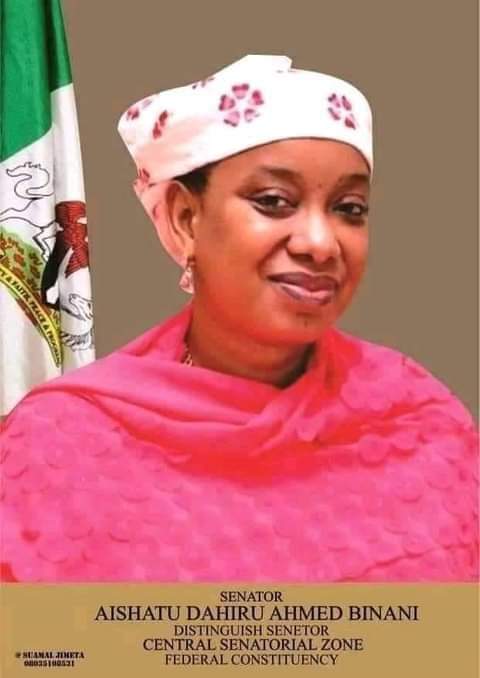
The March 18, 2023, governorship election in Adamawa State was unarguably the tightest-ever contested race in the history of the state. The incumbent governor, Ahmadu Fintiri, was up against a formidable challenger, Aishatu Dahiru Ahmed (popularly known as Binani), a former member of the House of Representatives and the current senator representing Adamawa Central Senatorial District.

The election was shaped to a large extent by ethnoreligious sentiment. While most Christians and ethnic minorities voted for the governor, most Hausa-Fulani/Muslims voted for Binani. Although the election was declared inconclusive, Binani committed avoidable mistakes that denied her the chance for a landslide victory.

Disrespect for elders was Binani’s first mistake. Shortly after the APC primaries that saw her defeat prominent politicians, including a former governor, Jibrilla Bindow, and former EFCC chairman, Nuhu Ribadu, some concerned Adamawa elders prevailed on Binani to reach out to those who lost the primaries for their cooperation and support towards winning the general election. Rather than heeding their elderly sound counsel, Binani was said to have exhibited a high level of arrogance and dismissed them as “Ribadu’s errand boys”. The elders took offence and refrained from making any further reconciliatory efforts. This singular display of hubris emboldened her opponents to teach her political lessons. While former Governor Bindow, alongside thousands of his supporters, dumped the APC for PDP, the former EFCC boss, Ribadu, opted to challenge the nomination process at the court.

Binani’s second mistake was populating her strategic campaign team with an army of incompetent, immature and belligerent youth under the aegis of “Binani Ambassadors”. These young people, some of whom are still fresh students in universities and colleges, have become her veritable political strategists. They dished out spurious propaganda and disparaged anyone who challenged Binani’s politics. The brazen manner in which the Binani Ambassadors demonised and denigrated Binani’s challengers on various social media platforms without restraint contributed to anti-party activities, particularly among thousands of Ribadu supporters during the governorship elections.

The Binani Ambassadors also misled her into believing that she had sufficient grassroots support and, as such, she didn’t need the backing of APC stalwarts in the state. The case of Fufore Local Government Area is a glaring example where Binani and her incompetent strategists bypassed and excluded renowned APC stalwarts and appointed lightweight politicians to coordinate her campaign.

Preference for political vendetta against perceived political opponents over reconciliation and cooperation preparatory to the all-important general election was Binani’s third political mistake. Perhaps acting on the ill-advised strategy of the insecure Binani Ambassadors, Binani initiated and pursued indiscriminate infighting between her loyalists and anybody loyal to Bindow or Ribadu within the Adamawa APC. The obsequiousness of the former state chairman of the party, Alhaji Ibrahim Bilal, further aggravated the intra-party conflicts. It had reached a point where the party leadership in the state got fed up and showed Alhaji Bilal the exit door.

Binani’s seemingly conceited and domineering nature is another mistake that cost her a sweeping victory at the end of the March 18 election and may likely work against her at the forthcoming supplementary polls. Those who know her say she always insists on having her way at all costs, even when her actions are supposedly unreasonable. For example, she allegedly stormed Ribadu Ward in Fufore Local Government Area and unilaterally sacked duly elected ward officials of the party. A senior ward official made several pleas for reconciliation and cooperation, but Binani was said to have dismissed his overtures and challenged him to go to court. A cursory look at the results from IREV shows that she narrowly won the Ribadu Ward, a largely Hausa-Fulani domain that could have given her an edged advantage.

Binani also shot herself in the foot when she started an unwarranted battle against the party officials at her Ward in Yola South Local Government Area. She was alleged to have orchestrated the suspension of some key party officials loyal to Ribadu, although her antics were not successful. Binani’s relentless pursuit of political vendetta did not stop at the state level. She was also said to be clandestinely fighting with the loyalists of the first lady, Aisha Buhari and Secretary to the Government of the Federation, Boss Mustapha. Perhaps that explains why Mrs. Buhari’s brother, Mahmood Halilu, was seen alongside Governor Fintiri at the residence of former Vice President Atiku Abubakar during a press conference calling for the declaration of the election results after several delays. Even most recently, there are speculations that Binani is behind the suspension of the SGF.

Regardless of the outcome of the yet-to-be-scheduled supplementary election, Binani has succeeded in creating the impression that she is an authoritarian who will give no room for the opposition if, by the rarest coincidence, she becomes Nigeria’s first democratically elected female governor.

On the other hand, her philanthropic initiatives, massive support of women voters, ethnoreligious sentiment, and the fact that she hails from the central zone, which has the highest concentration of voters in the state, contributed in large measures to her impressive performance at the March 18, 2023 polls. Winning the cooperation and support of her party stalwarts would have closed the insignificant margin and propelled her to a landslide victory. As it stands now, Binani would need a miracle to win over 35,000 votes from the mere 37,000 available to defeat Governor Fintiri and become Nigeria’s first elected female governor.

Mohammed Kabir Ibrahim wrote from Kaduna and can be reached via mohammedkabir.ibrahim@gmail.com.

We need more of Binani

By Aliyu Idris

It’s undeniable that Sen. Aisha Dahiru Ahmed Binani’s name has travelled in the ears of many Nigerians. Her emergence as the flagbearer of the Adamawa State Governorship Candidate of APC grasped and arrested the attention of the country’s populace. With these, she received massive support and countless prayers from the people in the country and even the diaspora. Without a doubt, she’s a notable personality in this year’s election.

Binani might win or lose the election, but she won the people’s hearts. She has become influential and has set a pace for people to follow in the country’s politics. Among her influence is making the incumbent governor (Ahmadu Umar Fintiri) substitute his male running mate (Crowther Seth) with a female (Prof Keleptawa Farauta). This remarkably uplifts the status of women’s participation in politics and dismantles the common sense of some people that women don’t have a role to play in politics.

Binani’s bravery is incomparable; her audacity and capacity have shaken and made the sitting governor shiver and quiver. She made him initiate last-minute empowerment and execute some projects at the election deadline. Similarly, how she defeated strong male candidates during the party’s primary election is encouraging.

Binani will now be leaving the red chamber. Her four years as a senator representing Adamawa Central Senatorial Zone birthed legacies that will live on forever. Her projects in different sectors such as education, health, poverty alleviation programs, the establishment of Federal Medical Centre Mubi, upgrading Federal Medical Centre Yola to a Teaching Hospital and Modibbo Adama University Yola (MAU Yola) from a technology University to a conventional university, solar power lights supplies, unending and unbiased empowerment of hand workers, donations to religious organisations, youths association, and other life touching projects during her single tenure as senator will remain a testimony of making her the best-elected representative in the state.

Binani’s attracted even the opposition and proved to the present administration that their chanting and ranting of no opposition in the state is merely an illusion and a mirage but fortunate enough. They have now realised her intense display of spirit towards achieving a goal can never be underestimated, like Shakespeare’s lady Macbeth still gives them sleepless nights. Binani is a beacon of steadfastness that motivate the two genders, and her political career is now a fad, and she remains vivacious.

We need more Binani in us, around us and with us. The pavement of strong female participation in contemporary Nigeria has been set and revived by Binani. 

Binani is energetic, and the declaration of inconclusive is not the end of the journey but rather a fresh beginning to return and positively impact people’s lives. May Adamawa State and Nigeria succeed.

Aliyu Idris writes from Jimeta (Yola North) and can be reached via aliyuidreesali@gmail.com.

Musa Majakura, 29, defeats Yobe Speaker

By Muhammad Suleiman Yobe

Speaker Yobe State House of Assembly, Hon. Ahmed Lawan Mirwa of the ruling All Progressive Congress, APC, has lost his seat in the just concluded governorship and state house of assembly elections held yesterday, Saturday, March 18, 2023.

Lawan Mirwa, representing Nguru outside constituency in the Yobe State House of Assembly since 2003, has lost his seat to People’s Democratic Party, PDP, candidate Musa Lawan Majakura.

Majakura got 6,648 votes, Mirwa got 6,466 votes, Bukar Jatau of New Nigeria People’s Party got 23 votes, while Mai Zare Idriss Idriss of APM Party got 14 votes followed by Isah Sa’idu Shehu of the ADC party who got 30 votes.

While declaring the election results, the Independent National Electoral Commission INEC’s returning officer, Nguru Outside state Constituency, Alhaji Mahdi Damaturu, announced Lawan Musa Majakura of the PDP as the winner.

“Musa Lawan Majakura of People’s Democratic Party, PDP, having satisfied the requirement of the law, is hereby declared the winner and return elected”, he added.

Musa Lawan Majakura, who is 29 years old, obtained a diploma from Atiku Abubakar College of Legal and Islamic Studies Nguru, Yobe state. Before winning this election, the ruling party APC did its best to force him to withdraw his candidacy, but he refused.

Recalled that the Speaker, Ahmed Lawan Mirwa, first came to the Yobe State House of Assembly in 2003 and became the Speaker of the House in 2019.

APC debunks social media reports on zoning of key National Assembly positions

By Muhammadu Sabiu 
 
The All Progressives Congress (APC) has described as false online reports that the party had zoned some important positions in the upcoming 10th National Assembly.
 
The National Publicity Secretary of the APC, Barr. Felix Morka, debunked the report in a statement released on Friday.
 
He said: “The attention of the All Progressives Congress (APC) has been drawn to a report circulating on social media on the purported zoning of key positions in the incoming 10th National Assembly.
 
“The report is false and misleading, and should be disregarded in its entirety. The party has not made any decision on zoning of positions or offices of the 10th Assembly.
 
“As soon as a decision is made on zoning, it will be made public through the party’s official communications channel.”
 
Recall that the President-elect, Bola Tinubu, disclosed that he has no favourite candidates for the leadership of both chambers who would make up the 10th National Assembly during the meeting with incoming National Assembly members-elect.
 
Senator Abdulahi Adamu, the party’s national chairman, also stated during the meeting that Tinubu and the party leadership would have the necessary consultations to come up with a plan for sharing the National Assembly’s offices.