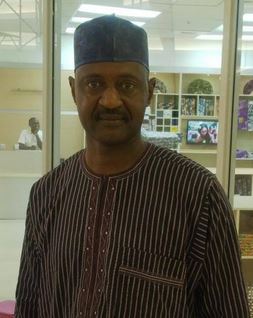
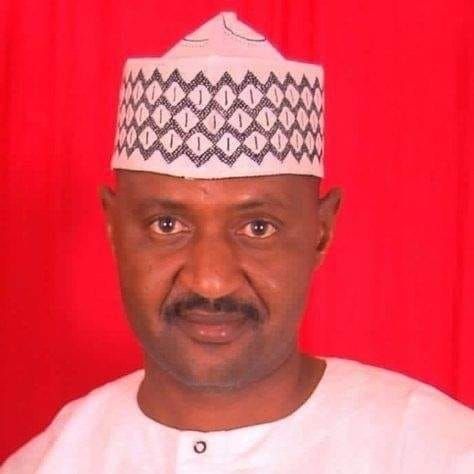
Aliyu Nuhu

₦8000 palliative: who sold this wretched idea to President Tinubu?

By Aliyu Nuhu

Can ₦8000 given over a period of 4 months solve poverty or alleviate the sufferings of people imposed by withdrawal of petrol subsidy?

If 12million people are getting the money, what of the remaining 168 million poor Nigerians? What will be the selection criteria. Sometimes you wonder at the quality of the thinking of our leaders.

Who sold this idea to president Tinubu?

To solve poverty you have to create business opportunities and provide loans. That was how China created wealth among its people. Loans were given with defaults in mind on self recognition only. No penalty for delinquency or business failure. Definitely some businesses will fail but many will succeed. China gave tax holidays to business startups and subsidized electricity and wages.

Brazil reduced poverty by reduction of inequality through equitable wealth redistribution programs. It did not only focus on economic growth, but accompanied this growth with active social policies for redistribution. The end results, economic growth led to better living standards for much of the population, through better wages and social transfers. Brazil gave family scholarship, business loans and huge minimum wages.

Egypt has long had a cash transfer/social assistance programme (maash al-daman al-igtimai), a program of the Ministry of Social Solidarity that reaches approximately 1.5 million households unable to work and uncovered by any other social insurance scheme. This mainly includes widows raising children, the elderly and the disabled.

In addition, two new cash transfer programs were launched in 2015. Karama (dignity) which provides an individual monthly allowance of LE320 for the elderly and those with severe disabilities. Takaful (solidarity), a conditional cash transfer program disbursed quarterly, which offers poor families with children who are younger than 18 a monthly allowance of LE325 and additional sums of LE60, LE80 and LE100 per child in primary, secondary or high school respectively, on condition of regular attendance. These programs, launched in early 2015 in some of the poorest villages in Upper Egypt, now reach almost 160,000 beneficiaries, with plans for geographic and quantitative expansion. Unlike Nigeria, the monies were not diverted and it surely reached the intended targets because of government sincerity of purpose.

It is not just about announcing unimplementable programs with no results in sight. Government must think deep and look at what other countries are doing. We cannot reduce poverty while at the same time imposing 7.5% tax on petrol and increasing price of electricity. We cannot end hunger, the bigger factor in poverty while banning importation of food that we don’t produce enough or closing borders. We cannot address inflation when we unleash extortion gangs on the highways collecting bribes from trucks that distribute goods to our cities.

It is as if Tinubu did not understand Nigeria and did not prefer or intend to govern it.

Ten quick practical indicators which Tinubu should look into

By Aliyu Nuhu

First; Nigeria does not generate enough electricity to support industries and sustain growth. When leaders talk of addressing poverty and unemployment they forget the single factor holding Nigerian economy down. With 3000-5000mw of electricity, the story of Nigeria will always be associated with darkness.

Second; Nigeria is still unable to employ its youths, about 90% of them finish schools and are sitting at home or roaming streets and committing crimes. The number is alarming.

Three; Industries are either closing down due to insecurity, absence of forex to import critical spare parts or electricity.

Four; Thousands of Nigerians are losing their jobs. MTN and some banks are still retrenching. Only government is employing and doing it selectively for sons and daughters of the elites, politicians and government officials. Government can’t employ everyone. As long as the private sector is not employing, unemployment will always be high in Nigeria.

Five; Start up businesses die due to failure of banks to give them loans. No Nigerian bank gives any form of loan at all.

Six; Big and small industries are being killed by multiple taxation. There are more than 20 different taxes that companies pay in Nigeria.

Seven; Some states are taxing companies for broad band satellite receivers, something that is vital to their operations, especially banks. Other states are imposing tax on boreholes even as the governments fail to provide pipe borne water to factories.

Eight; Agricultural goods in transit, including livestocks are subjected to all manner of extortion by police, LG officials, VIO, FRSC and security forces. Once a truck or car is loaded with goods, it is fair game to security agencies. Nigeria is becoming an impossible nation to move goods, capital and equipment. No nation develops without free movement of labour and capital. In the northern part of the country, insecurity has ensured that most farmers don’t go to farms due to activities of bandits and Boko Haram.

Nine; Despite efforts to build roads, rail, bridges, power plants and other social and economic infrastructure, it is becoming clear that the government will finish its two terms leaving Nigeria with the same tragedy of uncompleted and abandoned projects.

Ten; Nigerian businessmen are being rewarded for investing abroad. In other words the government rewards them for exporting Nigerian jobs to other African countries. Dangote has been building factories outside Nigeria in the name of diversifying his risks. Government should take a cue from what Donald Trump did in America. He rewarded those that built factories in US and punished those that built factories outside the United States. He slashed taxes on American companies to encourage them employ Americans.

Aso Villa cabals sabotage APC

By Aliyu Nuhu

From what governor Nasiru El-Rufai said, the currency redesigning and fuel scarcity are the handiwork of the cabal in Aso Villa to ruin the electoral chances of the APC candidate, Asiwaju Bola Ahmad Tinubu. The president’s wife validated the claims by endorsing El-Rufai’s views.

Now it makes a lot of sense to me. No sitting government with victory in mind will introduce such harsh policies that shut down the economy few days to election. Northerners will go into the polls with anger and no one will vote for APC. I don’t think there is anywhere, except Borno and Yobe the president can go without being pelted with stones. Let him try it.

I have reviewed the policy again and again and could not see the economic sense in it. Withdrawing cash from circulation in a cash economy is a recipe for disaster. CBN has effectively shut down the informal sector of the economy. The North is 95% cash economy. Everything is at a standstill.

I wholly agree with El-Rufai. Emiefele is acting a script to undermine Tinubu. His policies are for political reasons after all he has never hidden his partisanship by attempting to contest in the election. The cabal surrounding the president wanted the vice president to succeed his principal and it didn’t work because no one could defeat Tinubu in the primaries. I was wondering why Osinbajo contested when it was obvious that Tinubu could not be beaten. Now I understand. It was the cabal that gave him the false hope of winning. Today, due to apathy, Osibanjo is not even attending Tinubu’s campaigns.

Unfortunately the opposition politicians are not cashing on the crisis to make political fortunes out of it. Only Kwankwaso knows how to exploit such situation. This is the time to push Nigerians against APC. But they appear docile as if they don’t know the art of political brinkmanship.

As for Tinubu he is not doing the right thing. This is the time for damage control for his electoral benefits. He should distance himself from the new currency policy and promise to reverse it. He should be beyond any fear by now. Buhari can’t do him anything. The president is now a political nonentity. Without Kano and other parts of the North, Buhari is nothing. As long as the governors are with Tinubu he has nothing to fear.

As for Buhari, just forget about him. He has never been in charge of the government. He is just a figure head. If he were the candidate in this election will he allow this kind of crisis?

Advantages of foreign reserves: the case for Nigeria

By Aliyu Nuhu

Here is the use and advantages of foreign reserve currencies for nations that take their economy serious and have development and growth of their nations in mind.

First, countries use their foreign exchange reserves to keep the value of their currencies at a fixed rate. A good example is China, which pegs the value of its currency, the Yuan, to the dollar. When China stockpiles dollars, that raises its value when compared to the Yuan. That makes Chinese exports cheaper than American-made goods, increasing sales.

Second, those with a floating exchange rate system use reserves to keep the value of their currency lower than the dollar.

They do this for the same reasons as those with fixed rate systems. Even though Japan’s currency, the Yen, is a floating system, the Central Bank of Japan buys U.S. Treasuries to keep its value lower than the dollar. Like China, this keeps Japan’s exports relatively cheaper, boosting trade and economic growth.

A third, and critical, function is to maintain liquidity in case of an economic crisis. For example, a flood or volcano might temporarily suspend local exporters’ ability to produce goods. That cuts off their supply of foreign currency to pay for imports. In that case, the central bank can exchange its foreign currency for their local currency, allowing them to pay for and receive the imports.

Similarly, foreign investors will get spooked if a country has a war, military coup, or other blows to confidence. They withdraw their deposits from the country’s banks, creating a severe shortage in foreign currency. This pushes down the value of the local currency since fewer people want it. That makes imports more expensive, creating inflation. The central bank supplies foreign currency to keep markets steady. It also buys the local currency to support its value and prevent inflation. This reassures foreign investors, who return to the economy.

A fourth reason is to provide confidence. The central bank assures foreign investors that it is ready to take action to protect their investments. It will also prevent a sudden flight to safety and loss of capital for the country. In that way, a strong position in foreign currency reserves can prevent economic crises caused when an event triggers a flight to safety.

Fifth, reserves are always needed to make sure a country meets its external obligations. These include international payment obligations, including sovereign and commercial debts. They also include financing of imports and the ability to absorb any unexpected capital movements.

Sixth, some countries use their reserves to fund sectors, such as infrastructure. China, for instance, has used part of its forex reserves for recapitalizing some of its state-owned banks.

Seventh, most central banks want to boost returns without compromising safety. They know the best way to do that is to diversify their portfolios. That’s why they’ll often hold gold and other safe, interest-bearing investments. 

How much are enough reserves? 

At a minimum, countries have enough to pay for three to six months of imports. That prevents food shortages, for example. Another guideline is to have enough to cover the country’s debt payments and current account deficits for the next 12 months. In 2015, Greece was unable to do this. It then used its reserves with the IMF to make a debt payment to the European Central Bank.

If Nigeria had been a prudent nation we should be having $900bn as our foreign reserve by now, and according to world bank, a Naira will exchange Dollar one for one.

But look at us. We neither have robust national saving, nor an infrastructure to show for the money we earned. A wasted nation. Aliyu Nuhu is a renowned social commentator on African affairs. He writes from Abuja, Nigeria.

Rahama Sadau is just a western copycat

By Aliyu Nuhu

Rahama Sadau has not hidden the fact that she is a cultural and religious rebel. But the laws guarantee her freedom, Nigeria is not Iran. So why bother yourselves about her dress mode? Leave that to her parents.

But for Rahama, she obviously never heard the dictum by John F Kennedy, that “if you try to copy something, you will end up being the caricature of that thing”. There is beauty in our cultural dresses. Other Kannywood actresses that stick to Islamic and Hausa mode of dresses are more beautiful, stylish and appealing. They are more salable abroad.

Check the most beautiful actresses in Kannywood. Momme Gombe, Fati Washa,Aisha Aliyu Tsamiya, Halima Atete, Maryam Waziri and Hadiza Gabon. They dress cultural. Beauty is in the eyes of the beholder but I daresay Rahama is not in their league. While they are cultural icon, Rahama is just a western copycat. You can’t beat the white in their own game. It is the reason why our musicians are making headway by using pidgin and vernaculars.

Salif Keita uses Bambara language in most of his songs. He is the most celebrated musician from Africa. Fela used pidgin and Yoruba. He is the most popular musician from Nigeria.

Kannywood/Nollywood film preview: Nanjala

The “Hausa films in English” have, since their debut, been as much praised as they have been criticised. However, while a large section of spectators welcomes the films, many others regard them as a threat to the development of the indigenous language. Others go further to describe them as “non-Kannywood” productions.

However, their initiator and promoter, Malam Kabiru Musa Jammaje, remains undaunted. He is all set to enthral the audience with another Kannywood film in English after the remarkable success of There is a way (2016), This is the way (2017), Light and darkness (2018) and In search of the king (2019).

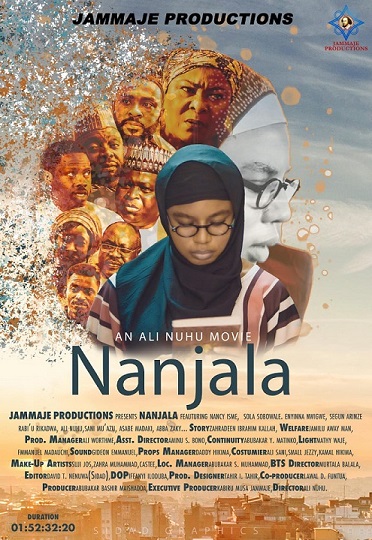
The soon-to-be-released movie, entitled Nanjala, is the first of its kind in Kannywood. It features the industry’s heavyweights alongside top Nollywood actors like Enyinna Nwigwe, Nancy Isime, Segun Arinze, Sola Sabowale, among others. Moreover, it’s reportedly the most expensive Kannywood movie with a budget worth over N35 million.

The movie was directed by “whizkid” Ali Nuhu, co-produced by Abubakar Bashir Mai-Shadda and titled after its main character, Nanjala. I have only watched its two-minute-long teaser, but I could grasp that the eponymous heroine, Nanjala, is a journalist whose investigative reports would lead to the main conflicts. The film’s themes may include corruption, honesty, women empowerment, the menace of drug abuse, moral decadence, etc. The cinematography is terrific, and the cast seems to give an outstanding performance.

To be right is to describe the film as ‘pan-Nigerian’ due to its production quality, cast, English medium, and the resonance of its message in the country. It’s, of course, promising and will surely appeal to moviegoers from a wide range of backgrounds.

I, therefore, commend the trio of Jammaje, Ali Nuhu and Mai-Shadda for making a Kannywood film with the potential to catapult the overlooked film industry to the international stage. I do hope that it will not disappoint.

Habibu Maaruf Abdu

Kano, Nigeria

habibumaaruf11@gmail.com

27.5.2022

Nigeria @ 61: I will not celebrate sickness

By Aliyu Nuhu

At 61 years of age the only progress Nigeria made is in population growth, something that is not properly managed. It jumps from 36 million people formerly, we are now approximately 200 million. A clear case of quantity without quality.

What do we have to celebrate while Nigeria today is in company of Somalia, DRC, Sudan, Zimbabwe, Afghanistan, Niger, Iraq, Pakistan and host of other failed states in terms of development?

According to UNICEF about 20 million Nigerian children are not attending primary school, about 6 million that are attending will still come out illiterate due to poor quality of teaching. The worst is that the government pretends that all is well and is doing nothing about it. Almajiri system of education is still in practice and not properly managed. It is one of the indicators that Nigeria is not serious about its future.

Another tragedy is that, around 80 million Nigerians are unemployed, in fact about 98% of Nigerian youths are all without job or any form of social and economic engagement. Suddenly, Covid-19 came and made matters worse as more people are losing their means of livelihood. Banditry and kidnapping have chased people away from their farmlands.

Nigeria is without electricity, roads, railways, good airports, clean water and sanitation, public toilets and all other critical social and economic infrastructures.

The government naively claimed that the economy is growing forgetting the relationship between economic growth and job creation. How can growth be justified with 80 million unemployed citizens? How can growth be justified with 3000mw of electricity? That is far below what South Africa generates from renewable energy. According to the Ministry of Energy, South Africa’s total domestic electricity generation capacity is 51,309 megawatts. About 91.2%, or 46,776 MW comes from thermal power stations, while 4,533 MW or 8.8%, is generated from renewable energy sources.

How can growth be justified with industries failing, the entire Northern Nigeria is without viable industry! All the critical sectors that make a nation strong are either absent in Nigeria or in shambles. The chemical, commercial, communication, manufacturing sectors, dams, defense, emergency services, energy, banking and other financial services, food and agriculture, health care, information technology, nuclear reactor, material and wastes management, transport and waterways, all and sundry are either not working or completely corrupt and dubious.

Don’t roll the drum to celebrate, as a matter of fact we should remain in our houses and mourn our collective failure as a nation.

The Mo Ibrahim foundation just placed us among the 10 worst governed countries in Africa. The Economic intelligence Unit (of the London Economist) placed us among the world’s failed nations. And these institutions are not the opposition, it is not PDP that is giving this grim picture of our country.

It is easy for Nigerians to rise and say we are not a failed state, but going by the definition of state failure, a nation that fails to discharge its obligation to its citizens, is indeed heading to the direction of a failed state.

Everyone knows Nigeria cannot provide basic security to its citizens. We have hundreds of thousands of people displaced by insecurity. This is the kind of story associated with state failure because the state, after failing to secure lives, will also not be able to bring the criminals to justice.

We are never worse in terms of security, people are killed daily in our cities. They are kidnapped and attacked in their homes. Corruption has never been worse, yet the courts have simply joined the thieves. In Nigeria today, nobody gets jailed for corruption.

To me there is no need to celebrate, we should all put our hands on our heads and cry. Our leaders, both past and present should bury their heads in shame for bringing our country to its knees.

Nigeria is also practically not good for the poor and vulnerable. If you can’t get plum government appointment, just be rich.The rich are allowed to claim fuel subsidy, evade tax, have import duties, manipulate commodity prices, bet on stocks with privileged information they get from golf clubs. The equivalent of all these or even less, when done by the poor, is called stealing. And the poor also had their bad ways as well. Leaders looting by example while followers learning by instinct.

Nigeria allows great deal of latitude to the rich. The courts are even scared of them. This is our way of making up to them for creating a society in which everything can be done for money, while nothing is worth having at all.

I can only say happy independence to the Nigerian rich, they, along with our leaders, help in ruining this nation. They are now reaping the fruits of their labour. As things get so bad, there is no peace for them to enjoy their wealth. They are an endangered species on the highway. Kidnappers are looking for them the way hunters look for antelope. At home there is no peace. Even behind heavily fortified walls, they sleep with open eyes. It will continue to degenerate because peace exists only in a society that has shared prosperity among its people.

Sadly again, Nigeria is the most badly governed and mismanaged nation on earth. Most poor and backward countries owe their present condition to war, natural disasters, geography and size, but it is not the same with Nigeria. It is its people in the hierarchy of the leaders, the rich and the poor masses.

Vietnam was in a state of war for 20 years. Korea was at war for three years. Today they are developed economies.

Nigeria only witnessed civil war for three years and remained in peace for the best part of its 61 years existence, earning about $1 trillion from sale of oil. Yet with all that money it achieved nothing in terms of development. Most of it has been shamelessly mismanaged or stolen!Today Nigeria is 61 years old. Here are some reasons for sober reflection and adjustments by our leaders.

1. In 1960 Nigeria has only 2 universities. Today it has 40 federal universities, 40 state universities and 61 private universities. However its people have to run to Ghana, a country with only 9 universities to study. The reason is because the 141 universities in Nigeria are below international standard due to corruption, mismanagement and neglect. The country, according to UNICEF has 10.5 million children outside primary school. It means in 20 years, about 30% Nigerians will not be able to secure employment as security men, because the job will require basic literacy as qualification. Public primary and secondary education system has collapsed in Nigeria. Parents spend their earnings to educate their children. This goes to say adding weight is not equal to good health.

2. Twenty years ago India has the largest number of pure scientists in the world but it was considered a poor country compared to China because the number of scientists did not transform India into net exporter of goods and services. It was until India changed its ways and started producing technicians like China that it began manufacturing goods and earned the respect of the world. Numbers matter but vision matters most. The Indians were not seeing the world as the Chinese. Like India and China, Nigeria has abundant human and intellectual capital which have been wasted by neglect due to poor attention to education. And because of that our numbers produce nothing. In this age with our size we cannot produce needles, toys and bicycles. These are simple products that don’t require rocket science.

3. Today we have 193,600kms federal highway. Out of that length, only 28,200 kms are paved in the whole 60 years of the country’s existence. The paved highways are death traps killing hundreds of people daily. Meanwhile in 1960 Nigeria had 8,800km of paved federal highways in relatively good condition. The increase in the length without quality today does not translate to progress. Nigeria is considered the worst country among it’s neighbors in terms of road infrastructure. Quality matters more than numbers.

4. In 1960 Nigeria had 118 mission hospitals, and 101 government hospitals. Today it has 22 Federal Medical Centers, 23 giant teaching hospitals, about 46,000 state owned hospitals/health centers and hundreds of thousands private hospitals, clinics and dispensaries. But Nigerians run to Ghana to treat skin infection and UK to treat ear infections! For most heart and brain surgeries we have to go to India or Egypt. Some of us go to Niger and other neighbouring countries!

5. In 1841 Britain and Wales had a population of 15 million people. However Great Britain virtually held the entire world by the jugular, colonising all and every important nation and defining their destiny. Dynamites come in small sizes.

6. Today the US has a population of 325 million people but controls and sets standards for the world with a population of 8 billion. By contrast Nigeria has a population of 182m and military of 400,000 strength but is overwhelmed by a rag tag Boko Haram with a strength of 16,000 followers or even less.

7. Nigeria has 91 million hectares of arable land of which it is able to cultivate only 42% of it using crude and simple tools. Industrial scale holding is nonexistent in Nigeria. Despite being able to produce large quantities of rice, beans, sesame, cashew, cassava, cocoa beans, groundnuts, gum arabic, kolanut, maize (corn), melon, millet, palm kernels, palm oil, plantains, rice, rubber, sorghum, soybeans, bananas and yam; Nigeria is not a net exporter of agricultural products and it imports food to feed its population. FOA report put Nigeria slightly ahead of Niger, Ivory Coast, Liberia, Burkina Fasso and Sierra Leone in food security. Today Nigeria is facing food crisis due to inflation. Most households cannot feed. Those barely eat, eat poisonous, damaged or expired foodstuffs.

It is not how old you are but how well you are. It’s not your numbers that matter but the quality. I feel we have nothing to celebrate. Let’s not be a bunch of jokers!

Aliyu Nuhu, a public commentator, writes from Abuja, Nigeria.