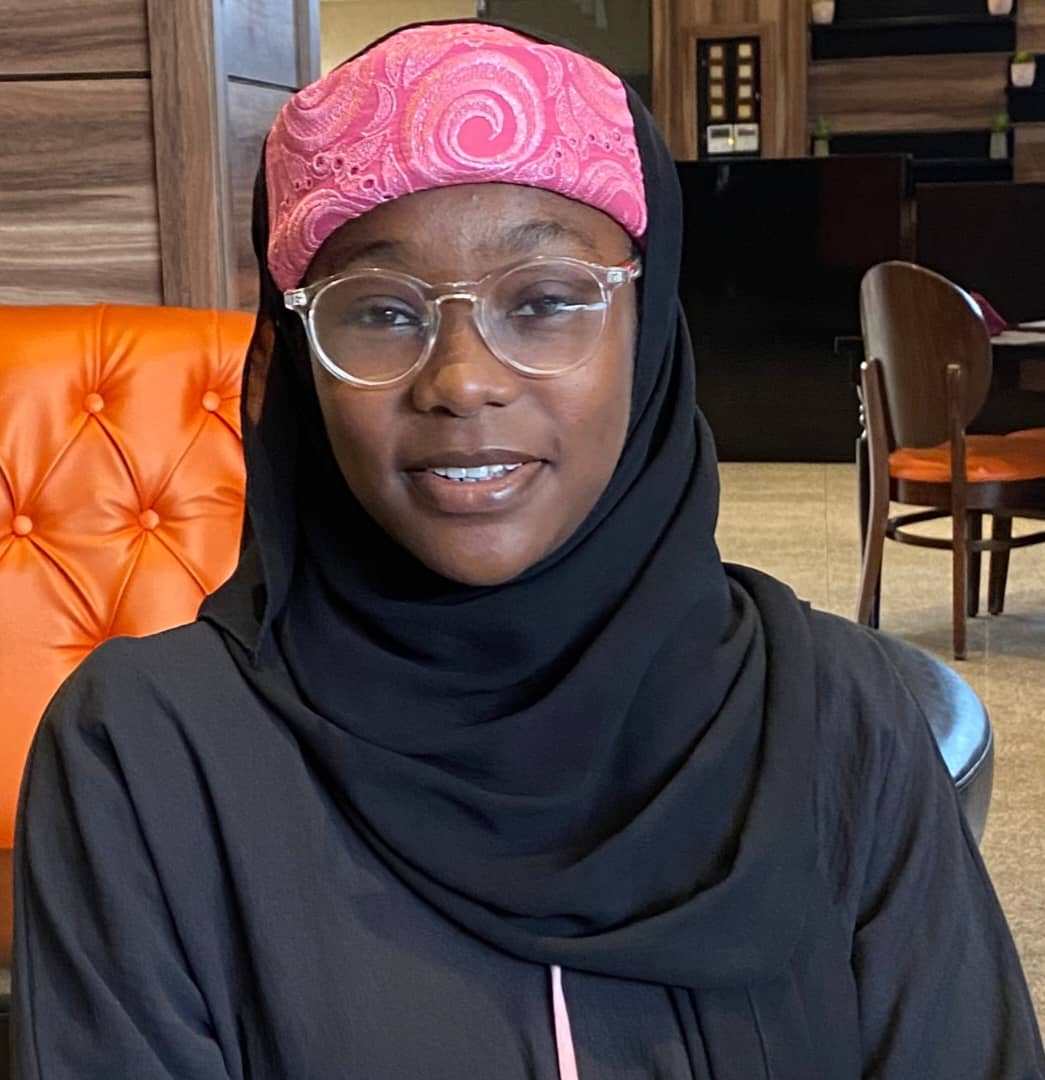
Aisha Musa Auyo

Hormones: The symphony behind complexities in human behaviours, looks, and emotions

By Aisha Musa Auyo

Hormones influence or determine a considerable percentage of our behaviours and physical appearance. If we say our hormones are what makes us, we won’t be exaggerating. Yet, we hardly discuss it. Yet very few know about it; very few believe in its impact. From genetics to behavioural scientists to physiologists and psychologists, these specialists believe in the power of hormones, especially in women. I will try my best to write in the simplest language possible so that I will not suffocate you with medical jargon.

Hormones are chemicals that coordinate different bodily functions by carrying messages through the blood to the various organs, the skin, muscles, and other tissues. Hormones are the signals that tell your body what to do and when to do it. There is no gainsaying, therefore, that hormones are essential for life and health. So far, scientists have identified over 50 hormones in the human body.

 Hormones control many bodily processes, including metabolism, homeostasis (constant internal balance), such as blood pressure and blood sugar regulation, fluid (water) and electrolyte balance, body temperature, growth and development. Hormones also affect sexual function, reproduction, sleep-wake cycle, and mood.

With hormones, a little bit goes a long way. Because of this, minor changes in levels can cause significant changes to your body and lead to certain conditions that require medical attention. The levels and nature of hormones in the body correlate with our moods, sense of smell, body odour, taste buds, thinking faculty, energy, and looks. 

In this week’s outing, I will start with women, as they are the gender whose hormones have a greater influence and impact on their lives. If you have a woman in your life, regardless of your relationship with her, know that hormones are constantly influencing her. 

Growing up and transitioning into a woman is a roller-coaster of emotional and physical changes. There will be noticeable differences in her attitude, looks, behaviour, and even how she smells. There will be irritability, sadness, and heightened or lowered confidence.

Women have heightened hormonal influence during certain periods. When she grows from a girl to an adult, when she’s ovulating, and at different times when she is on her monthly period. There is a hormonal influence in pregnancy when she is breastfeeding and when she is using hormonal contraceptives. There is yet another hormonal issue at menopause, just as it is at adolescence. 

A few days to menstrual onset (ovulation periods), a woman experiences a libido boost, appetite changes, heightened sense of smell and mood changes…usually in a good mood. But, during the onset of their period, a woman will experience cramps, dizziness, bloating, acne breakout, feeling tired, and mood swings…sadness, anger and anxiety. It isjust a roller-coaster of feelings and emotions. 

When pregnant (this should be a topic of its own), a woman is most likely to experience, among other things, morning sickness, dizziness, nausea, and vomiting; strange food cravings; fatigue; heightened sense of smell; forgetfulness; lack of patience; and crying for no explicit reasons. Bro, be patient and empathic; it’s beyond her. 

Then there comes the postpartum and breastfeeding period, which is associated with crying, difficulty in making decisions, lack of sleep or oversleeping, tiredness, mood swings, etc. Not infrequently, a woman may fall into depression at this phase. 

Then, there are issues relating to the use of contraceptives. These range from headache, migraine, acne, weight loss or gain, hair loss, smooth skin, dryness, and mood swings. The signs are numerous, depending on the woman and the type of contraceptives used.

Then, there is the advent of menopause, which comes with palpitations, hot or cold flashes, difficulty sleeping, tiredness and irritability, dryness and a whole lot of other changes.

Have you ever noticed how a woman can be so lovely today and nasty the next day for no reason? Have you ever seen a woman cry just like that? Have you ever seen a woman with clear skin today and skin full of rashes or acne tomorrow? Have you ever noticed that a woman can be thin today and bloated the day after? Know that these amazing, dramatic transformations result from the interplay of hormones. You have to be tolerant, understanding, and kind.

As a husband, father, son, brother, or friend, you need to understand the complexities of hormones in women to a certain level. This will help you make informed decisions about certain behaviours. This might help explain some oddities in women’s behaviour you experience or notice. The knowledge will help you and be the person she needs during those trying periods.

Sometimes, all a woman needs is space, silence, patience, kind words, empathy, massages, or a shoulder to cry on (that is, if she’s your wife, yauwa!). Chocolates, a listening ear, a credit alert (LOL!), hot tea, a pain killer, or taking her on a walk may be the healing or soothing balm.

The above is just a summary of what women go through. I will expound on each stage in subsequent editions, each stage as a topic of itself, and see how we can navigate through each milestone of hormonal symphony and the complexities of women’s health and emotions. Insha Allah.

Dear reader, but do you know that men, too, have hormones and emotional issues which we overlook? From childhood to adolescence and adulthood, men also come under certain societal expectations and pressure to suppress their feelings. I will try to summarise that in my next article.

Aisha Musa Auyo is a Doctorate researcher in Educational Psychology, a wife, a mother of three, a homemaker, a chef, and a parenting/ relationship coach. She can be reached via aishamuauyo@live.co.uk.

Importance of understanding your partner’s love language

By Aisha M Auyo

Love, it is popularly said, makes the world go round. This implies that the presence of love engenders harmony, peace, and tranquillity in relationships.

As the nucleus of the family, which in turn is the pivot of human society, it is very important that true or genuine love exists between the two people who live together as a couple, as in husband and wife.

Do you know the concept of love language? Do you know your love language? Do you know your partner’s love language?

Knowing about these will solve most of the issues that usually rock marriages and our relationships with others.

Love language is defined as a person’s characteristic means of showing affection or care for another. It can also be portrayed as how a person prefers to express love to—and receive it from—a partner. 

If you doubt your partner still loves you, know you are not alone. The fact is, you might be speaking a different love language from that of your partner. 

Relationship expert Dr. Gary Chapman created the concept of love languages in his book The Five Love Languages: The Secret to Love That Lasts

The book explains that to ensure a healthy relationship, it is essential to identify and use your partner’s love language. This will help eliminate miscommunication and allow for a more understanding, harmonious couple. The following are some points to know about love languages to help you on the road to a healthier relationship.

There are five types of love languages: 

1. Words of affirmation.

When words of affirmation are your love language, words build you up. You thrive on spoken affection, praise, encouragement, and compliments. Harsh words and criticism irk and can bother you for a long time.

2. Acts of service.

As a woman, anything your partner does willingly to ease your workload is a sign of love to you. You feel cared for when, for instance, your partner vacuums (or sweeps) before you get to it or makes you breakfast as a surprise. On the other hand, broken promises or laziness can make you feel unimportant.

3. Receiving gifts.

When you speak this love language, a thoughtful (special) gift shows you that you are special. In contrast, generic gifts and forgotten special events have the opposite effect. This love language is not necessarily materialistic – it could be as simple as receiving your favourite snack after a bad day.

4. Quality time.

To you, nothing says you’re loved like undivided attention. When your partner is genuinely present (not looking at their phone, laptop or TV), it makes you feel important. Failure to actively listen or long periods without one-on-one time can make you feel unloved.

5. Physical touch.

Holding hands, kisses, hugs, and other tender touches are your preferred ways to show and receive love. Appropriate touches convey warmth and safety, while physical neglect can drive a wedge between you and your partner. 

Generally, men are people of action, while women thrive on words. If a woman disrespects a man, doesn’t obey his orders, or talks to him disparagingly, it is usually very difficult to convince that man that she loves him, even if she does.

 If you, as a man, spend time, resources, and efforts to make life easier for a woman and make no effort to tell her sweet nonsense, trust me, you may not win her heart. On the other hand, a playboy, with few spoken words like, ‘I love you’ or ‘you’re beautiful’, will win her heart in no time.

 Although some women may be materialistic and prefer gifts and money, some men, too, may prefer a voluptuous or sophisticated woman to a submissive, uneducated one. The examples are endless.

How love languages can improve your relationships

Most of us have one or two preferred love languages – often different than our significant other’s. If you express your love through your preferred love language, the chances are that it goes unnoticed by your partner.

For example, if your love language is gifts, and you often surprise your partner with thoughtful gifts, how does it make you feel when they just have a quick look at your thoughtful present? Meanwhile, your partner hardly values gifts but appreciates acts of service. It would mean the world to them if you did chores around the house instead of buying gifts. So you and your partner won’t feel loved, as there is a difference between what one gives and what the other wants to receive.

Many women complain that their men are not romantic: no hugs, pecks, or holding hands. Some frown at their women when they initiate any of these gestures. Some men find it hard to vocalise their feelings, such as “I love you”, “I miss you”, “you are beautiful”, and “You smell nice” appear to be very difficult for some men. “Allah Ya yi miki albarka” is difficult for some men. The issue here is a difference in love language between the couples. 

If these men go out of their way to provide for the family and make you comfortable, then to them, they’re communicating that they love you. If your man is interested in what you do, listen to your small and big talks, even if he doesn’t say a word, it means he cares about you.

My sister, if your man hardly comments on your clothes or outfits, it means he values your character and personality more than your looks. But if he’s so inclined to your physical appearance, it means you should pay much more attention to how you look than how you behave.

My brother, I know it’s a man’s nature not to vocalise what you feel, but your woman needs to know your love language to please you. Know your love language and communicate it accordingly. Also, try and get to know hers.

Some women love gifts, but this doesn’t mean they’re materialistic. Even if it’s something small, the thought matters to them. She will be happy and submissive. 

Some women love to hear sweet nonsense. These kinds of women do not care about your gift as much as they care about your attention and affection. If your woman is of this type, men, your wealth or gift will not mean much to her. Lack of attention makes her feel unloved.

In conclusion, speaking your partner’s preferred language can drastically strengthen your relationship. Relate with your partner in their love language, not yours, for a better and more fulfilling relationship. Let me stop here.

Aisha Musa Auyo is a Doctorate researcher in Educational Psychology, a wife, a mother of three, a homemaker, a chef, and a parenting/ relationship coach. She can be reached via aishamuauyo@live.co.uk.

How to combat decision fatigue, maximize daily productivity 

By Aisha Musa Auyo

Oxford Dictionary defines decision fatigue as a difficulty in making a good decision experienced due to the number of decisions one needs to make. In psychology, decision fatigue is defined as mental and emotional exhaustion due to excessive or relentless decision-making.

According to Bob Pozen, a professor at MIT and author of Extreme Productivity, we make between 10,000 and 40,000 decisions per day, ranging from insignificant to critical.

The figure looks exaggerated, right? I didn’t believe him at first until I started to count the decisions I had made from the moment I woke up, from what to make for breakfast, to which kid to bath first, to which clothes to wear, which shoe or bag, what time to go out, what article to write, to eat before leaving or not, what type of tea to make? To call my siblings after work or before work, to read either a book or a journal, to address a junior colleague or to let it pass, to watch a movie or sleep. If I chose to watch a movie, then which one? The decisions are endless. 

The more energy we spend on mundane tasks, the less we have for the important ones.

Roy F. Baumeister, a social psychologist, developed this theory, arguing that our mental energy diminishes as we make more decisions. The brain’s ability to make decisions wears out over time like a muscle that is used too much.

According to a 2016 study published in the Proceedings of the National Academy of Sciences, people find it difficult to make intelligent decisions even after spending hours deliberating. Brain scans revealed a decline in mental energy in the lateral prefrontal cortex, an area crucial for decision-making.

Everyone experiences decision fatigue from time to time. And that’s OK. While we can’t always control the situations that cause our decision fatigue, we can build protective measures into our daily lives to make that fatigue less likely and more manageable

To combat decision fatigue, experts suggest simplifying daily choices as much as possible and learning to manage our mental energy more efficiently. But I’ve summarized a few points that will help us in our day-to-day activities. 

Experts advise making as few decisions as feasible on a daily basis and developing more effective mental energy management techniques to fight decision fatigue. However, I’ve outlined a few things that will support us in our daily tasks. 

1. Take the option out of certain aspects of your life. Prominent decision-makers such as Steve Jobs and Barack Obama have openly discussed how they wear nearly identical outfits every day. Their justification is that there is one less decision to make when it comes to attire. Certain things can be automated, such as your wardrobe choices, the podcast you listen to while commuting, or the type of bread you purchase from the shop. Allow yourself to not be the one who demands perfection.

2. Assign (if you can). You will always have to make some selections. But occasionally, it’s acceptable to delegate tasks to others. They might make a mistake, but so will you! Try to delegate some of the decision-making to your spouse, siblings, or subordinates. They’ll learn how to meet your expectations with time.

3. Make time for self-care. Caring about your own mental health and well-being isn’t selfish. You can’t do what it takes to help others if you aren’t caring for yourself. Having a self-care routine in place can prevent decision fatigue — and make handling it easier if it does happen.

4. Prioritise your sleep. What do people say when presented with difficult decisions? “I’ll sleep on it.” There is a reason for that. Research suggests that humans spend more time deliberating – and making better decisions — early in the day. It also demonstrates that sleep deprivation impairs not just impulse control and emotional management skills but also morality. If you’re going through a particularly decision-heavy period in your life, making an additional effort to get a decent night’s sleep may help you avoid decision fatigue.

5. Schedule downtime into your day. Life can get so hectic that we forget to give our brains a chance to disconnect for a bit. Scheduling downtime, whether it’s watching a series on your phone during your lunch break, listening to Quranic recitation, perusing social media clips, or phoning a buddy who makes you laugh, can help keep your mind charged and ready to make difficult decisions.

6. Exercise. You’ve probably heard that exercise is good for your brain, especially as you get older. But did you know that it can also help you make better decisions? A study published in the British Journal of Sports Medicine found that 30 minutes of moderate-intensity exercise followed by a 3-minute walking break every 30 minutes When combined, they were found to improve executive function.

 If that sounds like a lot, don’t worry: Any exercise is better than no exercise, and long walks can do wonders for your overall mental health.

In sum, decision fatigue is a common issue that affects our decision-making abilities. To manage it, we can simplify routines, delegate tasks, prioritize self-care, schedule downtime, and incorporate exercise. These strategies preserve cognitive resources, enhance well-being, and enable more thoughtful decisions.

Aisha Musa Auyo is a Doctorate researcher in Educational Psychology, a wife, a mother of three, a homemaker, a chef, and a parenting/ relationship coach. She can be reached via aishamuauyo@live.co.uk.

Dental floss: The secret to fresh breath and overall oral hygiene

By Aisha Musa Auyo

Do you know about dental floss? Please do not tell me that you don’t. I was shocked when I conducted an oral poll about dental floss and found out that only about 10 percent of people know about it, and only about 4 percent practice it. This could be part of the reason why dentists are making outrageous money. This could be part of the reason why people get irritated while listening to you. This could be part of the reason why your spouse doesn’t like kissing you.

According to the Cambridge Dictionary, flossing is the practice of cleaning between your teeth using dental floss. It also states that regular flossing is essential for healthy gums.

Flossing is an important oral hygiene habit. It is a habit that helps clean and dislodge food stuck between your teeth, which reduces the amount of bacteria and plaque in your mouth. Plaque is a sticky film (that looks like cream) that builds up on the teeth and causes gum disease, bad breath, and tooth decay if not managed properly.

Even though many people brush their teeth daily, some even do it twice daily, not everyone flosses their teeth. Flossing should be as regular as brushing. Brushing can never fulfill the function of flossing. Regardless of how expensive your toothpaste and toothbrush are, flossing is vital.

So now that you know, I need to tell you that it’s not about simply flossing. It is important to do it correctly, or else you will damage your teeth and gums. Brushing twice daily for at least two minutes each time is the first step in keeping your teeth and gums healthy. But even the best toothbrush can’t thoroughly cleanse the spaces between your teeth. That’s why the American Dental Association recommends that you floss once a day to remove food particles and plaque—the sticky film on your teeth that can lead to cavities and gum disease.

Plaque contains cavity-causing bacteria that feed on leftover food in your mouth. These bacteria thrive on sugary substances—and as they feast on them, they produce acids that can damage the shiny, protective surface of your teeth, setting the stage for tooth decay.

Plaque that isn’t removed by brushing or flossing can harden into a rough substance called tartar or calculus. Tartar builds up along the gum line, which can lead to gum disease.

Once tartar forms, only your dentist can remove it. However, flossing every day can help prevent plaque buildup. Some mouthwash can perform the function of flossing when gargled for over two minutes. However, excessive use of commercial mouthwash is not healthy or environmentally friendly.

Cloves soaked in water can also do it, but that should not stop you from mechanically flossing your teeth one by one.

How often should you floss?

The ADA recommends brushing your teeth for 2 minutes twice a day and flossing at least once a day. I floss after every meal or snack. I’m obsessed with it. I always carry my floss around with me, just like I do my phone.😀

I feel cleaner and more confident in my breath and teeth. I would advise you to do what works for you. It’s up to you whether you floss before brushing or afterward. It depends on your comfort and timing.

In conclusion, dental floss is readily available and affordable. It saves you the expense of visiting a dentist, spares you the embarrassment of bad breath and plaque-stained teeth, and improves both your confidence and oral health.

Let us take our oral hygiene very seriously. It reveals a great deal about our overall hygiene and self-care practices and strengthens our relationships with our spouses and others in general.

Women’s education—a command, a right, a life, here and hereafter!

By Aisha Musa Auyo

International Women’s Day holds immense significance as a global observance dedicated to celebrating women’s achievements, promoting gender equality, and raising awareness about the challenges women face. It serves as a reminder to acknowledge and appreciate women’s contributions in various fields, while also highlighting ongoing efforts to address gender disparities. The day fosters a sense of solidarity among women worldwide, encouraging discussions and actions to advance women’s rights and opportunities.

The theme for IWD 2024 is “Invest in Women: Accelerate Progress”. It highlights the importance of women’s and girls’ empowerment and their rights to healthier lives.

I plan to write this article from a religious and social perspective because many have hidden behind the veil of religion to deny women their basic right to education and empowerment.

Without question, education for women and girls is an integral part of Islam.

In the Holy Quran, Allah orders both men and women to increase their knowledge and condemns those who are not learned. The very first revelation to Prophet Mohammed (ﷺ) starts with the word “read” and says:

“Read. Read in the name of thy Lord who created; [He] created the human being from a blood clot.

Read in the name of thy Lord who taught by the pen: [He] taught the human being what he did not know.” (Q96: 1-5)

In addition to the clear stance of the Qur’an on knowledge acquisition by every Muslim woman and man, the Prophet is also reported to have said (hadith):

“The acquisition of knowledge is the duty of every Muslim man and Muslim woman” (Rahman 1980, 397).

From the above verse and hadith, we can conclude that

1. Girls’ Education Is a Divine Command

The obligation for women and men to study is also confirmed by the hadith and the sunnah. Preventing women and girls from receiving an education is preventing them from fulfilling the divine obligation commanded by Allah and intervening with their akhirah, or afterlife.

2. Girl’s Education is a Divine Right

Education of girls is central to their faith because it increases their knowledge, teaches them how to use their intellect, furnishes them with critical reflection skills, and makes them better Muslims and better members of their communities. It allows girls and women to make use of the gifts Allah has given them.

Preventing women and girls from receiving an education is preventing them from fulfilling the divine obligation commanded by Allah and intervening with their akhirah, or afterlife.

Prophet (PBUH) Invested in the Education of Girls

Since the early years of Islam, learned women enjoyed high public standing and authority. The Prophet (ﷺ) made an effort to educate women and girls and encouraged his wives and daughters to learn and be educated. He held classes for women, and women were often present in the public assemblies that came to learn from the Prophet (ﷺ). Women in his household received education not only in Islamic sciences but in other fields such as medicine, poetry and mathematics, among others. He made arrangements for training women in the commandments, fixing one day a week to meet with them.

Aishah and Umm Salamah (ra) are among the greatest narrators of hadith. Much of what Muslims practice today in terms of their religion is transmitted via the education of these two great women. The world’s first institution of higher education, the University of Qarawiyyin in Morocco, was established by a Muslim woman, Fatima al-Fihriyya.

How the society benefits from educating women

“Education is the only way to empower them [girls], improve their status, ensure their participation in the development of their respective societies, and activate their role to be able to take responsibility for future generations.” – Dr. Yousef bin Ahmed Al-Othaimeen, secretary-general of the Organisation of Islamic Cooperation

Education is more than just the ability to read and write. It is the process of acquiring knowledge, skills, and values in various fields that enable individuals to contribute meaningfully to the social, economic, and political well-being of their families and communities. Without educating its citizens, no society can develop and prosper.

The concept of knowledge in Islam covers a broad spectrum of subjects. The Quran describes the breadth of knowledge as vast and states that learning encompasses both religious and secular subjects. Many verses of the Holy Quran invite the reader to reflect and contemplate the creation of the universe. Therefore, it is incorrect to restrict women to the study of only religious sciences and prohibit them from a broader scope of education.

Some of the benefits of educating women include the following:

Educating girls contributes to stronger economies and alleviates poverty. Economic development and poverty reduction require countries to benefit from the talents, skills, and productivity of all their citizens, both men and women. Reducing the gender gap and educating girls in science, technology, engineering, and mathematics (STEM) will help reduce the skills gap, increase the employment and productivity of women, and reduce occupational segregation.

Educating girls leads to healthier and happier families because, as mothers, educated women make better and more informed decisions for their children’s well-being, including protecting them from disease.

When women are educated, violence is reduced, and children have better psychological well-being and are happier.

Ways to invest and accelerate women progress

Investing in women for societal progress involves addressing various aspects to empower them holistically. Here are key areas for investment:

Education: Ensure access to quality education for girls and women. Support scholarship programs, mentorship initiatives, and STEM education to bridge gender gaps.

Healthcare: Invest in women’s health services, including reproductive health, maternal care, and mental health support. This contributes to healthier communities and improves overall well-being.

Economic Opportunities: Promote equal economic opportunities by supporting women entrepreneurs, providing training, and encouraging workplace diversity. This enhances financial independence and contributes to economic growth.

Legal Rights: Advocate for and invest in legal frameworks that protect women’s rights. This includes combating gender-based violence, ensuring equal pay, and promoting workplace policies that support work-life balance.

Technology and Innovation: Encourage women’s participation in technology and innovation sectors. Investing in programs that provide skills training and mentorship can bridge the gender gap in these rapidly evolving fields.

Community Engagement: Invest in community-based programs that empower women, addressing social and cultural barriers. This can involve awareness campaigns, support groups, and grassroots initiatives.

Media Representation: Support initiatives promoting positive and diverse portrayals of women in media. This contributes to changing societal perceptions and breaking stereotypes.

By investing comprehensively in these areas, societies can foster an environment where women have equal opportunities, contribute significantly to various sectors, and play vital roles in societal progress.

Let us unite in a collective call to action for the continued support of women’s empowerment. Support, sponsor, and encourage the women and girls around you. By standing together, we can accelerate progress toward a future where women’s rights are not only acknowledged but celebrated, ensuring a more equitable and prosperous world for all. The journey toward women’s education and empowerment requires each of us to play a role—let’s commit to this shared mission and create lasting change.

Happy International Women’s Day to all women and the men who have allowed, supported, sponsored, and encouraged women’s education and empowerment.

Businesses you can start with less than 10K capital

By Aisha M Auyo

Introduction

With the rise in the cost of living, the removal of fuel subsidies, and other factors affecting the average Nigerian, I thought about how we could do something to augment our income. A business or service that will bring more into our account, known as a side hustle, depends on our skills and capital.

In this write-up, I will start with a business idea that requires ₦10,000 or less, and I plan to progress to a more complex skill and larger capital investment.

So, what’s a side hustle? A side hustle is an additional employment opportunity unrelated to a person’s full-time job that provides supplemental income. In other words, a side hustle is a way to earn extra income in addition to a full-time job. With the extra money, it may be easier to pay bills, contribute to savings, or assist with other expenses.

The additional income could also help turn your side hustle into a growing business. Unlike a part-time job, a side hustle usually offers more freedom and more control over what a person does, when they do it, and how many hours they devote to it.

Individuals can usually pursue a side hustle that involves their passions and talents, and some may eventually make their side hustle their primary career. If you’re interested in making extra money outside of your full-time job or want to explore a new career, consider starting a side hustle.

To pursue one successfully, it is helpful to choose the type that matches your interests, skills, and professional goals. Learning more about side hustles might allow you to earn money while doing something that engages you and gaining professional experience in a new field.

Benefits of having a side hustle

1. Gaining flexibility: Individuals typically manage the time they dedicate to their side hustle, making it easier to integrate into their existing schedule as full-time employees. By controlling their schedule, they can make their side hustle accommodate other events or commitments they have while still earning additional income. This may help them gain flexibility and maintain employment in their existing role while also pursuing their passion.

2. Improving your finances: A side hustle is a way to earn additional income in addition to a full-time job. With the extra money, it may be easier to pay bills, contribute to savings, or assist with other expenses. The additional income could also help turn your side hustle into a growing business.

3. Exploring Your Passions: One advantage of a side hustle is the opportunity to pursue a career you’re passionate about. Pursuing your passions as part of a side hustle may allow you to develop your side hustle into a career. You can also develop specific skills that may help make your side hustle successful.

In this article, I’ll discuss 16 ideas for side hustles you can try with a capital of ₦10,000 or less. They are as follows:

1. Tutor/Lesson Teacher: Many families seek extra help with their children’s schoolwork. Offering tutoring services can be a successful side hustle, and helping students can be rewarding. This side hustle may accommodate a full-time job since many tutors only work before or after school hours. I advise you to find students near your area so you can walk or commute for less than 500.

2. Babysitting: With many nursing mothers going to work or other engagements daily, the need for a babysitter has risen. Also, the lack of relatives and extended family households has given rise to mothers depending on others to help with their children. You can stay at the person’s home and look after their children, or the baby could be brought to you if you live in a baby-friendly environment.

3. Cleaner: This side hustle offers a variety of options, including cleaning residential homes and commercial businesses. Additional service options could include cleaning the interior, exterior, or both aspects of buildings. You may offer as many or as few of these services as you wish, and you could charge different prices depending on the service.

4. Car wash: Offer to wash cars in your neighborhood or find a local car wash where you can assist the owners when they’re overwhelmed.

5. Technology repairer: If you have an affinity for technology, a potential side hustle could be repairing technology. This could include fixing computers, laptops, smartphones, or tablets. These devices are a big part of many people’s lives for work and leisure, and some pay for repairs on these devices. You may have the option to control how these repairs come to you, such as having them sent through the mail, having clients bring them to you, or picking them up yourself.

6. Rental property manager: If you own a residential or commercial space, renting it out could be a successful side hustle. Whether you rent it out short-term or long-term, and for businesses or vacations, there are many options and potential clients. You can either advertise on your own or use real estate sites or companies that can help you reach potential renters.

7. Personal trainer: Helping others reach their fitness goals can be a very rewarding side hustle. You can maintain a schedule of clients around your availability, and you could work at a public gym or park your facility if you have one. There are certifications and licenses you may be interested in earning as you enter this job field.

8. Tailoring: If you have experience in tailoring and sewing, another side hustle could be doing alterations. This is when a customer visits a tailor to have their garments altered to fit their bodies. A common example is wedding dresses, as many brides order dresses and have tailors alter the dresses to their exact measurements.

9. Plaiting hair: If you have the skill of plaiting hair, you can do this in your free time. If customers aren’t coming, you can offer to do home service in your neighborhood or places not far from your area. Home service also allows you to meet others who might want their hair done.

10. Henna design: In this era of women wanting to look their best, henna design has come to stay. Women want to adorn themselves with this natural product. If you have the skill of either red henna, dye, Rani, or Sajem design, offer to do it at your place or provide home services. These things sell and don’t cost a lot.

11. Manicure and pedicure: Working-class women and men want to pamper themselves and look their best. So, getting their nails, feet, and toes done is something they will need. The tools for this service may not cost up to 5k. Also, home service will work just as well if one doesn’t have space.

12. Roasting corn/plantain/yam: This business is ubiquitous, yet we can’t get enough of it. Try roasting on the roadside along a busy route in your area when you are free. Buying corn, plantain, or yam for a start-up won’t cost more than 2k, then add coal and a rack for roasting.

13. Making snacks: Making small chops or snacks for events or daily for schoolchildren and workers is another way to get a steady income. Parties and social functions are always coming up. You can even offer a home service where the client buys all the ingredients, and you make the snacks for them to refrigerate.

14. Selling drinks/Zobo/kunun aya: Depending on the weather, cold drinks always sell. But with the advent of health awareness and the vices of carbonated drinks, people are opting for natural drinks. Nonetheless, one can combine natural and carbonated drinks in a bucket with ice. This will cost less than 10k.

15. Selling fruits and vegetables: Fruits and vegetables are always needed, and not everyone has the luxury of going to the market or store every day. So, bringing these to their location will always be welcome, from cucumbers, bananas, plantains, peppers, carrots, or onions. One can always get a customer needing one of these.

16. Online advertisements: If you are an internet user, you can help with social media posting or managing business accounts. You can take videos or pictures of items and advertise them, then get paid for your efforts. If you have many contacts on WhatsApp, you can advertise products and services on your status and get paid for doing so.

Which of the above businesses sounds appealing or doable to you? Is this feature helpful? In what ways? Please share your thoughts with us.

Aisha Musa Auyo is a doctoral researcher in educational psychology, a wife, a mother of three, a homemaker, a chef, and a parenting/relationship coach. She can be reached via aishamuauyo@live.co.uk.