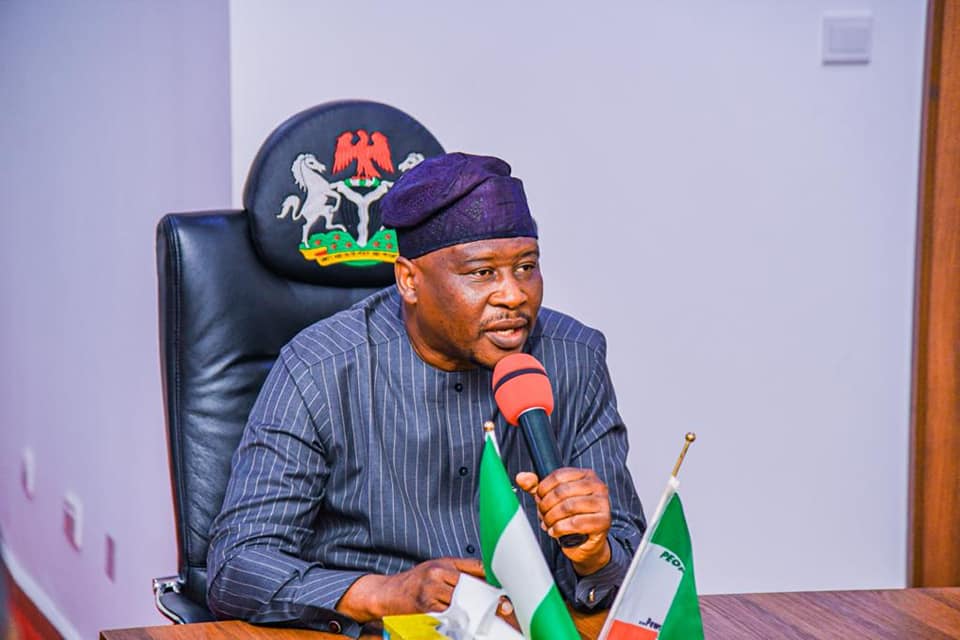
Ahmadu Umaru Fintiri

Understanding Fintiri’s style and the next Adamawa governor 

By Zayyad I. Muhammad 

Ahmadu Umaru Fintiri’s remarkable success in politics and governance is built on three solid pillars. First and foremost, he holds an unshakable belief that power is granted solely by the Almighty Allah, who bestows leadership upon whomever He wills. This belief is not just theoretical for Fintiri, it defines his attitude toward leadership, power, and responsibility.

Secondly, Fintiri is a man of conviction. He cannot be swayed or coerced into decisions. However, he remains open-minded and receptive to superior arguments. This rare blend of firmness and intellectual humility sets him apart in a political environment where many leaders either succumb to pressure or refuse to listen to alternative views.

Thirdly, Fintiri possesses an in-depth understanding of governance and political power, how it works, when to deploy it, and where it can be most effective. His grasp of these dynamics has allowed him to wield power not for personal gain, but in service of meaningful, people-focused development.

From his early days as a member of the State House of Assembly, through his rise to Speaker, Acting Governor, and now two-term Executive Governor of Adamawa State, Fintiri has consistently demonstrated strategic acumen. What has kept him ahead of his adversaries is not just political skill, but his deep-rooted belief that power belongs to Allah alone. This faith has given him clarity, courage, and calmness in the face of political storms, enabling him to remain fearless, resolute, and capable of making difficult yet visionary decisions. These are decisions that echo not only in the present but will define his legacy for generations to come.

His independence of thought, combined with a willingness to embrace sound reasoning, has driven unprecedented transformation in Adamawa State. In a state once typified by political patronage and a “yes-sir” culture, Fintiri has introduced a new style of leadership; one that prizes merit, innovation, and long-term development over short-term political expediency.

Under his leadership, Adamawa has witnessed a massive infrastructural renaissance. Roads, flyovers, and underpasses have sprung up, redefining mobility and connectivity. The 1,000 housing for the masses. He has established three mega science schools, one in each senatorial district, positioning the state as a hub for scientific and technological advancement. He also ensured the construction of 21 model nursery, primary, and junior secondary schools across all local government areas, ensuring that every child, regardless of background, has access to quality education.

Fintiri’s health interventions are equally groundbreaking. From the provision of free kidney treatment to the establishment of one of the most advanced medical laboratories in Nigeria at the Specialist Hospital in Yola, his vision is clear: a healthy population is the foundation of a prosperous state.

His administration has also been proactive in addressing youth unemployment and gender inclusion. Through programs like PAWECA (Poverty Alleviation and Wealth Creation Agency), thousands of women and young people have been empowered with skills, funding, and job opportunities, restoring dignity and creating pathways for self-reliance.

Leadership, as Fintiri understands it, is both a divine responsibility and a human enterprise. Often, when the Almighty Allah grants leadership, He also grants a unique wisdom, the ability to see what ordinary eyes cannot. Fintiri not only possesses this foresight, but he also understands the fine balance between authority and service. He knows when to exercise power and when to listen; when to act boldly and when to build consensus.

A perfect illustration of this wisdom was his recent declaration that his successor must be a grassroots politician. This was not a vague or politically convenient statement, it was a profound and strategic vision. What Fintiri meant was clear: his successor must share his belief in putting the people first, must be committed to inclusive and comprehensive development across all socioeconomic sectors, and must be a leader with the intellect, experience, and moral compass to lead Adamawa into the future. Such a successor, in Fintiri’s view, must be refined, educated, visionary, and capable of seeing tomorrow through the prism of today.

In summary, Governor Ahmadu Umaru Fintiri exemplifies a rare style of leadership rooted in faith, defined by principles, and driven by results. You may agree or disagree with his politics, but one cannot ignore the defining qualities that make him not just a political figure, but a true grassroots leader .

Zayyad I. Muhammad writes from Abuja via zaymohd@yahoo.com.

A Modern Monarch: HRH Sani Ahmadu Ribadu, King of Fufore 

By Lukman Dahiru

In the rich tapestry of Nigerian history, where tradition meets contemporary governance, HRH Sani Ahmadu Ribadu’s appointment as the King of Fufore Emirate stands as a monumental chapter. The Governor of Adamawa State, His Excellency Ahmadu Umaru Fintiri, elevated him to this revered position, not merely acknowledging his royal lineage but affirming his profound dedication, moral integrity, and visionary leadership.

Sani Ahmadu Ribadu, the younger brother of the renowned National Security Adviser, Nuhu Ribadu, brings a blend of heritage and modern dynamism to the throne. His journey to this prestigious role has been marked by a life committed to service, community, and the betterment of society. 

Born into a family known for its integrity and public service, Sani has carved his own path, gaining respect and admiration for his family name and his personal merits. He has proven himself not only as a successful farmer but also as a successful politician, having served as Chairman of Yola South Local Government and as a member representing Yola South in the Adamawa House of Assembly. His impact in these roles has been substantial, focusing on grassroots development, agricultural improvement, and fostering a transparent, people-centric governance. 

The significance of his appointment extends beyond the ceremonial; it symbolizes a new dawn for the Fufore Emirate. As king, Sani Ahmadu Ribadu is poised to bridge the ancient customs of his people with the evolving demands of the modern world. His leadership is anticipated to be a beacon of progress, unity, and peace in a region where traditional roles still play a crucial part in community life. His tenure is expected to be characterised by the following.

Cultural Preservation: Sani Ahmadu Ribadu, who deeply understands his heritage, will safeguard and celebrate Fufore’s cultural identity. He will likely champion initiatives to document, preserve, and promote the emirate’s rich traditions, ensuring they are passed down through generations.

Community Development: He is known for his commitment to his people, and he will leverage his position to drive development projects. From education to infrastructure, from health to economic empowerment, his reign is expected to see significant advancements that uplift the living standards of his subjects.

Social Justice and Peace: His background suggests a leadership style that emphasizes fairness, justice, and reconciliation. In a region that has experienced its share of conflicts, his approach could foster greater social harmony, making Fufore a model for peaceful coexistence.

Youth Engagement: Acknowledging the demographic dividend, Sani Ahmadu Ribadu is expected to concentrate on engaging the youth by offering them opportunities for growth, innovation, and participation in governance, therebyensuring the emirate’s future is as bright as its past.

Security and Stability: With his familial ties to national security, there’s an expectation that he will advocate for and implement strategies that enhance local security, working in tandem with state and federal authorities to maintain peace and order.

His appointment has been received with jubilation and optimism, not only within Fufore but throughout Adamawa State and beyond. The community perceives in him a leader who honours tradition while embracing innovation. His governance is expected to be defined by open dialogue, community engagement, and a strong emphasis on sustainable development.

Sani Ahmadu Ribadu’s reign promises to be an era where the past and the future of the Fufore Emirate walk hand in hand under the wise and compassionate leadership of a king who understands that true sovereignty lies in serving one’s people. His legacy, still in its nascent stages, is already shaping up to be one of transformative leadership, where the throne serves as a seat of power and a platform for enduring positive change. 

Here’s to a reign that will be cherished not only for its duration but for the indelible mark it leaves on the heart of Fufore and the broader canvas of Nigeria’s cultural and social landscape.

Lukman Dahiru wrote from Yola via ldahyu@gmail.com.

The birth of Fufore Emirate in Adamawa State 

By Zayyad I. Muhammad

No emirate, its Emir’s stool, or palace comes into existence without the foundation of law and authority, coupled with the community’s request, acceptance, loyalty, and support. This straightforward process involves the people’s demand, legislative endorsement, and executive approval.

The creation of the two new emirates and five chiefdoms by Governor Ahmadu Umaru Fintiri was guided by two principles: first, the community’s request and demand, and second, the provisions of the Adamawa State Chiefs (Appointment and Deposition) Law 2024, which has been formally gazetted and is now part of the state’s statutory framework. Without this law, the governor would lack the power and legal authority to fulfil the community’s requests.

The Fufore Emirate was established based on the demands of the 12 districts and their people. For those suggesting that Gurin, Malabu, and Ribadu or any other districts were coerced into joining the Fufore Emirate, consider the example of Zumo and Song. They chose not to join the new Yungur Chiefdom and remained with the Adamawa Emirate, while Gurin, Malabu, and Ribadu opted to be with Fufore. It’s straightforward: in a democracy, you get what you ask for.

Governor Fintiri didn’t simply wake up one morning and declare, “Let there be Fufore Emirate,” and it came into existence. It was the product of requests, demands, negotiations, mutual understanding, and the backing of law and authority.

There is a popular saying that one cannot cry more than the bereaved. Up to this moment, most of the noise about the creation of the Fufore Emirate is coming from people outside the 12 districts.

None of the 12 districts—Ribadu, Daware, Bengo, Verre, Nyibango, Kofsopah, Malabu, Malabu Kofa, Mayoine, Gurin, Beti, and Wuro Sham.—has filed a petition or challenged the creation of the Fufore Emirate or their inclusion in it. In fact, the heads of all 12 districts were the first to pledge their allegiance and pay homage to the new Lamido of Fufore, His Royal Highness Alhaji Sani Ahmadu Ribadu.

On behalf of the 12 district heads, the District Head of Malabu was both emphatic and unwavering in his expression of loyalty and support for the new Emirate during the reception of the new Emir in Fufore.

The Fufore Emirate, like any other emirate in Nigeria, is a product of law—established by the Adamawa State House of Assembly and gazetted in Adamawa. The emergence of the new Fufore Emirate, its Emir, and the allegiance and support of all 12 district heads and their subjects are outcomes of law, clear legal provisions, government authority, negotiation, and the people’s requests and demands. These are the fundamentals of tradition, custom, and democracy. 

Let us allow the citizens, friends, and neighbours of the Fufore Emirate to celebrate, as this expansion of horizons will foster development and strengthen unity, prosperity, and peace.

Zayyad I. Muhammad writes from Abuja via zaymohd@yahoo.com.

Governor Fintiri’s successor

By Zayyad I. Muhammad

Governor Ahmadu Umaru Fintiri recently stated that his successor must be a grassroots politician. So, to all grassroots politicians, are you prepared?

Whether or not you agree with Governor Ahmadu Umaru Fintiri, it’s impossible to ignore that he delivered an impressive performance in just five years. His leadership style, marked by decisiveness and a strategic approach, has left a lasting impact on Adamawa State. 

Three key factors contributed to his success: first, he profoundly understands local politics at the grassroots level. This knowledge allowed him to manage diverse interests, bringing various stakeholders together while effectively navigating the political landscape. He knows how to utilise power not just to control but to drive progress and development as well as the political power itself.

Second, Fintiri is known for making bold decisions without hesitation, which sets him apart from many political leaders who are often bogged down by fear or indecision. Whether in policy formulation or tackling complex issues, he has consistently courageously taken risks where necessary. However, boldness doesn’t equate to rashness. Fintiri rarely rushes critical decisions, opting instead for careful deliberation. He balances this decisiveness with a thoughtful approach, ensuring resources are allocated judiciously across various sectors, leading to sustainable development and equitable growth.

Finally, while he can be measured and calculated in his decision-making, Fintiri is also forthright. He doesn’t shy away from expressing his views openly, making him a leader who is both pragmatic and honest. This combination of boldness, caution, and openness has earned him recognition on a national level, bringing Adamawa into greater prominence. Recently, Fintiri expressed his political views in Rivers State but remained balanced as a leader. That is how a true leader speaks.

For Fintiri’s successor, the road ahead will be marked by both challenge and opportunity—a situation that could be described as sweet-bitter. The primary challenge will be following in the footsteps of a highly successful leader. Succeeding a high performer often comes with the burden of high expectations. The new leader will be required to exceed Governor Fintiri’s accomplishments, as merely matching them or falling short would likely be a failure. This catch-22 is often the hardest part of leadership transitions—especially when the predecessor has set a high bar.

On the flip side, there is a significant advantage. Fintiri has laid a strong foundation, which includes efficient tools, systems, and a skilled human resource base. Gov. Fintiri’s successor will have the opportunity to build on these assets, improving where needed while inheriting a well-established structure. With the right approach, he or she can take Adamawa to even greater heights.

Fintiri’s understanding of politics in Adamawa has been straightforward—he sees it as the art of balancing interests driven by fairness and people’s rights. His ability to manage conflicting interests while making decisive moves has been crucial to his success. Bold yet measured, he has used resources to create visible impacts, from infrastructural developments to social programs, all of which have put Adamawa in the national spotlight. His performance will give his successor powerful momentum on which to capitalise. However, whoever succeeds Governor Fintiri must recognise the weight of expectation that comes with succeeding a well-regarded and high-performing predecessor. It will require vision and strategy to maintain the trajectory and deliver even greater results.

Zayyad I. Muhammad writes from Abuja via zaymohd@yahoo.com.

School Shuttle Buses: The Adamawa Model

By Zayyad I. Muhammad 

The Adamawa state government has procured the world-famous Blue Bird school buses to shuttle pupils and students to and from schools within metropolitan and town areas across all 21 local government areas of the state. 

The Adamawa Model aims to achieve four targets: firstly, to serve as a palliative measure for students and their parents to cushion the effects of the removal of petroleum subsidies and the rising cost of living; secondly, to sustain the state’s achievements in mopping up out-of-school children from the streets; thirdly, to maintain the security enjoyed by the public in the state; and fourthly, to support Governor Ahmadu Umaru Fintiri’s programme of productive job creation, local industry support, and the Adamawa urban renewal programme, including utilisation of today’s available resources for tomorrow’s future.

Blue Bird buses have proven to be the most preferred and frequently used transportation system for students, pupils, and even teachers in many countries. Studies have shown that the school bus system is the safest, cheapest, and most organised method of transporting students to and from schools.

Governor Ahmadu Umaru Fintiri’s developmental programmes and projects are interconnected; they don’t occur in isolation. The school shuttle buses project complements the success of the Fresh Air Metro Bus Scheme, a palliative transportation system for the masses, and aligns with education sector improvement and modernisation.

On January 25, Governor Fintiri officially launched the construction of the model nursery, primary, and junior secondary schools across all 21 local government areas of the state. Additionally, the Governor plans to build comprehensive one-in-all mega secondary schools, two in each of the three senatorial districts of the state.

These projects and schemes are also designed to complement the Adamawa state government urban renewal programme, which includes the construction of infrastructure such as great interchanges, the Aliyu Mustapha flyover, the ongoing Mubi Round flyover, the superhighway, and the township roads in Jimeta-Yola and other local government areas.

Furthermore, Governor Fintiri’s programmes and projects are always designed using ‘the science’ of resource management and distribution. On March 8, 2024, the Governor launched an empowerment programme to support 10,000 women and youth with 50,000 naira each for small business development.

Furthermore, the Blue Bird buses, with a capacity of 50–100 students per bus, will reduce traffic congestion. The benefits of school buses, globally accepted, include keeping students punctual and active, fostering responsibility, providing peace of mind for parents, and being economically beneficial.

Despite dissenting voices, particularly within the opposition, experts in transport and education have highlighted the enormous multiplier effects of school shuttle buses. Besides ensuring pupil safety, parents will experience relief in transportation costs, leading to increased enrollment in schools and job creation for drivers, fuel station operators, and bus managers.

During the ceremony of the Call to Bar of his daughter, Barr Fa’iza, at the Body of Benchers Complex Abuja, Governor Fintiri said his administration will continue to maintain its interconnection of programmes and projects for his government to continue to address the needs of various sectors simultaneously while demonstrating a commitment to comprehensive governance.

Zayyad I. Muhammad writes from Abuja zaymohd@yahoo.com.