ADC

ADC demands probe into $20.8bn refinery expenditure before planned sale

By Abdullahi Mukhtar Algasgaini

Nigeria’s opposition African Democratic Congress (ADC) has demanded a comprehensive audit of the nation’s state-owned refineries, alleging the “reckless mismanagement” of over $20.8 billion spent on their rehabilitation without results.

The call comes amidst government signals suggesting plans to privatise the facilities.The party, in a statement by its Interim National Publicity Secretary, Bolaji Abdullahi, labelled the proposed sale as “premature, suspicious and potentially criminal.”

This stance follows recent announcements by the Federal Government and the Nigerian National Petroleum Company Limited (NNPCL) indicating a move towards full privatisation, coinciding with claims that some refineries have resumed partial operations.

“The ADC is deeply troubled that after spending over $18 billion across successive All Progressives Congress (APC) administrations, and an additional $2.8 billion under the present government, there is still no tangible improvement in refining capacity,” Abdullahi stated.

“Now, the same government wants to quietly sell off these assets. Nigerians deserve to know: what exactly is being sold – scrap or sovereign assets?”

The party questioned the transparency of President Bola Tinubu’s administration, warning the current approach could lead to the undervaluation and sale of critical national assets to “cronies or even to themselves under the guise of reforms.”

Furthermore, the ADC accused both past and present governments of exploiting ‘Turnaround Maintenance (TAM)’ programmes. It described the refineries as “a black hole for public funds,” alleging TAM has served as a cover for corruption and personal enrichment rather than genuine rehabilitation.

The ADC insists a full, independent audit must be conducted and its findings made public before any consideration of selling the refineries.

This demand underscores deepening political tensions over the management of Nigeria’s vital oil assets and the significant public funds invested in them.

Atiku quits PDP over irreconcilable differences

By Ibrahim Yunusa

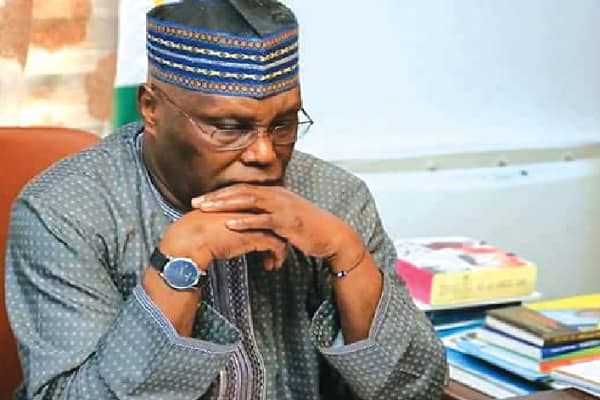
Former Vice President of Nigeria, Atiku Abubakar, has officially resigned from the People’s Democratic Party (PDP), marking a significant political shift ahead of the 2027 general elections.

The resignation was contained in a letter dated 14th July, 2025, and addressed to the PDP Chairman in his Jada Ward, Adamawa State.

Atiku, who served two terms as Vice President and contested the presidency under the PDP in both 2019 and 2023, is allegedly left the party due to internal crises and increasing allegations of anti-party activities as key reasons for his departure.

The PDP, once Nigeria’s leading opposition party, has struggled in recent times with internal divisions, weakening its political strength.

Atiku’s exit is viewed as a major blow to the party’s stability.

Recently the former Vice President confirmed has aligned with a new political coalition involving aggrieved members of APC and other parties, with a consensus to adopt the African Democratic Congress (ADC) as their new platform moving forward.

How the lack of strong opposition masks the government’s failures in Katsina 

By Muhammad Isyaku Malumfashi

One thing I despise about Katsina’s political realm is the absence of a strong and formidable opposition that will tackle the government’s dormancy and make them very focused and renaissance-like toward their responsibilities by using both envious and constructive criticism against those in power, so that at least the citizens may witness democratic dividends seen in some states.

But for the opposition to hold hands and keep mute without holding those in power accountable for any misfortune is unhealthy, and that’s the reason why we are here. Many citizens have questions about the power, but they are afraid to ask due to threats of arrest or intimidation by those close to the power. Perhaps some would disguise themselves in the name of advice to convince you not to oppose this failed government led by the so-called PhD, but they will not prove to you that what you said about the government is not true.

It’s a good thing to advise one to be cautious and watchful of his tongue, but it’s cowardice to intimidate him with arrest or cite the quibbles of his words without pointing out the error in them. The present Katsina government at all levels has become a failure despite the boasting made about the ‘educational qualification’ of the governor during the campaign and even after in his first year of office.

The governor made it clear that he would work with only ‘educated people’ because he is a PhD holder. His academic position was also used to deceive people into believing that Katsina would have a governor for the first time who had attained such a high level of education, unlike his predecessors, who were only master’s degree and diploma holders. People believed that the highest level of education equates to good governance until Governor Radda spent two years in office with nothing to show, or at least outshine or perform better than his predecessors.

That’s when we realised that a secondary school leaver may do better than a PhD in governance because it’s not about the qualification but fear of God, experience, integrity, and honesty. This administration of a PhD holder has not endangered any sector in Katsina. Take the security issue first, which is the most pressing issue in the state.

During the campaign, the governor made it clear that even if it’ll cost him not constructing a single gutter, he’ll eliminate insecurity in the state. We were happy to hear that and even began to see some desirable steps toward actualising that by distributing ammunition to citizens, launching the Katsina State Security Watch Corps, and arresting and killing many people found sabotaging the fight against insecurity. But what happened along the way?

The emphasis was later shifted to politics; the bold promise of no negotiation with bandits at the weak point was broken, and we saw negotiations made in some local governments when it was apparent that the bandits breached many trusts that had been placed in them by the previous government after the talks, and the insurgency escalated. It’s only during Radda that we’ve seen the worst of banditry, especially in my hometown of Malumfashi.

Initially, they only attacked villages, but later they expanded their attacks to cities. People are no longer safe. The son of our immediate local government chairman has been in bandits’ captivity for months now. My sibling, a sister of the same father and the same mother, was kidnapped in the same area where the ex-chairman lived while in office, and his child was abducted.

Many people inside Malumfashi were kidnapped; some were killed, and some had ransom paid to release them. Even today, I woke up seeing the sad news of the death of a PDP leader in Malumfashi from bandits. It’s under this government that dozens of villages in Malumfashi were evacuated due to banditry, and a whole brigadier general from Tsiga was kidnapped and spent more than 50 days in their hands before gaining freedom after millions were paid to them as ransom.

And a first-position winner from Katsina of the National Qur’anic Competition (Musabaqa) held in Kebbi was also kidnapped with his parents along their way back to Faskari from Katsina, where the governor gave him prizes and gifts, but was not able to ask security to escort him home despite the apparent danger of their town. And the governor made a blatant lie in a video, which I saved for my unborn children to remind them that ‘he’s the one feeding every family whose head is kidnapped in the state.’ This is not just a capital lie but a grievous one.

If you take education, you still have nothing to show. The previous government was paying WAEC and NECO for every student in government schools who passed the qualifying exams. Still, this government of ‘PhDs’ paid only NECO to every student, even if he or she passed both WAEC and NECO last year. Katsina’s NECO result was released late last year, after many schools had concluded their admission processes, and the pass rate was very low. Katsina was ranked among the three lowest-passing states in the NECO exam last year.

The governor employed thousands of teachers and a few from the health sector. I agreed, but he did not tell us how many thousands have retired in every sector every year and how far along the replacement process is. No school will go without seeing a shortage of teachers, and the same goes for clinics.

How long did it take him to implement the 70k minimum wage, and has it been implemented 100%? You’ll hardly see a civil servant who saw an increase of up to 50k in his salary, like in other states. What was the cause of his dispute with the university staff about the minimum wage implementation, and how many times did they reject his low implementation of minimum wage for them?

The tertiary school fees were raised when many students were dropping out due to the high cost of education, even though the governor is now earning more than his predecessor because of the removal of subsidies. His predecessor did not increase the school fees, but PhD did. In his just two years in office, he claims to have spent more on security than the previous government did in 8 years, yet there has been no clear difference between the two governments in their success against banditry in the state.

Only these two crucial areas are sufficient to condemn this Yan Boko government, but the lack of opposition in Katsina is giving the governor the confidence to speak badly about the coalition. 

Coalition/opposition has come to stay in Katsina, and no man born of a woman can stop it.

Bukarti is clueless: Nigerians stand with the ADC coalition 

By Salisu Uba Kofar Wambai

Audu Bulama Bukarti is a noisemaker who understands nothing about politics. His recent comments on the newly formed opposition coalition are not only shallow but also dangerously misleading. While millions of Nigerians are applauding this coalition as a timely and necessary step to challenge the Bola Ahmed Tinubu administration and rescue the country from economic suffocation, Bukarti — a London-based lawyer — chose to mock the effort on social media.

Rather than supporting a credible and coordinated opposition, he is promoting a vague, unstructured “youth political party,” claiming that only the youth can bring about change. This may sound attractive on paper, but it shows just how politically naive he is. Politics isn’t wishful thinking — it’s a game of structure, influence, visibility, and strategic alliances.

Just like filmmaking, where unknown actors rarely carry a blockbuster, political success depends on familiar, trusted, and tested figures. The leaders in the ADC-led coalition may not be perfect, but they possess the political weight, experience, and resources to help Nigeria emerge from this crisis. They are not saints, but they know what the people are going through, and their unity reflects the seriousness of the moment.

We must not forget the damage the Tinubu-led APC government has caused: the reckless removal of fuel subsidy, the crippling naira devaluation, inflation that has turned food and transportation into luxury, and a general sense of hopelessness among ordinary citizens. Nigerians are hungry and angry — and they need relief, not political experiments.

Bukarti’s idea that youth alone can take over now is not only unrealistic, but also risky. It will divide the opposition, weaken the resistance, and give the APC a smooth ride into another term of hardship. The youth are important, yes. However, they must join hands with established political structures to make an impact, rather than isolating themselves in emotional idealism.

The ADC coalition brings together people who understand Nigerian politics, who have reach, recognition, and machinery. That’s what it takes to defeat a regime that has weaponised poverty and punished the poor. Unity is the only way forward. This is not a time to gamble or experiment — it is a time to act wisely and strategically.

Bukarti’s obsession with promoting his “youth party” at this critical point raises serious questions. Is it merely ignorance, or is he playing a hidden role to distract and sabotage the coalition’s genuine efforts? Either way, Nigerians must not be fooled. The real enemy is not the coalition, but the hunger, insecurity, and hopelessness forced on us by the Tinubu government.

This is not the time for ego or empty noise. What Nigerians need are leaders with courage, experience, and structure, not social media loudspeakers who offer nothing but confusion. Bukarti should either contribute meaningfully or step aside.

The ADC coalition may not be perfect, but it is Nigeria’s best shot at ending the nightmare. This moment demands unity, not division — strategy, not noise — and above all, action, not confusion.

Salisu Uba Kofar Wambai wrote from Kano. He can be reached via salisunews@gmail.com.