Adamawa State

Governor Fintiri and market development 

By Zayyad I. Muhammad 

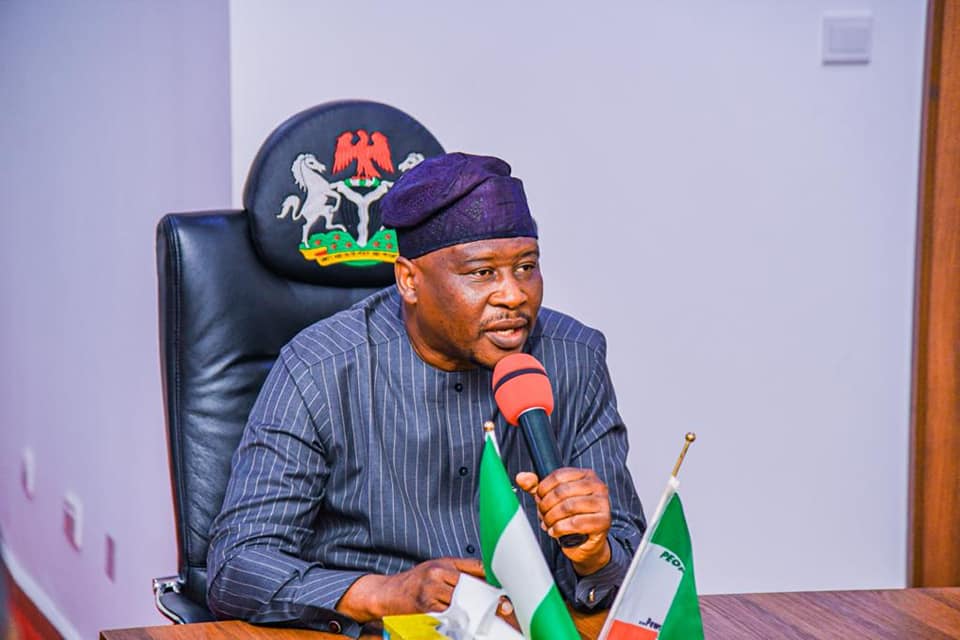
In systems thinking, infrastructure and social developments don’t occur in isolation; projects and programmes are built using a series of interconnected systems that complement each other’s purposes and functions. Governor Fintiri is applying this approach to his development programmes, projects, and policies.

A typical example is the modernization of the Jimeta Shopping Complex, which aims to connect its purpose and functions with those of the new flyover at the old Mubi Roundabout while also providing a befitting shopping complex at the centre of Jimeta City for economic and aesthetic development as part of the urban renewal programme.

The new flyover at the old Mubi Roundabout will connect travellers to Jimeta’s economic activities and natural beauty. At one end, it will lead to the Gerio Swamp and the historic Jimeta Bridge over the River Benue, offering a glimpse of the area’s natural charm. At the other end, it will provide access to the Jimeta Modern Shopping Complex and ease traffic within the city—economic and social development knit together.

The new Jimeta Shopping Complex will feature a world-class, 24-hour, one-stop shopping mall with high-rise buildings. The redevelopment plan of the complex includes a diverse range of shops, boutiques, arcades, food courts, cinemas, banks, smart parking facilities, Wi-Fi connectivity, interactive displays, and a customer service desk.

Adamawa’s three senatorial zones each boast important urban and rural markets. In the southern zone, spanning from the Ganye grain market to the historic Mayo Belwa market, there are connections to the central zone’s Ngurore cattle market, the Jimeta modern market, the new Jimeta shopping complex, the Jimeta old market, the Yola-town market, and the Hong agriculture market.

In the northern zone, notable markets include the Mubi International Cattle Market, Michika Market, and various weekly markets. Plans are underway to transform these markets into modern trading hubs catering to local, national, and international trade. The markets in the northern zone and the Fufore markets serve as crucial centres for traders from Cameroon, Chad, and several Central African countries.

The redevelopment of the Mubi International Market is already underway, with plans to rebuild and remodel the burned Yola Town Market. Additionally, other major markets across Adamawa State are slated for modernization. The markets will undergo systematic redevelopment following Governor Fintiri’s government’s series-system development process.

Governor Fintiri’s comprehensive plan for market development focuses on revitalising economic activities across the state by introducing modern markets and shopping centres. This initiative aims to create vibrant commercial hubs catering to diverse needs. 

Central to the plan is a robust market redevelopment policy, streamlining bureaucratic processes and attracting local and international investors. Job creation is prioritised, with the goal of stimulating employment opportunities through market revitalization and new commercial spaces.

The policy also emphasises sustainability, promoting private sector participation to diversify revenue streams and reduce dependence on the dollar. Overall, Governor Fintiri’s vision for market development encompasses economic transformation, community empowerment, and a prosperous future for the state.

Zayyad I. Muhammad writes from Abuja via zaymohd@yahoo.com.

School Shuttle Buses: The Adamawa Model

By Zayyad I. Muhammad 

The Adamawa state government has procured the world-famous Blue Bird school buses to shuttle pupils and students to and from schools within metropolitan and town areas across all 21 local government areas of the state. 

The Adamawa Model aims to achieve four targets: firstly, to serve as a palliative measure for students and their parents to cushion the effects of the removal of petroleum subsidies and the rising cost of living; secondly, to sustain the state’s achievements in mopping up out-of-school children from the streets; thirdly, to maintain the security enjoyed by the public in the state; and fourthly, to support Governor Ahmadu Umaru Fintiri’s programme of productive job creation, local industry support, and the Adamawa urban renewal programme, including utilisation of today’s available resources for tomorrow’s future.

Blue Bird buses have proven to be the most preferred and frequently used transportation system for students, pupils, and even teachers in many countries. Studies have shown that the school bus system is the safest, cheapest, and most organised method of transporting students to and from schools.

Governor Ahmadu Umaru Fintiri’s developmental programmes and projects are interconnected; they don’t occur in isolation. The school shuttle buses project complements the success of the Fresh Air Metro Bus Scheme, a palliative transportation system for the masses, and aligns with education sector improvement and modernisation.

On January 25, Governor Fintiri officially launched the construction of the model nursery, primary, and junior secondary schools across all 21 local government areas of the state. Additionally, the Governor plans to build comprehensive one-in-all mega secondary schools, two in each of the three senatorial districts of the state.

These projects and schemes are also designed to complement the Adamawa state government urban renewal programme, which includes the construction of infrastructure such as great interchanges, the Aliyu Mustapha flyover, the ongoing Mubi Round flyover, the superhighway, and the township roads in Jimeta-Yola and other local government areas.

Furthermore, Governor Fintiri’s programmes and projects are always designed using ‘the science’ of resource management and distribution. On March 8, 2024, the Governor launched an empowerment programme to support 10,000 women and youth with 50,000 naira each for small business development.

Furthermore, the Blue Bird buses, with a capacity of 50–100 students per bus, will reduce traffic congestion. The benefits of school buses, globally accepted, include keeping students punctual and active, fostering responsibility, providing peace of mind for parents, and being economically beneficial.

Despite dissenting voices, particularly within the opposition, experts in transport and education have highlighted the enormous multiplier effects of school shuttle buses. Besides ensuring pupil safety, parents will experience relief in transportation costs, leading to increased enrollment in schools and job creation for drivers, fuel station operators, and bus managers.

During the ceremony of the Call to Bar of his daughter, Barr Fa’iza, at the Body of Benchers Complex Abuja, Governor Fintiri said his administration will continue to maintain its interconnection of programmes and projects for his government to continue to address the needs of various sectors simultaneously while demonstrating a commitment to comprehensive governance.

Zayyad I. Muhammad writes from Abuja zaymohd@yahoo.com.

Adamawa: After the Supreme Court verdict, what next?

By Zayyad I. Muhammad 

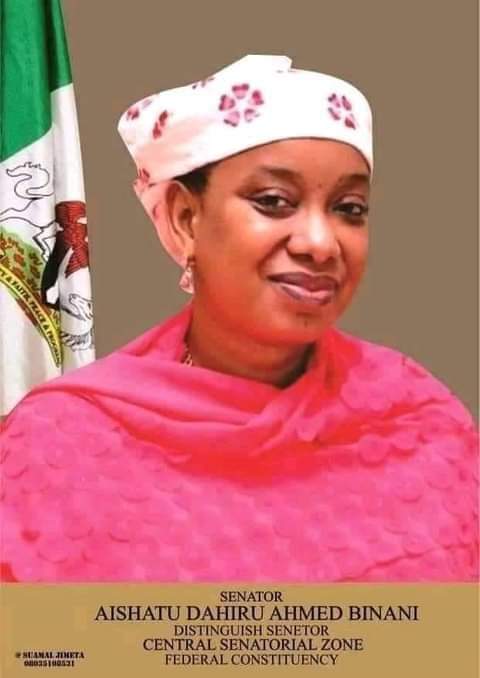
The legal battle for the Adamawa governorship seat has come to an end with the Supreme Court’s judgement of January 10th and 31st, 2024, with Governor Ahmadu Umaru Fintiri triumphant over both the Social Democratic Party (SDP) candidate, Dr Umar Ardo, and the All Progressive Congress (APC) candidate, Aishatu Dahiru Binani.

The fabric of Adamawa peace was never shaken, like when the suspended Adamawa INEC Residents Electoral Commissioner (REC), Barrister Ari Hudu, unilaterally, based on a mutilated ordinary paper with jotted results, announced Aishatu Binani as the winner of the April 15th, 2023, gubernatorial rerun election. However, two factors prevented a social disorder in Adamawa state:  the incumbent governor, Ahmadu Fintiri, maintained composure and calmness and acted responsibly, and the public refrained from being provoked. Additionally, well-meaning stakeholders advocated for peace and urged for the correct procedures and processes to be followed.

Moreover, the Supreme Court has now condemned Hudu’s actions, labelling them as irresponsible and criminal. In response, Governor Ahmadu Umaru Fintiri has expressed his government’s intention to prosecute Hudu’s associates.

Now that Governor Fintiri has solidified his legal authority over his mandate, the focus will automatically shift towards governance rather than politics. This entails continuing to implement policies, deliver on campaign promises, address the people’s needs, and ensure the efficient administration of the state.

The political landscape in Adamawa has shifted significantly from its previous trajectory. Since 2003, the state has been characterised by a divide between “Abuja politicians” and “home politicians.” Governors have often found themselves distracted by the so-called “Abuja politicians,” whose political survival and pocket interests rely on fostering fabricated or genuine disagreements between the sitting governor and individuals holding positions at the centre.

Now that Governor Fintiri is having no fights or disagreements with anyone. He is enjoying a harmonious relationship with key figures in Abuja, such as the NSA, Nuhu Ribadu, and Minister of Education Tahir Mamman, as well as several APC stakeholders. The time has come to put an end to any efforts to sow discord and unnecessary distractions.

Additionally, all PDP stakeholders stood steadfastly with Governor Fintiri throughout the election period and the prolonged legal battles. Notable figures include PDP state chairman Barr A. T. Shehu, State Organising Secretary Hamza Madagali, Deputy National Treasurer Adamu Kamale, and stakeholders like Alh Musa Garba, Stephen Maduwa, Buba Shafani, and many more. On the government side, the Deputy Governor, SSG, and Chief of Staff demonstrated exemplary leadership in supporting the administration’s success in new frontiers.

With the Supreme Court’s verdict, it’s now time for development in Adamawa. Over the next three years and four months, Governor Fintiri will focus on governance to sustain progress in infrastructure and human capital and maintain a peaceful environment. Meanwhile, for Senator Aisha Binani, it’s an opportunity for reflection on her hirthetor’s good public image that brought her to where she is and to ‘clean’ her politics from the stains of Hudu’s irresponsible and criminal actions as labelled by the Supreme Court.

Zayyad I. Muhammad writes from Abuja via zaymohd@yahoo.com.

A look at Governor Fintiri’s Model and Mega School projects

By Zayyad I. Muhammad 

Adamawa State Governor Ahmadu Umaru Fintiri has commenced the implementation of his ambitious Mega and Model Schools projects. 

On January 25th, 2024, the Governor officially launched the construction of the model nursery, primary, and junior secondary schools across all 21 local government areas in the Girei local government area. Additionally, the governor plans to build comprehensive one-in-all mega secondary schools, two in each of the state’s three senatorial districts.

The big question is: Why is the Adamawa State Governor engaging in these enormously ambitious projects? There are three answers. First, according to the United Nations Children’s Fund (UNICEF), one in three children in Nigeria is out of school, totalling 10.2 million at the primary level and 8.1 million at the junior secondary school (JSS) level. Adamawa State, positioned as a frontrunner in the north for reducing the number of out-of-school children, aims to sustain and enhance its progress. 

Additionally, the state has achieved remarkable milestones in maintaining existing schools and securing impressive student performance in WAEC and NECO. Notably, in the 2023 NECO examination, Adamawa came first in the North and ranked second nationally for students with more than five credits in all subjects, including mathematics and English. 

Furthermore, as part of Governor Fintiri’s 2024 budget commitment, promises include allocating projects exceeding one billion Naira to each of the 21 local government areas in Adamawa State. The construction of model and mega schools reflects a dedication to fulfilling these promises and spreading development and resources beyond the state capital, fostering a sense of inclusivity among the people.

While some dissenting voices suggest that the government should focus on rehabilitating and maintaining existing schools and skills vocational centres, the governor has already taken care of that through well-designed approaches. According to experts, Adamawa State, known for its exemplary education sector management, employs a highly regarded systematic and systemic approach. 

Adamawa has implemented a system that consistently maintains school infrastructure while concurrently constructing new ones based on needs and distribution. The state actively recruits new teachers and provides ongoing training for existing ones, aiming to enhance teacher quality, welfare, and pupil enrollment to address the challenges of out-of-school children. 

According to the Commissioner of Education, Dr. Umar Garba Pella, there are essentially two types of schools in the world: those with classrooms and street schools. Failing to enrol children in schools with classrooms may result in them attending street schools, where one child in such a setting can negatively impact the education of 10 children in a conventional classroom.

There are three takeaways from Gov. Fintiri’s launch of the construction of the 21-model nusery, primary and junior secondary schools, and the six mega schools. Firstly, there is public excitement; the majority of Adamawa residents are enthusiastic, recognising the government’s effectiveness and the inclusive nature of infrastructure development. Secondly, the projects will have a regional impact: the Model and Mega schools in Adamawa are expected to significantly influence the state’s education sector and contribute to the broader educational landscape of the northeast subregion. These schools are designed to provide advanced facilities, technology, and specialised programs, accommodating many students and fostering diversity. 

Thirdly, the schools will have a multipurpose and economic impact. Governor Fintiri’s mega and model school projects aim to address the challenges highlighted by UNICEF. The UN said that 12.4 million children in Nigeria have never attended school, and 5.9 million left school prematurely. Thus, the project will tackle the high number of out-of-school children in the northeast and provide students with modern skills aligned with globalisation. Furthermore, the economic impact is evident, with the substantial investment of 16 billion naira in the model school project, which is expected to affect the lives of residents in various ways positively.

Zayyad I. Muhammad writes from Abuja via zaymohd@yahoo.com.

As Governor Fintiri constructs the first superhighway in the Northeast

By Zayyad I. Muhammad

The Adamawa state government, under the leadership of Governor Ahmadu Umaru Fintiri, has commenced the construction of a 20.8-kilometre superhighway in Yola, the Adamawa state capital.

The Superhighway, starting from the Yola City Gate and ending at AA Lawan Junction inside the city of Yola, will open up a new corridor in the Jimeta-Yola metropolitan area as the superhighway is passing through virgin land, though there is massive building activity along the way—new housing estates, including the 2000 housing units constructed by the Governor Fintiri Government for civil servants and other citizens of the state. Other activities along the corridor are industries, farmhouses, schools, and commercial activities.

Some critics have been accusing state governors of neglecting basic needs while constructing big roads and flyovers, but Governor Fintiri is different—he has struck a balance between human development and infrastructure, rural needs and urban development, and community engagement, and political engagement. Governor Fintiri has built cottage hospitals and rehabilitated general and specialist hospitals throughout the states. He built new schools and improved the existing ones, including the payment for WAEC and NECO for all Adamawa State students.

In the just-released 2023 NECO Results, Adamawa State recorded the highest number of candidates with five credits, including English and mathematics. Recently, Governor Fintiri launched the Adamawa Human Development Council to drive Adamawa’s human development initiatives and oversee all human development issues in the state. Furthermore, Adamawa State has one of the most well-structured and sustainable poverty alleviation and wealth creation agencies in the northeast: the Adamawa Poverty Alleviation and Wealth Creation Agency (PAWECA). The agency trains and develops skills for youth and women; it’s doing well in that its core mandate

Coming back to the main topic, the superhighway, it is simply a product of knowledge-driven governance, which always strives to strike a balance between development and expansion, rural needs and urban requirements, and people’s needs and wants. This balance is essential for any state government to fulfil its vital role in how its citizens and businesses travel, commute, and transport goods and services. One of the crucial components of modern transportation in this era of high-speed technology is superhighways.

Like any other huge construction project, superhighways have their challenges, but the importance and the need for the 20.8-kilometre superhighway along that corridor overshadow its challenges.

City expansion, urban congestion, population growth, and modernization necessitate the need for better roadways on a global scale. Superhighways in towns and cities bring efficiency to businesses that depend on transportation, reduce commuter time, and are designed to enhance road safety while reducing accidents. Their economic impact is substantial, improving connectivity between different sections of the city, reducing congestion, and diverting long-distance traffic away from the inner town’s roads. Governor Fintiri’s 20.8km superhighway stretching from the Welcome Yola City Gate to AA Lawan Junction inside the city, which will be the first in any state capital in the Northeast, will offer these benefits, including opening a new corridor in the Jimeta-Yola capital city.

Zayyad I. Muhammad writes from Abuja via zaymohd@yahoo.com.

What next for Aishatu Dahiru Binani? (II)

By Zayyad Muhammad

In my piece, “What Next for Aishatu Binani?” Published months ago, I postulated that the Adamawa APC Gubernatorial Candidate in the 2023 election, Senator Aishatu Dahiru Ahmed Binani, had three options to choose from, which would make or mar her political future. First, Binani can continue to insist that she is the ‘Governor-Elect’, as declared by the suspended Adamawa INEC, Resident Electoral Commissioner (REC) Barristers Hudu Yunusa Ari. In this case, Binani will approach the tribunal with that sole demand.

The second option for Binani was to pursue her case through the tribunal while ignoring Hudu’s bizarre actions. The third option for her was to retreat and congratulate Governor Ahmadu Umaru Fintiri. That’s to discard the option of any litigation and move forward for the future. Binani and her team chose the former; they opted for litigation. Now, the Adamawa Governorship Election Tribunal has dismissed her case, thus putting her in a catch-22 situation. If Binani has to pursue the case to the Appeal and the Supreme Court—she will overstretch her luck—in politics, when you overstretch your luck, you may hit the wall with your head.

Everything being equal, Binani will battle three issues: she has lost a good rapport with most Adamawa APC-critical stakeholders. Second, the party itself seems not to be on the same page with her. Thirdly, continuing the legal battle means pressure on her pockets while knowing she has no chance. All the politicians that will hang on Binani’s side will only continue to do so if it will oil their courses.

Prof. Jibrin Amin has a famous saying: Ba’a adawa, babu dawa (opposition only survives with resources at hand). Fourthly, her philanthropic activities will diminish because she is not in a government position that allows her easy access to the materials used for the philosophical activities. Fifthly, discontinuing the case will portray her as weak in the eyes of her supporters. All Binani diehard supporters heavily rely on ‘the court case’ to have temporary relief and hope.

To be fair to Binani, she is among the few politicians with cult-like followers. She has fought a good battle in her own rights, but now she has found herself between two dicey options: one: reformat her politics by discarding all the unnecessary legal tussles; two: mend fences with her party at the state and LG levels, including lowering her head to some APC stakeholders who, hitherto, she assumed were not important, but they have shown her their capacity and understanding of how Adamawa politics works.

Two: go with her cult-like followers, whose only hope and temporary relief is to continue with the extraneous legal battle. And, whichever way she follows—Binani will now battle with being absent from the scene—no federal presence and local presence were cut short by the tribunal dismissal of the case and loss of influence in the local APC chapter.

Another salient fact is that one cannot discuss Binani’s political future without looking at Barr—Hudu’s faith in the court. A federal high court has ruled that Hudu’s trial can go ahead. Hudu’s conviction will have an impact on Binani’s political future.

Furthermore, the Adamawa APC will continue to have two sides: the Binani side, who have suffered massive losses of positions and steam due to court judgements against them, and the other side, who are in absolute control of the party machinery, federal might, and also sitting akimbo, laughing at the former’s predicament.

Nevertheless, one big picture is that Binani, as a person, will have to sit down and look at things from one important angle—the feasibility of being the sole financier of an opposition facing a battle from two fronts—its party and the government in power. Will Binani resort to what she did after the 2015 elections? When she suffered a ‘not surprising’ defeat in the 2015 Adamawa central senatorial election, she imposed upon herself a premature retirement from politics. The 2015 senatorial outing was a product of a miscalculated political move—contesting for the senate on a very weak platform—the PDM.

Here is the big dilemma: if Binani decides to temporarily ‘abscond’ from the scene, events and ‘new’ people will take over her spot before the 2027 election cycle, and if she decides to pursue her case to the Appeal and Supreme Courts, it will be an extraneous and costly adventure.

Here are three suggestions for Binani: First, she has lost goodwill within the APC family but has strong goodwill within her supporters’ base, so it’s time for sober reflection and amendment. Two: Governor Ahmadu Umaru Fintiri appears to be more calculative and bold. The Fintiri team—the Deputy Governor, SSG, Chief of Staff, and the rest—appear to work with the ‘books’ and off-the-shelf as well. In contrast, Binani’s team heavily relies on weak pivotal emotion hearsay and is confined to just a minute unit, which their eyes see, forgetting the wider picture.

The best bet for Binani is to congratulate Governor Fintiri and move on, as Mallam Nuhu Ribadu did to her after the APC Gubernatorial primary election tussle. The last suggestion for Binani is to make a deep soul search for where she wants to be in 2027 and the tough road ahead.

Congratulations, Governor Ardo Ahmadu Fintiri!

Zayyad Muhammad writes from Abuja. He can be contacted via zaymohd@yahoo.com.

A welcome to Gov. Fintiri’s Fresh Air metro buses 

By Zayyad I. Muhammad

Governor Ahmadu Umaru Fintiri ‘Fresh Air Metro Buses’ have commenced operation in the Jimeta-Yola metropolis, shuttling between Jimeta and Yola town, Jimeta Modern Market to Sangere. Modibbo Adamawa University to the Market, Sangere, Welcome to Yola City-Gate to the Market axis, etc. The government also said it planned to take more buses to other local government areas.

The metro buses significantly impact the citizens’ lives, as the fare fee is a mere 100 naira to any destination. Students, market women and men, farmers, and civil servants have expressed their joys and delight and excitement as one big issue in the common man’s difficulties—the high cost of transportation—has been solved.

Three cardinal things are the lubricants of a decent life: good healthcare, proper education, and easy transportation. Once a family had these things eased for them, all other things are now secondary. 

Politics apart, Gov. Fintiri has impacted healthcare by constructing new cottage hospitals and rehabilitating general hospitals. The payment of WAEC and NECO examination fees, rehabilitation of schools, and teacher welfare. And now, with the commencement of the metro bus service, which has transformed people’s lives not only through easing pressure on their pockets but also through the luxurious nature of the buses while being transported to their places of work, etc.

Recall the arrival in the state of the 58-seater luxurious ‘palliative buses’ was a big surprise to many people, including those in the opposition. Within less than a week of the government’s intention to procure the buses, the buses arrived in the state capital. This is commendable. This writer also says the metro buses are part of the ‘systemic approach’ of the Fintiri government in tackling the economic hardship associated with the removal of the subsidy on petrol, commonly called PMS, by the federal government.

Apart from providing cheap, affordable, and comfortable transportation to the masses, the purchase of the buses by the Fintiri government from Innoson Vehicles Manufacturing (IVM) is a true reflection of the government’s desire to support the local industries, whose multiplier effect can even reach the Adamawa people since the buses are being operated through public-private partnerships (PPP) to create jobs, maintain the buses, and create a friendly business environment to attract more investment.

The Fresh Air Metro buses will assist workers in their daily transport to their offices, pupils to their schools, and the movement of people from one point to another, including the ease of doing business in the state. Furthermore, the buses will greatly eliminate the hustling of using KEKE NAPEP tricycles.

One of the most important aspects of it is that the buses will greatly eliminate the insecurity that Shila Boys associate with the KEKE NAPEP; people will now freely and comfortably use the buses even at night without the fear of anything happening to them as each bus has security personnel attached to it. Urban planners have looked to such public transportation to facilitate improvements in community health and well-being.

Zayyad I. Muhammad writes from Abuja.

On our nonchalant attitude towards preserving and maintaining infrastructure

By Muhammad Dauda Muhammad

About two years or so, I was in Jimeta, the capital city of Adamawa State, where I went to visit my family. And, from my observation, the city had witnessed a significant infrastructure improvement and, more significantly, the roads. 

I was amazed to see many areas where new roads were constructed. In the past, I would have never imagined that those places would one day be tarred, but all thanks to the former and the present administrations.

Now, I will state what triggered me to develop this piece. During my visit, I noticed something ill about people’s behaviour towards the new road infrastructure put in place to ease their daily routine, especially in the rainy season. 

Though I am not an engineer by profession, from experience, I know that roads that have already been constructed don’t need any form of substance to stay on them, be it water, oil or anything such. But instead, for people to be more careful and ensure the cleanliness of the roads, they choose to make the drainages built beside the roads for the successful passage of water a place to dump wastes. However, this act congested the drainages, thereby resulting in the stoppage of the water flow, making it spilt all over the roads.

Forget about Adamawa state, which is like a development area compared to states like Lagos and Kano. Kano State is not an exception when it comes to the issue of lack of maintenance of infrastructure. Looking at the ongoing road construction along Gwarzo Road, one will wonder why and how a whole road construction company will block a road for years, all in the name of construction, which is causing more damage to the already constructed road than is good. I am referring to those places they blocked planning to build a new roundabout.

This negligence didn’t stop on properties owned and controlled by the government alone but also in learning institutions like ours. Look at the Ibrahim Gambari Square, built and commissioned a few years ago and the first on our campus. 

Almost all the features set for the beautification of the facility have lost their structure. The fine bulbs that lighten and brighten up the place at night, the concrete chairs that students use to sit and catch a glimpse, the taps that splash water stylishly in the air, and the water flow system that has already been blocked. 

It has not stopped there, but some roads need urgent attention due to eruption, not to mention the grasses that have taken over so many places, greatly threatening the people and the environment.

NB: this piece is not an exposè but a mere candid call to all concerned citizens, both from the public and those in authority, to work collectively in ensuring a transparent and dirt-free society.

Muhammad Dauda Muhammad is a final year student of Mass Communication, Faculty of Communication, Bayero University, Kano. He can be reached via muhammaddaudamuhammad@gmail.com.

Security management: The Adamawa model

By Zayyad I. Muhammad

At its 8th meeting held in Maiduguri, the Borno state capital, on September 9, 2023, the Northeast Governor’s Forum expressed its concern about the new dimension of growing banditry in Bauchi, Gombe, and Taraba states as a result of the concerted efforts of the military bandits from other parts of the country. The governors called on the federal government to intervene. With this new development, it’s evident that Adamawa State is doing well among the six states in the northeast sub-region in internal security. How did the Governor Fintiri-led government achieve that? Through planning and strategies or just sheer luck?

The Adamawa state government has employed three approaches. First, the Fintiri-led government looked at the areas affected by Boko Haram’s senseless insurgency. Then, the government developed excellent and feasible post-war programmes and projects with a comprehensive implementation strategy that fast-tracked the healing of the war’s scars. The government restored basic infrastructure and local economies, returning the affected communities to their peaceful and productive pre-war status.

A simple example is the burbling economic activity in townships like Mubi, Michika, and Madagali. Secondly, after the restoration of basic infrastructure and integration of the lives and livelihoods of thousands of people, the government employed a quick rehabilitation of agricultural land, places of worship, health centres, bridges, and schools, including the creation of productive employment for the teeming unemployed citizens, especially young people and women.

Over the years, most developmental efforts in many states emphasised urban development at the expense of rural development, which has led to a substantial rise in inequality among Nigerians—inequalities beget insecurity. What the Fintiri-led government did was balance urbanisation and rural areas’ needs. While Adamawa state’s capital, Yola, is gradually being transformed into a working city that accommodates all segments of society and provides basic and modern infrastructure, other local governments are getting what they should have in agriculture, basic electricity, healthcare, and human development. What the government did was equate each community’s basic infrastructure needs with youth employment needs to curtail crime.

For example, when the notorious Shila Boys re-emerged, the Fintiri government used a soft and hard approach: the government provided young people with cash grants, loans, and training on new skills through the Poverty Alleviation and Wealth Creation Agency (PAWECA) and the Adamawa State Social Support Programme (ADSSSP). While those who refused to change their ways were dealt with the hard way by law enforcement agents. Another approach that helped Governor Fintiri sustain the success recorded in its internal security management- the government reinforced its more knowledge-based approach, thus the coming onboard of Deputy Governor Professor Kaletapwa Farauta, Secretary to the State Government Awwal Turkur, and Chief of Staff Dr. Edgar Amos, etc. These people are well-read and have been through the mills in their respective fields.

According to the United Nations Development Programme (UNDP), community security seeks to operationalise human security, human development, and state-building paradigms at the local level. This is the concept the Fintiri government used to douse tension due to farmer-herder conflict in some communities. However, there is a theory that says no one can experience perfect security because individuals or states are not perfectly secure or completely insecure, but the Fintiri model of community engagement, local people’s parley, and provision of basic needs has helped Adamawa State curtail farmer-herder conflicts, peaceful co-existence, youth restlessness, assurance of safety, absence of fear, etc. within the state. The Fintiri model of internal security management is working; other states in the northeast sub-region can copy it.

Zayyad I. Muhammad writes from Abuja.

As Governor Fintiri commences second term 

By Zayyad I. Muhammad

The 2023 Adamawa governorship election was not only tough for Governor Ahmadu Umaru Fintiri, but it also shocked him to his marrows. Fintiri said he didn’t only contest against Senator Aishatu Dahiru Ahmed Binani, but against a powerful people in Abuja- Governor Fintiri further said it was an attempted coup d’état against him.

The aftermath of the April 15th governorship election rerun led to Gov. Fintiri ending his first term in a kind of ‘Anger’. So, Fintiri’s second term is highly likely to begin in anger, vengeance, and fighting real and imaginary political enemies.

This is where we must pity Fintiri; if he mistakenly allowed these three things to control his thinking in making appointments, siting of development projects, and creating policies and programs – his four years of the second term would be shrouded with just politics, politics and politics. if  Fintiri is not very careful, he will allow the ‘trauma’  of April  15th to be on his head- his second term’s appointments, projects, and policies will be full of vengeance, anger, and unnecessary fights- if that happens; it will be the beginning of the end of his political future,  because of 2 things- the complexity of Adamawa politics and the current moment.

Nevertheless, Fintiri’s first actions will be how to punish those he presumed did anti-party in the PDP and how to compensate the ‘outsiders’ who did anti-party in their parties to his advantage. This is where the first problem of Fintiri’s second term will commence- new enemies within his party, the outsiders will feel meagerly compensated while those who worked hard for his second term will feel that the outsiders have more than what they ought to have.

For his political survival, Fintiri’s second term should be a kind of political redemption for him- work on his poor relationship with some of his party stakeholders, discard any thought of unnecessary fights with people who he thinks have worked against him and cool the growing tongue and faith division in the state’s polity, especially among jobless young people.

Fintiri’s second term should be a reconciliatory one towards some of his party stakeholders, the traditional class, and some of his so-called enemies. And his appointment should reflect Adamawa’s complexity and the people that truly contributed to his victory in both his first and second terms. This will go a long way to ‘heal’ the past and ‘nurture’ the future.

As things stand now,  if Fintiri doesn’t apply the science of politics and wisdom in his thoughts-  most of his actions will be viewed through the prism of ‘we’ vs ‘them’, which will be very bad for a Governor in a second term; because second terms are intricate – one’s political values diminish as he utilizes the term’s years; followership  reduces, permutations and carpets cross occur without necessarily factoring the second term’s driver’ while those wishing to replace the driver becomes more of yes men, at the detriment of the driver

Fintiri should quickly make some in-delectable marks with legacy programs and projects in the area of youth empowerment, poverty reduction, and human development and industrialization, amongst others. Roads projects are good- but  within 10-20 years, often,  people will forget who to do them; while some will deteriorate, new ones will replace them, but human development and youth empowerment are everlasting- this is where Kwankwaso and Tinubu derived their unending popularity at their primary constituencies

The truth is, the Binani case is a big hammer dangling on Fintiri’s head. Anything can happen in a Tinubu regime that will be thirsty to maintain the old & get new strongholds and votes, including being non-apolitical on some issues.

Fintiri should be fast- bring new thinking, new ideas, and new vigour. Though this is only possible if he brings on board all his party, including young people and even people with opposing political views, to do some intelligent thinking free of politics but development.

Congratulations, Governor Ahmadu Fintiri.

Zayyad I. Muhammad writes from Abuja via zaymohd@yahoo.com.