Academic Staff Union of Universities

The Academic Staff Union of Universities (ASUU) has embarked on a protest

By Fatima Badawi

The Academic Staff Union of Universities, popularly known as ASUU, has organized a massive peaceful protest to express its strong disapproval of the government’s insincere promises and failure to fulfill agreements made to university lecturers.

Members of the union from Bayero University branch came out early this morning, marching around sections of the school while holding placards with inscriptions calling the government’s attention to do the needful.

While a TDRHausa correspondent was speaking with a senior official of the union, the official explained that there are numerous issues the government has failed to address for university lecturers, and the lecturers have been patient, but it seems their patience has run out.

Among the issues highlighted by the official include;

1) Lack of attention to the plight of lecturers.
2) Withholding the salaries of university lecturers because they went on strike, even though the law allows university lecturers to do so.
3) Failure to fulfill hundreds of promises the government made to improve the condition of universities and carry out reforms.
4) Withholding earmarked funds (Earned Academic Allowances) that university lecturers have been demanding from the government for years, and the government made several promises but broke them.
5) There is also the major problem of university lecturers’ salaries, where some of the lecturers have become pitiable, because even a professor’s salary is not enough to solve basic life problems, not to talk about medical expenses and school fees for their children, let alone their worry about academic pursuits.

Hundreds of union members came out for this massive peaceful protest, men and women, and it was done calmly but with concerns on how the government has neglected the welfare of lecturers across the country and broke all promises made.

This kind of protest is being held across all Nigerian universities to express strong displeasure against this injustice from the government.


TDR

TDRHausa

Aftermath of ASUU strike and the hike of university fees

By Safiyanu Ladan

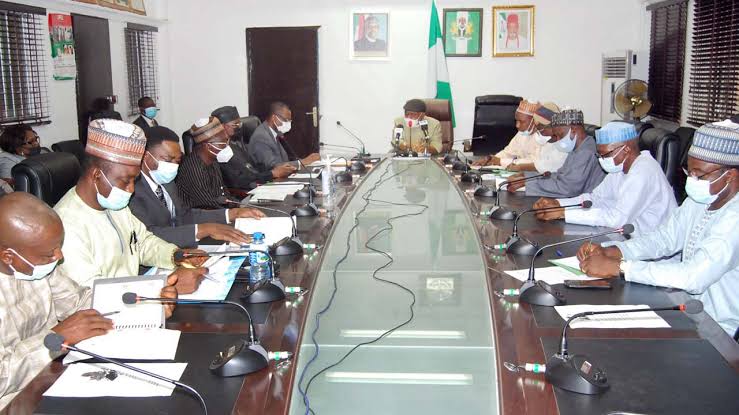
The Academic Staff Union of the Universities (ASUU) embarked on an indefinite strike on the 14th February 2022, following years of unresolved issues with the federal government. During the period of the strike, the union had on several occasions met with the federal government representatives headed by the labor and employment minister Chris Ngige with a clear mandate to find a long and lasting solution to the lingering problems but to no avail as the meetings have always ended in deadlock.

Tired and frustrated with that, In September last year, the federal government through the ministry of labor and employment took the union to an industrial court, praying to the court among other things to order the varsity teachers to resume classes with immediate effect. The outcome of the court’s judgement favored the federal government. Paradoxically, the appellant court refused to entertain ASUU’s appeal, saying that until and unless they obey the lower court’s judgement of going back to classes.

The intervention of the speaker, house of representatives Right Hon. Femi Gbajabiamila has paved the way for the varsity workers to get a soft landing in what seems like an unending fracas with the Federal government.

Prolonged and incessant ASUU strikes were this time around followed by a heavy price as the federal government reiterated that, the no work no pay policy has been duly applied to the striking workers. The federal government decision to withhold their salary has generated heated debates and threats from ASUU, but the government remains adamant. Closing down of Universities is at the detriment of students because they are always at the receiving end.

Having been tried but failed to convince the FG to pay the arrears of the past eight months of ASUU members, the management of some universities have decided to compensate that with an increment of students’ school fees. It’s no longer news that some universities have deliberately increased their fees to more than 100%.

It’s now crystal clear that this increment will affect many students because their parents cannot afford to pay such whopping amount of money as school fees. In the meantime, the mass exodus of students dropping out of the universities most especially in the North is imminent. Leaders and everyone should know this. Many students have expressed their worries on the trend and their final resolve to quit.

Safiyanu Ladan wrote from Zariya City and can be reached via uncledoctor24@gmail.com.

The forgotten victims of ASUU strikes

By Dikko Muhammad, PhD

I read the justifiable frustration of many people affected by ASUU strikes, most of them undergraduates with a few months to graduate but were stalled by the strike. Some have already missed the chance to attend law school this year. This is quite unfortunate. It is a waste that saddens every sensible person.

However, there are other victims of the strike who are mainly forgotten. Many people talk as if the strike does not harm ASUU members. They say that ASUU members will get their withheld salaries back at the end of the strike. That’s largely true. But there are other implications for many of these members.

First, the younger ones in the profession — Graduate Assistants and Assistant Lecturers, their progress is truncated by strikes. These are people enrolled in our universities for their master’s and PhDs, respectively. A few of them get the chance to study abroad. Majority study at home. Every strike means an indefinite pause to their studies, careers, promotions etc.

Before you say that the strike is their choice, please understand how ASUU goes to strike: each chapter (or university) will hold a meeting to decide whether to embark on strike or not. Every member present has one vote, whether a Professor or Graduate Assistant. A simple majority carries the day. That means a Graduate Assistant may vote against the strike, but those in favour could win by a single vote. At the national level, the results from the chapters are collated and studied. If there are 100 chapters, the decision of a simple majority will be the final verdict. So if 51 universities vote for the strike against 49, that’s the end.

These strikes inevitably affect the professional development of every academic staff. Some couldn’t start and/or finish masters and PhDs on time. That delay will manifest up to their retirement. Strike halts promotion exercises of many universities. People who aspire to be professors in their forties might be delayed into their fifties despite their conferences, publications, etc.

Thus, the strike is not as viable an action as many people seem to think. The lecturer you insult for being an ASUU member might have voted against the strike from the beginning. They might have been equally affected by the strike in terms of studies or promotion.

And these are people who don’t even talk about their predicament. Instead, they simply suffer in silence.

Dikko Muhammad wrote from Umaru Musa Yar’adua University, Katsina. He can be reached via dikko.muhammad@umyu.edu.ng.

ASUU Strike: Endless negotiations and FG’s disregard for the future of Nigerian students

By Babatunde Qodri

Since Nigeria’s independence in 1960, we have never witnessed such a long and suffocating strike as it is at the moment when public tertiary institutions would be closed down, and there would be no serious move by those concerned to avert it. In two years, our universities have suffered unprecedented deterioration due to incessant industrial action by the Academic Staff Union of Universities (ASUU).

Consequently, students are often condemned to stay at home. But this is what we get any time we elect a leader that cares less about the education sector. Ministers of Education and Labour Adamu Adamu and Chris Ngige, respectively, largely contribute to this agelong industrial action. Yet, despite a series of meetings, nothing tangible has happened to facilitate the return of students to class. This is unarguably appalling. 

Professor Emmanuel Osodeke, ASUU Chairman, recently revealed the lack of readiness by the Federal Government to yield to the demands of striking lecturers when he appeared on Channels TV. Osodeke slammed the Minister of Labour for misleading the public on the development while accusing the Federal Government of insincerity in its dealing with the Union. One then wonders whether this administration actually places a premium on the future of Nigerian students. The government’s body language is symptomatic of what these abandoned students have to contend with for years.

This is not to throw a jab at the Minister of Education or the Labour Minister. Unarguably, however, I am disturbed by the carefree approach of the Federal Government to the situation that affects millions of young Nigerians. It is sad to stress that this unfortunate development has resulted in many problems.

For instance, several Nigerians affected by the industrial action have been forced into activities that negatively affect society and their future. Because they say idle hands are susceptible to devilish errands, most students are now into internet fraud and other related engagements to the country’s detriment. This is in addition to the fact that some of these students, having stayed at home for a long, have lost interest in education, thereby engaging in unprofitable endeavours.

It is necessary also to admit that the protracted strike translates to a waste of time, with students spending more time than necessary. And this puts them at a disadvantage. While their counterparts in private and state universities have seamlessly unhindered years to run and complete their programs, students in public universities are trapped. Those supposed to be used as innovation agents are abandoned to situations that delimit them. This is thoroughly depressing.

Moreover, the strike has a way it contributes to the debilitating nature of the Nigerian education system. Today, Nigerian lecturers seek opportunities outside the country to make their skills and knowledge relevant. There are cases of Nigerians in the medical fields going to countries abroad in search of better conditions. This is not good for the country as it ultimately leads to a shortage of competent lecturers in our various public tertiary institutions. Even if the industrial action is called off, the fact that it has forced talented Nigerians to opt to lose confidence in the system remains a threat.

My final take: If the Federal Government cannot meet up with the demands of the Union, at least it must identify with its clamour since it is in the best interest of public tertiary institutions. Both parties must forge a new mode of communication that recognizes the yearnings of Nigerians. Done based on sincerity, the government might agree to attend to the union’s demands in batches. Between all of these is the need for committed Ministers of Labour and Education who can drive the Government to do the needful. This is necessary to put the country on the path of steady development.

Babatunde Qodri wrote via babatundelaitan@gmail.com.

Nigerian Universities to embark on fresh strike

By Khadija Muhammad

The national president of the Academic Staff Union of Universities (ASUU), Professor Emmanuel Osodeke, expressed concern over how the Federal Government of Nigeria is handling the demands of the universities unseriously. Together with other union leaders, he expressed their dismay at a press conference in Abuja on November 15, 2021.

The Academic Staff Union of Universities (ASUU) issued a three-week ultimatum to the Federal Government to address all issues as agreed in the December 2020 Agreement.

ASUU President, Professor Emmanuel Osodeke, stated this on Monday while addressing reporters in Abuja.

The president warned that the union might be compelled to embark on another nationwide strike should the government fail to implement the Memorandum of Action signed with ASUU before suspending the last industrial action.

According to the ASUU President, all the issues, including unpaid academic earned allowances and the universities revitalisation fund, have not been addressed almost one year after an agreement was reached.

The ultimatum is part of the resolutions reached at the National Executive Council (NEC) meeting of ASUU held in the nation’s capital.

It can be recalled that ASUU embarked on a nationwide strike in March 2020 following its disagreement with the government over the funding of the universities and the Integrated Payroll and Personnel Information System (IPPIS), among other issues. Accordingly, it had proposed the University Transparency and Accountability Solution (UTAS) to replace IPPIS. But in a bid to get the lecturers back to class, the Minister of Labour and Employment, Chris Ngige, convened a series of meetings with leaders of the union and relevant government officials.

Amid the strike that lasted several months and negotiations that ended in a deadlock, the government and ASUU later signed a Memorandum of Action in December 2020. This led to the suspension of the protracted industrial action that lasted nine months. However, not after the government offered a cumulative N65 billion to the lecturers to address earned academic allowances and revitalisation of universities.

On the IPPIS tussle, both parties agreed on the UTAS, while the government would pay the university lecturers’ salary arrears on a different platform.

ASUU had on several occasions warned that it would indeed go on strike if the federal government continued to break the promises and throw away all the agreements reached.