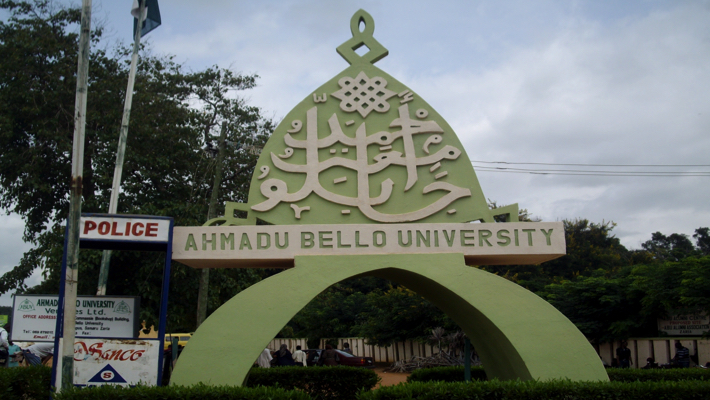
ABU Zaria

MSSN-ABU expresses sorrow over kidnapping of its member, calls for prayers

By Hadiza Abdulkadir

The Muslim Students’ Society of Nigeria (MSSN), Ahmadu Bello University (ABU), Zaria, has expressed deep sorrow over the tragic kidnapping of one of its members, Abdussalam Rabi’u Faskari, a 300-level MBBS student. 

The incident, which also involved two members of his family, occurred as they traveled home from the Government House of Katsina State.

Abdussalam, known for his academic excellence and deep religious commitment, is not just a promising medical student but also an accomplished Islamic scholar. 

He is an Imam at the College of Medical Sciences mosque. He also secured the first position in the 60Hizb category at the last National Musabaqa (Qur’anic competition).

The MSSN community, along with the wider Muslim ummah, is now calling for fervent prayers for his safe return, as well as for other victims of similar tragedies. 

The statement from MSSN urged all students to remain steadfast in their faith, emphasizing that “with hardship comes ease” (Qur’an 94:6).

This unfortunate event is part of the growing security crisis affecting Nigeria, where kidnappings for ransom have become alarmingly frequent. 

Calls for more decisive government intervention and lasting security solutions continue to mount as families and communities grapple with these distressing incidents.

Re: Attempt to discredit the process of ABU VC appointment, by Abdullahi Musa Ashafa

My attention was drawn to an article in the Education Monitor tabloid of Monday, 25 February 2025, written by what the tabloid referred to as the ex-ABU ASUU Chairman. The article was supposedly a rejoinder to a discussion I had with Nagarta Radio, Kaduna, on the changing dynamics of university administration in Nigeria and its implications for university education. The discussion took place during a weekly phone-in program that focuses on topical issues of public interest.

Prof. MK Aliyu

The radio station was concerned about recent events leading to the sacking of some Vice Chancellors and their Governing Councils at Nnamdi Azikiwe University, Awka, and Yakubu Gowon University, Abuja. During the discussion, I cited the recent misconduct and miscarriage of justice in the appointment of a new Vice Chancellor at ABU, aiming to draw the attention of the federal government and other stakeholders to prevent ABU from suffering a similar fate as the two universities mentioned.

Sadly, the rejoinder by the former ASUU Chairman, ABU Chapter, deliberately ignored the issues raised during the radio program. Instead, it focused on personal attacks against me regarding my tenure as Acting Vice Chancellor of Kaduna State University. While it is not in my character to engage in public disputes with a younger colleague, especially when discussions become personal, I find it necessary to clarify the issues raised both in the radio program and in the rejoinder itself.

For the record, the personal attack in the rejoinder, which appears to satisfy the rhetorical standards of an archaeologist, falls far below the analytical rigor expected of a historian. It does not deserve much attention.

In the rejoinder, the former ABU ASUU Chairman insisted that the Council acted within the law by appointing a candidate with a lower score instead of the highest-scoring candidate. However, this raises a moral question that legality alone cannot address. The fact that something is legal does not necessarily mean it is morally right. While the law is a system of rules enforced by a governing body, morality is a set of ethical principles guiding right and wrong behavior.

The key issue here is that the appointment of a candidate other than the highest scorer appears to have been politicized, possibly to serve the political interests of the Chairman of the Council, Alhaji Mahmud Yayale Ahmed, who belongs to the ruling party in Bauchi State. The candidate he announced as the new Vice Chancellor was a former Commissioner of Lands and Survey in Bauchi State. Was this appointment a political favor or a reward for past services rendered to Alhaji Yayale or his political allies?

Laws are meant to ensure that society functions better and more peacefully. Civil law is not intended to regulate the entire spectrum of human conduct, which is where morality comes in. This is precisely where the Council Chairman missed the point.

The Council lacked ethical consideration, an essential principle in decision-making that ensures transparency and prevents harm or injustice to individuals and the system. Alhaji Yayale, a former Secretary to the Government of the Federation who once oversaw the Federal Character Commission—an agency responsible for ensuring federal character compliance in public service—should have known that appointing a Vice Chancellor from his own state under his chairmanship was ethically problematic, even if the candidate had been the highest scorer.

Instead of learning from history—such as the controversy at Yakubu Gowon University, Abuja, where the Council Chairman from Katsina State appointed a Vice Chancellor from his own state—the ABU Council repeated the same mistake. The outcome in ABU is expected to be even worse, especially considering that, unlike in Abuja, the announced candidate did not even score the highest.

The University Miscellaneous Act of 1993, before its amendment, allowed the Council to nominate and recommend three candidates with the highest scores to the Visitor (the President), who would then make the final appointment based on government discretion and considerations such as federal character. In such cases, the government could not be accused of violating the law. However, with the amendment transferring this power to the Council, ethical considerations must be taken into account.

The same Council that advertised the position, set the criteria for selecting the best candidate, ensured all candidates passed integrity screenings by law enforcement and anti-corruption agencies, and conducted interviews to determine the most qualified person, cannot suddenly shift the goalpost at the announcement stage by introducing undisclosed criteria. This lack of transparency fuels doubts and suspicions about the fairness of the process.

The rejoinder also mentioned a past ABU appointment where the Council selected Professor Abdullahi Mustapha (then Vice Chancellor of Umaru Musa Yar’adua University), who ranked second, instead of Professor Abdullahi Zuru (from Usmanu Danfodiyo University, Sokoto), who ranked first. However, the rejoinder deliberately omitted the reasons behind that decision.

In that particular case, ABU was experiencing a leadership crisis that resulted in two Acting Vice Chancellors in quick succession, with the possibility of a third. To stabilize the university, Professor Zuru was deemed unsuitable because he had never been associated with ABU in any capacity—as a visiting lecturer, external examiner, or stakeholder. Appointing an outsider at such a turbulent time would have further destabilized the university.

Thus, instead of appointing someone who would require two to three years to understand ABU’s internal dynamics before taking meaningful action, the Council chose Professor Mustapha. This decision, unlike the current one, was justified.

In the present case, Professor Sadiq Zubair Abubakar, the highest-scoring candidate, has been with ABU since graduating as an Agricultural Engineer from the university. After completing his National Youth Service Corps in 1987, he rose through the ranks to become a professor in 2006. He served as Executive Director of the National Agricultural Extension and Rural Liaison Services, where he initiated a 3-star hotel project that significantly boosted ABU’s Internally Generated Revenue. He was also Vice Chancellor of the revoked Federal University of Education, Owerri, and later Vice Chancellor of Capital City University, Kano. Additionally, he served as Dean of the School of Postgraduate Studies and later as Deputy Vice Chancellor (Administration) at ABU.

Compared to the appointed candidate, Professor Abubakar had submitted over 130 publications for promotion, while the candidate announced by Alhaji Yayale had submitted only 23, as reported by the ABU Bulletin of Wednesday, 5 February. This glaring disparity further supports our argument that the highest scorer, with superior academic and administrative credentials, was unfairly denied the appointment in favor of a politically favored candidate.

The rejoinder attempted to discredit me personally for insisting on merit-based appointments at ABU. As a Nigerian, a bonafide Northerner, and an academic with ties to ABU—albeit not as a former student or current staff member beyond a sabbatical—I have every moral right to express concern over this flawed decision. The wrong decision made by the Mahmud Yayale Ahmed-led Governing Council will negatively impact ABU in the short and long term.

Some candidates were disqualified over serious moral issues and chose not to challenge their disqualification due to the credibility of the allegations against them. Instead, they sought to align themselves with potential appointees, only to switch allegiance once the Council announced a different candidate. This kind of opportunism reflects poorly on the integrity of those involved.

The rejoinder neither redeemed nor absolved the Council from wrongdoing. Instead, it reinforced our concerns about ABU being subjected to an improper and self-serving appointment process. While some may argue that the decision did not violate any legal provisions, we maintain that moral considerations are distinct from legal technicalities.

I am confident that the Federal Government will investigate this matter and take necessary corrective measures. Alhaji Yayale Ahmed’s actions have tarnished his legacy, and ABU must not be sacrificed on the altar of political expediency. The university’s academic excellence should never be compromised for selfish interests.

This is my position against whatever rejoinder that supports wrongdoing and morally unassailable actions.

Prof. Ashafa, a directing staff member on sabbatical at NIPSS, Kuru, wrote from Zaria in Kaduna State, Nigeria.

The brightest son of Northern Nigeria

By Bilyamin Abdulmumin, PhD

Every nation has its beacon of hope. India has Mahatma Gandhi, Singapore, Lee Kuan Yew, China, Mao Zedong, South Africa, and Nelson Mandela. In the United States, it’s Abraham Lincoln, while Ghana reveres Kwame Nkrumah. Zimbabwe holds on to Robert Mugabe, Kenya to Jomo Kenyatta, Egypt to Gamal Abdel Nasser, and Ethiopia to Haile Selassie.

Northern Nigeria’s guiding light is Sir Ahmadu Bello, the Sardauna of Sokoto—a man whose name is written in gold on the sands of history. A towering figure with a heart as vast as the Sahel, he was a custodian of Islam, a protector of culture, a unifier of regions, and a calculated risk-taker. Bold in action and resolute in purpose, he stands tall as the North’s brightest son.

Almost all of Sardauna’s life and legacy have been well documented and were public knowledge; it has been told through various forms and platforms like nostalgia, reminiscence legends, truth, and myth. Sardauna is generally known for one thing: an unnegotiable love for the North- a love rooted in modernization and unification.

Thanks to Sardauna’s vision for proficient and disciplined graduates to fill the gap in the northern civil service, the all-encompassing, majestic, and larger-than-life ABU Zaria was born. Sardaunan’s vision for institutional independence extends beyond academia: it includes independence in finance, energy, media, aviation, and food security.

Monuments and megastructures in Sardauna’s name that still stand and reverberate speak volumes about the foresight, determination, and vision of this legendary figure. This uncommon vision for the North to develop and be independent fetched Sardauna, both friends and many foes. But it never deterred him. He forged on from strength to strength.

Whether known or unknown to Sardauna’s distractors, he was never anything close to being a bigot. His actions tell a different story: his consideration of the whole North transcends every primordial boundary like tribe, region, and religion. Sardauna merely wanted to discharge his duties best to the people he was entrusted with. If Sardauna could govern Nigeria, he would ensure the country excels among its peers. He will pursue the Nigerian interest with the same vigour and rigour as the North.

Perhaps the most controversial stance of Sardauna after the Northernization agenda was his determined campaign against independence. This is what Southerners and Easterners, especially his colleagues such as Awolowo, Akintola, and Azikiwe, could not wrap their heads against. Was it not the independence that people die to get, but here is a potential premier kicking against it or, at best, asking for its delay? This particular unpopular campaign that Sardauna embarked on and his colleagues in the North are two sides of the same coin.

As of 1952, when agitations for self-government began to mount, the majority of staff in the North were Whites, Southerners, and Easterners of Nigeria’s geopolitical zones, so Sardauna clamour was until the North became not only united and literate but capable of piloting its affairs before independence. This argument and most of other Sardauna’s interests would prevail, and the regional self-government was granted in 1955 to 56 instead, before the independence four years later.

This unprecedented vision of Sardauna for the delayed independence is a revolutionary—a potential antidote to the challenges plaguing many post-colonial nations. This could be the first time a potential president of a potential country could not be desperate, but instead harbour delayed independence subject to the capacity of the country.

Yesterday marks 59 years since Sardauna’s cold-blooded assassination by Lieutenant Colonel Nzeogwu. Yet, his legacy lives on, etched in the hearts of Northerners and Nigerians alike. May Allah forgive the shortcomings of North’s brightest son and grant him Jannatul Firdaus, amin.

Bilyamin Abdulmumin, PhD, wrote via bilal4riid13@gmail.com.

ABU awards Honorary Doctorate to Sheikh Sharif Saleh Al-Hussaini, restoring its prestige

By Hamisu Adamu Dandajeh, PhD

Recently, I have not encountered anyone more deserving of an Honorary Doctorate Degree globally than Sheikh Sharif Ibrahim Saleh Al-Hussaini Maiduguri CON. The 87-year-old global scholar and researcher has authored over 400 books and 100 conference papers in Arabic. 

Sheikh is a global mufti who currently heads the Supreme Council for Fatwa and Islamic Affairs in Nigeria (NSCIA). Throughout Nigeria’s history as a nation, no recognised Islamic scholar has made such remarkable contributions to the body of quality knowledge as the Mufti himself.

This renowned Sheikh embodies knowledge and humility and is a product of the Tsangaya System. Sheikh Sharif is, in fact, overly qualified. European universities established an Honorary Doctorate in the 15th Century to recognise exceptional individuals who have made substantial contributions to a particular field, society, and humanity despite lacking traditional academic credentials.

Sheikh Sharif has written extensively on nearly every facet of Islam, encompassing Quranic sciences, Hadith, Islamic law, history, philosophy, Islamic jurisprudence, linguistics, Islamic polity, Tauhid, Fiqh, Tafseer, Sufism, Arabic literature, Islamic law, inheritance, astronomy—indeed, astronomy—and the peaceful coexistence between nations.

While some universities worldwide have drifted away from the 15th-century original purpose of awarding Honorary Doctorates, instead prioritising celebrity appeal, fundraising, politics, diplomacy, and commercialisation, Ahmadu Bello University in Nigeria remains committed to upholding the original intent, as evident in the recent award to Sheikh Sharif. 

Sheikh Sharif has spent his entire life teaching, learning, researching, and contributing to community development, which aligns with the exact purpose of universities globally. He has exemplified scholarship and knowledge sharing, promoted interfaith dialogue, and fostered a culture of peaceful coexistence. 

Sheikh Sharif has produced many scholars of global repute, including Sheikh Professor Ibrahim Maqari, now the Chief Imam of the Central Mosque in Nigeria. He is building one of the biggest Islamic centres (Markaz) in Abuja to advance international teaching and research.

Sheikh Sharif brings class, integrity, dignity, and prestige to the Honorary Doctorate. We hope that, going forward, the nomination, review, selection, and conferment processes will remain transparent and accountable. 

To know what is next for Nigerian universities after this remarkable award, here is what Abdulbasit Kasim, a friend and a postdoctoral fellow at the African and American Studies at Stanford University, USA, added: “After awarding Shayk an honorary doctorate, Ahmadu Bello University should proceed to the next phase of translating and incorporating his books into the University curriculum. If I can include Shayk’s work on history, politics, philosophy, and economics in my Stanford syllabus, there is no reason why Nigerian students in humanities and social sciences should study Antonio Gramsci and Karl Popper but not Sharif Ibrahim Saleh and Adam Abdallah al-iluri. While this honorary degree has aesthetic value, I hope Ahmadu Bello University will diversify and broaden the curriculum beyond [the] Western canon.

Thank you, Ahmadu Bello University, for honouring an erudite scholar. Congratulations, Sheikh Sharif Ibrahim Saleh Al-Hussaini Maiduguri, on your well-deserved Honorary Doctorate in Law award.

Hamisu Adamu Dandajeh, PhD, is a Senior Lecturer in Sustainable Fuels, Energy and Climate Change at Ahmadu Bello University, Zaria – Nigeria.

ABU to honour Okonjo-Iweala, Sheikh Al-Hussain with honorary degrees

By Sulaiman Abdullahi

Ahmadu Bello University (ABU), Zaria, will confer honorary degrees on the President of the World Trade Organisation, Dr. Ngozi Okonjo-Iweala, and renowned Islamic scholar Sheikh Sharif Al-Hussain.

The decision was approved during the university’s 544th (Special) Senate meeting, held on Tuesday, January 7, following the recommendation of the Honorary Degrees Committee.

The recognition highlights the university’s acknowledgment of the recipients’ outstanding contributions to global trade, governance, and Islamic scholarship.

Details of the conferment ceremony will be announced in due course.

Award-winning essayist Maimuna Abubakar graduated with a first-class from ABU Zaria

By Idris Hassan

A student of Ahmadu Bello University (ABU) Zaria, Maimuna Abubakar, who beat other contestants across the world last time to emerge 3rd in an International Essay Competition organised in the United States of America, has graduated with a first-class degree in Sociology (the third person in the department’s history to graduate with a first-class), after Muminah Musa Agaka, who first broke the 38-year record. 

Maimuna Abubakar is someone I have been mentoring since my time at ABU, Zaria. She’s from Niger State and has always been eager to listen and learn. She lost her mother a few years ago, which was a difficult period for her. 

I recall the last time she asked me if there was anything she could work on, as she often does. I mentioned an essay competition in the US that I wanted her to apply for. She responded, “Sir, that’s for people like you. I don’t think I am a good fit since I know so little.” I laughed and encouraged her to submit her entry. We discussed her ideas critically, and she wrote something she sent me for proofreading. After reviewing it, she submitted her essay and won third place.

Maimuna is a writer, poet, and much more. She graduated as the best student at her level in the Department. Maimuna is also a trained teacher with over five years of experience. During school breaks, she makes dresses, loves writing, and especially enjoys reading. 

She was Amira of the Muslim Students Society of Nigeria (MSSN) ABU, Chairperson of the NSASA Academic Committee, and Secretary of the NSASA Editorial Committee in Zaria. Maimuna aspires to be a Public Health Professional or a Social Psychologist. Given her dedication and achievements, I believe the Niger State government needs to acknowledge and reward her efforts.

Applied Worldwide is a project founded by Stephanie Wilson and Luke Hanna in the United States. It believes in a dynamic sociology in which sociological knowledge is produced and applied to enact positive changes in communities worldwide. 

Applied Worldwide organises an international essay writing competition to inspire students in the field and help foster change through a sociological lens that Applied Worldwide aims to bring. You can also try your luck.

Learning under Professor Atta

By Bilyamin Abdulmumin, PhD

You will find some highly versatile members whose contributions drive their areas in every place. The Department of Chemical Engineering at ABU Zaria is no exception. I cannot imagine the department without Professor Atta’s services.

 Advanced Chemical Reaction Engineering is among the PhD courses that ring the bell in the department, thanks to the delivery methods perfected by Prof.

Prof. designed his class with weekly assignments submitted before each session. Students take turns submitting and answering immediate follow-up questions, ensuring that even those copied must read. Adhering to this weekly activity is a Prof trademark except for unusual circumstances, keeping students engaged throughout the week. The more time one dedicates to a topic, the better one understands it.

There is also a group project where the class is divided into teams. Each team is assigned a research topic to develop into a term paper. This project often includes laboratory work, computational work, or both to publish a paper in a respected journal. Like the weekly assignments, group work is reported biweekly. The group leader makes a presentation, but each member contributes. Though it is challenging for a group of two or three to produce a paper during coursework, the skill that comes with that is priceless.

Then there is the industrial visit. Prof. Atta ensures that students make at least one visit to a process industry, particularly the Kaduna Refinery and Petrochemical Company (KRPC), to study chemical reaction units such as Fluid Catalytic Cracking (FCCU) and fixed bed reactors. These academic excursions are vital for complementing student knowledge or, as Prof. puts it, making knowledge functional.

During our visit to the KRPC FCC unit, the chief operator unleashed the practical working principles of the process. At the same time, Prof. Atta facilitated the connection between theory and practice to us. The duo of Prof. and the experienced chief technician, a reservoir of experience, kept us on our toes until we wished to call it a day. A colleague turned to me and whispered, “Whenever a chemical reaction is being discussed, Dr. (then) can never have enough.”

Of course, this rigorous teaching approach doesn’t sit well with every student, but that never makes Prof. Atta take his foot off the gas. I was surprised at the end of the coursework when a colleague, who was in collusion terms with the course, declared, “I now understand modelling and simulation for the first time.” This is another reason one should not be deterred by complaints of those he is supposed to train. Trainees often want to avoid the process and jump to the achievement, so a trainer must stick with his gun; as they say, the end justifies the means.

A conducive environment is a major concern for research students in Nigeria. Simple tools like a weighing balance, pH meter, or glassware can affect and slow down research. To address these small but impactful issues, Prof. prepared a mini lab equipped with all basic and some analytical equipment. This lab includes a working area, a reading area, and lockers for everyone.

One day, an MSc student met me in the lab and, after his observations, declared, “You, Prof. students, are enjoying,” as if he would say I will join you. Still, to my chagrin, he confessed: I couldn’t join Prof. because I wasn’t serious enough to qualify to work with him.

Another major concern for postgraduate students is time. Many suffer from a lack of contact time and engagement with their supervisors. However, with Prof. Atta, the story is different. His office is a Mecca for PG students, with students queuing from morning to evening, each waiting for their turn.

 Of course, other significant issues that concern the nation and society pop up and are discussed. As a melting pot, the professor’s office allows free fall for ideas, but primordial affiliation has no place. Such gatherings of students, sometimes Professor colleagues, and visitors from various backgrounds are a rare opportunity not only to get a glimpse into diverse area research and technological trends but also to learn about others’ personal life journeys and ambitions. 

The professor’s dedication to academics is exemplary and worthy of emulation by young (and not-so-young) scholars. It will go a long way to facelift postgraduate study in Nigeria.

Bilyamin Abdulmumin, PhD, wrote via bilal4riid13@gmail.com. 

My PhD journey

By Bilyamin Abdulmumin, PhD

With my viva voce a few days ago, the sojourn that began five years ago has ended. Although the coursework started late, around May 2019, it was successfully navigated through that year.

Postgraduate students often think coursework should be eliminated. They wonder how a PhD student could be sitting in a four-corner wall in the name of lectures, arguing that PhD candidates should dive straight into research. However, after completing the coursework, none of us agreed with that sentiment.

One notable sacrifice that potential postgraduate students should be prepared to make is financial freedom. Study not only limits one income but also eats deep into the fabric of the little one on the hand—it is an attack from a double front. So, it only takes individual ambition to succumb to that.

One common question from those considering enrolment but still undecided is, “How long will it take to finish a postgraduate program?” My quick response to them is to enrol as soon as possible because time will pass regardless. 

In Nigeria, pursuing a PhD is a journey where you likely only know the starting point, facing a path fraught with unforeseeable circumstances; the end sight can’t be rightly assured. While I read posts that some lucky individuals graduate in about three years, others aren’t as fortunate and may take seven years or more. So, I believe graduating in five years is an average.

The first major hurdle of my five-year PhD journey emerged at the beginning of 2020. Immediately after the year clocked, the COVID-19 pandemic struck the globe. The world came to a standstill as countries implemented stringent measures to combat the virus. In Nigeria, after the first confirmed case was announced in late February, we swiftly followed suit; wearing facemasks, using hand sanitisers, and maintaining strict social distancing became the order of the day. 

Despite the initial disruptions, as the pandemic began to wane, my supervisor and I would forge on, adapting precautionary measures. The lockdowns would be a blessing in disguise as they provided valuable time for my supervisory team and me to finalise our research topic and draft a comprehensive literature review manuscript.

Another significant hurdle arose with the ASUU strike. As early as February 2022, the agitation for the government to implement the 2009 agreement mounted. It began as warnings but escalated into an indefinite strike lasting eight months. Like the COVID-19 pandemic, the strike ultimately became a diamond in the rough. It afforded me more interactions with my advisors and crucially facilitated a collaboration with the Centre for Resources Recovery in Sweden, known for its extensive work in my research area. Leveraging the online meeting platforms adopted during the pandemic, such as Zoom, expedited our collaboration.

Another serious hurdle I encountered was frequent power outages. Just as I was about to enter the lab after completing all preparations, ABU experienced a series of power disruptions; their light would be cut due to failure to pay the bills—an issue I had never expected. This cultural shock paled in comparison when I later heard that even Aso Rock faced threats of power cuts. The inconsistency of electricity, compounded by national grid collapses and ABU light cuts made the initial stages of setting the research in motion unforgettable.

A five-year journey demanding a high level of commitment, teamwork, tight schedules, and stringent deadlines, in addition to the inherent conflicting perspectives in group work, inevitably led to clashes—sometimes titanic ones. However, what mattered most was understanding each other’s viewpoints and even finding humour in the aftermath. You have an added advantage for those who are naturally diplomatic, persuasive, and humorous: you will come to handle such pressures far more easily.

One of the major successes of my PhD journey was the significant contribution to knowledge pioneering an innovative method: the development of mesoporous support for heterogeneous fermentation for the first time. This achievement has culminated in forthcoming publications in high-impact (or not-so) journals, the filing of a patent, and facilitated international collaborations.

No matter how daunting the task may seem, it can’t be insurmountable, provided there is consistent effort (even a bit), patience, and perseverance.

Bilyamin Abdulmumin, PhD, is a public affairs commentator and science writer. He can be reached via bilal4riid13@gmail.com.

“Mine is bigger than yours”, professorial count, that is!

By Prof. Abdalla Uba Adamu

The recent Facebook ribbing about the number of professors from states and localities in various northern cities with universities reminds me of the male adolescent macho posturing of “mine is bigger/thicker than yours” game played behind classrooms! I am even mentioned as a trophy — “yes but WE are the ones with a double professor!” referring to my being from Bayero University, Kano (BUK), in Kano State (Daneji in Kano Municipal).

The whole thing was ignited by an infographic with its origin in ₦airaland Forum where one Zafsy75 posted the graphic. Right away a fierce debate ensured on the forum with many commentors disputing the figure. Zafsy75 themselves did not provide additional scientific methodology on how they arrived at the figures. Nevertheless, they infographic became viral — and started the prideful ‘mine is bigger than yours’ ribbing.

The infographic was from Statisense which uses Generative Artificial Intelligence to generate its data! A search on its site revealed another graphic of “most professors” in Nigerian universities, in September 2023, with the University of Jos leading with 530 professors. BUK had 434 professors which included 10 women. I can personally count more than 20 women professors in BUK in 2021, not 2023! No methodology was provided as to how the figures for the universities were arrived at.

People should be aware that AI generated data is based on what the engine can find — it does not create the data. Thus, it is actually not possible to accurately determine the number of professors per state or local government even based on the much-quoted NUC Directory of Full Professors, 2021 (link to the publication attached below).

This is because the directory lists professors by DISCIPLINE in order to promote research collaboration and networking amongst Nigerian academics. Also, the Directory was not based on official submissions by various universities, but voluntarily by INDIVIDUALS which was synthesized and summarized by NUC. Additional source for the AI was personal websites where a professor proclaims to come from a particular university.

Thus, not EVERY professor agreed to submit their details to be captured. With this, it therefore becomes very difficult to accurately determine the number of professors from each state, as that was not the focus of the Director (or NUC’s intentions).

You can only get the official number of professors from individual universities. As of October 2023, BUK had 381 professors with the largest category being in Medical Sciences. All the professors were, however, not listed by their States or Local Governments, but their DEPARTMENTS or specializations.

So, I can’t see how the game of ‘mine is bigger than yours’ started. I believe; however, it was started by the infographic floating around showing the number of professors per UNIVERSITIES in the various states. The graphic was not providing the number of professors per state of origin, but per the universities IN the state. It made it clear by stating it is “by state where the school is located.”

Thus, if you are from Anambra and are a professor in BUK, this infographic will capture you as being from a university in Kano, but you will not be captured in any university in Anambra. In this way, it does not tell you the number of professors from indigenous to Anambra.

Right away, it is faulty (or fake). As of October 2023, BUK had 381 professors. Last week another 11 were announced bring the total to 392 as of February 2024. So how can Kano have 428 professors in 2022? Granted there are many universities in Kano, but the main prominent ones — Aliko Dangote University of Science and Technology, Yusuf Maitama Sule University — are basically tributaries of BUK. Indeed, most of the others rely on BUK professors as ‘visiting’ to their faculties.

Kaduna State where Ahmadu Bello University is located has at least eight universities — and you want me to believe the entire universities in the State have 62 professors? I am sure Kaduna State University (KASU) alone had either more than or close to that.

While the ribbing was fun while it lasted, at least it wakes us up to the idea of fake data and weaknesses of Generative Artificial intelligence.

As promised, below is the link to the authentic number of professors voluntarily submitted to NUC as of 2021. BTW, yours truly is listed TWICE on page 836. They still pay me single salary, though!

Directory of Full Professors in the Nigerian University System, 2021: https://shorturl.at/yKV34

ABU announces multiple jobs for students, calls for applications

By Ishaka Mohammed

The management of Ahmadu Bello University (ABU), Zaria, has created numerous job opportunities for its current students. This is contained in a special bulletin dated Tuesday, January 9, 2024.

According to the director of the Counselling and Human Development Centre, Dr Sa’adatu Makarfi, the initiative named Students Work/Study Scheme aims to provide financial support to needy students and enhance their educational experience.

The scheme welcomes interested and capable students to work in areas such as coaching (for primary and secondary school students), research assistance, computer operation, harvesting, babysitting, laundry and car washing. Students can equally work as masters of ceremonies, and those with other specific skills are also encouraged to apply.

Interested students are to visit any of the Guidance and Human Development Centre offices at both the Samaru and Kongo campuses for registration or more information.

The Daily Reality gathered from some ex-students of ABU that the Centre has been assisting needy students who can work while studying, but this is probably the first time it is publicly calling for registration.