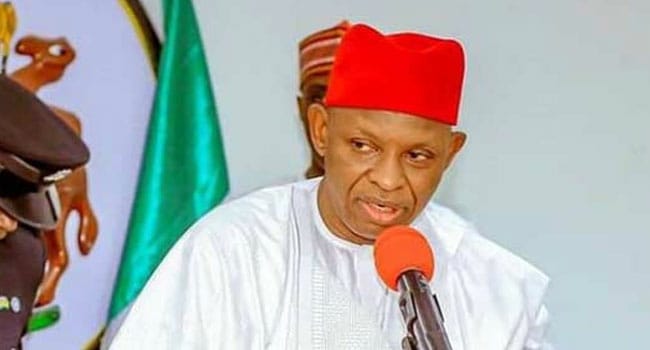
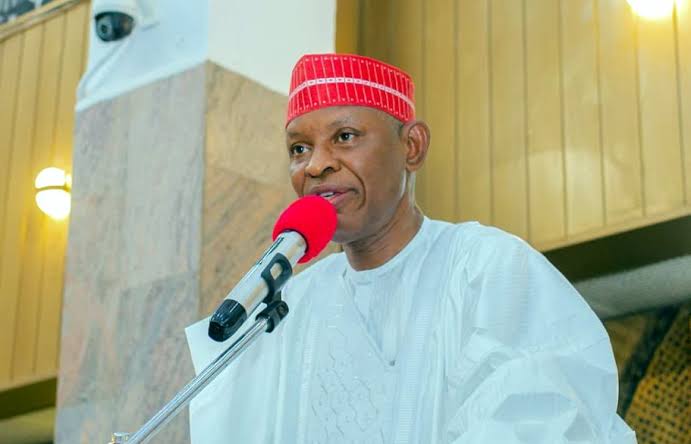
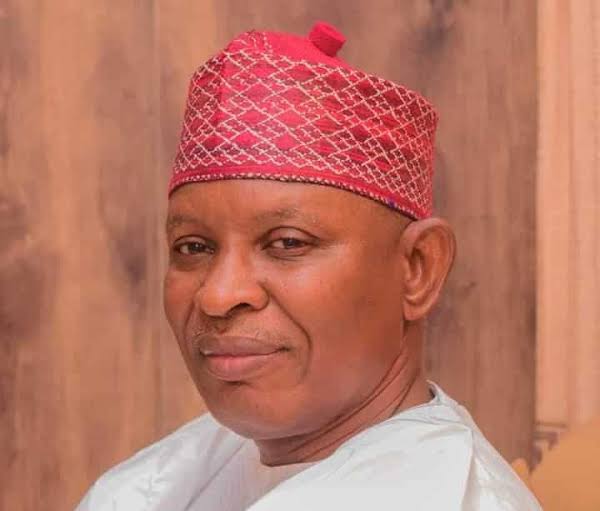
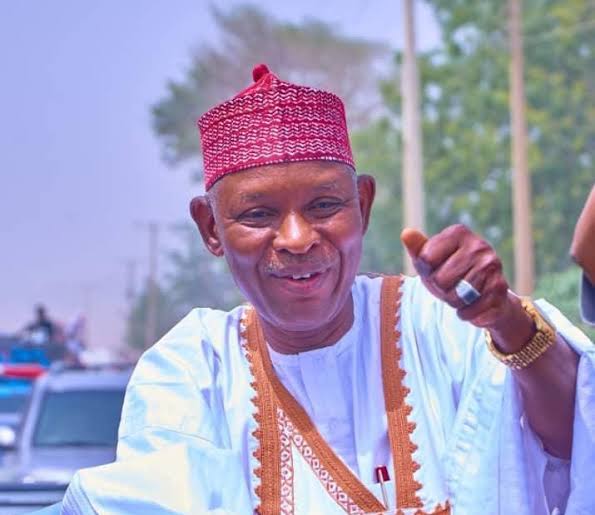
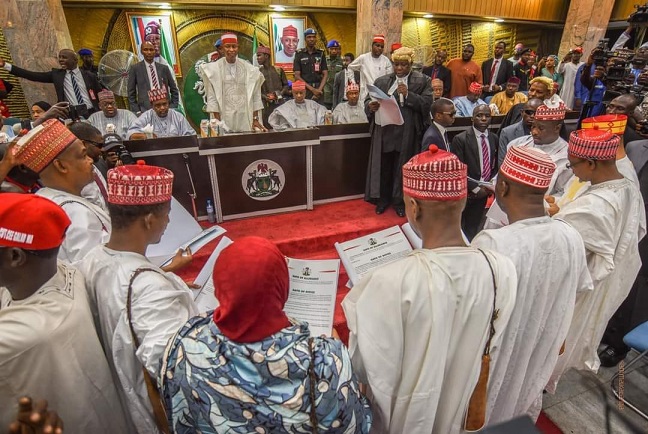
Abba Kabir Yusuf

Kwankwaso, Kwankwasiyya and Arewa beyond 2023

By Aminu Alhassan Kuba

During the 2023 general elections, Eng. Rabiu Musa Kwankwaso contested for the office of the President Federal Republic of Nigeria under his newly registered party, the New Nigeria People’s Party (NNPP). Unfortunately, he came a very distant 4th, winning just one State out of 36 plus the Federal Capital Territory, Abuja, with a little over 1 million votes. His party also presented candidates for the governorship in a few other states apart from Kano, and the closest it came to winning apart from Kano was in Taraba.

Before the elections, Senator  Rabiu Musa Kwankwaso had been engaged in a fierce political battle with his erstwhile political friend and deputy and present governor of Kano State, Dr Abdullahi Umar Ganduje.

In 2015, Kwankwaso supported Ganduje to succeed him, but afterwards, trouble started. In a video I watched sometime in 2018, Ganduje accused Kwankwaso of envy. He said he did everything to respect and be loyal to his former boss, but it seemed Kwankwaso wanted everything. He accused Kwankwaso of wanting to be governor by proxy.

The fight between the two finally culminated in the now infamous inconclusive governorship election of 2019, where Kwankwaso tried to unseat Ganduje and replace him with his former PA, former commissioner, son-in-law, now governor-elect Eng. Abba Kabiru Yusuf. In that titanic battle for Kano, Ganduje emerged victorious.

The win led to other unfortunate matters, including the dethronement and banishment of the then Emir of Kano, His Royal Highness Muhammadu Sanusi II, the balkanisation of the Kano Emirate into five (5) smaller entities and the eventual appointment of two of Sanusi’s cousins among others as Emirs of Kano and Bichi, respectively.

In the succeeding four years, the political rivalry and fight between Kwankwaso and his old friend and political ally only intensified, culminating in the defeat of Ganduje’s candidate by same Kwankwaso’s son-in-law Eng. Abba Kabir Yusuf in the just concluded governorship election in the State.

Following NNPP’s victory, Kwankwaso’s supporters mainly and some commentators have sought to present Kwankwaso as some political wizard in Northern Nigeria. While this is true to a certain degree and circumstance, it is more accurate if Kano and not Northern Nigeria was the point of reference.

Kwankwaso has indeed managed to remain politically relevant compared to his Northern governor colleagues, alongside whom he contested and won elections to become governor in 1999. However, since his stated goal is not to become or produce the governor of Kano State but to lead Nigeria as President and Commander in Chief, the fairest comparison should be with those who have demonstrated similar ambition. And in this category, the most worthy comparison should be with the President-elect, His Excellency Asiwaju Bola Ahmad Tinubu, former Senator and Governor of Lagos State.

This comparison is even worthier considering that Lagos and Kano share similarities in population, political history, economy and commercial relevance to South and Northern Nigeria, respectively.

Let’s take a dive

In 1992 when Tinubu won a seat to become Senator of the Federal Republic, Kwankwaso won one in Nigeria’s House of Representatives and became its deputy speaker.

In 1999, both Tinubu and Kwankwaso contested and won to become governors of Lagos and Kano, respectively.

In 2003, while Tinubu was re-elected for a second term in office despite Obasanjo’s backstabbing and cynical takeover of the entire South West (except Lagos, of course), Kwankwaso lost his seat to a former permanent secretary, Malam Ibrahim Shekarau, whom he had humiliated and relegated to a classroom teacher. Shekarau went on to serve two full terms as governor of Kano. Kwankwaso was eventually appointed Minister of Defence by Obasanjo.

In 2011 Kwankwaso returned to Kano for a second shot and won. He served the next four years, delivering spectacularly on the massive infrastructural transformation of Kano and investing heavily in education and social services. In addition, he provided scholarships to hundreds of Kano indigenes to undertake postgraduate studies around the world. By the end of his tenure in 2015, he easily transited to the Senate under the newly minted alliance party, the APC, with General Muhammadu Buhari’s CPC, Asiwaju’s AC and Atiku’s rebellious PDP G-5 governors.

 In the same period, Tinubu chose not to run for office but worked to build a formidable political base with the South West as its fulcrum, installing governors in at least four of the region’s six States, many of them his former commissioners and going beyond to support former comrade Adam Oshiomhole to take Edo from the PDP.

In the same period, Tinubu not only built the Lagos-Ogun axis as Nigeria’s financial and economic powerhouse, but his former appointees also became a Vice-President, ministers, governors, chief executives of agencies and parastatals of the Federal Government.

Kwankwaso and his Kwankwasiyya movement have failed to go beyond the borders of Kano into neighbouring states like Jigawa, Katsina, Kaduna, Bauchi, etc.

Notably, they have ruled Kano with his former deputy turned adversary for 16 years. Despite its industrial and commercial potential, Kano has failed to significantly grow its internal revenue base to compete favourably with its peers in the country. In a shocking manifestation of its leadership crisis, a civil service state like Kaduna now generates more internal revenue than Kano.

Again, in education, Kano tops the list of states with the most out-of-school children. This is where I find difficulty in understanding Kwankwaso’s education investment model of sending vast numbers of Doctors, Pharmacists, Nurses, Engineers and other university graduates outside Nigeria to undertake postgraduate studies while millions of children are roaming the streets wretched, hungry and illiterate.

While I do not begrudge the beneficiaries of his scholarship largesse, many of whom I know personally, I think the billions of naira public funds he spent in that endeavour would have been best spent in strengthening Kano’s capacity to educate its underprivileged poor urban and rural population.

Therefore, it’s now twenty-four years after Kwankwaso and Tinubu first became governors; Tinubu could comfortably lose Lagos but still win in the rest of Nigeria and become President; Kwankwaso could only win his Kano and ended up a distant 4th in the same presidential race. This is a testament to how far both have come.

To bolster the point further, while Kwankwaso has managed to build a competent and diverse political team across Nigeria, on the one hand, even in his beloved Kano and over 24 years, he could only find his son-in-law and former PA worthy of his trust to become governor.

Beyond Kano in the wider Arewa, he has failed to create a political support base. Instead, he is mainly seen as the head of a violence-prone, uncouth, fanatic and cult-like group willing to insult and denigrate anyone who dares to disagree with its methods. This is not without justification either. Evidence in utterances, actions and inactions from him, his closest lieutenants and supporters that they are willing to use violence to achieve political ends when push comes to shove.

The behaviour of his supporters after the governorship election in Kano in which his candidate was declared the winner and his silence speak volumes. After attacking and burning down Rarara’s property within the Kano metropolis, no word of condemnation or reproach came from the Madugu [leader] or this party.

Despite Kwankwaso’s failings, however, at this moment of Nigeria’s political journey, Arewa needs a viable opposition to put the APC-led government on its feet from May 29th this year. And Kwankwaso’s NNPP, with a base in Kano, could position itself as a viable platform for the role. From the results of both Presidential and Governorship elections so far declared and its history in this part of Nigeria, PDP can no longer pose a serious challenge to the ruling APC.

Now practically wiped out of the North East, North West and North Central except in some minority enclaves like Taraba and Plateau and unfortunate governance failure examples like Zamfara and possibly Adamawa, PDP is practically dead. In Bauchi and Adamawa (maybe), I don’t see PDP surviving beyond 2027. All these added that Alhaji Atiku Abubakar, its leading financier, is now both old and tired. A Kwankwaso-led NNPP could therefore become a viable alternative for the greater North.

But for NNPP and Kwankwaso to take up this role, I suggest they need to rebrand; Kwankwaso needs to convince the rest of Arewa and Nigeria that his movement can grow beyond the personality cult Kwankwasiyya is now.

He must also convince the rest of Arewa and Nigeria that Kwankwasiyya is not a violence-prone provincial cult that quickly resorts to arson and looting at the slightest opportunity. Finally, he must convince the rest of Nigeria that when his interests clash with that of the State, that of the State will take precedence and that he is willing and able to reign in his supporters.

Aminu writes from Kaduna and can be reached via aminukuba@yahoo.com.

Kano Governor-elect nominates 65-man transition council

By Muhammadu Sabiu  

The 65-person 2023 Transition Committee has been unveiled by Kano State Governor-elect Engr. Abba Kabir Yusuf (Abba Gida Gida) ahead of his inauguration. 

Sanusi Bature Dawakin Tofa, the press secretary to the governor-elect said this in a statement on Friday. According to the statement, Dr. Abdullahi Baffa Bichi, a former executive secretary of the Tertiary Education Trust Fund (TETFUND) and senatorial candidate for Kano North on the platform of NNPP in 2023, has been named chairman of the committee, with Abdullahi Musa, a retired permanent secretary, to serve as secretary. 

The statement says, ‘’His Excellency, the Kano State Governor-elect will inaugurate the Committee on Saturday 1st April, 2023 by 2:00 PM. Below is the full list of the Main Committee membership, while sub-committees on various sectors and sub-sectors would be announced in due course.” 

A report seen by The Daily Reality has given the list of committee members as follows: 

Sen. AB Baffa Bichi, PhD Chairman 

Prof. Hafiz Abubakar Member

Hon. Shehu Wada Sagagi Member

Hon. Umar Haruna Doguwa Member

Hon. Ahmad Garba Bichi Member

Dr Ali Haruna Makoda Member

Barr Maliki Kuliya Member

Barr. Haruna Isa Dederi Member

Dr. Danyaro Ali Yakasai Member

Engr. Muhammad Diggol Member

Dr Ibrahim Jibrin Provost Member

Sheikh Aminu Daurawa Member

Dr. Labaran Abubakar Yusuf Member

Prof Sani Lawan MFashi Member

Alh. Umar S. Minjibir Member

Dr. Danjuma Mahmud Member

Engr. Kabir Jibrin Member

Dr. Farouk Kurawa Member

Engr. Dr. Marwan Ahmad Member

Dr. Aminu Garba Magashi Member

Alh. Aminu Ibrahim Abba Member

Alh. Laminu Rabiu Member

Engr. Bello Muhd Kiru Member

Engr. Garba Ahmed Bichi Member

Hon. Tajudeen Othman Member

Hajiya Sadiya Abdu Bichi Member

Hon. Yusuf Jamo Member

Hon. Nura Dankadai Member

Alh Yusuf Lawan Member

Hon. Umar Maggi Gama Member

Hajiya Azumi Namadi Bebeji Member

Prof. Auwalu Arzai Member

Rt. Hon. Gambo Sallau Member

Bar. Muhuyi Rimingado Member

State Chairman, NLC Member

State Chairman, KACCIMA Member

Alh. Audu Kirare Member

PS Adda’u Kutama Member

PS Aminu Rabo Member

Alh. Sule Chamba Fagge Member

Alh. Usman Adamu Gaya Member

Engr. Tijjani Yunkus Member

Engr. Abubakar Argungu Member

Alh. Yahaya Musa Member

Rt. Hon. Alasan Kibiya Member

Prof. Dahiru Sani Shuaibu Member

Arc. Ibrahim Yakubu Member

Dr. Kabiru Muhd Kofa Member

Dr. Mustapha Sani Member

Sheikh Malam Abbas Abubakar Daneji Member

Bar. Bashir Yusuf Mohd Member

Bar. Ibrahim Wangida Member

Umaru Idi MemberDr. Sulaiman Wali Member

Hon. Rabiu Liliko Gwarzo Member

Alh. Kabiru Gwarzo Member

Hajiya Aisha Kaita Member

Hajiya Aisha Lawan Saji Member

Ali Yahuza Gano Member

Hon. Auwal Mukhtar Bichi Member

Alh. Musa Fagge Member

Hon Wakili Aliyu Garko Member

Tukur Bala Sagagi Member

Dr Nura Yaro D/Tofa Member

PS Abdullahi Musa Member/Secretary 

Abba Kabir and the challenges of education reform in Kano

By Bashir Abdu Muzakkari, Ph.D.

Education is a fundamental right of every individual, and it is crucial to achieving personal and national development. The availability of quality education is a critical factor in reducing poverty, improving health, economic prosperity, and fostering social equality. However, access to quality education remains a challenge in many countries, particularly in developing nations. To address this challenge, governments and stakeholders must take deliberate steps to ensure that education is accessible to all.

The Kano State Governor-elect, Engr. Abba Kabir Yusuf (Abba Gida-Gida), has a keen interest in the provision of quality education in Kano. In his plan to ensure that education is accessible to all, he has outlined several critical policies that will improve access to quality education which include: free education, establishment of additional schools, providing modern furniture, teacher recruitment, school feeding and uniforms, initiation of Mega Schools Policy, and the girl-child education initiative among others.

These critical policies are part of Abba’s Blueprint titled “Our Commitment for Kano: 2023 and Beyond”, and how they can improve access to quality education in Kano state.

To begin with free education: this is a crucial though critical policy in ensuring that education is accessible to all. Abba has proposed the provision of free education for all children in Kano state. This will eliminate the barriers that prevent children from accessing education, particularly those from impoverished backgrounds. Free education will ensure that all children, regardless of their socioeconomic status, can access quality education. The idea is to reduce the number of children – including beggars roaming our streets.

Similarly, establishment of additional schools in under-served areas will help to increase access to education. Abba has proposed the establishment of additional schools in rural areas and areas with a high number of out-of-school children. This will ensure that children in these areas have access to quality education at their doorstep.

In addition, the provision of modern school furniture is essential in ensuring that children can learn in a comfortable environment. His Excellency has proposed the idea “One-Child-One-Chair” to ensure that children can learn in a comfortable environment. This will help to improve schools’ attending and allows teachers to cater for the basic and individual needs of the pupils in their classes.

Moreover, to actualize the above policies, teacher recruitment is necessary. Abba Kabir has proposed the recruitment of qualified teachers to meet the demand for the 21st century learning system. Additionally, teacher training and retraining programmes had been developed to ensure that teachers have the necessary skills and sound knowledge to meet the demands of the standard global system.

Furthermore, school feeding and uniforms are essentials in promoting free education policy. Abba Kabir Yusuf has supported the continuation of school feeding program and distributing free uniforms to improve attendance and ensure that pupils learn with ease. This will help to reduce the burden on families and ensure that children have access to basic needs such as food and clothing.

Not only that, Abba Kabir Yusuf has proposed the initiation of Mega Schools Policy to address the challenges of inadequate resources and infrastructure in many schools. Mega schools are large schools that can accommodate a high number of students and provide all the necessary facilities, including classrooms, libraries, laboratories, and sports facilities. This policy helps to free the existing schools from over-crowded classes and improve free access to education in all parts of Kano State.

Finally, Abba has proposed the promotion of girl-child education initiatives to ensure that girls have equal access to education. This initiative is crucial in addressing the challenges of gender inequality in education, hawking as well as addressing the barriers that prevent girls from accessing education.

Abba’s plan to improve access to quality education in Kano state is comprehensive and addresses critical areas that need attention. By implementing these measures, it is certain people of Kano will have access to free quality education, regardless of their socioeconomic status or gender.

Bashir Abdu Muzakkari, Ph.D. writes from Kano and is a Senior Lecturer at Yusuf Maitama University, Kano.

Stop construction in public places – Kano Gov-elect warns residents

By Uzair Adam Imam

The Kano State Governor-elect, His Excellency, Engr. Abba Kabir Yusuf, has warned residents to stop any ongoing building in public places in the state.

The Govenor-elect also strongly cautioned that anyone who contravenes this warning is doing it at his or her own risk.

He made this warning in a statement Thursday by his Chief Press Secretary, Sanusi Bature Dawakin-Tofa.

There have been popular outrages by the citizens in the state over the selling of some parts of schools and hospitals by Govenor Abdullahi Umar Ganduje.

The statement read, “You are advised to discontinue any construction work on public land within and around the following: All schools in the State, all religious and cultural sites in the State, all hospitals in the State, all graveyards in the State, and along the city walls of Kano.

“You are also advised to discontinue the demolition of, and the construction on, all existing public buildings belonging to the government and people of Kano State.

This Advisory is issued in the public interest, effective from today Thursday 30th March, 2023 till further notice. Any contravener does so at his/her on risk, please,” the statement concluded.

If we were from Kano, Abba Gida Gida would be our choice – Group

By Ahmad Deedat Zakari

A group of persons from different states in Nigeria, under the auspices of Concerned Citizens for Human Rights and Democracy, have expressed their thoughts on the forthcoming gubernatorial election in Kano State.

In a now viral WhatsApp message, the group said they would vote for Abba Kabir Yusuf, the governorship candidate of the New Nigeria Peoples Party, over Nasir Yusuf Gawuna of the All Progressives Congress.

The group predicated their concerns on the failure of the administration of the incumbent governor, Abdullahi Umar Ganduje.

According to them, poverty, non-payment of gratuity and the illegal sales of government properties characterise Ganduje’s administration.

They further opine that Gawuna’s intention to continue with the policies of the incumbent governor is shameless and disastrous.

A paragraph in the article reads:

“Upon all the offences and atrocities committed to the people of Kano State by Mr. Ganduje and his cabinet, still the All Progressive Congress’ candidate in the next coming Saturday Governorship elections in Kano State, Dr. Nasiru Gawuna had without slightest feeling of shame pledges to continue with the unpopular policies and oppressive programmes of the present administration of the state if elected. But no wonder! since, the duo are accomplice in the destruction of the economy and society of Kano.”

The signatories to the article include:

  1. Dr. Bolaji Raheem, Sociologist (Lagos)
  2. Mr. Oluka Jekky, Medical Doctor (Port Harcourt)
  3. Mrs. Nneka Obi, Activist (Anambra)
    Hebert Kingsley, Historian (Akwaibom State)
  4. Ali Yabo, Trade Unionist ( Sokoto State)
  5. Mallam Babawo Ibrahim, Writer ( Katsina State)
  6. Dr. Mvandiga Tor Political Scientist, Benue State
  7. Ibrahim Zunkur, Pastor ( Plateau State)
  8. Muhammad Wunti, Teacher ( Bauchi State)
  9. Babagana Musa, Aid Worker ( Borno)
    Saleh Garba , Islamic Cleric/Imam ( Jigawa)

Kano 2023: NGOs are part of my government – Abba Kabir

By Aisar Fagge

The gubernatorial candidate of the New Nigeria Peoples Party, NNPP, Eng. Abba Kabir Yusuf, also known as Abba Gida-Gida, said Non-Governmental organizations (NGOs) are part of his government.

Yusuf made this statement on Tuesday during a continuation of interactive session series organised by a coalition of 21 Kano CSOs and NGOs aiming to promote peace and development of Kano State.

Yusuf said, “NGOs are part of my government. I need creative people who will assist us to make Kano State better. People seem to relegate the power of NGOs when it comes to good governance. They have important roles to play in the socio-economic aspects of human development. Our laws have recognized them. They can even take anybody who frustrates them to court and demand prosecution.

“Our administration will give special consideration to youth development. I, personally, have been supporting youths financially in various capacities, including national competitions. Social media activists and influencers are also part of our plans,” he added.

When asked about Child Protection Bill, the former commissioner said, “We’ll support it. We’ll implement it. We’ll give it maximum support. We’ll bring it back even if it is discarded. These poor kids are being victimized and molested. We’ll not tolerate it anymore,” he frowned.

The event gathered people from all walks of life. People living with disabilities sent their representatives who complained about how they have been constantly ignored by politicians. He assured them important posts such as advisers, MD and [possibly] a commissioner. He lastly appealed to an audience who are eager to see his blueprint, which he said will be unveiled very soon.

The convener, Dr Aminu Magashi Garba, thanked Eng. Abba Kabir Yusuf and his team spared their time to grace the event and interact with the audience on critical issues on health, education, youths, women, the environment, commerce, agriculture, and technology, among others.