2027

Party Primaries and the Powers of Voters

By Isyaka Laminu Badamasi

As political parties in the country gear up to conduct primary elections in preparation for the 2027 general elections, they should ensure strict adherence to the laid-down procedures put in place by electoral acts and those of their parties to avoid further internal wranglings and legal tussles that will ultimately harm the party’s chances of winning the election or maintaining victory in courts. 

The process adopted by some political parties in some states for selecting the party’s flag bearers for different posts exposes how stakeholders underestimate voters’ power by fielding candidates who are far below the electorate’s goodwill and requirements for winning elections. 

The electoral acts recognise only two processes that political parties can follow in conducting primary elections: direct primaries, which allow party card-carrying members to elect their candidates, or consensus, which allows contestants to withdraw their contests and announce their support for one person among themselves. 

As seen in many states that adopt the consensus process in selecting their candidates and the issues that followed so far, it is clear that stakeholders neglect the powers of voters by anointing persons with questionable political values as their preferred candidates without considering the legal implications of such decisions (remember Zamfara state) or the electoral values of the persons they selected.

If public acceptance and popularity are the selling points of any politician, then some candidates do not possess the qualities of a counsellor, but present themselves as gubernatorial aspirants, either because they can afford the nomination forms and want to trend and remain relevant in the scheme of things or because they are playing a deceitful game in the event of joining the negotiations table.

While appealing for a peaceful conduct of free and fair process from the remaining political parties that are yet to conduct their primaries, they should also be mindful of the people they will present for elections, as winning elections do not limited to the platform (political party), it is about goodwill, clear and practicable manifesto and the electoral values of the persons they presented as their flag bearers. 

To the electorate, they should ensure their voter cards are accessible. To those who do not possess the ‘electoral weapon’, the third phase of the Continued Voter Registration (CVR) will commence today, Monday, 11th May 2026, and end on Friday, 10th July 2026. During this period, eligible citizens who have reached the age of 18, as well as those who were unable to register in earlier phases, should seize this opportunity to do so.

We at the Initiatives for Sustainable Development (I4SD) are committed to ensuring free, fair and peaceful conduct of the 2027 general elections in the country. 

Isyaka Laminu Badamasi is of No 555, Ajiya Adamu Road, Bauchi, Bauchi State.

Kebbi: The Factor That May Ultimately Play a Crucial Role 

By Bilyamin Abdulmumin, PhD

The politics of the Jega/Gwandu/Aleiro federal constituency fascinate me for several reasons: All three major contenders hail from Jega, and for three consecutive election cycles, they have contested in tightly fought primaries and elections.

Now, another cavalry, a former Comptroller-General of the Nigerian Correctional Service, threw his hat into the foray. The addition of Alhaji Jafar Jega to the list has dramatically changed the calculations and trajectory of the constituency politics. Because Ahmad Jafar enjoys the massive goodwill of the people in Kebbi State. Unlike some politicians who claimed that people called on them to contest, Ahmad Jafar genuinely enjoys that goodwill. 

By virtue of the high office he held, the former CG secured a number of jobs, especially in this contingency. Community leaders, clerics, and politicians drove to his house to pay their respects and to appreciate his gesture. Therefore, such a person joining the race must add dynamics to the game. 

The incumbency of officials can either be a tool for success or a vehicle for their downfall. Honourable Mansur Musa (Dan Jamiah), the current House representative, unarguably used this opportunity to his advantage. He used his position and oversight function as deputy chairman of the Federal Road Safety Commission in the lower chamber to bring infrastructure development never seen in this constituency. The citizens left in awe, reduced to asking this burning question: Can an NA member carry out such development? 

It should never be forgotten in a hurry that Dan Jamiah overcame all odds against him, coming from the PDP to defeat the then-incumbent and ruling party, the APC. Now, after getting into office, he consolidated the people’s goodwill even further.

Ahaji Kabiru Labbo Ajiya delves into the current battle as energetically as always. He is a populist, which is why he commands significant goodwill among voters. The part that particularly sets Ajiya apart is his initiatives in business and job creation. It’s without a doubt that Ajiya will hustle through the NA position to bring the developmental projects in this constituency to equal levels. The hurdle that had been standing before Ajiya was the primary elections. The political scheming and calculation were previously against him.

Alhaji Umar Danbuga’s political trajectory is seen as elite-driven. So, in this region where candidates’ emergence highly depends on elite goodwill, this is to the face of Alhaji Umar. In addition, the job opportunities and sponsorships through his office, as well as his personality, are part of his legacy. However, the odds against Alhaji Danbuga, Secretary, are that he has no benefit of doubt. He was the longest-serving member for this constituency. This makes different voters express different views about his candidacy.

I think Dan Jami’ah and Ajiya belong to the Senator Aleiro camp within the APC, while Jafar Ahmed and Danbuga Secretary belong to the Dr Nasir Idris/ Senator Atiku Bagudu camp. This factor may ultimately play a crucial role in deciding who emerges as the ticket-bearer come 2027.

Mitigating the Scourge of Flooding in Nigeria

By Faith Mamman

Flooding is one of the most pressing environmental challenges facing Nigeria today. The devastating effects of flooding have been felt across the country, with many communities being displaced, homes destroyed, and lives lost. Despite the severity of the problem, it appears that the Nigerian government is not taking the necessary steps to mitigate the effects of flooding.

The frequency and severity of flooding in Nigeria have increased significantly over the years. The country has experienced some of the worst flooding in its history, with the 2012 flooding being a stark reminder of the devastating effects of flooding. The flooding, which affected over 30 states and displaced over 2 million people, is still fresh in the minds of many Nigerians. Similarly, the 2018 flooding, which affected over 20 states and resulted in the loss of many lives, is another stark reminder of the devastating effects of flooding in Nigeria.

Despite the severity of the problem, the Nigerian government’s response to flooding has been largely inadequate. While the government has established various agencies and initiatives to address the issue of flooding, these efforts have been hindered by a lack of funding, inadequate infrastructure, and poor coordination. For instance, the National Emergency Management Agency (NEMA), which is responsible for coordinating disaster response efforts in Nigeria, has been criticized for its slow response to flooding disasters.

Furthermore, the Nigerian government’s approach to managing flooding has been largely reactive, rather than proactive. While the government has invested heavily in responding to flooding disasters, it has done little to prevent or mitigate the effects of flooding. For instance, the government has failed to invest in critical infrastructure, such as dams, levees, and flood-control systems, which are essential for preventing or mitigating the effects of flooding.

In addition, the Nigerian government’s lack of investment in flood-risk mapping and early warning systems has also contributed to the country’s vulnerability to flooding. Flood-risk mapping involves identifying areas that are prone to flooding and taking steps to mitigate the effects of flooding in those areas. Early warning systems, on the other hand, involve providing people with advance warning of impending floods, so that they can take steps to protect themselves and their property.

The lack of investment in these critical areas has resulted in Nigeria being one of the most vulnerable countries in the world to flooding. According to the United Nations, Nigeria is one of the top 10 countries in the world that are most vulnerable to flooding. This is a stark reminder of the need for the Nigerian government to take the issue of flooding seriously and invest in critical infrastructure and systems that can help to prevent or mitigate the effects of flooding.

Moreover, the Nigerian government’s failure to address the root causes of flooding has also contributed to the country’s vulnerability to flooding. The root causes of flooding in Nigeria include climate change, deforestation, and poor urban planning. Climate change has resulted in increased rainfall and more frequent extreme weather events, which have contributed to the severity of flooding in Nigeria.

Deforestation has also contributed to the severity of flooding in Nigeria. Trees play a critical role in absorbing rainfall and preventing soil erosion. However, the widespread deforestation that has occurred in Nigeria has resulted in the loss of many trees, which has contributed to the severity of flooding.

Poor urban planning is another root cause of flooding in Nigeria. Many Nigerian cities are characterized by poor drainage systems, inadequate waste management, and a lack of green spaces. These factors have contributed to the severity of flooding in many Nigerian cities.

To address the issue of flooding in Nigeria, the government needs to take a more proactive approach. This includes investing in critical infrastructure, such as dams, levees, and flood-control systems. The government also needs to invest in flood-risk mapping and early warning systems, which can help to prevent or mitigate the effects of flooding.

Furthermore, the government needs to address the root causes of flooding in Nigeria. This includes taking action to address climate change, such as reducing greenhouse gas emissions and promoting sustainable land use practices. The government also needs to take action to address deforestation, such as promoting reforestation efforts and enforcing laws against deforestation.

In addition, the government needs to promote good urban planning practices, such as designing cities with adequate drainage systems, waste management facilities, and green spaces. By taking these steps, the government can help to prevent or mitigate the effects of flooding and reduce the risk of flooding disasters in Nigeria.

In conclusion, the issue of flooding is a serious problem that requires a more proactive approach from the Nigerian government. The government needs to invest in critical infrastructure, address the root causes of flooding, and promote good urban planning practices. By taking these steps, the government can help to prevent or mitigate the effects of flooding and reduce the risk of flooding disasters in Nigeria.

Faith Mamman, Department of Mass Communication, University of Maiduguri.

Supreme Court Reinstates David Mark as ADC Leader

By Muhammad Abubakar

The Supreme Court of Nigeria on Thursday set aside an order of the Court of Appeal to maintain the status quo ante bellum in the leadership crisis rocking the African Democratic Congress, ADC.

A five-member panel of the apex court, led by Justice Mohammed Lawal Garba, held that the Abuja Division of the Court of Appeal acted without jurisdiction when it issued the order after already dismissing the case filed by a rival faction.

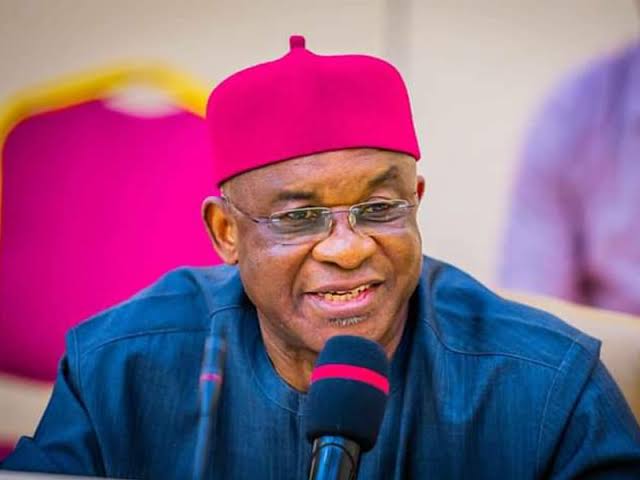
The decision effectively restores the recognition of the party’s executive committee led by former Senate President David Mark.

Prior to the ruling, the Independent National Electoral Commission, INEC, had removed David Mark and his executive team from its portal in compliance with the lower court’s status quo order.

The Supreme Court directed all warring factions to return to the Federal High Court to continue and fully determine the substantive suit regarding the party’s leadership.

The ADC has been embroiled in a leadership crisis following a restructuring that brought David Mark in as National Chairman and former Osun State Governor Rauf Aregbesola as National Secretary, a move fiercely contested by a rival faction led by Nafiu Bala Gombe.

2027: Our Silence Is Not a Strategy, Our Vote Is

By Malam Aminu Wase 

As 2027 approaches in Nigeria, a troubling sentiment is spreading among many citizens. There is no point in voting. Frustration is understandable. Economic hardship is real. Insecurity is real. Public disappointment is real. But choosing silence at the ballot box is not a solution;  it is surrender.

Democracy does not collapse in a single dramatic moment. It weakens gradually as citizens withdraw, participation declines, and people convince themselves that their voices do not matter. The most dangerous political decision is not voting for the wrong candidate; it is refusing to vote at all.

If we are dissatisfied with leadership, the answer is not apathy. It is participation. If we desire better governance, accountability, and reform, we must use the one instrument that gives power to ordinary citizens, the ballot.

Complaints on social media do not change governments. Private anger does not change governments. Boycotts by the disillusioned do not change governments. Votes change governments.

When citizens stay home on election day, they do not protest the system; they strengthen the influence of those who show up. Every empty polling unit is not a statement of resistance; it is an opportunity handed to someone else to decide the future.

The power to shape 2027 does not lie solely with politicians. It lies with citizens who choose to participate. Leadership is not imposed in a democracy; it is permitted. And permission is granted through votes.

This is not about blind loyalty to any party or personality. It is about responsibility. It is about understanding that disengagement guarantees continuity of whatever we claim to oppose. If we want reform, we must vote for it. If we want accountability, we must demand it through participation.

Nigeria’s future will not be written by observers. It will be written by participants. In 2027, the real question will not only be who wins. The real question will be, did we show up?

Silence is not a strategy. Withdrawal is not resistance. Our vote is our voice, and 2027 is the time to use it.

Malam Aminu Wase writes from Kaduna. He can be reached at aminusaniusman3@gmail.com.

INEC cannot walk into 2027 with this crisis hanging over its Chairman

By Yakub Aliyu

Nigeria has entered dangerous territory. The country has appointed as Chairman of the Independent National Electoral Commission (INEC) a man whose most prominent public writing is an 80-page brief accusing whole communities of committing genocide. That document, published in 2020, framed national violence almost entirely through a Christian-victimhood narrative and presented sweeping, contested claims that many Nigerians find offensive, incomplete, or simply inaccurate.

Today, the author of that brief is the referee of our national elections. And yet, the political class, from the Presidency to the Senate to the parties, is maintaining a silence so absolute that it borders on negligence.

It is this silence, not the controversy itself, that is now the real danger.

The Integrity of Elections Is a National Security Issue
Every Nigerian knows elections in this country are not routine administrative events. They are national security operations involving millions of citizens, overstretched security agencies, and volatile political identities. The neutrality of INEC is therefore not optional. It is foundational.

When the person leading that institution has authored a highly divisive document, which is now weaponised against the country by some foreign powers, the question is no longer academic. It becomes a matter of national security.

If the chairman once wrote that a section of the country was engaged in “genocide,” how will those communities trust him? How will they interpret his decisions? How will they accept results in a tight contest? And what happens if the outcome of 2027 is close enough for suspicion to matter?

These are not theoretical questions. They are national security scenarios.

How Did This Appointment Pass Through Screening?
The more the issue is examined, the more troubling the answers become.

  1. The Executive Vetting Was Inadequate.
    It is difficult to believe that the Presidency did not know about the 2020 brief. It is publicly available and widely circulated among advocacy groups. If the government did not know, it raises questions about the quality of its due diligence. If it knew and ignored it, that is an even bigger problem.
  2. The Senate Screening Was Superficial
    A nomination of this magnitude requires hard questions about ideology, neutrality, and past publications. No such questions were asked. The Senate treated one of the most sensitive constitutional positions as a formality. This is a failure of oversight.
  3. Political Actors Fear Religious Backlash
    Many southern politicians do not want to appear to be “attacking a Christian advocate.” Many northern politicians do not want to inflame tensions by addressing a document they consider deeply inaccurate. And politicians on both sides fear being dragged into arguments that can harm their coalitions.

The easiest solution for them is silence.

  1. Some Actors Prefer a Weak INEC
    A chairman under suspicion is easier to pressure. A weakened INEC is more pliable. Some forces benefit from an institution whose credibility can be questioned but whose cooperation can be secured.

This is the cynical logic but it must be acknowledged.

Why the Silence Is Dangerous

The real risk is not that the chairman is personally biased. The risk is that millions of Nigerians may believe he is, especially when political temperature rises.

Nigeria’s democracy cannot run on suspicion. If a northern, Muslim candidate loses narrowly, the chairman’s own words from 2020 will be used immediately:
“How can the election be fair when the umpire once accused us of genocide?”

This single sentence is enough to delegitimise an election. In a fragile environment, it is also enough to trigger unrest.

Nation-states collapse not from the actions of one individual, but from the inability of institutions to command trust. INEC cannot afford this weakness. Nigeria cannot afford this gamble.

The Moral Issue Cannot Be Ignored
Beyond politics lies a moral question. Every section of Nigeria has suffered from violence. Christians in some regions have endured brutal attacks. Muslims in others have buried thousands. Any narrative that elevates one community’s pain while erasing another’s deepens division.

The brief published in 2020 was not balanced. It did not acknowledge the wide pattern of atrocities across faith and region. That lack of balance is precisely what raises concern today, not whether the author meant well or not.

Leadership of INEC must be above suspicion. It must be acceptable to all parts of the country. At present, that foundation has been shaken.

Why Is Everyone Silent?
The Presidency is silent because acknowledging the issue means admitting an error in judgment. The Senate is silent because speaking now exposes the weakness of its oversight. The political parties are silent because taking a position risks angering key religious blocs. Security agencies are silent because the moment they comment, the crisis appears larger.

But silence does not preserve stability. Silence delays conflict. Silence leaves the field open for extremists, propagandists, and opportunists.

Nigeria cannot enter 2027 with a question mark hanging over the referee.

What Needs to Happen

Three things are necessary.

  1. The INEC Chairman must address the Brief publicly. He does not need to renounce his past or apologise for advocacy, but he must clarify:
    —that INEC belongs to all Nigerians,
    —that all communities have suffered, and
    —that his role demands strict neutrality. Not making this clarification would mean he has lost the moral authority to remain in that office.
  2. The government must break the silence.
    Here, the Presidency must explain whether the brief was vetted, how it was evaluated, and why the appointment proceeded. Nigerians deserve transparency.
  3. Political leaders must safeguard the integrity of elections. If trust cannot be rebuilt, other constitutional options exist. The aim is not punishment but protection of national stability.

A Final Word

Nigeria stands at a crossroads. This issue will not disappear. It will resurface at the most dangerous moment: during the heat of the 2027 elections. The silence of today will become the crisis of tomorrow.

The country cannot sleepwalk into an avoidable disaster.

If INEC is weakened, Nigeria is weakened. If trust in the umpire collapses, no winner will have legitimacy. And if political leaders continue to pretend that this controversy is insignificant, the consequences will arrive at a cost far higher than the discomfort of speaking the truth today.

It is time to speak. It is time to act. And it is time to protect the Republic.

2027: Why replacing Shettima with Kwankwaso would be Tinubu’s biggest mistake

By Musa Shehu

The rising speculation that President Bola Ahmed Tinubu may replace Vice President Kashim Shettima in the 2027 elections is not just a distraction—it is a dangerous political gamble that could cost the All Progressives Congress (APC) everything it has built since 2015.

While official voices try to downplay the narrative, recent events—especially within the party’s North-East wing—indicate that the matter is no longer mere rumour. What happened in Gombe, the calculated omissions in party endorsements, and the president’s deafening silence all point to a coordinated, if cautious, effort to test the waters of a political switch. But history, logic, and the current political climate all speak clearly against such a move.

Also, there has been another disturbingly growing speculation that President Tinubu may consider replacing Vice President Kashim Shettima with Dr. Rabiu Musa Kwankwaso. While this idea may appear strategic on the surface, it would be a serious miscalculation.

Kwankwaso is not as capable or disciplined as Shettima. He lacks the patience, composure, and loyalty that Shettima has consistently demonstrated both during the 2023 campaign and throughout his time as vice president. Unlike Shettima, who has proven to be a team player and a stabilizing figure in the presidency, Kwankwaso is widely seen as a local champion whose political relevance rarely extends beyond Kano.

Again, Kwankwaso is also known for his domineering style and confrontational approach. He often moves with a crowd of blindly loyal supporters who tend to stir division rather than build consensus. Tinubu needs a dependable and steady partner, not a disruptive and self-centered figure who could complicate governance. Replacing Shettima with Kwankwaso would be inviting internal crisis, not national progress.

Moreover, Shettima is not just a placeholder or ceremonial figure in the Tinubu presidency. He was a key player in Tinubu’s emergence, standing firmly with him when many in the North, especially the political elite, were either undecided or opposed to Tinubu’s ambition.

His nomination as vice president was not just strategic—it was loyal, bold, and calculated to balance the controversial Muslim-Muslim ticket in a way that maintained the party’s regional grip while managing national tension. Attempting to discard him now undermines that delicate balance and sends a dangerous message to APC loyalists and the broader Northern constituency: loyalty is negotiable, and regional representation can be sacrificed at will.

Recent developments in the APC suggest that some within the party see Shettima as expendable. His name was glaringly omitted during key moments in the party’s North-East stakeholders’ meeting in Gombe. The violent reactions from party delegates who stormed the stage, chanting Shettima’s name and attacking speakers, are not random acts of protest. However, they reflect genuine political frustration and a deep sense of betrayal.

The North-East, especially Borno—Shettima’s home state—has stood firmly behind the APC even in difficult times. Discarding its most prominent representative in the federal government would not only be unwise, but also politically suicidal.

Moreover, dropping a sitting vice president in a bid for second term is historically rare and politically dangerous. Nigeria’s democratic experience, shaky as it is, has shown that stability in leadership tickets often yields better results.

Obasanjo retained Atiku in 2003 despite personal and political differences. Jonathan ran with Sambo in both 2011 and 2015. Buhari did not drop Osinbajo in 2019. In each of these cases, keeping the vice president on the ticket was a signal of continuity, unity, and loyalty to political partnerships. So why does Tinubu attempt to break from this tradition? This, according to many, will not be seen as strategic—it will be interpreted as cold, calculated betrayal.

Moreover, there is also no credible reason that has been given—or can be given—for dropping Shettima. He has not been involved in any scandal. He has not rebelled against the president or the party. He continues to represent the administration with measured tone, loyalty, and a calm that contrasts with the chaos in some parts of the country.

The idea that he lacks “visibility” is hollow. Shettima has always been a backroom operator, more interested in delivering results than seeking applause. That was his style as governor of Borno, and it remains his approach as vice president.

Furthermore, the APC risks opening old wounds and repeating past political mistakes if it proceeds with this plan. In 2015, the PDP lost its northern base largely due to internal exclusion and the perception that it had betrayed zoning arrangements. That single miscalculation allowed a coalition to form around Buhari, ultimately bringing the APC to power. Tinubu himself benefitted from that revolt. For him to now allow—or lead—a similar alienation of a key northern figure would be politically disastrous.

What is unfolding now mirrors the political climate of 1983, when President Shehu Shagari removed his vice president, Alex Ekwueme, under pressure from internal party factions. That decision split the party, weakened Shagari’s legitimacy, and accelerated the military coup that followed. The cost of betraying one’s political base in a fragile democracy like Nigeria’s is always steep. APC leaders, especially those urging a replacement, would do well to revisit that history.

Perhaps the most unsettling part of this entire episode is President Tinubu’s silence. Unlike his predecessors, who openly reaffirmed their vice presidents ahead of their second-term bids, Tinubu has allowed ambiguity to take root. The clarification by his media aide, Bayo Onanuga, that the president will only choose his running mate after accepting the party nomination is technically correct—but politically tone-deaf. The impression it leaves is that Shettima’s position is hanging by a thread. That kind of uncertainty does not build party confidence; it fractures it.

In truth, the campaign to replace Shettima is less about religion or regional balance and more about ambition—by those who believe they deserve the VP slot, and by those who think they can engineer a political realignment in their favour. But these short-term calculations ignore the long-term damage they could cause. The North-East has already shown signs of agitation, and the idea of switching loyalty to the PDP or other parties is no longer hypothetical. If APC loses that bloc, no amount of last-minute reconciliation will save it in 2027.

President Tinubu still has time to shut this rumour down and make it clear that the 2023 ticket remains the 2027 ticket. Anything less will continue to create chaos within the party and hand the opposition a ready-made campaign message. Nigerians are watching.

The North-East is watching. The APC base is watching.

Musa Shehu wrote in from Kano State, Nigeria.

APC cautions Ndume over prediction of Tinubu’s 2027 defeat

By Uzair Adam 

The All Progressives Congress (APC) has issued a strong warning to Senator Ali Ndume following his recent remarks suggesting that President Bola Tinubu could face the same electoral fate as former President Goodluck Jonathan in 2027 if urgent reforms are not implemented.

Senator Ndume, who represents Borno South Senatorial District, made the statement during his appearance on Channels Television’s Politics Today on Sunday.

Responding to his remarks, the APC Director of Publicity, Bala Ibrahim, on Tuesday acknowledged Ndume’s longstanding role within the party but stressed that discipline within the party is of utmost importance.

“Senator Ndume is a senior and respected member of the APC. This is not the first time he has aired his views publicly about how the country is being governed by his party, sometimes expressing dissent or contrary opinions,” Ibrahim said.

He continued, “However, the APC is a party of liberal-minded people. We do not reject diverse ideas, provided they do not violate the party’s constitution.”

Ibrahim reiterated that while the APC upholds internal democracy and freedom of expression, members are expected to operate within the party’s defined limits.

Patience Jonathan rules out return to Aso Rock, pledges support for Remi Tinubu

By Maryam Ahmad

Former First Lady Dame Patience Jonathan has ruled out any intention of returning to Aso Rock Villa. She affirms her support for the incumbent First Lady, Senator Oluremi Tinubu, ahead of the 2027 general elections.

Speaking at a public event over the weekend, Dame Patience expressed her commitment to working closely with Senator Tinubu to promote unity and women’s political participation. 

Mrs Jonathan noted that her focus is on national development and supporting the current administration’s efforts, rather than seeking a return to political power.

“I have no interest in returning to Aso Rock,” she said. “I am fully behind our First Lady, Senator Remi Tinubu, and I will campaign alongside her come 2027.”

Analysts see this move as a significant show of solidarity between two of Nigeria’s most prominent political women and a potential boost for the ruling party’s female outreach ahead of the polls.

Nigeria’s North and its leadership mirage

By Usman Muhammad Salihu,

Northern Nigeria stands at a defining moment in its history. Once the bastion of decisive leadership and cultural resilience, the region is now plagued by a crisis of governance. 

The distinction between “leaders of the North” and “leaders in the North” has never been more pronounced. Leaders of the North carry the burden of the region’s progress on their shoulders, while leaders in the North are mere seat-fillers—occupants of political positions without a true sense of duty.

Unfortunately, today’s reality leans heavily towards the latter. The region is flooded with individuals who wear the titles of governors, senators, ministers, and traditional rulers. Yet, their leadership amounts to little more than self-interest, political survival, and personal ambition. 

The result? Northern Nigeria remains stuck in a cycle of poverty, illiteracy, and insecurity, trailing behind the rest of the country on almost every developmental index.

Banditry, kidnapping, and insurgency have become rampant, turning villages into ghost towns and leaving countless families in mourning. Youth unemployment and economic hopelessness have skyrocketed, while education continues to suffer, with millions of children out of school. 

Rather than prioritising sustainable policies, these leaders dish out empty rhetoric, making grand promises while doing little to uplift the people they claim to serve.

Hunger has become a political tool—wielded not as a crisis to be solved, but as a mechanism of control. Those who once enjoyed three square meals now struggle to afford even one. 

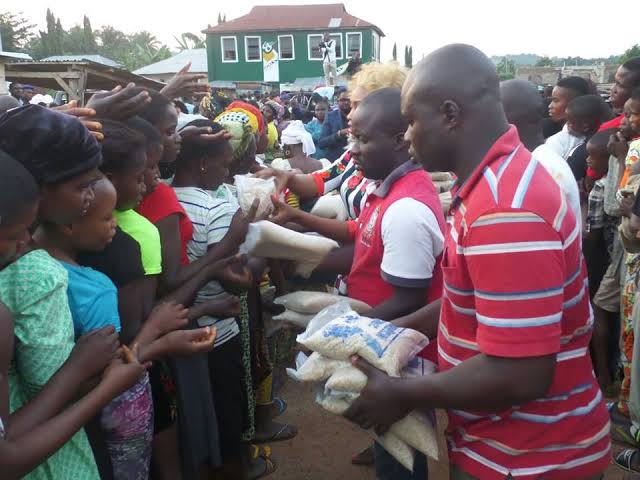
Yet, instead of confronting the root causes of poverty, many politicians prefer the optics of distributing bags of rice. They would rather keep the people hungry and dependent than invest in mechanised agriculture, industrialisation, or skills development. 

A well-fed, independent populace questions leadership. A starving one is easier to manipulate. Beyond economic woes, northern lives have become increasingly devalued, even beyond the region. 

The recent horrific killing of at least 16 northern travellers in Edo State is a chilling reminder of the dangers of mob justice and ethnic profiling. These victims, mostly Hausa hunters heading for Sallah festivities, were mistaken for kidnappers and brutally lynched. 

Their truck was torched, their bodies consumed by fire in a scene reminiscent of a lawless state. Such tragedies expose the colossal failure of leadership at all levels. 

A country with strong institutions and responsible governance would not permit the extrajudicial slaughter of innocent citizens. Figures like former Vice President Atiku Abubakar and activist Omoyele Sowore have rightly condemned the killings, while Edo State Governor, Monday Okpebholo, has ordered investigations. 

But the crucial question remains: Will justice be served? Or will this atrocity, like so many before it, fade into oblivion? Meanwhile, traditional institutions that once provided stability and moral guidance in the North have been hijacked by political interests. 

The reckless creation of new emirates and first-class chiefdoms is no longer about strengthening governance—it is about settling scores, wielding influence, and further fracturing the region.

Northern Nigeria is rich in potential, yet without sincere leadership, it will remain shackled to poverty, insecurity, and stagnation. The people must awaken to their power, demanding accountability and choosing leaders based on competence rather than ethnicity, religion, or political patronage.

A true leader does not throw food at his people; he empowers them to produce their own. He does not buy votes with handouts; he builds an economy where citizens can thrive without begging. 

The North needs statesmen who will champion food security, support industrial growth, and create jobs, not politicians who prey on hunger for electoral gain.

Above all, northern lives must matter—not just to those in power, but to the nation. If the cycle of mob justice and ethnic profiling continues unchecked, Nigeria risks deepening its fractures beyond repair. 

Leadership is not about occupying an office but securing justice, progress, and dignity for all. So, the question lingers: Will Northern Nigeria continue to be ruled by leaders in the North who exploit suffering, or will true leaders emerge to break this cycle of failure? 

The answer lies in the hands of the people.

Usman Muhammad Salihu is a PRNigeria Fellow.