2023 Elections

Atiku pledges to end lingering ASUU strike

By Ahmad Deedat Zakari

The presidential candidate of the Peoples Democratic Party ( PDP), Atiku Abubakar, has promised to resolve the lingering strike of the Academic Staff Union of Universities (ASUU).

Atiku spoke at the youths programme on “Intergenerational Synergy on Government”, organized by PDP to mark the 2022 International Youth Day celebration in Abuja on Friday, August 12, 2022. 

The former vice president argued that education is a fundamental right which every youth needs for their growth, and he would do the needful when elected president 

“This is because education is fundamental to your growth. It doesn’t matter whether you are in politics, business or any sector. The fundamental right of every youth or every citizen is to be educated.” He said

Atiku criticized the government and boasted that he had invested in education for three decades. He then pledged to work with university authorities to end the strike. 

“I take very strong exception to the strike by ASUU and the government’s inability to resolve the crisis. I have been investing in education for the past thirty years. I pledge I will work with university authorities to end these incessant strikes that are causing unacceptable harm to the ability of our children to get an education.”

ASUU has been on strike since February 14, consequent of which most public universities have been shut down.

Katsina 2023: Radda replaces Musawa with Joɓe as running-mate

By Uzair Adam Imam 

The Katsina State gubernatorial candidate of All Progressives Congress (APC), Dr Dikko Umar Radda, has nominated Honorable Faruk Lawal Joɓe as his running mate. 

This is, however, coming after the former running mate earlier nominated, Alhaji Yusuf Aliyu Musawa, voluntarily withdrew.

The Chairman of Gwagware Media Organization, Ahmed Abdulkadir, disclosed this in a statement signed Thursday, August 11th, 2022.

The statement read, “Alhaji Yusuf Aliyu Musawa withdrew from the race voluntarily after wide consultations with relevant stakeholders. 

“Faruk Lawal Joɓe is the current Commissioner, Budget Economic Planning in Katsina State. 

“You may recall that Faruk Lawal Joɓe, who hails from Ƙanƙara, in Funtua Senatorial District of Katsina State, also contested for Katsina State Governor but lost to Dr Dikko Umar Radda at the primary elections,” the statement added.

On International Youth Day

By Tajuddeen Ahmad Tijjani

International days and weeks are occasions to educate the public on issues of concern, mobilize political will and resources to address global problems, and celebrate and reinforce the achievements of humanity. The existence of international days predates the establishment of the United Nations, but the UN has embraced them as a powerful advocacy tool. 

August 12 of every year marks International Youth Day. This year 2022, is to amplify the message that action is needed across all generations to achieve sustainable development Goals, especially for youth, without leaving anyone behind. It’s expected that youth should champion participation in developmental programs across all facets of human development.

As Nigeria approaches the 2023 elections, it’s a clarion call to all our youth not to allow politicians to use their brains to promote violence. Instead, they should champion the cause for a better country that we will all be proud of. Get involved and define your priorities through meaningful debate. Bargain for better welfare, and promote peace, growth and stability.  

Nigeria’s youth make up a substantial portion of the population, and if they can fully realize their potential, Nigeria and the rest of the globe will thrive. Undoubtedly, the youth are behind in every aspect of human life. Therefore, they must have ‘a fair shake’ in the Nigerian context. They should take up the challenges and use their God-given talents to advance the nation.

Perhaps, you can ask yourself, why are the youth left behind, even though they are the majority? There is no enabling environment to showcase their potential, but should we continue like this? No, we have to wake up in the sense that we should pursue education. Indeed, with education, we can fight poverty, know our rights, stand firm and fight for the future of the living and the unborn generations.

Reports show that half of the people on our planet are 30 or younger, which is expected to reach 57% by the end of 2030. However, this indicates that youth can take control of their future and provide solutions to the problems bedevilling society. For instance, Nigeria is battling insecurity from all corners of its existence. Boko Haram in the Northeast; banditry; kidnapping in the Northwest and some parts of the North Central; IPOB in the South-east; etc. Unfortunately, the youth are the ones who not only encourage but partake in a vicious cycle of violence.

Perhaps we need reorientation to be reasonable ambassadors of society. Let’s teach the habit of productivity through education and change the world to make it a better place to live. Research and development can make us innovative with new ideas and creative in health care reform, Engineering etc. 

Therefore, at this juncture, I make a humble appeal for our youth to rise and take their rightful position. I’m optimistic that when the youth unite and pursue positive goals, it’s achievable to change the narratives to develop the country.

Tajuddeen Ahmad Tijjani writes from Galadima Mahmoud Street, Kasuwar-Kaji Azare, Bauchi State.

Kwankwaso/Obi ticket – A nice combination nobody should have thought about

By Muhammad Sulaiman Abdullahi, PhD

Many good things should have happened to Nigeria, but such good things were and are still averted by Nigerians who feel threatened by others. Our collective psyches teach us to be myopic and to lack reason. These make us promote selfishness, ethnic chauvinism or even other material gains at the expense of the best public interest.

Now that Kwankwaso/Obi ticket has been ethnically killed, I am happy that it didn’t come to fruition. It would have been disastrous to the nation as Peter Obi supporters are turning into something else. Now that it didn’t happen, it left some issues to ponder, especially on our reasoning that it shouldn’t have even been thought of in the first place. It left us with no hope as to the politicians we see, who are a sort of “young” blood, compared to those whose actual age, patriotism, source of wealth and health status are all not certain.

All of us in the North, without a doubt, believe that Dr Rabiu Musa Kwankwaso is far better than Obi. They are not comparable in whatever capacity, from academic credentials to practical experience, national spread, political platform and even patriotism. However, one irony about the ticket was that the way Northerners believe in Kwankwaso is similar to how South Easterners believe that Obi is better. They think that Obi is the only answer. In their bid to justify that, they reduced Kwankwaso to pieces, saying he was over-ambitious. This is where they woefully failed. This was what made the thought of bringing the ticket even more worrisome.

Obi’s supporters shouldn’t be blamed, as the country is programmed this way. People only know and promote people they are so much close to, naturally. What will happen if this natural knowledge is mixed with bitter secessionists’ sentiments and arrogance that beclouded their thought of anything if not theirs?

There are some reasons why Kwankwaso shouldn’t have even thought of Obi. Perhaps Kwankwaso did that out of nationalism and as another way of garnering support from the other end. Still, one thing Kwankwaso failed to realize was that Obi’s candidature was no longer his own. It has long been hijacked by a fake Christiandom, Obidients/OBiafrans and other disgruntled politicians from the other end. First, however, let’s consider some points here.

The way Nigeria is, a country with such a vivid religious divide, with Muslims as the majority and Christians with a significant number, the Christians must feel offended if they do not feature as number two, if not number one in the country. In this case, someone may say that democracy is, to some extent, a hoax. If not, why shouldn’t the majority carry the board all the time? But in Nigeria’s situation, Christians are many, and they would feel somehow alienated by the APC’s Muslim/Muslim ticket.

Therefore, it will be a miscalculation for anyone to ask Obi to deputize instead of being the lead. Christians may not take it lightly. They have already fought the Muslim/Muslim ticket and failed, and now the only option left for some of them shouldn’t be tempted or played with. Therefore, looking at it from this angle, it was a terrible idea right from the beginning. Reuben Abati confirmed this in an interview when he opined that, during one of their talks about Kwankwaso/Obi, he asked one question! And the answer to that question, given to him by the NNPP representatives, convinced him that the Kwankwanso/Obi arrangement was dead on arrival.

He asked them, is it fair that after a Northener – and maybe a Muslim – finishes his eight-year tenure, another Northerner will rule again immediately? He said the Kwankwanso/NNPP representatives responded that that is not an issue to worry about. This is their point of reasoning which should be understood.

Another point is regional affiliation. This doesn’t give much, but many Southerners may prefer to have someone healthier than Bola Tinubu, not minding his religion the way the Northerners do. Here, Obi as the lead may be more appealing to them.

On the other hand, there is an issue of the Igbo presidency. Igbo politicians have been too stubborn, divisive and too regional in their approaches to national discourse. They always create problems for themselves, of which Obi’s candidature is part. You can’t disown your country, engage in a series of treasonable felonies, condone crimes, support terrorism against your nation, and then think you would be trusted.

The idea of rallying behind Obi as the only source of salvation is another mistake made by the Igbos. It will make them more stubborn or more alienated. If Obi fails – which will likely happen, some of those overzealous OBiafrans who now threaten all who talk against Obi will surely be more stubborn and restless. And the mainstream politicians would put them aside as they know they are inconsequential.

Now that the ticket has been killed, most commentators agree that it wouldn’t change anything even if it had happened. The real fight is seen to be between the two giants. Now both camps should sheath their swords and forge ahead.

Kwankwaso and his supporters should continue to aim high. Merging with anyone among the two major parties cannot produce a result, and going alone is not the solution. Madugu and his team should think within and outside the box and develop a real solution.

As for Obi’s real supporters, the real Obidients, they should learn tolerance and know that Nigeria is not Imo, Abia or Enugu. Two states’ votes in the North can equal the total number of states in the South-East region. This is based on the latest voter statistics released by the Independent National Electoral Commission (INEC), which shows that the North has more voters registered in the continuous voter registration that ended last Sunday.

Therefore, these OBidients, including the OBiafrans, should be more civil, tolerant and open-minded. They should interact well with others, show decorum in their manners, and not allow the OBiafrans to lead them.

Dr Muhammad can be reached via @muhammadunfagge (Twitter) or email: muhammadunfagge@yahoo.com.
Peter Obi’s supporters threaten to kill me – journalist raises alarm

By Uzair Adam Imam

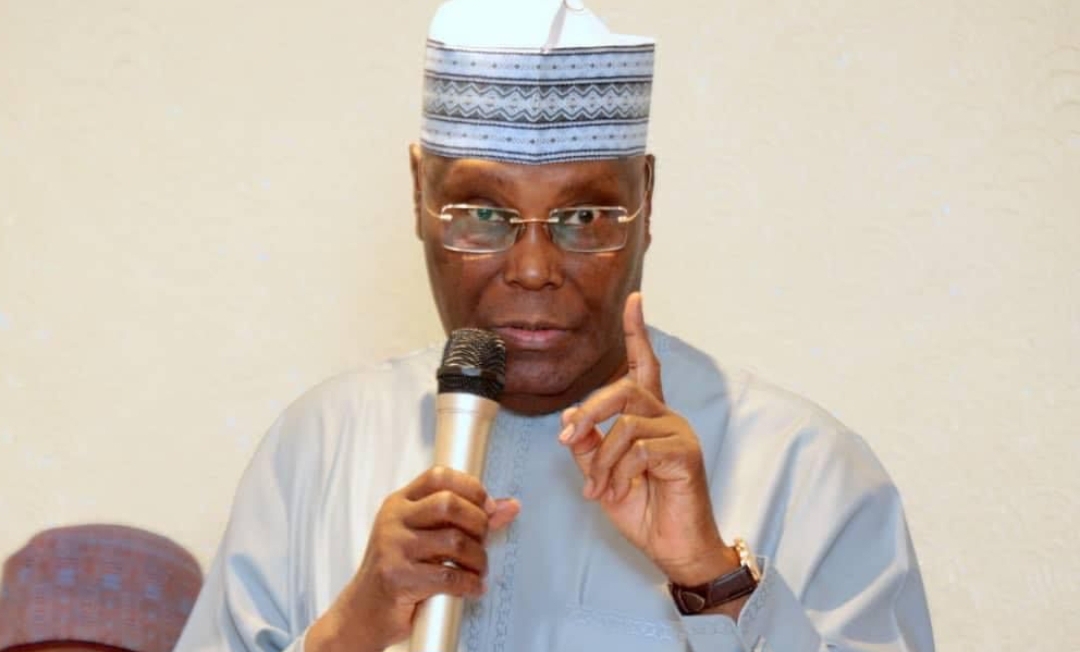
Sam Omatseye, a veteran journalist, has alleged death threat from the supporters of Labour Party presidential candidate, Peter Obi.

Omatseye had asked Obi to call his supporters to order in a tweet Tuesday, raising that Obi should be held responsible if anything happened to him.

“Mr. Peter Obi, call your supporters to order. They are calling and issuing death threats. If anything happens to me, you will be held responsible!,” he tweeted.

The Daily Reality learned that this was however coming barely 24 hours after Omatseye’s latest article in The Nation newspaper titled ‘Obi-tuary’.

It was gathered that Omatseye in the piece described Obi as a shelter for miscreants, saying, “Obi has turned out to be an excuse for even closet Biafrans to betray open emotions about Biafra without being accused of it.

“This includes intellectuals who did not show mercy to him while he reigned in Anambra as a pharisaic chief executive. It is like wearing a colour beneath another colour. Obi has become a shelter for both miscreants and activists of the crowd.”

2023 Election: Northwest leads in voter registration – INEC

By Uzair Adam Imam

The Independent National Electoral Commission (INEC) says the Northwest is leading in voter registration with the total number of 22,672,373 prospective voters.

The region is made up of seven states: Kano, Kaduna, Jigawa, Zamfara, Katsina, Sokoto and Kebbi.

According to the INEC, a total of 96,303,016 eligible voters have registered to vote in next year’s general election.

However, Northwest was said to have trailed by the Southwest, which has 18,332,191 voters. The zone is made of the six states of Lagos, Oyo, Ondo, Osun and Ekiti.

Northcentral is third with 15,680,438, followed by Southsouth with 15,299,374; Northeast, 12,820,363 and Southeast, 11,498,277.

On Sunday July 31, the INEC had closed its registration portal, bringing the exercise to a halt.

“The CVR exercise has been suspended. Access to log-in to check the status of your completed applications will soon be restored,” notice on the INEC website stated.

PVC Registration: Nigerians groan over expiration of deadline

By Muhammad Sabiu 

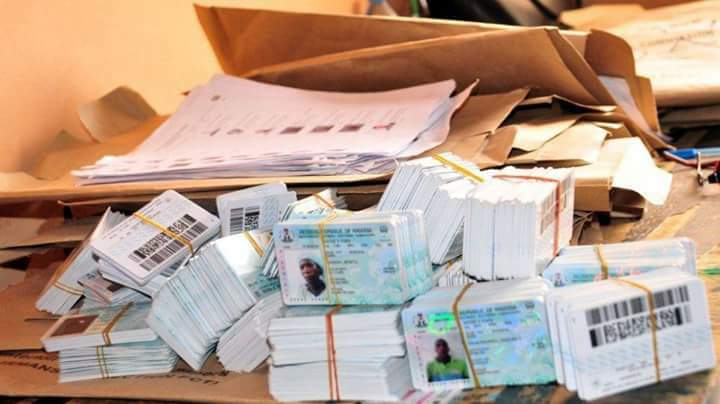
Nigerians who had not been able to get registered made a plea to the Independent National Electoral Commission, INEC, to prolong the Continuous Voters Registration, CVR, process as it came to an end yesterday.

In a rush to register before the deadline, which was set by the electoral authority on June 25, Nigerians flocked to many registration centres on Sunday.

In order to provide eligible Nigerians more time to apply for PVCs before the 2023 elections, INEC extended the application period from June 30 to July 31.

Many people have yet to register, despite the service being extended to churches and other locations in an effort to help with the process.

On Sunday, intended voters were furious in certain voting locations in Abuja, claiming that there were conspiracies to deny some Nigerians the right to vote.

An aggrieved PVC applicant was quoted by journalists to have said, “I think they just don’t want us to vote. Look at the people that are going to be denied the opportunity to participate in the election. What is wrong in this country?

“If you look around, you will notice that most of us here that have been here since 3 am this morning are youths. They are afraid of the revolution that is coming, and that is why they are deliberately pushing us away”.

Threatening to take their grievances to the street, he said, “we must hit the street to demand the extension of the exercise. It is our right to vote, and nobody should violate that right”.

PVC Registration: El-Rufa’i declares public holiday

By Sumayyah Auwal Ishaq

The Kaduna State Government has declared July 27th to 29th July 2022, as a public holiday to enable citizens of the state to turn out en masse to register at the ongoing Independent National Electoral Commission (INEC) Permanent Voter’s Card slated to end on July 31st 2022.

In a statement by the Special Adviser to the Governor (Media & Communication), Mr. Muyiwa Adekeye said the decision of the governor was aimed at ensuring that citizens of Kaduna State are not denied the opportunity to participate and vote for candidates of their choice ahead of next year’s general election.

It further stated that “the government urged all eligible residents of the State to seize the opportunity to register to vote.”

“The government requests all employers to actively support their staff to register before INEC closes voter registration on 31st July 2022.”

Shettima: The facts and fallacies of Boko Haram linkage

By Lawan Bukar Maigana

The emergence of Senator Kashim Shettima as the running mate to the All Progressives Congress  (APC) presidential aspirant, Ahmed Bola Tinubu, has continued to generate reactions from all corners of Nigeria.  

Most worrisome is the puerile attempt by some ill-intentioned social media influencers to link the former governor of Borno State to Boko Haram terrorism.

What could have influenced the attempt to link Shettima with Boko Haram?

While the paid and unpaid agents behind this vile propaganda have not provided any evidence to link the Senator to terrorism, it is necessary to examine some facts from the apparent fallacies of the opposition and separate the wheat from the chaff.

For instance, while travelling to Gamboru Ngala for a rally ahead of the 2019 presidential and National Assembly elections, Shettima’s convoy was attacked by Islamic State West Africa Province (ISWAP) members and three of his loyalists were killed. Many others sustained various degrees of injuries.

Characteristically, ISWAP claimed responsibility for the attack the following day. However, the then Special Adviser on Communications and Strategy, Malam Isa Gusau, confirmed the identities of the deceased, including a brave soldier and two staunch politicians.

According to Gusau, the attack aimed to attract global media attention to sustain the terrorists’ agenda of instilling fear in citizens and reducing the morale of the gallant troops.

The leader of the Boko Haram terrorists, Abubakar Shekau, who was later killed in an alleged suicide bombing, had threatened Shettima and top government officials in a 56-minute video where he ordered his members and foot-soldiers to kill them wherever and whenever they found them. Could Shettima have a link with Boko Haram, yet he would be the number one on their hit list?

In the video, Shekau boasted as follows: “You, former governor Kashim [Shettima], you present governor [Babagana] Zulum, listen – do not be deceived by your walking without shoes – be careful! If you sing these things we mentioned [Nigeria’s national anthem, national pledge, and the NYSC anthem], you are a disbeliever even if you recite them jokingly.”

It was not surprising that Shettima and Zulum were mentioned in the video because both personalities have consistently spoken against the evil of Boko Haram and worked assiduously with security agents and other stakeholders to decimate them. They have also been supporting Internally  Displaced Persons (IDPs) to recover from the damage the terrorists had done in their lives and relocate them to their respective, original communities.

It should also be noted that Shettima didn’t just stop at appealing to the Federal Government to intensify efforts aimed at eradicating terrorism. He committed enormous resources to support the military with security equipment and dozens of vehicles to ease mobility during operations. Is that a governor that has a link with Boko Haram terrorists?

Born and brought up in Maiduguri, I can authoritatively confirm that Shettima adequately funded the Volunteer Vigilante Youth Groups, popularly known as Civilian Joint Task Force (CJTF) in 2013, who were later trained in counter-terrorism operations, to strengthen the fight against Boko Haram terrorists.

He also provided adequate welfare and logistic support to over 20,000 CJTFs to strengthen the fight against Boko Haram elements. The motivation enhanced the crucial role of CJTF in intelligence gathering, easy identification, and arrest of suspected insurgents, among others. Could Shettima have a link with Boko Haram fighters and yet fund their tormentors?

Before the expiration of Shettima’s tenure as governor of Borno State, he was relentlessly calling for the deployment of military personnel and equipment to curb the threat of the terrorist group in the Northeast.  Considering the cost of the war on terror, Shettima was among the few personalities who persuaded state governors of the necessity of approving the sum of $1 billion from the Excess Crude Account for the counter-insurgency campaigns. He also defended the Federal Government’s plan to ensure the judicious utilization of the fund for the intended purpose.

Could Shettima have a connection with terrorists yet support counter-terrorism financing?

When Boko Haram terrorists destroyed churches in Borno, Shettima provided funds to reconstruct the places of worship and ensured adequate security protection of the areas.

In his testimony to this, the Chairman of the Christian Association of Nigeria (CAN), Borno Chapter, Bishop Mohammed Naga, said: “During Shettima’s visit to these areas, he released N100 million for the rebuilding of some of these churches. A committee was set up for that purpose. I was a member of the committee headed by a permanent secretary, Mr Justus Zare, as Chairman, and I am happy to inform you that presently we have used that money to rebuild 11 key churches which our people are now using. I am surprised to hear some people saying why don’t we rebuild all the churches. We cannot do that because there are many places that are still unsafe.”

Would church leaders praise Shettima if he had a link with Boko Haram fighters!?

In a nutshell, Shettima is neither an ethnocentric leader nor a religious bigot. On the contrary, he is a charismatic personality who believes in equity, justice, and fairness. Moreover, from his engagements and pronouncements, he has consistently advocated peaceful and harmonious relationships among different tribes and religions.

Therefore, it is unfair and unreasonable to link him with Boko Haram terrorism when he, in reality, has been their number one enemy and a prime target for years.

Lawan Bukar Maigana writes from Wuye District, Abuja. He can be reached via Lawanbukarmaigana@gmail.com.

FACT-CHECK: How true is the claim that 90% of Northerners are not on social media? 

By Muhammed-Bello Buhari

Claim: Atiku, Nigeria’s former Vice President and the Peoples Democratic Party presidential candidate, Atiku Abubakar, claimed that 90 per cent of northerners are not on social media while responding to a question in an exclusive pre-recorded interview on Arise TV aired on Friday, July 22.

Atiku made the claim, suggesting that the Labour Party cannot make inroads in northern Nigeria. He played down the possibility of Labour Party’s presidential candidate, Peter Obi, causing an upset to his presidential ambition during the next year’s general elections.

His words:

“It is very difficult to expect a miracle to happen simply because Peter Obi is in the Labour Party. After all, they were saying through social media [that] they had more than one million votes in Osun state.

“But how many voters turned for the Labour Party? And then again, mark you; you’re talking about social media. In the north, 90 per cent of our people are not tuned to social media.”

With this claim, social media was awash with all sorts of counterclaims. Nigerians on Facebook and Twitter knocked the former vice president out for his comment, alleging that such a claim is untrue.

Verification:

According to the Digital Report 2021 by Datareportal—one of the world’s most trusted sources of social media data, insights and trends—the number of social media users in Nigeria was equivalent to 15.8% of the total population (208.8 million) in January 2021. This means there were 33.00 million social media users in Nigeria in January 2021.

This same report recorded the total population of the northern region to be 128.17 million. This is also in line with the National Bureau of Statistics figures on Nigeria’s demographics, using data from the National Population Commission.

So assuming that the divide of the social media users in Nigeria between the south and the north is 50-50. i.e. of the 33 million users, 16.5 million are northerners. This means that of the 128.17 northerners, only 12.9 per cent are on social media, representing 87.1 per cent are not on social media.

And given the apparent disparities in internet usage between the north and south due to market size, urbanization, economic development, income, telephone density and employment, which are the major contributory factors to the divide as reported in the research conducted on the digital divide in Nigeria, there’s at least a 60-40 percentage divide between the south and north in terms of internet and social media usage.

As such, 40 per cent of Nigeria’s 33 million social media users is 13.2 million. This means that of the 128.17 northerners, only 10 per cent are on social media, which also means that 90 per cent are not on social media.

Verdict: Atiku’s claim that 90 per cent of northerners are not on social media is backed up by data. Findings have shown that only 10 per cent of northerners are on social media. Therefore, the claim is valid.

Muhammed-Bello Buhari is a freelance fact-checker based in Kaduna and can be reached via embbuhari@gmail.com.