2023 Elections

Tinubu’s slots to opposition parties move for one Nigeria

By Uzair Adam Imam

The reservation of some slots to the opposition parties by President Bola Ahmed Tinubu could be seen as a move afoot to get a better Nigeria which was one of the things his administration promised Nigerians since his victory.

The Daily Reality recalls that Tinubu promised to run an inclusive government that would thrust Nigeria into greatness.

Speaking as the president-elect in March, Tinubu said he was seeking a better country not just for himself and his supporters but for all Nigerian people, regardless of their political affiliations.

The Kwara State Governor and Chairman of the Nigeria Governors Forum, Abdulrahman Abdulrazaq, relayed the news about the slots reservation to journalists at a meeting of the forum in Abuja on Tuesday.

He said that Tinubu reserved some appointments in the governing boards of agencies, parastatals, institutions and government-owned companies for members of the opposition Labour Party and the Peoples Democratic Party.

Abdulrazaq stated that the President asked the governors to nominate competent persons to serve on the boards and parastatals of Federal Government agencies which were dissolved last month.

According to him, Mr Tinubu dissolved the boards last month, which left no fewer than 2,000 vacant positions expected to be occupied by new nominees.

He added that “Among the agencies are the North-East Development Commission with 12 vacant board slots, Independent Corrupt Practices and Other Related Offences Commission with seven board seats; Joint Admissions and Matriculation Board, seven; Teachers Registration Council of Nigeria, 21.

“Nigeria Social Insurance Trust Fund, 12; National Universities Commission, 21 and Transmission Commission of Nigeria, 14; National Health Insurance Authority,12

“Others are the Nigerian Safety Investigation Bureau, 7; Nigerian Meteorological Agency, seven; Nigerian College of Aviation Technology,8; Nigerian Police Trust Fund, 8; Nigerian Natural Medicine Development Agency,10; Federal Institute of Industrial Research, 11 and National Centre for Technology Management, 11 among others,” he stated.

EU report is an imperialist agenda – MURIC

By Muhammad Abdurrahman

An Islamic human rights group, the Muslim Rights Concern (MURIC), has faulted the final report of the European Union observer team on Nigeria’s 2023 general election. MURIC described the report as an imperialist agenda.   

The group spoke on Tuesday, 4th July 2023, through its Executive Director, Professor Ishaq Akintola.

His full statement:

“The Chief Observer of the European Union Election Observer Mission (EU EOM), Barry Andrews, at a news conference in Abuja last week presented its final report on the 2023 general election in Nigeria. The report was an undisguised indictment of Nigeria’s electoral system.

“We are nonplussed by this blatant attempt to push an imperialist agenda down the throat of Nigerians. The report is a premeditated attempt at inciting anarchy in the country with the hope of gaining political and economic influence at the outbreak of commotion.

“The EU EOM final report is the odd one out when juxtaposed with those of other election monitoring groups. We saw nothing close to this in the report of the US-based International Republican Institute (IRI) and the National Democratic Institute (NDI). NDI/IRI came with 40 observers from 20 countries led by Dr. Joyce Banda, former president of Malawi. They did not sow any seed of confusion.

“229 different observer groups deployed 146,913 domestic and international monitors. 33 of these were international observer missions which deployed 2,113 observers and the Independent National Electoral Commission (INED) threw its doors wide open for them.

“Why is the EU EOM report a different cup of tea? Is this group trying to tell the world that the Commonwealth Observer Group led by Thabo Mbeki which also covered the elections is blind? The African Union had its team and so did the Economic Community of West African States (ECOWAS) observer team led by Dr Kwadwo Afari-Gyan.

“Nigerians should not allow the EU EOM to destabilise the country. Imperialists will never teach you what will benefit your country but what will make you despise it. The aim is divide et impera. MURIC rejects this EU EOM report. It is jaundiced.”

Ortom dismisses news of own nomination as minister in Tinubu’s gov’t

By Muhammadu Sabiu 

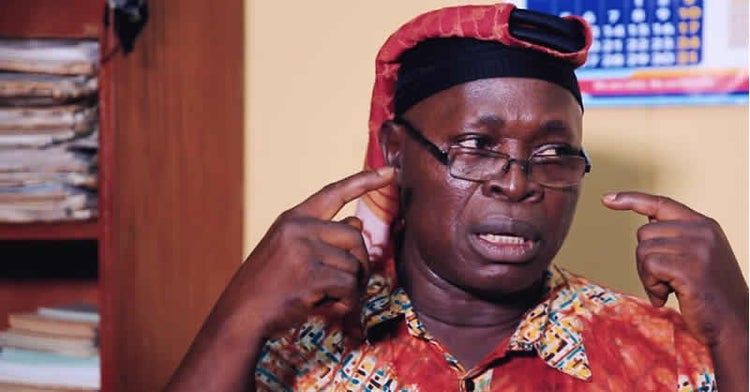
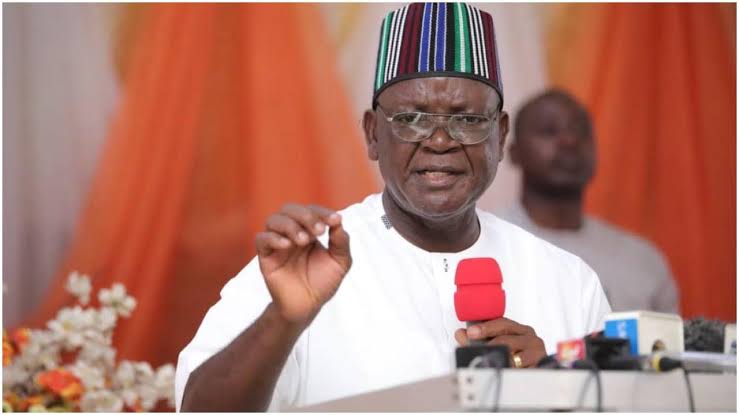
Samuel Ortom, the former governor of Benue State, has refuted rumours that President Bola Tinubu had proposed him for a ministerial position. 

It has been observed that Internet users have been spreading rumours that the former governor made the anticipated ministry list. 

The governor, however, referred to the story as false and misleading and urged people to ignore it in a statement issued by Terver Akase, his media assistant. 

The statement reads, “The attention of the immediate past Governor of Benue State, Samuel Ortom has been drawn to the speculation on social media that he has been nominated for a ministerial appointment. 

“We urge members of the public to disregard the report as it is false and misleading. 

“Chief Ortom deeply appreciates those who have taken time to call and verify the information”.

Senator Abdulaziz Yaradua: A legacy within the Yaradua dynasty – A comparison with the Kennedys

By Ayatullah Muhammad and Aminu Ismail Elyakub

In my History of the US Founding and Constitution class, I had the rare privilege of reliving the experience of the constitutionalist and founding patrons of the country. It elicited a feeling of foundational belonging despite each representative being entitled to their colonies or settlement. This led to a brief conversation during the semester where a colleague of mine in a friendly conversation uttered, “I love Aristocracy”. My radical response had to be heard, “I hate aristocrats because of their elitism and…” a list of things identifiable with modern oligarchs today.

I may have defeated my colleague but not for too long. He responded, “I see what you are saying, but my reasons are tied to the values….” That made no sense, even though I ended up writing an article on aristocratic values shaped and eschewed by leaders that ended up being transcendental. I was too hasty for a moment. The case of the Musa Yar’adua family presents a typical example of what virtuous aristocracy can bring to the building of the nation-state.

The 10th National Assembly commences with a renewed commitment and a rejuvenated pursuit toward Nigeria’s unhindered democratic succession. This comes with a mixture of veterans, the newly elected, and experienced former governors coming into the Senate. From the pool of “freshmen”’ comes Senator Abdulaziz Yar’adua, representing Katsina Central in Northwestern Nigeria.

The entry of Senator Yar’adua marks another moment for his constituents and enthusiasts of democracy globally as we spotlight family dynasties and their potential for impacting nation-building and making their distinct mark in public service. In this article, we highlight Senator Abdulaziz Yaradua, a distinguished member of the Yaradua family and arguably the first bi-cameral legislator of the dynasty’s siblings. This opens up possibilities for making parallels to the Kennedy family as examples of counterparts across the Atlantic with a serendipitous trajectory in destinies of similar dynasties.

The authors of “The Democratic Imperative: Exporting the American Model” have noted that dynasties are not an inherent aberration to democracy but an opportunity to enhance it with their experience and public service. Thus, the oldest democracy in the world has had five political dynasties across two centuries since its inception. This includes notables such as Adams, the Roosevelts, and, most recently, the Bush family.

The dynasty began with the late Patriarch of the Family and Mutawallen Katsina Musa Yar’adua, a parliamentarian who held two ministerial portfolios in the Tafawa Balewa Cabinet. However, the family name was shot into the limelight when an illustrious son, Gen. Shehu Musa Yar’adua, became the defacto “Second in Command” to General to the Head of State following the 1976 Coup. Since the late General SM Yar’adua’s passing, Shehu’s beacon of political light and values have arguably been responsible for shaping political decisions, contests, and prodigies since 1999, including the late Umaru Musa Yar’adua’s ascension to Presidency in 2007. Beneficiaries of such illustrious mentorship in the early 90s were two of the prominent aspirants of APC and PDP at the 2023 presidential elections.

As a significant member of the Yaradua dynasty today, Senator Abdulaziz Yaradua is continuing his family’s history and advancing Nigeria’s unity and prosperity. The senator’s career began as a disciplined and commissioned military officer of the Army’s Signal Corps, mirroring his elder brother’s path and earning him the moniker “Audu Soja”.

Despite being the penultimate child among his mother’s children, he heeded his father’s call for higher education. He joined the famous brothers in becoming the third university graduate from the men of a large family and a distinguished engineer in his own right. Senator Abdulaziz Yaradua has had a stint at being dependable on security issues, to Tinubu’s delight, while in the recent past also had a brief stint as an administrator of the country’s Rural Electrification agency under Buhari’s stewardship.

Like the Kennedy family in the United States, the Yar’aduas are not without their trials. Shehu Yar’adua could be paralleled to Robert F Kennedy, who died as a prominent political figure outside of an official capacity, compared to Umaru Yar’adua and John F Kennedy, who died in similar official capacities. Beyond the trials, however, were similar shared convictions, progressive ideals and activist mindsets championed by Shehu-RFK and Umaru-JFK positions and situations, respectively. They never missed their marks in setting stones and policies that etched them in the hearts, projects and legacies of admiration today.

Senator Abdulaziz Yaradua could learn from his late Senator Kennedy counterpart in history with hopefully a longer lifespan and influence etched in the Red Chamber of the NASS. While in a similar vein, expected to continue on their family’s tradition, he has his priorities and goals, including helping the Tinubu administration with bills to improve infrastructure and ensure long-term economic growth. His dedication to educational reforms and constituency empowerment projects sensitive to the needs of his community is further evidence of his intention to improve his people’s lot in life.

The tall and elegant leader with a built statute also best fits the “bridge builder” role. Tinubu could find a dependable “Senator Biden” in him capable of working across party lines to accomplish shared goals, a quality that is consistent with his family’s tradition.

Judging from the bios of the dynasty’s youngest politicians, it is clear that both men forged their unique paths while inheriting a powerful history. Senator Yar’adua did not have an easy way to political victory today as the family name was not enough to earn him a win in at least four contests he was involved in between 2011 and 2019. A devotion to democratic values, social equality, and inclusive governance has characterised the Yaradua dynasty. Senator Yaradua shares these values.

Expectations are high as Senator Abdulaziz Yaradua pursues his political career. He holds a good place in the Yaradua dynasty due to his unshakable commitment to the values supported by his family and his vision for a prosperous Nigeria. By taking a cue from his predecessor’s accomplishments, traditions, and values in pursuing a better future through their dedication to public service, social advancement, and economic prosperity. Like the late Senator Kennedy, Senator Yaradua represents the promise and hope of his people and constituents toward a better political system for his Katsina state and Nigeria’s evolving democracy.

Ayatullah Muhammad and Aminu Ismail Elyakub can be reached via ayatmatters@gmail.com.

Bello El-Rufa’i: The youngest legislator to watch

By Mukhtar Jarmajo 

Bello Elrufai, a member representing the Kaduna North federal constituency, made a mark in the upcoming 10th National Assembly. In a recent interview with Channels TV, Bello showcased his humility, political acumen, and team spirit, making it clear that he is well-prepared for the task ahead.

Although he admitted no one could be fully prepared for the NASS, Bello’s academic background in political science, international relations, public relations, and corporate communications sets him apart. He recognizes the importance of having a team and their input, giving them credit for his ideas. His team helped him prepare ten Bills, which he is waiting to table for discussion at the House.

Bello’s team spirit bodes well for his future political career. He wants to leverage his associates’ expertise to build a strong political front. He is willing to compensate them financially and also give them invaluable experience. It’s a win-win situation, demonstrating his leadership skills and an eagerness to learn from others.

Bello’s focus on team building and valuing his team’s input is refreshing, particularly in a political climate where individualism is prevalent. Bello’s willingness to succeed and go far is admirable. With his thirst for knowledge and team spirit, he has the potential to make a significant impact in the National Assembly.

At 35, Bello is the youngest legislator in the new NASS. However, his age should not undermine his potential or capabilities. Instead, his youth is an asset and could increase the diversity of voices in the National Assembly.

Bello Elrufai is a legislator to watch. His humility, political acumen, and team spirit make him unique and potentially successful. His initiatives, bills, and passion for teamwork will help him make an impact in the upcoming 10th National Assembly. He may be the youngest, but he is one to watch out for.

Jarmajo wrote from Wuse Zone 2, Abuja. 

Eng Sagir Koki vows to bring positive change

By Abbas Datti

Our newly elected representative, Engineer Sagir Ibrahim Koki, promises to serve the people of the Kano Municipal constituency with integrity and dedication.

In a historic election victory, Engineer Sagir Ibrahim Koki has emerged as the newest member from Kano Municipal in the House of Representatives. Before his campaign, he promised to bring fresh perspectives and foster positive change within the esteemed legislative body. With the weight of public trust on his shoulders, Engineer Sagir steps into office, committed to serving the constituents and championing their interests.

Hailing from the Koki district of Kano State, he has already made waves with his dynamic campaign, installation of transformers, vocational training, distribution of JAMB forms, and rendering assistance to prospective NECO candidates, which resonated strongly with a diverse range of voters across the Municipal Local government area. The constituents were captivated by Engineer Sagir’s passion for public service, dedication to core issues, and vision for a brighter future.

Throughout his campaign, Eng Sagir has demonstrated an unwavering focus on crucial matters such as healthcare reform, economic revitalisation, education enhancement, and environmental sustainability. Drawing from a deep understanding of the challenges the Municipal Area Community faced, Sagir Koki outlined innovative policy proposals that garnered widespread acclaim and support.

As he assumes office, he is determined to turn those promises into tangible action. Eng Sagir’s primary objective is to represent the voices of his people, ensuring that their concerns are heard, amplified, and effectively addressed within the hallowed halls of the legislative chamber. Eng Ibrahim firmly believes that the foundation of a thriving democracy lies in empowering every citizen and working collectively towards progress.

One of Sagir’s key initiatives is bridging the gap between different political ideologies and fostering collaboration and compromise. By promoting bipartisan efforts, he aims to break down the barriers that have impeded progress in the past, seeking common ground to tackle pressing issues head-on.

Furthermore, Sagir Ibrahim understands the significance of transparency and accountability in public office. He has pledged to maintain open lines of communication with constituents, regularly hosting town hall meetings and actively seeking public input to shape his decision-making process. By being accessible, Sagir aims to establish a strong bond with his community, ensuring that their aspirations remain at the forefront of his legislative endeavours.

The road ahead of Sagir may be challenging, but his determination to serve with integrity, empathy, and dedication remains unshaken. He brings a wealth of experience, having worked tirelessly within the community as an advocate for positive change. Now, armed with the power of legislation, Sagir Koki is ready to effect lasting transformations that will profoundly impact the lives of the people of the Municipal he represents.

As the newest addition to the House of Representatives, Engineer embarks on a journey marked by hope, resilience, and an unwavering commitment to the betterment of the people of the Municipal. Therefore, Municipal people are eagerly anticipating the positive changes that lie ahead, placing their trust in the capable hands of their newly elected representative.

Abbas Datti writes from Kano Municipal and can be reached via abbasdattibashir@gmail.com.

Kano, know your Comrade

By Murtala Sani

Beyond the eloquence and vibrancy that are attributed to the newly elected Deputy Governor of Kano State under the platform of New Nigeria Peoples Party (NNPP), Comrade Aminu Abdussalam Gwarzo, there are other special qualities that earned him the title of a Comrade. His entire life, from teenage to date, is spent in the struggle for the betterment of the lives of the people.

Comrade Aminu Abdussalam Gwarzo was born at Gwarzo Local Government, Kano State, on 6th November 1960. He was set for the quest for Islamic knowledge at Alkalawa Islamiyya and then transferred to Kofar Fada Islamiyya, all in Gwarzo town. He was later enrolled into Gwarzo Central Primary School from 1966 to 1972 and then proceeded to Kano Educational Development Centre (K.E.D.C) in 1973 for Secondary School Education.

Within one year, Aminu was transferred to Kano Teachers College (K.T.C) and graduated from the college in 1977. In the same year, he started teaching at Kara Primary School on 1st July 1977 for six months, when Kano and Jigawa States were in the folder old Kano State. The brilliant young Aminu was the youngest primary school Headmaster when he headed Salihawa Primary School in Gwarzo Local Government.

In his quest for more knowledge, Aminu got admission into the School of Management Studies, Kano State Polytechnic, in 1981, where he obtained a National Diploma in Banking and Finance, the qualification that propelled him to get a new job at the Kano State Board of Internal Revenue in 1986. In the same year, Aminu was re-admitted to the same School, School of Management Studies, Kano State Polytechnic, and bagged Higher National Diploma in the same course, Banking and Finance. In 1988, Aminu received his National Youth Service Certificate (NYSC) after serving as a corps member at Nigerian Mining Corporation, Jos, Plateau State.

As a youth, the comradeship of Comrade Aminu started manifesting glaringly when his activism beckoned him to join Gwarzo Youth Progressive (GYPA) in 1980. The Association was founded in 1979, but he became its first Chairman in 1981 due to his immense struggle to bring positive change within his society. The dominant role he played in stabilizing the then embattled Gwarzo Development Association (GDA), an association of Gwarzo elders, made the elders accommodate the useful Aminu into their association. They also considered his impact on the progress of GYPA, especially the way his wonderful leadership brought huge development within Gwarzo Local Government.

As a civil servant, his activism earned him the seat of Interim Secretary General of the Nigerian Union of Teachers (NUT) of the Gwarzo branch in 1981. Again, he became the Secretary-General and then Chairman of the National Civil Service Union (NCSC) board. Noticing his charisma while steering the leadership of the Union in the board, the then Chairman of Nigerian Labour Congress (NLC), Kano State, Comrade Baffa Gaya, suggested that talented people like comrade Aminu should not be limited to a low level. Therefore, Comrade Aminu was propelled to the position of Auditor General of the Nigerian Civil Service Union (NCSU), Kano State branch, from 1987 to 1991.

After carving Jigawa State out of Kano State, Aminu Abdussalam clinched the seat of Chairman National Civil Service Union, Kano State. As a politician, the Comrade was among the seven Local Government Chairmen that initiated the formation of the Association of Local Government Chairmen of Nigeria (ALGON) in the whole Country. He was the pioneer Chairman of ALGON in Kano State. He was the pioneer National Co-ordinator of ALGON North-Western States comprising Kano, Kaduna, Katsina, Sokoto, Kebbi, Zamfara and Jigawa, and lastly, the pioneer National Auditor of ALGON.

His passion for the struggle for the masses led him to support Mallam Aminu Kano’s Peoples Redemption Party (PRP). He was also an active member of the Social Democratic Party (SDP), the political party registered alongside Nigerian Republic Congress (NRC) by General Ibrahim Badamasi Babangida. Comrade Aminu’s diving into mainstream politics was when he contested and got elected the Chairman of Gwarzo Local Government of Kano State in 1996 during the reign of General Sani Abacha’s military regime. After the formation of New Political parties by the same Government, Aminu vied for membership in the Federal House of Representatives to represent Gwarzo/Kabo Constituency under the umbrella of the Democratic Party of Nigeria (DPN). The controversial election declared his opponent, Alhaji Aminu Sule Garo of the United Nigeria Congress Party (UNCP), the winner of the election. Therefore, Aminu Abdussalam challenged the victory in court.

On 5th December 1999, Comrade Aminu Abdussalam was elected as the Chairman of Gwarzo Local Government, Kano State, where he defeated Engineer Abdullahi Tijjani Muhammad Gwarzo, who contested under the platform of All Peoples Party (APP). His pragmatism led him to develop Gwarzo through the execution of countless developmental projects, providing employment and other humanitarian activities. This moulded him to become a strong political clout in the stream of Gwarzo Politics. From 1999 to 2011, Comrade Aminu was the Director General of Senator Bello Hayatu Gwarzo’s Campaign Organization, the leadership that hugely contributed to the victory of the senator throughout his four Senatorial races. During the Presidency of late Alhaji Umaru Musa ‘Yar’adua, the Comrade was appointed the Federal Commissioner of the National Assembly Commission.

When Dr Rabi’u Musa Kwankwaso was re-elected as the Governor of Kano State in 2011, he appointed Comrade Aminu Abdussalam as the Commissioner of Monitoring and Evaluation. Satisfied with his hardworking, honesty, trustworthiness and loyalty, Kwankwaso promoted him to the position of Commissioner of State Affairs, thus, occupying the office very close to the Governor. The duo decamped to the All Progressives Congress (APC) and supported Dr Abdullahi Umar Ganduje to become the state’s governor. In President Muhammadu Buhari’s tenure from 2015 to 2019, Comrade Aminu was appointed the Chairman Governing Council of the Federal College of Education, Kwantagora.

After the eruption of a feud between Kwankwaso and Ganduje, Comrade joined his boss, Kwankwaso, by decamping back to PDP, where he and Abba Kabiru Yusuf contested for Deputy and Governorship seats, respectively, in 2019. Although they won against Ganduje with more than twenty thousand votes, the election was declared inconclusive by the Independent National Electoral Commission (INEC) due to the controversy that trailed the election. Again, Comrade and Abba contested and won the election against Nasiru Yusuf Gawuna and Murtala Sule Garo under the platform of the New Nigeria People’s Party (NNPP) during the 2023 gubernatorial election.

One of the greatest challenges against Comrade Aminu was when he was contesting for Member at the Federal House of Representatives to represent Gwarzo and Kabo Constituency. At that moment, more than twenty of his prominent supporters were arrested by the forces challenging his candidature. This made others flee from Gwarzo to other hidden places within and outside Kano State, seeking refuge.

At the same time, Comrade’s house was invaded by political goons who attempted to break into his house and assassinate him. With the help of his die-hard supporter, a ladder was erected for him and his entire family and escaped to his neighbouring house. This forced him to run for political asylum in the Cameroon Republic, but on his way, he found refuge in Gombe State. Again, the Comrade escaped lynching by some political thugs in 2003 at the Madadi ward of Gwarzo Local Government when they set his official car ablaze.

Every discerning mind could detect Comrade Aminu’s erudition and intellectual analysis either on the podium of a political campaign or interview. He expresses himself with facts and figures while debating. He laces his speech with quotes from Qur’an or Hadith.

Comrade faces a lot of criticism, one of which is his austerity measures at home office or public. He doesn’t pamper his children to run a luxurious life. He doesn’t embezzle government funds or throw money at his followers. Furthermore, Comrade frowns at favouritism and nepotism. He only relies on creditability and merit. Moreover, he detests thuggery and bloodshed; he allows things to flow naturally. More so, the Comrade doesn’t hesitate to get his beautiful, educated and morally sound children married to commoners or children of commoners.

The Comrade has two wives with twenty-three children.

Murtala Sani, a lecturer at Kano State Polytechnic, writes from Kano.
As Governor Fintiri commences second term 

By Zayyad I. Muhammad

The 2023 Adamawa governorship election was not only tough for Governor Ahmadu Umaru Fintiri, but it also shocked him to his marrows. Fintiri said he didn’t only contest against Senator Aishatu Dahiru Ahmed Binani, but against a powerful people in Abuja- Governor Fintiri further said it was an attempted coup d’état against him.

The aftermath of the April 15th governorship election rerun led to Gov. Fintiri ending his first term in a kind of ‘Anger’. So, Fintiri’s second term is highly likely to begin in anger, vengeance, and fighting real and imaginary political enemies.

This is where we must pity Fintiri; if he mistakenly allowed these three things to control his thinking in making appointments, siting of development projects, and creating policies and programs – his four years of the second term would be shrouded with just politics, politics and politics. if  Fintiri is not very careful, he will allow the ‘trauma’  of April  15th to be on his head- his second term’s appointments, projects, and policies will be full of vengeance, anger, and unnecessary fights- if that happens; it will be the beginning of the end of his political future,  because of 2 things- the complexity of Adamawa politics and the current moment.

Nevertheless, Fintiri’s first actions will be how to punish those he presumed did anti-party in the PDP and how to compensate the ‘outsiders’ who did anti-party in their parties to his advantage. This is where the first problem of Fintiri’s second term will commence- new enemies within his party, the outsiders will feel meagerly compensated while those who worked hard for his second term will feel that the outsiders have more than what they ought to have.

For his political survival, Fintiri’s second term should be a kind of political redemption for him- work on his poor relationship with some of his party stakeholders, discard any thought of unnecessary fights with people who he thinks have worked against him and cool the growing tongue and faith division in the state’s polity, especially among jobless young people.

Fintiri’s second term should be a reconciliatory one towards some of his party stakeholders, the traditional class, and some of his so-called enemies. And his appointment should reflect Adamawa’s complexity and the people that truly contributed to his victory in both his first and second terms. This will go a long way to ‘heal’ the past and ‘nurture’ the future.

As things stand now,  if Fintiri doesn’t apply the science of politics and wisdom in his thoughts-  most of his actions will be viewed through the prism of ‘we’ vs ‘them’, which will be very bad for a Governor in a second term; because second terms are intricate – one’s political values diminish as he utilizes the term’s years; followership  reduces, permutations and carpets cross occur without necessarily factoring the second term’s driver’ while those wishing to replace the driver becomes more of yes men, at the detriment of the driver

Fintiri should quickly make some in-delectable marks with legacy programs and projects in the area of youth empowerment, poverty reduction, and human development and industrialization, amongst others. Roads projects are good- but  within 10-20 years, often,  people will forget who to do them; while some will deteriorate, new ones will replace them, but human development and youth empowerment are everlasting- this is where Kwankwaso and Tinubu derived their unending popularity at their primary constituencies

The truth is, the Binani case is a big hammer dangling on Fintiri’s head. Anything can happen in a Tinubu regime that will be thirsty to maintain the old & get new strongholds and votes, including being non-apolitical on some issues.

Fintiri should be fast- bring new thinking, new ideas, and new vigour. Though this is only possible if he brings on board all his party, including young people and even people with opposing political views, to do some intelligent thinking free of politics but development.

Congratulations, Governor Ahmadu Fintiri.

Zayyad I. Muhammad writes from Abuja via zaymohd@yahoo.com.

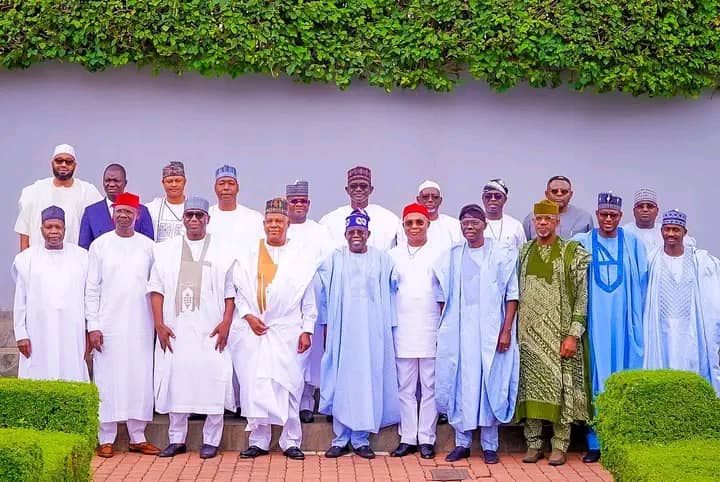
Tinubu receives APC governors in Aso Rock

By Ahmad Deedat Zakari

President Bola Ahmad Tinubu, on Friday, had a meeting behind closed doors with governors of the All Progressives Congress, APC.

President Tinubu, in a Facebook post, posted about the meeting with the governors at the Presidential Villa, Abuja.

“Today, I had the delight of welcoming distinguished Governors from our great party, the APC, to the State House.

“Together, we reaffirmed our commitment and united efforts in realizing our cherished vision for Nigeria. With every hand on deck, We are resolute in our pursuit of a prosperous nation.” the post says.

The governors were led to the State House by Imo State Governor, Hope Uzodinma, who recently assumed the role of Chairman of the Progressives Governors Forum, PGF.

Seventeen of the twenty APC governors were in attendance. However, conspicuously absent from the meeting were Governor Oluwarotimi Akeredolu of Ondo State, Abiodun Abayomi Oyebanji of Ekiti State and Dr Nasir Idris of Kebbi State.

 At the mercy of delegates: The imperative of breaking free

By Mohammad Qaddam Sidq Isa (Daddy)

Regardless of the expectation and anticipation with which the new administration in Nigeria is being greeted, there is no better time than now to embark on efforts to address the underlying challenges that have always undermined the credibility of primaries, hopefully by the 2027 election season, relevant legislation and methods will have been duly reformed.

Towards every election season, people lament the scarcity of suitable candidates for elective positions, which they also rightly attribute to the systematic manipulation of the party nomination process by powerful vested interests within the parties, who impose candidates on the electorate via charades in the name of party consensus or primaries by some hand-picked party delegates.

Public officeholders and other party elites use the instruments of power and public resources at their disposal to ensure the emergence of their political associates, in addition to themselves, of course, as party delegates with a mandate to elect party candidates, on occasion typically characterised by systematic vote buying deals between delegates offering their consciences (if any) for sale. Deep-pocketed politicians jostle to outbid one another.

That has discouraged many conscientious individuals with the potential to turn things around in their respective jurisdictions given the mandate from getting into politics, for they rightly wouldn’t bootlick any so-called political godfather or bribe any greed-motivated delegate. After all, many like-minded individuals have ventured into politics but ended up frustrated at the hands of party manipulators. In contrast, many others of similar calibre have compromised their moral principles to join the corrupt elite they have previously often castigated.

Consequently, the electorate is left with the dilemma of choosing amongst candidates with notorious pasts for gross incompetence, massive corruption cases, and even court convictions against many of them. The average voter, therefore, betrays his underlying frustration by voting for the highest bidder amongst the candidates or voting for whoever his immediate political master endorses, with some hope that the candidate will win. His master will be rewarded with some political appointment or other privileges, for him (voter) to be occasionally rewarded with peanuts by the master throughout his stay in office or continuation of his privileges.

Only a few votes with a conviction may still not be in order anyway, for it might be influenced by one manipulative tactic or another.

Ironically also, there is general indifference in all segments of society. Even democratic activists and advocates for good governance, who are supposed to be particularly committed to demanding, among other things, the reform of the party nomination process, have been largely and inexcusably indifferent. They only rant in futility when it’s too late, i.e. when birds of a feather flock together have emerged as their respective parties’ candidates. Many have become mere attention-seeking opportunists hiding behind activism to extort political appointments and other privileges from the politicians they have criticised in return for their loyalty.

Even the few voices of reason in society only urge the electorate to vote for the so-called best of a bad bunch among the candidates, if any.

Now, until relevant legislation governing the party nomination process and the methods of conducting it are reformed in such a way that it guarantees maximum transparency in the process, the kind of change Nigerians wish for under democracy will never be achieved.

Instead of chasing shadows, therefore, it’s high time that genuine advocates for good governance and other concerned groups and associations embarked on a concerted campaign to demand the reform of relevant legislation to abolish the current corruption-laden delegate primaries and consensus and adopt a direct and transparent primary where all party members are eligible to vote, as the only legal method of nominating party candidates at all levels.

The imperative of demanding such reform represents a challenge that puts Nigerians’ yearning for good governance to the test. If the next general election doesn’t achieve the reform, then the yearning is simply not genuine enough. 

However, even when realised, it’s naive to assume it’s unmanipulable. Vested interests within parties will keep trying to manipulate it. Yet, when sustained, it will undoubtedly make the quest for good governance more achievable, enabling people at various levels to push for and secure the emergence of the best amongst them as parties’ candidates for various elective offices.

That way, Nigerians will be able to break free from the grip of party delegates to freely elect the calibre of people with the capacity, credibility, inventiveness, and passion necessary to turn things around in the country.

Though the beneficiaries of the status quo will vehemently resist and undermine any attempt to reform it, they will eventually succumb to the collective willpower of the people, provided they remain passionate, resilient, and determined enough.

Mohammad Qaddam Sidq Isa can be contacted via mohammadsidq@gmail.com.