

If there was Biafra
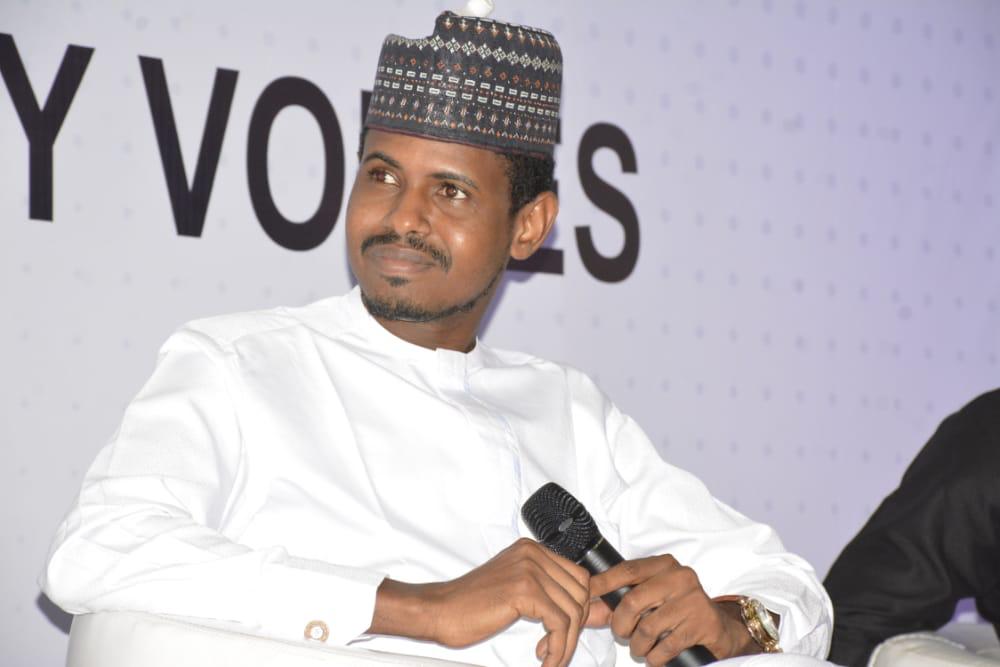
By Ahmadu Shehu, PhD.
It is no longer debatable that Nigeria, despite its crippling challenges, may never disintegrate, at least geographically. Of course, the animosities, hatred and distrust between the ethnic and regional nationalities might worsen, but Nigeria’s elasticity is exemplary and uncommon. However, I still do not accept the convenient folktale deployed by politicians that our country’s unity is non-negotiable. By now, our experience as a nation should have liberated our minds to begin a conversation on any topic of national interest, no matter the controversy or emotional delicacy.
As we approach the 61st birthday of our beloved country, I find it imperative to discuss this controversial but important issue. From the outset, let me clarify that this article is not about the Igbo as an ethnic group or the southeast as a region. Given the rise in pro-Biafra sentiments and agitations at the moment, this article is only meant to provide an outsider view of some arguments espoused by the secessionists in their attempt to generate sympathy and popularity.
When you think of Nigeria’s disintegration, the first thing that comes to mind is Biafra – a defunct Igbo separatist nation in the country’s southeastern part. The attempt to curve this region from Nigeria in 1967 remains one of the most gruelling experiences of our country. A barely six-year-old nation was thrown into chaos by a set of greedy politicians and unscrupulous military officers who wanted power at the centre. Within those thirty months, millions of innocent citizens lost their lives, got injured or lost their possessions. In addition, Nigeria lost a large chunk of its national treasury meant to set the country on the right footing. The rest, as they say, is history.
Instead of learning from our past mistakes to avoid the recurrence of this destructive, reckless and unnecessary event, Nigerians of this generation seem to be oblivious of the necessary truth. As with most factual historical events in the Nigerian psyche, this painful experience, its true causes, and damning consequences are not well-known to the younger generations. The biased narratives in various country sections ensure that our population only hear the stories that suit their mindsets without alternative facts that would open their minds to self-criticism.
In the case of Biafra, most of the young Igbo folks have a pretty false image of their fate as a people if Biafra had happened. This skewed imagination is not unconnected with the biased, often imaginative stories these young Nigerians were told about their defunct “nation”. The Igbo popular culture and the intelligentsia depict a fictional image of Biafra as a dream-nation where the Igbos shall live in peace and prosperity devoid of challenges.
They imagine, albeit naively, that Biafra will be unlike Nigeria and that their lot would have been better than it is today. These unsuspecting chaps are led into believing a mirage of living in a nation flowing with honey and milk. They are also told that other ethnic and geopolitical sections of Nigeria are responsible for all their woes. They argue, albeit ignorantly, that if not for the North, the West, Hausa, Fulani, Yoruba, etc., theirs would have been a heaven on earth. These ignorant tales conclude that a united Nigeria does not help their course as a people.
Well, I think that these views are simplistic. I also believe that it is our responsibility to tell our brethren the truth that they need to hear. Firstly, the creation, proclamation of Biafra was not in the interest of the ordinary Igbo people. It was the last-ditch by Igbo politicians to hide their faces from problems they caused and ensure they stayed in power. Secondly, our brethren are mischievously told that the Igbo were so rich that the Igboland was the largest economic contributor to the federation. Unfortunately, the falsity of this assertion is not far-fetched, as the southeast was and is still the least contributor to the Nigerian GDP. Moreover, during the attempted secession, Nigeria’s GDP was mainly from the agricultural sector, predominantly from the North.
Thirdly, it seems that many people are misled into believing that Biafra would be an oil-rich country even though none of the Southeastern states is truly oil-producing. The Niger Delta, Nigeria’s oil pot, was not and will never be part of Biafra.
Fourthly, young Igbo people tend to believe that the southeast was Nigeria’s cash-cow at independence. The bitter truth is that even in the ’60s, the perceived strong Igbo economy depended entirely on other regions. This scenario is worse today as there are probably more Igbo people and Igbo businesses in other parts of the country than in Igboland. Worse still, the Igboland is closed and unfriendly to Nigerians, making external investments impossible.
The most supposedly intelligent argument advanced by the secessionists hinges on the current centralized federal system. They claim that the centre is too powerful and that Igbo states are marginalized. This is an argument of convenience, at best. Nigerians are not oblivious that the current unitary system was the handwork of Igbo politicians who saw a unitary arrangement as the answer to their political agenda. Today, the tides have turned, and these very people are calling for the system they abolished. Restructuring this country – whatever that means – might be a good idea, but only after a genuine debate that will ensure we do not return to the same vicious circle.
People with secessionist tendencies have used the challenges in northern Nigeria as reasons for disintegration. However, Biafra will by no means be a safer or better place. Currently, some of the most terrible crimes bedevilling this country are not unconnected with the southeast. From drugs to internet fraud, armed robbery and kidnapping to arms smuggling, if not worse, the southeast is not holier than other parts of this country.
Another commonplace argument is that the industrious nature of the Igbo people is enough evidence that Biafra will be a great country. But this argument, too, has failed to account for the fact that the wealthiest and most successful Igbo people and their businesses owe their success significantly to Nigeria and not Igboland. The Igbo people are traders, and the economic success of trading lies in the customer market, not the number of sellers. What do the Igbo people actually produce or sell that does not rely on the larger Nigerian population?
On the one hand, there is nothing that the southeast offers that cannot be produced or sold by other Nigerians. But, on the other hand, everything from food to livestock, energy, and the market for everything sold depend on the other regions. The southeast is asking to leave under this situation is the most absurd strategic blunder of the century.
Similarly, Igbo politicians and administrators have not distinguished themselves from the rotten Nigerian public servants. We do not see a difference between southeastern institutions or southeasterners in Nigerian public offices and their counterparts in other regions or ethnic groups. The same crop of people will lead Biafra. So, nobody should be enthusiastic.
Therefore, it is evident from the preceding that the viability of Biafra as an independent state is not assured. For one, it will be a landlocked, forty-one thousand kilometres square piece of land, which is just a half of Niger state and less than the size of Kaduna state. Worse still, it will be circled on all four corners by its biggest adversary, the Nigerian state. Secondly, it will depend on its biggest adversary for nearly everything except air, including waterways, food, and labour. Third, it would be one of the most overpopulated countries vis-à-vis its landmass and population.
The bitter truth is that these ecological, geographical, demographic and economic factors do not support the presupposition that the Igboland is better off as a separate entity than it is within the Nigerian federation. Therefore, it is safe to conclude that even if Biafra was to happen on a platter of gold, it is not going to be the rose garden these populists have configured our brothers to believe. Thus, we should all look before we leap!
Dr Ahmadu Shehu is a nomad cum herdsman, an Assistant Professor at the American University of Nigeria, Yola, and is passionate about the Nigerian project. You can reach him at ahmadsheehu@yahoo.com.
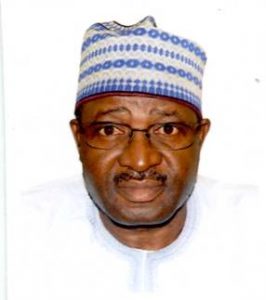
Gunmen kidnap former minister, Solomon Ewuga, in Jos
By Hussaina Sufyan Ahmad
Solomon Ewuga, the former Minister of the Federal Capital Territory, has been kidnapped.
Ewuga, who also served as a Senator, was kidnapped in the late hours of Wednesday in Plateau State.
The former Senator, who represented Nasarawa North Senatorial district from 2011-2015, was returning home when the gunmen waylaid and abducted him.
His abduction is coming after the gruesome killing of the husband of former Minister of Information Prof Dora Akunyili, Dr Chike Akunyili, was reported.

The danger of ‘otherization’
By Mukhtar Garba Maigamo
The trending video that surfaced after President Buhari attended the UNGA in New York, showing an unprovoked assault on some people that are considered “Hausa-Fulani” or “Northern Muslims” by their provocateurs on account of their facial countenance and, or the apparels in them, is a perfect example of the deep-rooted hatred, obsessions and insecurities bedevilling many people in some parts of this country which translated into this dismissive ‘othering’.
It is even very possible that these two or three people in the video who are being verbally assaulted with a barrage of racist abuses and the most opprobrious language, share no cultural or ethnolinguistic affinities with Fulani, but because of the fact the racialization of the Buhari/APC government has taken a firm root, the entire people of the North are lumped together as either Fulani or Hausa-Fulani (whatever that means) and demonized by many people in the South, including even the most educated ones. What a profoundly ignorant mischaracterization!
This sort of ignorance has historically also manifested in the ‘Aboki’ and ‘Gambari’ ethnic slurs these people used with profound contempt.
But the striking irony is that there are many people here in the North or even residents of Daura (hometown of Mr President) who might have felt disillusioned with the Buhari’s administration, who could also share cultural, ethnic and religious affiliations with him. Still, they are worst-off today, and there are those also who do not share these features with the president. Still, by their circumstances or by way of geography, they are lumped together and mischaracterized as Fulani or Hausa Fulani.
But the danger of this otherization and the racialization of APC is that it could provoke ethnic and religious sentiments during elections and make people rally around a maligned candidate- whether he is the right choice or not, in terms of capacity and ability to deliver.
When, because of your pathological hatred of a single person, his party or associations, you pigeonhole an entire stock of his ethnic nationality and derogate as dregs of the country, you are invoking his people’s consciousness to rise against you whether or not they love him.
This same thing happened during GEJ when some clannish zealots otherized the entire country, but south-south. Under GEJ watchful eyes, Edwin Clerk and his passengers went about with rhetorics and threatened fire and brimstone against anyone who raised eyebrows against their posturing.
His wife also went about demonizing the North as the habitat of almajiri (the almajiri that are menacing the North too, and whom many people in the North were campaigning against).
Her infamous diatribe, “our people no dey born shildren wey dem no dey count. Our men no dey born shildren throway for street. We no dey like the people from that side” was the final straw that galvanized the anger of people to rise and rally around ethnic solidarities to defeat GEJ.
The victory of APC in 2015 and 2019 was, therefore, a combination of many factors, including the idealization and evocation of sentiments for candidates put forward by the party.
And this will continue to play out if the antipathy like the one we’ve seen in this video continues.
Mukhtar Maigamo writes from Kaduna. He can be reached via mgmaigamo@gmail.com.

People feared dead after Shiites, security operatives clashes in Abuja
By Hussaina Sufyan Ahmad
The Nigerian Police Force has reportedly arrested dozens of Shia Muslims followers at a religious procession of Arbaeen in Abuja on September 28, 2021.
The spokesperson of the group claimed that eight members were shot dead during the gathering.
However, Abuja police denied the claim of any casualty.
The police official said they intervened to stop members of the banned Islamic Movement in Nigeria (IMN) from causing hardship to motorists along the Abuja-Kubwa expressway. He added that “57 people were arrested after IMN members attacked the police with petrol bombs and stones.”
“They were promptly intercepted by the security operatives and dispersed to prevent further disruption of public order,” the police statement said.
IMN spokesman, Ibrahim Musa, said security forces shot and wounded protesters.
“We were almost rounding up the procession when the police and army came and started shooting,” he said.
The IMN, a pro-Iranian group, had a profession in 2019 that saw their leader Ibrahim El-Zakzaky’s arrest when it clashed with Nigerian security forces.
The army killed 350 IMN Shia Muslims during a religious procession in northern Nigeria in December 2015. According to rights groups, many were gunned down and burned alive.
IMN leader el-Zakzaky and his wife, who has been in custody since 2015, were freed last month after a court acquitted them of murder charges involving the death of a soldier.
But the religious leader still faces terrorism and treasonable offences charges, according to prosecutors.
Muslims make up about half of Nigeria’s population of 200 million. However, the Shia Muslim minority have long complained of discrimination and repression.
Niger State: Government approves further reduction in university tuition fees
By Abubakar Ibrahim
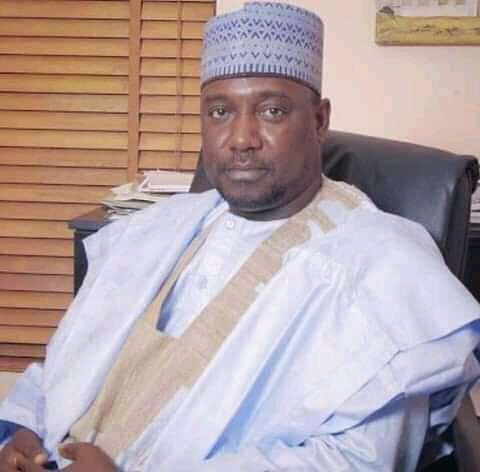
A Statement issued by Secretary to the State Government (SSG) Ahmed Ibrahim Matane said the downward review of the tuition fees of the Ibrahim Badamasi Babangida University, Lapai, only affects returning students and the state’s indigene from fifty thousand to forty-six thousand. For the new indigene students, it is ninety-five to eighty-six thousand.
Ahmed Matane revealed that the tuition fee for the new and returning non-indigene international students remain unchanged.
The SSG explained that Governor Sani Bello reduced the tuition fees after listening to representations from the State House of Assembly members, stakeholders, including the Students Union.

Police arrest health worker helping bandits
By Muhammad Sabiu
Men of the Nigeria Police Force have successfully apprehended a health worker who was alleged to have been providing medical assistance to bandits in the Danmusa Local Area of Katsina State.
The 34-year-old health worker, identified as Murtala Umar, owns a patent medicine shop in the LGA.
A report by the Daily Post newspaper has indicated that Murtala had been working for the bandits operating in that area, and they always came to him whenever they needed any medical attention.
SP Isah Gambo, the Katsina State Police Command spokesman, who paraded Murtala at their headquarters on Monday, said the suspect had confessed to offering assistance to bandits.
Confessing the allegations made against him, Murtala was quoted as saying, “I studied at the College of Health and Technology in Kankia, and I manage a chemist at Tashar Yar Alewa. The bandits, from time to time, come to my shop carrying guns to seek my help concerning the health of their members, and they pay me in return.
“I used to oblige them for fear of being attacked, but I am regretting my actions now.”
NBC releases approved radio, TV companies [Full list]
By Sumayyah Auwal Ishaq
The National Broadcasting Commission (NBC) has released the list of 159 companies, communities and institutions of higher learning granted approval by the President Muhammadu Buhari, GCFR, to operate radio and television stations in Nigeria.
See the list below:


Zungeru hydropower project is genuine, unlike Mambila — President Buhari’s aide
By Muhammad Abdulrahman
President Muhammad Buhari’s media aide, Bashir Ahmad, shared photos from the Zungeru Hydroelectric Power Station on his Facebook page.
Ahmad added that “Zungeru Hydroelectric Power Station is a 700 megawatts (940,000 hp) hydroelectric power plant under construction. When completed, it will be the second-largest hydroelectric power station in the country, behind the 760 megawatts (1,020,000 hp) Kainji Hydroelectric Power Station.”
Several people, some of whom commented under the post, considered the gesture a mere “damage control”.
You may recall that a BBC Hausa report recently exposed that no work had been done at the site of a similar project at Mambila, Taraba State. This happened despite promises made by successive Nigerian governments in the last 40 years.
The Buhari-led government had especially made promises and talked much about the Mambila project. Bashir Ahmad, among other officials, shared similar pictures of the non-existent project.
However, in today’s post, Ahmad vowed to take people “to a virtual tour of the [Zungeru] project in the coming days”.
Governors’ forums do more harm than good in Nigeria
By Abubakar Ibrahim
Those looking for devolution of powers to make the states more powerful than the centre had forgotten about history.
The Soviet Union (USSSR) collapsed when it gave more powers to its states.
Nigeria government has given Governors’ clubs (governors forum; southern governors forum, northern Governors forum, etc.) leverage to the extent that they are now flaunting executive orders.
No governor obeyed the executive order to give monthly allocation directly to local government councils, legislature and judiciary in their respective states.
The antics of southern governors, especially of Rivers, Lagos and Ogun, will send Nigeria to its waterloo.
Governors forums have made them act as devils instead of angels. They have frustrated the inflow of funds to LGAs, state legislatures and judiciary. They have refused to pay the correct minimum wage.
Governors forums have done more harm than good. They are only good at wasting state resources in crisis, crossing the skies in charted flights attending their meetings at various locations. The worst scenario is they will leave their states at the mercy of nobody. Hence, this stagnates work until they are back.
It is time for these unproductive governors forums to be abolished. We like to see state governors behaving like former governors with integrity, people like late Governor Jakande, who had never travelled outside Nigeria and never run away from his state responsibilities throughout his tenure.
Governors like Audu Bako, through under a military regime, would only travel out to bring back goodies for the ordinary person, such as “irrigation schemes” that Kano people are still benefiting from after all these long years. It is a legacy he left behind.
Nigerians should come back from supporting politicians who are only good at building themselves and championing the course of disintegration.
Abubakar Ibrahim can be contacted via ai869802@gmail.com.
ABU Distance Learning Center scored best in Nigeria
By Ibrahiym A. El-Caleel
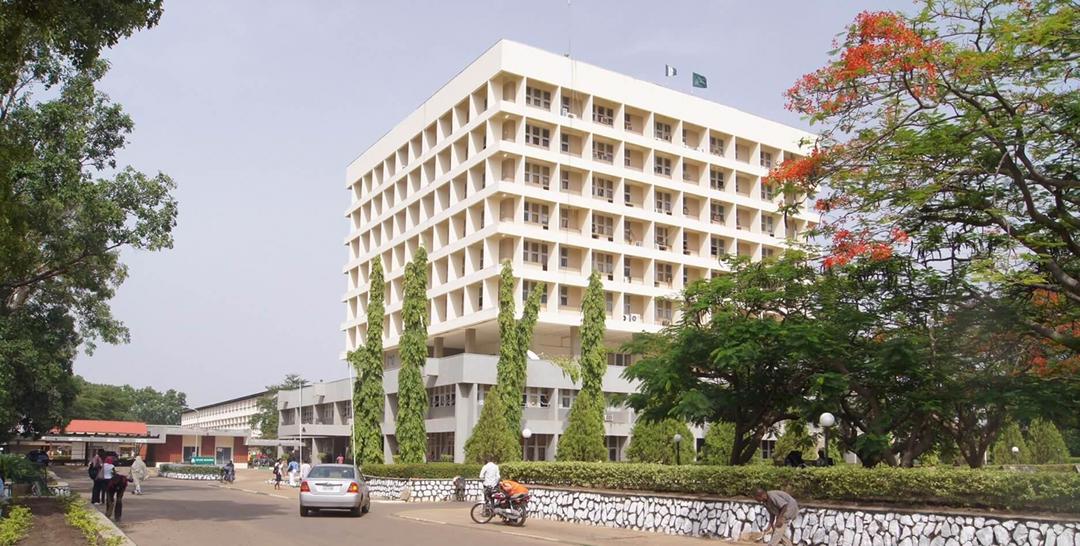
The National Universities Commission (NUC) has scored Ahmadu Bello University Distance Learning Center as the best in Nigeria.
NUC conducted a Quality Assurance Assessment Visit to Nigerian university distance learning centres. Eight among the centres were rated “Very Viable” with a percentage score of at least 80%, as follows:
Ahmadu Bello University Distance Learning Center- 94.9%
University of Lagos Distance Learning Institute- 93.1%
University of Ibadan Distance Learning Center- 93.0%
Joseph Ayo Babalola University Center for Distance Learning- 92.7%
Lagos State University Open and Distance Learning and Research Institute- 89%
Ladoke Akintola University of Technology Open and Distance Learning Center- 88.7%
University of Nigeria Nsukka Center for Distance and e-Learning- 85%
Modibbo Adama University of Technology Yola Center for Distance Learning- 83.5%
University of Maiduguri and Obafemi Awolowo University were both rated “Viable”, scoring 78.1% and 75.3%, respectively.
University of Abuja Center for Distance Learning and Continuing Education was rated “Not Viable”, with a score of 50.3%.
There are only 12 approved distance learning centres across the country, as obtained by The Daily Reality from the NUC website. The 12th accredited program is the Federal University of Technology Minna Center for Open Distance and e-Learning.
Nigerian universities established distance learning centres to obtain degrees from NUC-approved universities without a physical presence on campus. Due to flexibility, the programmes are gaining more acceptability over the years by students who might be inconvenient to be in physical contact with the schools.