



On the culture of disrespect and disregard for term limits
By Mujahid Ameen Lilo
When in 2015, the then incumbent president of Nigeria, Goodluck Jonathan, called to congratulate his opponent ahead of the announcement of the election winner, it was hailed as a heroic act. The act further cemented the country’s democratic maturation and avoided the imminent disintegration of the country had the president not accepted defeat. Moreover, it ensured a stable and successful government transition in a country on the brink of war.
The former president of the Niger Republic got the Mo Ibrahim Prize for Achievement in African Leadership because he respected term limits. Yet, nobody was found worthy of the award for eight years, which points to African leaders’ disgraceful culture of disregard for term limits and bastardising of democracy. What’s more annoying, though, is the culture of celebrating the few ones that respect the term limits.
When we understand that it’s the moral imperative of our leaders to bow to the people’s will, to respect the constitutional authority that put them there and dictate their term limits. Until then, we wouldn’t rush to make a big deal of it and lionise them, present them with awards, among other things. We tend to forget and forgive their misrule. The great disenchantment with the previous administration’s sadistic leadership style made Nigerians ready to go to any lengths to vote out that party. People were prepared for war if the election got twisted. So it’s the morally and politically correct thing to do, that is, handover. Most of these leaders leave behind enormous debts, worsening insecurity, cases of corruption and so on.
The recent coups in Guinea and Chad and the foiled one in Niger indicate the frightening facts that the West African countries are far from political stability. Military intervention hardly change matters. It shouldn’t be the response to a faulty democracy. The West African subregion should thoroughly shake itself off the yoke of any military powers. The democratisation of the whole subregion would go a long way in stabilising it. Not that democracy is perfect per se (what with her so-called upholders violating one of the fundamentals: periodic election), but that we can and should practice it most purely, quite distinct from the military system. There should be an atmosphere that’ll facilitate proper reforms of democracy. A stable system of government will guarantee peace and also bring about the desired developments.
It’s on this premise that I’d now address another factor that is damaging to our democracy, threatening what little peace and stability is left in the region: electoral processes. In my country Nigeria, once it’s time for elections, people who live away from their states of origin start rushing back to their hometowns because elections have been synonymous with violence leading to the death of many people. There should be peace for people to exercise their fundamental right of voting. Instead, thugs are paid to violate the process. Many people believe in the quote that ‘our votes do not count; otherwise, they wouldn’t let us vote’. However, that is not where the problem lies. I believe that we’re capable of holding free and fair elections as we’ve done in the past. We can cite many examples with Nigeria as a case study. The fourth republic election in Nigeria that put Chief Obasanjo into power was relatively free and fair. The two elections that put Buhari into power were also pretty free and fair. We cannot forget the annulled election of June 12, 1993.
I was born in the early 2000s. My generation is called the ‘golden generation’ because the Nigeria we’re born in is democratic, free from colonial and military powers. But my generation suffers from a collapsing education system (most have to attend private schools because the government ones are total craps), from frequent strikes in universities to insecurity devouring our lands like an inferno. This semester, I was looking forward to fieldwork we are supposed to go on in a literature course but have to resort to what our lecturer calls ‘mental research’ because nowhere is safe. This generation is so angry – a wave of anger manifested in the Endsars protests.
On days like this, independence day, I sit and reflect on the happenings in my nation while my fellow teenagers are out having fun, draping their bodies in the country’s colours and posting things like ‘happy independence’ on social media. Yet, the ghost of Achebe and Gimba surrounds me as I struggle to intellectualise my thoughts, building it on Achebe’s dictum (the trouble with Nigeria is simply and squarely a failure of leadership) and the Gimba’s theory that differs from Achebe’s.
I am a lover of columns. As a child, I was very socially and culturally conscious, reading my dad’s dailies. On my shelf, I have a collection of columns: Gimba’s Why am I Doing This, Tundes’s Nigeria: A Thousand Cries, A Thousand Laughs, Nda Isiah’s Nigeria: Full Disclosure, and Victor’s Excuse Me. The writings there span Nigeria from Obasanjo’s first tenure to the eventful short tenure of Yar’adua and Goodluck’s tenure. Presently, I read Kakanda, Bulama and Abubakar, whose columns are about the present administration. All through, there is rage. There is a disappointment. These essays echo in my conscience, making it hard for me to celebrate not only Nigeria’s birthday but those supposed champions of democracy, that after much damage, step aside and respect term limits. Like Jonathan. Like Niger’s Muhammdou, winner of Ibrahim Prize for Achievement in African Leadership.
Mujahid Ameen Lilo is a winner of the Wole Soyinka Essay Competition and a student at the Department of English, Ahmadu Bello University, Zaria.

World Teacher’s Day: Nigerian students send wishes, prayers to their teachers
Compiled by Aisar Fagge
Today, October 5, is designated as World Teacher’s Day. Students across the globe are celebrating the day with their teachers by sending them flowers, cards, taking them out for dinner and writing goodwill messages on various social media platforms.
The Daily Reality collects some opinions of Nigerian students about this day. Here are some:
Umar Haruna Tami
“Teachers are the nearest alchemists within our reach. The good students they produce are the result of patience, perseverance and dedication to the service. They don’t prioritize what’s in it for them. May their spirits never lose shape.”
Adamu Kazaure
“Without the hard work of Nigerian teachers, the level of illiteracy will have been unmeasurable. We are ever grateful to all the Nigerian teachers. You all deserve to be celebrated.”
Hafeez Kiido
“Uncle Ishaq, who taught me in my elementary school, Maitama Yousuf. He was the first person who had inspired me to read and be courageous when giving it back(public speaking in debates). Malam Sanusi was the second person who usually exempted me out of many applauding my doings. That motivates me, though.
Prof. Tijjani M Naniya of BUK (well-known historian), from whom I retrieve raw knowledge of history. I also emulate some of his positive and solid character. For example, he once told us to be self—defendants and not to part in sectarianism, as sectarianism was solely built upon politics, not religion.
Late Malam Sanee taught me Quran in my early childhood stage (Allah ya gafarta masa).
Last and not least was Malam Abdullahi Abba, who was my Project Supervisor at Kano state Informatics. I will never forget his kindness and guidance towards our studies. May the brim of blessings of Allah flood them all.”
Sohaib Infinity
“Teachers are the reason for what am I today; I always respect them, and my love for them is immeasurable.”
Abdullahi Idris Tikau
“We know we don’t have a Kobo, Naira, or Dollars to pay you. So your (teachers) reward is in heaven. May Allah be your helper and protect you from the trials of this Dunya. May Allah bless your excellent work for humanity. Long live Nigerian teachers. Your good work will not be in vain.”
Jamila Umar
“Teachers are community builders. I can recall when a teacher in primary six once told me about vision 2020 (2005) that all the academic, health challenges etc., we are facing in Nigeria will become history. Since then, I have been dreaming of this dreamland. He speaks sincerely with hope for our future, but upon reaching 2020 now, the result is ‘irony.’ I still have hope for the future generations to come. May Allah reward our teachers.”
Harun Muhammad Yakasai
“Teachers are the angels who enlighten our lives with the light of knowledge and wisdom. Wishing you immense joy, happiness and prosperity because teachers like you deserve the best. Happy teacher’s day to you all.”
Sani Muhammad
“My best regards to both my Islamic and western education teachers as they have really impacted on me in relations to honesty, dedication and many more.”
Dan Ladi Hausawa
“I don’t have enough words to express my gratitude to my humble teachers who guided me on how to become a useful person among the people. God bless our teachers.”
Auwal Mukhtar
“Today is the teacher’s day. Teachers are the bedrock of any sane and progressive society without which any society can only live in room and gloom. They perform lofty and noble acts which go unnoticed and adequately compensated. My utmost regards to my teachers, who helped to shape and mould my thinking. Who always taught me the act of self-sacrifice and selfless living. My sincere appreciation to Mrs Beatrice Okoro, Mr Yemi Odedokun, Mr Nkuma, Late Atemken Achanga, Mal Abdullahi Musa, Mal Yusufu, Mal Nura Khalid ( digital Imam), Ass. Prof Bappa M Abubakar, Ass. Prof Manir Kamba, Prof Lukman Diso, Dr Abdulkadir Idris Ahmed and many others too numerous to mention.”
Karama Jamila Sani Yaro
I will forever be grateful to my teachers. My parents were my first teachers. Both Islamic and Western School teachers I attended. And the entire teaching staff of Al-Manaahil Academy. You all are much appreciated.”
Yahanasu Ibrahim Isah
“Dear teachers, it is because of you I became a good student. Thank you, all, that you have done for me. I wish you a delighted teachers day. If knowledge is the light, then you are the guiding stars that give us this light. I celebrate you all. Happy teachers day. Proud to be one. I celebrate us all.”
Hassan Mujtaba
“I was inspired by many teachers, and you are included. The way teachers inspired me is to be a hard-working student. Alhamdulillah. I took their advice. I always work hard. I rather fail and fail than cheat in any exam. I believe deep down in me that this is a very good thing and am proud of it. Above all am proud to be among your students, sir. Am still seeing it as a favour. May God bless all our teachers.”

Teacher’s Day
By Muhammad Rabi’u (Bin Isah)
IN MOST CASES, we look at many successful people without remembering those people that held the lamp for them. Teachers are the light-bearers of success, the beacons of progress and the building blocks of a good generation. “Islamiyya teachers” at the top, and the Boko teachers; they all hold lamps for us. But they are less assisted, remembered and appreciated.
Of all people, teachers are the most selfless segment of the society that derive pleasure not in failure but in the success of their students and people in general. Whether doctor, engineer, lawyer, administrator, etc., a teacher stands behind you in support. They feel delighted when students learn and understand, take and pass their tests, and when they hear that one of their students has made a remarkable achievement in life. After exhausting their energy in bringing light in person, they are now fully assured that their effort has not been in vain.
Teaching, as the essential task of teachers and the most fundamental component of education, can never be achieved without teachers. Education, the art of imparting knowledge, skills and experiences to learners, will lose its meaning without the help of teachers. Because education, which we now equate with schooling, taking schools as the vital places of learning, where socialization takes a decisive form, is not effective without teachers’ sacrifices.
The system of our organizations, whether governmental or non-governmental; the processes of our public and private enterprises; the modalities and mechanisms of our modern state of affairs; the leaders that serve the workers that run our world and us; all are not but the manifestation of the work of one selfless, good-loving and a charitable individual called a teacher. But this teacher is not appreciated, and they don’t care as long as the world stays educated, sane and developing.
Whatever we may say about teachers, we can never elucidate the merits of their services in their deserved way. Words can never capture the splendour of their roles and works in man’s development and wellbeing. Teachers love nothing more than the feeling of being successful in putting life into a place where death has taken an abode.
Teachers can be forgotten, but in every word spoken and any letter written, and in any sense made and any problem solved, the teacher takes credit, and particularly the teachers, at the primary levels of our learning, who have helped us learn how to read and write, understand and play with numbers in order to have eyes, hands and tongues to communicate with the world.
You can say “Thank You” to your teachers, and you’re still less thankful for the life they have breathed into you. Perhaps, by excelling more and being a good member of society, the teachers will feel better appreciated. And you can still never pay them. And nobody can ever pay them. Indeed, their reward is in heaven.
Thus, I say, a happy #WorldTeachersDay.
Muhammad Rabi’u (Bin Isah) writes from Bauchi State.

Kano Government shut down 537 fake hospitals, 138 pharmacies and 399 patent medicine shops
By Hussaina Sufyan Ahmad
The Government of Kano State ordered the closure of no fewer than 1,581 premises used as hospitals, clinics, pharmacies, and patent medicine shops in 20 Local Government Areas of the state.
The government embarked on these measures following the growing menace of quack doctors, inexperienced pharmacists, and other health officials that use unlicensed premises for rendering health services across the state.
In this regard, the government’s action was said to have been prompted by reports that many unsuspecting residents had continued to fall victim to the nefarious activities of quack doctors and illegal clinic operators in the state.
The state, working in collaboration with the Pharmacists Council of Nigeria (PCN), has since swung into action, shutting the fake centres and moving ahead with more measures to sanitize the state and save the lives of the citizens.
The Registrar of the PCN, Pharmacist Elijah Mohammed, represented by his Director of Enforcement, Stephen Esumobi, told the media that efforts to sanitize the state would continue until the place is safe and secure from unqualified persons to practice and render services.
Mohammed said: “A total of 1,581 premises comprising 657 pharmacies and 924 patent medicine shops were visited across 20 local government areas of the state. A total of 537 premises made up of 138 pharmacies, and 399 patent medicine shops were sealed for offences which include: operating without registration with the PCN, selling ethical medicines without the supervision of a pharmacist, poor documentation, poor storage conditions, unauthorized sale of substances of abuse, amongst others.
While 25 were issued with compliance directives. Many patent medicine shops and medicine dealers in Kano still operate without adequate storage facilities, while others have illegal warehouses scattered around the state, some of these warehouses have a large stock of ethical products and substances of abuse which could find their ways into the camps of criminal elements in the society thus contributing to the adverse security situation.”
Similarly, the Private Health Institutions Management Agency, PHIMA, has also closed down many illegal clinics actively rendering services as hospitals to unsuspecting persons in the state. The Agency’s Executive Secretary, Usman Tijjani Aliyu, said the agency shut a chemist operated by a low-level secondary school exciter as a ‘hospital,’ describing it as a case of ‘quackery’.
The Chairman of the Kano State Chapter of Nigeria Medical Association (NMA), Dr Usman Ali, said that efforts were in been taken to checkmate activities of quack doctors in the state; “We are fighting this quackery, and it is because of this that a committee, Medical and Dental Council of Nigeria, (MDCN) monitoring team was set up in the 36 states including Federal Capital Territory.
“The committee comprises director of medical services of the Ministries of Health as chairman and the NMA chairman of each state as the secretary. About two years back, with the collaboration of the Kano Police Command, we have arrested two to three quack doctors in the state. Similarly, for all doctors in the state, we must make sure a doctor is qualified and certified to practice in Nigeria. That is why the same monitoring team is going round to help check these in hospitals.”

Facebook, WhatsApp outage: Nigerians react
Facebook and its family of different applications which are massively used by Nigerians and billions of people worldwide have encountered a very big technical trouble that led to general outages worldwide. According to The Newyork Times, Facebook and its family of apps, including Instagram and WhatsApp, were inaccessible for hours on Monday, taking out a vital communications platform used by billions and showcasing just how dependent the world has become on a company that is under intense scrutiny.
Facebook’s apps — which include Facebook, Instagram, WhatsApp, Messenger and Oculus — began displaying error messages around 11:40 a.m. Eastern time, users reported. Within minutes, Facebook had disappeared from the internet. The outage lasted over five hours, before some apps slowly flickered back to life, though the company cautioned the services would take time to stabilize.
Even so, the impact was far-reaching and severe. Facebook has built itself into a linchpin platform with messaging, live-streaming, virtual reality and many other digital services. In some countries, like Myanmar and India, Facebook is synonymous with the internet. More than 3.5 billion people around the world use Facebook, Instagram, Messenger and WhatsApp to communicate with friends and family, distribute political messaging, and expand their businesses through advertising and outreach.
Facebook is used to sign in to many other apps and services, leading to unexpected domino effects such as people not being able to log into shopping websites or sign in to their smart TVs, thermostats and other internet-connected devices.
Technology outages are not uncommon, but to have so many apps go dark from the world’s largest social media company at the same time was highly unusual. Facebook’s last significant outage was in 2019, when a technical error affected its sites for 24 hours, in a reminder that a snafu can cripple even the most powerful internet companies.
This time, the cause of the outage remained unclear. It was unlikely that a cyberattack was the culprit because a hack generally does not affect so many apps at once, said two members of Facebook’s security team, who spoke on the condition of anonymity. Security experts said the problem most likely stemmed instead from a problem with Facebook’s server computers, which were not letting people connect to its sites like Instagram and WhatsApp.
Facebook apologized for the outage. “We’re sorry,” the company said on Twitter after its apps started becoming accessible again. “Thank you for bearing with us.”
The outage added to Facebook’s mounting difficulties. For weeks, the company has been under fire related to a whistle-blower, Frances Haugen, a former Facebook product manager who amassed thousands of pages of internal research. She has since distributed the cache to the news media, lawmakers and regulators, revealing that Facebook knew of many harms that its services were causing, including that Instagram made teenage girls feel worse about themselves.
The revelations have prompted an outcry among regulators, lawmakers and the public. Ms Haugen, who revealed her identity on Sunday online and on “60 Minutes,” is scheduled to testify on Tuesday in Congress about Facebook’s impact on young users.
“Today’s outage brought our reliance on Facebook — and its properties like WhatsApp and Instagram — into sharp relief,” said Brooke Erin Duffy, a professor of communications at Cornell University. “The abruptness of today’s outage highlights the staggering level of precarity that structures our increasingly digitally-mediated work economy.”
When the outage began on Monday morning, Facebook and Instagram users quickly used Twitter to lament and poke fun at their inability to use the apps. The hashtag #facebookdown also started trending. Memes about the incident proliferated.”
Even here in Nigeria, many Facebook, WhatsApp and Instagram users start exchanging pleasantries and teasing one another that those apps are not to be trusted as the ultimate way of communication. A Facebook user, called Abdullahi, posted that: “I am happy we are old, we came all the way from the time when there were no social media and I feel we were not taken by surprise as we are not like the boys of today, whose life is largely dependent on Facebook, as that’s the only thing they know”. Abdul’aziz, another user said “I didn’t even know that it happened. While another Facebook user was shocked and he said, “I thought it is the end of time”. Another user opined that “what do you think if it is Oxygen that is stopped for certain hours”! Users continue to say their minds as Facebook and its family apps are resuscitated back to life.

Late Sheikh Ja’afar’s daughter named Izala women leader
By Muhammad Sabiu
The daughter of the late Sheikh Ja’afar Mahmud Adam, Zainab, has been appointed as the new leader of a JIBWIS women body, also known as Nisa’us Sunna.
Delivering her acceptance speech after she was named the leader of Nisau Sunna, Malama Zainab expressed her gratitude to the Almighty Allah for making the event a reality.
She said, “I am grateful for being given this opportunity not because we are better than anybody, but for the simple reason that trust has been vested in us, with the thought that we will try our level best. And we hope the Almighty will spare us from disappointing (you), and may He grant us the opportunity to discharge the good expected of us.
“We, therefore, seek their [our leaders’] guidance in different aspects—in the aspect of praying for us as our parents, and on the part of commanding us.”
She also stressed the importance of the inclusion of women in areas that have to do with community development, adding that women are of great importance in any effort of bringing development.
The naming of Malama Zainab as a women’s leader went viral, thanks to the prominence and influence of her late father, Sheikh Ja’afar.
Recall that the late cleric was murdered in 2007. However, no culprit had been brought to justice even though a former leader of Boko Haram, Abubakar Shekau, claimed responsibility for his killing on several occasions.

Bishop Kukah blows hot, tells Buhari to expose names of terrorists’ sponsors
By Muhammad Sabiu
Bishop Hassan Matthew Kukah, the Archbishop of Sokoto Catholic Diocese, has again yesterday berated the Buhari-led administration, saying that the president isn’t ready to deal with terrorists.
The Bishop expressed concerns as to why the Federal Government isn’t ready to expose the elements financing terrorism in the country, stressing that “Nigeria is decomposing from within.”
Delivering a sermon at the Priestly Ordination of Five Deacons at the Holy Family Cathedral, the cleric vented his anger at the terrible condition the country is in.
He was quoted as saying, “Nigeria is a broken country. It is decomposing from within. Our heart is broken and lives are haemorrhaging by the day. We cannot go on like this. The country and people have become so traumatised and sedated by horrible news, that have now become comfortable in ‘this swamp of evil’.
“No number of horrific deaths, murders, sexual violence and kidnapping of children or adults can make us stop our life of debauchery.”
Mr Kukah has been one of the fiercest critics of the Buhari administration, and the Presidency doesn’t take it lightly in replying to the bishop, in what could be tagged as ‘a war of words.’
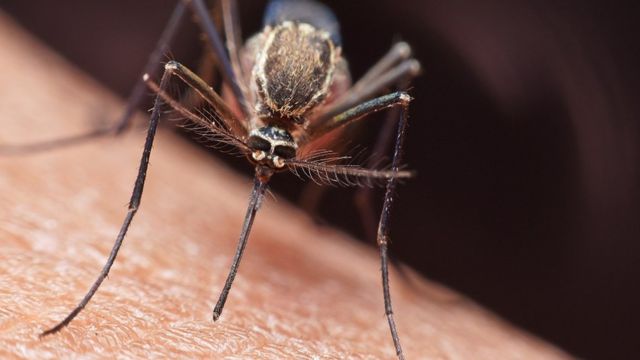
90,000 malaria related deaths are recorded every year in Nigeria – NMEP
By Hussaina Sufyan Ahmad
MEP Advocacy Communication and Social Mobilisation (ACSM) Officer, Eunice Subair, disclose that 90,000 malaria deaths are recorded yearly in Nigeria at the quarterly meeting of the Civil Society in Malaria Control, Immunisation and Nutrition (ACOMIN), held in Abuja on October 3, 2021.
Subair noted that progress is being made to control malaria, with prevalence going down from 42% in 2010 to 27% in 2015, and 23% in 2018 (MIS 2010 and NDHS 2018).
She said malaria was still a significant burden in Nigeria, and that the Seasonal Malaria Chemoprevention (SMC), was ongoing in all the eligible states.
She also requested the media to help in achieving the malaria elimination goal by making the disease a topmost topic of discourse to the public by including malaria issues in their programmes. And educating the public on the importance of sleeping inside ITNs every night to protect themselves against mosquito bites, among others.
Subair stressed the need for pregnant women to visit clinics at the earliest stage of pregnancy, to undergo antenatal care and admonished Nigerians to always go to the hospital whenever they suspect their systems to have malaria symptoms.
The Coordinator of the Civil Society in Malaria Control, Immunisation and Nutrition (ACOMIN), Ayo Ipinmoye, said more than three billion people, about half of the world’s population, are at risk of malaria, which is treatable and preventable.
He noted that the recently upgraded customised management information system would save the Federal Government about N293,700,000 in logistics cost, out of the N890m budgeted for the implementation of the malaria Intervention programme.
He further explained that the deployment of technology in data collection would help check malaria commodities, such as the ACT and insecticide-treated net.
He said with the latest upgrade of ACOMIS, data could be collected from the field on a real-time basis across all implementing states.

High rate of stealing and its possible solutions
By Nasiru Tijjani
Doubtless, stealing is one of the social problems bedevilling the peace and stability of almost all human societies. Therefore, stealing means taking something away from a person, shop/store, etc., without permission and without intending to return or pay for it. The problem, needless to say, is known to every reasonable person who cares to look and discuss their societal issues. Quote me anywhere that no society can fully develop and excel in all spheres of life if its members are thieves, burglars or robbers. For clarity, thieves are persons who steal things, especially secretly and without using violence. Burglars usually get into a house, office, etc., especially by force, to steal stuff, while robbers steal property from a person or public place, especially using violence.
The rampant cases of stealing are gradually becoming a new normal in our society. The culprits are always employing different strategies to safeguard themselves against an unwarranted arrest by the security agencies and other community volunteers. The community members gradually become helpless and equally lose hope about when to live in peace and comfort with their property. I don’t need to justify anything here for you, or your brother might
Since time immemorial, stealing has been discouraged by Islam and Christianity. The duo has strongly warned their followers through a significant portion of scriptures that they should shun the attitude of taking someone’s property without the owner’s consent. Apparently, the act has been classified as taboo and unethical that can only be committed by the mannerless, heartless and idle good-for-nothing person whose faculty of reasoning is abysmal. The effects of their (thieves) actions negatively affect the peaceful co-existence of the entire society either by crippling the welfare of the people or creating an unresolved hatred and enmity.
What comes first on the list has to do with parents. To me, they should not be left blameless, for they have a role to play in the proper upbringing of their children. They have been saddled with the responsibility of meeting the needs of their children, right from appropriate education to marriage. Nowadays, children are left to stand on their own feet in all walks of life. Parents are gradually disowning the mandates of their children as enshrined in the religious and cultural provisions.
Coming next after the first is peer-group influence. Children usually commit crimes under the influence of friends. This is because they typically get to know the attitude of each other better during their friendship. Psychologists have identified imitation as one of the stages of cognitive development. Therefore, children effortlessly emulate the behaviour of their friends. A friendless child is safe for not associating with rotten eggs, for he is less likely to be influenced by peers.
It is a known fact that the care of children is being placed firmly within the domain of their parents. Therefore, they (parents) should ensure that they fulfil all the mandates saddled on them. They must be answerable for their children’s failure, either for poor upbringing or anything for that matter.
The influence of some films that are of no character-building is equally associated with the topic under discussion. For example, with the recent release of Kannywood seasons, youths learn different tactics of stealing and other unwanted behaviours. “A Duniya“, a new Hausa season produced by Tijjani Asase, is a classic example of such a film. Recently, the Kano State Censorship Board has cautioned its makers and asked them to reshape the season’s activities considering the negativity of some scenes.
The human being is a social animal that cannot live in isolation without associates. However, children/ youths should not be left under the control of friends. Instead, they need to be guided/assisted in choosing or deciding on whom to befriend/mingle with.
Besides, people should reduce their quest for materialism. For instance, youths should regulate their strong desire to possess smartphones, among other things. Parents and security personnel may begin to ask the owners to account for the source, originality and anything to do with the suspected phones or any other property.
In conclusion, stealing is a correctable problem like all other social vices. I can attest without any iota of hesitation that the above-stated recommendations will surely bring a lasting solution to the unwanted act if taken into consideration. Meanwhile, I fancy the idea of not forgiving the doers of the action, for they know not the purpose of being human.
Nasiru Tijjani, Gwaram Tsohuwa, Jigawa state. He can be contacted via tijjaninasiru@gmail.com.
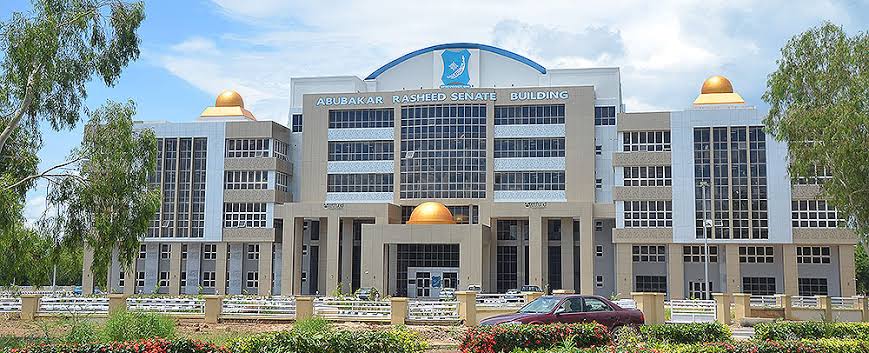
Bayero University Kano confirms extension of registration period
By Khadija Muhammad
It has been widely circulated that the Senate of Bayero University, Kano, has extended its resumption time from October 4, 2021, to the first week of November. However, students were worried as nothing was mentioned concerning the actual time of closing registration. Nevertheless, today, The Daily Reality newspaper has seen and verified a Facebook post of the Dean, Student Affairs, Bayero University, Kano, Professor Shamsuddeen Umar. The Dean posted as follows:
“Dear BUK Students.
1. With [the] extension of the resumption time, the registration time has also been extended accordingly. So the registration portal will not close and even if it closes it will be opened again. So there is no cause for alarm.
2. The Vice-Chancellor has increased the number of students to benefit from the Indigent scholarship. The list will soon be pasted and this year close [to] 500 students will get #50,000 each to help them register and do other things.
3. The Vice-Chancellor has also directed for the employment of interested students, to do some work during their lecture-free time in the University and they will be receiving payment weekly to enable them [to] cater for themselves while studying.
I wish all of you success,
Prof. Shamsuddeen Umar
DSA