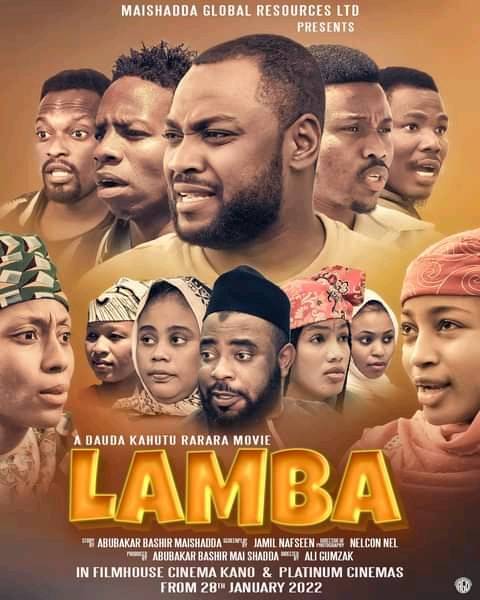
Kannywood Movies Review: “Lamba”
- Director: Ali Gumzak
- Producer: Abubakar Bashir Maishadda
- Screenplay: Jameel Nafseen
- Language: Hausa
- Company: Mai-Shadda Global Resources Limited
- Release Date: 28/01/2022
Mai Shadda Global Resources Limited, a film production company that recently emerged as Kannywood’s powerhouse, has produced many blockbusting comedies with the veteran director, Ali Gumzak. Their last release, Kayi Nayi, was the biggest hit of the previous year. However, as the new year arrived, they came in with another comedy entitled LAMBA.
The film is a social satire set against the backdrop of ‘Audio money’ (a slang term for the fake display of wealth). It tells how some three young men (Adam A. Zango, Umar M. Sharif and Ado Gwanja) flaunt false riches to impress the classy girls they meet on social media. They look for the girls who post their filtered, stylishly snapped pictures on the platforms.
Quite incidentally, the girls, too, are living under false pretences. They rent all the trendy clothes and latest phones they use. They hire everything from a dubious merchant, Salo (Aminu Shareef Momo), at any price. The unveiling of their true identity and what transpired later is shown in brilliantly executed hilarious scenes that get the audience laughing throughout.
The film bears some striking similarities to Makaryaci and Kalen Dangi (both directed by Ali Gumzak in 2017), but this doesn’t make it a clichéd one. It’s, in fact, somewhat of an unconventional comedy for having up to three choreographed song and dance routines. The songs are pretty melodious and well shot. But Zango’s dance in the last one, which has thumping music, impresses the most.
Also, due to the film’s need for multiple actors, the producer (Mai Shadda) didn’t cast his favourites (M. Shareef and Maryam Yahaya) alone. He, this time, featured Adam Zango alongside many others. This is particularly interesting for, until this film, the star (Zango) has not appeared in any big production since Karamin Sani (Dir. Falalu Dorayi, 2020).
Moreover, Ado Gwanja, Aminu Sharif (momo), Maryam Booth, Amal Umar and Aisha Najamu acted in pivotal roles. Dubbing artist-cum-actor, Sultan Abdurrazak and rising starlet Ummi Rahab also play supporting roles along with many new faces.
All the leading cast show great comic timing. Zango is larger than life, and Gwanja amuses with great gusto. M. Shareef shows a vast improvement as an actor. Aisha Najamu shines with her signature look, and the new faces seem promising. The credit should go to the director (Ali Gumzak), who handles them effectively.
In sum, though LAMBA lacks an innovative script, it’s an excellent comedy that succeeds in tickling the funny bone. It will surely entrance you and leave a long-lasting smile on your face. Watch it!
Habibu Ma’aruf Abdu wrote from Kano via habibumaaruf11@gmail.com.
Is the Nigerian public still divided over 2023?
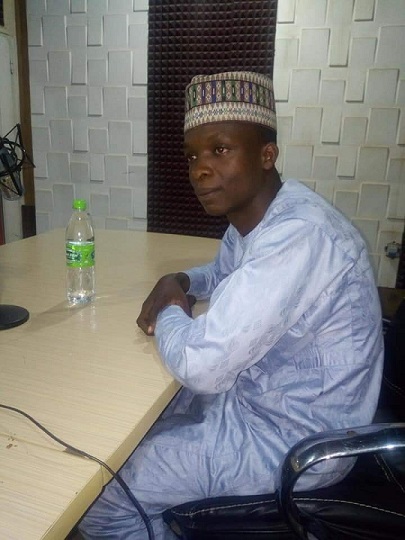
By Kabiru Danguguwa
January 15, 1966, was the beginning of ethnopolitical division in Nigeria, followed by a civil war a year later. One may argue that colonialists initiated this division when they amalgamated the two, perhaps unrelated, protectorates for easy administration and exploitation in 1914. This manifested in the political parties formed on ethnic lines as a prerequisite for self-rule. Whatever the genesis of our division might be, January 15 1966, has been instrumental.
Different regimes have made several attempts, perhaps in vain, to create unity in diversity to address the above issue. Unfortunately, our democracy has not been a solution either. In a book chapter published in 2018, I argued that Nigeria’s democracy had recorded only one achievement. That’s the sustenance of “democratic rule” since 1999 without the return of the military. This is an outstanding achievement indeed. Thus, I conceptualised Nigeria’s democracy as an electoral democracy.
One of the most critical steps in electoral democracy is the transfer of power from the military to civilians, which happened in Nigeria in 1999. The remaining significant features are conducting elections as provided by the constitution and governing citizens with at least some concern of the process of law. From 1999 to 2019, we witnessed six general elections every four years as the constitution demands. The government also, to some extent, care about the citizens. Political science students may agree that we are operating above a facade democracy and, of course, below the liberal democracy found in the West. Put simply, unlike some countries in Africa and Latin America; we keep our military in the barracks and other places they constitutionally belong.
On the other side of the coin, the 23-year old Nigeria’s democracy is full of conundrums. The democracy is so illiberal that some citizens think of going back to the colonial era or the least, returning to military dictatorship. We often celebrate former military heads of state, especially when comparing them with civilian leaders. We almost unanimously prefer the military personalities of the people that ruled as military heads of state to their characters as civilian leaders. What is wrong with our democracy?
As 2023 approaches, just like the previous general elections, Nigerians are being divided over the choices of political parties and candidates that will govern the county. Several divisions emerged; some have been with us since the 1960s, while others were recently created. The North-South division might have come to stay. Southwest-Southeast has also been there for decades. There’s also Igbo versus the rest of Nigeria, mainly connected to January 15, 1966, and the Civil War.
There are at least two recently created or popularised divisions: Yoruba versus the rest of Nigeria and Yoruba versus the North. The duo, especially the former, is connected to the alleged concentration of the present government’s efforts on the welfare and well-being of Lagos and Lagosians.
Other popular divisions are APC-PDP and intra-political party rivalry between camps and political groups. I don’t believe in the religious division, for there are many Christians in the North and numerous Muslims in the South. There is Nigerian youth versus old-timers rift.
Political trends show that Northern Nigeria is more united politically. The North showcased its unity in 2015 when Boko Haram was on the verge of crippling socio-economic activities in the region. Out of optimism, people hated the regime of the day in favour of a Northern candidate. Forgive my conceptualisation of the North to include those who see themselves as Northerners.
There is a need for another unity as the region faces another severe problem mightier than pre-2015 general elections. In 2023, we must gear our unity using our strengths to present candidates who can deliver irrespective of their backgrounds and political parties. The South has never, since 1999, been united, but Yorubas have been. Look at how Southwest (Lagos), with Vice President, has been benefiting from this administration at the expense of the entire country. I firmly believe that we should only be united, not too ambitious. They say “politics is a game of numbers”, and we have the “numbers”.
Kabiru Ibrahim Danguguwa lectures at the Department of History and International Studies, Yusuf Maitama Sule University, Kano. He can be reached via kabiru.ibrahim87@gmail.com.
The role of a writer, first off, is to inform: A response to Rabiu Jibril’s letter to Prof. Farooq Kperogi
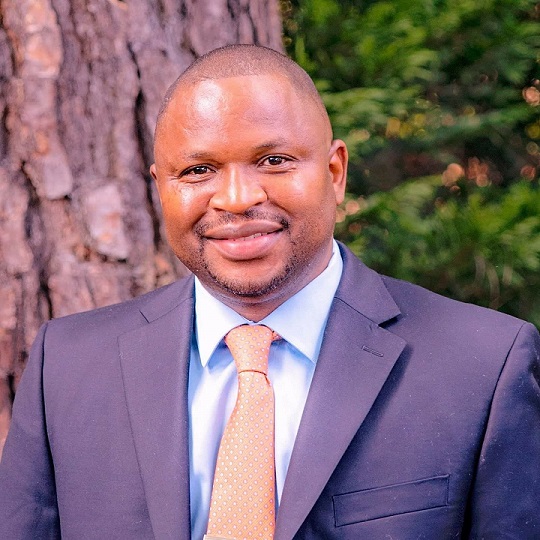
By Ambali Abdulkabeer
On January 22, 2022, a seemingly terse letter by one Muhammad Rabiu Jibril to the perennial critic of Nigeria’s asphyxiating political system and its enablers was published by The Daily Reality, an online news medium headquartered in Kano. In the letter, Bashir writes about Kperogi’s consistent verbal umbrage at Nigeria’s geriatric political stagers and asks him to recommend a candidate for Nigerians in the 2023 elections. Bashir implicitly hints that faulting our leaders alone won’t suffice. More worryingly, several people who commented on the letter challenge Kperogi to, in lieu of writing belligerent, “big grammar” articles to condemn all the candidates currently available for Nigerians to pick from in 2023, come out and participate in the laborious task of choosing a leader for Nigerians during elections. That, to me, seems ignorant at best and unwarranted at worst. Here is why.
We need to understand that political participation is in layers. In other words, our involvement in politics, as significant as it is, can take various forms. Some of these include voting during elections, participating in mature political campaigns, conducting political sensitisations especially in places far removed from the mainstream politics, holding political positions, donating money to a political cause (in the interest of collective prosperity), participating in meetings that keep citizens close to their leaders and blogging writing about political happenings.
It’s unarguable that Prof. Farooq Kperogi is renowned for one or all of the above. As a dyed-in-the-wool political commentator and justice advocate, he writes consistently about political issues. His writing has propelled many public decisions that have shaped the country’s economic, social, cultural and political trajectories. His weekly political columns are devoted to critically analysing the myriad of sociopolitical issues bedevilling Nigeria in the last three decades or more. For me, this is a heavier role to assume by someone who, despite not being directly affected by several political diseases in the country, takes his country’s progress as a priority.
The fact that Kperogi has taken it upon himself to right the wrongs of the monsters in power by exposing their egregiously corrupt practices, not minding the consequences, should be enough for us to know that he wants the best for the country.
Ngugi wa Thiong’o, the Kenyan man of letters, aptly reminds us about the responsibility of a writer in his essay “Writers in Politics: The Power of Words and the Words of Power” when he argues that writers in politics operate within complex forces. He refers to them as people who risk many things to create a befittingly just world. One of the paragraphs in the strongly-worded essay is worth quoting here:
“He (writer) must reject, repudiate and negate his roots in the native bourgeoisie and its spokesmen, and finds his true creative links with the pan-African masses over the earth in alliance with all the socialistic forces of the world. He must, of course, be very particular, very involved in a grain of sand, but must also see the world past, present, and future in that grain. He must write with all the vibrations and tremors of the struggles of the working people in Africa…behind him. Yes, his work must show commitment, not to abstract notions of justice and peace, but the actual struggle of African peoples…and be in position to lay the only correct basis for real peace and real justice”.
In all fairness to Prof. Farooq Kperogi, his writing has always been within the prism of the above-identified responsibilities of writers, especially those who are caught up in the terrible sociopolitical conditions of countries like Nigeria. Nigeria is plagued by existential problems, including bad leadership, mass ignorance, and smelling regional biases exemplified in people’s attitudes toward the establishment and others. Therefore, for anything, any writer that informs their people and unrelentingly writes to challenge the status quo by giving the blueprint for emancipation and genuine leadership, which Nigeria truly needs, doesn’t deserve ill-founded condemnation.
This is not to argue that Prof. Kperogi’s political essays are watertight recommendations; it’s hard to discredit the courage and foresight his work forges for concerned Nigerians. Perhaps, this is what Breyten Breytenbach means in his polemical essay titled “The Writer and Responsibility” when he says, “a writer, any writer, to my mind has at least two tasks, sometimes overlapping; he is the questioner and the implacable critic of the mores and attitudes and myths of his society, but he is also the exponent of the aspirations of his people”.
Those who have commented on Jibril’s letter by calling Prof. Kperogi out should know that it takes massive grit to do what he is doing. They should know that his writing is really helpful. Even though he is not in Nigeria, he is doing what many Nigerians who are direct victims of the mess the country is enmeshed in can’t or fail to do. Of course, many scholars in Nigeria should have taken it upon themselves to inform the public through writing and go against the grain in the interest of a better Nigeria.
I would end this essay this way: Voting during elections isn’t the only way to participate in politics. Before voting, voters need to have the required knowledge of the process and understand the qualities a responsible political aspirant should possess. They must also come to terms with the power dynamics in the country and know who is fit to say this and that on their behalf. This is the leitmotif in Kperogi’s writing. So, before launching baseless ad hominem digs at a patriotic Nigerian who is voluntarily doing his part to fight for a country we can all cherish, we should understand that the role of a writer, first and foremost, is to inform. And that is exactly what Prof. Kperogi is doing.
Ambali Abdulkabeer is a writer and critic of contemporary writing. He can be reached via abdulkabeerambali@gmail.com.
Trust TV seeks collaboration with BUK Communication Faculty
By Ibrahim Siraj
The Faculty of Communication, Bayero University, Kano, is happy to collaborate with the newly launched Trust TV for the mutual benefit of the Faculty and the new television channel. Dean of the Faculty, Professor Mustapha Nasir Malam, said this while receiving a delegation from Media Trust Limited in his office on Thursday, January 27, 2022.
Trust TV is the latest addition to the list of products by the Media Trust Limited, owners of Trust newspapers. Launched six months ago and watched on StarTimes, free-to-air Nigcomsat and online, Trust TV is expected to be on DSTV soon.
While congratulating Media Trust on adding television to the Trust family, Prof Malam described the organization as an impressive success story looking at how it started a few decades ago and what it has become today in terms of readership, spread, facilities, staffing and corporate headquarters.
He said the launch of the TV channel has brought the need for a closer partnership between the Faculty and Media Trust and urged the delegation to identify specific areas of collaboration and their timeline to serve as the basis for developing and signing an MoU.
On his part, the general manager of Trust TV, Ibrahim Shehu Adamu, said the TV channel was set to fill an existing gap in the television ecosystem in the country, especially when it comes to reporting northern Nigeria.
“The North is not represented at the national level. Most of the television stations are southern-based. And sometimes, when it comes to telling the stories about the North, the perspectives are being skewed, and the stories are not told in the proper context.
Though Trust is a national medium, we feel we understand our constituency, our religion and our people, and we should be able to tell our stories better”. He said.
He added that the visit was meant to offer Trust TV the opportunity to tap into students’ potential, especially graduates who want to pursue a career in television broadcasting and those wishing to go on internships to enhance their skills. He said those services were needed to be able to drive the products.
Speaking earlier, the Editor-in-Chief, Naziru Mika’ilu Abubakar, applauded the long-existing collaboration between Media Trust and especially the Mass Communication department. He described the automatic job offer for best graduating Mass Communication students as a great success, adding that more areas of collaboration would be explored.
Trust TV is an all-English news and current affairs channel that concentrates more on documentary and investigative storytelling.
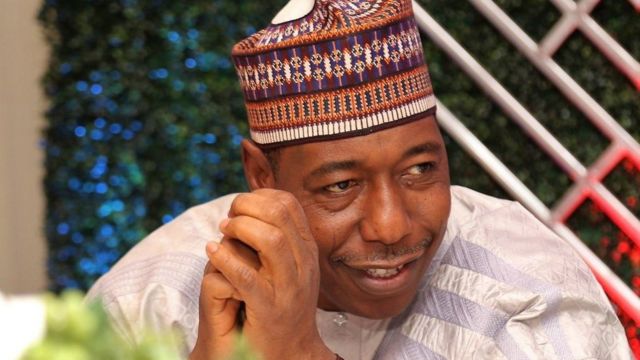
Zulum is an exceptional political player
By Abdulrahman Yunusa
Borno State Governor Prof. Babagana Umara Zulum’s dealings with the power are enough to prove that he is an exceptional political player. He is extra cautious when sensitive issues are involved regarding the people he leads. He stood for his armless people during the tough days of Boko Haram activities and succeeded.
Unlike any other politician, Zulum neither puts his personal interest above his people’s nor allows his sentiment to overshadow his rationality. On the contrary, he often puts his people first before anything else. Thus, this aptly depicts how he resembles a statesman rather than a politician.
To attest to this, look at how he confronted several tragedies in the past. He does everything to get his people out of the cave of fear. Meanwhile, his recent assertion that says, “I’m not a politician, it’s my destiny that made me governor”, is another point of contention.
Either he said this wittingly to make an endpoint for his political voyage because he figured out something despicable attached to his govt, and he can’t withstand it. Perhaps he gets compromised as other politicians do, or he isn’t satisfied with his performance as a leader. That’s what we anticipated from President Buhari and his cohorts. But, instead, they end up disappointing us.
However, I do not support Zulum quitting politics so soon because he is the only man I have utmost conviction and respect for. And with people of his likes out of this dirty game, I can say we will be at a loss till God knows when.
Though I don’t know what the future holds for us, I’m terrified of losing such a rare gem among Nigerian politicians, for they always stand unique and prove to be the best among the rest.
I pray to have a lot of people of his personality amidst these useless politicians of ours because no matter how awful things go, they will surely change the narratives.
May Allah protect our Zulum, amin.
Abdulrahman Yunusa is a political and public affairs analyst. He writes from Bauchi and can be reached via abdulrahmanyunusa10@gmail.com.
On the (official) division of Nigeria
By Hammed Adam
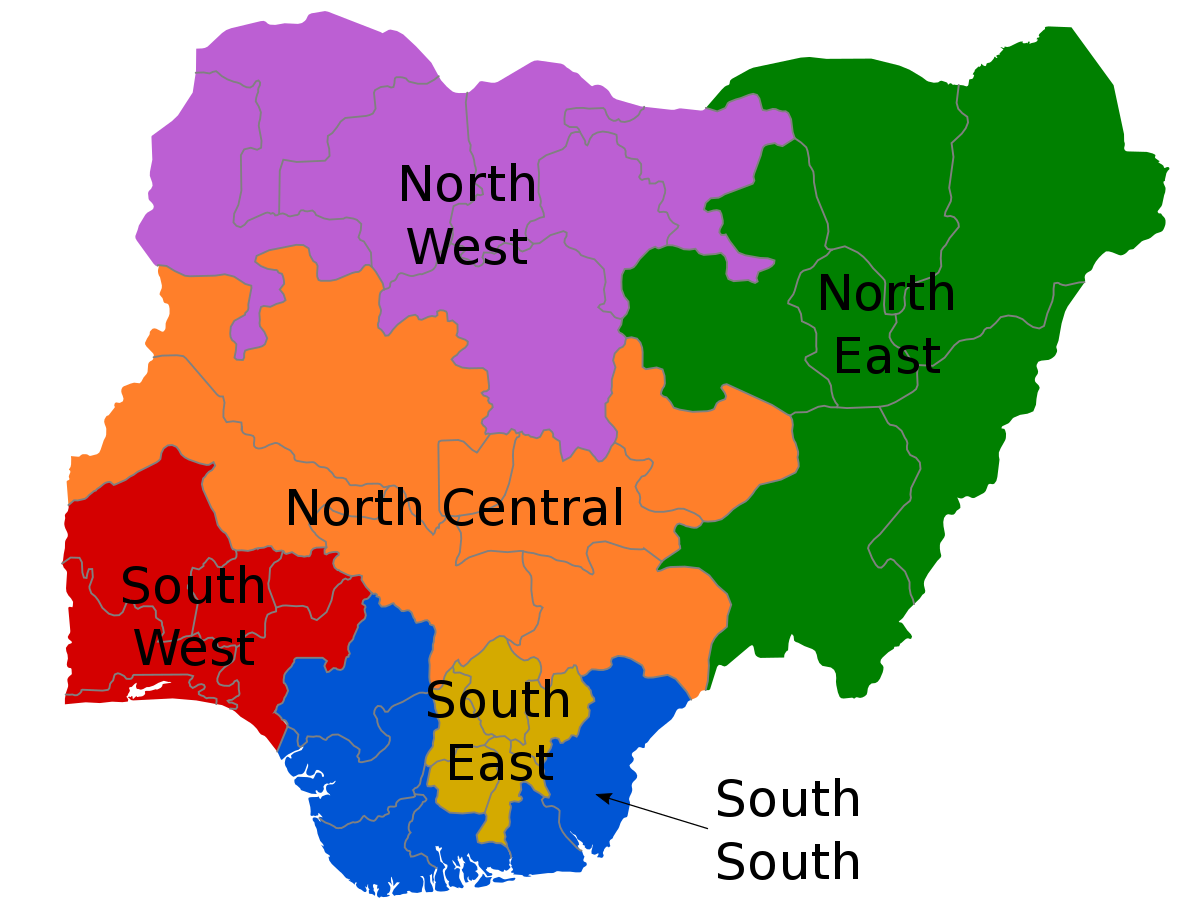
Dividing Nigeria into Oduduwa Republic, Biafra Republic, Arewa Republic, and possibly the Niger Delta Republic has been done already with the current level of hatred and mistrust between the citizens. It is just that it has yet to be officially announced.
They’re not yet officially recognised as sovereign states because there might be a physical war before any country break out from another, which is yet to be witnessed. Moreover, everyone knows it’s constitutionally treasonous and felonious to rebel against any government.
Another reason is that most of the Yorubas and Igbos who want secession aren’t fully ready (militarily wise) to weigh a war against Nigeria, a recognised country, knowing they will be resisted firmly using the might of the Nigerian armed forces.
Igbos, in particular, delay their move to go into war against Nigeria because they have first-hand experience. They also know that with the unity between Hausa and Yorubas, they won’t succeed, and the result can be disastrous, just as it was back in 1967-1970.
Now that Yorubas are fed-up, they have risen against Nigeria to actualise the Oduduwa Republic. They do so by provoking the Northerners into war by evicting Hausa-Fulanis from their regions. The Igbos will back the Yorubas to become allies as they both pursue the same interests.
Mazi Nnamdi Kanu is on air with his compatriots, trying to see how they can galvanise the Yorubas, the Christians in the Middlebelt, and other Christians of the minority tribes in the North. These include the Atyabs of Kaduna, Jukuns and Mumuye of Taraba and Benue State, Berom of Jos Plateau, Tivs of Benue State, Bachamas of Adamawa State and others. He wants them to pay allegiance to Biafra and rise against the Hausa-Fulani-Muslims in the North.
The more Yorubas and the aforementioned ethnic groups heed the calls of Nnamdi Kanu, that would be the beginning of the fight between Nigerian soldiers of Northern extractions vs Nigerian soldiers of Southern extractions mixed up with Christians vs Muslims. That could be the end of one Nigeria unless those defending the unity of Nigeria becomes victorious.
If Yorubas still prefer Nigeria over Oduduwa and Biafra, the Igbos agitating for secession are like barking dogs in chains. Half of the Igbos and most people from the South are already against the creation of Biafra. But with Yorubas by their side and the disjointed Northerners, be it on the battleground or polling units, none in Nigeria can be successful against them and is nothing but toothless.
Who knows Nnamdi Kanu his first arrest in 2015/2016? But he cunningly crawled into the limelight with his verbosity. Today, with the help of the Nigerian Govt, he’s not only controlling Igbos but mightily influencing Ijaws, Igalas, Kallabaris, Tivs and the almighty Yorubas here and abroad. They all listen to him better than they do, even to their Churche’s Pastors, Monarch, Alfas, State Governors, etc. He’s much more as an Emperor than a just leader, which is perilous as he’s becoming more powerful by the day.
This is only possible when a country is ruled by someone like today Muhammadu Buhari, or a country ruled by cabals as the amiable wife of Buhari hinted as early as 2016. Still, even some patriotic Nigerians failed to listen to her and resort to calling her petty names and politicising it in defence of APC and Buhari.
For God sake, if not because of craziness and stubbornness, what makes any Nigerian think they can love or care for Buhari better than how his only wife, Āisha, can do?
If I tell you I’m not scared of the disasters the demarcation of Nigeria into four or at least two parts would bring upon innocent people, I’m lying to you. But, still, God knows, if Nigeria can be divided into many parts without bloodshed, I have no problem with that. So, likewise, if the creation of Biafra and Oduduwa would be resisted without wasting the lives of innocent people, I have no problem too.
May God, in His infinite mercy, look into this matter and choose for us which is the best. Āmin Thumma Āmin.
Hammed Adam sent this article via hammedadam2@gmail.com.
Four abducted Chibok girls regain freedom
By Muhammad Sabiu
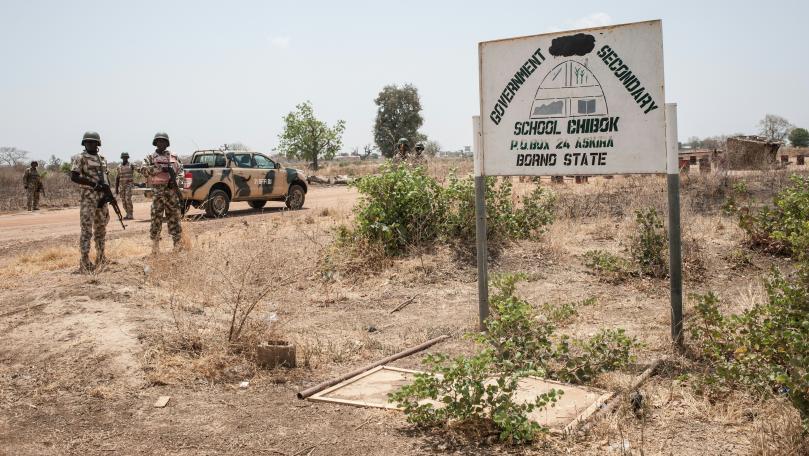
Residents of Chibok town claimed on Sunday that four girls abducted in Kautikari village in Chibok Local Government Area of Borno State in northeast Nigeria regained their freedom over the weekend.
The girls were among the 24 people kidnapped on January 14, 2022 in Chibok’s villages and adjacent villages, where the rebels also took food and other necessities from the inhabitants.
Chibok is around 150 kilometers from Maiduguri, the capital of Borno State, and has continued to be targeted by Boko Haram and ISWAP, prompting residents to speak out recently, accusing the government of abandoning them.
It should be remembered that nine residents of Kautikari village were abducted during the episode that led to the kidnapping, before the militants later freed two older ladies and some youngsters.
In addition, the insurgents took the four young ladies to Dille. Dille is a community in Borno State’s Askira Uba Local Government Area that has a boundary with the Sambisa forest. The community is also reported to be a hotspot for rebels in the area.
Kautikari lies roughly 15 kilometers east of Chibok town and is primarily populated by Christians.
According to locals, the attack on Kautikari village has occurred more than 20 times since the kidnapping of 276 Chibok girls in 2014, which brought the area to national attention.
Miss USA 2019 commits suicide
By Ahmad Deedat Zakari
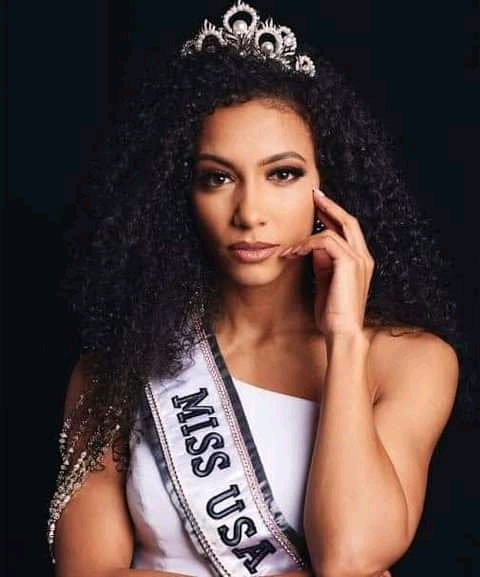
Miss USA 2019, Cheslie Kryst commits suicide. Law -enforcement sources told reporters that the woman who leaped to her death in New York on Sunday, January, 30, is the beauty peagant, Cheslie Kryst.
Just hours before her death, she wrote on her verified Instagram, “May this day bring you rest and peace.”
Her family confirmed her passing in a statement.
“In devastation and great sorrow, we share the passing of our beloved Cheslie. Her great light was one that indpired others around the world with her beauty and strength.”
“Cheslie embodied love and served others through her work as an attorney fighting for social justice, as Miss USA and as a host on EXTRA. But most importantly, as a daughter, sister, friend, mentor and colleague – we know her impact will live on,” Her family wrote.
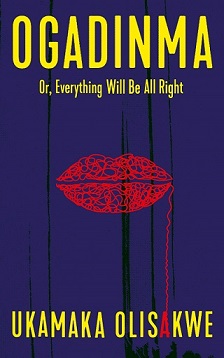
Sexual abuse and domestic violence in Olisakwe’s “Ogadinma”
By Zayd Ibn Isah
One of the obstacles to recognizing chronic mistreatment in relationships is that most abusive men simply don’t seem like abusers. – Lundy Bancroft.
I have read many books this year, but none proved to be as poignant and challenging as Ukamaka Olisakwe’s Ogadinma. Ogadinma is loosely translated in Igbo as “Everything Will Be Alright.” The novel’s gripping story revolves around sexual molestation, domestic violence, unwanted pregnancy, torture, deprivation and emotional manipulation. It was set in the 80s during the military coups and dictatorial repression era. Against this significant backdrop of national history, Olisakwe deftly explores themes connected to the disintegration of familial bonds.
Ogadinma is a young and impressionable girl whose dream of acquiring a university degree is truncated by one Barrister Chima. Ogadinma’s father sends her to Barrister Chima’s office to help secure her admission into the University of Nigeria, Nsukka. However, the dishonourable lawyer takes advantage of the situation and has forceful sexual intercourse with the girl.
Consequently, Ogadinma gets pregnant. Fearful of her father’s reaction, she decides to terminate the pregnancy with contraceptives. When the father becomes apprehensive after his only daughter falls ill, he takes her to the hospital for treatment. However, he is pretty disappointed after the doctor carries out tests that reveal Ogadinma had done an abortion. The old man proceeds to punish Ogadinma severely before sending her packing from his home to Lagos.
In Lagos, Ogadinma has to live with her aunt and is then pressured into a marriage with Tobe. Tobe is a wealthy contractor, but his fortunes falter following his arrest by the new military government for contract fraud. As a result, Tobe has almost everything taken from him, and even his house has to be sold to facilitate his release from prison.
Out of prison, Tobe becomes a different man, a beastly drunkard. His once-loving wife becomes his favourite punch bag. Fed up with his abusive behaviour, Ogadinma runs away to her father’s place in Kano to take refuge. But the father, who is supposed to be her shield against sexual and domestic violence, sends her back to her husband. And just like that, the circle of abuse continues. Her good friend—Ejiro, warns her of the consequences of staying in an abusive marriage, especially after her sister, who tried to endure it, eventually paid with her life.
Whenever Ogadinma complains to her aunt about her husband’s abusive behaviour, she (the aunt) would always attribute it to the man’s travails and misfortunes. The aunt also advises Ogadinma to endure until the husband regains his fortunes. Ogadinma heeds this advice and takes everything in stride, patiently waiting for better times. But even when she gets pregnant, her husband continues to abuse her.
On the other hand, Tobe ventures into several businesses but fails in each turn without a significant change to his pathetic story. Things become considerably worse after a pastor accuses Ogadinma of orchestrating her husband’s misfortunes. Ogadinma is left at the mercy of this pastor for deliverance, only to still go through another round of sexual abuse.
At this point, Ogadinma musters the courage to run away from her husband’s house. She also leaves her baby in the care of Tobe and the house help. Unable to endure any form of abuse again, Ogadinma seeks solace at the house of a relative, her Aunty Okwy. Ogadinma refuses her aunt’s advice to return to her husband, even when she knows her father will not take her in. Finally, she goes back to her friend Ejiro’s house in Lagos. There, she is warmly welcomed and free to live the life she deserves afterwards.
Nowadays, we live in a society where men increasingly arrogantly take advantage of their status and privileges. Men like Barrister Chima are why young girls have become sexual prey in our tertiary institutions and workplaces. Parents who condone spousal abuse on their children also make the war against domestic violence difficult to win or even sustain. This is particularly prevalent among parents who depend upon their in-laws for sustenance. They allow their daughters to die slowly in abusive marriages because of money. It is hard to bite the hand that feeds you.
There are a plethora of cases where women receive the beating of their lives for even daring to confront their cheating husbands. We have come to lower the moral bar so that adultery is not considered taboo for men as it is for women. There is something fundamentally wrong with this. It is utterly wrong on so many levels, especially when the religiosity of our society should translate to a stronger collective sense of morality. Instead, our society and culture continue to thrive on entrenched abuse: leaders abuse their powers over the masses; men abuse the women they should love; women abuse domestic staff and children. We need to weaken this cycle of abuse. We need to stop it soon! We cannot just wait until things worsen or fall apart beyond redemption.
The first step towards tackling domestic violence is via urging victims to leave abusive marriages and seek redress in court. However, this can only work if there are heavy consequences in the form of legal punishments for the actions of abusive husbands. Parents should also stop forcing their daughters to stay with abusive husbands.
There should also be massive reforms in our criminal justice system to ensure the effectiveness of the law against domestic violence and sexual abuse. And lastly, we should always encourage victims, especially women, to speak up, to be bold enough to tell their stories with truth and without fear, just like Ogadinma.
Zayd Ibn Isah is an Officer, a law graduate and a creative writer. He is also the author of We Are All Guilty, his first fictional work. Email: lawcadet1@gmail.com.
How bandits stripped me naked, cut off my two hands – Mechanic
By Uzair Adam Imam
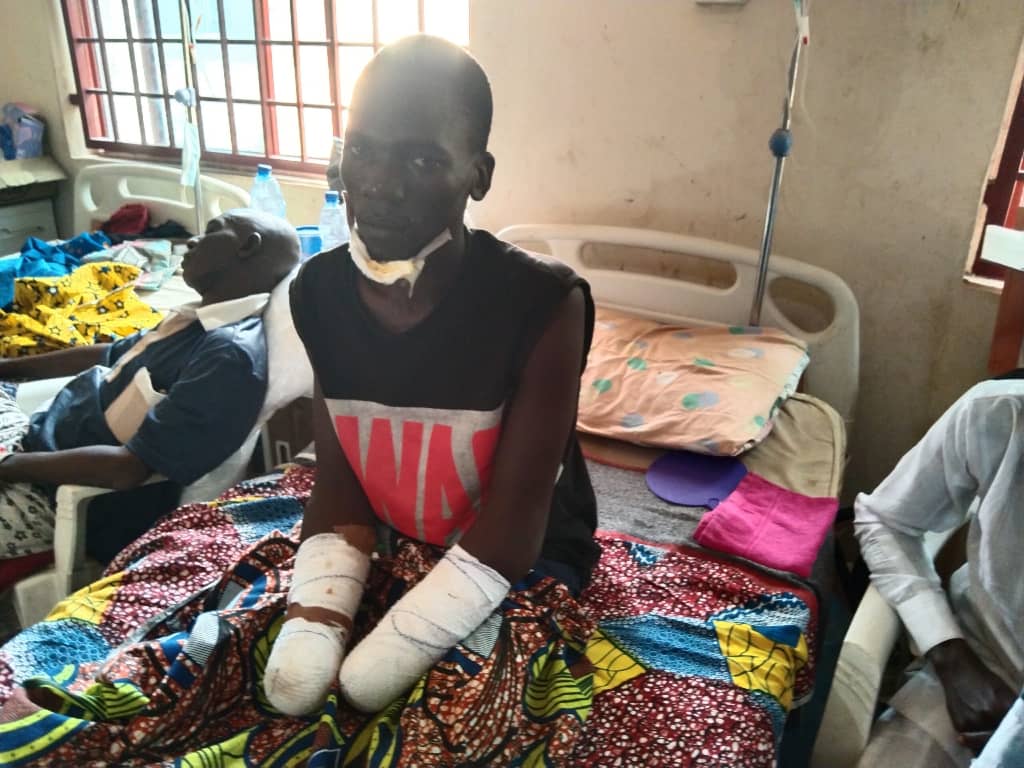
A 25-year-old mechanic, Yahaya Muhammad Galadima, has recounted how he got his two hands cut off by unknown gunmen Tuesday on his way back from Agbabo along Rukubi before Yeluwa in Nassarawa State.
Galadima was reported to have been attacked while returning home from Rukubi after fixing a client’s J5 vehicle.
Narrating the incident, Galadima said that the incident occurred around 8 pm on Tuesday.
He said, “It happened around 8 pm on Tuesday night. I was with one of my boys, Salisu Haruna, who followed me to Rukubi, in Doma Local Government Area of the state. We went there on my motorcycle to work in one of my customer’s houses as his J5 had developed some mechanical fault.
“While on our way back from Agbabo along Rukubi before Yeluwa, all of a sudden, we were ambushed. Before we knew what was happening both of us felt off my motorcycle and my boy sustained some injuries on his left leg. However, they didn’t hurt my boy.”
He added that after they succeeded in stopping them, “They started shooting sporadically into the air, asking that I should give them money. I immediately handed over all the money I had on me, including his mobile phone.”
He also disclosed that after they had inflicted several matchete wounds on him, they snatched his motorcycle.
“Before asking them what was wrong, they cut off my two hands,” he added.
Asked if his boy was also attacked, Galadima explained saying, “My boy was not hurt at all. He was watching helplessly how they cut off my hand.”
The victim is currently receiving medical care at the Dalhatu Araf Specialist Hospital, in Lafia Local Government.
ASP Nansel Ramhan, the Nasarawa State Police Public Relations Officer, said the command was yet to be informed about the unfortunate incident.