


Transition of Tashe
By Sumayya I. Ja’eh
Chorus/children: ‘Ka yi rawa kai mallam ka yi rawa.’
You’ve danced, oh! Mallam, you’ve danced
Mallam: ‘Ban yi ba’,
I didn’t
Chorus: ‘tsoho mai gemun banza.’
Old man with a useless beard
The call-and-response dialogue, accompanied by the beating of a drum, propped open my six-year-old eyes in my grandfather’s compound in a village in Katsina. It was one of those fuzzy moments when you wake up and don’t know where you are for a minute. I had slept off in the car, only to find myself in a dim room lit by a kerosene lamp. There was no electricity, and the young moon illuminated the compound. The young boys that woke me were beating a locally made drum from tins, nylon, and sticks. They looked like characters from the famous tale by moonlight series produced and aired by the national television station NTA, which I was obsessed with then. The main character, Mallam, had a costume: a babban riga, an old cap placed haphazardly, a white beard, attained by putting white cotton on a boy’s face, and his mimicry of an old Mallam thrilled me. It made me and their audience laugh. That was my first conscious experience of Tashe and one of the reasons I look forward to spending my fasting period with my grandparents in Katsina or Kaduna.
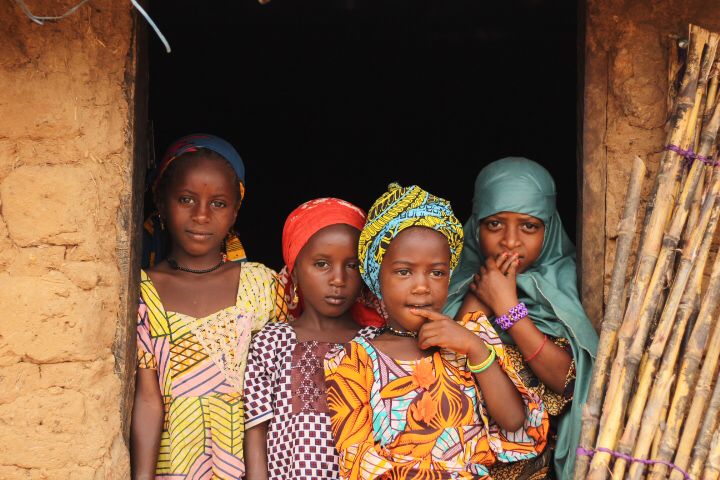
Tashe is an old-age traditional mimetic performance performed by children between 6 to 14. It is an annual cultural performance that takes place in the 9th month of the Islamic calendar and is performed in the early hours of the morning or the evening before the pre-dawn meal or after the break of the fast. Tashe is a short play that challenges a social issue, accompanied by songs, dance, and mimicry.
Tashe can be traced as far back as the contact of the Hausawa with Islam. The word is derived from ‘tashi’, a Hausa word for wake up. Muslims are expected during the month of Ramadan (9th) of the Islamic calendar to fast, and they are highly recommended to take the pre-dawn meal. So, some people feel the need to wake others up for Sahur, to replenish their empty stomachs and energy to see them through the rigours of the day’s work without much difficulty. So, a few community members took it upon themselves to wake people, to prepare and eat just before dawn. To lighten the frustration of struggling to keep awake with no alarms, these volunteers enact the games named wasannin Tashe. While the adults prepare the meals, children with nothing to do occupy themselves with games to help while away time. Another factor is the essence of Tashe, which is aimed at luring people away from un-Islamic leisure pastimes since the beginning of Ramadan.
Tashe is performed mainly by young children, who imitate adults. It is often satirical and full of humour but laden with moral lessons and socio-religious ethics of the Hausa community. Tashe is usually passed down orally from generation to generation. The characters fill the roles with costumes, makeup, and dialogues in call-and-response songs. It is social criticism and a mirror/lens to view the socio-religious ways of life in most Hausa communities.
The Almajirai also are volunteers that perform Tashe. The Almajiri’s source for their food, move from house to house, seeking food or alms. During Ramadan, the Almajiri sing a dirge in the late night hours, songs calling out to anyone with an extra plate to give them. Some musicians and drummers, along with young children, also began to imitate the activities engaged in by the adults. In time, these plays shifted to the early hours of the night. They sing, dance, dialogue, improvise and wear costumes. It is a comedy, but like all comedy, it is the presentation of serious matters in unserious ways.
One striking characteristic of Tashe is its didacticism; it doesn’t only entertain but emphasizes the Hausa cultural belief and tradition—Tashe projects social ethics. Therefore, many performances aim to ridicule those who deviate from correct social norms merrily.
One well-known Tashe passed down from generation to generation is that of naci na kasa tashi, meaning, ‘I’m so full, I can’t stand.” One of the young boys dressed as an older man puts cotton on his chin that looks like a beard and puts on some clothes to show his protruding stomach. When they are ready, they go from house to house. The lead character sings, and the other children chorus/reply.
Baba: na ci na kasa tashi!
Children: Baba zare gareka!
Baba: Tuwon da dadi yake!
Children: Baba zare gare ka!
Baba: kuma har da nama!
The above can be roughly translated as ‘I’m so full, I can’t stand’, and the children reply with ‘Baba, you’re greedy,’ while the Baba tries to justify his gluttony by saying the tuwo is sweet and there is meat.
For instance, Ga Mariama Ga Daudu, another Tashe, gives us a socio-historic glimpse of the Hausa laden with humour. It is a mimetic performance of the communal responsibilities/expectation of husband and wife, the type of staple food eaten by Hausas. Although a comic, the play is social criticism of the institute of marriage, which several people from both genders are desecrating. Girls stage the play. One of the girls puts on a costume, a long kaftan and a beard and tries to deepen her voice to sound like a man. It is a telltale that enlightens young women about what society expects from a married woman.
Due to the Hausa tradition that does not allow the two genders to mix freely, the girls and boys don’t mix to perform Tashe. Instead, each gender play switches roles with its unique performance type.
A very well-known Tashe is of Gwauro. It is a mime that consists of 5/6 boys. One of them is dressed in nothing but bante (a short nicker) Hausa traditional pants, a rope tied to his waist, a bundle of clothes with kitchen utensils like used tins, old, discarded radio, an old dirty kettle can be found in the bundle carried by the main character. The others hold on to the rope while the lead character tries to run and is being pulled by the rope, while they sing ‘gwauro gwauro, gwauro nuna mana yadda kake tsanawa’? Gwauro can be translated to as Divorcee or an old bachelor. ‘Show us how you cook?’ He goes on to put a tin can, wedged it between two stones, and mimics blowing air into the woods.
This is aimed at ridiculing the bachelor, and lessons deducted from this drama border on the irresponsible nature of the bachelor for trying to play the role of a woman, who in most Hausa communities is the one who cooks. Tying the rope around the waist of the lead actor is symbolic. The rope restraining the bachelor also portrays the image of someone in bondage. This shows that in Hausa society, marriage is given such importance that the bachelor/divorcee is considered a lesser being than the other community members.
One Tashe that has gone viral and is available on YouTube is the 2021 Ramadan Tashe ridiculing the state governor of Kano, who asked for 15 billion naira to tackle the issue of Covid 19, as well as a scandal video of him collecting kickback. The short clip shows a boy lying on the floor with a babban riga (an overflowing gown), a red cap, and a white beard. His friends, the crew call out, ‘Ganduje tashi,’ ‘Ganduje stand up,’ to which he replies, ‘sai an ba ni dollar Corona’ ‘not until I am giving dollars to fight Corona.’ The clip is a short comedy skit that not only cracks people up but also has an undertone that challenges corruption by government officials.
Though Tashe is basically performed to provide merriment, the reverse may occur. Sometimes, Tashe meant to ridicule certain personalities, which may not be acceptable to the person concerned. Here the object of ridicule will not find the performance funny, and it is pretty common to see the performers running helter-skelter, being chased by the target of the performance. At other times, the performance itself may be acceptable, but the attitude of the performers may be irritating to the target audience. To cap it up, these performers would taunt any house owner who refused to donate anything. Upon exiting, the actor would often sing, “mun taka tutu, maigidan nan ya yi shi.” “We have stepped on a heap of shit; the owner of this house must have excreted it”.
Tashe emphasizes communal performance. My grandparents or parents always give out some loose change to the performers. This is the norm that the adults expected to give alms to the performers. These donations can be money or food items, primarily grains like millet and sorghum, the staple foods in any Hausa community. There is no fixed amount for alms, but donation largely depends on the social and financial status of the audience, as well as the extent of enjoyment of a performance.
The audience, primarily adults, also participates by correcting any misrepresentation in the texts, disguise, or dramatization. With globalization and urbanization happening worldwide, Tashe, as I used to know it, is fast becoming a relic of the past. The face of Tashe has evolved in urban cities. Few children or Almajirai go from house to house, entertaining people while seeking alms.
This long-old tradition of performance entertains and highlights the life of the Hausa folks and brings the fore societal expectation of a man/woman in Hausa society. Although it is a series of plays that comes only once a year as entertainment, it is full of dramatic content that reflects contemporary events. This mimetic performance encompasses most characteristics of a drama; costume, dialogue, improvisation, storyline, and purpose. These earliest Tashe performances are the precursor of modern Hausa drama.
Tashe tries to divert the community’s attention from the economic and political predicament. Tashe, like Macukule, which explores the Hausa stereotype of the Gwari man, is still dominant in contemporary Hausa movies. A renowned character Dan Gwari is not new to anyone familiar with Hausa movies.
Today, if you google Tashe on YouTube, a few children and young adults pop up on your white screen. The TV channel, Arewa24, created a short series of Tashe that they stream. While this is another means of preserving this long tradition, the thrill and euphoria experienced by the audience are reduced by the limited screen. Unfortunately, my children would most likely never experience this long communal tradition of Tashe as I did.
Sumayya I. Ja’eh wrote from Abuja via sumyjaeh@gmail.com.

Border Patrol Team hands over suspects arrested with $285,000, CFA18.9m to EFCC
By Ibrahim Nasidi Saal
The Joint Border Patrol Team, comprising Nigerian security operatives, on Thursday, April 28, 2022, handed over the duo of Ismail Ajibade and John Adewumi, a Beninoise, arrested with $285,000 (Two Hundred and Eighty-five Thousand Dollars) and CFA 18, 925,000 (Eighteen Million Nine Hundred and Twenty-five CFA) to the EFCC, for further investigation and possible prosecution.
The suspects were arrested on April 15, 2022, by officers of the JBPT whilst on a routine patrol along the Ilashe/Ihambo axis of Ogun State.
While handing over the suspects, A. Adamu, who led the team, said Ajibade, who is a driver, received the foreign currencies from one Taiwo Hassan in Ogun State.
Adamu added that Ajibade was on his way to convey the same to Adewumi, who had been directed to deliver the monies to one Oladimeji in the Benin Republic when they were intercepted.
President Goodluck Jonathan walked the Almajiri talk
By Engr. Mustapha Habu Ringim
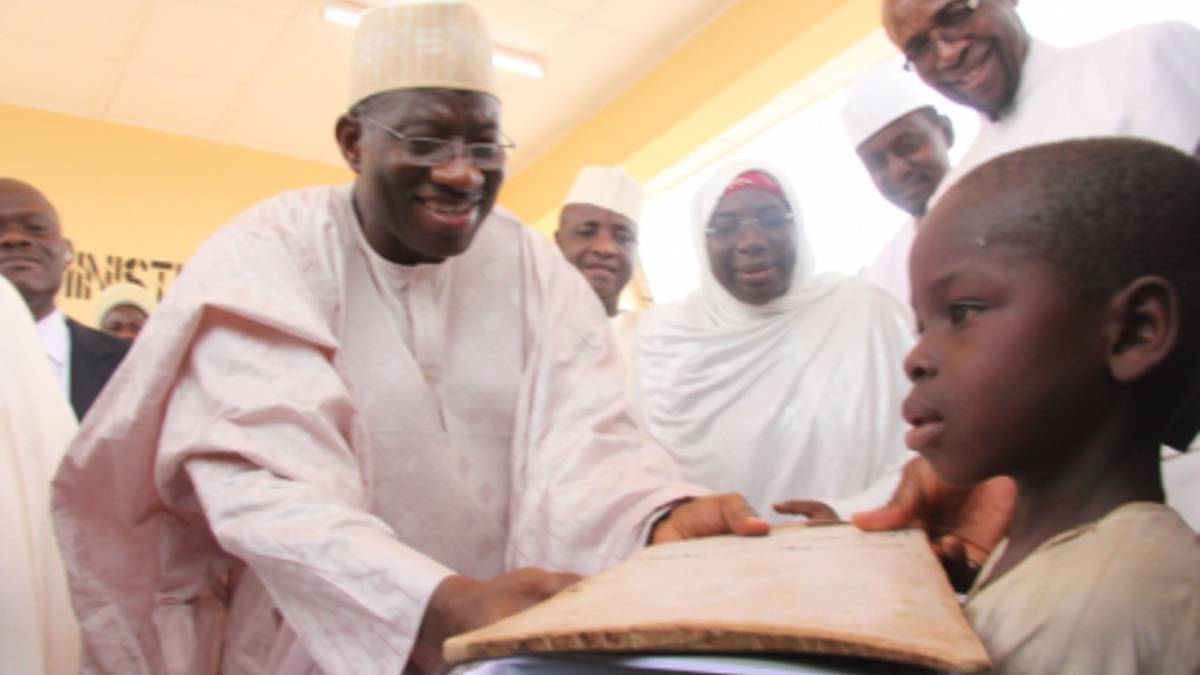
The innovative Almajiri School Initiative of President Goodluck Ebele Jonathan (GEJ), directly or indirectly, challenged northern Nigerian elites on the intense need for a proper plan and execution of any sustainable way of curtailing the menace of the Almajiri system of education. He did his best during his tenure. We expect the incumbent government and the next one to build on where that administration stopped to ensure continuity.
I don’t know how Northern Nigeria is becoming so loose that our communities find it difficult to maintain essential infrastructures like those installed during the GEJ government. Instead of optimising the system, we allowed the structures and the equipment to rot away. We abandoned the schools. Today no one cares to adopt the strategy even in our localities, neither our philanthropists nor any NGO.
Most of our elites are only good at criticism. You will never see them when it comes to action. They instead spend their energy on empty talks and promises. While in a situation like the one Arewa is subjected to, action is mostly needed, with less noise. Though we all agree that “facta non verba”, actions speak louder than words, we always end up talking the wrong walk instead of walking the right talks.
Alhamdu Lillah, we started a model of such a system within our jurisdiction, called ENGAUSAR ALMAJIRAI, under Engausa Global Tech. Hub, which has recently attracted an intervention from NITDA Nigeria and a solo philanthropist from JOS Plateau State, Alh. Yusuf Yahaya Kwande. I don’t want to say much about the outcomes at the moment until we achieve enough to discuss. I always prepare walking the talk instead of the opposite.
We had witnessed a similar effort to revamp the TSANGAYA SYSTEM in Kano State during Malam Ibrahim Shekarau’s tenure. Shekarau transformed the Tasanga (Almajiri School) system and provided Almajirai and their teachers (Malaman Tsangaya) with sustainable means of livelihood. But unfortunately, the innovative Tsangaya System, sphere-headed by Dr Bashir Galadanci, a man with a sincerity of purpose, was abolished by the successor of Shekarau. And all the achievements recorded from the innovative system were brought back to square one.
Moreover, this is how the monotonous lack of continuity in governance, lack of patriotism, and focus are consuming every program or policy designed to transform our socioeconomic and sociocultural activities. In the same way, Kano ICT Park and Jigawa Galaxy Back Borne and Informatics suffered from the unpatriotic people at the helm of the affairs of Nothern Nigeria. Both Jigawa and Kano would have been ahead of Lagos regarding the digital ecosystem and digital economy. As of 2005, Jigawa was rated as the best ICT State in Nigeria due to the achievements recorded from those iconic “digital wings”.
Our society needs a new set of purposeful leaders, the likes of Borno State Governor Prof. Babagana Umara Zulum. We require leaders who are ready to sacrifice their lives for any struggle necessary to save our society from obscurity to prominence. With such Zulum’s prominent achievements, the progress recorded under Shekarau in Kano, and that of Goodluck at the federal level, we now have a concrete reason to disagree with anyone who thinks Nigerians will never be taken to the proverbial promised land.
Engr. Mustapha Habu Ringim wrote from Kano via ringims@gmail.com.
Why the Almajiri debate will never end
By Shafi’i Sheikh Jr.
Reading through posts, articles, and comments, I think I now know why our debates on almajiri/bara will never end in Northern Nigeria. And as long as it remains a debate, it will continue to ravage every fabric of our society.
Despite being the very foundation of today’s society, a debate is no longer a discourse among people with contrasting arguments using facts, logic, and evidence to exchange views and/or ideas.
I have realised that once a debate revolves around Almajiri and begging, people of certain sects see it as an opportunity to bash another sect. In defence, the others also find a way to come back. In doing so, the purpose of debate suffers the consequences, and debating parties end up being more determined and confused than they were before it began.
Until debating parties start arming themselves with facts, figures, logic, and most importantly, open minds to accept or exchange ideas, the problem will always win. Parties will always return confused, and the solution to the menace of “Bara” will never be found.
At this juncture, I will like to point out that there is a fine distinction between Almajiri, which has its roots in the Arabic word “Al-Muhajirun” and loosely translates to “Migrators”, and “Bara”, which means begging for alms from people (often done as a means of sustenance). And until our people can differentiate between the two, ours will be a confused and misguided society.
Perhaps, further clarification will disabuse the minds of debaters on the wrong usage of the two concepts.
The former is a term that was first used in Islamic history to refer to those who migrated with the Prophet (S.A.W) from Makkah to Medina (Ogunkan and David Victor, 2011). The term was later ‘Hausanized’ to Almajirai, which today refers to seekers of knowledge who migrate from their comfort zones to concentrate only on acquiring Islamic knowledge.
Now, some greedy Mallams (Islamic teachers) laid a fertile ground for this misconception to thrive by taking away small children who can not shoulder the bulk of their responsibilities to major towns and cities to acquire Islamic knowledge. And because neither the mallams nor the children can shoulder their responsibilities, especially in cities where life itself is expensive, the children engage in begging and other menial jobs, the proceeds of which the mallams extort from them hence, ditching the primary reason they left home.
This gave birth to “Bara” (begging), which many non-Muslims and even some Muslims alike erroneously ascribe to Islam. To people with such minds, they believe Islam is associated with begging and encourages its practice by declaring almsgiving (Zakat) to be so weighty that it is a pillar of the religion. Also, it is believed that the five pillars of Islam are dependent on each other. Therefore, neglecting the pillar of Zakat (almsgiving) will render the others fall and ruin a person’s faith.
This they justify by quoting, among other things, chapter 76, verse 9 of the Holy Qur’an, which says:
“And who give food – however great be their own want of it – unto the needy; and the orphan, and the captive (saying in their hearts) “We feed you for the sake of God alone: we desire no recompense from you, nor thanks.”
Yes, Islam encourages the giving of alms. There is no doubt about that. However, it also frowns on taking begging (Bara) to be a means of livelihood. Qabisah ibn Mukhariq reported: I was under debt, so I came to the Messenger of Allah, peace, and blessings be upon him, and I asked him about it. The Prophet said,
“Wait until we receive charity, then we will order it to be given to you.” Then the Prophet said, “O Qabisah, begging is not lawful except for one of three cases: a man who is in heavy debt, so asking others is permissible for him until he pays it, after which he must stop; a man whose property is destroyed by a calamity, so asking is permissible for him until he can support himself; and a man who is afflicted by poverty attested to by three astute members of his people, so asking is permissible for him until he can support himself. O Qabisah, besides these three, begging is forbidden, and the beggar consumes what is forbidden.” (Sahih Muslim 1044)
Hakim Ibn Hizam, a poor companion of the Prophet, also went to beg the Prophet three times. The Prophet on each occasion granted his request, but on a subsequent occasion, the Prophet discouraged him from begging, telling him that “the upper hand is better than the lower hand”. The Prophet admonished his followers, saying:
“I swear by Allah that it is better for one of you to take his rope and gather firewood on his back than to come to a man and beg him whether he gives or refuses to give.”
To sum it all up, one may be right to opine that “Almajiranci” in its truest form is a system of Islamic education that should be practised and encouraged while “Bara is not only unIslamic but also a menace that should be eradicated.
The above suggests that no relationship exists between Islam and begging. Therefore, the menace can only be attributed to socio-cultural and socio-economic realities in the region and, to a larger extent, the country. Consequently, it is now left to Islamic scholars, religious leaders, and stakeholders to embark on an enlightenment campaign to raise awareness and educate the general populace on the difference between the two practices.
May Allah guide us, amin.
Shafi’i Sheikh Jr. writes from Jos and can reach via talk2sheikh.esq@gmail.com.

NDLEA asks political parties to make drug test part of screening for aspirants
By Nasidi ibrahim Saaal
Chairman/Chief Executive of the National Drug Law Enforcement Agency, NDLEA, Brig. Gen. Mohamed Buba Marwa (Retd) has urged political parties to make drug integrity test part of the screening requirements for aspirants seeking to contest political offices in the 2023 elections on their platforms.
Marwa stated this while responding to questions from journalists at the 2022 First Quarter Best Performing Commands Awards ceremony at the Agency’s national headquarters in Abuja on Wednesday 27th 2022.
According to him, for politicians, we have long advocated and I take the opportunity again to repeat the advocacy that when they run for public office it demands a lot of responsibility from the person and we need to be certain if he’s a person that is already a drug addict/user who will spend all the money he’s given for public service to consume cocaine and his head will not be in a stable condition to handle the affairs he has been entrusted with. For this reason, we have advocated and will continue to advocate that drug test be conducted for politicians; some state governments like Kano state is already doing this.
“Not just politicians, but government appointees, and I’ve just sent a letter this morning to the National Chairman of APC, who will be the first of the national working committee I wish to pay an advocacy visit on this issue. I recommended that drug tests be incorporated in the screening process for all those interested in running for public office; we’ll do the same to the PDP and other important parties.”
While addressing officers and men of the Agency present at the event, Gen. Marwa said the ceremony has become part and parcel of our corporate culture. Recognizing and rewarding hard work and excellence has always been a pragmatic way of stimulating productivity and enhancing the attainment of organisational goals; making it a tradition for the Agency is our way of enshrining meritocracy in the system.
“Statistics from the first quarter (Q1) report, indicated that our performance level has not dropped off. Indeed, achieving 3, 539 arrests, 677 convictions and seizures of 65, 916 kg of drugs in three months is no mean feat. Little wonder our performance continually earns the Agency deserved accolades from the right quarters within the country as well as from abroad, especially from international partners and peers. While we have not yet achieved the utopia of a drug-free society, the results showed that we are getting it right.”
He told the officers that the awards and commendations are expected to will spur them to surpass their current feats at the next awards ceremony. The ceremony should be a poignant reminder for us not to forget where we are coming from. And there is no better way to say it other than for us to be mindful of the saying that success has a hundred fathers, but failure is always an orphan. No organisation would understand this adage better than NDLEA in the light of our past rock bottom experience. Therefore, we should all be mindful that we hold the fate of NDLEA in our hands, and that fate will be determined by our patriotism and dedication to duty, as well as our collective resolve to work towards the attainment of the Agency’s mandate.
“Let me also seize this occasion to remind you about the importance of propagating the War Against Drug Abuse (WADA) programme in your various commands. There is much we can achieve when our communities are working hand-in-hand with us. That is why our roadmap, the NDCMP 2021-2025, strongly emphasises collaboration with all the stakeholders in society. We have to woo members of society to work with us on this very important assignment. Therefore, I charge you to ensure that WADA is correctly and deeply entrenched in the spheres of operation of your respective commands, he stated.
While assuring the officers that the Agency is proud of them, he said the sacrifice of a narcotic officer cannot be quantified in gold or silver, for he is fulfilling a higher calling. As we go about our duty of securing our society against the corrosion of illicit drugs, we should be aware that we are the direct beneficiaries of our work because for every kilo of drugs seized, we are making our streets and society safer for our children, family and kinsmen.
NDLEA is proud of its workforce; the Agency treasures the effort of its officers and men; the management shall continue to look out for their best interest. We shall continue to reward hard work and excellence.”

Court awards N1bn for blocking highway
By Nasidi ibrahim Saaal
Niger State High Court has awarded N1 billion damages against the National Association of Road Transport Owners (NARTO), the Road Transport Employers Association of Nigeria (RTEAN) and the National Union of Road Transport Workers (NURTW).
The sum is awarded against the organisations over the blockade of some roads in September 2021. The members had blocked Bida-Lambata, Bida-Minna and Lambata-Minna Roads, all in Niger State.
Consequently, a non-governmental organisation, NGO, Dan Amajiri Initiative, filed a case against the organisations that powered the blockage of the roads, protesting over the deplorable condition of the roads and claiming damages.
The group said that the damages were for the inconveniences to the lives of the general public, especially road users, caused by the gridlock that lasted for about three days on the aforementioned roads.
In his judgment, Justice Abdullahi Mika’ilu of the Niger State High Court II ordered the award of N500 million for exemplary damage and another N500 million for economic hardship against the road transport workers.
However, the judge of the court struck out the fourth to the sixth respondent; the Niger State government, the governor, and the attorney-general of the state, respectively, joined in the case.

Muslims, other minorities brutally oppressed in Narendra Modi’s India
By Muhammad Sabiu
Mehdi Hassan, a political journalist, author and show presenter at MSNBC TV has in a 6-minutes video news report exposed how the Indian government appears to be complicit with far-right fanatics in persecuting and bullying non-Hindi Indians.
This is coming amidst far-right movements in major world countries, including France, where Le Pen, the presidential candidate who contested in the recently concluded election, lost to her archrival, Emmanuel Macron, due to what many people attributed as her far-right political views against Muslims in France.
India’s Prime Minister, Narendra Modi, who has been in office since 2014, has been accused of openly promoting Hindu Nationalist Supremacist Ideology, which aims at segregating Muslims, Christians and other non-Hindi faithful.
The ideology being championed by Narendra’s political party Bharatiya Janata Party (BJP) could, according to scholars and observers, lead to genocide.
According to the TV presenter, Mehdi Hasan, “minorities” in the Indian Muslim and Christian communities are facing the greatest threat since India became independent.
Mehdi recalled also that the great Mahatma Ghandi himself was assassinated by the so-called Hindu supremacists, who believe India belongs to them.
Recall that the Daily Reality has reported that, during the Hindu celebration of Ram Navmi early this month, Muslims in many Indian states were reportedly scared as crowds marched through their towns, shouting anti-Muslim slogans and destroying their property.
This is what prompted the forum of Nigerian Ulama to call on Prime Minister Narendra Modi of India to rescind his Neo-Nazi ideology and embrace democracy as envisioned by India’s founding fathers.
In a statement released by the Forum of Ulama, the preachers lamented: “India claims to be a democratic secular State, but in the actual sense it is an undemocratic Hindu supremacist State. There is no other modern state in the world today that oppresses over 200 million of its citizens solely on the basis of their religious beliefs, with brutal determination to strip them of their rights to exist as human beings.”
2023: Will Emefiele Declare?
By Zayyad I. Muhammad
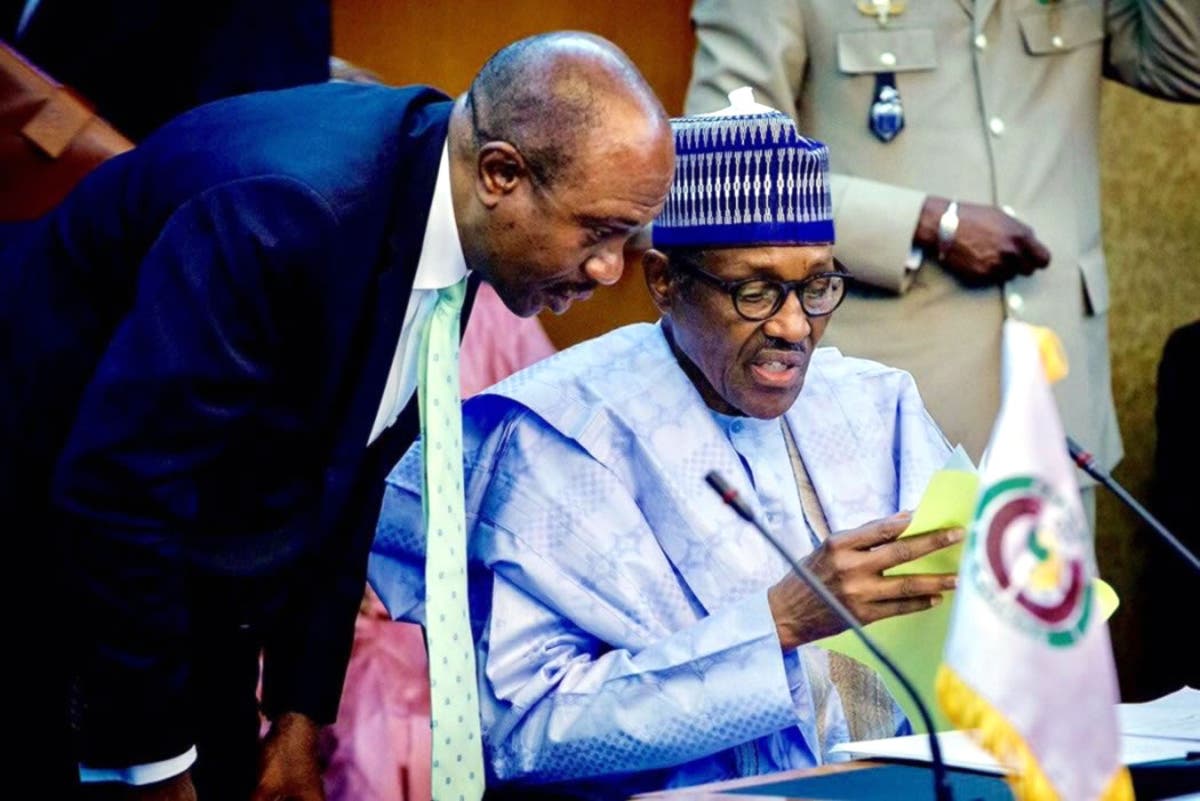
Godwin Emefiele, 60-year-old Governor of the Central Bank of Nigeria, is one of the presidential hopefuls whose ‘aspiration’ has become a surprise to some people, and admiration to some other people.
Some people were surprised when Emefiele’s name popped up among the presidential hopefuls. This class of people thought that as an experienced economist heading Nigeria’s apex bank, Emefiele should concentrate on his job of formulating monetary policies, controlling inflation, and managing other economic fluctuations, while championing innovation to ensure the nation’s economic and financial stability.
On the other hand, the people who see Emefiele as a strong candidate believe that with the remarkable successes of the programs and schemes initiated or being implemented by Emefiele; if as president of Nigeria he will not only expand them but will also apply his wealth of experience as a development finance expert to stimulate the economy via other economic programs that will reflect on local needs in line with global trends. This group of people always cite schemes like the anchor borrower program- which has successfully created economic linkages between smallholder farmers and reputable companies involved in the production and processing of key agricultural commodities and the COVID-19 intervention that has cushioned the adverse effects of COVID-19 on households and MSMEs.
In the last five years, the CBN under Emefiele has disbursed over N114.09 billion to support the fertilizer industry- Nigeria had seven Fertilizer blending plants in 2016, and only four were operational. As of today, there were 62 functioning blending plants. These and many economic policies and progress are the ladders these people stand on to cheer Emefiele on, as a strong aspirant. There are reports that many farmers in the north, especially rice farmers have termed their successes as ‘Emefiele’.
Furthermore, political pundits are of the view that Emefiele’s candidature can be a very important political balancer for the APC ahead of the 2023 presidency game. Firstly, no camp in the Southwest will feel cheated with the Emefiele candidature since he directly doesn’t belong to any of them; but can be incorporated into any camp seamlessly.
Secondly, Emefiele from Ika South, Agbor region of Delta State, SouthSouth Nigeria, can also be linked to the cousins of the Igbos in the Southeast. This will to some extent calm the nerves of the advocates of the Igbo presidency and achieve geopolitical equity. For example. Goodluck Jonathan’s presidency was a stabilizing force in the southeast’s politics and social order. Some political pundits believe that Emefiele, as president can also play that role, now that the Southeast is in agitation for the presidential seat.
The time has come for Emefiele to officially declare whether he will contest or not. This is very important to clear the air- politics or CBN Governor. If Emefiele will not contest- let him continue with his task as the driver of Nigeria’s monetary policies and other important roles of the CBN. However, if he decides to contest – this will be a big one in the field of the 2023 presidency game in the APC- already groups like the Emefiele Support Group and Arewa Alliance for the Presidency of Godwin Emefiele (AAPGE) have reached out to many quarters in the country campaigning for Emefiele.
So, what remains for Emefiele is political alliances, negotiation, and courting- this will be easy for him because of his privileged position. However, he also needs to understand that politics is not Development Finance. It is a game where a primary school dropout can teach or even ‘scold’ a Central Bank Governor!
Zayyad I. Muhammad writes from Abuja via zaymohd@yahoo.com.

Nigerian Ulama Forum calls for justice as Muslims see wave of attacks, hate speech in India
By Uzair Adam Imam
A Nigerian based Islamic organisation, Ulama Forum, has called on the Prime Minister Narendra Modi of India to rescind his Neo-Nazi ideology and embrace democracy as envisioned by India’s founding fathers.
The forum urged Modi and other stakeholders in the country to take concrete action to mitigate violence against Muslims to promote peaceful coexistence.
This was contained in a release jointly signed and issued Tuesday by the forum secretary, Engineer Basheer Adamu Aliyu, and its convener, Aminu Inuwa Muhammad.
The Daily Reality gathered that Muslims in several Indian states had been terrorised as mobs came out in processions, making hate speeches and attacking their properties during the Hindu festival of Ram Navmi.
The escalation of violence against the minority communities, particularly Muslims, has recently seen a steep increment, making it hard for the Ulama Forum to believe India is a democratic secular country.
The statement also called on the Indian Muslims to hold on to their faith and avail the rest of the Indian population of the benefits of Islamic justice.
The statement reads: “They should hold on to their faith and avail the rest of the Indian population with the benefits of Islamic justice, which restrains Muslims from overreacting against all provocations.”
“Indian Muslims should use every constitutional window available to them to seek redress on the excesses committed against them by Hindu extremists.”
“Indian press, especially those who believe in democracy and universal human values and who are immune to sectarian tendencies, should continue with the good works of fair and truthful reportage, which will promote justice and fairness to all,” the statement added.
Muslims at knifepoint in India
The statement also lamented that India has been witnessing sporadic violence targeted at its large number of Muslims promoted by the Neo-Nazi BJP Government for the past decade.
It stated that “The most recent of which is during a Hindu religious ceremony which was marked by thousands of youth marching into Muslim dominated areas, brandishing guns and swords, using public address system to prevent Muslims from concentrating in worship inside their mosques.”
“Whenever Muslims react in any way, a combined disproportionate force is used on them with Hindu citizens using guns and the India Police arresting mostly Muslims who are the victims of the violence.”
You cannot eliminate Islam
The statement taunted that it is unwise for any Indian to think of eliminating Muslims in the country, let alone Islam.
India has over 200 million Muslims, ranking the country as having the second-largest number of Muslims globally.
“It is, therefore, perplexing how anyone can think of eliminating such,” the statement concluded.

Russian courts fine Tiktok and Meta for not removing LGBTQ+ content
– Newsbriefs
Russian courts have fined TikTok and Meta for failing to delete LGBTQ+ content. Meta was fined 4mn rubles by a court in Moscow. The US tech giant had failed to remove content that ‘promoted LGBTQ+ rights’, ruled the judges.
TikTok was also fined 2mn rubles in another trial for a similar violation. LGBTQ+ advocacy, such as gay pride marches, and the pride flag, are banned in Russia.