

Outrage trails brutal flogging of Almajiri in Kano
By Uzair Adam Imam
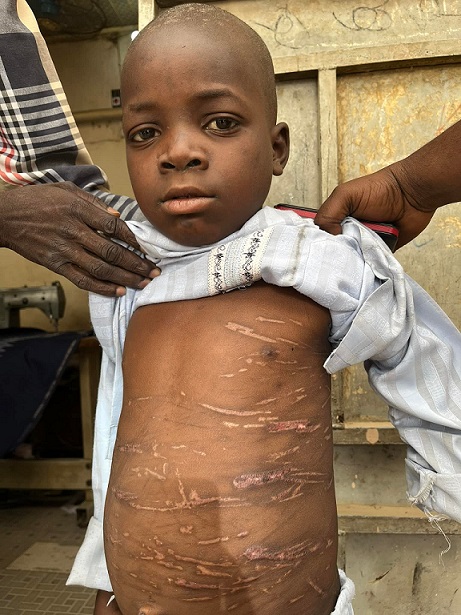
Many people reacted with shock over a viral video showing an eight-year-old Almajiri beaten mercilessly by his ‘Tsangaya’ Quranic teacher.
The Daily Reality gathered that punishment was due to the kid’s failure to bring food to the teacher, which is an age-old practice in many Tsangaya schools.
A source told our correspondent that the kid was found roaming the street after running away from the school.
The source added that a relative brought the victim to Kano from Magamar Gumau Local Government Area of Bauchi State for Qur’anic studies after his mother’s demise.
“I don’t want to go back to the school. The teacher will kill me. I want to return to my father,” said the kid.
Begging outlawed in Kano
Kano State is becoming a haven for beggars, despite the state government’s ban on street begging and subsequent measures the government to enforce the order.
In 2019, the Ganduje administration banned street begging, introducing new approaches to improving the education of the almajiri system.
In a statement, the Chief Press Secretary to Governor Abdullahi Umar Ganduje, Malam Abba Anwar, said the effort was to consolidate the free and compulsory primary and secondary education fully.
“If an Almijiri teacher thinks he cannot accept the new policy, he has to leave the state.
“When Almajiri are caught begging, it is not only that beggar is caught but also his parents or guardians. Such parents or guardians would be taken to court to face the wrath of the law,” the governor threatened,” the statement said.
But despite the ban, street begging has held to its position in the state, as beggars are still on the state’s streets.
Citizens blame government
Some people blame the government for not consolidating its position of improving the Almajiri education system to mitigate the menace of bagging in the state.
A former president of Foundation Against Child Abuse, Abdulmalik Shu’aibu Sani, blamed the government for playing politics with the menace.
Abdulmalik Shu’aibu said, “Government decides to play politics in handling this issue. If the government had actually banned or changed the Almajiri education system in the state, this boy wouldn’t have been beaten like a slave.”
“I believe this will surely be a joyous and celebratory idea if the government could implement the new system or at least tax parents to pay for school fees. With that money, their children will be fed.”
Amina Shu’aibu said, “I know the government will not do this. Anything about it is political.”
Some concerned citizens described the punishment as disheartening, stating that the system is not what it used to be.
Abdulmalik Shu’aibu Sani said such heartless people should be brought before the law to reap what they sow while calling on the government to take action.
He lamented that the kid was too small for that brutal beating, saying he could not take responsibility for himself and his teacher.
Adam Zahraddeen, one of the active members of the Almajiri Foundation in the state, said that in the past, Almajiri parents paid a certain amount of money and “that money will be used to feed his child by the Malam.
“It is heart-touching to see such forsaken small kids wandering on streets searching for what to eat.
“The government should by now end the Almajiri system of education and rethink how to reform the system.
Amina Adamu, who said she almost cried on watching the video, stated that she felt sorry for the boy.
She said, “Seeing the picture of this boy in this situation, I feel bad, sad, and sorry for the kid. He looks so pathetic. I feel like no matter what this boy has done, he doesn’t deserve to be beaten mercilessly like this.”
We are not heartless
Auwal Ilyas, one of the senior students at an Almajiri school in the state, said what happened was entirely contrary to what is obtainable in the system.
He stated, “The person who did this beating was very wrong. I believe a true teacher who answers his name will not do the same. So it must be a gardi (a senior Almajiri) that committed such a pathetic and regretful thing. I know gardi used to ask for food but not Malam.
“How will a teacher ask this very small kid to bring him food? In our school, our teacher, my father, take responsibility for any Almajiri. Malam provides two square meals for them, breakfast and lunch,” Auwalu added.

On the Abuja-Kaduna train attack
By Tajuddeen Ahmad Tijjani
It would be an understatement to imply that the Nigerian government has failed in its primary responsibility of protecting the lives of its citizens. Under any form, this catastrophe is cruel, inhumane, insensitive, and repugnant.
The only solution is to take decisive action by tracking these terrorists attacking and kidnapping travellers to their hideouts. It’s inexcusable to wait for them to attack before confronting them. They only deserve death by any means necessary.
The terrorists have declared total war on the country and undoubtedly put our territorial integrity and sovereignty to the test. Thus, allowing them to experience the freedom of fresh air is unacceptable.
Sadly, you only see government action promptly when their party is in crisis, or some forces are threatening their power. Surveillance can only work when these unrepentant bandits are followed to their hideout and eliminated.
Our gallant security operatives should sustain an offensive and kill the terrorists without wasting time on our weak judicial system. Perhaps, special courts to try terrorists and send them to God for them to answer for the crimes against humanity is simply the way to go. Then, the national assembly can come in to achieve a better bargain to make our country save.
My thoughts and prayers are with the victims who are being attacked innocuously daily, while the government’s apparent incompetence keeps reassuring citizens just on paper, with no hope in sight. But, of course, it is neither them nor their children who are the victims. That’s what makes them not act promptly.
I, therefore, call on the government to rise to its responsibility.
Tajuddeen Ahmad Tijjani wrote from Galadima Mahmoud Street, Kasuwar Kaji Azare, Bauchi State.
Kogi State shouldn’t just be a salaried state
By Fatima Usman
Kogi State is one of the abundantly blessed states in Nigeria regarding natural and human resources and other things. Carved out of the old Kwara and Benue states, Kogi was created on 27th August 1991 by the then former president, Ibrahim Badamasi, alongside eight other states, including Delta, Edo, Abia Osun, Taraba states, etc. The state capital, Lokoja, is an ancient historical town that once served as Nigeria’s colonial administrative headquarters.
The birth of the new state was a reunion of a people who had shared history and had co-existed as one polity for over seven decades before being severed by the 1976 states creation exercise.
Kogi, among other states, has the most extensive mineral resources in Nigeria. These minerals resources, including coal, iron ore, dolomite, feldspar, tar, bauxite, and limestone, can serve as a source of income to the state and Nigeria as a whole only if utilised well. These alone can bring foreigners to the country for investment and serve as a tour state. It can also help eradicate poverty and create job opportunities for the people of the state and Nigeria.
Ajaokuta Steel Company alone can create millions of job opportunities for the youths, yet the government is not paying attention to it. Instead, they keep investing in another man’s land while ours dies.
Let’s not even talk about the rivers Niger and Benue, the two largest rivers in West Africa; their meeting point is in Lokoja, Kogi State.
The main aim is to make it a pleasurable delight to visitors, both foreign and local, thus boosting the tourism industry, economy, and social interaction in the state. But what have we done to it? Nothing. The government abandons it and never pays attention to it.
Sadly, Kogi politicians do not see that we have things that can make the state a better place, where people can talk about, and where people will come to search for greener pastures yet abandon them.
Those folks instead prefer to invest in other states and countries. All they know is to build hotels and filling stations all over the state, while most of them die after two to five years of operation. That happens because Kogi people depend only on salary and sometimes on percentage. Nobody is coming from other states or countries for any business meeting.
A state can be developed and have people coming after it only if it has good infrastructure, good roads, a standard manufacturing company, and other business activities. Without all these things, nobody will be interested in coming here.
Kogi state happened to be a state where people only depends on a salary after every 30 days of the month, which is not supposed to be.
We have other states who don’t have what we have, yet they are doing well. Their states have good roads, production companies that provide jobs for their citizens and even those who go there for greener pastures.
For Kogi state to be a better place, we have to appreciate what we have and utilise it well so that people don’t have to wait for white-collar jobs or wait for a stipend every month end before they can feed or live a better life.
Fatima Usman is a 300 level student of mass communication at IBB University, Lapai. She can be reached via usmanfatima499@gmail.com.

Kwankwaso and his over-ambitious movement
By Sagir Ibrahim
Recently, we witnessed a new direction in our modern politics, whereby former Governor of Kano State, Engr. Rabi’u Musa Kwankwaso and other former political heavyweights formed a new movement with an ambition to upset the status quo ante of our politics.
No doubt, Kwankwaso is a political juggernaut with a track record of achievements within his state. I don’t think it will be an exaggeration to say, none among his peers can match him in terms of positive impact on the lives of the poor. From that, he successfully built a team of educated youth that penetrated the nook and crannies of Northern Nigeria. On a visit to any tertiary institution in the North-West, it is rare to register the absence of a lecturer who happened to be a benefactor of the Kwankwaso government or under his present Kwankwasiyya Foundation.
And on the other hand, looking at his peers, for instance, Sokoto, under Governor Aminu Waziri Tambuwal, is not yet free from the shackles of illiteracy despite being a former speaker a second-term governor. Moreover, Sokoto is ravaged by persistent banditry insecurity. So then, how can he save the nation from the current insecurity challenges if he can’t secure his state? But in terms of party acceptance and the 2019 PDP presidential primary election’s result, his political strength is more extensive than Kwankwaso’s.
Although, that will not be unconnected with his ability to forge a good relationship with his party leadership, unlike Kwankwaso, who is known to have mad love for dominating relationships and space without considering others. For instance, when he left PDP for APC in 2014, he dominated the APC in his state by anointing his preferred candidates on the party tickets leaving no room for those he met in the party. The same happened when he defected to PDP from APC. He cornered all the party structure and candidates to his faction without regard for others that were there before him. That forced people like Sen. Ibrahim Shekarau to leave the party.
Kwankwaso’s New Movement
Recently, Kwankwaso launched a new movement that aimed to bring a positive change to the country’s political atmosphere. Known political figures that attended the launching are ex-governors, ministers, political actors and some technocrats. But, there is a possibility that the movement would join an existing political party outside the two major parties to serve as a third force in the upcoming election. Assuming that it joins another party, is he the only person in the movement with a presidential ambition? How ready are his colleagues to assist him financially and politically? Are they influential enough to sway people to vote for him? These and many more questions are begging for an answer.
Currently, forming and marketing a new political party in Nigeria less than a year before the election is almost impossible unless it is a merger of existing political parties. But, unlike this new movement, the influence of its convener is the most potent force that can be marketed. And if he can be sold in his Kano quickly, could that be done in Northeast, which has VP Atiku Abubakar, Ahmed Mu’azu, and Gov. Bala Muhammad that are eyeing the same seat?
Even in the North-West, how well prepared is the movement to confront the likes of Tambuwal that outshined him during the 2019 primary election?
What about Southerners who believe this is their perfect time to clinch the seat? Therefore, Kwankwaso has a lot to face in this new direction.
If not for wishes being horses, he would’ve exercised enough patience to join either of the two bigger parties, especially the APC. Because if the likes of Prof. Yemi Osinbajo emerge as the party flag bearer, they will be left with no perfect match to serve as his running mate than him. But his desperation is for leadership is second to none.
But looking at the constitutional provision, one needs a political party to contest any political seat since there is no constitutional provision for independent candidacy. With this, we can understand the political calculation of Kwankwaso. Going by the obstacle(s) mentioned, there is no possibility of Kwankwaso being the flag bearer of any of the two major parties. At best, joining NNPP could serve as an avenue for him to test his relevance in the national political space since his new party has no candidate of his calibre. Therefore, there’s every possibility for him to clinch the party presidential ticket.
Can He Win?
This is something that only time could tell. But, indeed, if any of the political parties give their ticket to a Northerner, Kwankwaso will now turn into a major spoiler to the Northern votes and a distraction. Thus, this could pave the way for a Southern candidate to victory. And in the end, if God lend us long life to 2027, maybe then he’ll contest again and luckily emerge as a winner since most of the contestants are either in old age or have given up their ambition
Sagir Ibrahim is a graduate of Economics from the Department of Economics, Bauchi State University Gadau. He can be reached via ibrahimsagir1227@gmail.com.

World Cup Qualifier: Federal civil servants close from work at 1 pm ahead of Nigeria vs Ghana clash
By MMuhammad Sabiu
Office of the Head of Service of the Federation has announced to civil servants that work would Tuesday be closed at 1:00 am so as “to mobilise support for the Nigerian Team [Super Eagles]” ahead of its World Cup Qualifier against Ghana.
This is contained in a circular signed by Dr. Ngozi Onwudiwe, Permanent Secretary (Service Welfare Office), on behalf of the Head of the Civil Service of the Federation.

The circular reads, “As you are aware, the Super Eagles of Nigeria will be meeting the Black Stars of Ghana in continuation of the 2022 FIFA World-Cup Qualifier, Playoff, (Return Leg).
“Consequently, I am directed to inform you that all offices will be closed at 1:00 pm on Tuesday, 29th March 2022.”
Dr. Ngozi also urged Permanent Secretaries to disseminate the information contained in the circular more widely.

Terrorist bandits bomb Abuja–Kaduna train conveying over 900 people
By Muhammad Sabiu
Reports coming from the northwestern part of Nigeria have indicated that suspected terrorist bandits detonated bombs on the rail track of an Abuja-Kaduna train, thus immobilizing it.
The attack was said to have taken place between Katari and Rijana.
According to sources who spoke to journalists, the attackers were said to have surrounded the train, shooting intermittently.
As of the time of filing this report, there are still no details of the number of casualties in the attack.
Special Report: Kano witnesses more divorce than wedding
By Uzair Adam Imam
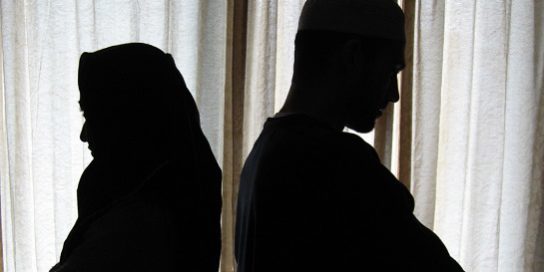
Marriage break-up is perceived as one of the major challenges bedevilling relationships in Kano State, a development that leaves a severe psychological impact on the windows. A report by the BBC Network African Programme in collaboration with the Kano State disclosed that there were over one million divorcées in the state.
The research disclosed that 32% of marriages in Kano State survives only a period of three to six months; and that many young people between the age of 20-25 years are said to have gone through three marriages at least.
The Executive Director National Association of Divorcees/Widows and Orphans, Hajiya Altine Abdullahi, decried the rate of divorce in the state. She had once threatened to protest the menace. This menacing issue of marriage break-up has continued to witness a steep increment in Kano State more recently, making it a serious problem needing mitigation.
The Daily Reality had reported materialism as one of the contributing factors militating against marriages these days.
Divorce, how abrupt it occurs
As though a competition, many husbands partake in the race for divorce. The issue has now graduated to a national problem in dire need of mitigation.
A photographer, Aminu A. Gambo, recounted the harrowing tale of how a one-week-old marriage crashed.
He said, “I once covered a wedding. The wedding took us almost a week, as they started the events from Tuesday throughout Thursday the following week and had a break on Friday.
“The events continued on Saturday and Sunday was wedding Fatiha, which concluded with conveyance of bride late evening that day.
“In the subsequent week, on a fateful Wednesday, the groom called me as early as 6 am and told me to calculate my balance and send my account number. As I did, he then transferred the amount to my account and told me that their marriage was no more,” he stated.
Also, Abubakar Umar confided in our reporter that he was rather perplexed on hearing that the marriage he attended just a week ago had broken up.
Umar said the marriage had broken up even before some relatives who attended the wedding from far places returned to their various destinations.
He added, “it came to me as a surprise that a week-old marriage had broken up just abruptly like this despite the bond between the couple.”
Understanding the root cause
Many concerned citizens argued that there are no tangible reasons behind the increased marriage dissolution.
Hashim Ibrahim described the menacing issue as a problematic phenomenon that defies every explanation.
He said, “The problem is that what triggers Mr A to divorce his wife might not be the same reason for Mr B to end his marriage.”
Muhammad Tasi’u stated that: “There are only two things that lead to the marriage breaking up; the exaltation of men and the ignorance of women.”
Aisha Mujitaba looked at the issue from a different angle, saying guys pretend to be rich in order to woo girls.
“Nowadays, both loves and marriages are based on materialism; that is how equivocation and deception have chipped in in the process of getting married.
“Guys pretend to be wealthy in order to win girls’ hearts. Consequently, when they are joined in matrimony, the true nature of what the person is will be revealed. This leads to the breakdown of relationships,” Aisha said.
Fatima Sha’aibu also believed that lying was one of the contributing factors leading to the marriage break up.
She said, “Mostly guys lie to win affections. Then after the marriage, when the truth was revealed, the girl might feel she can’t resist living with a life-faking husband.”

Aisha Buhari celebrates 22-year-old tech guru, Hawau Ibrahim
By Ahmad Deedat Zakaria
Nigerian First Lady, Mrs Aisha Buhari, has lauded the achievement of Miss Hawau Ibrahim, who developed two software applications named Archiscope and Jupimart.
The First Lady celebrated the young lady on her verified Facebook page on March 25, 2022.
“Celebrating the Achievements of young Miss. Hauwa Ibrahim, 22, [is] a developer of two exciting and innovative Apps (Archiscope) for Architects and (JupiMart) for online Shoppers,” she posted.
Mrs Buhari also wrote about the excellent performance of the young lady at both Ghana and Mauritius universities, where she attended for her first and second degrees.
“A graduate of Computer science with First Class Honors from Lancaster University Ghana and a distinction in her MSc from Middlesex University, Mauritius,” she added.
Dear diasporans, stay where you are: Nigeria is at its worst
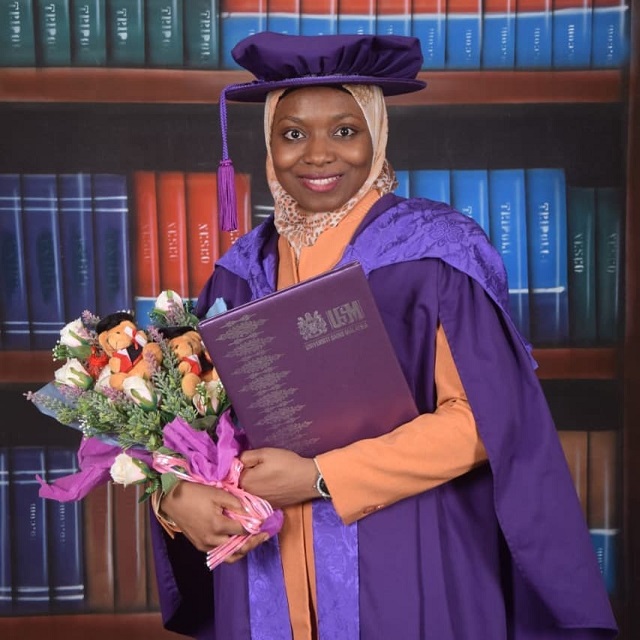
By Sadiya Abubakar Isa, PhD
It is precisely one year since we returned to Nigeria from Malaysia. My experience has been a roller-coaster ride since my return. I’ve seen the good, the bad and the ugly.
Alhamdulillah for the gift of life and a loving family. The primary reason why we chose to return was that I missed my family so much. My son would always request to see his cousins – “I want to go to ‘Naijilia’, I want to see grandma”, he cried – until my neighbours once pled with us to take him to Nigeria. He has never been there. He just wants to meet his grandparents and cousins as he has only met them via video calls. I responded.
I thought about the consequences of extending my stay abroad; what if my parents also die (like my husband’s)? Does that mean my kids would never see any of their grannies? I pondered and discussed it with my husband. Maybe we should just return home after my viva. We thought it through thoroughly, and home it is. We finalised our decision.
Of course, there were other reasons. Our scholarship tenures ended towards the end of 2020, so if we had chosen to stay back, we would have to work extra hard to manage our finances. Additionally, the world was fighting a pandemic, a not-so-good time to job-hunt. So rather than being stranded abroad, we got additional reasons to fly back home.
Many people, mainly family and close friends, tried hard to dissuade us from returning, but what do you do with homesickness? Or the fear of losing loved ones (again) without meeting them after seven years of being away? We overlooked all the negative news. We thought we could make a difference. We felt that we could directly contribute our quota to bettering our dear country by returning to Nigeria. We discussed, planned and strategised lots of projects to do when we return, but Nigerians aren’t ready – we realised.
On that fateful day, we arrived in Nigeria on the 19th of March 2021. From the airport in Abuja down to Kano airport, the manners of the airport officials and the treatment of our luggage, we knew we were ‘home’.
Sometimes I’m glad I’m home, but I often regret this decision. I have tried to settle down since, but I’m still in the process. Truth be told, if one is entrepreneurial, there are many business opportunities in Nigeria, but its challenges wouldn’t let you achieve the desired results in time. Even if you have a good-paying job, your salary is hardly enough this time, thanks to the inflation everywhere and the devaluation of the Naira. Moreover, with the overwhelming decline in Nigeria’s energy sector, things can only worsen over time.
The vulnerability of an ordinary citizen in Nigeria is very discouraging, thanks to the exacerbating insecurity in our region. You can’t travel around peacefully. You can’t trust your neighbours, not to mention strangers. You can’t even take off your attention from the kids. So we are always living in fear – fear of the unknown.
Basic amenities are still not basic in Nigeria. The first time my son experienced a light-out, he asked, “Mama, what happened? Please, put on the light, Mama I can’t see”. It was funny, and we all laughed, but it hit me very hard.
Adopting has been quite tricky for my kids. We are all Nigerians, but my husband and I are more Nigerian than the kids are. Till today when writing this, they quickly have diarrhoea resulting from food poisoning and difficulties in eating local foods. The worst is when you don’t have good enough hospitals around, and It’s tiring. I can’t count how many times we have been down due to malaria or thyroid fever; watching your child suffer from illnesses that would have otherwise been avoided is appalling. It’s exhausting and sometimes frustrating.
We were mugged at Kofar Danagundi in Kano; we have escaped a series of phone snatching scenes. I have been duped and cheated by people I tried to help out of poverty. I still cannot explain the concept of almajiri to my son. He asked, “where is the ‘almadiri’s [almajiri] mother? Why does he have to beg for food?” I still haven’t answered his questions satisfactorily.
While travelling to Borno in mid-January, I experienced what it really means to be in a war zone after slightly escaping a Boko Haram attack. By the grace of God, we are surviving in this country. When we look back at life, we see how far Nigeria is from the developed and developing world. Even India, which is still struggling with all forms of corruption, offers a better life experience than Nigeria.
I will not advise anyone to return to Nigeria if you ask me. Nigeria is currently at its worst. So don’t relocate to Nigeria if not for very tangible reasons. If you have a good job in your country of residence, please don’t come back. If you have a scholarship, do your best to prove your worth to be retained there. If you have a valid visa, look for a job; keep searching, make yourself useful in any way possible. If you can afford to stay there, don’t even think of returning. Yes, living abroad is expensive but also efficient.
It could also be exhaustive, but the basic necessities are available and accessible. You may pay too much tax but drive on good roads with cameras. You get to eat good food and sleep without battling mosquitoes.
So if you choose to return, think about the future of your kids here, think about their safety and think about the opportunities they may be missing because of your decision. But then, Alhamdulillah for everything!
Dr Sadiya Abubakar Isa can be reached via haleesad@gmail.com.
How parenting changes a person
By Aisha Musa Auyo
Parenting is one of the most challenging jobs globally, a job that starts with pregnancy but never ends. It’s a lifetime commitment with many challenges, rewards, and experiences that change us, teach us and humble us. In fact, one doesn’t fully know himself till he starts bearing and raising kids. This commitment tests our patience, compassion, selflessness, strength, weakness, etc.
When I was in my teens, I didn’t have that natural love for kids, as I saw them as nuisance and disturbance, but ironically, kids love me and often extend their hands to pick them up. Usually, I didn’t bother to respond to their advances. I would look at them with a pretentious smile and move on. Later, a friend who loves babies explained that kids are attracted to me due to the constant eyeglasses in my face. That was relieving. My coursemates could not believe their eyes when they saw me on a TV program dishing out tips on parenting, child psychology, and upbringing.
A few years later, I became a mom, a fierce one for that matter, and this new responsibility has changed my entire outlook on life. It made me appreciate Allah more; the fact that a whole human being is produced in a womb from a drop of sperm, and the entire foetus transformation within nine months never cease to amaze me. The fact that milk begins to pop out from the breast after childbirth is still super.
Perhaps the most baffling is how tuwo, shawarma, rice, veggies, and whatever breastfeeding mother eats get transformed into breastmilk within minutes is brain blasting. Sometimes, I wish I could see how my body organs function to deliver this seamless production. Allah is indeed the Greatest. Tabarakallah Ahsanul khaaliqeen!
There’s a popular cliché that says if you want to change the world, change it while you are single, without a spouse, or a kid, as that is when you have freedom and might to do whatever you want because these two groups of people take your freedom and will power away. This is true in some ways. But if we look at it in another way, one can change the world when he becomes a parent by being a better version of oneself and upbringing pious, honest and loving generation.
Please permit me to list a few ways in which motherhood changes me. Perhaps others can learn, relate, realign, and prepare themselves for the unending task:
Motherhood made me more grateful to my Creator, more thankful to my parents, appreciate other parents, and made me understand to some certain extent the pain of not having kids, delayed fertility and parenting kids with special needs.
Motherhood humbled me, as all the things I never imagined myself doing are now my daily routine. From changing diapers to feeding kids, toilet training, wiping phlegm and saliva, and many activities I considered gross. I’m now cool with all of these. There was a day my husband took me to greet his friend’s family, as one of his kids had broken his ankle from the compound. I could hear the mom screaming at the kids. I was like, aww, this woman was loud, ta cika masifa.
At the time, she had five boys, and they were seriously misbehaving. Even the one who broke his ankle tried to touch a moving fan with his other hand. The others were all doing bad stuff, some using chairs as a ladder to touch the ceiling. Even so, I thought she unnecessarily shouted. As God will have it, I have only three boys. Trust me, I find myself shouting all day. It took a lot of practice, willpower and patience to REDUCE the shouting. This experience humbled me a lot. I stop judging.
There are times when you will feel relaxed, thinking that you are doing this parenting right. Then, suddenly, one of the kids will do something unpredictable, unimaginable that you will doubt yourself and all the efforts you’ve put in making and building them. That’s a reset and a humbling one, for that matter.
My selflessness and sacrifices increase: Although I intentionally always put others before me, I put my kids first without thinking, without weighing. It comes so naturally without an effort. As a mother, one finds herself the last option, the last one to be taken care of. At a point, I had to drop some of my dreams and aspirations to take good care of my kids.
Constant worry and wild imagination: I don’t know if it’s just me or all mothers do this. I don’t know if it’s the insecurity situation or the unhealthy vices of our time. I know I’m constantly worried about my kids, how they are faring in my absence, how they’ll turn out, their health, well-being, demeanour, interests, aspirations, etc. I cry a lot when they’re sick and in pain. I don’t even blink when they have a fever. I check them at least three times before daybreak. I’m always overwhelmed and have panic attacks here and there.
I start loving kids altogether, whether mine or not. If they are kids, they become my favourite persons. I love them. Nowadays, I prefer staying with kids than with adults. I enjoy their presence. This may be due to a course I studied (i.e. developmental psychology), which explains the entire human nature from pregnancy to old age. It made me understand a lot about kids and why they exhibit certain behaviours. It makes whatever kids do make sense to me. As a result, I became more empathetic and patient.
Kids make us become better versions of ourselves. Parenthood comes with the challenge that kids always look up to their parents on whatever they do. Kids look at us more than they listen to us. So, we parents know that we have to model the behaviour we want them to have. We have to show more than we tell. We have to always be conscious of our words and actions and be intentional about what we do. For example, there was a time I was reciting the Quran, not my usual tilawa time, as I’ve missed my schedule. Then my first son asked, “Mama, dama kina tilawa?” (Mama, do you recite Qur’an?) I was so baffled by the question. I answered yes, every day. He replied that he had never seen me do that, only me helping and commanding him to do his. In my little mind, I’ve chosen a time when the kids are asleep or at school so that I will not be disturbed. It never occurred to me that the kids thought I don’t do tilawa. So, we need to be intentional and specific on what we want them to see and model.
Steadfastness and patience. These creatures test your energy, patience, commitment and endurance. There’s no room for laziness or minor sickness. Your sleeping hours reduce to the minimum. They must be attended to every second of the day. Even in their absence, preparations are made for things they will need when they return. They consume your budget, plans, relationship with your Creator and creations, health, looks, well-being, and even wardrobe. If care is not taken, one loses himself in this parenting and only notice when it’s almost late. One has to be tough to survive this.
And mind you, this is coming from a mother who does not pay the bills. All expenses are taken care of. This is coming from a mother whose kids are all healthy, and none of them needs special care. The mother’s combining their motherly responsibilities with financial support, special nursing abilities, or both, I doff my hat for you. May Allah reciprocate your efforts in reward and fulfilment.
Finally, this parenting stuff is rewarding, both here and hereafter. If one is blessed with pious kids, there’s no greater joy. Even as babies, their innocent smiles instantly lighten up one’s mood. One often finds himself speaking sweet nonsense, singing non-existence lyrics, to see a baby laugh. Their love is raw, undiluted and genuine.
On a lighter note, I would like to advise myself and other mothers to take it easy; it’s okay to take care of oneself. It’s even highly recommended. Go out and have some adult interactions, discuss with other moms, watch movies, spoil yourself, and rejuvenate your mental health. You need it. Forgive yourself when you are wrong; parenting is learning in the process. You are human. Do your best, pray for God’s guidance and protection, leave the rest to the Almighty.
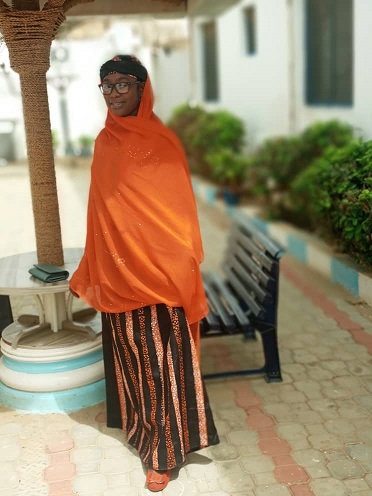
Aisha Musa Auyo is a doctorate researcher in educational psychology. A mother of three, parenting and relationship coach.