
Jolly times with Poetic Wednesday
By Namse Udosen
I came across Poetic Wednesday on Facebook. It was refreshing to see young people telling their stories in verse. During the Covid-19 lockdown, I followed keenly as Eclectic voices sang tunes that ranged from despair to hope.
Poetry is a beautiful part of literature often not paid deserved attention in this climes. It breathes colours and creates philosophy. Therefore, immersing myself in the words of the poets of Poetic Wednesday provides me with a refreshing view of life in Northern Nigeria.
Aside from providing an outlet on social media for budding poets, they have organized a series of offline creative writing workshops for more than 300 secondary school students in Kano, Katsina, Yobe, and Kaduna. These workshops provide opportunities for non-formal education in creative writing. These workshops also expand the thinking range of these students and them better in their academic work. As a result, many young writers have participated in and won writing competitions which are essential for building confidence.
Poetic Wednesday has used its online presence to drive narrative around pressing societal issues in Arewa. The works have been bold and daring, covering domestic violence, Almajirci, drug abuse, and girl-child education. The conservative toga around Northern Nigeria is regularly broken by the strength of the poetry published.
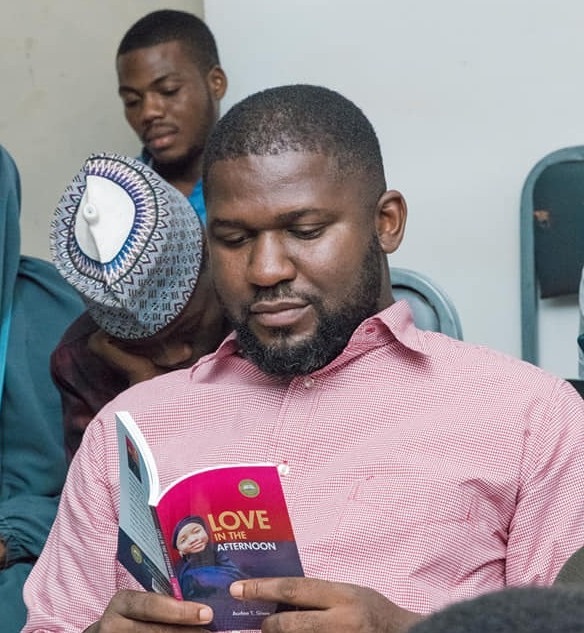
I have also had the opportunity of attending some of the physical poetry events. Asides from the big players in Kaduna, they have one of the best poetry events in Kaduna.
They have been able to collaborate and partner with several literary organizations such as The Art-Muse Fair, Open Arts, Ahmadu Bello University Arts Festival (ABUFEST), Poets In Nigeria (PIN), Creative Writers Club, ABU Zaria, Minna Book and Arts Festival (MinnaBAF), For The Love of Poetry, Campus Watch, The AlhanIslam Tutoring Center, Chapter One, Open Arts, Hausa International Book and Arts Festival and several others to support and promote literary activities.
I am glad to be part of their growth and successes. I don’t know where they get their drive from, but I appreciate the sacrifices of the young men and women behind the initiative. Long live Poetic Wednesday.
Namse Udosen wrote from Kaduna via namse.udosen@gmail.com.
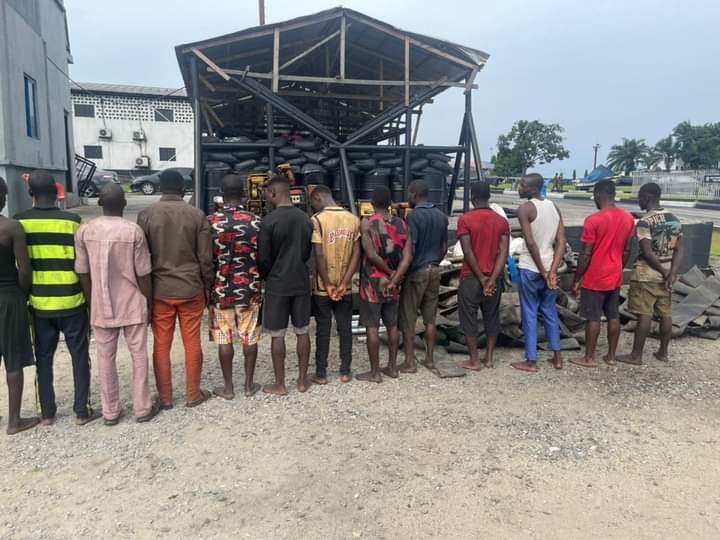
Navy handed 13 suspected oil thieves in Port Harcourt to EFCC
Ibrahim Nasidi Saal
Operatives of the Port Harcourt’s Zonal Command of the Economic and Financial Crime Commission, EFCC, have commenced an investigation of 13 suspected oil thieves handed over to it by the Nigerian Navy.
The suspects were handed over Wednesday, May 4, 2022, by the Nigerian Naval Ship, NNS Pathfinder, Rumuolumeni, Port Harcourt, Rivers State, for allegedly dealing in petroleum products without appropriate licences.
The suspects are Goodnews Wilfred, Gabriel Awadis, Monday Anja, Sylvanus Benson, Timothy Rufus, Appolos Awajis, Tombari Lede, Ebirene Ebirene, Friday Aaron, Ataije Ebirene, Ibrahiim Attah, Shuaibu Magaji and Odeon Emmanuel.
Till death do us part
By Dr Abubakar Mohammed Gombe
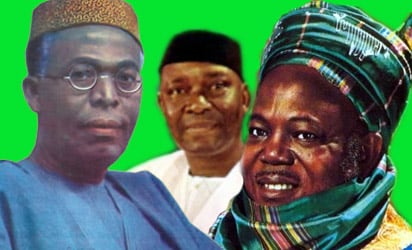
It is interesting to understand the divine marriage between a country and its citizens, specifically between Nigeria and Nigerians. In such a marriage, no amount of lives lost puts asunder. The mysterious marriage keeps producing low-quality products who believe eliminating half brothers will better their lives. Nonetheless, the marriage produced the golden voice of the continent that was, however, eliminated by the products of his mother.
The first army General who coordinated the marriage affair was also eliminated by the same products. Many more military coordinators in charge of the Nigerian marriage were eliminated. The latest were the homemade healthy transition of General Sani Abacha GCON; the prison made transition of MKO Abiola with General Shehu Musa Yaradua, and the contagious transition of President Umaru Musa Yaradua GCON. Yet, the marriage stands. It was only death that did them part.
A three-year civil war could not put asunder. The Ojukus were forcefully retained for the survival of the marriage of interest that occasionally accepts religious and tribal killings and hailing such acts by pardoning popular champions like General Zamani Lekot of the Zangon Kataf crises by the IBB regime and rehabilitating others for communal reintegration by the Buhari regime. These are sincerely done to sustain the cracked marriage until death.
The emergence of popular movements like Boko Haram, IPOB, Kidnapping, Cattle rustling, Herdsmen, Bandits, and Terrorism move to ensure the marriage failure. Still, the lifetime Unity in Corruption among the children of the marriage, which recently pardoned Joshua Dariye and Jolly Nyame, is stronger than the distraction of the popular movement groups that also exploit brothers of the same marriage.
While Unity in Corruption ensures poor education for brothers and sisters of the same marriage, BH went on destroying primary and secondary schools. They also vandalized electricity supplying poles and transformers to complement Unity in Corruption’s idea of rural electrification. IPOB, in its territorial states, declares Monday as an additional weekend while Kaduna officially declares Friday as the beginning weekend. In their territorial states, Bandits know all the army free zones where they peacefully operate without stepping on army toes. Cattle rustlers also know where there are no cattle, and so, instead of taking away cattle, they take the lives of entire villages that provoke them by not keeping cattle, their needs.
Nigerian lives are not safe on the road, on rail and at the airport. One finds it difficult to comprehend a passage in which children of the same mother kill within the home. Yet, the marriage stands and keeps producing children. Everyone identifies with the mother in a polygamous family and blames half brothers. In the Nigerian case, there is only one mother with several tribal lands. It seems only the Fulani have no land. Yet, the Fulani also join the powerful elites’ movement of Unity in Corruption. Under the same mother, the socio-political and economic status becomes the dividing line. The certified children that form Unity in Corruption blame the Almajiri for retrogression.
Then, the most disturbing effort of closing universities to seek the attention of the I Assure You Regime by the educated class that formed ASUU appeared with the support of their supporting staff of SSANU and NASU to seek revitalization. ASUU believes closing universities and sending brothers and sisters home will pain Unity in Corruption. It indeed doesn’t. Instead, ASUU complements Unity in Corruption in denying access to university education and actualizing BH’s mission while in self and family hunger. While most state universities in the north religiously observe the ASUU strike, some state universities in the south graduate students. Yet, the marriage stands till death do us part.
Considering the time, the response of the previous regimes, the regime of assurance with less action, and the possible incoming regime, ASUU ought to have a comprehensive retreat, call off its hunger strike, restrategize and declare regime change in Nigeria with the support of SSANU, NASU, Colleges, Polytechnics, NUT, students, parents and good citizens.
All Nigerians are deeply involved, and all political and armed movements are sponsored either to sustain Nigeria’s marriage for sponsors’ personal gain or to put asunder. With all the prophesies, projections and armed movements, the marriage of amalgamation remains. What Nigeria needs is the game-changer, and that changer can be found in ASUU. Nigeria needs focus and determination. ASUU must go into governance en mass. Otherwise, one or two members hardly make a meaningful impact.
ASUU should simply declare for the office of the Federal and State University Visitors, Senatorial Districts, Federal and State Houses of Assembly in the 2023 general elections and work with SSANU, NASU, Colleges, Polytechnics, Monotechnics, NUT, students, parents and good citizens. Nigeria must be saved. We remain Nigerians till death do us part.
ASUU must retain its strong UTAS team and set in motion its national planning and enforcement team, policy enforcement team, economic team, company revival and creation team, employment creation team, national security management team, education monitoring team, patriotism enforcement team, salary and pension enforcement team, manufacturing promotion team, local and international lobby team, Crude oil and refinery enforcement team, action or resignation enforcement team, among others,
Let’s use our hunger to save our country. With ASUU, SSANU, NASU, Colleges, Polytechnics, Monotechnics, NUT, students, parents and good citizens, Nigeria can be saved.
Let’s save Nigeria till death do us part.
Dr Abubakar Mohammed Gombe wrote from Gombe State University. He can be reached via amgombe2@yahoo.com or +23408060839578.

Mass defection rocks Kano State House of Assembly
Ibrahim Nasidi Saal
Nine members of the Kano State House of Assembly elected on the Peoples Democratic Party (PDP) platform have defected to the New Nigeria People Party (NNPP).
The spokesperson of the Assembly, Uba Abdullahi, announced this in a statement he issued on Friday. He said the members had sent a letter to the Speaker of the House notifying the House of their defection.
He said some of the members cited a leadership tussle in the PDP at state and national levels for their action.
The affected members include:
Isyaku Ali Danja (Gezawa Constituency),
Umar Musa Gama (Nassarawa Constituency),
Aminu Sa’adu Ungogo (Ungogo Constituency),
Lawan Hussain Chediyar ‘Yan Gurasa (Dala Constituency)
Tukur Muhammad (Fagge Constituency).
Mu’azzam El-Yakub (Dawakin Kudu Constituency)
Garba Shehu Fammar (Kibiya Constituency)
Abubakar Uba Galadima (Bebeji Constituency)
Mudassir Ibrahim Zawaciki (Kumbotso Constituency).
Earlier on April 29, the House announced the defection of a member representing Kano Municipal, Salisu Gwangwazo, from the PDP to the ruling All Progressive Congress (APC), also citing an internal crisis in the main opposition party
However, the latest defections are widely seen to be connected to the movement of a former governor of the state, Rabiu Kwankwaso, from the PDP to the NNPP.
Mr Kwankwaso moved to the NNPP earlier this year and is expected to run for president on the party’s ticket.
Kwankwaso’s defection has triggered the mass defection of his followers from the PDP to the NNPP. Some of them have taken party positions ahead of the party’s primaries.
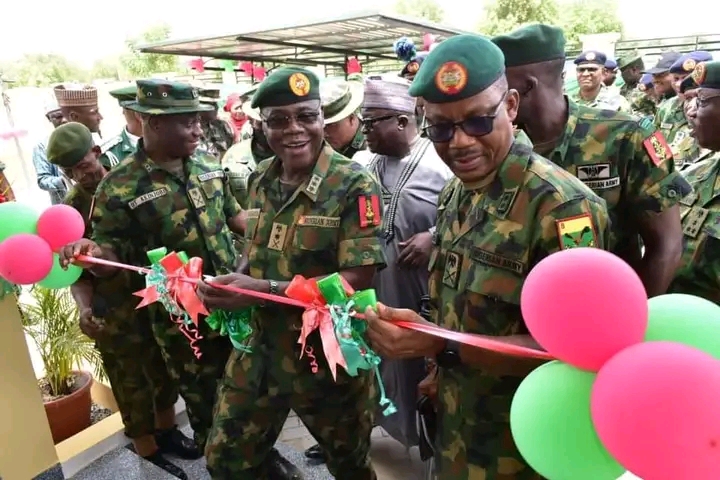
COAS commissions official residences for 8 Division and Garrison RSMs in Giginya Barracks Sokoto
By Ibrahim Nasidi Saal
The Chief of Army Staff(COAS), Lieutenant General Faruk Yahaya, has commissioned two official residences for Regimental Sergeant Majors (RSMs) of Headquarters 8 Division and Division Garrison, both in Giginya Barracks, Sokoto.
The COAS commissioned the projects Thursday, 5 May 2022, as part of his operational tour of the 8 Division, Nigerian Army. Speaking during the event, Gen Yahaya maintained that RSMs constitute a vital link between officers and soldiers, stressing that they are the custodians of discipline and regimentation in the NA, without which command and control would have been cumbersome. Therefore, he charged the RSMs to redouble their effort in entrenching discipline and regimentation among personnel.
General Yahaya noted that bequeathing a befitting infrastructure to troops is a gesture that will boost their morale and encourage them to do their best while discharging their responsibilities. He reiterated his resolve to continue a deliberate policy, to improve the standard of infrastructure in all NA barracks.
The COAS also commissioned other projects, including remodelled 8 Division Garrison RSM’s office and road, Fire Fighting Truck and a Fuel Dump, among others. The projects were named after some Master Warrant Officers who had distinguished themselves in service.
While addressing officers of the Division, the Army Chief charged them to escalate operations against banditry and other criminalities in the North-West zone.
Gen Yahaya urged them to be vigilant at all times to respond to distress calls effectively. He emphasized that troops must cooperate with other security agencies and stakeholders in their area of responsibility, noting that security is the collective business of all.
The COAS later inspected ongoing projects in Giginya barracks, including the new Headquarters 8 Division Office Complex and industrial waterworks.
It will be recalled that the COAS, on Saturday, 30 April 2022, commenced an operational tour of Joint Task Force North East Operation Hadin Kai, from where he proceeded to 8 Division and Operation Hadarin Daji in the North West.
Accompanying the COAS during the operational tour are the Chief of Operations (Army) Maj Gen Olufemi Akinjobi, the Coordinator Nigerian Army Special Projects Maj Gen Philip Eromosele, the General Officer Commanding 8 Division, Maj Gen Uwem Bassey, Provost Marshal Army Maj Gen Robert Aiyenigba and the Chief of Military Intelligence, Maj Gen Ibrahim Salihu.

Poetifying the North: Six years of Poetic Wednesdays poetry revival
By Sa’id Sa’ad
As a people of oral tradition such as folklores, stories and songs, modern poetry today – or what is otherwise called contemporary poetry – could still be traced back to the oral literary traditions which have, over centuries, served the purpose of cultural entertainment and preservation in Nigeria.
However, even with the consistent growth of poetry in some parts of Nigeria – mainly because of the existence of some of the most celebrated African literary giants in those parts: Wole Soyinka, Niyi Osundare, Gabriel Okara, Christopher Okigbo – poetry in northern Nigeria has continued to suffer significantly amongst the wanna-be-poets and growing poets, who are thirsty of platforms to put their arts out for the right audience. With no or few consistent literary communities, inaccessibility of literary mentors and workshops or festivals, this category of young people genuinely interested in the art has been in a dilemma between giving up their dream or continuing to breathe in water.
Six years ago, Poetic Wednesdays was built—a rescue mission run by young people for young people. Of course, they understood the challenges of their fellow youths so well. However, It is not surprising that a small team of young people from the under-represented communities in this part of the world would give birth to a literary community of sorts. But what is exciting is how – in six years – these young people Poetified most of Northern Nigeria. It was surprising how, in six years, they were able to achieve what will take others a decade-plus to achieve. This is a product of genuine passion for the course.
Thus, these are young people who – when they began – were never given a seat at any literary or poetry workshop, of any sort, as a way to propel or guide their growth as future literary stars. And this is, sadly, a coat-of-arm that Northern Nigeria, in almost all industries, has cursed itself with, which is ‘intentionally’ refusing to tap on the shoulders of their growing talents. Relatively, most of the young talents in this part who have grown to horn their talents were able to do that without mentorship. Accordingly, they are used to thorns.
However, against all odds, with Salim Yunusa, a young writer from the narrow streets of Zaria, to Nasiba Babale, a noble lab scientist with poetry all over her syringe and test tubes, to Abdulbasit Adamu, a passionate poet and spoken word artist wobbling on the highway between Kaduna and Kano, to Maryam Gatawa, a Kano poet turned entrepreneur, to Abduljalal Musa (AJ) and scores of others who pushed the lorry behind the camera, these passionate and talented people stood and birthed a poetry community run by young people – solely to promote literary arts, to give a platform to other young people especially the wanna-be-poets who are ‘only’ interested in seeing their forced-rhymed poems read by others, and the growing poets who have the dying needs to hear feedback about their art.
Excitedly, with fewer resources, Poetic Wednesdays has grown to do beyond a toddler literary organisation. Especially using digital media/social media platforms like Facebook, hundreds and thousands of young poets have access to sharing their poems with global audiences every Wednesday. With Poetic Wednesdays, in the last six years, one can say that the recent robust revitalisation of poetry, especially in parts of Northern Nigeria, can be directly attributed to literary organisations like Poetic Wednesdays. Now, the north is ‘poetified’ with excellent poets who have and are capable of creating some of the best poems in the country.
Accordingly, with these bold decisions, numerous literary communities have sprouted from some of the most unexpected parts of Northern Nigeria, which have continued to host literary functions and promote their local artistic prowess. From Borno Literary Society in Borno, Yobe Literary Society in Yobe, Sunshine Literary Society and in Adamawa State, literary communities in other northern states such as Taraba State, Sokoto State and Kebbi State sprouted as well. This occurs due to the hard work of a few young people who dared to take up the challenge and push beyond boundaries.
This doesn’t contextualise Nigerian literature based on geographical lines; I am solely a Pro-Nigerian-Literature irrespective of where it comes from. However, it is also essential to acknowledge the growth of particular people or at least point a green mark on an honest, passionate move. Moreover, Poetic Wednesdays or any literary community doesn’t only speak for the people of the north but speaks for every Nigerian artist. Whereas some are even growing to go beyond Nigeria to a broader African space, which is commendable in a way as well.
Today, northern Nigeria is Poetified. From Sabon Gari in Kano to Bulunkutu in Maiduguri, to Ribado Square in Adamawa, to Tudun Wada in Zaria, to Unguwan Dosa in Kaduna, Gidan Kaya in Sokoto, to Bunza in Kebbi, to Madobi in Jigawa, to Sardauna in Taraba, these and more thousands of streets in the north now breath poetry and are giving birth to the most talented literary giants in the country.
If they ask you about the north, tell them that the north is poetified.
Sa’id Sa’ad is a Nigerian writer and performance poet from Maiduguri. He won the Peace Panel Short Story Prize, 2018 and NFC Essay Prize, 2018.
A hazardous journey
By Mallam Musbabu Magayaki
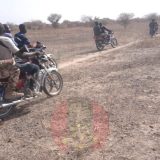
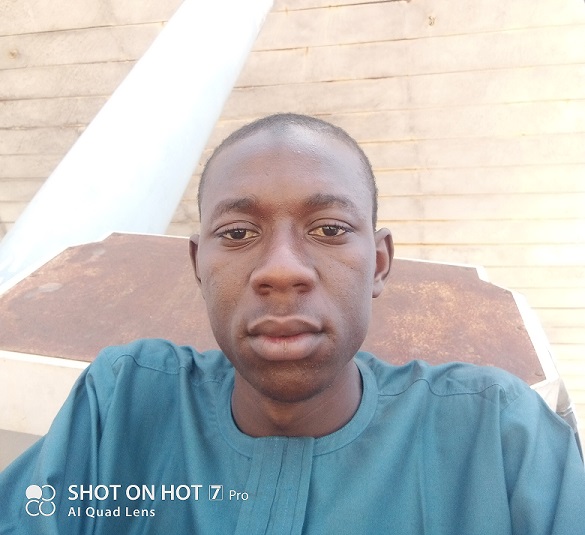
I took this picture after seeing some unidentified gunmen not far away from us on Monday, April 25th, 2022, while plying the dreadful Birnin Gwari-Kagara and Kontagora roads. The road is full of uncertainty about the unavoidable fear of bandits. Fortunately, we arrived home safely (glory to God). Nonetheless, our hearts’ continued to rewind the dangerous nature of the road in a flashback format.
However, after spending a horrendous one-hour journey that looked like an eternity waiting for help, we were escorted by vigilantes and police officers stationed at Udawa-Buruku villages, particularly for travellers, with a fare of N1000 for each car. They would arrange all the cars in a straight line after collecting the charge of N1000 from each car’s driver for him to be part of the convoy.
As we began the terrifying 30-km journey, the security operatives operating on the road arrived. They told us glad tiding of seizing three bandits’ motorcycles (TVS-like), which they distributed to three groups as a spoil of war: one for the vigilantes, one for the military personnel, and one for the police officers.
While plying, everyone was anxious and confused, saying various forms of supplications for fear of bandits’ retaliatory attacks. But, thank God, despite the dangerous nature of the short journey through the almost impenetrable bushy forest, we arrived safely in Buruku.
We thanked God and hailed the vigilantes who risked their lives to save us from any bandits’ attacks that might have come at us.
I recommend that the Kaduna and Niger state governments for empowering those vigilantes in their regions with modern weapons. They are genuinely trying, without compromise, to safeguard the lives of innocent travellers.
Mallam Musbabu Magayaki wrote from Sabob Fegi, Azare.
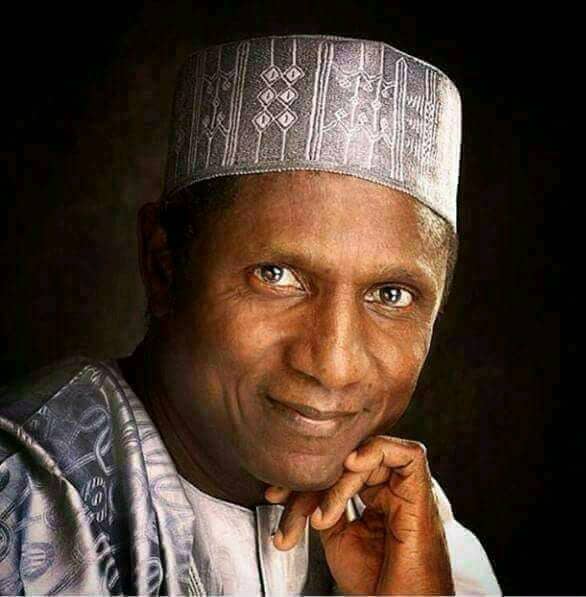
Jonathan remembers Yar’adua twelve years after
By Ahmad Deedat Zakari.
Nigeria’s Former President, Goodluck Jonathan, has taken to his official Facebook page to remember his former principal, Late President Umaru Musa Yar’adua.
Thursday, May 5, 2022, marks exactly twelve years since Yar’adua died, and Jonathan, who succeeded him as Nigeria’s President after his death, remembers him fondly on the anniversary.
He said although Yar’adua has left this world, the memories of his great works live with us.
“Twelve years ago, our nation lost a patriot, a selfless leader and a peacemaker who governed with sincerity and passion for the people. President Umaru Musa Yar’ Adua is no longer with us today, but his strides in public life continue to testify for him and keep his memory alive,” He wrote.
Jonathan also added in the third paragraph of his eulogy that Yar’adua is the kind of leader that is rare and hard to find
“He was a soldier of truth, committed to justice, equity and other democratic virtues. He was a servant leader and a good man, the type that is hard to find.” He stated

Telecom firms write NCC, propose new prices for calls and data
By Ibrahim Nasidi Saal
Nigerians may have to pay more for calls and data as telecommunication companies proposed a new tariff increase of 40 per cent. They made this known in a letter sent to the Nigerian Communications Commission titled, ‘Impact of the Economic and Security Issues on the Telecommunications Sector’.
The telecommunications companies wrote the letter under the aegis of the Association of Licensed Telecommunication Operators of Nigeria to the NCC.
According to The Daily Reality sources, the Telcos have proposed the price floor of calls will increase from N6.4 to N8.95 while the price cap of SMS will increase from N4 to N5.61.
The Telcos noted that the increase in energy costs had impacted their operating expenses by 35 per cent, Our Source added.
The Telcos, which include MTN, Glo, Airtel, and 9mobile, also said that the introduction of the recent excise duty of five per cent on telecom services had further increased the burden of multiple taxes and levies on the industry.
The letter read in part:
“As the commission may be aware, the power sector, under the supervision of its Nigerian Electricity Regulatory Commission of the power sector in November 2020, undertook a review of electricity tariffs to cater for the economic headwinds reported above.
“In view of the foregoing, ALTON considers it expedient for the telecommunications sector to undergo periodic cost adjustments through the commission’s intervention in order to minimise the impact of the challenging economic issues faced by our members.
“Upward review of the price determination for voice and data and SMS. Given the state of the economy and the circa 40 per cent increase in the cost of doing business, we wish to request for an interim administrative review of the mobile (voice) termination rate for voice; administrative data floor price, and cost of SMS as reflected in extant instruments.
“With respect to voice an SMS cost, ALTON respectfully requests the commission to consider a mark-up approach to address the upward price adjustment desirable for the industry. We have enclosed herein and marked as ‘Annexure 1’our proposal in that regard.
“For data services, we wish to request that the commission implements the recommendations in the August 2020 KPMG report on the determination of cost-based pricing for wholesale and retail broadband service in Nigeria. Excerpts from the report, are attached and marked ‘Annexure 2’ to provide a further illustration.
“In implementing the said recommendations, however, we recommend that the 40 per cent increase in the cost of doing business be factored in to arrive at a cost price per GB in view of the current economic situation.”

How Kano workers spend Sallah festivities without salaries
By Uzair Adam Imam
Amidst Sallah (Eid-el-Fitr) celebration, when people jubilate the end of Ramadan in new clothes and different sorts of delicious dishes, civil servants in Kano have seen their 4th day of a new month without salaries, the development they said has thrown them and their families into dilemma.
Reacting with dismay, the workers said the government has failed to keep to its promise of paying the salaries on the 25th of every month.
The Daily Reality learnt that some workers had to hide because they could not make any provision to welcome and host their friends and relatives as usual.
The workers who bitterly complained about the government’s carelessness towards their wellbeing said they remained indoors on the Sallah days because they were economically depressed.
Eid-el-Fitr is the period when the Muslim faithful happily celebrate the end of Ramadan. The days are usually welcomed with beautifully sewed clothes, different sorts of delicious foods, and meats of all kinds provided they are Islamically lawful, and relatives from all walks will call on their family and friends to celebrate the day.
Salary delay leaves a big hole in our minds
One of the civil servants who spoke to our reporter said that he went ahead to embrace his old craft of sewing for a living. The civil servant, who our reporter found busy sewing in a tailoring shop, said this delay has left in their minds a very big hole.
He added, “I can not do what I used to do on Sallah days. I couldn’t afford to buy a single chicken for my family. We did not cook anything nor did we have any new clothes to wear.”I used to sit with friends after Eid to exchange greetings and share pleasantries. But this time around, as I was depressed, I remained indoors until 4 pm when I came out to pray,” he added.
Another source, Ibrahim Shu’aibu, decried the experience as horrendous as they largely depend on their monthly income for a living.
Shu’aibu said, “The experience is horrendous. The effect is deep. It has affected almost all aspects of our lives as civil servants. More than half of the civil servants rely on salaries to cater for themselves, their families as well as some members of their relatives.”
In the same vein, this incident has deeply affected many businesses in many states in this country, Kano in particular.”
Personally speaking, this Eid-el-Fitr has passed like an ordinary day. I had to hide because I didn’t make any provision to welcome and host my friends and relatives as usual,” he stated.
Also, another source who pleaded for anonymity confided in our reporter that this Sallah is one of the worse situations he ever found himself in. He said, “We didn’t cook anything for this Sallah because I was broke. And I couldn’t afford to buy Sallah attire for my small kids. Here we are living like baggers.”
The worst part of it is that the government keep mute about the issue. I think the government should have addressed us. But sadly enough, what we only hear or see from the government officials is their beautifully snapped pictures at Umara.”
Another worker, Sulaiman Abdullahi, not his real name, said they found it difficult to handle the situation as they mostly live from paycheck to paycheck.
He said, “that’s why most of the workers are indebted beyond settlement. As we receive our salaries, we go ahead to pay the debt. I know you can imagine how hard we civil servants live our lives.”
Kano economy in a chain – Economist
An economist teaching in one of the Kano institutions lamented that the state economy is in a chain, leaving a lot many sectors affected. The economist said the delay in this month’s salary has affected many businesses, leading to the stop in the facilitation of goods and services in the state.
He further stated that “generally, the state economy is the dependent economy. It is dependent because it depends on workers’ salaries. When workers get paid at the end of every month, they will take their income into circulation by purchasing goods and services.
“At the end of this month, workers have not been paid. The facilitation of goods and services from various markets in the state will stop.
“The welfare of workers and their families will be affected. The state economic facilitation and activities are also stopped. And in long run, it will give a gap in which businesses will be dropped. And if it dropped it will create losses,” he said.
Could Kano State Government respond?
In line with balancing this report, our reporter contacted the Kano State Chief Press Secretary, Malam Abba Anwar, to know the cause of the delay in this month’s salary payment. However, all attempts were proved abortive despite huge complaints by the workers about the government’s silence on the issue.