Three more Kano Assembly members dump APC, join NNPP
By Ibrahim Nasidi Saal
Days after nine Kano State House of Assembly members defected from the opposition Peoples Democratic Party, PDP to New Nigeria People’s Party, NNPP, three more lawmakers have dumped the ruling All Progressives Congress APC, for the new party.
On Wednesday, a spokesman for the Assembly, Uba Abdullahi, announced their defection, citing three separate letters the legislators sent to the speaker, Hamisu Chidari.
According to the statement, the members notified the House of their defection from the ruling APC to NNPP through the letters dated May 5, officially received by the House.
The defecting lawmakers are:
Hon.Abdullahi Iliyasu-Yaryasa, member representing Tudunwada Constituency;
Hon.Muhammed Bello Butu-Butu, member representing Tofa/Rimin Gado Constituency.
Hon.Kabiru Yusuf Ismail, member representing Madobi Constituency.

JUST IN: ASUP embarks on two-week warning strike
By Uzair Adam Imam
The Academic Staff Union of Polytechnics (ASUP) will commence a two-week warning strike on Monday, May 16, 2022.
According to the ASUP president, Anderson Ezeibe, the decision was borne out of the emergency meeting of the union National Executive Council on Wednesday, May 11, 2022.
However, this is coming amidst worries over the extension of strike by the Academic Staff Union of Universities (ASUU).
ASUP decried that the federal government has refused to meet their demand, making it necessary for the union to embark on a strike.
Recall that ASUP has suspended its industrial action declared on the 10th of June, 2021, following the Memorandum of Action (MoA) which the government had signed.
The union said in a statement, “Non-release of arrears of the new minimum wage: The owed 10 months arrears for the Polytechnics is yet to be released. The composite amount covering all Federal Tertiary Institutions to the approximate figure of N19Bn currently exists as an AIE in the Accountant Generals Office.”
“We are deploying this medium to equally appeal to members of the public to prevail on the government to do the needful within the two weeks period so as to avoid an indefinite shutdown of the sector,” the statement added.
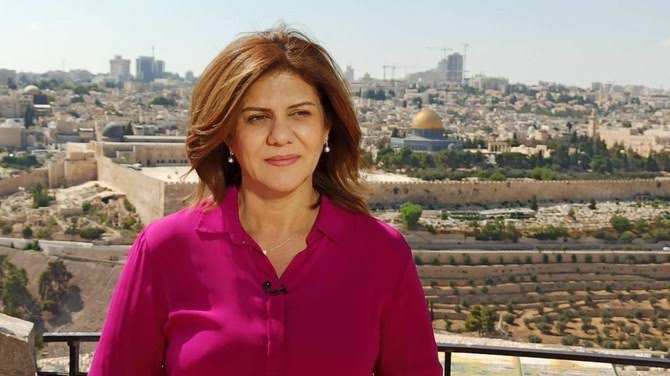
Shireen Abu Akleh, prominent Palestinian-American Aljazeerah journalist, assassinated by Israel forces
Aljazeera said Wednesday that Shireen Abu Akleh, a veteran journalist for the news network, was fatally shot by Israeli troops in the West Bank refugee camp of Jenin.
According to the Washington Post, Steve Hendrix reported that in JENIN, West Bank — Israeli forces killed a Palestinian American journalist for the Al Jazeera news network in the West Bank early Wednesday, according to the network and the Palestinian Health Ministry. Israel said the journalist, Shireen Abu Akleh, was killed in an exchange of gunfire and called for an investigation.
Abu Akleh, 51, a longtime Al Jazeera correspondent, was shot in the head while covering Israeli raids in the Jenin refugee camp, according to the network and the ministry. She was taken to a hospital before dying from her wounds.
In a statement, Al Jazeera accused Israeli forces of killing Abu Akleh “in cold blood” and said she had been “clearly wearing a press jacket that identifies her as a journalist.” Two journalists who were standing next to Abu Akleh said in interviews that the area had been relatively calm before she was shot.
“It was dead quiet,” one of the journalists, Ali al-Samudi, who was also injured by gunfire, said in an interview from his hospital bed.
In a statement, Prime Minister Naftali Bennett said the shooting occurred while the Israel Defense Forces were conducting counterterrorism operations in Jenin, after a spate of deadly attacks over the past few weeks in Israeli cities. During the operation, he said, “armed Palestinians shot in an inaccurate, indiscriminate and uncontrolled manner.”
“Our forces from the IDF returned fire as accurately, carefully and responsibly as possible. Sadly, Al Jazeera journalist Shireen Abu Akleh was killed in the exchange,” he said. “To uncover the truth, there must be a real investigation, and the Palestinians are currently preventing that. Without a serious investigation, we will not reach the truth.”
Brig. Gen. Ran Kochav, an IDF spokesperson, told Israel’s Army Radio that “all of the data indicate with a high degree of probability” that Abu Akleh was killed by Palestinian fire. “But I say that cautiously,” he added.
A senior Israeli official, in a statement sent to reporters, said that the army’s assessment was based on evidence that included video footage in which a gunman is heard saying in Arabic, “We hit a soldier, he’s on the ground.” The Israeli military said that no Israeli soldiers were injured during clashes in Jenin on Wednesday and that the Palestinians in the video may have been referring to Abu Akleh.
It was not clear when the video, which was published on the Israeli foreign ministry’s Twitter account Wednesday, was recorded, or where the incident depicted in the video occurred. A Jenin field researcher from B’tselem, an Israeli human rights organization, shared a map with reporters marking the location of Abu Akleh’s killing and the location of events depicted in the video distributed by Israelis.
The map locations, determined by GPS coordinates and aerial shots, were nearly 950 feet apart.
In a message posted on Twitter, Israeli Foreign Minister Yair Lapid wrote: “We have offered the Palestinians a joint pathological investigation into the sad death of journalist Shireen Abu Akleh. Journalists must be protected in conflict zones, and we all have a responsibility to get to the truth.”
Palestinian Authority President Mahmoud Abbas said in a statement that he “condemns the crime of the execution Shireen Abu Akleh” and holds Israel “fully responsible.”
U.S. Ambassador to Israel Tom Nides said in a message posted on Twitter: “Very sad to learn of the death of American and Palestinian journalist Shireen Abu Akleh.”
A spokeswoman for the U.S. Embassy in Jerusalem said “The United States encourages a swift, thorough, and transparent investigation into the circumstances of her death.”
“We understand the Israel Defense Forces have already stated that they will be investigating this incident. As we have said numerous times, the United States supports press freedoms and the protection of journalists in carrying out their work,” she said.
Samudi, who works for the Jerusalem-based Al-Quds newspaper, said Wednesday that he and Abu Akleh had been standing several hundred meters from a house where Israeli soldiers were carrying out an arrest. His shoulder was wrapped in a bandage, and dark blood stains were visible on a bullet-resistent vest marked “PRESS” on the table beside him. He had been working with Abu Akleh on Wednesday as a producer, he said.
“The house was at the top of the camp; we were far below,” he said, referring to the Jenin refugee camp. They were alone with four or five other Palestinian journalists, all wearing protective gear marking them as such. They had not yet set up to film, he said.
They were near Israeli military vehicles, he said, and they moved slowly to make sure the soldiers could identify them as reporters. There were no other Palestinian civilians or fighters in the area that he could see, he said.
Suddenly, a single shot rang out, Samudi said, close enough for him to hear the whiz of a bullet. He said he turned and ran and was immediately hit in the upper left back. He said he knew he had been hit, but he also remembers his colleague’s reaction.
“I heard Shireen scream, ‘Ali has been shot! Ali has been shot!’ ” he said. “Then they shot Shireen. She dropped dead immediately.“ He was adamant that the group was not caught in a crossfire between soldiers and militants, as the Israeli government has suggested.
“There were no fighters where we were, none at all,” he said. “We don’t put ourselves in the line of fire. Whatever the Israeli army says for us to do, we do. They shot at us directly and deliberately.”
Another journalist, Shatha Hanaysha, 29, said the group stood in an open area “for about 10 minutes to make sure the Israeli army can identify us as journalists.”
“We were told by people there were Israeli snipers on the roofs, but I didn’t see any,” she said. “It was very quiet. There was no danger in our area.
She said there was no fire fight happening in the area — just the sudden individual shots. “At the shots, everyone ran toward a wall. But Shireen and I weren’t able to climb it,” she said. “Shireen was screaming ‘Ali is shot!’ Then she fell. I tried to help her up, but I couldn’t.”
“She was shot,” she said, pointing at her own neck.
Atah Abu-Rumeleh, a doctor in Jenin who said he witnessed the shooting, also said there had been no exchange of fire before the journalists were shot. “It was a clear day, and the sun was shining,” he said in a telephone interview. “A sniper from somewhere shot Shireen in the head. And Ali al-Samudi was also hit.”
Abu Akleh was among the most high-profile Palestinian journalists and a veteran of covering the Israeli-Palestinian conflict. She joined Al Jazeera in 1997 as one of the network’s first field correspondents. In the over two decades since, her voice, face and reportage became a mainstay for Palestinian audiences.
“Shireen was a brave, kind, & high-integrity journalist that I and millions of Palestinians grew up watching,” tweeted Ramallah-based Palestinian activist Fadi Quran. “A devastating tragedy.”
Husam Zomlot, head of the Palestinian Mission to the United Kingdom, called Abu Akleh the “most prominent Palestinian journalist and a close friend.”
“Now we will hear the ‘concerns’ of the UK govt & the international community,” he wrote on Twitter.
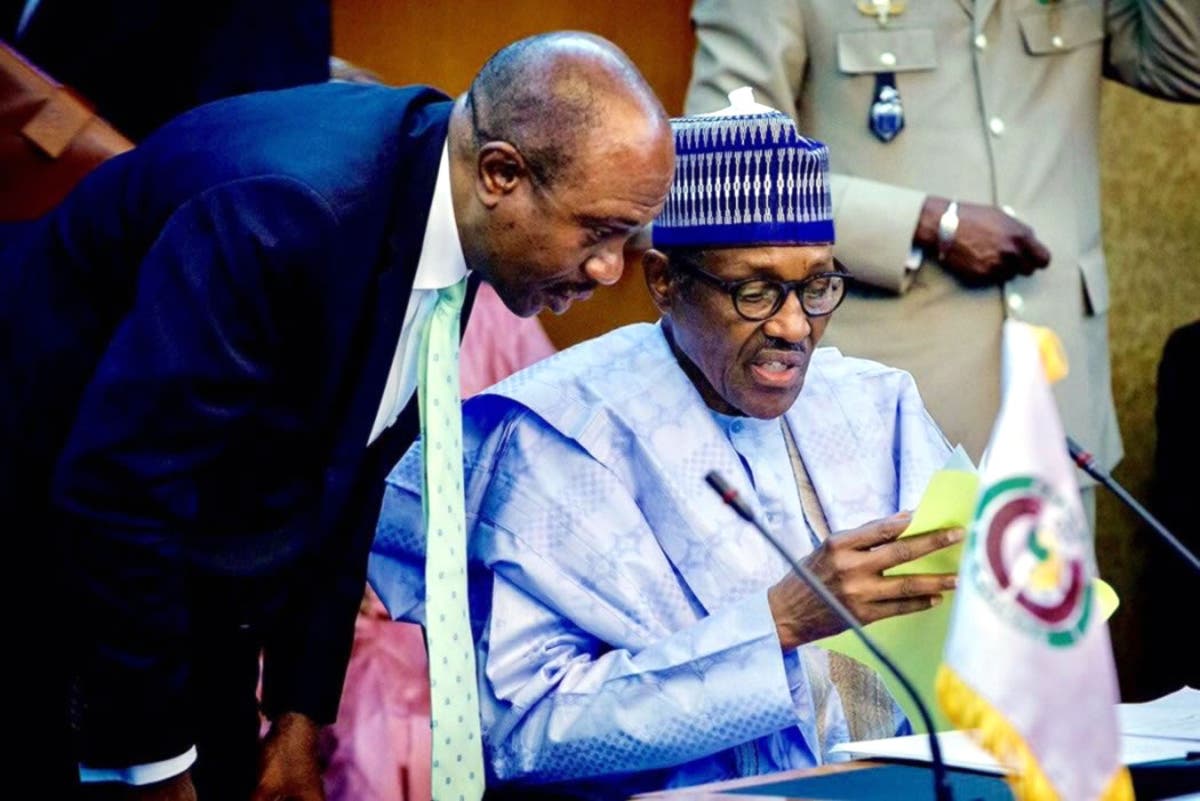
Will President Buhari, Emefiele sacrifice CBN for the 2023 Presidency?
By Ibraheem Abdullateef
Ahead of the 2023 presidential elections in Nigeria, the race for the ticket of the All Progressives Congress (APC) has never been so terribly chaotic and funny. Pegged at an outrageous N100 million naira, no less than 25 aspirants have obtained the nomination and expression of interest forms as of Friday 6, May 2022 to contest in the primaries later in the month. As Nigerians, including the media and the CSOs, were still debating the moral rectitude and leadership capacity of the long list of contenders, the news hit the airwaves on Thursday that the Central Bank Governor of Nigeria (CBN) Godwin Emefiele has also obtained the form by proxy.
There is no word fit to describe this action, not even anomaly. CBN Governor Godwin Emefiele is taking Nigerians and Nigeria for a ride with his presidential bid. By the extant Central Bank of Nigeria Act 2007, the Bank is an independent, apolitical body and whoever is the Governor is not allowed to be partisan. The series of political-related activities, consultative meetings, and branding in his name would vitiate the law and ethics of professionalism, and it makes a mockery of the public image of the nation’s apex financial and monetary authority in the international community.
As if to forestall quackery, the section 8 (1) which is on Appointment, Qualification, and Remuneration of Governor and Deputy Governor of the CBN says both of them “shall be persons of recognised financial experience and shall be appointed by the president subject to confirmation by the Senate on such terms and conditions as may be set out in their respective letters of appointment.”
While corroborating it, the next section in the Act, Section 9, on full devotion to the service of the bank, says “Governor and Deputy Governors shall devote the whole of their time to the service of the Bank and while holding office shall not engage in any full or part-time employment or vocation whether remunerated or not except such personal or charitable causes as may be determined by the Board and which do not conflict with or detract from their full-time duties.”
Yet, the CBN Governor, Godwin Emefiele, has continued to pursue a presidential bid under the APC. What started a few months back recently reached a crescendo when pictures of about 50 well-branded campaign vehicles hit social media. It also followed the hosting of banners, including rallies across the nation. Despite denying the ambition in April, the eventual purchase of the nomination and expression of interest forms less than two weeks to party primaries show that Emefiele is partisan and has been involved in activities, not in tandem with his office. This impunity is unprecedented. It is not unexpected the outrage of Nigerians, condemning what is perceived as immoral and unethical behaviour.
As a Nigerian, the 1999 constitution allows Godwin Emefiele the right to pursue any political ambition. But to pursue a presidential bid without resigning, may erode the confidence of investors, international partners, business magnates, and other stakeholders in the financial sectors in the Bank, thereby affecting the economy. Many Nigerians have begun to wonder if the weakening Naira values, including the introduction of policies like E-Naira and banning cryptocurrencies, were not informed by decisions influenced by partisan interests. Regardless of the intentions, the moment Emefiele submits his nomination and expressions of interest form, he must not spend a minute longer as the CBN Governor, unless it becomes a sad precedent to other officeholders, further bastarding the national institutions.
While spelling out conditions for disqualification and cessation of appointment, section 11 (2) (f) of the CBN act empowers the president to remove the governor. The CBN governor may also be relieved of his appointment if he is “guilty of a serious misconduct about his duty under this Act.” By being openly partisan, it is enough ground for the Board or the National Assembly to summon and question the professionalism and ethics of Godwin Emefiele, in relation to this stewardship.
The only way Emefiele stays in office is to dissociate himself from this development. If truly he has an ambition and would rather face it squarely, he should vacate the office immediately (provided that he has given at least three months’ notice in writing to the president of his intention to do so). It is not the time to keep mute and be evasive. It is rather a moment to prove a test of character and integrity. President Muhammadu Buhari must address the issue and take positive action to salvage the sanctity of the nation’s foremost financial and economic authority now.
Ibraheem Abdullateef is a Nigerian youth leader and freelance journalist. He tweets at @_ibraheemlateef.
How man ‘kidnapped, murdered’ his neighbour’s daughter after collecting ransom in Bauchi
By Uzair Adam Imam
A father of a four-year-old girl, Khadijah Abdullahi, popularly known as “Ilham” has recounted the traumatic incident of how his neighbour allegedly connived with some people, kidnapped and killed his daughter after collecting ransom at Tilden Fulani, Toro Local Government Area of Bauchi state.
Speaking to The Daily Reality, the father, Abdullahi Yusuf, said the girl was abducted during the Ramadan fasting period on April 11, 2022. But according to the Nigeria Security & Civil Defense Corps (NSCDC), they received this shocking information on Saturday, 23rd of April, 2022.
Yusuf narrated how the suspect mercilessly strangled the little Ilham to death and later buried her in the kitchen of his house, and kept on demanding more ransom.
The prime suspect, identified as Alhaji Kabiru Abdullahi, was said to have sympathized with the victim’s father and joined a group of people who trooped out in search of the innocent Ilham before the investigation pinned him down. Though, another suspect, Alhaji Yawale was apprehended by the NSCDC officers of Toro Division.
The incident has left the Tilden Fulani community in great fear, as parents were left in the dark.
A source, Hussaini Narabi, confided in our reporter that they took to their social media platforms to announce the mysterious disappearance of the little Ilham and post her pictures.
He said, “However, Ilham was not found, but the alleged abductor was arrested by the security personnel.”
My last moment with little Ilham – father
Recounting the traumatic experience, Abdullahi Yusuf, the father of the murdered innocent girl, said he had a joyous moment with his little kid before he finally made for the market where he was running his business.
He said, “It happened one Friday when Ilham went out in the company of her little friends to school. In the early hours of that day, before I went to the market, Ilham came to me with excitement asking me to buy her biscuit.
“Sadly enough, on that same day, I was called by her mother around 5 pm to inform me that Ilham was missing. I didn’t hesitate to run back home.
“We trooped in search of Ilham, unknown to us that we will never see her again. Despite an exhaustive search for her, we went back home hopelessly as the search was fruitless.
“A few days later, the abductors contacted me demanding for N1million ransom. They resolved to accept N150,0000 after a serious bargain.
‘Suspect spying on me’
Yusuf said he began to suspect his neighbour, Alhaji Kabiru, when he sent his son to spy on him every morning.
He said, “One day when the boy came in early in the morning, I threatened to break his legs if I ever saw him again in such hours.
“Two days later, my neighbour packed to another area without informing me. Since then, I began suspecting him. So I went ahead to tell the police who came to investigate the matter.
“On seeing them, the man, to the surprise of anyone, began to yell for help atop his voice. They arrested him. And after a thorough investigation, the man confessed to both kidnapping and killing my little Ilham.
Yusuf described his neighbour as ruthless when he saw IIlham’s corpse as she was unburied.
Speaking, the Bauchi State Police Public Relations Officer, Ahmed Wakili, confirmed the incident but said the case is yet to be brought to the command.
He said, “The case is with Bauchi State Civil Defence. I watched it on TV news. But they are yet to bring the case to the police.”

Adamu Garba withdraws from presidential race, gives reason
By Ahmad Deedat Zakari
Adamu J. Garba, a tech-entrepreneur and presidential aspirant on the All Progressives Congress (APC) platform, has withdrawn from the presidential race.
In a press release on Twitter on Tuesday, May 10, 2022, Garba cited the monetisation of the political space as the reason for his withdrawal from the presidential race. He argued that the nomination form is recklessly high and amounts to the commercialisation of the political space.
“Our generation should not set an example as part of the people that supported the financialisation/commercialisation of our political space, especially the public office, considering the prohibitive cost of the nomination forms. The highest in the world.” He stated.
Garba also stated that the APC would not conduct a primary election despite the humongous amount of money for the party’s expression of interest and nomination form.
“We further discovered that even if we went ahead to obtain the form, the party has foreclosed the plan for primary election because of the presence of the request for a Letter of Voluntary Withdrawal on page 18 of the nomination form.” He wrote
Garba claimed he had raised the sum of eighty-three million from online donors. As to what will happen to the donation consequent of his withdrawal, he said donors would be refunded upon request.
According to Garba, the withdrawal from the presidential race is not the end of the journey, and his supporters, whom he thanked graciously in the press release, should patiently wait for further directives.

NLC should join ASUU to end the lingering strike
By Muhammad Mahmud
I believe that Nigeria Labour Congress (NLC) should join the Academic Staff Union of Universities (ASUU) in solidarity. An injury to one is an injury to all.
I recall that an affiliate union embarked on industrial action during the military regime. I can’t remember exactly which, but the NLC joined in a solidarity move.
After some time, without a positive response from the government, the labour union directed all other affiliated unions to join. Thus, the PENGASSAN, NUPENG, NURTW etc., joined. Before you can say UTAS or PANTAMI, the nation was halted.
No flights were flying, no taxis or buses plying any road as fuel was absent, etc. This forced the government to give in to the demands of the workers.
I believe this is the only strategy that the politicians will understand. The NLC should initiate the process and start preparing for the mother of all strikes in solidarity with the ASUU.
Malam Muhammad writes from Kano. He can be reached via meinagge@gmail.com.
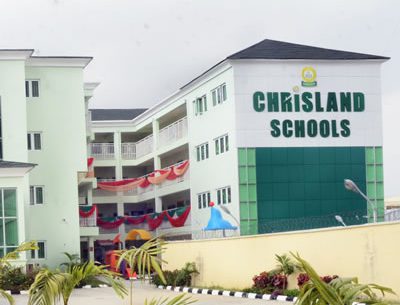
Chrisland Schools Scandal: Police arraign four teachers
By Muhammad Sabiu
The police have charged four Chrisland School teachers in the Yaba Magistrate Court in Lagos State.
Teachers who accompanied several Chrisland students to the World School Games in Dubai were summoned before the court on Tuesday.
After a scandal over the alleged wrongdoing of some of its students while on a trip to Dubai, the United Arab Emirates, Lagos State authorities ordered the closure of all Chrisland Schools branches.
In a statement issued on April 18, the government stated that all complaints were being investigated by relevant Ministries, Departments, and Agencies, including the Ministry of Youth and Social Development, Ministry of Justice, and the Lagos State Domestic and Sexual Violence Agency.
After reviewing the administrative investigation into the incident, the authorities reopened the schools a week later.
The government stated that the reopening was necessary to ensure that pupils had access to learning when the new semester began on April 25.
The Lagos police command said at the time that it had launched an investigation into the case to determine the identities of the players in the video, the actual incident in the video, the geographical location of the incident, the alleged threat to life against a school student, and the circumstances surrounding the alleged repeated pregnancy tests conducted on a student without parental consent.
Poetic Wednesdays: Putting us on the right side of history
By Junaid Sharfadi
For many a century, poetry has been used as a veritable tool to pass on religious, historical and social ideas in northern Nigeria. In Kano, for instance, scholars during my grandad’s generation – and beyond – were good at deploying Arabic and Hausa poetic means when forming an opinion.
Women and children too never missed an opportunity to ululate and chant poetic verses, laden with moral messages, when conveying a bride or on other occasions. The famous Charmandudu poem or the works of Sultan Bello, Aƙilu Aliyu, Nasir Kabara, Mudi Spikin, Asma’u Bint Fodio and Modibbo Kilo serve as an example.
Thus, Art and Culture enthusiasts and promoters like the late Abubakar Gimba or Professor Abdallah Uba Adamu would be delighted to see a literary fraternity sprouting from the fertile land of northern Nigeria, spreading its maturing branches across the country.
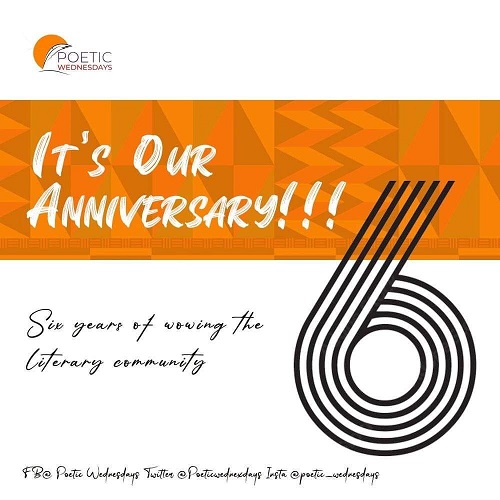
Poetic Wednesday (PW) Initiatives started six years ago as an online platform for poets to engage, grow, entertain and convey impactful messages every Wednesday. From agriculture to artificial intelligence, climate change, peace, conflict, education, love etc. the group writes on diverse, important issues.
The founders, led by Salim Yunusa, have succeeded in unleashing the full potentials of the weekly participants by critiquing and publishing their beautiful and virgin poems that drown readers into poemgasms. Budding poets have since joined to unbutton their poetic minds on marginless screens. No boundaries or limitations, just pure chutzpah and truth that reveal the primordial yet sacred content of the heart.
It is imperative to state that Poetic Wednesdays’ remarkable online presence has been effectively utilized in organizing webinars, competitions and workshops to fuel the passion for literature among youth. Prof. Hussein Nasr was right when he emphasized the significance of poetry in shaping Persian, Arab and Chinese societies. Therefore, with literary groups like PW, this society is on the right side of history.

Big bigot in Kperogi’s mirror
By Aliyu Barau, PhD
Farooq Kperogi is among the few Nigerians who elegantly sandwich scholarship, media and English language expertise. On the contrary, I am neither a language expert nor a political analyst. Here, I am just trying to figure out the naughtiness of Kperogi’s thinking machinery. How Kperogi thinks substantially determines his writings and opinions.
No doubt, Kperogi’s articles are a cynosure of the eyes of many Nigerians across political, cultural and social divides. Some of his Nigerian readers pluck his linguistically well-crafted and yet asymmetric views and dye them in the colours of their sentiments or ignorance. It is very normal to manipulate any text on this planet. Interestingly, it is not unusual for bohemians and intellectuals to dress and feast on controversies.
I see Kperogi as a sort of a roller coaster dripping joyful and sorrowful moments on public sentiments and obsessions. Indeed, considering Nigeria’s contested socio-political landscapes, Kperogi personifies Hankaka (a pied crow in Hausa) which they say, “whoever sees its black must see its white too.
I am indifferent to Kperogi’s criticisms of the powers that be. I don’t care about his tirades and vituperations directed at the political class who sold their moral rights at the markets of failures and misgovernance.
So, what’s my headache with Kperogi? Well, I am deeply touched by his overriding superficiality, unidirectional views, bigotry, extremism and spider mannerisms. To be fair to Kperogi, no elites in the social and political divides of this country are immune from his pen. Nevertheless, his seamless and borderless forays are in many instances unconscionable and peddling post-truth constructs. My labelling of Kperogi is based on my readings and analysis of his recent blog stuff:
• Presidents Who’ll Make Me Renounce Nigeria (https://www.farooqkperogi.com/2022/03/presidents-wholl-make-me-renounce.html)
• Osinbajo’s RCCGification Part of Plot for Theocratic State Capture (https://www.farooqkperogi.com/2022/04/osinbajos-rccgification-part-of-plot.html)
• 10 Reasons Osinbajo Will Ignite a Religious Civil War (https://www.farooqkperogi.com/2022/03/10-reasons-osinbajo-will-ignite.html)
As a transdisciplinary environmental researcher, I always prefer wider views, co-produced, and inclusive opinions. I am diametrically opposed to ‘single story’ constructions – as Chimamanda Ngozi Adichie would say. My reading of the above articles has convinced me of Kperogi’s single story-driven narrowed conclusions on crucial and critical national issues. Before I explain my points, I have tried further analysis of Kperogi’s knowledge production mannerisms to see how that fits my labelling. For instance, I conducted a rapid assessment of his authorship of academic works on leading research archives namely Researchgate and Google Scholar. Both repositories reveal in him a professor with a very limited network and co-authorship. By implication, any scholar with limited networking and co-authorship will have little room for alternative views, tolerance and thorough analysis. This evidence convinces me as to why he writes less holistically and cares less to get into deep layers of issues.
Kperogi is a good reflection of the proverbial Dubarudu – a character in one of the Hausa riddles. Dubarudu owns a mirror in a town where no one owns any. He alone uses it and no one can use it including his wife. Nigeria is a mirror that we need to share to see our faces and appreciate our different outlooks.
My reading of the three blog articles produced by Kperogi leads me to carry out further analysis of how this versatile writer thinks. Scholars make use of Low-Order Thinking Skills (LOTS) and Higher-Order Thinking Skills (HOTS) to determine the thinking capacity of scholars and students. I always assume that the Nobel Prize winners and other high ranking scholars utilise HOTS. Without prejudice, blog articles produced by Kperogi appear to belong to low-order thinking skills.
Then, how is he seen as a low thinker at least in the three articles under consideration? The answer is discernible to all his readers who care. He uses interrogatives such as ‘when’, ‘where’, ‘which’, ‘how many’ and ‘who’ in driving his opinions in the three articles. We could see mentions of places, names of persons, the number of persons, places, when and where in his labelling of religious bigotry by VP Osinbajo. Healthy and informed minds would care only about the HOTS interrogatives such as ‘why’, ‘how’; ‘what evidence is there?’, ‘cause and consequences’ etc. Unfortunately, less informed and sentimental Nigerian readers can easily be misled by the lots of LOTS he always amplifies.
At this point, I am bringing out my real problems with this language scholar. I really find it very nauseating and irritating when he declared in his blog, on March 28, 2022, that he would renounce his Nigeria citizenship if any of the four individuals he listed in an article would become Nigeria’s next president.
The four Nigerians he condemned were Osinbajo, Tinubu, Bello and Wike. How on earth! What depth of hatred is this? What if God has decided one of them to be? To me, this is exotic bigotry, branded intolerance and egregious extremism. Where is his knowledge of the language of contestations, resistance and resilience that characterize the works of Edward Said, Frantz Fanon, Michel Foucault, and Karl Marx? Maybe, I should remind him of the struggles of the Irish activists captured in Feargal Mac Ionnrachtaigh’s Language, Resistance and Revival. Such a Kperogian declaration amounts to cowardice, hopelessness and disillusion. How can I give up my citizenship on account of a tenured president that could be at the mercy of the judiciary, parliament, media and civil society? I never expected him to easily forget how spirited men and women stood against the caudillos (strongmen of Latin America) seen in Pinochet of Chile, Stroessner of Paraguay, Somoza in Nicaragua, and Trujillo in the Dominican Republic. I wish good luck to the listed four and to Kperogi, especially when one forsakes Nigeria for America where black lives matter. The people brutalized by the Nigerian junta yesterday are princes of the Aso Rock Villa of today. That is how time works.
No little thanks to Farooq for giving us a neologism -RCCGification through his April 14th 2022 blog opinion. I was distraught reading that as I saw in it that article tight shortness of sight and breath considering it is coming from a scholar. Saying that one church denomination will overrun Nigeria is a devilish statement. Even Satan might call that the last post-truth reality. Nevertheless, I find solace in Mehdi Hassan’s response to Anne-Marie Waters during Oxford Union Debate On Islam held at the Oxford University in the UK sometime in 2015. Putting your article in the context of that debate and Mehdi’s response means Kperogi is a big fanatic and bigot. Why? Because RCCGification is the same thing as Islamisation.
Every time a Muslim rules Nigeria some Christian bigots use the thread of Islamisation to weave clothes of suspicion and division. So what’s the difference between the advocates of Islamisation and RCCGification? Is it not flipping sides of the same coin? I would be happier to have as a leader, a just Christian than an unjust Muslim. RCCGification of Islam, Catholicism, Protestants, and traditional religions are all mirages. RCCGification of Nigeria is a charade since this church has not even seen the intergenerational transition of itself let alone overrun others.
Let us be frank with ourselves, it has been a standing tradition of Nigerian political, religious and business leaders to bring close to them the people that they know. Hence, I am unruffled by any list of political appointees associated with the RCCGification agenda. I am always amused by fears of Islamisation and I always see weak and ignorant Christians as its drivers and authors.
When you insist on going on pilgrimage to Jerusalem as Muslims do in Mecca, you are just Islamising Nigerian Christianity. When you say let us block the Muslims or deny them their rights what is your name? Islamaphobe, unjust, conspirator or still a Christian? What I like most about religion is the sweet taste of spirituality. Those forwarding the RCCGification agenda are either mischief makers or ignorant of Nigeria’s social, historical and political institutions.
When I saw the casket of Chief Odumegwu Ojukwu draped in Nigeria’s flag and carried by the Nigerian military officers, that is the day I realised that Nigeria is bigger than all its citizens. Nigeria overwhelms anybody with any hidden agenda. A critic must learn how not to be like a spider. Its knowledge of design is superb and its nest is outstandingly beautiful. However, the skinny guy builds its nest on the common pathways not minding trapping everybody.
Aliyu Barau, PhD, is an Associate Professor from the Department of Urban and Regional Planning, Bayero University, Kano, Nigeria. He can be reached on Twitter via @aliyubarau.