


Multi-talented Nigerian director, Biyi Bandele, is dead
By Muhsin Ibrahim
Biyi Bandale’s death was announced via a Facebook statement signed by his daughter, Temi Bandele.
Born in Kaduna to Yoruba parents, Bandele, 54, was the director of the movie adaptation of Chimamanda Ngozi Adichie’s classic novel, Half of a Yellow Sun; Blood Sisters, among other remarkable works.
Last month, Bandele, who also wrote novels and directed plays in the UK, Nigeria and other places, announced the release of his new film, Elesin Oba: The King’s Horseman, a Netflix-Ebony Lifefilm production.
At the time of this report, the cause of his death is not yet clear.
“As Biyi’s daughter, I am heartbroken to share the sudden and unexpected death on Sunday 7th of August in Lagos of my father Biyi Bandele.
Biyi was a prodigiously talented writer and film-maker, as well as a loyal friend and beloved father. He was a storyteller to his bones, with an unblinking perspective, singular voice and wisdom which spoke boldly through all of his art, in poetry, novels, plays and on screen. He told stories which made a profound impact and inspired many all over the world. His legacy will live on through his work.
He was taken from us much too soon. He had already said so much so beautifully, and had so much more to say.
We ask everyone to please respect the privacy of his family and friends as we grieve his loss.”
Neglectful parenting in contemporary society
By Hadiza Abdullahi
Many parents do not care to deliver their responsibilities, leading to different social problems in Nigeria and the world. In layman’s terms, parental negligence can be seen as the failure or inability of parents to fulfil their parental responsibilities of providing the proper and adequate care and attention to their children.
The child-parent relationship is supposed to be affectionate, harmonious, supportive, and productive, but this relationship is becoming conflicting, unsupportive, destructive and agonizing due to certain factors. For example, some parents may be emotionally unsupportive to their children yet provide all their basic needs, i.e. food, clothing and shelter, while some are not supportive.
A study conducted on improper parenting and parental negligence by Dr Manzoor Hussain pointed out that good parenting quality depends on several factors. They include; the mature personality of the parents, which is an essential element of good quality parenting, stable and intimate marital relationship, as well as the form of the pregnancy, i.e. planned or not, as planned pregnancy implies better preparation to be a parent.
On the other hand, a broken home is believed to be the primary factor that contributes enormously to the issue of neglectful parenting, as children from such families are usually brought up by either their biological parent or a step-parent. These children often undergo different sorts of challenges, trauma and agonies from the step-parents, particularly stepmothers, who do not like having a stepchild under their custody.
A typical example is the case of two minor Almajiris, an eight-year-old Habu and his six-year-old younger brother Tanko (not real names), whose parents got separated and had to live with their father and his new wife. Although the father is financially stable and could cater for their basic needs and education, he refused to do so due to the influence of their stepmother, who rejected them. As a result, the innocent boys left the house, roaming the street as Almajiris.
Research has indicated that couples’ desperation toward becoming a parent also promotes this issue. Some couples, especially the rural residents, who consider the number of children as pride, are only interested in giving birth to as many children as possible without having any adequate plan for their wellbeing. Instead, they exploit the children by engaging them in different forms of child labour such as domestic chores, street hawking, street begging or even working as house helps, all in the name of sourcing for income. The World Health Organization (WHO) regards it as child abuse. This exposes children to dangers when they mingle with bad people who may negatively influence and/or harm them.
These children quickly go astray because their parents are not around to watch and caution their wrong behaviours. Hence most of them end up going into drug abuse, prostitution or even being recruited into terrorist groups, among other crimes.
Hajiya Salamatu Yaqub, a housewife and a mother, lamented that the absence of adequate face-to-face interaction (which is an essential principle for a good parent-child relationship, in which both children and their parents understand each other’s needs, views, emotions, and brings about strong and growing intimacy between them) contributes immensely to this problem.
Similarly, Malama Maryam, another mother, expressed her grief over how some so-called civilized and educated Nigerian parents, especially young mothers, adopt an improper way of parenting. They focus more on their jobs, education, and other forms of businesses instead of the primary role of every traditional Nigerian parent, specifically mothers who are supposed to put the welfare of their families ahead of anything else. However, some abandon these responsibilities altogether while some entrust the responsibilities to nannies and other house helps, who may not be morally upright and talk more of instilling moral values in children.
A teenager (who refused to be named) and a victim of neglectful parenting said, “being neglected by your own parent is the worst and most traumatizing experience of every child”. She further disclosed how she and her siblings went through a lot due to this issue. Even though their parents took proper care of all their basic needs, they are always absent to watch over them, support them emotionally and caution them. She added, “we miss our parents badly and do a lot of things we should not do and mingle with people we would not have been mingling with supposing our parents are around”.
Children with intellectual, psychological, emotional and developmental disabilities are especially vulnerable to being forced into child labour and are more likely to face threats of violence and abuse. These children— especially girls—are often victims of trafficking, prostitution, domestic enslavement, forced marriage and other forms of abuse. In addition, some children who have physical and visual disabilities, visible congenital disabilities, or disfigurement are forced by traffickers to beg. In extreme cases, traffickers intentionally disfigure children to exploit them through forced begging.
Yusuf Muhammad Daura, a student at the Department of Special Education, Bayero University, Kano, described parents who take advantage of their children’s physical disabilities and refuse to work hard, instead using them as a source of income, as irresponsible and self-centred. He added that when interviewed, most of these children seen on the street begging or hawking explained how they were forced into it and if they were to have an opportunity of living a normal life, they would be more than happy to join their mates in going to school.
However, it is understood that some children undergo neglectful parenting not because the parents or guardians are not around to support them emotionally or failed to provide for their basic needs. It’s, instead, due to their inability to home train and discipline the children properly.
The implications of parental negligence are many. They include a lack of mutual understanding and affection between parents and their children; children’s needs also weaken the close bond that is supposed to exist between their parents and their children. In addition, the children may feel the parent are worthless since they cannot cater for them, which might make them disrespect or hate the parents.
Research indicates that children who lack proper parenting behave aggressively and violently and perform poorly in academic activities. When interviewed, Mr Yahuza Abdullahi, a primary school teacher, confirmed that most children going through improper parenting perform poorly in academics and recreational activities as they do not have the extra support they need, such as helping them with their home works and getting the necessary learning materials.
Therefore, it is paramount that couples must be physically, psychologically and financially ready before they venture into the demanding task of parenting. As someone planning to have a child, prepare for your children or unborn children on how you intend to take adequate care of them. Make provisions for their basic needs, i.e. food, clothing, shelter, education and proper medical care. Also, provide a conducive environment to protect and keep them safe while instilling sound morals and values in them and having a plan on how you intend to caution and correct them whenever they are wrong.
Also, the government has a critical role in tackling this menace because, as citizens of Nigeria, these children have fundamental rights that the government must protect. Thus, the government should have the full authority to punish any parent or guardian caught abusing or neglecting their parental responsibilities.
Hadiza Abdullahi, Department of Mass Communication, Bayero University, Kano.
I smuggled drugs to raise N5m ransom for my mother’s abductors—detainee
By Muhammad Sabiu
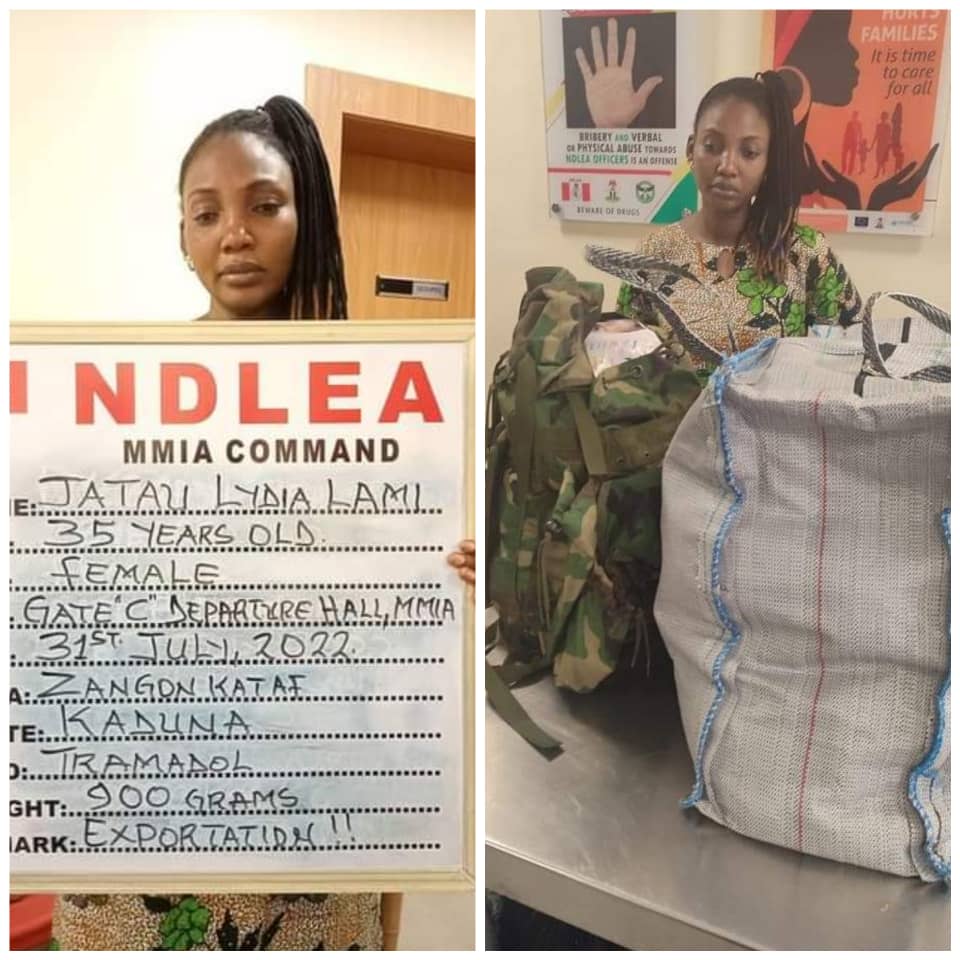
The National Drug Law Enforcement Agency (NDLEA) detained a female traveller named Jatau Lami at the Lagos Airport for attempting to export 1,700 Tramadol 225mg tablets.
Her arrest was confirmed by the director of media and advocacy at the NDLEA, Mr. Femi Babafemi, in a statement made public on Sunday.
Babafemi revealed that the package was carried undercover in her luggage on a Turkish Airlines journey to Istanbul, Turkey.
The suspect, a mother of three, is a native of Zango Kataf Local Government Area (LGA), Kaduna State, but she currently resides in Istanbul, Turkey, with her family, according to a preliminary inquiry.
She attributed her action to pressure to earn N5 million in ransom money to release her mother from the robbers’ custody.
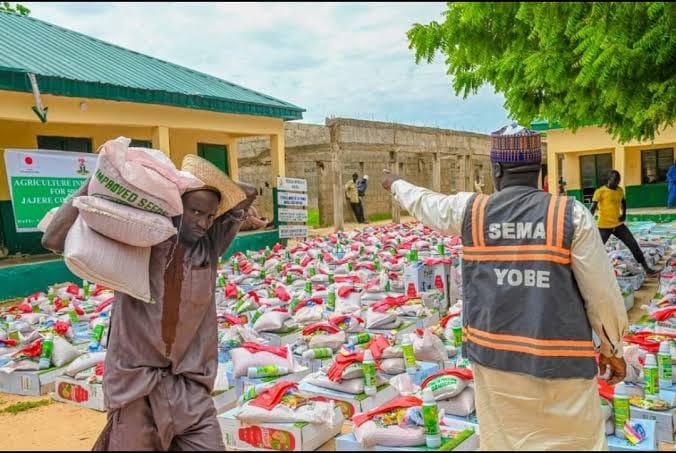
Excitement as Yobe Govt distributes farm components to 500 farmers
By Uzair Adam Imam
No fewer than 500 farmers have benefited from the agricultural component distributed by the Yobe State Government Sunday in the Jarere Community of the state.
The state government had described the distribution as part of its early recovery response project in the state.
Flagging off the distribution Sunday, Dr Mohammed Goje, Executive Secretary, Yobe State Emergency Management Agency (SEMA), disclosed that each of the beneficiaries would go home with a knapsack, sprayer, liquid fertiliser, herbicide, bean seeds, sorghum seeds, hand gloves and facemasks.
Reports disclosed that the 500 beneficiaries were identified by Agricultural Development Programme (ADP) through community-based selection.
It was gathered that the 500 beneficiaries included 400 men farmers and 100 female farmers of the community.
However, the beneficiaries applauded the state government for identifying their community, Jajere, among the benefiting communities.
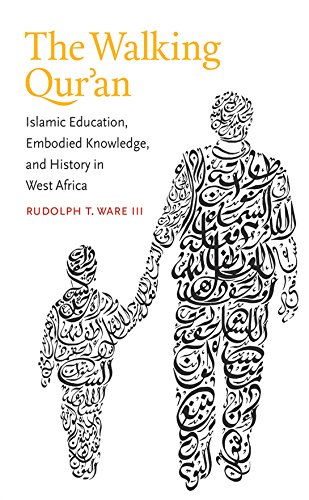
Book Review: The Walking Qurʾan: Islamic education, Embodied Knowledge, and History in West Africa
- Book time: The Walking Qurʾan: Islamic education, Embodied Knowledge, and History in West Africa
- Author: Rudolph T. Ware III.
- Date of Publication: 2014
- Number of Pages: 330
- Publisher: The University of North Carolina Press
- Reviewer: Shamsuddeen Sani
After recently reading a book about Quranic Schools in Northern Nigeria, I was left hungry for a less Western way of presenting the subject matter. So I serendipitously laid my hands on this book, and knowing that I have read about the author in the past, I didn’t hesitate to devour it.
Following a broad introductory section, the book delves deeply into an interdisciplinary examination of the knowledge philosophy underlying Quranic education. This required an in-depth historical ethnography of the institution in modern-day Senegambia, which lays the way for comprehension of the conceptualization and transmission of knowledge. It also strengthens the case that internalizing texts, even by swallowing them, was crucial to understanding and remembering the material. This book’s central concept represents the embodiment and actualization of Islamic knowledge.
Importantly, these early chapters look at the emergence and long-term evolution of a native West African clerisy. Ware underscores how these African Islamic instructors and thinkers were the primary agents of Islamization in a continent unperturbed by the early Islamic conquests. In order to avoid rulers (and maintain their independence), they established a unique framework for the interactions between political and religious powers. It also emphasizes both moral and political economies of studying and teaching the Qur’an throughout the 18th century focusing on how the growth of the Atlantic slave trade led to the breakup of this model of pious distance from power.
As we near the middle of the book, Ware thoroughly explored the historical account of the enslavement of ‘huffaz’ in Senegambia from the 1770s until the advent of the French colonial rule in the late 19th century. With clerics viewed as embodied exemplars of the Quran, such incidents of enslavement were perceived as more than just violations of Islamic law, but as desecrations of the Book of God.
The book meticulously illustrates the chronological narrative of Senegambia’s revolts, rebellions, and even revolutions inspired by the enslavement of “the walking Qur’an.” Without going further into spoilers, these historical happenings culminated in the climactic radical movement by African Muslim clerics and their disciples, with a cascade of events leading to the overthrow of hereditary slave-owning kings in 1776, the abolition of both the Atlantic slave trade in the Senegal River Valley and the slavery institution itself.
These narratives would lack crucial context if they did not include the efforts of formerly enslaved people and other oppressed groups to use the legal abolition of slavery in the French colonial state to assert their dignity through the dissemination of the Qur’an in the early 20th century. They fought to transform their very selves through Islamic education while doing so from within the epistemology of embodiment and in opposition to regional traditions that stigmatized their bodies because of their social standing. The establishment of mass Sufi organizations and the emergence of new French and Muslim teaching forms were only two of the many changes in colonial Senegal’s political and educational landscapes fueled by this knowledge-sifting process.
This outstanding work profoundly serves as the first step for anyone interested in learning about Qur’anic instruction in West Africa. A significant chunk of detail about Quranic education in West Africa jumps right off the page, you can feel the author’s passion, and as he claims, this is the narration from within. The writing style is genuinely simple and engaging and has a powerful sense of atmosphere. It gives you a lot to chew on and is one of those books that it would not feel right if you didn’t give it the five stars it deserves.
Rudolph T. Ware III is a historian of West Africa at the University of California, Santa Barbara. He formerly taught at the University of Michigan and then at Northwestern University. His work aims to confront and dispel Western misconceptions about Islam.
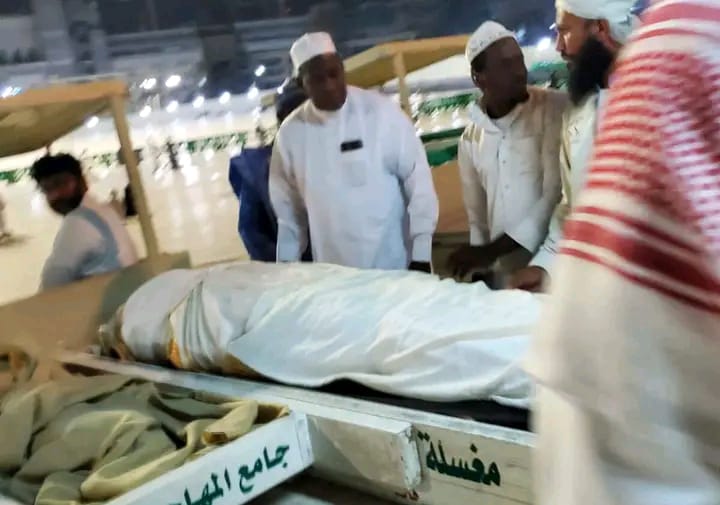
Kano loses pilgrim in Saudi Arabia
By Ahmad Deedat Zakari
A Kano State pilgrim in Mecca has passed on in the holy city of Mecca.
The Executive Secretary of the Kano State Pilgrims Welfare Board, Alhaji Muhammed Abba-Muhammad, disclosed this to the press on Saturday, August 6, 2022.
The Executive Secretary said Idris Muhammad, who hailed from Madobi Local Government Area, passed on after a brief illness in a Hospital in Mecca.
“The deceased has been buried according to Islamic rites at Grand mosque at Masjid Haram Shira yard in Mecca,” He said
He also prayed for the deceased and extended his condolence to his family.
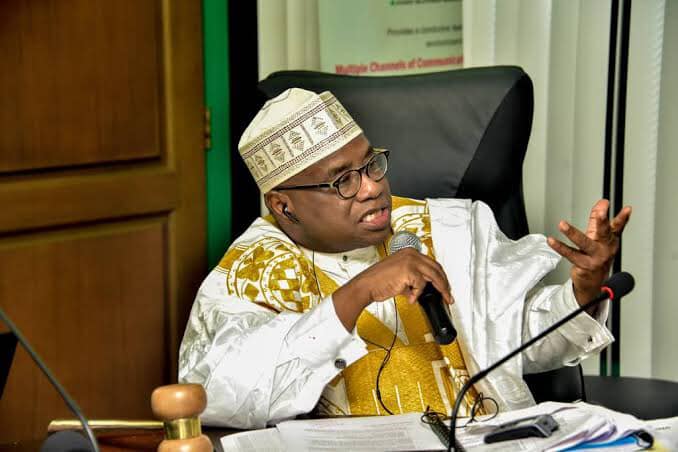
Abdalla Uba Adamu has double professorships! Seriously? (III)
By Prof. Abdalla Uba Adamu
S01EP03: Betelgeuse Star System Touchdown
On my return in April 2012, I reported to my Vice-Chancellor, Prof. Abubakar Adamu Rasheed. In a moment of radical inspiration, he asked me to submit every publication and activity in communication to the HoD of Mass Communication, the late Dr Balarabe Maikaba, for possible recommendation as a professor of Media and Cultural communication. In the meantime, a position for a professor was created in the Department of Mass Communication to accommodate my presence.
I was surprised at this as I thought once you are a professor, you stay that way without any addition! The then Dean of the Faculty of Social and Management Sciences, Prof. Adamu Idris Tanko, also welcomed the idea. Dr Balarabe Maikaba wrote a supporting letter. I put in the application and submitted all the papers I had in the new area for external assessment.
In January 2013, I received a phone call from my Vice-Chancellor informing me that assessments of my publications sent out months earlier had returned positive. Therefore, I have been appointed Information and Media Studies professor with effect from October 2012. There was only one wonderful caveat: I was to relocate to the Department of Mass Communication from the Department of Science and Technology Education, where I was then the Head of the Department. This relocation was the most significant move in my academic career. The day I received that letter counted as one of the happiest of my entire life.
I suddenly realized that my earlier desire to be in the Faculty of Science was to become a research scientist. Now, 32 years later, I have become a research social scientist while retaining my scientific focus. Allah truly blessed me. The journey to the first professorship took 17 years (1980-1997), while the second took 15 years (1997 to 2012).
I handed over the Department of Science and Technology Education on April 25 2013, symbolic of my birthday. My new Department and the Faculty overwhelmingly welcomed me when I formally reported on April 26 2013. Even more remarkable, the Communication Studies fraternity also welcomed me – apparently, they have been keenly following my what one calls ‘revolutionary forays’ in media studies.
It was thus an honour to be made a member of the Governing Council of the Association of Media and Communication Researchers of Nigeria (AMCRON) and a member of the Association of Communication Scholars & Professionals of Nigeria (ACSPN). It was humbling to be in the company of communication giants such as Idowu Akanbi Sobowale, Ralph Akinfeleye, Lai Oso, Umaru Pate, Nosa Owens-Ibie, Hyginus Ekwuazi, Victor Ayedun-Aluma, Eserinune McCarty Mojaye, Abiodun Adeniyi and many wonderful others. It was always a pleasure to meet at various conferences and workshops and appreciate each other.
I was given a huge sparkling brand-new office with all the frills! I have already been teaching Management Information Systems (MIS) in the Department of Business Administration of the Faculty for almost ten years. Additionally, I had been a ‘part-time’ staff of the Mass Communication Department for seven years, teaching and supervising students. So, I was not new to the faculty. For me, being in the Department of Mass Communication was the absolute way to chill out my career to retirement in 2026, in shaa Allah.
So, am I the only ‘double’ professor in Nigeria? It depends on the context. If you are referring to two professorships in two different disciplines (which is the actual context of a double professor), then yes, according to the NUC’s Directory of Full Professors in the Nigerian University System (2017), I am. However, being a professor at two different universities does not count. The second professorship has to be qualified through an external assessment of scientific works in the discipline, a process my Vice-Chancellor at the time and Chairman of the Appointment and Promotions Committee of the University rigorously followed.
Is this the same as Emeritus Professor (some have referred to me as such)? No. An Emeritus Professor is an honorary title given to a professor to show respect for a distinguished career and who has retired (critical qualifier) from the university successfully and honourably. It is neither a right nor automatic. It is a privilege (just like the professorship itself), given at the discretion of the university to an outstanding professor (mostly the university one is retiring from, although an appointment to such position could also be made to the retiring professor in a different university).
One cannot be appointed an Emeritus until they have retired (whether before or at the age of retirement). It is usually conferred (at a ceremony) to those the university feel that despite retiring, they can still add value to the academic programs of the university, either through teaching, research, supervision or other leadership functions. It often attracts a token stipend (not salary), and the office the professor retired from. It is also for life – meaning he stops being an Emeritus when he shifts to the other side of the universe the James Webb Space Telescope would not be able to locate! Here is a list of Emeritus Professors in Nigeria (updating).
How common is double professorship generally? Rare. A limited discussion was held on Quora, where a few examples from some American universities were cited. For instance, Andrew Gelman is a professor of statistics and political science at Columbia and a professor of statistics at Harvard. He has no political science degree at all. His first degree was in physics, and his graduate work was in statistics. He has received the Outstanding Statistical Application award three times from the American Statistical Association, the award for the best article published in the American Political Science Review, the Mitchell and DeGroot prizes from the International Society of Bayesian Analysis, and the Council of Presidents of Statistical Societies award. Have a look at this blog to know how he came to be occupying those two chairs.
This answers the question of whether I should be a professor in Mass Communication without a degree in Mass Communication. At the professorial level, it is your output that matters. My own site might satisfy one’s curiosity about what the fuss is all about. As my Vice-Chancellor at the time, Prof. Abubakar Adamu Rasheed, pointed out when my case was presented in 2012, if anyone is a professor of History and made enough contributions to the field of Physics, they can also apply and be assessed as a professor of Physics.
Oh, I almost forgot. Two professorships? Yes. Two salaries? Unfortunately, no! You get only one salary.
Prof. Abdalla Uba Adamu wrote from the Department of Information and Media Studies, Bayero University Kano, Nigeria. He is, among many other things, the former Vice-Chancellor of the National Open University of Nigeria (NOUN). He can be reached via auadamu@yahoo.com.
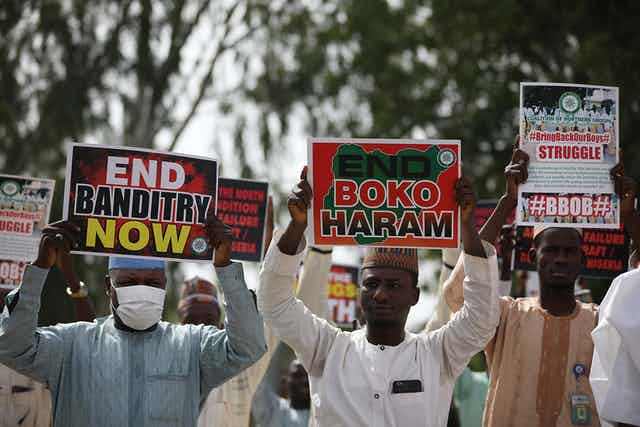
Insecurity: A bomb capable of blowing into civil unrest in Northern Nigeria
By Abdullāhi Muhammad
Sadly, the issue of insecurity is becoming somewhat politicised. The danger lurking behind this, however, is alarmingly disarming. The problem is multifaceted. While some criminals do so to make end meets, many indulge in crime due to conflict of interest. Be that as it may, the government’s inadequate measures to tackle security is a lurking bomb capable of blowing into civil unrest.
In a documentary by BBC in Zamfara, Fulani Bandits frequently invade villages, abduct inhabitants and slaughter anybody who resists. They also raid roads, shoot passengers and drag drivers out of their cars. In a somewhat passionate yet disarming effrontery, Fulani Bandits have gone beyond the camera reach as they film each other, showing obsession with guns and frequent drug-taking.
Speaking to one of the bandits’ warlords, Ado Alero, BBC reported that Alero considers his action to be a means to attract the government’s attention. Alero is one of the most feared warlords in Zamfara, whose behest police had put the bounty of 5 million Naira considering his rule in a recent massacre. He was recently turbaned in one of the bandits’ villages.
In another interview with one of the leading bandits’ commanders who led an attack and abduction of nearly 300 school girls in one government girls’ secondary school in Jengebe, Abu Sani confirmed to BBC that they had collected 60 million from the government to release them. They used the money to buy more riffles. Abu Sani said they did that to destabilise the government and keep her from intervening in the parrying. In another attack launched by the bandits, more than 200 people, including women and children, were reportedly killed. Further, they threatened to kill 120 Hausas at the behest of any single Fulani lost to Hausas.
This follows the sorry state the Fulani had been subjected to. They were abandoned, extorted and apprehended for so long. Their cattle were also rustled. They’re made worthless; no hospitals, no schools, and nobody cares to listen to their cries. Thereupon, they take guns to protect themselves.
In response, the Hausa, on the other hand, organised vigilante militias who went on a rampage and attacked Fulani Hamlets, killing any Fulani their eyes could meet.
Hassan Dan Tawaye (Hassan the rebel), a Fulani, who was reported to have first brought AK-47 to Zamfara, explained to a BBC correspondent that each side of the warring parties was at fault. When bandits attacked the Hausa community, Hausa militias were quick in reprisal and, in the process, killed many innocent lives.
Hassan Dan Tawaye, having laid down his guns to pursue peace, has returned to armed conflict. Hassan said they could not endure the levity of getting killed and were tired of waiting for the government to intervene. Therefore they have taken guns.
At this point, the Zamfara state government is in a dilemma and forced to negotiate with the bandits. However, Abu Sani said that each side benefited from the insurrection. He further noted that the polity’s increased insecurity politicised the problem. Things deteriorate because any of the parties, from top to bottom, needs money.
Dishearteningly, while Northwestern Nigeria is on fire, governments both at the federal and state level are becoming insensitive and lack the audacity to tackle the menace adequately. This has led to the bandits getting more enamoured and the victims being pesticide. The worst is how the state government asked the citizenry to buy guns so that they could depend on themselves. However, this is not the answer to the situation on the ground and would not provide the garment possible enough to stampede insecurity within the polity.
On the other hand, it’s interesting how the National Assembly’s impetus to impeach the president over the long-endure insecurity issue in the nation. The National Assembly had on Wednesday given the president six weeks ultimatum to resolve the issue of insecurity in the country or risk impeachment. This has relieved the citizens but is not good enough to suppress their fears of the criminals who sworn hell-bent on countering peace in all ramifications and bringing the nation to its knees.
It’s indeed of great concern and fear to see the centuries-old, good relationship between Hausas and Fulanis deteriorating. We, therefore, urge the government to deploy numerous tactics to tackle the insecurity issue in northwestern Nigeria and other parts of the country. More military bases should be built in and across various states with insecurity problems, and there should be sufficient military equipment for proper and successful operations. Finally, both sides should be demanded to lay down arms, concede for peace, and reconcile a trust.
May Allah bring back peace in Zamfara, Northwestern Nigeria and Nigeria in general, Amin.
Abdullāhi Muhammad lives in Azare, Bauchi state, and can be reached via abdullahimuhammadyalwa02@gmail.com.

ASUU’s demands are unrealistic – Festus Keyamo, SAN
By Ahmad Deedat Zakari
The Minister of State for Labour and Employment, Festus Keyamo, SAN, said the demands of the Academic Staff Union of Universities (ASUU) are unrealistic, and the Federal Government cannot be blackmailed into borrowing money to end the strike.
Keyamo made the statement on Friday, August 5, 2022, while speaking on Channels Television Politics Today.
“Should we go and borrow to pay N1.2 trillion yearly?
“You cannot allow one sector of the economy to hold you by the jugular and then blackmail you to go and borrow N1.2 trillion for overheads when our total income would be about N6.1 trillion. And you have roads to build, health centres to build, other sectors to take care of.” He stated
The Minister then pleaded with parents to beg ASUU to return to the classroom.
“Like the President said the other time, those who know them appeal to their sense of patriotism,” Keyamo said.
“Let them go back to classes. They are not the only ones in Nigeria. They are not the only ones feeding from the federal purse. The nation cannot grind to a halt because we want to take care of the demands of ASUU.” He added
ASUU embarked on strike on February 14, 2022, and are seeking improved condition of service and revitalization of public universities amidst other demands.
However, the Buhari-led Federal Government said it does not have the fund to attend to ASUU’s N1.1 trillion demand due to low oil prices. The impasse has shut down government-owned universities across the country.
KDDI rallies youth to shun drug abuse
By Mallam Musbahu Magayaki
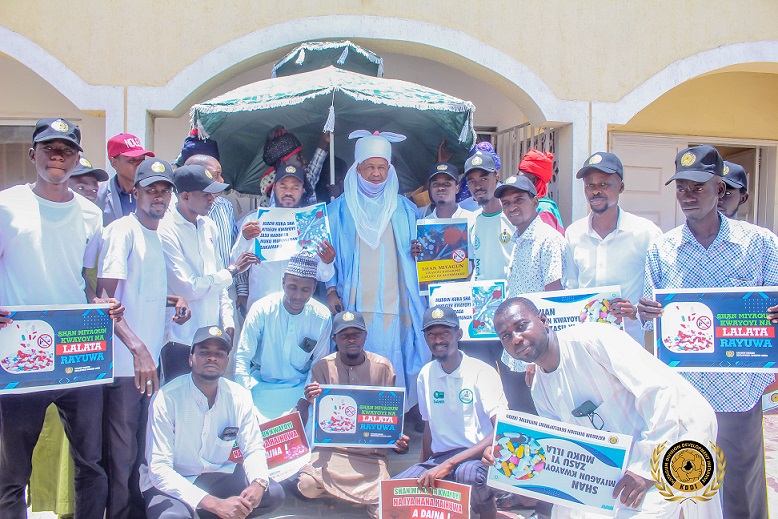
On Monday, August 1, 2022, a community organisation known as Katagum Division Development Initiative (KDDI) launched one of its planned programs titled “Awareness on Drug Abuse” at Jama’are Local Government Area of Bauchi State. Several inhabitants of Jama’are communities joined the KDDI youths during the campaign rally.
Jama’are NDLEA officers, local government representatives, Nigerian Red Cross representatives, and social welfare representatives participated in the event. The program was observed at Wabi Academy, major streets, market places, and the Emirs’ Palace.
The Emir, Alhaji Nuhu Ahmed Wabi Mni, was highly impressed with the organisation’s effort. He urged the people of the Katagum community to support the fight against drug abuse.
The organisation calls on the general public to join them in achieving their goals.