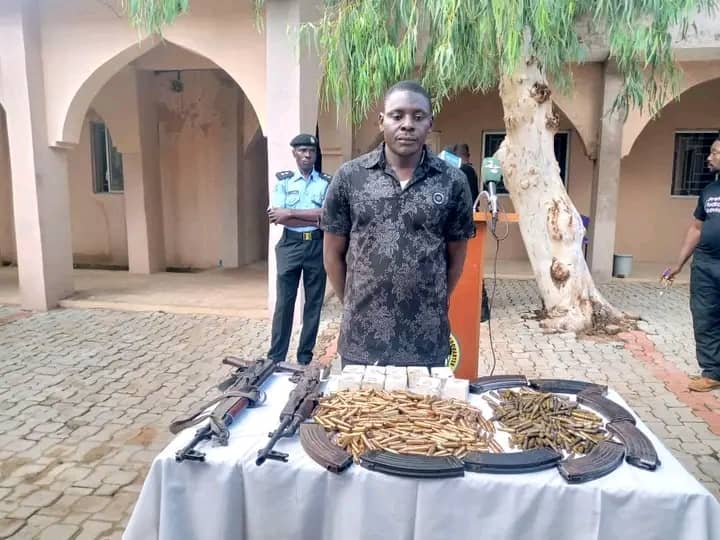
Zamfara: Police nab ex-soldier supplying arms to gunmen
By Muhammadu Sabiu
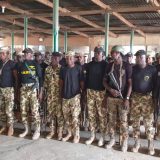
The Nigeria Police Force in Zamfara State have arrested and paraded a 41-year-old notorious kidnapper, Sa’idu Lawal, for terrorising “Zamfara State and neighbouring Katsina, Kaduna, Niger, Kebbi and Sokoto States.”
The Zamfara State police spokesman, SP Mohammed Shehu, disclosed this to journalists at a press conference on Wednesday in Gusau, the state’s capital.
The suspect, according to the police spokesman, was an Army service officer who was apprehended after the police received an intelligence report about his malicious activities.
SP Shehu said, “On 27th August, 2022 at about 1730hrs, Police Tactical/Escort Team attached to the Commissioner of Police Zamfara State Police Command, CP Kolo Yusuf psc acted on actionable intelligence that led to the arrest of the above named suspect who was an Ex-service personnel of the Nigeria Army attached 73 Battalion Janguza Army Barracks Kano.
The paraded kidnapper also made many confessions, including supplying weapons to gunmen in other local government areas and neighbouring states in the northwestern part of the country.
“In the course [of] interrogation, the suspect confessed that he was to convey the said exhibits from Loko LGA of Nasarawa State to his customer one Dogo Hamza ‘M’ of Bacha village in Tsafe LGA of Zamfara State. The suspect further confessed that he had previously supplied same consignment to his other customers in Kaduna, Katsina, Niger and Kebbi States respectively,” Mr Shehu added.
1 AK-47 Rifle Breech No. Q971987, 1 AK-49 Rifle Breech No. 34-7094, 200 7.6mm Rounds of Live Ammunition, 501 7.62X51mm Rounds of GPMG Live Ammunition, and 8 Empty Magazines were recovered from him.
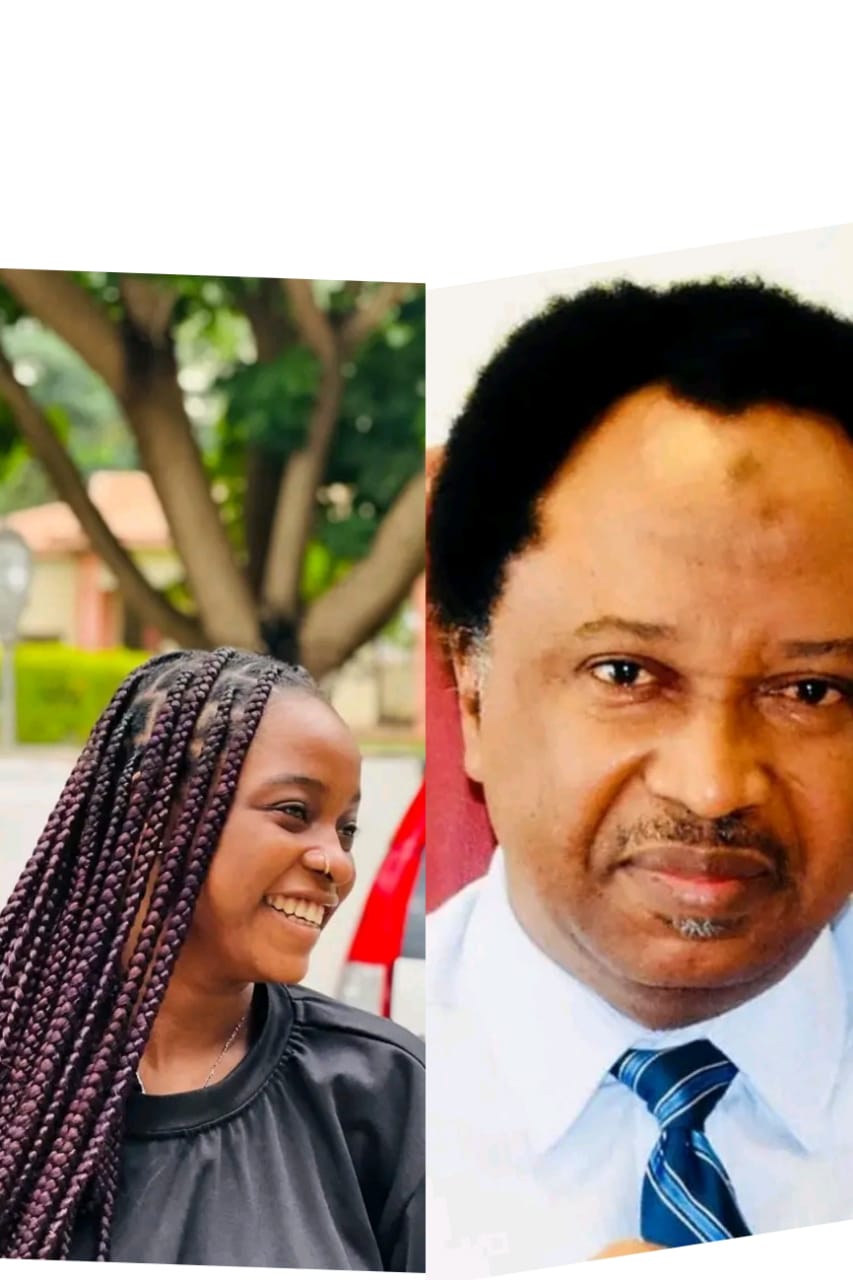
I fainted when I see am, Shehu Sani reacts to Safara’u’s nude video
By Ahmad Deedat Zakari
Former senator representing Kaduna Central Senatorial District, Senator Shehu Sani, has reacted to the leaked nude video of Kannywood actress, Safia Yusuf famously known as Safara’u.
Safara’u granted BBC Pidgin English an interview on Tuesday August 30, 2022, where she narrated her ordeals when her friends leaked her nude video in 2020.
“Dat period when my nude video leak na di most depressing time for my life because I spend three months without nearing di gate of my house, I just dey indoors.
“And by di time I muster energy comot na so pipo just dey abuse me for road in fact e get one particular pesin wey stone me as I dey waka.” Safara’u disclosed to BBC Pidgin English
While commenting on the BBC Pidgin English interview of Safara’u on Facebook, Shehu Sani said he became unconscious when he saw the video.

Politicians should stop using religion for political gain—Bishop Kukah
By Muhammadu Sabiu
Matthew Kukah, the Catholic Bishop of Sokoto Diocese, has cautioned politicians against exploiting politics in the nation through religion, noting that a severe result would follow such a move just as it had in Germany during Adolf Hitler’s rule.
On Tuesday in Abuja, as part of the celebrations for his 70th birthday, Kukah spoke at the launch of his new book, Broken Truth.
“If you look at history, there is a consequence for using religion to manipulate politics. We just need to look at Germany. The consequences are there to see in Hitler.
“The problem is that the Nigerian political elites lack the mental capacity to understand the consequences of the fire they are stoking because there is nothing to suggest that the average person who is living in the north, who is Fulani, who is a Muslim, or who is Hausa, can say that they are proud of the Nigerian political system, beyond a very tiny percentage.
“So, if you decide that you want to give privilege to a religion or an ethnic group, what will happen is that others automatically become outsiders,” the bishop was quoted as saying.
Additionally, he indicated that protests are still taking place in the nation because the populace is more knowledgeable than those in charge of its affairs.
Kukah added, “The agitation that persists in Nigeria is largely borne out of the fact that those who govern us are not aware of how much mental progress ordinary people have made.
“Those who are being governed are more intelligent and endowed. And it will not have been a bad thing if people who don’t know seek knowledge.”

And again, ASUU extends its strike…
By Hassan Ahmad Usman
Recently, I read a post on Facebook cautioning ASUU not to ignite the government into following the path of the former UK prime minister, Margaret Thatcher, in her famous face-off with unionists. Before then, I only knew of her being called the “The Iron Lady”, and that’s all. It prompted me to find out more about her struggle with them. I got a book, Margaret Thatcher: A portrait of the Iron Lady by John Blundell.
After winning the war of about eleven weeks against Argentina over the Falkland island, she made a famous statement in 1983: “We had to fight the enemy without in the Falklands, and now we have to fight the enemy within, which is much more difficult but just as dangerous. These few men are the wreckers in our midst.”
The miners, led by Arthur Scargill under the NUM, started a strike action after learning of the National Coal Board’s chairman’s plan to close uneconomical pits. The NUM held a special place in the political landscape.
They were somewhat invincible. In fact, the unionists brought down a government a decade earlier before Thatcher’s. But as the book’s author opined: “I think it possible that her defeat of General Galtieri (in the war) emboldened her to take on the mineworkers with robustness she may otherwise not have shown”.
She welcomed the fight against the miners, defeated them and reformed the unions.
Now, let us relate the defeat of the NUM and ASUU’s likely end if they thread the same path. One of the early actions that Thatcher’s government took when the strike heightened was to promise a big Christmas bonus to whoever resumed work. It yielded positive results, and a war started between the striking and non-striking workers. Imagine the federal government promising to pay the unpaid salaries for six months to only lecturers that resumed. What do you think? There is already a push for a rival union.
Nigerian government can actualize the new union, which would automatically birth the beginning and end of ASUU. ASUU chairman’s recent labelling of universities not on strike as quacks is a big blunder. Other state universities felt insulted too. If the union keep on this trend, its end looms. A divided house is a recipe for a fallen one.
Another area is politicizing ASUU strikes. One mistake the union should not make is making the politicians understand that they can win elections with or without an ASUU strike. It’ll ultimately show that the public is not sympathetic to the union. Parents are already tired of seeing the unhappy faces of their wards. Like the NUM, their resolve would eventually wane after the election litmus test.
The NUM leader Scargill was embarrassed when the press revealed that President Gaddafi and Soviet President Gorbachev were sending large sums of money to the NUM. Indeed treason was in the air. In the case of Nigeria, it is nothing close to treason, but acting as an opposition party by the ASUU chairman while calling on Nigerians not to vote for the government that made their universities to be closed is an apparent derailment from the status quo. It gives the government reason to cling.
I’ve long wondered if ASUU listens to its ordinary members’ cries. Do they even have a voice? Yes, solidarity and loyalty are good, but how long can they be sustained with a hungry stomach? They are passing through a lot, and words of the mouth alone cannot keep them going. Just like NUM members that couldn’t hold on for long without cheques, ASUU members, too, are humans and any given opportunity thrown at them to abandon their war gear, they’ll heed without hesitation.
Prime minister Thatcher weakened the old arrangements that made membership in the union mandatory by giving more power and rights to individual workers. She went to the British public and the ordinary members of the unions. She explained that strikes affected union members just as much as the rest of the public. And she used simple examples to show how the kind of economic thinking represented by the TUC would keep Britain on the road to ruin.
Thatcher’s strategy was to break down the closed shop and bring real democracy to these institutions so ordinary members could regain control. As a result, union membership dropped from 51% when she assumed power in 1979 to just 18% in 1997, seven years after leaving.
Lastly, it is my utmost prayer to see ASUU get what they want from the government for the betterment of our education, for I believe they are doing it with good intentions and for the interest of all.
Hassan Ahmad Usman writes from Lafia and can be reached via basree177@gmail.com.

Nigeria: The search for good governance and prudent policy
By Umar Yahaya Dan-Inu
Governance, in simple terms, means ‘quality decision’ that affects the citizenry’s life. It encompasses accountability, openness and responsiveness in our institution. When Nigeria utilizes its resources, it can achieve progress and development in every aspect, especially when its men and women come together, respect their differences and views, and work together for the nation’s development.
Any society that lacks leaders who can stand up and look at the challenges and solve them is bound to fail. One of the finest Historians in the world, Francis Fukuyama, opined that Nigeria’s problem is a “lack of quality governance”. Since the beginning of the fourth republic, Nigerians have elected four successive presidents with an optimism that the country’s governance would be changed. Moreover, they hope that prudent accountability and transparency would be established in the polity; corruption would be minimal; the difference would be set from the military rule we experienced in the 80s and 90s; every sector of the economy would thrive.
We also expected that there would be equity, fairness and inclusion in governance and leadership where every region of the country and everyone would be carried along to change the nation’s narrative for good. But instead, the nation’s stories remained the same after 23 years of democracy.
Democracy is all about giving people the opportunity to participate in the leadership and decision-making of their country, to decide on their future, to have their voices on who should lead them and the type of policy choices government made, and how national resources should be channelled for the development of the country.
In our polity, the stories are not the same. The flaws in our democracy are very glaring. There is no prudent accountability. Even the civil society organizations (CSOs) and media houses who are to help in grilling government and demand accountability are part of the problem. Corruption has become deep in our system. We institutionalize it. Mathew Hassan Kukah’s opined that “it is part of the human system”.
Ahmed Idris, a former Accountant General of the Federation, and his accomplices, fraudulently siphoned 109 billion naira. They took advantage of the system, betrayed the people’s trust and put the nation and its people in more miserable poverty.
There are thousands of his types and stories in this poverty. The measures put by the government to checkmate corrupt practices are not adequate. There is a need for more because corruption is in every sector and aspect of the country. Insecurity, banditry and kidnapping have taken menacing proportion. People are killed unjustifiably regularly, while the government doesn’t seem to care.
On the other hand, the academic staff union of universities (ASUU) has been on strike for several months. Students are doing nothing at home. As the government is showing a nonchalant and lackadaisical attitude toward the striking lecturers, there is no sign of ending it. This justifies the position that Nigeria needs prudent leadership and governance.
Good policy is key to achieving national development. Though public policy can be seen as an act of government carried out through the identification of societal needs and demands and acted upon by the executive and legitimized through the legislative process, it should be pro-people, participatory and devoid of elitism. When we look at the challenges posed by the lack of good policy design and implementation, one will realize Nigeria is in the wrong direction. Every past administration came into power with a vague plan that could not be achieved.
This has been the norm since Nigeria got Independence in the early 60s. The trends have always been to tell people what to do, even if it’s not feasible and realistic. When policymakers disregard the poor segment of their society, they are bound to fail. I genuinely believe that “change will not come to us easily”; it is the responsibility of scholars and experts in our country to stand up and demand change.
We need a change in the area of policy design. People should be carried along in the process of design and implementation. All their problems should be captured, and attention should be given to the solutions stated. The CSOs should track all the government expenditures to speak on the pros and cons of every policy initiated by the government and engage the government on development issues.
Nigeria needs strong leadership. It is a known fact that global leaders showed resilience and exhibited what leadership means during the worldwide pandemic. Covid-19 posed a bigger challenge to people around the world. It killed millions of people, destroyed families and hit the global economy like never before.
In Nigeria and around the world, schools were shut down. The leaders imposed a lockdown; there was no movement of people from state to state. It affects everyone. People are afraid to interact with their families and friends because they fear contaminating the virus.
We need leaders that can inspire hope in times of crisis, especially in the forthcoming 2023 election. Nigeria doesn’t deserve bad people and leaders. We need efficiency in our governance and focused leaders. A courageous and bold one. A leader who can galvanize support from the global community and command respect. A leader with capacity, empathy, foresight and deep knowledge that can translate policy goals into reality.
We must prioritize security, education, health, and employment opportunities. Our failure in effective identification, design and implementation has been the major setback of our public policy. We need expert intervention and input to get it right. We must establish good governance and uplift our people from the artificial poverty created by elite manipulation. Until and unless we stand and get it right, we will continue to suffer at the hand of bad leaders.
Umar Yahaya Dan-Inu wrote from Nguru, Yobe State via umarnguru2015@gmail.com.
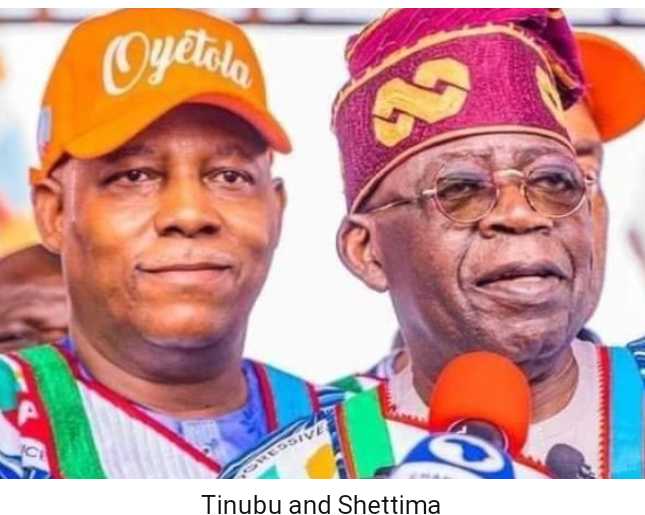
Tinubu/Shettima ticket: What are the issues?
By Lawan Bukar Maigana
“We are not coming into government to represent the Muslim or Christian faith. The Sultan of Sokoto and the CAN President are competent to represent their faiths. We are the Nigerian dream team that will catapult the country to a higher pedestal, and we will redefine the concept of modern governance. The Christians have nothing to fear, and there is no cause for alarm because we are one people with a common destiny.”
That was vintage Kashim Shettima, the Vice-Presidential candidate of the All Progressives Congress (APC), in one of his numerous efforts to push back the insinuation of a sinister motive behind the Muslim-Muslim arrangement of the party. In fact, based on his determination to deflect attention from the Muslim-Muslim ticket controversy, Shettima has been using every platform available to him to tell everyone who cares to listen that we should all focus on the issues – issues of governance and how to move the country forward.
But beyond the irritation that engulfs his face each time the issue of religion is brought up and his insistence that real issues, not inanities, should be discussed, Shettima also needs to come up with the issues he wants Nigerians to focus on and, most importantly he should lead the conversation.
Is Shettima himself or Ahmed Bola Tinubu discussing the issues? Beyond saying he and his running mate would tackle insecurity and fix the economy using their experience and the pedigree they have garnered over the years, what specifics has Shettima been discussing? What timelines?
What bold ideas are Tinubu and Shettima bringing to the table to tackle insecurity, fix the economy, power, etc.? What specific promises are they making that Nigerians can hold them accountable for?
APC is the ruling party. Tinubu/Shettima ticket is deemed to be the leading ticket in this election, and Shettima himself is believed to be the ‘Golden Boy’ of the ticket, and he deserves that accolade. So it is appropriate for Nigerians to expect a lot from him, knowing full well that he is a very sound, visionary, and modern-day leader.
Nigerians would like to know exactly what Tinubu and Shettima want to do to make their lives better and change the Nigerian condition. Nigerians want them to elevate the conversation beyond the media and public forum rhetorics.
For instance, public universities have been shut for the last six months, and the misery of our undergraduates knows no bounds. Any candidate that comes to say he would ensure they call off the strike is a lazy thinker and should not be taken seriously. That is like treating headaches and ignoring malaria, which is tantamount to leaving fundamental issues and doing window dressing for some temporary gains. ASUU crisis has been a recurring problem for decades, and Shettima and co need to tell Nigerians what they will do differently to fix the rot in the tertiary education sector and take lecturers back to classrooms and also ensure that our campuses stop producing half-baked graduates. I am talking about permanent solutions, not cosmetic measures that will last for a few months.
Nigerians are desperate to know how much Shettima and his running mate are planning to invest in tertiary education over the next four years and how they intend to raise the money that will run them. Nigerians need to know Shettima’s plans to return the universities to the glorious old days when they were some of the best research institutions in the world and where human problems were solved. When the Covid-19 pandemic and other zoonotic diseases are rocking the world, what Nigerian universities and their research institutes are doing in terms of producing vaccines to cure them? Why the over-reliance on the West?
What is Shettima’s opinion on restructuring education, federal universities, legislature, fiscal federalism, state/regional policing, power generation, distribution, and transmission?
Security challenges have also become intractable in recent years. Nigerians would like to know the bold ideas Shettima and his running mate are bringing to the table. Nigeria is said to be under-policed and under-protected generally. What Shettima’s action plans would look like in terms of empowering the Nigerian army, police and other security agencies?
The 1999 Constitution of the Federal Republic of Nigeria (as amended), makes it mandatory for the Vice President, not the President, to chair the National Economic Council, the highest decision-making body (on the Economy) in the country that has all 36 states governors, the FCT Minister and a few other ministers as members. Aside from that, successive presidents since 1999 have made it a tradition to put their deputies in charge of the entire economy. That tradition has not changed, with Vice President Yemi Osinbajo playing that role at the moment. It may not change with Shettima, and the former Borno state governor will have his job cut out for him.
Shettima stole the show at the recent Nigerian Bar Association (NBA) conference in Lagos as he dwelt on some of the issues. But Nigerians would like to see the APC blueprint and know the policies Shettima and his running mate are proposing to tackle negative macroeconomic indices such as rising inflation, poor growth rate, unemployment, underemployment, etc. What about the exchange rate and CBN policies on the monetary side of the economy? How does the APC duo intend to ensure proper fiscal supervision of the monetary side of the economy, and how is the CBN handling it?
Core inflation, headline inflation, and food inflation are all in the excess of 20 per cent in the face of dwindling purchasing power and a national currency that is always in a free fall! It would be interesting to know what Shettima’s ideas are on how to fix these multifaceted problems. What does Shettima want to do to boost local manufacturing and make Nigeria export-competitive in the global market, which is the ultimate, final solution to the twin problems of the exchange rate crisis and high rate of unemployment?
What is Shettima’s opinion on the country’s debt crisis? Do they intend to take more foreign loans? If yes, why?
The current managers of the economy have for years been spending over 90 per cent of the country’s revenue on debt servicing while they keep taking more and more loans and claiming the country’s debt to GDP ratio is okay without paying attention to the revenue end of the argument. Now, the worst has just happened with the 2022 first quarter reports revealing that the government spent more on debt servicing than what it generated as revenue within the quarter, and the difference was in the region of 300 billion nairas! That means aside from the already known scandal of borrowing to pay salaries, they have been borrowing more to service previous debts, a terrible vicious cycle that is highly unsustainable!
This shows that the problem is more on revenue generation than the present government‘s obsession with foreign loans. Shettima must have a couple of ideas about how to boost the country’s revenue from both oil and non-oil sources.
Talking about oil and gas, what about oil theft? It is crystal clear that it is the reason why Nigeria cannot meet her OPEC quota of 2 million barrels per day, and that is the reason for the country’s revenue shortage. Nigeria is the only country in OPEC that is losing up to 400,000 barrels of crude oil per day to the organised, exotic, white-collar crime called oil theft! And this is the major reason the country’s revenue base is wobbling. Shettima should tell us if their administration would be able to summon the political will to confront the highly placed, untouchable monsters behind the evil of oil theft and save Nigeria from becoming another Sri Lanka or Venezuela!
Yet, this same broke country is spending trillions of naira on the corruption-prone, an opaque scam called fuel subsidy. While failing to fix ailing refineries and importing refined products, and killing the naira, the country is spending billions of naira on a monthly basis to sustain hundreds of redundant staff members of these refineries that are not producing up to a drop of refined petroleum!
While not attacking or seeming to be openly disagreeing with the sitting government since they are of the same political party, the duo of Tinubu and Shettima have a duty to let Nigerians know their proposed choices among the difficult options that will be available to the country from next year.
In a nutshell, the APC duo needs to come up with a robust policy or action plan that will answer a lot of questions in the minds of Nigerians. They need to tell Nigerians what they should expect from them within the first hundred days in office, the first six months, the first year, and so on. While marking their first hundred days, how many executive bills would they have sent to the National Assembly? Which of the troubled sectors will they declare a state of emergency? Is it security, power, aviation, education, oil, and gas, or all of the above? Nigerians need to know!
I am urging Shettima and his running mate to come clean on their implementable plans so that Nigerians can scrutinize them accordingly and fairly when they get into office. Doing so now will send a strong signal to the electorates that they will be transparent and accountable to the people when they occupy the highest offices in the land.
May Nigeria succeed!
Lawan Bukar Maigana writes from Wuye District Abuja. He can be reached via lawanbukarmaigana@gmail.com.
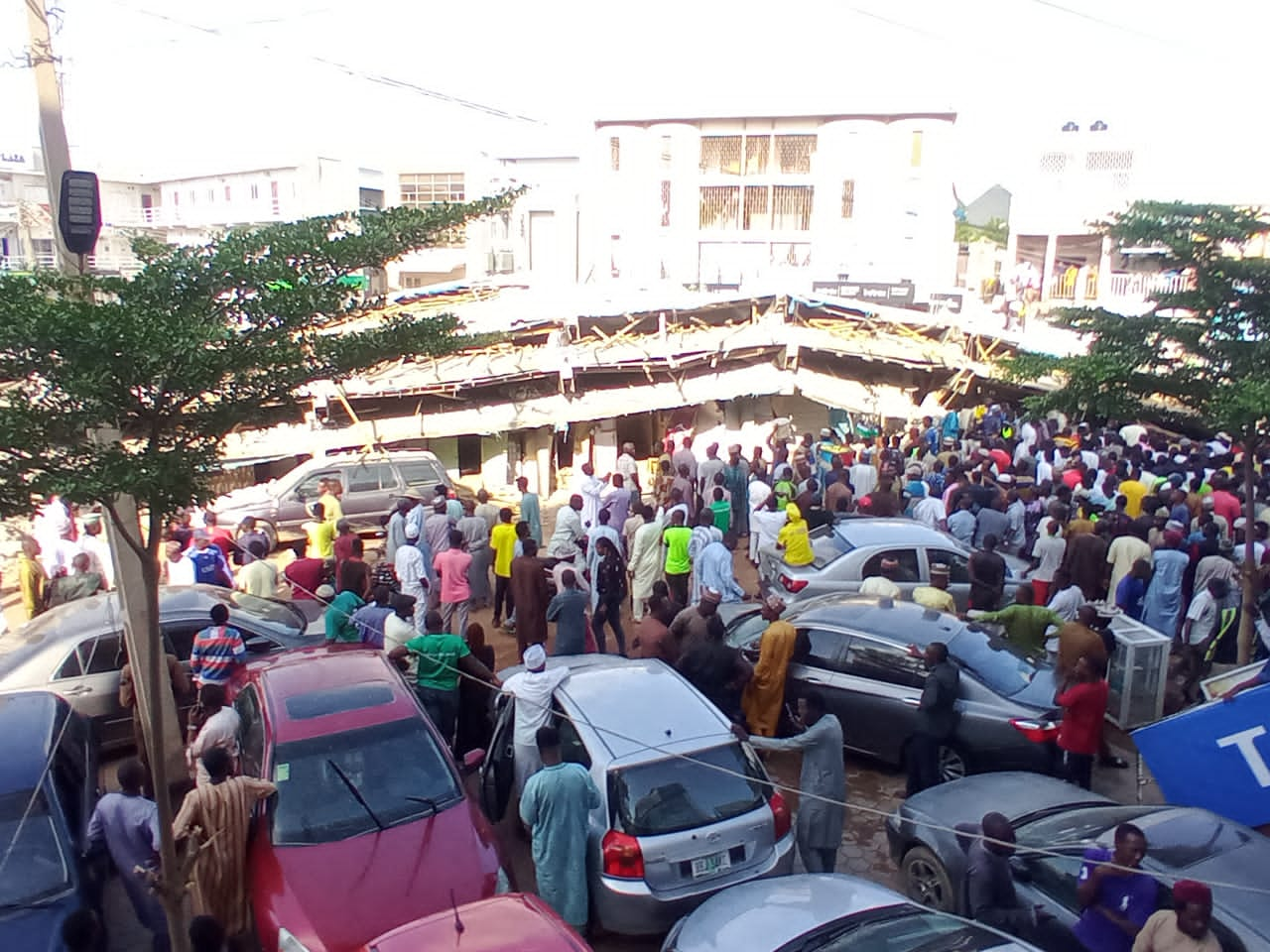
People trapped as building collapsed on Beirut Road, Kano
By Muhammad Aminu
At least ten people have been trapped in a three-storey building being constructed in the famous Beirut Road market in Kano City.
An unspecified number of people have been affected, including some people working on the construction site.
An eyewitness said that the Kano State Government is constructing the building. He confirmed that close to ten people are still trapped in the collapsed building.
Three people have been rescued so far, but residents are lamenting the late arrival of the rescue operations team. An eyewitness also said his friend was among the trapped as his number rang and he answered, saying he was suffocating.
The incident happened around 30:30pm Tuesday.
Atiku donates N50m to Kwari market flood victims
By Muhammad Aminu
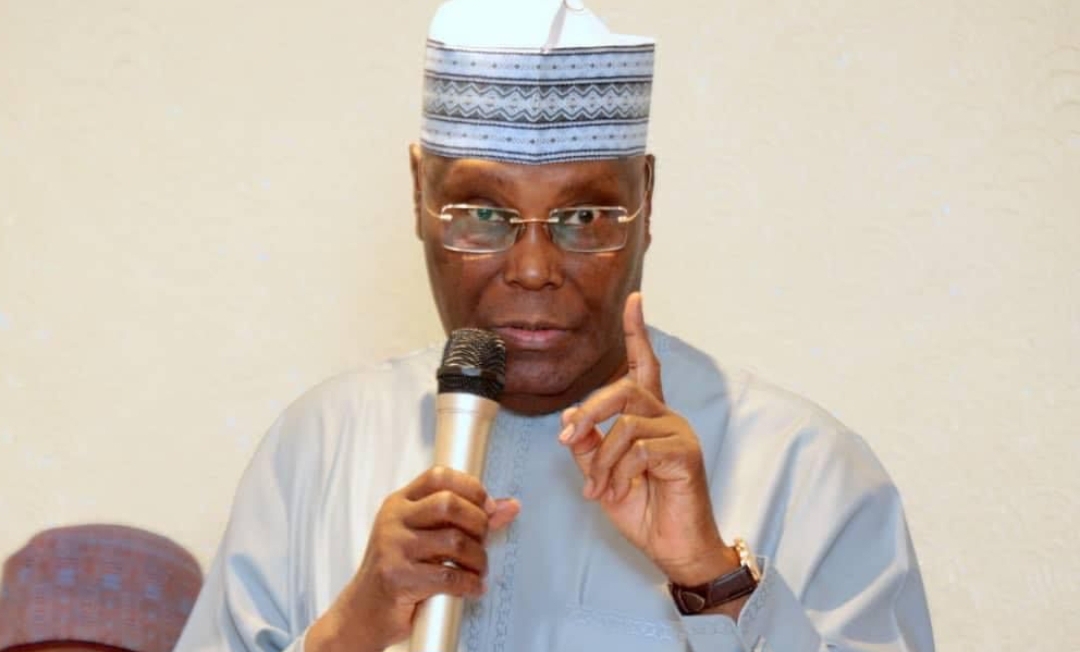
The presidential candidate of the People’s Democratic Party (PDP), Atiku Abubakar, has donated N50 million to Kantin Kwari textile market in Kano following a flood that affected the market.
The Star earlier reported that Kano has been witnessing torrential rainfall in the last few days that has led to floods in many parts of the metropolis, including the Kwari textile market.
The presidential candidate announced the donation Monday while welcoming former Kano State Governor Ibrahim Shekarau to the PDP.
He sympathized with the businessmen and women who were already suffering from an unfriendly business environment with economic hardship.
According to him, Shekarau’s defection is a win for the people of Kano State, the PDP and the country.
The former Kano State governor argued that Atiku was the most qualified candidate to get Nigeria working again come 2023.
Atiku was in Kano since Sunday alongside his running mate Governor Ifeanyi Okowa, Governor Aminu Waziri Tambuwal of Sokoto State, former Governor of Jigawa State, Sule Lamido, former Minister of Transportation, Senator Abdullahi Umar Idris, among other party chieftains.
El-Rufai calls ASUU “useless union”
By Ahmad Deedat Zakari
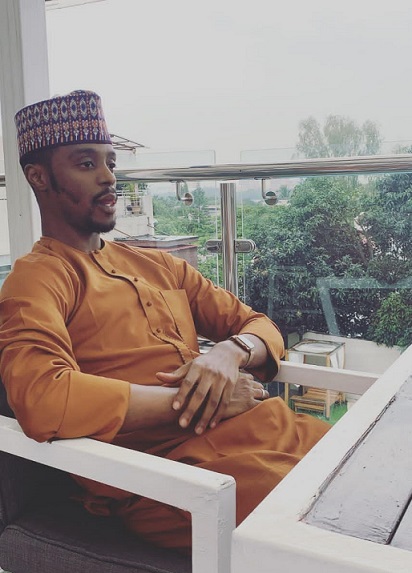
Bashir El-Rufai, the son of Kaduna State Governor Nasir Ahmad El-Rufai, has described the Academic Staff Union of Universities, ASUU, as a “useless union” that should be scrapped.
The junior El-Rufai, on Monday, August 29, 2022, said ASUU is useless and should be replaced with educators that care about the students and Nigeria.
“ASUU is a very useless union. They should be scrapped & replaced with educators that actually give a damn about students and how that translates to the future of this country.” He tweeted
El-Rufai’s condemnation of ASUU is coming after the union extended its ongoing strike in the early hours of this morning. ASUU has been on strike for half a year, an industrial crisis that has crippled the academic activities across Nigeria’s public universities.
3 persons die, 15 others injured in Kano auto crash
By Uzair Adam Imam
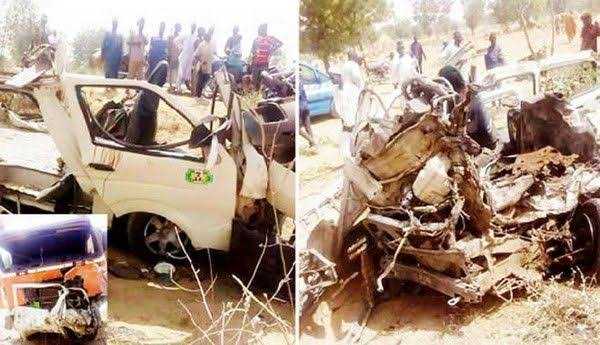
At least three people reportedly died while 15 others sustained injuries in an auto car accident that occurred in Takai Local Government Area of Kano State.
The Kano State Fire Service Spokesman, Yusuf Abdullahi, confirmed the development Sunday, saying the accident involved a Toyota Hilux conveying three people from Jigawa State and a commercial hummer bus conveying 15 others from Kano.
Abdullahi, who identified the dead victims as Sani Isah 28, Shamawilu Isah 30 and Musa Yusuf, 32, stated, “On receiving the information, we quickly sent out our rescue team to the scene of the accident for rescue.
“On arrival, we found out that it was a commercial bus (hummer bus) without registration number and conveying 15 people from Kano that had a head-on collision with a Toyota Hilux conveying three persons coming from Jigawa with registration number JMK 142 XA. The hummer bus was engulfed by fire.
“Out of the 18 people involved, 15 people were rescued alive while three out of the passengers from the hummer bus were rescued unconscious. We immediately conveyed them to Takai General Hospital where doctors on duty confirmed the three unconscious, dead,” he said.