


How to survive without a housemaid
By Aisha Musa Auyo
The current trends of housemaids poisoning their employers are so sickening and scary. It happened countless times, and one can’t escape seeing one or two videos of such heinous acts. From sexual and physical to mental abuse, housemaids and their masters always have these issues in their relationship.
Whenever I encounter such an incident, I wonder why we continue to employ maids or why others leave their homes and work with people they hate. I had maids, and I grew up with maids in our house. But things are different now. People do not fear God. Humanity is lost. From the employee to employers, we are all at fault.
As much as we agree, the maids are vulnerable and more likely to become victims. Unfortunately, these maids have upped their games, and the family employed them are becoming the victims. I’m not here to tell who is right or wrong, but I know that maids had abused us, taken advantage of our kindness, stolen from us, and deceived us to the extent that we decided we no longer have maids in our home.
Is it easy? No. Is it doable? Yes. We can bring an end to this problem. This issue is almost none existence in developed countries. Regardless of how educated or wealthy you are, cleaning your home is something one takes pride in doing, except for celebrities and rich people who employ the services of cleaning agencies who can hardly be cheated on and are less likely to betray too.
Another advantage of doing your house chore is that it helps you burn calories. Moving your body here and there, doing this and that makes you burn calories, makes you more energetic and more alert. As a result, you gain most of the advantages that come with doing exercise. Researchers have proven that active women around the home are healthier and less likely to be attacked with a certain illness than women who sit and do nothing all day.
As a homemaker, I’ve devised ways to survive without a maid, and with the help of Allah, I’m doing fine, if not great. I don’t have the constant apprehension of trying not to harm another person or be hurt by that person. The peace that comes with this feeling is priceless.
1. Wake up earlier than others, or simply reduce your sleep hours. You will be surprised what an extra hour will do to make your work faster and your home cleaner. This can be an hour before everyone wakes up or an hour after everyone else sleeps. This will give you undivided attention to do whatever needs to be done.
2. Engage other family members. From your kids to whomever you are living with, allocate an age-appropriate chore to everyone, and ensure they do it. Even if it’s just cleaning up after their mess. A five-year-old can wash their plate and spoon. Can pick up toys, and older than/six years old can change the bedding, bathe themselves, and clean up after using the loo.
3. Clean as you go. From always picking up dirt and cleaning drops with wipes or napkins to washing dishes as you cook and immediately after eating, you will manage to have a clean space almost all the time.
4. Reduce the number of plates for dishing up. All those fancy food flasks, jugs, spoons, forks, saucers, knives, and big trays are not a must. Use only what you need except when you have visitors. I mostly dish up from the pot straight to the plate (there are elegant plating styles to please the eyes) or a plate and a bowl. Fruits could be served or arranged in a big bowl for everyone to eat together. Drinks can be served directly in used water bottles or paper cups, so you can just throw them away after use.
5. Hire a one-day help at intervals. The point here is to get someone to help you with things you find hard and time-consuming. For example, laundry is my number one weakness, so we employed someone to do this, as the person doesn’t have to go and stay with us to achieve this. You can engage them weekly or bi-weekly, so they can help you with bulk cleaning, like removing the cobwebs, cleaning the compound, brushing sofas and rugs, and doing other deep cleanings that will help keep the house sane throughout the weeks. If this is not an option for you, you can just take the clothes to laundry services, as you will need all the help you can get.
6. The toilets. Depending on the number of people using it, a bathroom should be washed every other day. In between, ensure that every mess is cleaned after usage.
7. Fridges and freezers; the fridge can be cleaned and decluttered once a week, and the freezer can be cleaned once a month, depending on how you shop and cook.
8. Buy machines that will make your work easier. From a washing machine, a strong blender that can blend Tiger nuts and beans, a vacuum, a dishwasher, and many others, depending on your pocket size, you need all the help you can get. This is where your husband comes in. He should know that you made a sacrifice for the safety and sanity of the family, and you need his financial support and understanding.
9. Husbands, we need your support here. You see, all those allowances that should have been used to pay a maid, we need it, in two or three folds. We are the glorified house helps now. We keep the home set and safe. A token will motivate us to do better.
Verbal support is a must. Commend her efforts for taking good care of the homeland and everyone in the family. It’s not easy. I know it’s her duty, but one or two good words won’t hurt, you know?
Still, the husband should try to overlook when she sometimes errs in caring for the house. She is only human, with two hands. And if you can sometimes help with one or two things when you are less busy, that will be a plus for you and her, if you know what I mean.
If you can afford it, make water and electricity 2/47-thing. This is a necessity, not a luxury. She needs this to make work easier for her. Almost all the tasks at home need either electricity, water, or both.
10. Look for temporary help when you are sick or pregnant. Find someone reliable from your family or friends to help you before you get back on your feet.
11. If you can afford it, carve out a playroom or a play area for your kids so that they limit their playing objects to that place. Your living room should always be clean; a toy here and there will make that mission impossible.
12. Lastly, start the day with prayers and a potent stimulant. A hot black tea or coffee will do the trick. Trust me; you need it. If you are an addict like me, ensure you never run out of it. Also, habitually do the zikr – Subhanallah, Alhamdulillah, and Wallahu Akbar – while you go around your daily routines. Our prophet taught Nana Fatima this when she asked him to give her a slave to help her with domestic chores. He said this would be best for her, here and hereafter. Listen to radio, podcasts, Quranic recitations, music, or audiobook. This will energise, entertain, educate and make housework less burdensome and easy for you.
My fellow woman, this piece is not for the sick, pregnant, lazy, or full-time working mom (9-5). If you are lucky with your maid, hold on to her, don’t come and kill yourself with work.
But if you are healthy, up and doing, have a flexible job, or not working at all, this is for you; congratulation. You will be rewarded immensely for this. You will have peace of mind, thus not constantly worrying about what’s happening in your house. You will raise a family who will learn to manage a home without depending on others. You won’t raise another person’s child at the expense of yours. And trust me, it won’t last forever. Once the kids are all grown, you can relax and do minor chores.
Whenever I feel overwhelmed and think of getting a maid, this idea will often cross my mind, especially if I can afford it. I ask myself, how will I cope if I live in a Western country? This resets me.
Aisha Musa Auyo is a Doctorate researcher in Educational Psychology, a mother of three, a Home Maker, a caterer and a parenting/ relationship coach.

Kano elections grand finale: The echoes of competence
By Nusaiba Ibrahim
The 2023 gubernatorial elections will go down in history as one of the most highly contested, especially in Kano. After eight years of Dr Abdullahi Ganduje-led government, his party, APC, could not secure the first position. Neither the victory of the President-elect, Bola Ahmed Tinubu, nor the popularity of President Muhammadu Buhari was significant in the tight race that was fiercely fought between the governorship candidates.
There were just countless permutations, combinations, analyses and whatnot on the proposed outcome of the gubernatorial elections coming from different viewpoints and existing realities, especially after the presidential and upper chamber elections. However, one thing that stood out was the incredible performance of the NNPP in Kano. And this became a challenging point for the ruling APC until the opposition candidate Abba Kabir Yusuf of NNPP emerged victorious.
While the Presidential elections had minimal cases of vote buying, Kano recorded massive acts of vote buying with petty items like soaps, detergents, wrappers and spaghetti during the gubernatorial and state house of assembly elections. In addition, in some strategic locations, there were significant disruptions in the voting and counting processes. But, of course, all of these aren’t out of the normal as tensions had already heightened after the presidential polls.
Nothing summed up the 2023 elections in Kano for me more than the chants of competence over spaghettis. Indeed, “taliya ba ta zabe” (loosely translated – spaghetti doesn’t vote). The likes of Senator Barau Jibrin, among others, only escaped losing their seats because of the hard work they channelled to community service and distinctive competencies. I’m in awe of how each candidate has been weighed based on the capacity to earn the invaluable mandate of the people. Here are my takes on each candidate.
Governor–elect Abba Kabir Yusuf: By resisting all odds to emerge the winner of the elections in Kano State, the heart of Northern Nigeria, you deserve resounding applause. You have also proven your worth to the electorates after losing the 2019 election, which was first declared inconclusive. So, your victory is a testimony of a relentless effort to achieve this desired objective. More so, preserving a loyal fanbase over these years is unimaginable and a strategic tool for your success. But you need to understand that more must be done. The game has just begun.
You would be serving the entire citizens of Kano, which includes your loyalists and a bunch of opposition. It would be easy if you’ve not made many promises during your campaigns, and even if you haven’t, you’ll still be judged anyway. You might face the gigantic task of restoring Kano State to what it used to be. The truth is, that might be impossible to do. Do not waste your time unveiling the errors of the past administration; the people are already full of new yearnings and aspirations. Focus on health, security, education, economy and adverse effects of climate change. They are the priority now.
Nasiru Yusuf Gawuna: Kano is proud of a citizen like you, though you have yet to accept defeat. Nothing compares to being crushed in a public engagement. You’ve taken a wise decision of not resorting to leading thugs to disrupt collation processes this time because you would make news for the wrong reasons, coupled with a widely shared photo of you explaining what happened to police offers. You must have performed your best after serving the people of Kano under three with three administrations in your lifetime. You should be thankful for this rare achievement that not everyone is fortunate to have. You’ve also made the history of being a loyal assistant for eight years – not so many deputies were lucky as you are. Better still, you can go to court if unsatisfied with the results.
Shaaban Ibrahim Sharada: When all youths were wary and incompetent to approach the governorship candidacy, you dared all doubts to stand out. Your candidacy was an ideal reflection of the future of the northern youths. There was so much to cull from what you exuded until the election. Your confidence reminded youths about the times of Tafawa Balewa, Sir Ahmadu Bello Sardauna, Malam Aminu Kano and Maitama Sule. Your grasp of the Kano situation wowed the audience anytime you spoke. You were ready to oppose the status quo even at the risk of your dearest life. But, unfortunately, the political trajectory was faulty. Defeating candidates with an established loyal fanbase needs more time, not a dying-minute preparation.
Mallam Ibrahim Khalil: Like Shaaban, you tried hard to showcase that an Islamic cleric is efficient enough to contest an election. You boldly did not play politics lowkey by supporting some politicians during your sermons and lectures. You challenged the maxim of playing politics as a war without or sometimes with bloodshed. You blocked your ears on people’s thoughts about the inappropriateness of clerics going into politics despite its indecency and ruthlessness. Although you lacked the support of other clerics, you were still confident in your quest. I applaud your effort, mainly because, unlike others, you didn’t hide under religion to back dubious politicians. Unfortunately, the current political trend is not ready for your clean style.
Results from around the country show signs of revolution from all over the nation. It is not just a red cap revolution in Kano but a ‘wake da shinkafa’ [rice and beans] revolution across the country – Zamfara State is one interesting illustration. I’m overly pleased that competence was echoed until it transformed into an actuality. I hope these revolutionary divergences will be a reason for the prosperity of Kano and Nigeria.
Nusaiba Ibrahim Na’abba is a master’s student from the Department of Mass Communication, BUK. She is a freelance writer and researcher. She can be reached via nusaibaibrahim66@gmail.com.

DSS unveils plot to cause nationwide violence
By Uzair Adam Imam
The Department of State Service (DSS) on Saturday raised the alarm over an evil plan by some people to cause nationwide violence in the country.
Dr Peter Afunanye, the Public Relations Officer of the DSS, disclosed this in a statement he made available to journalists today.
Afunanye said the violence was meant to disrupt peace, law and order in the country. He also warned those behind the plan to abandon their plot.
He added that the service would continue to take necessary measures to checkmate these elements who do not wish the country well.
The statement said: “The Service hereby warns those desperate to cause a breakdown of law and order to desist from that.
“It is evident that some aggrieved politicians are already taking advantage of this legal process. This, without a doubt, is the beauty of democracy. It is strongly believed that this approach enhances peace and security. All and sundry should cherish it.
“Be that as it may, the DSS will not tolerate a situation where persons and/or groups take laws into their hands and champion anarchy.
“Those peddling fake news, hate speech and all forms of false narratives as basis to ignite violence or pit the people against the present or incoming administrations, at the Federal, State and Parliamentary levels, should stop forthwith.
“Those inciting violence have nothing to gain as doing so will consume not only them but also the innocent. It is otherwise disturbing to see respected personalities use their platforms to mislead or incite citizens. This, to say the least, does not augur well for peaceful coexistence and general order.
“Therefore, the Service will continue to take necessary measures to checkmate these elements who do not wish the country well.
“This is to ensure that a conducive environment is provided for citizens and residents to pursue their legitimate businesses. A stitch in time, they say, saves nine. Let all be guided,” Afunanya warned.
Breaking: we never called for the review of Kano guber poll – Observers
By Ahmad Deedat Zakari
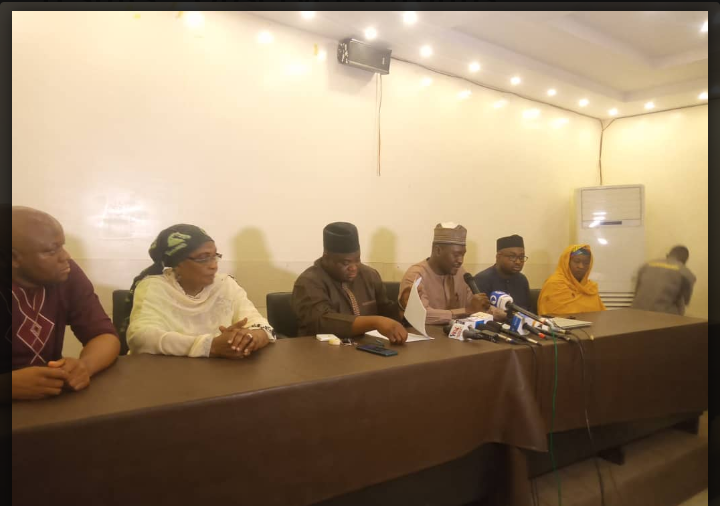
The Kano State Transition Monitoring Committee, TMG, has denied calling for the review of Kano guber election results and cautioned people with evil intentions not to smear the integrity of credible civil society organisations in the state.
TMG, in a joint press release with the Civil Society Legislative Advocacy Centre ( CISLAC) and the Kano State Civil Society Elections Situation Room, gave the advice in Kano on Saturday.
The organisations totally denounced the reports that they called for the cancellation and review of the governorship election in Kano State.
According to them, unscrupulous persons in the state are hell-bent on sneering at the integrity of civil society groups that have been working hard over the years to ensure electoral integrity in Nigeria.
“For obvious selfish and politically motivated reasons, some faceless groups in conjunction with some willing elements in the media have cooked up fake stories about civil society organisations calling for cancellation of the governorship election in Kano State and other parts of the country. ” The Group disclosed.
They stated that the news is fictitious malicious, and worrisome, and they will not condone attempts to be dragged into the mud.
“The spread of this fictitious and malicious news, in a time when the political space in Nigeria is already heated up, is not only worrisome but also has the potential to further overheat the polity. As champions of democracy, we will not allow sneer-campaigners and people with politically motivated reasons drag credible civil society organisations in Kano State and, indeed, in Nigeria at large into political wars with political parties.”
The group, therefore, called on individuals to disregard the reports making rounds that represented credible organisations in a bad light. They also urge media organisations to filter facts before reporting.
We need more of Binani
By Aliyu Idris
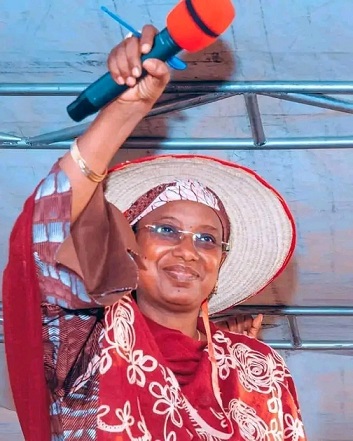
It’s undeniable that Sen. Aisha Dahiru Ahmed Binani’s name has travelled in the ears of many Nigerians. Her emergence as the flagbearer of the Adamawa State Governorship Candidate of APC grasped and arrested the attention of the country’s populace. With these, she received massive support and countless prayers from the people in the country and even the diaspora. Without a doubt, she’s a notable personality in this year’s election.
Binani might win or lose the election, but she won the people’s hearts. She has become influential and has set a pace for people to follow in the country’s politics. Among her influence is making the incumbent governor (Ahmadu Umar Fintiri) substitute his male running mate (Crowther Seth) with a female (Prof Keleptawa Farauta). This remarkably uplifts the status of women’s participation in politics and dismantles the common sense of some people that women don’t have a role to play in politics.
Binani’s bravery is incomparable; her audacity and capacity have shaken and made the sitting governor shiver and quiver. She made him initiate last-minute empowerment and execute some projects at the election deadline. Similarly, how she defeated strong male candidates during the party’s primary election is encouraging.
Binani will now be leaving the red chamber. Her four years as a senator representing Adamawa Central Senatorial Zone birthed legacies that will live on forever. Her projects in different sectors such as education, health, poverty alleviation programs, the establishment of Federal Medical Centre Mubi, upgrading Federal Medical Centre Yola to a Teaching Hospital and Modibbo Adama University Yola (MAU Yola) from a technology University to a conventional university, solar power lights supplies, unending and unbiased empowerment of hand workers, donations to religious organisations, youths association, and other life touching projects during her single tenure as senator will remain a testimony of making her the best-elected representative in the state.
Binani’s attracted even the opposition and proved to the present administration that their chanting and ranting of no opposition in the state is merely an illusion and a mirage but fortunate enough. They have now realised her intense display of spirit towards achieving a goal can never be underestimated, like Shakespeare’s lady Macbeth still gives them sleepless nights. Binani is a beacon of steadfastness that motivate the two genders, and her political career is now a fad, and she remains vivacious.
We need more Binani in us, around us and with us. The pavement of strong female participation in contemporary Nigeria has been set and revived by Binani.
Binani is energetic, and the declaration of inconclusive is not the end of the journey but rather a fresh beginning to return and positively impact people’s lives. May Adamawa State and Nigeria succeed.
Aliyu Idris writes from Jimeta (Yola North) and can be reached via aliyuidreesali@gmail.com.
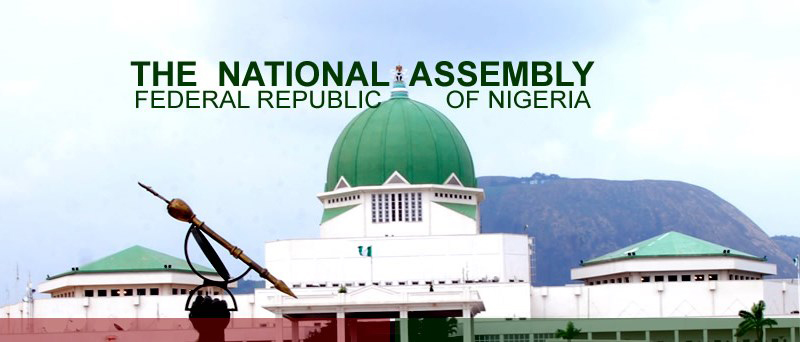
Nigerians expect more from the 10th National Assembly
By Mukhtar Sani Yusuf
The general election has come and gone. Nigerians are now focused on the National Assembly politics as jostling for the positions of presiding and principal officers of the incoming 10th National Assembly has begun. While the tenure of the outgoing 9th National Assembly expires on June 11, the next Assembly will be inaugurated on June 13, and expectation from the citizenry vested in the members of the incoming assembly is so high, going by their diverse backgrounds.
The outgoing assembly is seen as a rubber-stamp legislative body and criticised by many Nigerians that the two hallowed chambers are underperformed National Assembly that ever happened to the country.
Many Nigerians see the tenure of the current assembly as unproductive that the two chambers spent the whole four years at the beck and call of the executive arm well-nigh by succumbing to everything brought before them by the executive arm with little or no protest. Some people even believe that in this 9th National Assembly, the purpose of the principle of separation of power and checks and balances characterised by constitutional democracy has been defeated and jettisoned.
Notwithstanding, from the official results released by INEC on the newly elected and re-elected members of the Senate and House of Representatives, one may begin to be optimistic with the rainbow composition of the incoming National Assembly that this time around, the business might not be as usual.
Among other reasons that rekindle the hope of Nigerians about the upcoming Assembly is that it’s the most diverse National Assembly with eight political parties representation since 1999. Although some seats in the Senate and House of Representatives were not decided during the February 25 National Assembly elections and remain vacant due to the supplementary elections expected to be conducted on them, in the Senate, the ruling party APC has 57 seats, PDP occupied 29 seats, Labour Party got 6 seats, SDP and NNPP won 2 seats each, then APGA and YPP gained 1 seat each. In the House of Representatives, APC occupied 162 seats, PDP secured 102 seats, Labour Party garnered 34 seats, NNPP 18, APGA 4, ADC and SDP got 2 seats each, and lastly, YPP got 1 seat.
The ruling party APC has majority seats in the Red and Green Chambers. However, the breakdown shows that it doesn’t get the simple 2/3 majority where its wish must prevail. This is enough opportunity for the opposition parties to form a formidable group that will checkmate the excesses of the ruling party to improve the performance of the executive arm. Even though the executive arm can’t perform its duties without the cooperation of the legislative arm, nevertheless, we expect the opposition parties to be constructive while challenging the executive arm or the ruling party.
Democracy will not grow without opposition. We don’t want a situation where our representatives become rubber stamps; they’re our voices and represent our interests. The Constitution of the Federal Republic of Nigeria has empowered them with three core responsibilities, i.e. law-making, representation, and oversight function.
Therefore, the doctrine of trias politica or separation of power, which help to limit any one arm from exercising the core function of another and prevent concentration of unchecked power by providing check and balances, is of no use if the legislative arm reduces itself to mere stooge of the executive arm. We hope to see changes this time around.
Mukhtar Sani Yusuf wrote from Kano and can be reached via mukhtarsaniyusuf678@gmail.com.

Behind every negative human tendency is an enabler
By Dr Raji Bello
Last Tuesday, I listened to a panel on AIT’s morning programme discussing the increasing weaponization of ethnic and religious identity in Nigeria, particularly during the current election cycle. The discussants were particularly alarmed by the developments surrounding the governorship election in Lagos state, which has witnessed threats, intimidation and violence against voters of a particular ethnic group. The politicisation of ethnic and religious identity in this election cycle is, of course, not limited to Lagos.
Religious identity was a major issue for the APC presidential ticket and some governorship tickets like that of Kaduna state. Religion was a major issue in the Taraba governorship contest, and the issue of indigene vs settler reared its head during the Kano governorship election. There is even a Facebook group which is committed to getting candidates with pure Hausa blood elected into the governorship posts in the Northwest states. Nigeria may be on a slippery slope towards eventual implosion.
What I have noticed about the AIT discussion is the same thing that I have observed about other similar discussions – they are limited to expressions of sadness followed by appeals to Nigerians to change their behaviour. There is very little discussion on why Nigerians do what they do and if there are any enablers for those tendencies. In my personal reflections, I have tried to answer these questions.
Most negative human tendencies have things which enable them, and rooting out the enablers is an important part of the measures for suppressing these tendencies. Anyone who is familiar with Islamic theology, for example, knows that there is little tolerance for things which are deemed to be enablers of vices. The prohibition of the consumption of alcohol is an example; alcohol intoxication is regarded as an enabler for many vices, which has necessitated a full prohibition of it.
Likewise, the encounter, in isolation, of two eligible and unmarried members of the opposite sex is regarded as an enabler for sexual vices. In the secular world as well, drinking and driving are prohibited in many countries because it is an enabler of fatal road accidents. Relationships between academic instructors and students are prohibited or restricted in many American institutions because they could be enablers for abusive relationships and conflicts of interest.
If Nigerians have come to the conclusion that toxic identity politics is harmful to the corporate well-being of the country, they must find the enablers for such politics and uproot them. Issuing passionate appeals is bound to be ineffective because human beings do not always respond to reason or appeals to stop a negative behaviour, especially when there are things which incentivise such behaviour. In my view, there are two enablers for the weaponization of identity in Nigeria:
1. There is no punishment for it. There are either no laws against toxic identity politics and incitement against ethnic and religious groups in Nigeria or they are never enforced. The result is that offenders almost always get away with their actions. This lack of accountability is a powerful enabler for similar behaviour by the same individuals or others.
2. There is a reward for it under our federal system. Our current constitution provides for semi-autonomous federating units (states) which are loosely coterminous with ethnic and religious identities – for example, Imo State is Igbo and Christian, Katsina is Muslim and Hausa-Fulani, Niger is Nupe, Gbagyi and Hausa, Ogun is Yoruba etc. The federal system has also granted these federating units the power to elect their own leaders (governors and LGA chairmen), unlike in unitary states where these leaders are often appointed by the central government.
Since elections are competitive and every state is identified with certain ethnic and religious identities, the possession of these identities by any individual becomes an advantage towards winning elections. This is why Nigerians have learnt to hold on to these identities and even to flaunt them. Being a Tiv is a huge advantage in Benue state, just like being a Kanuri is in Borno state. It’s not hard to imagine that when electoral competition becomes very stiff, these identities will be weaponised. There is no way to stop Nigerians from engaging in toxic identity politics as long as these two enablers are in place.
Our country was founded on the basis that it has diverse and irreconcilable ethnic and religious communities. Our founding fathers wanted it that way, and they chose a federal system which they thought was best suited to manage our diversity (although most of the major federal states in the world are not so diverse internally). While countries like Ghana took off with the mantra of unity in diversity and did everything to build a united nation, our founding fathers did not even pretend that the country was united. Each of them had regional priorities higher than Nigeria’s unity.
We started with three federating units and have now grown to thirty-six plus the FCT, and the more we created states and LGAs, the more identity fault lines we created. The country is now balkanised into 37 identity enclaves (states), and 774 LGAs and each citizen is marooned inside their own enclave and is entitled to few formal privileges in others – even neighbouring ones.
In the First Republic, this divisive effect of federalism wasn’t up to what we have now because the federating units were much bigger, and they functioned as unitary states internally. The former Northern Region, for example, had thirteen or so provinces whose administrators were appointed rather than elected, and a northerner from one province could be posted to work in any of the other provinces. The provincial boundaries did not keep northerners away from each other, and as a result, the people of the region saw themselves as one because they were indeed one in practice.
The Northern Region alone has now evolved into 19 federal states and hundreds of LGAs, each with a rigid boundary which separates it physically and functionally from other federating units. This has made intercommunal relations to be worse than they were in the old Northern Region. The late former SGF Alhaji Gidado Idris, who was from Zaria, was once a divisional officer in Benue, Adamawa and Sardauna Provinces, but his grandchildren cannot work for the Benue State Government in today’s Nigeria. They may even struggle to gain admission into state-owned schools in Benue State.
Mr Selcan Miner, a former secretary to the government of Benue-Plateau State, was once an administrative officer in Sokoto Province, and he still has fond memories of his stay there, particularly his close relationship with Sultan Abubakar III. But in the present day, the government of Sokoto State may not grant privileges to Mr Miner’s grandchildren because they are not “indigenes” of the state.
The late chief of the Mbula people in Adamawa state Joram Fwa, who was a US-trained educationist, was the pioneer principal of Ramat Technical College in Maiduguri under the then Northeastern State. He was entrusted with the assignment of establishing the college and was made its pioneer head. The college has since grown to become Ramat Polytechnic and belongs to the Borno State Government. I will not be surprised if, in the present day, the application of Mr Fwa’s grandchildren for entry into the polytechnic is turned down on the grounds that they are not from Borno state. I have used the examples of these three Northern elders to illustrate what we have done to ourselves over the years through our so-called federal system.
Not too long ago in the 1990s, the governor of Lagos state was a military officer named Buba Marwa, a native of Adamawa State. He was appointed under the military government’s unitary style, and he was well-received in the state because the people knew that that was the system in operation then. At a different time before that, a native of Lagos State, Bode George, was appointed the governor of Ondo State. From all indications, Marwa had performed well in Lagos in terms of infrastructure and crime fighting.
If we do a cost-benefit analysis of the process of appointing Marwa as governor and that of the re-election of Governor Sanwo-Olu in 2023, we would see that the former didn’t cost any significant amount of money and didn’t involve any fracture in relations between major ethnic communities in Lagos while the latter had cost the federal government a lot of money in election expenses and has led to flaring of inter-ethnic animosity, intimidation and violence. In the end, both governors are capable of doing a lot of good for Lagos, the difference in the nature of their appointment notwithstanding. This is why we need to ask ourselves if we really need to have elected governors and LGA chairmen as provided in our current federal constitution or we could simply have them appointed and monitored by the central government.
In the late 1960s and 70s, the governor of Kano State was Audu Bako, a police commissioner and native of present-day Kebbi State. He was appointed by the government of General Yakubu Gowon, and from all historical indications, Kano State has had it so good under him. His appointment didn’t cause any inter-communal upheaval in Kano, and there was no violence. Compare that to the re-election of Governor Abdullahi Umar Ganduje in 2019 or the election of Abba Kabir Yusuf in 2023, which were both marked by communal tension and violence. Why should we keep using this costly option of election and risk so much when Kano can have good appointed governors just like Audu Bako and Sani Bello? Only a small number of democracies around the world have elected sub-national chief executives as we have, and countries which don’t have them are not deemed to be less democratic than us.
Sometimes Nigerians view unitary systems negatively because they equate them with military governments, but there is nothing that stops us from having a unitary democracy like many countries in the world. The appointed governors and LGA chairmen under this system are going to be civilians, maybe even members of the ruling party at the centre, just like in the system in Ghana, whose 16 regions are all governed by appointed regional ministers who, at the same time, are elected members of the national parliament.
The other fear that Nigerians have about a unitary president becoming too powerful is also misplaced. Ghana’s presidents are not regarded as dictators, and opposition presidential candidates have even won elections there. In any case, parliament is always there as a check on the powers of the president. Unitary systems are cheap, can minimise toxic identity politics, guarantee harmony in the pursuit of developmental priorities and provide better coordination in fighting insecurity. It’s a better system to have than our current federal system, with its unaccountable and politically autonomous governors whose elections are now driving our ethnic and religious communities further apart and threatening the stability of our country.
Whoever brought this American-style federal constitution and gave it to our African tribal groups to implement has not served us well. It’s time we found the courage to abandon the farce. What Nigeria requires is a unitary democratic system with an element of rotational leadership at the centre to ensure its various groups of inclusion.
Dr Raji Bello wrote from Yola, Adamawa State.
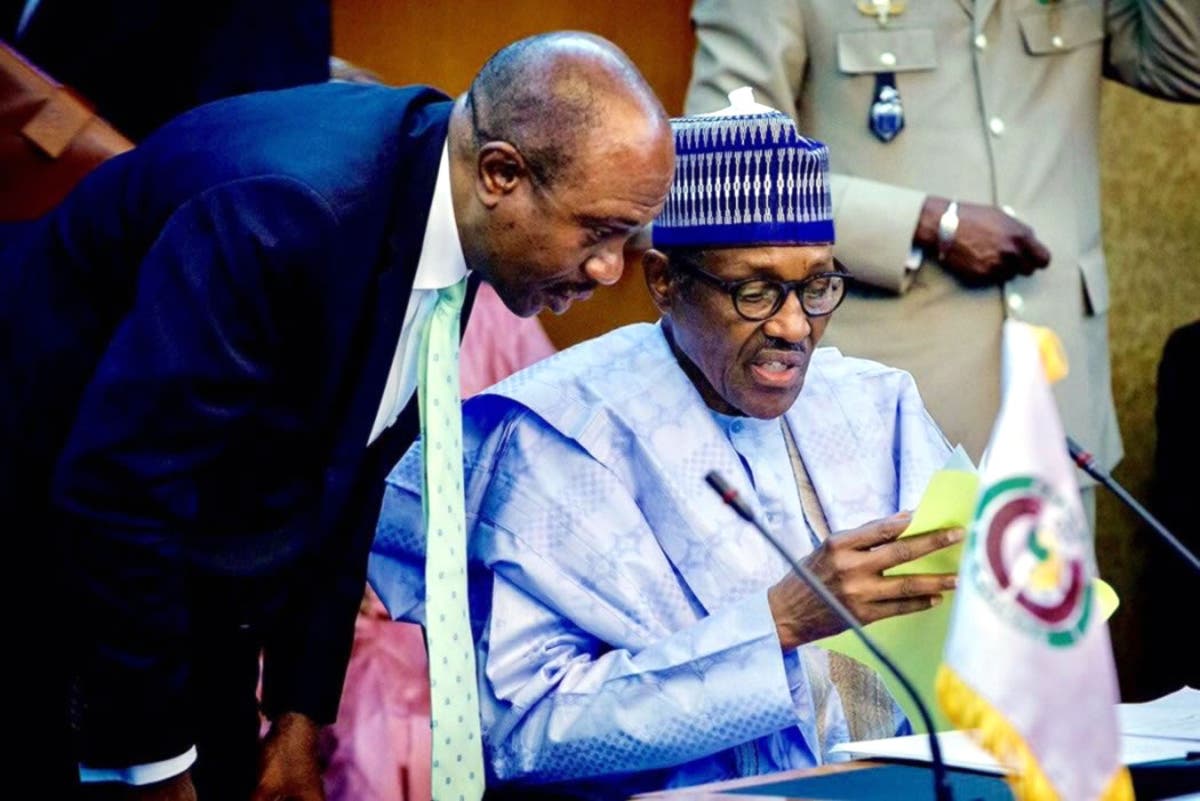
On Naira note redesign: tale of a University student
By Abdulbasit Toriola
I am Abdulbasit – an undergraduate student at the University of Lagos. I first heard about the CBN’s plan to redesign Naira from a hostel mate while returning from the mosque one evening. Soon, the news went all over. The boys of Biobaku Hall, my hostel, quickly picked up on it. It became a good subject for late-night arguments in a few rooms (after Messi-Ronaldo debates). I suppose the arguing parties, like me, were wondering how a change in currency design would help augment Naira’s depleting value against the US’ Dollar and other strong currencies. The Central Bank’s motive, however, was different. According to a CBN handbook I read, the redesigned notes were to help check counterfeiting, straighten the economy, reduce the expenditure on cash management, promote financial inclusion, and enhance the CBN’s visibility of money supply. These – are good benefits, anyone would say.
It was not until January 31st that we started bearing the brunt of a new cash policy. Prior to this, immediately after its launch, we had seen from a viral BBC post what the new notes were like. Some of us said the notes were a bleached version of the old. Others said the CBN only dyed the monies, our monies. Our currency had become more of a joke. Apparently, things were unfolding in the background. CBN had given directives that all old banknotes be deposited on or before January 31, while encouraging Nigerians to explore other payment channels. The CBN, literally, put us on a thin, experimental line.
Soon, banks got filled, stacked up like they were market squares. In order to avoid hiccups, they kept their customers queued outside their premises in very long and rowdy queues that almost never moved. They kept their gates shut, too, till noon or afternoon; especially after some branches reported cases of violent protests. It was hard and perplexing. But as young students, we quickly adapted to the virtual alternatives CBN had left us with.
Still, it was hard. Perplexing. But we knew – judging from what we see or hear – that the pain we feel paled in comparison to that felt by those living beyond the walls of a campus. Sometimes, I lay still on my bed imagining what it would be like for market women, for school children, for drivers, for commuters. I remember, again, our hostel coordinator saying this was Buhari’s final ingenious gift to Nigeria and Nigerians. He says the President’s plan, like in 1984, is to checkmate politicians who have stockpiled Nairas ahead of the 2023 General Elections. I nod.
For us, hostel occupants, the deal breaker was an announcement – coming from the VC – ordering everyone to vacate school hostels for the election break. It was the last straw that broke the camel’s back. In the past few weeks, we witnessed the FG shift the deadline to February 8; various NGOs beseeching them for an even longer extension. We also saw the case brought before the Supreme Court. We saw the Court gives an order; we saw them adjourn the court case.
On February 15, the Supreme Court validated their previous order – that the old Naira notes remain acceptable as legal tender. The following day, we woke up to a nationwide broadcast, by the President, stating that only old N200 notes will remain valid till a due date. It was hard. Some of us left the hostel as early as 6:00am to join queues in front of the Nigerian banks. We had to pay commercial drivers in cash or nothing. Many of us stopped attending lectures, and sat/squat in front of bank ATMs instead. Cash was scarcer than ever. Outside campus, POS outlets had their places shut. Those that opened, literally, sold us the new Naira – they were charging exorbitantly. We looked everywhere for a way. And when we finally found one, we packed our bags, hoping silently that home would be good to us.

Teens, social media and mental health
By Muhsin Ibrahim
Social media has a double-edged function. It can uplift you or do the exact opposite. It largely depends on the people and pages you interact with. Worried about their teens’ mental health, Utah became the first US state to regulate teen social media access this week.
According to a BBC report, “under the measures enacted on Thursday, a parent or guardian’s explicit consent will be needed before children can create accounts on apps such [as] Instagram, Facebook and TikTok.”
People of all ages can have their mental health wrecked on social media if they aren’t cautious. Some of us crave attention or other’s validation. Thus, people do crazy things to get more “likes” or ensure what they do gets their friends’ applause. That is one thing some of your social media ‘friends’ will never grant you because they are not your friends in the true sense of the word. So, the earlier you understand this, the better.
Of course, you should not be carefree. Each culture has its codes, and so on. So, consider these etiquettes but worry not about people’s attention or endorsement. Social media friendship is primarily fake. Folks, especially teens, can’t understand this. Thus, trolling push them to lose self-esteem, hate themselves, and some take their lives!
I salute the government of Utah. I am sure more states in the US and elsewhere will do the same. However, as ours (in Nigeria) will likely not do the same anytime soon, parents and guardians should do more. As it’s very challenging to deny your kids access to social media, monitor whom they interact with and the pages they visit.
Muhsin Ibrahim lives and works in Cologne, Germany. He can be contacted via muhsin2008@gmail.com.

Thomas Tuchel set to replace sacked Bayern Munich Manager
By Muhammadu Sabiu
Thomas Tuchel, a former manager of Chelsea and PSG, is about to be named the new Bayern Munich head coach.
Football transfer guru Fabrizio Romano made this known on Thursday night.
He reports that a complete deal is in place and that Tuchel has already accepted the position.
Romano wrote in a tweet: “Exclusive news confirmed: Thomas Tuchel becomes new FC Bayern head coach, full agreement in place. He has already accepted the job.
“Contract agreed, documents are being prepared tonight.”