


Court orders DIA to produce Kaduna cleric detained over alleged coup plot against Tinubu
By Sabiu Abdullahi
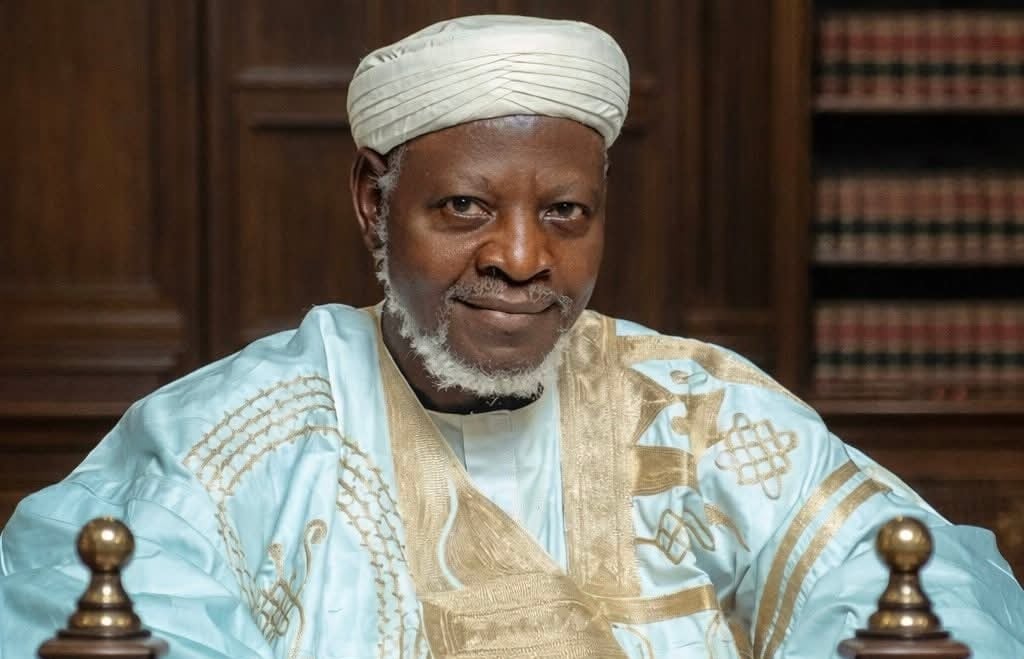
A Federal High Court in Abuja has directed the Defence Intelligence Agency (DIA) to produce a Kaduna-based Islamic cleric, Sani Zaria, before it on February 18 over allegations linking him to a coup plot against President Bola Tinubu.
The order followed proceedings on Friday before Justice Peter Lifu, who presided over a fundamental rights enforcement suit filed by the cleric. Zaria has remained in custody since December 2025.
Earlier in January, the Defence Headquarters confirmed the arrest of 16 military officers during the first week of the month in connection with an alleged attempt to overthrow the current administration.
Court documents showed that the cleric was first arrested by the Economic and Financial Crimes Commission before he was transferred to the custody of the Defence Intelligence Agency.
Respondents in the suit include the EFCC, DIA, the attorney-general of the federation, and Jaiz Bank Plc.
The applicant is asking the court to order his release. He argued that his continued detention has no lawful basis.
During the hearing, the federal government was unable to present a valid court order authorising his detention. The development drew criticism from the bench.
Justice Lifu had earlier instructed the DIA to produce any detention order or provide legal justification for holding the cleric under applicable laws, including provisions of the Administration of Criminal Justice Act.
The judge faulted the length of the detention. He subsequently ordered the intelligence agency to produce the cleric in court. The appearance, the court noted, will allow consideration of his bail application pending the continuation of the case.

Fubara dedicates award to Wike, says he chooses ‘weakness’ to preserve peace in Rivers
By Sabiu Abdullahi
Governor of Rivers State, Siminalayi Fubara, has said he deliberately chooses to appear “weak” in order to sustain peace and stability in the state.
The governor spoke on Friday in Lagos while receiving the 2025 Man of the Year Award presented by New Telegraph.
During his remarks, which focused on the burden of leadership, political disputes, and reconciliation, Fubara dedicated the honour to his predecessor and Minister of the Federal Capital Territory, Nyesom Wike.
“I do not care how you interpret it or misinterpret it. I also dedicate this award to somebody who discovered me, not minding the situation — the honourable minister of FCT, Nyesom Wike,” he said.
“He discovered me, and it is the discovery that gave me this loudness. Today is a very special day, and also special for everyone who has believed in me, and I know that for believing in me, you have a share of special pain.
“Some people have described these pains as weakness, while others say it is being strong. But I choose to be weak for a lot of reasons, weak because I want peace. Weak because we need to survive.
“Weak because I need to also protect those things that are dear, not just to me, but to our dear nation. Weakness is a virtue. It pays at the right time.”
Fubara thanked his family and residents of Rivers State for their patience and composure despite the prolonged political crisis in the state.
The development comes amid efforts to ease tensions between the executive arm and the Rivers State House of Assembly. Recently, President Bola Tinubu intervened and facilitated a truce between both sides after months of political strain, impeachment threats, and divisions within the legislature. Many lawmakers in the assembly are known allies of Wike.
The rift between the two political figures has played out publicly in recent months. Wike had opposed Fubara’s re-election ambition. He accused the governor of failing to honour an earlier peace agreement reached before the lifting of emergency rule in the state.
Earlier in the week, the FCT minister expressed optimism that the crisis between the executive and legislative arms would be resolved permanently following the president’s intervention.
Peace conditions linked to the dispute had earlier surfaced. One of the demands was the reinstatement of Sergeant Awuse, traditional ruler of Emohua kingdom, as chairman of the state’s council of traditional rulers. Fubara removed Awuse from the position in June 2024 and replaced him with Chike Worlu Wodo. Another demand involved the nomination of new commissioners.
In a fresh move, the governor dissolved the Rivers State Executive Council on Thursday. A day later, he forwarded a list of commissioner nominees to the state assembly for screening and confirmation.

Suspected BH fighters kiII 21 in fresh Niger State attacks
By Sabiu Abdullahi
Suspected Boko Haram fighters carried out fresh assaults in parts of Borgu and Agwara Local Government Areas of Niger State late Friday night.
The attacks were disclosed by security reporter and analyst, Comrade Zakari Y. Adamu Kontogora, through a post on his Facebook page where he detailed the incident.
He reported that the armed men moved across several communities. They opened fire on residents and set houses ablaze during the raids.
Quoting security operatives who spoke with his newspaper, he said no fewer than 21 people lost their lives after the gunmen invaded Konkoso community.
The sources also revealed that the assailants extended their attacks to nearby settlements such as Pissa, Zango and Tungan Maƙeri. Casualties were recorded in the affected villages. Properties were destroyed as homes and shops were burnt.
Residents were said to be gripped by fear as the attackers reportedly remained within the general area as of the time this report was filed.
There has been no official statement yet from security authorities regarding the incident or the number of casualties recorded.

SHOCKING: BH insurgents claim 176 abducted in Kwara, release video
By Sabiu Abdullahi
Suspected Boko Haram insurgents have circulated a video showing a large number of women and children said to have been abducted from Kaiama Local Government Area of Kwara State.
The footage, which lasts one minute and 17 seconds, was published by Sahara Reporters. It shows dozens of female captives and minors assembled in an open location while an unidentified speaker questions them. The face of the speaker was not shown in the clip.
During the exchange, the speaker asked the victims, “Where were you abducted?”
They responded, “From Woro.”
He followed up with another question, “Which local government?” and they replied, “Kaiama.”
“Which state?” he pressed.
“Kwara,” the captives answered in unison.
The speaker then asked, “How many are you?” Two women answered, “176.”
After the responses, the unidentified speaker accused the Federal Government of downplaying the number of abductees.
“You can see that your infidel government lied to people that you are not more than 30,” he said.
The video ended shortly after the remark.
As at the time this report was filed, neither the Federal Government nor the Kwara State Government had confirmed the authenticity of the footage or the number of victims mentioned by the insurgents.
Security agencies have also not released any official statement in reaction to the claims.
The incident has sparked renewed anxiety over insecurity in Kwara State. The North-Central state has not been widely known as a major centre of Boko Haram operations when compared with states in the North-East.

NNPP Kano calls on President Tinubu to fire INEC chairman over 2027 election date
By Sabiu Abdullahi
The Kano State chapter of the New Nigeria Peoples Party (NNPP) has asked President Bola Tinubu to remove the Chairman of the Independent National Electoral Commission (INEC) over the date fixed for the 2027 presidential election.
The party made its position known on Saturday through a statement issued by its Kano State Publicity Secretary, Ibrahim Karaye.
In the statement, the party said the presidential poll has been scheduled for 20 February 2027. It noted that the date falls within the Ramadan fasting period observed by Muslims.
The NNPP described the timing as unacceptable. It argued that the development could affect the turnout of Muslim voters across the country.
“This is a deliberate attempt to disenfranchise the majority Muslim population in the country,” the party stated.
The party also accused the INEC Chairman of displaying what it termed religious bias in the choice of the election date.
It therefore urged the President to take immediate action by removing the electoral body’s chairman. The party said such a step would promote fairness and rebuild trust in the electoral system.
“For any election to be accepted by the Muslim majority in the country, the President must replace him with a more credible Christian who will ensure justice and fairness for all,” the statement added.
Fresh blaze hits Singa market, traders fear wider destruction
By Uzair Adam
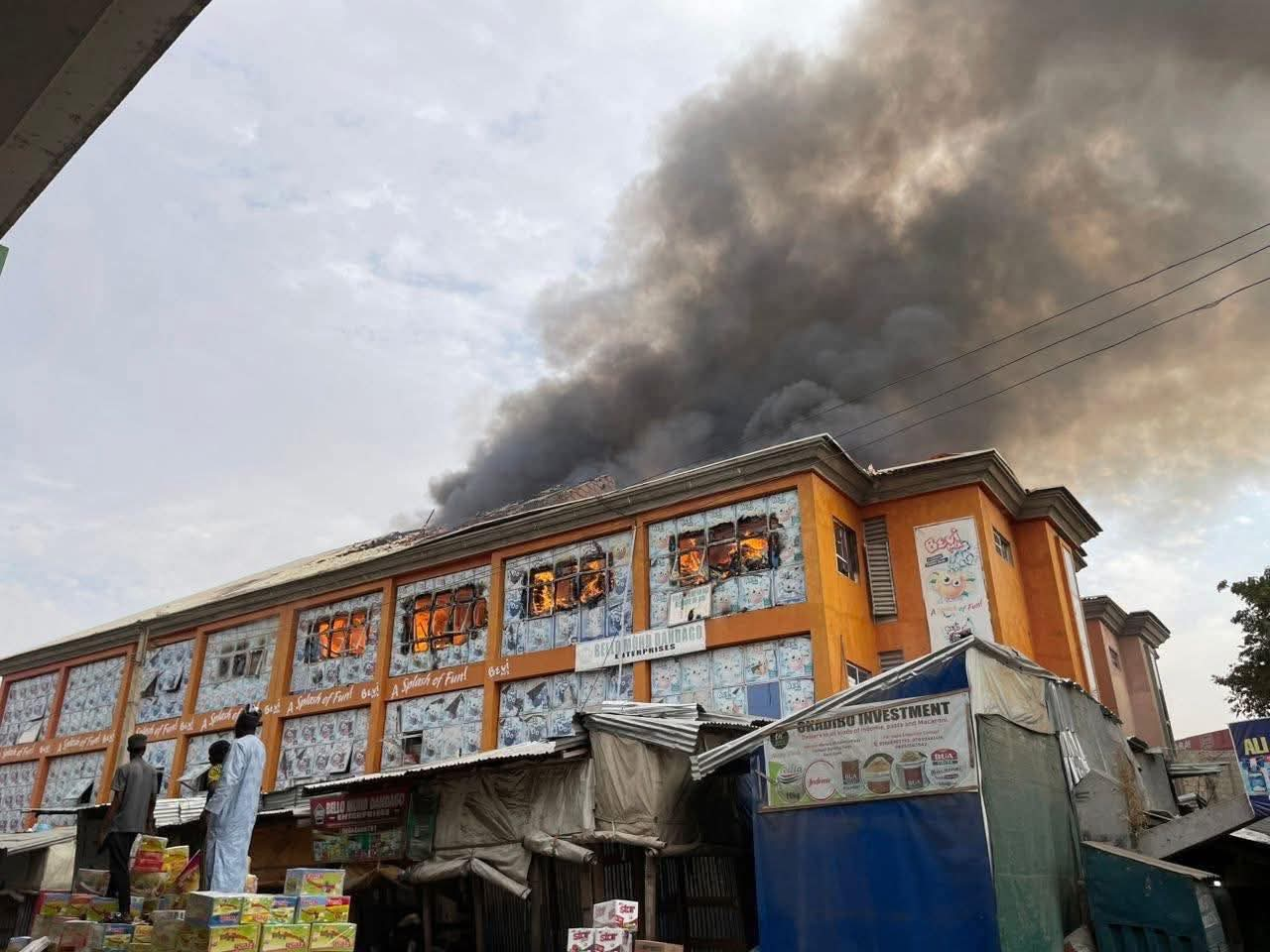
A raging fire on Saturday tore through Gidan Gilas, popularly known as “Gidan Mai,” at Singa Market, destroying goods and triggering fresh fears among traders that the inferno could spread to nearby buildings.
The Daily Reality gathered that the shops, where provision materials are sold, was engulfed in flames as thick smoke rose into the sky, attracting a crowd of anxious residents and traders. Many were seen making frantic efforts to salvage goods while others attempted to stop the fire from extending to adjoining structures.
Eyewitnesses said parts of surrounding buildings had already been affected, deepening tension across the busy commercial hub. “The fire is still burning, and we are afraid it may catch other shops if help does not come quickly,” one trader said.
As of the time of filing this report, the cause of the outbreak had not been ascertained, with no immediate trace to what might have triggered the incident.
Officials of the Kano State Fire Service arrived at the scene with a tanker of water, but the supply was quickly exhausted as firefighters battled to contain the flames. Another tanker was later deployed to reinforce the effort.
A private water tanker from Aspira Nigeria Limited also joined the emergency response to assist in extinguishing the fire.
However, several traders expressed concern that the number of tankers on ground may not be sufficient to completely put out the blaze.
They warned that without additional support, the fire could escalate and affect a larger section of the market.
The latest incident comes just weeks after a devastating fire outbreak at Singa Market caused heavy losses for business owners, further compounding the challenges faced by traders in the area.


Courts rule thousands of times against ICE detentions despite ongoing crackdown
By Sabiu Abdullahi
A review of court records has shown that judges across the United States have repeatedly ruled against the detention practices of immigration authorities under President Donald Trump’s administration.
According to Reuters, findings indicate that since October, courts have issued more than 4,400 rulings that deemed the detention of immigrants by U.S. Immigration and Customs Enforcement (ICE) unlawful. The decisions represent a major legal setback for the administration’s aggressive immigration enforcement policy. Despite this, detentions have continued in many instances.
U.S. District Judge Thomas Johnston of West Virginia criticised the government’s position in one of the cases. He wrote, “It is appalling that the Government insists that this Court should redefine or completely disregard the current law as it is clearly written,” while ordering the release of a Venezuelan detainee.
Many of the rulings stem from the administration’s shift away from a long-standing interpretation of federal law. For nearly three decades, immigrants already residing in the United States could seek release on bond while pursuing their cases in immigration courts. The policy change has triggered widespread legal challenges.
In response, White House spokeswoman Abigail Jackson said the administration is “working to lawfully deliver on President Trump’s mandate to enforce federal immigration law.”
Data shows that the number of people held in ICE custody has surged to about 68,000 this month. That figure represents an increase of roughly 75 percent since Trump assumed office last year.
However, the administration recorded a legal victory at an appeals court in New Orleans. U.S. Circuit Judge Edith Jones ruled that earlier administrations’ limited use of detention powers did not eliminate the authority to expand their application. She stated that prior restraint “does not mean they lacked the authority to do more.”
Government officials argue that the spike in lawsuits was expected. Department of Homeland Security spokesperson Tricia McLaughlin said the trend came as “no surprise” and added, “especially after many activist judges have attempted to thwart President Trump from fulfilling the American people’s mandate for mass deportations.”
Court filings show that detained immigrants have submitted more than 20,200 federal lawsuits seeking release since Trump took office. Judges have ruled in at least 4,421 of those cases that ICE held detainees unlawfully.
One example involved Joseph Thomas, an 18-year-old Venezuelan student arrested during a traffic stop in Wisconsin alongside his father. Both men were asylum seekers with legal work authorisation. Their lawyer, Carrie Peltier, argued they were targeted for “driving while brown.” Judges later ordered their release.
Chief U.S. District Judge Patrick Schiltz ruled that Joseph’s detention was illegal. He cited a lack of proof that ICE possessed a warrant at the time of arrest. In a separate decision, U.S. District Judge Eric Tostrud affirmed that the teenager’s father qualified for a bond hearing. He wrote, “This raises an issue of statutory interpretation that courts in this District have repeatedly considered and rejected, and it will be rejected here as well.”
Legal experts say habeas corpus petitions have become the primary legal route for detainees seeking freedom. The constitutional mechanism allows individuals to challenge unlawful detention in court.
The wave of litigation has placed pressure on the justice system. More than 700 Justice Department attorneys are now assigned to immigration detention cases. Some have appeared in over 1,000 lawsuits each.
Judges have also faulted authorities for failing to comply with release orders. In Minnesota, Schiltz said the government violated 96 court orders across 76 cases. A federal prosecutor in the district later described the caseload as an “enormous burden” on government lawyers.
In New York, U.S. District Judge Nusrat Choudhury ruled that ICE violated two “clear and unambiguous orders” after transferring a detainee while misrepresenting his location to the court.
The Justice Department has defended its actions. Spokesperson Natalie Baldassarre said the administration “is complying with court orders and fully enforcing federal immigration law.” She added, “If rogue judges followed the law in adjudicating cases and respected the government’s obligation to properly prepare cases, there wouldn’t be an ‘overwhelming’ habeas caseload or concern over DHS following orders.”
Advocacy groups continue to assist detainees. Lawyers often wait outside immigration courts to file emergency petitions that prevent transfers to distant detention centres.
Still, many immigrants struggle to access legal relief due to cost or lack of awareness. Judy Rall, the U.S. citizen wife of a Venezuelan detainee, said she could not afford the legal fees required to file a habeas petition. Her husband remains in detention despite having no criminal record. Reflecting on their situation, she said, “Our home burnt down, and I had told them I needed him to come help,” adding, “I assume that is the reason.”
The growing number of lawsuits continues to test the capacity of the courts as legal battles over immigration detention intensify nationwide.
China summons Western envoys in Hong Kong over Jimmy Lai sentencing criticism
China has summoned senior Western diplomats in Hong Kong after their governments criticised the sentencing of media businessman Jimmy Lai.
In a statement issued on Saturday, the Office of the Commissioner of China’s Foreign Ministry in Hong Kong confirmed that the heads of the United Kingdom, United States, Australian and European Union missions were called in over remarks made by their officials.
According to the office, Chinese authorities expressed “strong dissatisfaction and firm opposition” to the comments. It urged the governments concerned to respect China’s sovereignty as well as Hong Kong’s judicial system. The statement also asked them to halt what it described as “irresponsible” remarks on national security cases and to stop interfering in the internal affairs of Hong Kong and China.
Earlier in the month, a Hong Kong court handed Jimmy Lai a 20-year prison sentence. The ruling followed his conviction in a high-profile foreign collusion case prosecuted under the city’s national security law.
Lai, a well-known critic of Beijing and founder of the now-defunct Apple Daily newspaper, has faced several legal battles since the introduction of the security legislation.
The sentencing has continued to draw reactions from Western governments. Chinese officials insist that the case is purely a matter of law and national security.
Reuters

Indian teacher wins $1 million Global Teacher Prize for transforming education in slums
By Sabiu Abdullahi
An Indian teacher and activist, Rouble Nagi, has won the $1 million Global Teacher Prize for her groundbreaking work in bringing education to marginalized communities across India. The award was presented on Thursday at the World Governments Summit in Dubai, an event that attracts leaders from around the world.
Nagi, founder of the Rouble Nagi Art Foundation, has established over 800 learning centers in India. These centers provide structured education for children who have never attended school and supplement learning for those already enrolled. She also paints educational murals across slum walls, teaching literacy, science, mathematics, and history.
Accepting the award, Nagi said the recognition was not just for her but for India. She recalled starting 24 years ago with 30 children in a small workshop, and now reaching over a million children.
> “I think every step has just motivated me, inspired me to take every child in India to school,” Nagi said. “You know when I was a child it was my dream to see every child at school and as you grow up fulfilling that for as many as we can reach, I think it’s a very humbling experience.”
Sunny Varkey, founder of the Varkey Foundation, which awards the prize, praised Nagi’s dedication.
> “Rouble Nagi represents the very best of what teaching can be – courage, creativity, compassion, and an unwavering belief in every child’s potential,” Varkey said. “By bringing education to the most marginalized communities, she has not only changed individual lives, but strengthened families and communities.”
Nagi plans to use the $1 million prize to establish an institute that will offer free vocational training. UNESCO Assistant Director-General for Education, Stefania Giannini, added that Nagi’s recognition highlights the crucial role teachers play in shaping lives.
> “Teachers matter,” Giannini said. “We are honoured to join the Global Teacher Prize in celebrating teachers like you, who, through patience, determination, and belief in every learner, help children into school — an act that can change the course of a life.”
Nagi is the tenth recipient of the Global Teacher Prize since it was established in 2015. Past winners include educators from Kenya, Palestine, Canada, and Saudi Arabia, all recognized for their efforts to improve access to education in challenging environments.
Her work continues to inspire and redefine what is possible in education for underserved communities worldwide.

AI disruption: Why Africa is missing from the conversation
By Abdulhameed Ridwanullah
This week, the article titled “Something Big Is Happening” was published on X by AI entrepreneur Matt Shumer. It became viral with around 80million views, 36k retweets, 105k likes and 5.7k comments at the moment of this writing. The virality stems from the central thesis of the post – AI disruption of white-collar jobs within years. Days later, the CEO of Microsoft AI, Mustafa Suleyman, while granting an interview to the Financial Times, claimed that the tasks undertaken by white-collar workers will be automated within 12 to 18 months (watch the details in the video). Previously, Dario Amodei predicted that up to 50% of entry-level white-collar jobs would be automated within one to five years in his January 2026 essay.
All week, the debate has been whether AI will take your job. The discourse is loud. Spoiler alert! The discourse is almost entirely about the West. The Global South is often an afterthought. So, when I read Shumer say, “the experience everyone else is about to have,” or Suleyman say, “most tasks fully automated in 18 months”, I ask: Whose experience? Automated for whom?
The West debates whether AI will take their jobs. Much of Africa is still waiting for the jobs AI is supposedly coming to replace.
Most importantly, studies have shown that automated AI moderation barely works in the Global South (read the CDT study by Mona Elswah and her colleagues here). In my PhD research, I study how AI content moderation systems fail in Nigerian languages. The failures are systematic, not incidental. Moreover, there are over 2000 languages in Africa. AI moderation seldom works in 3 major Nigerian languages. There is a wide gap between what Silicon Valley promises about AI and the deliverables to the world population. That is the story.
Moreso, this doomsday discourse about new technology is not new. The pattern is real. Connor Boyack’s rejoinder (AI isn’t coming for your future. Fear is) beautifully captures by invoking Bastiat’s insight about the “seen and unseen” changes brought by new technology. The debate all week has been focused on the “seen”, but the “unseen” invoked by Boyack are the new industries and possibilities that emerge when technology reduces costs and eliminates drudgery. No doubt, every major technology disruption has eventually created more than it destroyed. If anything, Africa’s unofficial content creation economy is a pointer to such an opportunity.
However, the challenge is that the benefits are never evenly distributed. They are concentrated where infrastructure exists, languages are resourced, and capital flows. The boom and doom are not the same for a worker in London or Boston and someone in Cape Town, Lagos, Kano or Nairobi. One pays $20 ChatGPT subscription and enlists AI as a co-pilot. But the other is faced with the unseen failure of AI moderation, wreaking havoc in their community. This inequality runs in both directions: who benefits from AI’s capabilities and who is harmed by its failures.
So, the future of AI is not one story. It is two. While professionals in well-resourced economies leverage, adapt, upskill and thrive, billions of people in low-resource economies remain in the blind spot of a technology that was never designed for them.
The real question is not whether AI will take your job. It is whether AI will equally serve everyone or continue to perpetuate historical inequality.
This is the conversation we should all be having.
Abdulhameed Ridwanullah is a doctoral researcher working on AI and platform studies in Nigeria at Media for Empowerment and Impact Lab, Northeastern University, Boston. He can be reached at olaitanrido@yahoo.com