

NBA applauds Kano governor for sacking aides over death threat, derogatory remarks
By Muhammadu Sabiu
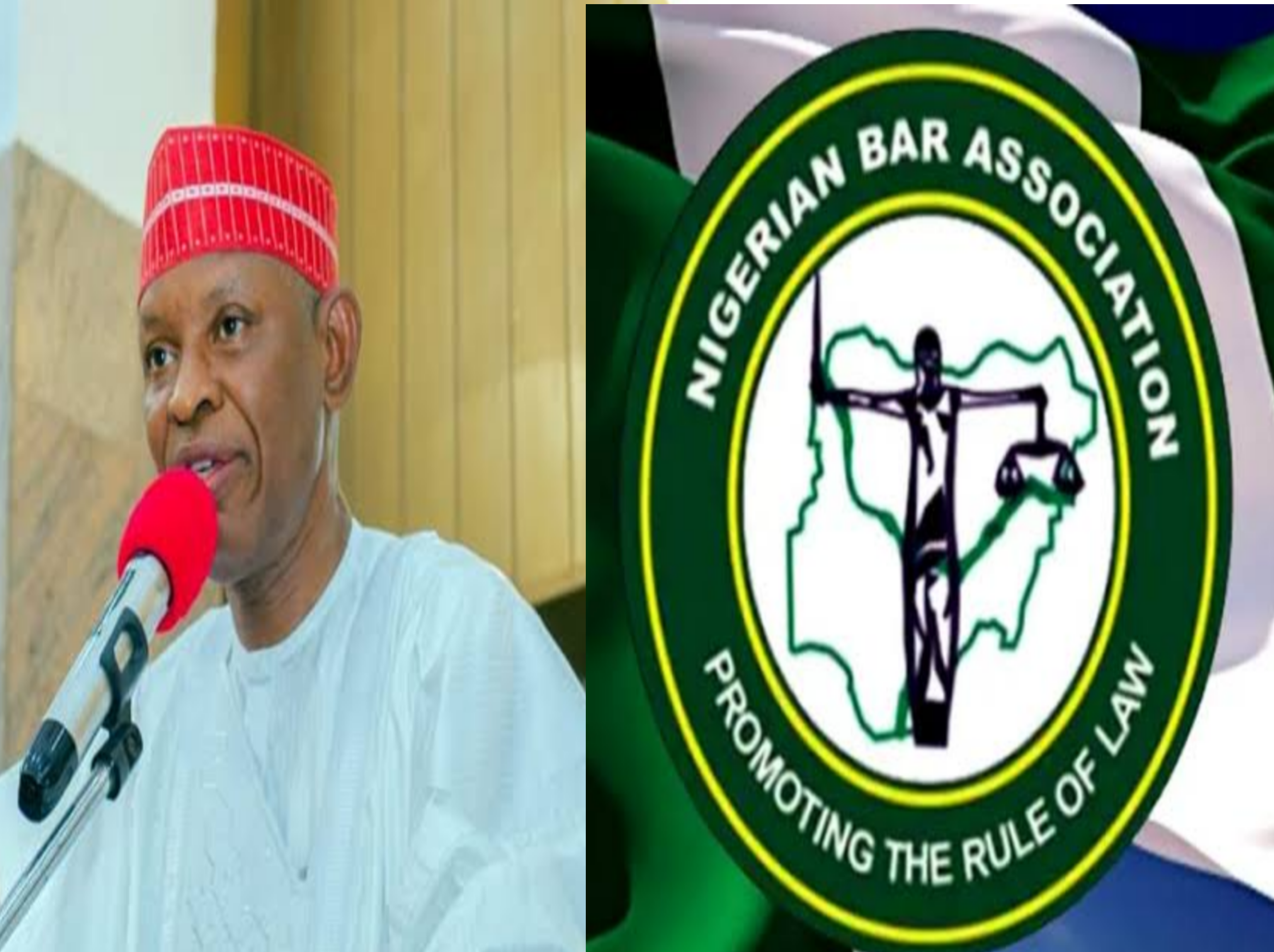
The Nigerian Bar Association (NBA) has commended Kano State Governor, Abba Kabir Yusuf, for his prompt response in dismissing two of his aides following a disturbing incident involving a death threat against judges of the governorship tribunal and derogatory comments made about Vice President Khasim Shettima.
The incident unfolded on Thursday when the Commissioner for Lands and Physical Planning, Adamu Aliyu Kibiya, addressed journalists during a special prayer session organized by NNPP supporters.
In a shocking statement, Kibiya issued a threat to the judges of the governorship tribunal, warning that anyone accepting a bribe to manipulate the judgement would face dire consequences.
Simultaneously, during the same prayer session, Special Adviser to the Governor on Youth and Sport, Yusuf Imam, known as Ogan Boye, made a series of derogatory remarks against Vice President Khasim Shettima concerning the impending gubernatorial tribunal judgement.
Barr. Suleiman Gezawa, Chairman of the NBA’s Kano branch, expressed his views on the matter in on Friday during an interview with a Nigerian online newspaper.
Gezawa called upon Governor Abba Kabir Yusuf to take disciplinary action against Commissioner Kibiya, emphasising that the statements made did not represent the official stance of the state government.
In a swift response, the State Commissioner for Information, Baba Halilu Dantiye, confirmed on Friday evening that Governor Abba Kabir Yusuf had terminated the appointments of Commissioner Adamu Aliyu Kibiya and Special Adviser Yusuf Imam.
Governor Yusuf also issued a directive, instructing all heads of Ministries, Departments, and Agencies (MDAs) to confine their comments and interviews to their respective offices.
Chairman Gezawa of the Kano NBA applauded Governor Yusuf’s decisive actions, emphasising the importance of distancing the administration from the careless comments made by his aides.
Gezawa further called upon security agencies to launch an investigation into the death threat issued by Commissioner Kibiya, suggesting that there might be ulterior motives behind the threat.
The swift response by Governor Abba Kabir Yusuf has been described by many as a clear show of commitment to upholding the integrity of the judicial process and preserving the dignity of public office in Kano State.
Fall of the Sokoto Caliphate: Some thoughts
By Huzaifa Dokaji
When people reflect on the fall of the Sokoto Caliphate in 1903, they often conjure up images of British soldiers armed with the formidable Maxim gun on the left, juxtaposed with local inhabitants wielding swords, bows, and arrows on the right, fervently chanting “Allahu akbar.” Unfortunately, this portrayal does not align with historical reality. The foot soldiers were mainly Africans, while Europeans primarily served as commanders and strategists rather than frontline combatants. The bulk of the invading forces were drawn from previously subjugated regions, frequently comprising individuals from the target community itself.
As demonstrated by Philip Afaedie’s PhD thesis, The Hidden Hand of Overrule: Political Agents and the Establishment of British Colonial Rule in Northern Nigeria, 1886–1914, individuals such as Adamu Jakada established their reputations and livelihoods by providing valuable intelligence to European forces. In the case of Kano, for instance, Ciroman Kano Abdu Lele, the son of Emir Kano Tukur (reigned 1893–1895), supported the British invasion in exchange for their promise to restore him to the Kano throne, which his family had lost after the Kano Civil War (1893–1895), known as the Basasa (of course they didn’t honour the agreement after the war!). Others, driven by diverse motivations, also aligned themselves with the British cause.
As recounted by Baba of Karo to Mary Smith (see Baba of Karo: A Woman of the Hausa Muslim), people in rural areas, fed up with pervasive political and social corruption, celebrated colonial conquest with a popular song, “Nasara kun dade ba ku zo ba”. The Resident of Kano also noted in an intelligence report to the British acting High Commissioner on July 9th, 1903, that the peasantry embraced British conquest due to their deep-seated resentment towards their rulers. “Nasara kun dade ba ku zo ba” carries more profound implications than its composers may have intended. Scholars like Murray Last (1967), Rudolph Ware (2014) and Paul Lovejoy (2016), along with others, have shown us how and why the Sokoto Jihad was one of the most important political and social revolutions of the 19th century, thanks to the egalitarian nature of its goals. However, Nasara kun dade ba ku zo ba demonstrates how such ideals were lost by the closing decade of the century, prompting common people to seek refuge in the hands of Christians. Nevertheless, the intellectual class remained committed to their quest for an egalitarian society through the Islamic ideological vehicle.
M.S. Umar’s seminal work, Islam and Colonialism: Intellectual Responses of Muslims of Northern Nigeria to British Colonial Rule, has powerfully shown us how such intellectuals reacted to British colonial conquest and the various strategies they adopted to challenge it. They saw it as temporary—God’s wrath upon an erring community. Defining the conquest as a temporary setback, the grand vizier of the Sokoto Caliphate equated it to the shaving of a beard.
In his poems titled Nuzhah and Intisaf, Sheikh Yahya an-Naffakh (b. 1898 and known as Malam) described the British conquest as the ‘triumph of absurdity’ caused by scholars who have replaced ‘the humility of Knowledge with the stupidity of ignorance’ and rulers who have exchanged ‘the wisdom of governance with the arrogance of past glory’. Malam himself came from a family that was a victim of such crass anarchy. The winning side of the Kano Civil War imprisoned his father, who was a legitimist. A young Malam secured his release by writing a petition to the Resident of Kano, Mr. Palmer, advocating against the unjust imprisonment.
Although oral traditions suggest that Dan Fodio prophesied the fall of the Caliphate to European Christians, it is more plausible that news of their encroachment reached Sokoto through traders and pilgrims travelling the trans-Saharan trade routes, ultimately reaching Mecca. For instance, in the early 19th century, the influential Lagos trader Madam Tinubu sent a letter to the Caliph of Sokoto, Bello dan Fodio, informing him of European activities along the coast. Furthermore, Paul Lovejoy’s research on Umar el-Fellati reveals that Fellati witnessed the British occupation of Egypt in 1882 and even acted as a double agent, providing the British with information about the Caliphate while simultaneously reporting on British activities in Northern Africa.
Huzaifa Dokaji is a PhD student and teaching assistant at the Department of History, State University of New York at Sony Brook. He can be reached via huzaifa.dokaji@stonybrook.edu.

Ronaldo institutes legal action against former club Juventus over unpaid €19.9 million
By Muhammadu Sabiu
Cristiano Ronaldo, the iconic Portuguese footballer, is set to sue Juventus Football Club for an alleged non-payment of €19.9 million, according to reports from Gazzetta dello Sport.
The legal action comes as a response to the financial difficulties faced by Juventus during the COVID-19 pandemic.
Ronaldo, who previously played for Juventus from 2018 to 2021, has reportedly taken his grievances to the Turin Prosecutor’s Office.
His decision to pursue legal action follows unsuccessful attempts to resolve the matter through negotiations with the club.
As of now, Juventus has not issued an official statement regarding the lawsuit, and the football world eagerly awaits further developments in this high-profile dispute.

FG ‘impressed’ with speed of $2 billion rail project from Kano to Niger Republic
By Uzair Adam Imam
The Federal Government of Nigeria has commended the level of ongoing construction of the Kano-Maradi, Niger Republic, standard gauge rail project.
The Minister of Transport, Sen. Ahmed Alkali, expressed this satisfaction shortly after inspecting the project on Friday.
Alkali spoke to newsmen at Dadin Kowa in Kazaure Local Government Area of Jigawa, adding that he was satisfied with the level of work done so far.
He said, “We are fully committed in ensuring timely completion of the ongoing Kano – Jigawa – Maradi rail line project, aimed at boosting the economy of the Nigeria and Niger republic.
“We are working hard to fix this country; so in terms of reviewing the financial aspect we must make sacrifice, including the contractor,” he said.
He also noted that with the speed at which the project is going, hopefully the contactors will meet the target of timely completion by 2025.
“The $2 billion project awarded by former President Muhammadu Buhari is expected to be completed at the set agreed project target year of 2025.
“The earth work of the project has reached 80 per cent stage, while real rail line work would soon commence after the earth works.
“I am very impressed with what we have seen; we came all the way from Dawanau where the project started so that we have first hand information of the level of the execution of the project and the contractors are in compliance with the level of specifications of the job,” he stated.
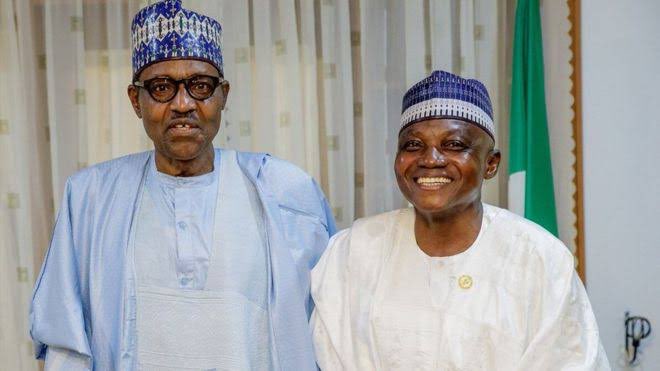
Garba Shehu defends Buhari administration’s record amidst criticism
By Muhammadu Sabiu
Garba Shehu, the spokesperson for former Nigerian President Muhammadu Buhari, defended the administration’s record while addressing ongoing criticism in a statement released on Wednesday.
Shehu acknowledged that while the Buhari government may have made some decisions that were questioned, he emphasised that the former president’s intentions were always aimed at achieving positive change.
Shehu pointed out that the administration took several significant steps to combat corruption during its eight years in power.
Notable initiatives included the implementation of the Treasury Single Account (TSA) and the Integrated Personnel Payroll Information System (IPPS).
These measures were aimed at improving transparency and financial accountability within the government. Despite these accomplishments, Shehu acknowledged that the Buhari government faced criticism from various quarters.
He stated, “There has not been a single area that had not been touched by the Buhari government. We have seen massive positive changes in the last eight years.”
However, he compared critics to individuals pretending to be asleep, implying that they were resistant to acknowledging the government’s achievements.
Shehu also addressed allegations of corruption within the administration, asserting that those who criticized the government were often motivated by resentment over lost opportunities.
He made a specific reference to a Buhari “critic” who had served as a military governor in a northern state, suggesting that even his underwear had been procured using government funds.
The statement further highlighted the administration’s stance on curbing wasteful spending and emphasised that President Buhari had declared that “no more free money.”
Shehu argued that money allocated to National Security Agencies was intended for security purposes and should not be misappropriated.
Shehu concluded that President Buhari had fulfilled his part and would be judged by history. He expressed confidence that history would judge the former President fairly.
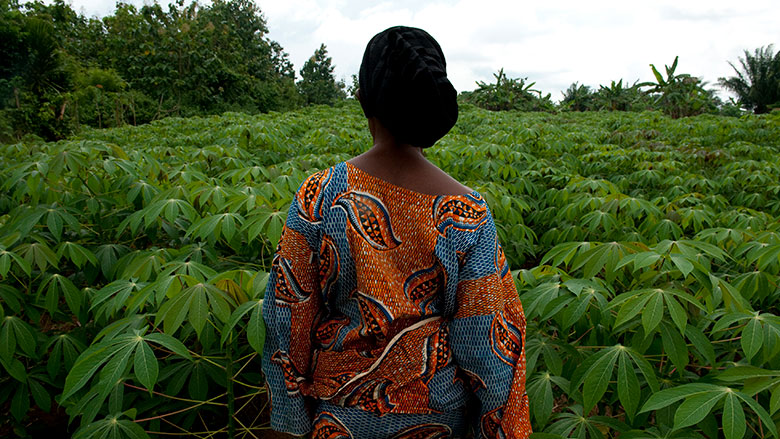
Give women a chance to break the shackles
By Emurence Imran Nata’alah
This is not a promotion of feminism, but it has become part of our people to meddle in what does not concern them, which is uncool in Islam: “Part of the perfection of someone’s Islam is leaving alone that which does not concern them.”
A woman passes through different positive and negative phases: People will define her life, plan her life, and monitor and count every move she makes.
Know this: The most annoying thing about these people who plan a woman’s life is that they aren’t family; they barely know a thing about her but are eager to say one or two negative things about her. I meant something like: What is her biggest sin, whom she sins with, how did she sin the alleged sin, and how did she react to the stupid allegations?
A woman must be super strong, for what will come is bigger and mightier than seen in movies like “Iron Lady” and all of Its sorts. People are mean, especially to women trying to be successful without going astray or becoming a negative example to the younger ones.
This does not mean people generally hate successful women out there, but in reality, people hate success. Even men face stuff like these, but it’s more prevalent when it’s a lady in the picture.
A woman should not let people know her weaknesses because If she cries out because of the negativity, they would call her a witch, and if a woman smiles, they would say it’s too much — she has no class.
If a woman frowns, she would be called ungrateful; she has forgotten all the blessings bestowed upon her, and if she isolates herself because of the negativity by keeping her head up—they would ask questions like: “Why are you isolating yourself?” “Are you depressed?”
When a woman minds her business and interacts with others, they would say she’s bragging. While she’s waiting for the right spouse—which is the most common thing in our part of the world; they suddenly become curious and considerate—people would accuse her of liking material things and not having a sound mindset.
The moment things start falling in place and a woman keeps her head up, BOOM! They would still say she’s too old, and no one will want her or suit her.
When she starts concentrating on profits in her business, people say she’s fornicating or selling her body for money and hurl many more negative comments just to hurt her. These people believe she can’t succeed in her small business without venturing into part-time prostitution.
When a woman finally gets a spouse, these people would say, “She’s married to a poor man. Is that all that she got after all the pride and ego?” Only a few will pray for you, honestly. All you need to know is do and don’t do this; happiness will be by your side.
When a woman’s life is going perfectly or something close to perfect, her husband is caring, and serenity becomes her friend, they would still manage to say she charmed her spouse. They would call him wife, and she’s the husband. According to their perspectives, a woman can’t be loved wholeheartedly, romantically, without charming her spouse.
They say, “A real man should be brave and act like a king in his house.” So, how does acting as a king correlate with an inferiority complex? I don’t know if there’s a correlation between being an Alpha and being foolish because an Alpha would never stoop this low because of an inferiority complex in the name of being an Alpha. Anyway, it’s a story for another day.
A woman is a lady with an entrepreneurial mind. She’s a lady who wants freedom and needs to be pampered as always like it’s always been before an inferiority complex came into existence.
Give women freedom. Don’t marry them and cage them for your selfish reasons. If you don’t want a successful or career woman, please go for something within your reality and spare these for those who live In the same way.
I know some of you would be in awe of how I came up with these negative stories, while there are many positive stories about women treated as Queens, that they are.
Okay. Hear me out. The number of marriages that crashed due to the inferiority complex isn’t something we should write about; the resulting negative treatment of spouses due to the inferiority complex isn’t something close to being friendly.
Despite all these phases, some women fought through and are living happily ever after, but then, we have to let the younger ones prepare for what is about to come because society has a bigger influence in their lives.
I’m saying that a woman shouldn’t be deprived of her rights and chances of making things right. She needs to be corrected in a romantic and caring way. She has imperfections in her nature. She shouldn’t be a target of suspicious actions.
Give her a chance, consult her and make her bloom. It’s not that hard.
| Emurence Imran Nata’alah wrote via emurenceimran@gmail.com. |
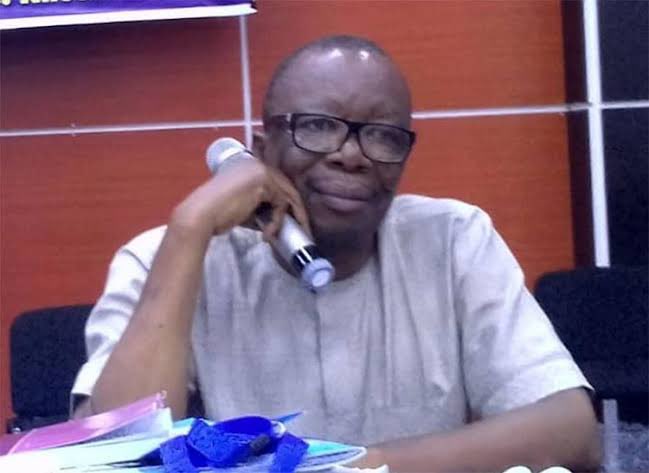
Not funding universities is unconstitutional, ASUU president tells FG
By Muhammadu Sabiu
The President of the Academic Staff Union of Universities (ASUU), Prof. Emmanuel Osodeke, has emphasised that the Federal Government of Nigeria is constitutionally mandated to fund universities in the country.
This statement comes in response to recent remarks made by the Minister of Education, Prof. Tahir Mamman, regarding the autonomy of universities in seeking alternative funding sources.
Prof. Osodeke highlighted that the provision for federal funding of universities is enshrined in the country’s Constitution.
He specifically referenced Section 18 of the Constitution, which explicitly states that universities, along with primary and secondary education, are to be provided for free by the government.
“There is no way the Federal Government of Nigeria would say they would not fund public universities because it is there in the law. It is there in the Constitution; look at Section 18 of the Constitution; it says ‘university, primary, and secondary are free,” asserted Prof.
Osodeke. However, he acknowledged that while the constitutional mandate exists, the issue lies in its enforceability.
The ASUU President noted that despite the legal obligation, the provision is not judicious, making it difficult to enforce.
In response to recent discussions about the government’s granting universities more autonomy to explore alternative funding mechanisms, Prof. Osodeke expressed skepticism about the government’s intent.
He stated, “I don’t think this government, from what we have seen, is going to say we are going to hands-off from university.”
He further emphasised the disparity between Nigeria’s education budget and its gross domestic product (GDP), describing it as one of the lowest in the world.
This financial imbalance highlights the crucial role of government funding in sustaining the quality and accessibility of higher education in the country.
As the debate over university funding and autonomy continues, Prof. Osodeke’s remarks serve as a reminder of the constitutional duty of the Federal Government to provide financial support to universities and the importance of addressing the challenges facing the education sector in Nigeria.
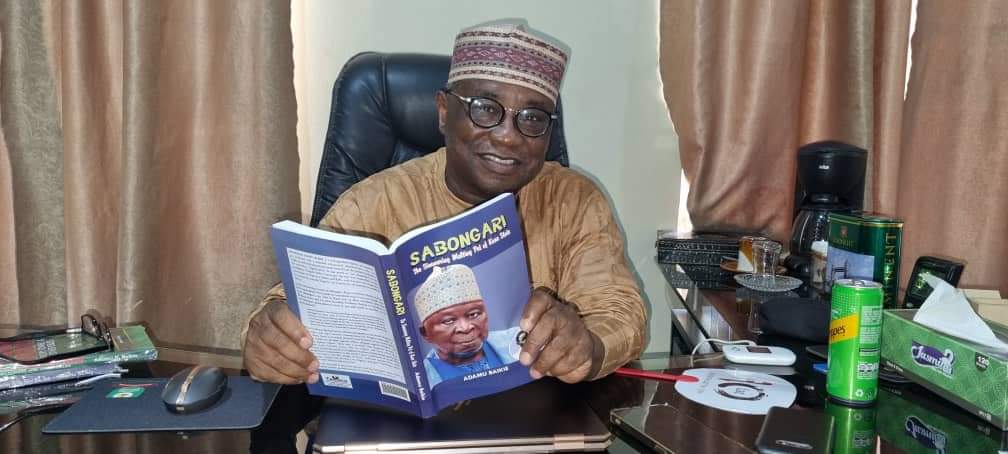
Sabon Gari, Kano – Prof. Adamu Baikie’s insider perspective
By Prof. Abdalla Uba Adamu
Sabon Gari Kano has always been a melting pot – drawing multiple nationalities and ethnicities who converge in the settlement and make it truly unique. Prof. Adamu Baikie’s “Sabongari: The Simmering Melting Pot of Kano State” is the latest addition to the literature on the area. Having grown up in the area, Prof. Baikie gives a unique ethnographic account of the place and its development.
More of a personal recollection from a resident, than a rigorous archival excavation of community history, Baikie’s Sabongari [sic – that is exactly how he spelt it throughout the book] provides additional fascinating information about other developments in Kano. In particular, Education, in which Prof Baikie also released a companion book, “Nigerian Education: Ivory Towers & Other Issues.” It’s a pity that the few pictures included in the Sabongari book did not come out too well, being black and white and blurry.
Prof. Baikie’s discourse on Sabon Gari (my preferred spelling) is similar to Neil Skinner’s “Alhaji Mahmudu Ƙoƙi – Kano Malam”, in which the subject provides a primary participant observer’s insight about the development of either events, or in this case, a community. It is truly fascinating.
There were, of course, other works on Sabon Gari Kano, long before this. The most monumental was Ahmed Bako’s “Sabon Gari Kano: A history of Immigrants and Inter-group Relations in the 20th century” (UDUS Press, 2006) and based on his groundbreaking PhD thesis, “A Socioeconomic History of Sabon Garni Kano, 1913-1989” submitted to Bayero University in 1990. Prof. Baikie approaches the study of Sabon Gari from the perspective of ‘son of the soil’ who lived in the neighborhood, playing footer, attending Church service there and interacting with the waves and waves of Nigerian and West African immigrants who settled in the borough as neighbors and friends.
Prof Adamu Baikie mentored both me and my father at various stages of our careers, so I certainly don’t mind plugging this wonderful memoir. This is not a review, as I am sure Dr Shamsuddeen Sani will be doing the honors soon enough [on Facebook]. It is just to let people know that the book, launched on 20th August 2023, is now available at Zamani Bookstore, Sabon Gari at the cost of ₦3,500. It is another addition to our understanding of the history of Kano.

Nigerian striker Victor Osimhen nominated for FIFA Best Player award
By Muhammadu Sabiu
Nigerian football star Victor Osimhen has been nominated for the prestigious FIFA Best Player award, just days after his Ballon d’Or nomination for 2023.
This nomination places Osimhen in the elite company of football’s finest talents.
The list of nominees in the men’s category is nothing short of star-studded, featuring Argentine superstar Lionel Messi, the prolific Erling Haaland, the maestro Kevin De Bruyne, and the electric Kylian Mbappe.
Osimhen’s inclusion in this group is a testament to his remarkable skills and achievements in the world of football.
What sets Osimhen’s nomination apart is that he is the first Nigerian player to be listed for the FIFA Best Footballer Award since its inception, a milestone that reflects the growing influence of African football on the global stage.
This award, first won by Cristiano Ronaldo in 2016, has now opened its doors to the Nigerian talent.

The tragic death of Dr Tijjani Ibrahim: A call to improve healthcare in Nigeria
By Aliyu Musa Dada
Today, I want to bring our attention to a heartbreaking incident that highlights the shortcomings in our government’s support system. Dr. Tijjani Ibrahim, a young and dedicated medical doctor, fought bravely against decompensated chronic liver disease caused by Hepatitis B infection.
Despite the efforts of his friends to raise funds for his treatment, Dr Ibrahim tragically passed away before realising the required amount. This unfortunate event raises serious concerns about lacking a robust system to assist individuals, even those tirelessly dedicated to serving others, like Dr. Ibrahim.
We, as citizens, deserve a government that prioritises the well-being of its people, especially those in critical need of medical support. It is disheartening to witness the struggles faced by individuals who have dedicated their lives to saving others, only to be let down by a system that fails to provide adequate assistance.
Dr. Ibrahim’s passing is a stark reminder of the urgent need for reforms and investment in healthcare infrastructure. It should not rely solely on the goodwill and generosity of friends and well-wishers to fund essential medical treatments. Our government should be responsible for ensuring accessible and affordable healthcare for all citizens, especially those in dire situations.
In this moment of grief, let us remember Dr. Ibrahim as a compassionate and dedicated doctor who selflessly served his patients until the end. Our thoughts and prayers go out to his family and friends during this difficult time.
May Dr. Tijjani Ibrahim’s soul rest in peace, and may his legacy inspire us to advocate for change. Let us raise our voices and demand better support systems for individuals facing medical challenges.
We must unite as a community to address these issues and hold our government accountable. We can start by engaging in constructive conversations, raising awareness about the gaps in healthcare support, and urging policymakers to prioritise the well-being of their citizens.
Remember, change begins with us. Let us honour Dr. Ibrahim’s memory by actively working towards a healthcare system that provides timely and accessible support for all those in need.