



Hamas delays hostage handover, cites agreement terms
By Sabiu Abdullahi
The armed wing of Hamas, the Ezzedine al-Qassam Brigades, announced on Saturday a delay in the handover of a second group of hostages.
This was part of a truce deal with Israel, contingent on Israel’s adherence to the terms of the agreement.
The issues at the centre of the delay involve the entry of humanitarian aid to the north of the Gaza Strip and the criteria for selecting prisoners for release.
The truce agreement, spanning four days, included the release of Palestinian prisoners in exchange for a three-to-one ratio.
Initially, a Hamas source informed AFP that the handover of 14 hostages to the Red Cross had commenced but later reported a halt in the transfer process.
However, an Israeli official countered, stating that the hostages had not yet been handed over to the Red Cross.
Despite the delay, the Israeli source maintains that Israel has not violated the agreement, alluding to a a different perspective on the situation.
The intricacies of these negotiations continue to unfold against the backdrop of the fragile truce between Israel and the Islamist movement.
Electoral victory: Whose Addu’a does Allah accept?
By Mohammad Qaddam Sidq Isa (Daddy)
There is a general but simplistic assumption that electoral victory necessarily implies Allah’s endorsement of the winner and His disapproval of the loser.
Politicians, potential beneficiaries of the electoral victory of politicians, and overzealous followers engage in supposedly wholehearted Addu’a for their and their benefactors’ electoral victory.
The practice of Addu’a for electoral victory has grown into a phenomenon and has indeed become an integral part of politicking in Nigeria. It has, in fact, turned into an industry of a sort where huge amounts of resources are invested in engaging amateur, part-time and professional Addu’a service-providing malamai who provide their services to the highest bidders or whom they expect higher gain from them of whatever kind.
Besides, with the growing phenomenon of holding the so-called special prayer sessions in public places for the success of one politician or another, the ‘political Addu’a industry’ has been growing further, attracting more investments from politicians. This is even though such so-called special prayer sessions bear the hallmarks of Bid’a.
On their part, winners in elections and their followers brag that their electoral victory necessarily implies Allah’s acceptance of their Addu’a hence His endorsement of them. They equally mock their opponents and attribute their loss to Allah’s disapproval of them. Whereas, in reality, nobody knows for sure whether or not a particular electoral victory implies Allah’s endorsement, or whether or not a particular loss implies His disapproval.
Because the fact that politicking under democracy is inherently characterized by gross dishonesty, hypocrisy, cunning, deceitfulness, bribery and other serious vices, which arguably all politicians perpetrate in their struggle to outmanoeuvre one another, makes the whole system too filthy for Allah to have anything to do with it, in the first place, let alone endorse any politician against another.
The winner, therefore, only wins thanks to his ability to somehow outdo his opponents in that regard, and the losers only lose due to their failure to outplay the winner, while none enjoys Allah’s endorsement, for all are equally guilty of the same grave sins, regardless of the extents of their involvements, respectively. After all, they actually never take Addu’a seriously in the first place; they only feign commitment to it in the context of their manipulation of religion for political interests.
Electoral victory under democracy is just like winning in gambling, which obviously never implies Allah’s endorsement.
Though craving for power and the temptations of what comes with it are irresistibly tempting, they aren’t worth the price of politicking under democracy, with all that it entails, which those involved pay in the hereafter.
Mohammed Qaddam wrote via mohammadsidq@gmail.com.
Body shaming: Understanding, overcoming, and promoting body positivity
By Aisha Musa Auyo
In simple terms, body shaming is defined as the action or practice of mocking or stigmatising someone by making critical comments about the shape, size, or appearance of their body.
Body shaming involves humiliating someone by making inappropriate or negative comments about their body size or shape. As well as “fat shaming,” you may also hear negative comments if you’re underweight or about a specific body part.
This type of criticism can be made to others or yourself. You may feel unhappy with your weight or body’s appearance and judge yourself harshly. You may even engage in negative self-talk, such as “I feel so fat today” or “I need to stop stuffing my face with food.”
The act of body shaming can be carried out in person or remotely via the internet and social media and can be done by your parents, siblings, friends, or people you’re not even close to.
Even in a joking manner, remarks about what you eat or how much food you consume constitute body shaming. Giving someone advice about dieting or praising weight loss is also considered body shaming, whether intentional or not.
Your friends and family often don’t want to hurt your feelings, but their comments can still be critical. They may not realise the negative effect that questions like “Have you lost weight?” or “Do you need to eat all of that?” can have.
Why Do People Body Shame?
You know how hurtful these behaviours can be if you’ve received those judgments—or even within earshot of words, looks, and gestures that judge others. So why do people do it?
Before I discuss why people choose to body shame others, I would say right up front: reasons don’t equal excuses! Ever. There’s no appropriate reason to make another person feel bad about the skin they’re in.
At the same time, it can be helpful to understand the motivation behind a person’s hurtful words. Doing this gives us perspective. Perspective helps us decide on the best path forward. Depending on the situation, we might:
* Shake off what another person says about us
* Remain confident as we see the lack of confidence in others
* Understand the heart behind hurtful words
* Call out misbehaviour in a calm, respectful manner
* Shut down rude talk without room for more to be said
With this in mind, let’s gain some perspective on why people do it.
We could talk about many interesting things—and have many good reasons to laugh. So why talk about how a person looks, right? Unfortunately, plenty of people do. Let’s look at some of the reasons why
1. Insecurity: When a person feels self-conscious about their body, they may talk badly about another person’s body to make themselves feel better.
2. Societal norms: For so long, joking about how people look has been something that many people were brought up thinking is okay. This is learned bias.
3. Societal norms: For so long, joking about how people look has been something that many people were brought up thinking is okay. This is learned bias.
4. Best of intentions: Friends, family members, and even medical professionals can think they’re helpful by pointing out perceived areas for improvement in another person.
5. Lack of awareness: A person may refer to a friend’s stature or frame and not realise that they’ve crossed a line or that the person on the receiving end doesn’t like it.
5. Immaturity and lack of empathy: Some people don’t take the time or care to consider their words or how they might affect another person.
Please, allow me to be blunt. Beyond gaining perspective, it doesn’t matter why a person chooses to body shame. After all, the results are the same. Body shaming is known to cause mental health problems, eating disorders, low self-esteem, etc.
Most of us know firsthand about the adverse effects of body shaming because we’ve been on the receiving end of it at one time or another—especially when we were growing up. Research shows that 94% of teen girls and 64% of teen boys have been body-shamed.
The effects of body shaming and how to overcome it
Hearing negative comments about your appearance can impact your body image and leave you feeling anxious and self-conscious. However, there are ways to manage body shaming or other critical remarks and achieve body acceptance.
Supermodels and prima ballerinas have insecurities and imperfections, but we still perceive them as the ultimate representations of beauty. You may feel inadequate and unworthy if you don’t meet these standards.
And if you experience body shaming by others and take their negative comments to heart, it can lead to unhealthy behaviours and mental health problems, such as:
Eating Disorders: Having a negative body image is one of the main factors for developing disordered eating or an eating disorder, such as anorexia, bulimia, or binge eating.
You may start a diet that involves restrictive eating to change your body shape or size. However, such dieting can spiral into harmful behaviours like skipping meals, fasting, vomiting after eating, excessive exercising, or overusing laxatives. Over time, you deprive your body and brain of essential nutrients necessary for optimal health.
Body shaming comments such as “Did you lose weight? You look so much better” can be triggering and create more disordered eating habits in an attempt to maintain or lose even more weight.
Body Dysmorphic Disorder (BDD): Experiencing body shaming can interfere with your self-image and make you feel highly self-conscious. This can escalate into body dysmorphic disorder, where you become obsessed with a perceived appearance flaw that can create repeated avoidance behaviours.
Daily life can become consumed with concerns about a minor flaw or one not apparent to others. You may constantly look at yourself in the mirror or avoid mirrors altogether, conceal body parts you don’t like, pick at your skin, or frequently ask others if you look okay.
Being constantly ashamed of your body can also impair your performance at school and interfere with your relationships with peers, teachers, and family members. Fears about being judged by others may cause you to limit or avoid social activities.
Anxiety and depression: Body shaming can trigger or worsen existing symptoms of anxiety and depression. If you are body-shamed in public or on social media, you may try to avoid going to school or other situations where this shaming might occur. You may withdraw from others and feel isolated and alone.
Hearing critical comments about your appearance can also be humiliating, heighten your insecurities, and damage your self-esteem. Consequently, you may engage in negative self-talk as you internalise these feelings of worthlessness. You may tell yourself things like “I am a bad person” or “I am completely worthless.” This can escalate into extreme loneliness, depression, anxiety, and poor body image.
Physical Health Issues: Fat shaming, in particular, is rampant in our society as obesity is associated with being lazy, unattractive, and lacking the willpower to lose weight. In one study, over 70% of adolescents reported being bullied about their weight in the past few years. This can be harmful to your physical as well as psychological health.
Rather than being a motivating factor for losing weight, fat shaming has the opposite effect. The stress has been linked to a reduction in physical activity and the consumption of more calories.
Don’t body shame others
Research shows that when you promote body positivity to others, you also feel more positively about your body. Surround yourself with people who are courteous and treat others with respect. Avoid bullies who engage in body shaming and talk about the flaws of others.
Establish boundaries with your friends and clarify that you will not tolerate comments about your body or weight. You can also set an example by standing up for others who are the targets of body shaming.
So, let’s work together to stop body shaming and talk about more interesting things. The truth is, we all body shame one another. We are sometimes the villains and sometimes the victims. And the society has made it very normal. If we genuinely believe that every one of us is created by our Lord, none of us chooses how we look in most cases, and none of us knows how we will look tomorrow (life happens… story for another day), then we should stop body shaming. It starts with you and I.
Were you ever body-shamed? Please share with us how you felt, how it affected you, and what you did to overcome it.
Aisha Musa Auyo is a Doctorate researcher in Educational Psychology. A wife, a mother, a homemaker, caterer, parenting, and relationship coach. She can be reached via aishamuauyo@live.co.uk.

Court of Appeal upholds Uba Sani’s victory as Kaduna governor
By Sabiu Abdullahi
The Court of Appeal in Abuja has affirmed Uba Sani’s victory as Governor of Kaduna State, dismissing the Peoples Democratic Party’s appeal challenging the March 18 election results.
The court upheld the tribunal’s decision, citing the PDP’s failure to adhere to legal timelines and highlighting irregularities in the evidence presented.
With this ruling, Uba Sani’s position is secure, concluding the post-election legal dispute.
Another batch of 50 graduates fly to India for master’s degrees under Kano government’s scholarship
By Sabiu Abdullahi
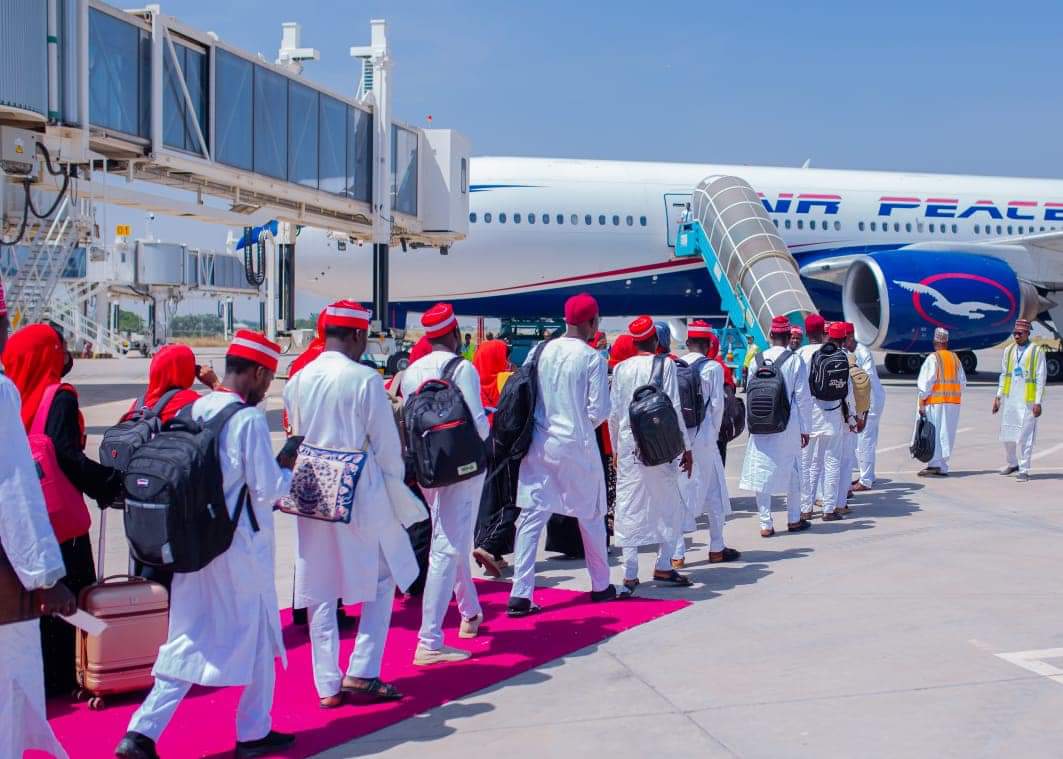
The Kano state government has dispatched the fifth batch of 50 first-class graduates to pursue their Master’s Degree programmes in India.
The beneficiaries, part of the 1,100 indigenous students sponsored by the state government for overseas studies, departed from Malam Aminu Kano International Airport for Lagos on a Max Air aircraft at 7:30 a.m. on Friday.
The Commissioner for Higher Education, Dr. Yusuf Kofarmata, and other government officials were present to witness the departure.
From Lagos, the beneficiaries are scheduled to board an Air Peace flight to India at 2:00 p.m. Speaking after the takeoff, Dr. Kofarmata noted that this initiative is a continuation of the government’s commitment to the 1,100 postgraduate scholarship programme for the academic year 23-2024.
The selected graduates, now on their way to reputed institutions like Sharda, Symbiosis, Mewar, Sri Sai, Swarnnim, and Kalinga, were chosen based on their outstanding performance during their undergraduate studies.
Highlighting the significance of the programme, Dr. Kofarmata stressed that the students would focus on internationally competitive fields, contributing to bridging the manpower gap not only in Kano State but also across the nation.
“A total of 550 students are the first batch who are going to eight reputable universities to study in internationally competitive areas of professionalism to bridge the manpower gap in the state and across the nation.
“The students are also expected to acquire experience, skills, and knowledge with the view to revamp the state commercial status and explore other potential for socio-economic development,” he said.
Providing an update on the progress of the previous batches, Dr. Kofarmata revealed that the students had already commenced their academic pursuits, and approximately 30 beneficiaries had secured casual employment with their respective institutions, a testament to their academic prowess.
Acknowledging the support and commitment of Governor Yusuf, the Commissioner noted the celebration among beneficiaries, parents, well-wishers, and citizens of the state.

FCCPC issues warning on surge of fake online stores ahead of Black Friday
By Sabiu Abdullahi
As Black Friday approaches, the Federal Competition and Consumer Protection Commission (FCCPC) has issued a cautionary alert regarding a potential surge in fake online stores, with intelligence suggesting a possible increase of up to 135%.
The day after Thanksgiving has historically seen an uptick in fraudulent activities targeting holiday shoppers, prompting the FCCPC to advise consumers to exercise heightened vigilance during this period.
Babatunde Irukera, Executive Vice Chairman of the FCCPC, emphasized the need for caution, stating, “There are unscrupulous individuals taking advantage of the Black Friday shopping spree to prey on unsuspecting consumers.”
Irukera urged consumers to exclusively patronize trusted and credible online platforms to mitigate the risk of falling victim to scams.
To safeguard against fake online stores, the FCCPC recommends the following
- precautions: Shop on Trusted Websites: Only make purchases from websites with a known and reliable reputation. Conduct research to verify the legitimacy of unfamiliar sites.
- Beware of Unrealistic Prices: Exercise caution when encountering online stores offering products at prices that seem too good to be true. Fraudulent websites often use enticing discounts to lure unsuspecting customers.
- Verify the Security Certificate: Check for a security certificate, indicated by a lock icon in the address bar, to ensure the authenticity and security of the website.
- Read Terms and Conditions: Thoroughly review a website’s terms and conditions, specifically focusing on the return and refund policies, to understand the platform’s commitment to consumer protection.
Al-Qalam University holds its 2nd combined convocation
By Abdulrazak Iliyasu Sansani
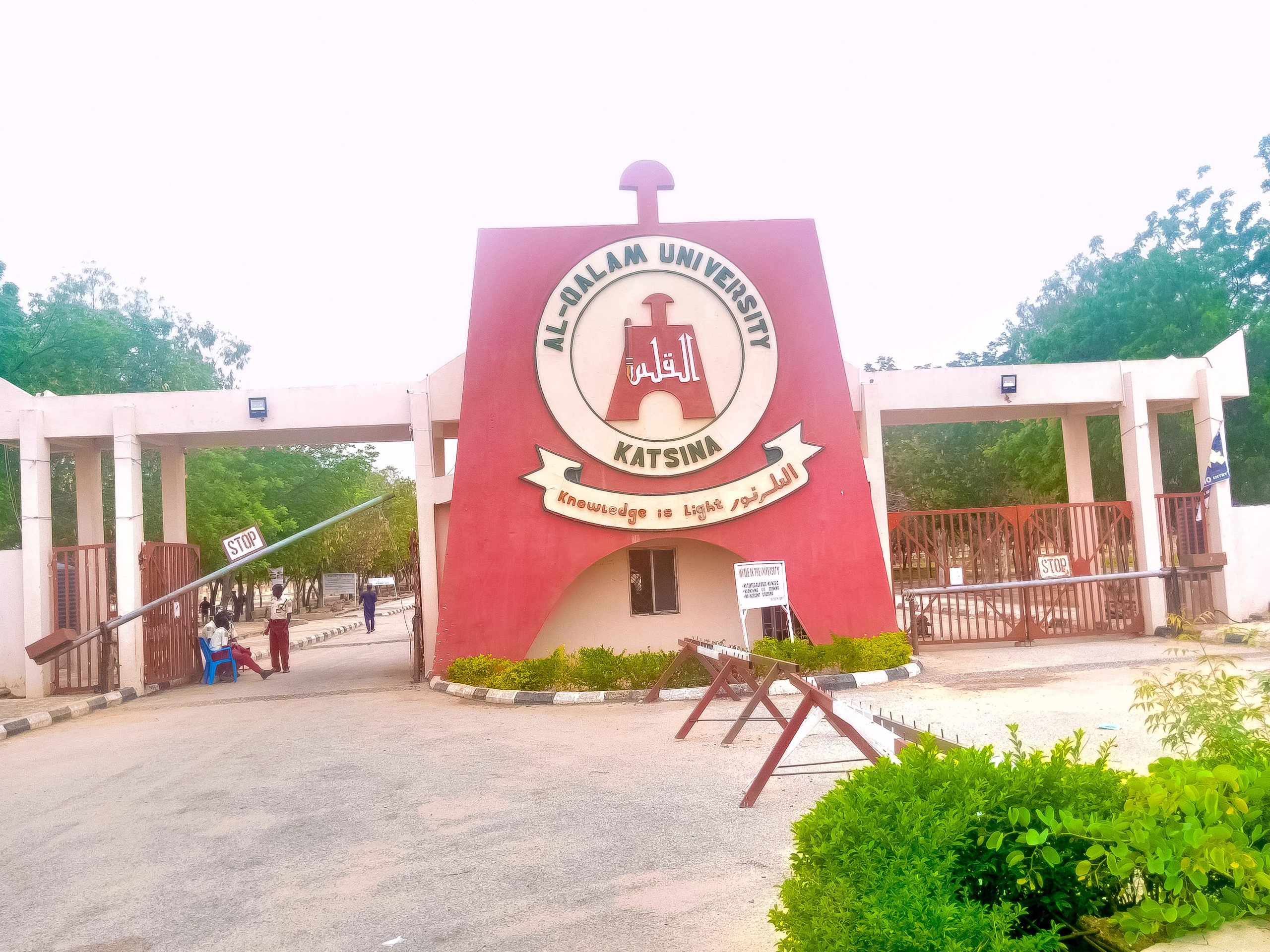
Barring any last-minute changes, Al-Qalam University will hold its 2nd Combined Convocation on Nov. 25, 2023. The day is what everyone associated with the university eagerly looks forward to seeing.
Al-Qalam University, Katsina (AUK), hitherto known as Katsina University, Katsina (KUK), is located in Dutsinma Road, Katsina State, and known for the academic aspiration of those who seek knowledge deeply rooted in sound morals. Al-Qalam University was established in 2005 as Nigeria’s first private Islamic university.
The university has gone from strength to strength since its establishment 18 years ago. It presently runs six schools/colleges, which offer assortments of options for the students: The College of Social and Management Sciences, College of Natural and Applied Sciences, College of Education, College of Humanities, College of Post Graduate Studies, and School of Basic and Remedial Studies. It awards 22 undergraduate degrees (among which five courses offer both full-time and part-time programs), 11 master’s programs, and nine PhD programmes, all accredited by the National Universities Commission (NUC) in line with the laws governing university education in Nigeria.
Recently, some new courses were accredited by the NUC, which brings the total number of programmes to 36 for the 2023/2024 academic session. Despite being a non-profit institution and the difficult economic situation in Nigeria today, the university continues to flourish. However, this is not far-fetched as it is run by an exemplary governing council and administratively headed by an astute academic, economic luminary, and open-minded scholar, Professor Nasiru Musa Yauri, who has not only built on what his predecessors had achieved but also devised different means to take the university forward. He is equally supported by the hard-working team across the various faculties and colleges to actualise the founders’ dreams of the first Islamic University in Nigeria.
The Programme of the 2nd Combined Convocation is quite extensive. Therefore, I will highlight some of the events for want of space. The Vice Chancellor of Al-Qalam University, Professor Nasiru Musa Yauri, disclosed some of the events scheduled for the imminent second combined convocation while briefing journalists in Katsina on Nov. 19, 2023.
According to the information, 139 postgraduates will be conferred with different honours during the convocation ceremony, including seven Doctor of Philosophy (Ph. D), 125 Masters, and seven postgraduate diplomas (PGD).
“We are going to honour and celebrate graduates from the 2016 to 2023 sessions, which means on Nov. 25, we are going to confer degrees on graduates for eight sessions.
“This is to say specifically that we are preparing to ensure that graduates of this 2022/2023 session are also going to be celebrated at the convocation ceremony,” the VC said.
Apart from this, there is also a Qur’an recitation contest for all interested university students to participate. This is one of the major events scheduled for the convocation. Winners of the Qur’anic recitation competition, both the female and the male categories, will receive N1 million each.
A pre-vocation lecture will be delivered on Nov. 24, 2023, by a distinguished scholar, Dr Usman Muhammad Bugaje, on the topic: “The out-of-school-children and the Conscience of the Nation: A Discourse on the Genesis, Prognosis and Solutions of the Almajirci Phenomenon.”
A novelty football match between Al-University students (AUK All stars) and its alumni (AUK Legends) is part of the programme, emphasising that all domains of learning: cognitive, affective, and psychomotor are given priority.
To cap it all, four eminent personalities who have made a tremendous difference in various fields of human endeavour will be conferred with honorary doctorate degrees: including the Emir of Katsina, Alhaji Abdulmumin Kabir Usman; Emir of Kazaure, Alhaji Najib Hussaini Adamu; Alhaji Sani Zangon Daura, and Alhaji Abdulsamad Isiyaka Rabiu.
Al-Qalam University Katsina is where it is today because of the leadership, who have remained steadfast to the ideals of the founding fathers and have employed transparent methods. The Vice-Chancellor, for example, is accessible, and every Thursday has been set aside for any student with a suggestion or problem to meet the Vice-Chancellor and iron out the issue amicably. This is good leadership and highly remarkable.
I am not writing this piece to pretend we have a flawless system. There is no system without flaws. All systems have their shortcomings in one way or the other. This may not be apparent without meticulous observation. But this we understand as we explore the system or rather utilise the services of the system. Hence, I do not claim a perfect system exists here or advance anything error-free for the public.
To buttress my points, I was personally affected by one of such fallibilities when I was wrongly accused of committing an offence I didn’t and have always stood against. Herein, Al-Qalam University, especially its College of Education, exercised due diligence by using all the legal instruments to get to the root of the matter and ensure justice was done. In my opinion, the greatness of any system or institution should be measured not by the duration it exists but by how effectively its services are rendered to those in need. This proves where the institution belongs.
Prof. Nasiru Musa Yauri’s giant strides are evident, from academics and sports to other equally important sectors of this citadel of learning. With time, Insha Allah, this institution can reach the heights its illustrious founding fathers envisioned when they established this university in 2005. May Allah (SWT) help Al-Qalam University to reach its rightful destination for the benefit of Nigeria.
Abdulrazak Iliyasu Sansani is a student of Al-Qalam University Katsina.

Court of Appeal reinstates Sule as Nasarawa governor after removal by tribunal
The Court of Appeal in Abuja has reversed the removal of Governor Abdullahi Sule of Nasarawa State, reinstating him as the duly elected governor following the governorship election on March 18.
A three-member panel of justices, in a unanimous decision delivered on Thursday, invalidated the Nasarawa State Election Petition Tribunal’s prior ruling.
The tribunal’s decision to oust Governor Sule has been nullified by the appellate court.
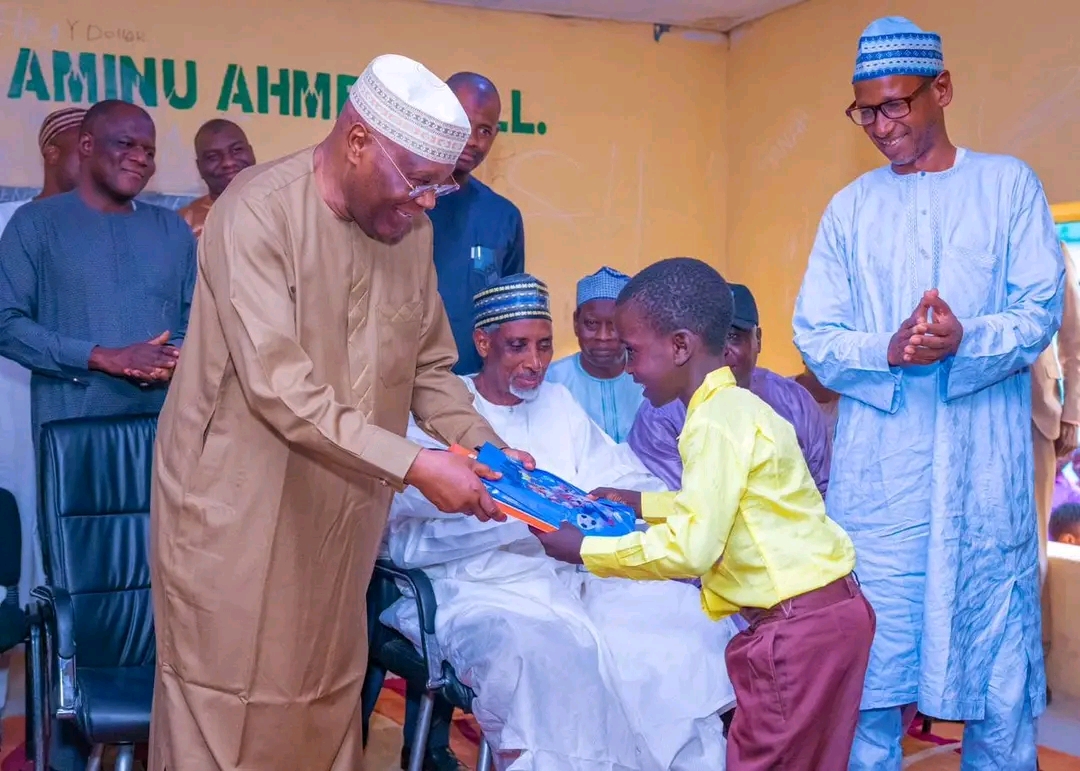
Atiku awards long-term scholarships to students in Adamawa
By Sabiu Abdullahi
The former presidential candidate under the platform of the PDP, Alhaji Atiku Abubakar, has made a significant effort towards promoting education in Adamawa during the Atiku Week.

The organisers of Atiku Week commenced the day by visiting all public schools in the Jada metropolis, generously donating essential educational materials such as books, chalk, and other teaching aids.
This outreach demonstrated a dedication to supporting the foundational elements of education within the community.
Atiku Abubakar returned to his alma mater, Jada Central Primary School, where he personally presented gifts and prizes to outstanding students.
According to the chairman of the planning committee for the event, Dr. Ahmad Shehu, these students were carefully selected based on their exemplary performances in various schools and their impressive displays during quizzes and debates organised by the Education Day implementation committee.

Nine of the best students would receive scholarships for their secondary and tertiary education.
Looking ahead, the organisers have committed to covering the UTME fees for all graduating students in the 2023–2024 session.
Furthermore, in a commendable move to support aspiring medical professionals, three medical scholarships were awarded to the most promising students of the session, enabling them to pursue degree programmes at esteemed universities, including the American University of Nigeria.
The Chairman of the Planning Committee also expressed gratitude to the donors, invoking blessings and success for Atiku Abubakar in his pursuit of realising the vision for accessible and quality education in Nigeria.

Kano State Governorship Election Petition Appeal Judgement: A Slip of the Pencil or A Freudian Slip?
By Rabi’u Gama
I almost spent a sleepless night reading the Court of Appeal’s judgement on the Kano State Governorship Election Petition. The 72-page document has raised many questions and generated mixed and confusing reactions among millions of people, particularly in Kano, immediately after its release to the public.
After a calm reading of the judgement, it is evident that there is a significant error in the conclusion of the lead judgement. The conclusion of the lead judgement, which “…resolve all the issues in favour of the Appellant (AKY) against the 1st Respondent” and “…set aside the judgement of the Tribunal” and finally “awarded the sum of one million Naira in favour of the Appellant against the 1st Respondent” is just a mistake; a grave mistake, though, in my opinion, not fatal or unpardonable.
If you read the judgement carefully, you will see that the reasoning of the court on the merit of the case was decisively against the Appellant (AKY) in favor of the 1st Respondent (Gawuna). The only error – a very grievous error – is with regard to the conclusion of the lead judgment. This becomes more obvious when you look at the fact that all the two concurring judgements found the appeal to be “bereft of merit” and also (just like the lead judgement) “…dismissed it and upheld the judgement of the Trial Tribunal”.
From the reasoning of the Court, that conclusion is just what it is: a slip of the pencil or a clerical error – so to speak – which can be, in fact, should be, waived aside with a single nod of the head. That mistake alone cannot reasonably change the preceding reasonings and findings of the court. The error is grave. Or was it a Freudian Slip? By the way, a Freudian Slip is an unintentional mistake that reveals a person’s subconscious thoughts, wishes, or desires.
Therefore, in my humble opinion, AKY lost this appeal. The mistake in the lead judgement’s conclusion (a slip of the pencil) will not change a thing. AKY should head to the Supreme Court, as he has already expressed his intention to do so. A clerical error like this should not deter a further appeal to the Apex Court of the land. Otherwise, there will be stories that will surely break and destroy many hearts.
However, there are many questions: how could such a serious mistake go unnoticed? Didn’t my Lord re-read the judgement after drafting it for grammatical corrections and possible typographical errors? In their concurring judgements, the two other Justices on the panel said: “They have read the lead judgement in draft (as it is customary for fellow judges to do) and adopted all the reasonings and the conclusion therein as theirs?”. Does that mean they, too, did not see that serious mistake while “reading the judgement in [the] draft”? What about the Registrar of the Court? Didn’t he also see the mistake before releasing the Certified Copy of the judgment to the world? So many questions to ask.
Rabiu Gama is a student from the Faculty of Law at Bayero University, Kano. He can be reached via rabiuminuwa327@gmail.com.