




Mass comm graduates, wake up
By Hauwa Isa Dogo
With sadness, I respectfully write to advise the potential and graduate students of Mass Communication about the positive potency of being practicable in their respective fields of specialisation before or after graduating. Instead of remaining stagnant without practice—despite acquiring the certificate and the knowledge consumed in school, one could sadly find a Mass Communication graduate who cannot compose a paragraph of composition. This is quite sad, I must say.
However, many governmental and non-governmental agencies attend the newspaper pages where people’s opinions are published to see the possibility of hiring professional and consistent writers with expertise in their respective fields—Mass Communications in question.
Sadly, most of the time, the space purposely reserved for publishing people’s views is flooded with writers not specialised in mass communication. And that prevents field professionals from having the chance of being hired or employed by the organisations above.
Why shouldn’t they—the mass communication professionals—always live according to their area’s customs by actively practising their field of expertise to promote their area of creativity? This sounds like a mechanism for playing with their already-acquired certificates while their country needs them!
Therefore, I encourage—though challenging—you to wake up and work with reality by heeding my word of caution.
Hauwa Isa Dogo wrote from the Department of Mass Communication, University of Maiduguri.

A new era for higher education in Nigeria
By Nusaiba Ibrahim Na’abba
In his inaugural professorial lecture, Professor Muhammad Muftahu addressed the need for the institutionalisation of higher education as a field of study and professional practice in Nigeria. This came amidst increasing debates about skills over degrees or vice versa and other higher education problems that continue to stunt the growth of education in Nigeria.
In the lecture, which took place on November 14, 2023, at Kaduna State University, Prof. Muftahu disclosed the massive strategic importance of higher education in the development of Nigeria. He had served in various capacities as a professional higher education consultant and researcher. In his journey, he has navigated the multitude of intricacies of the discipline while teaching revered values in various institutions and organisations around the world.
In the years of my professional engagements with Prof. Muftahu, particularly in higher education research, article writing and research reviews, we have both documented facts and valuable insights that have given higher education the needed spotlight. Today, the sum of the knowledge I have gained has eased my current engagement as a content writer at a higher education institution. Prof. always insisted that we had learned from each other until my contracted work arrangement elapsed.
The higher education field is an essential asset to Nigeria’s all-round development, as he highlighted while delivering his lecture titled ‘Institutionalizing Higher Education as a Field of Study and Professional Practice in Nigeria’. It solidifies and amplifies every element purposely chosen to support general development by promoting economic growth and social progress, among other pillars that ensure the thriving of societal development.
Higher education is a multilayered field of endeavour. Existing therein are all tertiary institutions of learning, comprising mono-technics, polytechnics, colleges of education, centres of excellence in research, and universities, among other tertiary structures, not forgetting higher education programs. They are solely established to enable the production of new knowledge through skills, innovation and value-based education. This is necessary to keep steering the affairs of the country towards betterment and advancement.
Growing recognition of the importance of the field, growth and diversification of Higher Education Institutions, the influence of technology, the impact of policy and politics, and the globalisation of higher education are among the major components that transform research and studies in the higher education discipline. These components must be creatively streamlined into the higher education system to institutionalise its practice in full capacity.
Prof. Muftahu’s inaugural lecture comes at a time when the Academic Staff Union of Universities (ASUU) and the Nigerian government have sharp disagreements over the autonomy of universities, the Integrated Payroll and Personnel Information System (IPPIS), the allowances of lecturers and notably the ‘Japa syndrome’ that has infested the universities. By the day, resourceful researchers in Nigerian universities seek lucrative, greener pastures abroad. Hence, they are trooping en mass to other countries, leaving behind the slowly decaying and pathetic system at home.
According to Muftahu, “Certainly, governance issues in higher education play a significant role in developing higher education practice in Nigeria. The lack of promotion of evidence-based policies and programs in higher education, as well as throughout the system, contributes to the difficulties in developing a strong pool of higher education researchers in Nigeria.” With the ‘Japa syndrome’ overwhelming the system, organising the strong pool of professionals dedicated to higher education research can be herculean.
The new era of higher education can be achieved through institutionalising it as a professional practice and a field of study in Nigeria. And doing that surely needs a redefined and robust approach. Critical areas that should be highly prioritised to elevate the status quo of higher education include higher education research and policy development, leadership, professional practice, a national strategic action plan and the establishment of a national institute for Higher Education research.
Higher education is a holistic collection of programs and institutions that serve as a think tank for every nation’s development. In advanced countries and developing ones like the US, Malaysia, Singapore, etc., higher education proudly supports decision-making at all levels of governance and public engagement with research and innovation. With the institutionalising of higher education using the key aspects, they have achieved a phenomenal transformation and development.
For Muftahu, “Without a doubt, a country’s overall development depends on the strength of its higher education system, which is heavily reliant on the presence and contributions of higher education professionals”. But, adapting to the contemporary practices of advancing higher education in Nigeria will be tricky.
In fact, with the current hike in university tuition, the tertiary education system is deterring youth from pursuing careers. This will also stagnate the development of a pool of resourceful higher education professionals that can ably streamline global best practices in the country’s education sector.
Nigerians are always on the search by global companies, research institutes, and other prominent organisations, courtesy of their well-regarded knowledge and abilities. A strategic national higher education roadmap is desperately needed to save the experts from trooping out of our country.
It is high time to stop the dramatic display of theatrics by the Nigerian government concerning higher education matters with evidence-based policies at institutional and national levels. These policies and programs can only be achieved by acknowledging the importance of skilled professionals in pursuing higher education excellence and values.
Nusaiba Ibrahim Na’abba is a content writer at Skyline University Nigeria (SUN). She obtained a degree in Mass Communication and a Master of Communication Studies. She is also a communication researcher and freelance writer.

Pastor arrested for killing wife
By Ahmad Deedat Zakari
A pastor of the Christ Apostolic Church, Abiodun Sunday, has been apprehended by the police in Ekiti State for the alleged murder of his wife.
The Ekiti State Police Command’s spokesperson, DSP Sunday Abutu, confirmed the murder of the pastor’s wife, Tosin Oluwadere, in Ido-Ile in Ekiti West LGA of Ekiti State on Thursday.
The police spokesperson further disclosed that the suspect is in the custody of the police and that an investigation into the murder is ongoing.
It was gathered that the suspect is both a pastor and a herbalist.
A brother of the deceased, Mr. Samuel Ibironke, alleged that, “After killing my sister, he called my wife who is a health worker to come and assist him, only for my wife to get there and discover that he strangled my sister to death.”
Mystery as 70-year-old woman gives birth to twins through IVF
By Sabiu Abdullahi
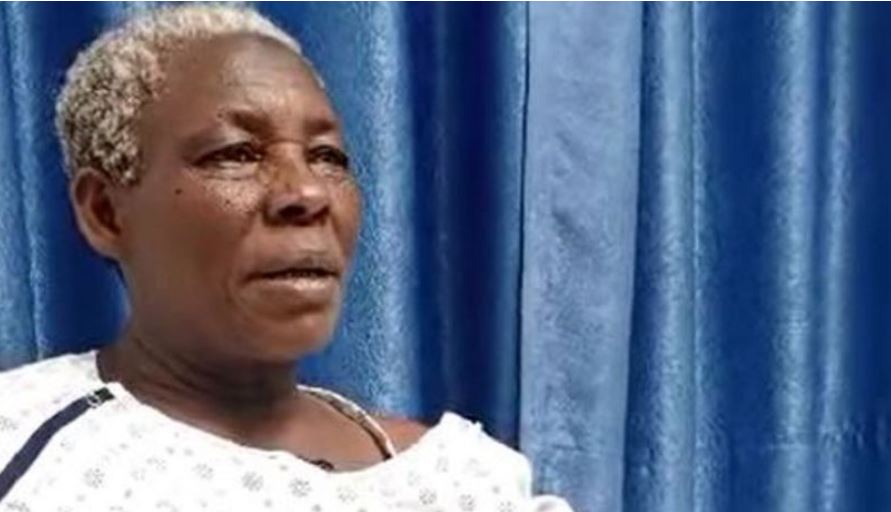
A 70-year-old Safina Namukwaya has made history in Kampala, Uganda, becoming the oldest woman in Africa to give birth to twins through in vitro fertilisation (IVF).
Namukwaya, who underwent a successful caesarean delivery at the Women’s Hospital International and Fertility Centre in Kampala, welcomed a healthy baby boy and girl on Wednesday.
Medical professionals at the hospital have confirmed both Namukwaya and her newborns are in good health, highlighting the story as not only a medical success but also a testament to the strength of the human spirit.
Speaking to a privately owned NTV channel, Namukwaya shared the challenges she faced during her pregnancy, including complications and the absence of the father of her children.
Despite societal judgments and hardships, Namukwaya expressed her gratitude, stating, “Many people judged and abused me for being barren, but I decided to leave everything to the Almighty God who has finally answered my prayers.”
This isn’t Namukwaya’s first journey into motherhood at an advanced age; she had her firstborn, Sarah, in 2020.
While cases like Namukwaya’s are rare, it echoes a similar instance in 2019 when Erramatti Mangayamma from India gave birth to twins through IVF at the age of 74, becoming the world’s oldest mother.
Namukwaya’s story serves as an inspiration, showcasing the triumph of hope and determination in the face of societal challenges and personal struggles.
Kano State’s scholarship debacle: Outstanding fees leave bright minds in limbo
By Dr Sagiru Mati
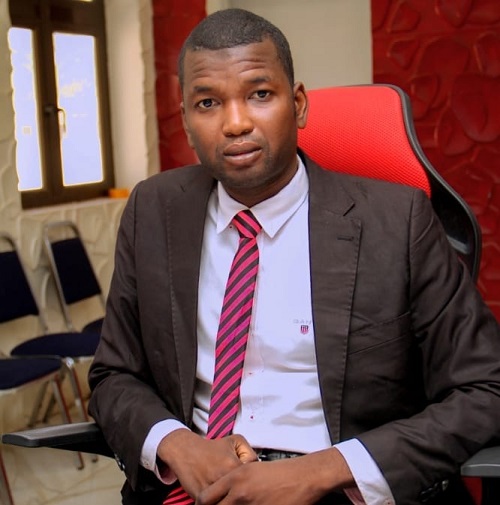
I was one of the beneficiaries of the 501 Scholarship Scheme during the Kwankwaso-Ganduje administration in 2012. Eleven of us were selected to pursue Master’s Degrees in Civil Engineering, Economics, and Software Engineering at Near East University. All expenses for tuition, accommodation, meals, a monthly stipend of four hundred US dollars ($400), flight tickets, and other necessary costs were covered and transferred to the university’s account. Towards the end of our program, an additional one thousand US dollars ($1,000) per person was also provided as a ‘thesis allowance.’ We are grateful to the Kano State government for this, and we hope that all scholarship schemes can be as hitch-free as ours.
Upon completing our master’s programs, approximately 50 students of Kano origin, primarily teenage girls, were transferred from India to Near East University. Additionally, a new group of undergraduates and post-graduates were granted scholarships under a new program initiated by the Ganduje-Hafiz administration. Unlike us, their fees and stipends were to be paid in instalments. Unfortunately, they faced numerous challenges, including delayed monthly stipends, despite their dedication to bringing pride to their parents and Kano State through hard work.
They comprise individuals holding PhDs (11 males and 1 female) and an MSc (1 female), alongside 47 undergraduates in Medicine (29 females and 5 males), Nursing (8 females and 2 males), Pharmacy (2 females), and Dentistry (1 female). In summary, there are 47 undergraduates and 13 postgraduates. These students showcased exceptional brilliance, making significant strides in their respective fields of study. Notable among them is Dr. Sani Isah Abba, the top PhD graduate in 2020, a distinguished researcher, and among the top 2% of world researchers in Artificial Intelligence. Assistant Professor Abdullahi Garba Usman stands out as the first postdoctoral scholar at Near East University, honoured with the Young Scholar Award, boasting over 800 citations.
Moreover, a married couple, Drs Auwalu Saleh Mubarak and Zubaida Said Ameen, received recognition from Near East University for two years in a row for their remarkable contributions to Biomedical Engineering research, accumulating hundreds of citations under their belts. Dr Rabiu Aliyu Abdulkadir is notable for having amassed more than 500 citations. At the same time, Dr. Abdulmalik Ahmad Lawan specialises in utilising technology for assessing autism spectrum disorder, and Dr. Umar Aliyu Shuaibu excels as an expert in assessing economic policy.
Similarly, the top three graduating medical students were Dr Ismail Adnan, securing the first position; Dr. Khadija Yusuf, ranking second; and Dr. Amina Aliyu Sambo, claiming the third spot. Likewise, Aliyu Nuhu Salihu distinguished himself as the top graduate in Nursing.
Despite these achievements, the Kano State government has not settled their tuition fees, stipends, and airfare for their return home. They were compelled to arrange their own means to travel back home. Near East University has withheld their certificates since 2019 due to the outstanding fees, which have escalated from around two hundred million Naira (NGN200,000,000) to approximately eight hundred million (NGN800,000,000) due to the depreciation of the Naira. Any further delay may increase this amount.
I have often pondered the following questions: Could it be because resolving their issues wouldn’t enhance political popularity? Is it because they don’t belong or lack connections to political families? Is it because there’s nothing in it for the government officials? Is it because the government lacks the funds to settle the debt?
I implore the government to act with compassion and understanding to settle this debt and safeguard the future of these bright minds before it becomes irreparable. They have demonstrated unwavering dedication to their education, and they deserve to have their achievements celebrated through the issuance of their certificates. The government should honour its commitment and restore the hope once ignited in these aspiring scholars’ hearts. They deserve the opportunity to reclaim their futures, proudly display their certificates, and embark on the careers they have diligently prepared for. Furthermore, Kano State needs human resources, predominantly female medical doctors in our hospitals and lecturers in our universities.
Sagiru Mati, BSc (BUK, Nigeria), MSc, PhD (NEU, North Cyprus), can be reached via sagirumati@yahoo.com.
Mrs. Nkechiyelu Mba’s Diary of Excellence
By Tajuddeen Ahmad Tijjani
If excellence means possessing good qualities in an eminent degree and superiority in virtue, Mrs. Mba, the Executive Director of Cooperate Services in the Niger Delta Power Holdings Company (NDPHC), is a personification of it all. Beyond meritorious service to the nation of Nigeria, her journey has been nothing short of extraordinary, marked by unwavering dedication and exceptional achievements.
One of Mrs. Mba’s notable accomplishments has been her role in spearheading initiatives to address Nigeria’s power crisis. Through her strategic vision and tireless efforts, National Integrated Power Projects (NIPP) has been making progress in increasing Nigeria’s electricity generation capacity. Her tireless effort towards ensuring a stable and reliable power supply continues to impact businesses and households, fueling economic growth and improving the quality of life for millions.
Her leadership style has been a source of inspiration for her colleagues and subordinates. Under her stewardship, NIPP has witnessed significant improvements in corporate governance, efficacy, and transparency. Moreover, corruption and favoritism have never been her portion; she believes in merit and ability to deliver, which is the only yardstick that would propel every organization, not only NIPP.
Beyond professional feats, Mrs. Mba is becoming a champion in social responsibility, where she actively engages herself in community development projects, promoting sustainable practices, and empowering local communities. Her achievements in this regard are clear for all to see and appreciate. I can only mention a fraction of her distinct accomplishments in service to God and humanity. Through her passion for environmental conservation and social welfare, she is leaving indelible marks on the regions served by NIPP; though, NDPHC’s footprint cuts across every nook and cranny of the country.
Mrs. Nkechiyelu Mba embodies the values of integrity, excellence, and service to the nation. Her meritorious service to Nigeria in the realm of energy and corporate governance has not only transformed the power sector but also served as an inspiration for future generations of leaders. I foresee that Nigeria will attain its full potential with her caliber in the energy sector. Again, her legacy is one of unwavering dedication to the betterment of her country, making her an exceptional and revered figure in Nigeria’s history of public service. On a personal note, I cherish and adore this woman of substance, who is a mother, the voice of the downtrodden, and an inspirational leader to the unborn generation.
History is more than the path left by the past; it can influence the present and shape the future. Mommy, I’m certain that history will be kind to you.
Tajuddeen Ahmad Tijjani writes from Abuja.
Truce extended between Israel, Hamas amidst lingering tensions
By Sabiu Abdullahi
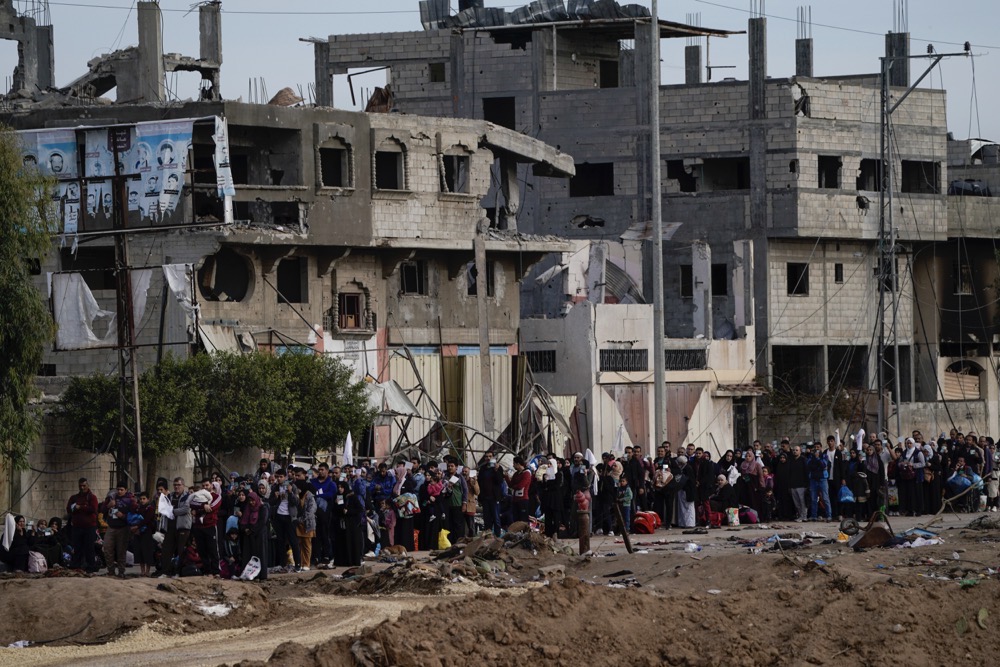
The delicate truce between Israel and Hamas faced a pivotal moment on Thursday as both parties agreed to extend the ceasefire just moments before its scheduled expiration at 0500 GMT.
The Israeli military declared an “operational pause” without specifying the duration, citing ongoing mediator efforts and the complex hostage release process.
Hamas echoed the extension for a seventh day, leaving the specifics shrouded in uncertainty.
Qatar, spearheading the truce negotiations, confirmed the extension until Friday, a decision met with anticipation amid calls for a lengthened pause to facilitate additional hostage releases and increased humanitarian aid to the ravaged Gaza Strip.
The timing coincided with the arrival of US Secretary of State Antony Blinken for crucial talks on Wednesday night.
The truce, initiated on October 7, brought a temporary cessation to hostilities that erupted when Hamas militants crossed into Israel, resulting in a toll of 1,200 lives, predominantly civilians, and the abduction of approximately 240 individuals, according to Israeli authorities.
Israel’s subsequent air and ground campaign in Gaza reportedly claimed nearly 15,000 lives, predominantly civilians, and left large parts of the northern region in ruins, as reported by Hamas officials.
Crucially, the truce agreement permits extensions contingent on Hamas releasing ten hostages daily. A source close to the group expressed a willingness to extend the pause by four days.
However, with a mere hour remaining before the truce’s expiration, Hamas disclosed that its offer to release seven hostages and hand over the bodies of three individuals killed in Israeli bombardment had been rebuffed.
Both sides had previously declared their readiness to resume hostilities, with Hamas’s armed wing instructing fighters to “maintain high military readiness” in anticipation of combat resumption if the truce elapsed.
IDF spokesman Doron Spielman issued a warning of a swift return to operational mode, vowing to continue targeting Gaza if the truce lapsed.
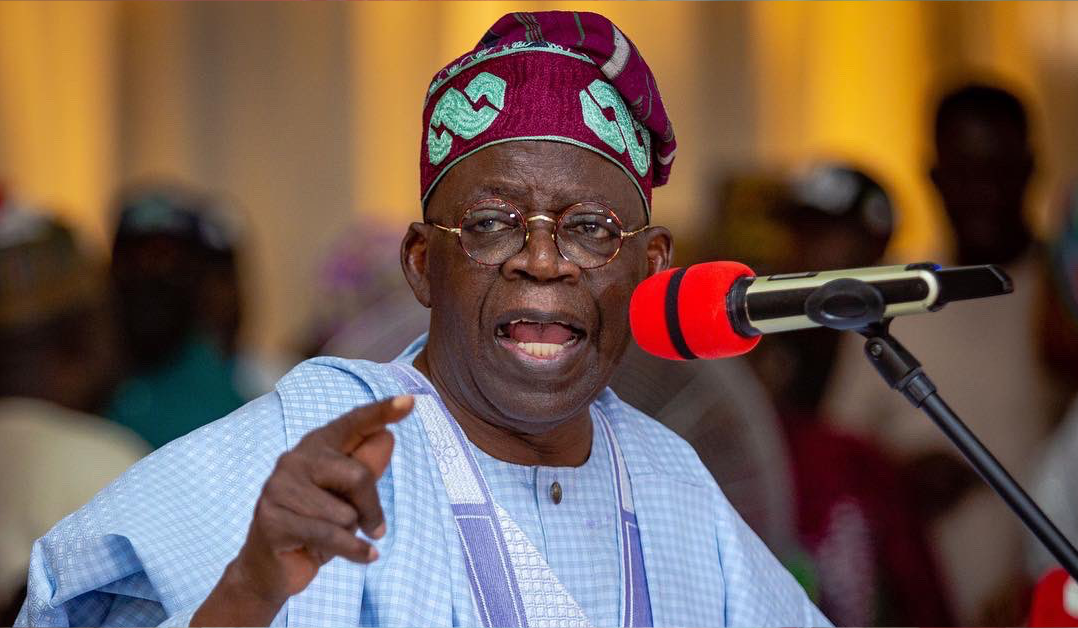
President Tinubu unveils 2024 budget at National Assembly amid tight security
By Sabiu Abdullahi
President Bola Tinubu arrived at the National Assembly complex at 11:04 a.m. on Wednesday to present the highly anticipated 2024 budget.
The president’s entrance was surrounded by heightened security measures, reflecting the gravity of the occasion.
This move follows the Federal Executive Council’s approval of the 2024 Appropriation Bill on Monday, amounting to a staggering N27.5 trillion.
As the nation eagerly awaits the details of the budget, the president’s presence at the National Assembly signals a crucial step in the fiscal planning for the upcoming year.

Is schooling a waste of time?
By Ubaydullah Abdulmalik
When an average youth from a developing country is fooled into believing that schooling is a scam because degrees do not guarantee employment, there is little that can be done to help such a person. There is hardly a day that I scroll through social media pages without stumbling over multiple posts that discredit the relevance of schooling and tertiary education. This argument continues to generate debates on whether it is worth it to go to school and acquire degrees, in a society where degree holders and degreeless people “hustle” equally for survival.
So is schooling a scam? Well, I will start with a quote from Michelle Obama, she said and I quote; “The ability to read, write and analyze; the confidence to stand up and demand justice and equality; the qualifications and connections to get your foot in the door and take your seat at the table – all of that start with education.” – Michelle Obama
It is gradually becoming a prevalent notion within our society that degrees and advanced formal education have limited relevance in the 21st century, and this is only because they don’t guarantee jobs to those who pursue or acquire them. No one says a college degree is the only path to success in life, but honestly, how could schooling be considered a waste of time?
Primarily, based on the misconception that people go to school and graduate to get employed, this reprehensible fallacy is gaining more ground in the midst of our youths and students. Phrases like “school na scam,” “who degree epp,” and “this useless course” among others, are trademarks of this idea. it is an undeniable fact that unemployment is at an all-time high state and that in today’s society, degrees and other qualifications may not guarantee employment, let alone job security for individuals, but this does not render degrees useless or schooling a waste of time. Because many do not understand the real essence of education, they stand to benefit the least from it – a lot go through schools only to leave a little different than they arrived.
Time has changed and even though college degrees largely guaranteed an employment in the past, that doesn’t hold anymore today. With the rapid rise of technological innovations, artificial intelligence and automation, concerns about unemployment continue to grow globally.
In my own opinion, this only reflects the dynamic and ever-evolving nature of societies and human interactions. The nature and standard of education in the past befitted the market requirements, socio-economic realities and technological advancement of those people, then.
Education has constantly evolved with societies and human behavior, and as such, we must continuously align the standards of our educational system with the dynamic needs and challenges of the present era. But this is difficult to fathom for some people. Instead of asking why a degree or some other form of formal education may not easily guarantee or get one a job in today’s society, a lot are trying to dismiss the relevance of tertiary education as a whole. This is completely wrong.
This is one out of many disheartening posts and conversations that happen daily on social media. The gullible among youths and students are glaringly made to believe this, because of obvious reasons, that education no longer holds much relevance in today’s society. And it is a very big fat lie! I don’t subscribe to the conspiracy theories questioning the motives behind our contemporary educational system. I do believe, however, that certain errors need to be corrected in our educational system, especially our mindset, regarding the purpose of education.
There’s this general misconception or conditioning that we all grow up with; since childhood, we are made to believe that we go through school and obtain education (the 6-3-3-4 system) to ultimately seek a job, a notion that is wrong in its entirety. When people grow up to learn the hard truths, some misunderstand it all and they begin to question the relevance of education.
A change in mindset and orientation would solve it all. The upcoming generation must come to understand that the end goal of education is not solely employment. Of course employment is a major factor after acquiring education; and gainful employment is expected of anyone with “sound education”, however, employment is never the primary purpose of education.
Education is meant to train individuals and to equip them with the requisite skills needed to thrive in any environment and live a meaningful life. Education is meant to broaden horizons, sparking innovations and producing problem-solvers that would champion the emancipation and advancement of societies.
As Kofi Annan puts it: “Knowledge is power. Information is liberating. Education is the premise of progress, in every society, in every family.” Education has always been and will always remain the golden key to success. It depends however on one’s perception of what education is.
Most often, we only think of the superficial value of things and never care to reflect deeply on the real essence of education. 1000 years ago, no one went to school to get degrees and universities as we know them today, did not exist. Even so, the people of those ages had their forms of education and learning systems, be they formal or informal. Similarly, universities as we know them today, may not exist in the next two or three centuries, but the essence of education will persist in accordance with the context of that era. This is because education is boundless and timeless.
Ubaydullah Abdulmalik is an undergraduate student from Bayero University, Kano. He is a passionate advocate for quality education and digital literacy in today’s society. He can be reached via; ubaydulmalik530@gmail.com
The Nigerian university professors and their sad reality
By Prof. Abdelghaffar Amoka
A part of the activities of the university professors is serving as external examiners to universities other than theirs. The appointment of external examiners is a worldwide practice for quality control. Professors can be external examiners for undergraduate or postgraduate programs. While the external examiner for a postgraduate program can be for a day if it involves just a student, appointment as an external examiner for an undergraduate program lasts for a whole academic year.
The external examiner is required to moderate the question papers and marking schemes of all the final-year examinations for the first and second semesters of the program. The Examinations Officer will travel to the university of the External Examiner with the question papers and marking schemes for the Examiner to moderate for each semester. I travelled to Kano for that exercise as an Examination Officer between 2006 and 2008. At the end of the academic year, the External Examiner is required to travel to the university to examine the students’ final-year project and also to moderate the answer booklets and results.
I was recently appointed as an External Examiner for the physics department of a Federal University about 210 km from my university. I moderated the question papers and marking schemes for both semesters. At the end of the session in October 2023, I was invited to the external examination of the students’ projects. While planning to go there, I inquired about the number of students to be examined, and I was told they were a bit above eighty (80). I was like, wow! The funny thing is that you do this job, especially as a first-timer, without knowing how much you will be paid for it.
I was wondering how I will examine 80 students in two days. The university is about 210 km from Zaria, and I need to analyse the economics of the trip. If I am to drive my car, I will spend about N40,000 on fuel for the round trip. But my instinct was telling me that using my car would cost more than I would be paid. So, I joined a public transport, and it cost me about N4,500 to get to the University.
Four passengers, including myself, were squeezed like sardines in a pack in the vehicle’s passenger seat.
I got there, examined the 80 students, and moderated the answer booklets of their final-year students for two full days. I examined 40 students each day. I was exhausted and needed enough space to relax, returning to Zaria. So, I paid for two seats, which cost me about N9,000. This made us three on the passenger seat to Zaria.
Just a few days ago, I received an alert of the payment for the one-year job. I got an alert of N138,920 six weeks after the job. My breakdown shows that I was paid N80,000 honorarium for the one-year job as an External Examiner for the university, N50,000 for accommodation for two nights to examine 80 students (25,000 per night), and N8,920 for transportation from Zaria to the university and back to Zaria (223km x 2 x 20 naira per kilometre). Payment for two nights implies that it was assumed that the job was done in one day. Yes, the university management assumed that I examined 80 students in one day.
At the end of the day, and even without using my car, I spent more on transportation than I was paid. For the moderation and examination of the students for an academic session, I was paid N1,000 per student for the exam moderation, reading of the project work, and oral examination of the students.
However, there was a circular in 2022 that reviewed duty tour allowance (DTA) and transport allowance per kilometre for public service. According to the circular, a Professor is meant to get N37,500 per night as DTA and N75 per kilometre for mileage. While it is in operation at every other MDA, under the current fuel subsidy removal regime, university professors are expected to travel at N20 per kilometre and can’t lodge in a hotel that costs more than N25,000 per night.
While the political class has subjected academics to abject poverty, the managements of our universities are still expecting us to travel with N20 per kilometre, lodge in a hotel that is not more than N25,000 per night, and then do oral examinations for 80 students in one day. They possibly felt that we could manage it. After all, we are already used to poverty. It’s sad that the political class does not regard us. We have lost respect in society and don’t seem to have regard for ourselves within the university system.
At least this university paid even though what was paid was ridiculous. I also got a nice reception from the department. For over a year, the other university has yet to pay the N50,000 for the professorial assessment of their staff and refund the N2,500 postage charges to send the assessment report. That is Nigerian academia.
Dear public university managers, why do we find it challenging to spend money on academic activities, the main activities of the universities? Does it still cost you 20 naira per kilometre to travel to Abuja for an official engagement on behalf of the university? The excuse is always that the university has no money. Then, why do we pretend that all is well when it is not? Why do we window-dress our programs for accreditation when we can’t adequately fund the programs? Why should we be expected to drain our blood to keep public universities open?
External moderation and examination are requirements for the award of degrees, and they should be properly funded. Otherwise, It should be suspended till there are enough funds to execute that component. If we want to make progress, we must stop the window-dressing approach and tell ourselves the truth.
Dear senior colleagues, I greatly respect your sacrifices and the risk of travelling between states these years on our bad roads for external examinations at this ridiculous honorarium and allowances. I don’t want to blame you for the sustenance of this slavery. But this treatment continued because you accepted it and MILT for these years. Even as teachers, we need a proper reward here on earth as we all strive for heavenly rewards.
Our old senior colleagues are already used to it. But to the new professors who will be taking up external assessment responsibilities, before going out for any external assignment, the supposed community service, to other universities, you need to be sure that the transport allowance will take you to the place to do the job and that the night allowance can afford decent accommodation.
Don’t be enslaved by the words “community service”. There is no free meal anywhere in the world. Somebody must pay for anything called a free meal.
Abdelghaffar Amoka Abdelmalik, PhD, wrote from Ahmadu Bello University, Zaria. He can be reached via aaabdelmalik@gmail.com.