



Curbing career choice struggles in teenagers
By Munirah Ibrahim Yusuf
Growing up as a teenager, one of the most challenging questions you could ask me was the almighty… “What do you want to be in the future”? I dabbled from one self-proclaimed pretty “Science course” to another for years…
All I knew was that it had to be a course in the Science field. First, it was ophthalmology, then pharmacy, and even estate management. Who am I kidding? It was a crisis.
It felt worse when I got to SS1 and saw the other options I could have had in different fields, like art and commercials. I was good in their subjects too.
I couldn’t quite understand why I chose to go to the Science Field. I couldn’t find why I decided to go there, so I held on to the fact that Allah was in control and had led me to pick it with good faith.
Years later, one morning….it hit me like a revelation. I suddenly knew why I never went to art or commercial class. It was because “THEY WERE NEVER AN OPTION”.
A certain teacher we looked up to had categorically told us things that created the impression. For example, whoever was blessed with anything close to an IQ had nothing to do with anything other than in the science field. And, like, that’s where the money is….And, like, that’s where great people and great professions belong….blah blah blah.
Who wouldn’t want to be Great, tho? I subconsciously ruled out other fields. I still remember when we were asked to pick classes after JSS3. I knew I wanted to choose “Science” but didn’t want anything too deep in science (medical science) because of all the blood and flesh business.
I had settled to write down courses I thought wouldn’t have too much messy work (blood, wounds), and Opthalmology was what I went with (LOL again, who am I kidding?)
Secretly, many people still regret the paths they chose in their education. Family, friends or society influenced some of us,and now we have discovered what we want for ourselves.
Let’s think about it; I don’t know about you, but in my area, kids around ages 12-14 are already in JSS 3, where they get to choose fields. Is a child that young capable of knowing what’s best for them? It’s screaming NO. The schools differ, ranging from private or government-owned, but most I’ve seen make them choose a field after JSS3.
I heard about a principal who would make the JSS3 finalists come to school during the long break after their Junior NECO exams. He would then teach them art, sciences, technical and commercial subjects and finish with some exams.
This system gave the students a little insight into what they would be dealing with when they got to Senior class and helped them make better choices regarding the subjects they found more intriguing and good Counselling. Great, don’t you think? May Allah bless his soul. Either way, no one seems to do that anymore, and we have to move on.
As a teacher or an educator whom kids look up to and adhere to with all beliefs, you should be careful with the kind of information you give kids.
Courses might be ranked, but the individual is responsible for how much utility they can produce using it. Every course is important. If not, it would not be a cause to study. (P.S.: We will talk about the effect of our country on education some other day).
As a parent or caregiver, it is important to practice mindful parenting and carry out routine checks with your kids to understand their choices and lifestyle and make sure they choose the best for themselves.
Many of us had that ‘follow follow’ stage that comes with growing up. And then you snap! And you reach the point where you have to take a step back, assess the situation and realise that this is not who you want to be.
Then, we live our lives trying to find ourselves with ever-changing wants and needs. Many of us are past that now, but you might know a kid or two going through these struggles. It is easy to recognise these stages when they talk and be on the lookout for help.
Let us give them better than we had.
Munirah Ibrahim Yusuf can be reached via ibrahimnurah99@gmail.com.
EFCC resurrects N772bn fraud cases against 13 Ex-governors, eyes billions more
By Sabiu Abdullahi
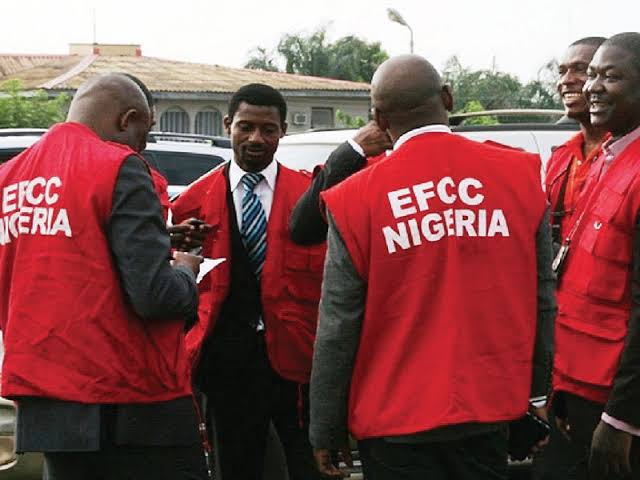
The Economic and Financial Crimes Commission (EFCC) has dusted off long-dormant corruption cases against 13 former governors, with a staggering N772 billion hanging in the balance.
This comes amidst investigations into an additional N81.6 billion allegedly looted from the Ministry of Humanitarian Affairs and Poverty Alleviation, revealing a renewed determination by the anti-graft agency to tackle high-profile financial crimes.
Sources within the EFCC confirmed the agency’s renewed focus on these high-profile cases, some dating back over a decade.
Among the ex-governors under scrutiny are prominent figures like Kayode Fayemi of Ekiti State, Ayo Fayose (also of Ekiti), Bello Matawalle (current Minister of State for Defence), and Chimaroke Nnamani of Enugu State.
These cases involve a web of alleged financial misdeeds, including money laundering, fund diversion, and misappropriation of public funds.
A senior EFCC official, who spoke on condition of anonymity, said, “I want to assure you that, as far as the commission is concerned, nobody is above the law. What the EFCC Chairman, Ola Olukoyede, has done since assuming office is that he has reviewed all the high-profile cases he inherited.”
The EFCC’s renewed drive extends beyond ex-governors. The agency is also investigating a separate $2.2 billion scandal involving individuals like former National Security Adviser Sambo Dasuki, the late media mogul Raymond Dokpesi, and ex-governor Attahiru Bafarawa.
These individuals are accused of diverting and misappropriating funds meant for arms procurement during the fight against terrorism, raising concerns about national security and accountability.
This aggressive anti-corruption push appears to be a marked shift under the new EFCC chairman, Abdulrasheed Bawa. Since taking office in 2021, Bawa has pledged to tackle corruption head-on, regardless of the individuals involved.
The reopening of these high-profile cases is a potent signal of his intent, promising a potentially seismic shift in the fight against graft.
Whether the EFCC can successfully navigate the legal complexities of these cases and secure convictions remains to be seen.
However, the agency’s renewed focus on tackling high-level corruption offers a glimmer of hope for Nigerians yearning for accountability and a more transparent governance system.
The coming months are likely to be pivotal, with close scrutiny on the progress of these investigations and the ultimate fate of the ex-governors and other individuals implicated in these multi-billion-naira scandals.

Ali Nuhu’s appointment as MD of Nigerian Film Corporation is well-deserved
By Habibu Ma’aruf Abdu
An interesting incident at the Awgu NYSC orientation camp, Enugu State, revealed to me the far-reaching popularity of Ali Nuhu in 2018.
It was the early evening glow at the camp. As we strolled back from the training ground, a young Ijaw lady approached me with a cool smile on her face;
“Brother, may I ask you a few questions, please?” she inquired.
“Why not?” I responded politely.
“Your platoon member, Oluwaseun, told me you are a Hausa from the North…”
I nodded my head in agreement: “Yes.”
“So, do you know Ali Nuhu?” she asked, her curiosity evident.
“Yes, I know him very well,” I affirmed.
Her face lit up with joy upon hearing my answer, and she muttered to herself: “No wonder!”
Curious, she continued, “Is he a brother to you…?”
Surprised, I responded, “Why this question? I know him as a famous actor. Nothing more. After all, who doesn’t know Ali Nuhu in the North? “
“Please don’t take offence; it’s just that I noticed a resemblance in your looks and actions…
“He is my favourite star. I love watching his films,” she added with enthusiasm.
From there, our conversation delved into a discussion about Nigerian cinema. I then discovered that the young lady knew no actor from Northern Nigeria besides him!
Ali Nuhu is probably the only Nigerian actor whose popularity transcends regional boundaries. His exceptional achievements in both Northern Nigeria’s Kannywood and mainstream Nollywood firmly established him as a pan-Nigerian superstar.
I once encountered a young man in a faraway village in Igbo land wearing a T-shirt adorned with Ali Nuhu’s image. Again, when I visited Kebbi state in 2013, their most frequent question was, “Have you ever met Ali Nuhu?”
I, therefore, deemed his recent appointment as the Managing Director of the Nigerian Film Corporation by President Bola Ahmad Tinubu to be well-deserved. It is a testament to his dedication and significant contributions to the Nigerian film industry. Wishing the King of Kannywood continued success in this new position!
Habibu Maaruf Abdu wrote from Kano via habibumaaruf11@gmail.com.

Yobe State to distribute over N1 billion worth of learning materials to boost education
By Kassim Isa Muhammad
Yobe State is set to embark on a significant initiative to enhance education by distributing learning materials worth over N1 billion.

The Yobe State Universal Basic Education Board plans to kick off the distribution early next week, encompassing a wide range of educational resources such as books, bags, whiteboards, chalks, markers, phones for teachers, uniforms, textbooks, novels, and various essential materials.

Mallam Isa Shettima, Secretary to the Board, emphasized the proactive nature of the initiative, addressing challenges in the state’s educational sector, while the distribution is inclusive, extending beyond government public schools to include Almajiri schools across the state.

The comprehensive effort, valued at over N1 billion, reflects contributions from UNICEF and other international organizations, coupled with substantial financial investments by the Yobe government.
To ensure fair and effective distribution, the Board plans to visit all 17 local governments in the state. In addition, teachers will receive digital devices to enhance their teaching methodologies.
Dr. Muhammad Sani Idriss, the Commissioner for Basic and Secondary Education, reaffirmed the state government’s commitment to strengthening the educational sector, pledging to overcome challenges and work towards continuous improvements.
The initiative extends its reach to Tsangaya schools, ensuring a comprehensive impact on education in the state.

A brief analysis of metaphysics of societal differences
By Mohammed Usman
Every society comprises class and caste, dividing its members into the same or similar status, profession, occupation, etc. This division makes the society function and able to move forward. It is the factor that enables each member to, directly and indirectly, benefit from another to sustain a living.
We can say that these societal classes and castes are God Made since they have existed since time immemorial. More so, they exist even in the heavenly kingdom of God, the Almighty, for not all the angels of God are of the same status andrank. But each one of them remains an Angel of God, anyway! And being one angel of a status lower than the other doesn’t make him less than an angel. The difference in status resulted from the different purposes for which each one was created to serve.
Similarly, mankind is made into different statuses, occupations and professions. We are all cut out for various reasons, so we can never be the same or go the same path in life’s journey. We are being driven, all of us, by the force of destiny that is beyond our control. It is in the hand of God, our dear creator. He is the one who penned down what and who each of us will be after being born and given a lease of life.
This, therefore, is worthwhile for us to fathom the metaphysical differences we have in perception of life phenomenon, passions, and craves_which are the fundamentals of our existence and our purpose for living, or one of the essential purposes for which we are created, and of course, the reason why we belong to a different caste.
Having this at the back of our minds and having understood it fully, we shall never assume that belonging to an assumably superior societal class or caste makes us superior to another in entirety. It is foolish to think this way. As I said above, we all need each other. And we benefit from each other to sustain living. That makes us less than superior than we think we are!
For more emphasis, belonging to that societal class or caste is, or the other, not a consequence of our own doings or mental engineering. It is something within the orbit of our destiny made and controlled by God, the owner of insurmountable power.
So the earlier we come to this wisdom, the better and more balanced society we shall make for ourselves, and as a result, we make the world a better place for mankind to live to the fullest.
May Allah grant us understanding. Aameaan!
Mohammed Usman (Noble-pen) wrote via mohammedusman5706@gmail.com.
MURIC condoles Zulum on death of Isa Gusau
By Muhammad Abdurrahman
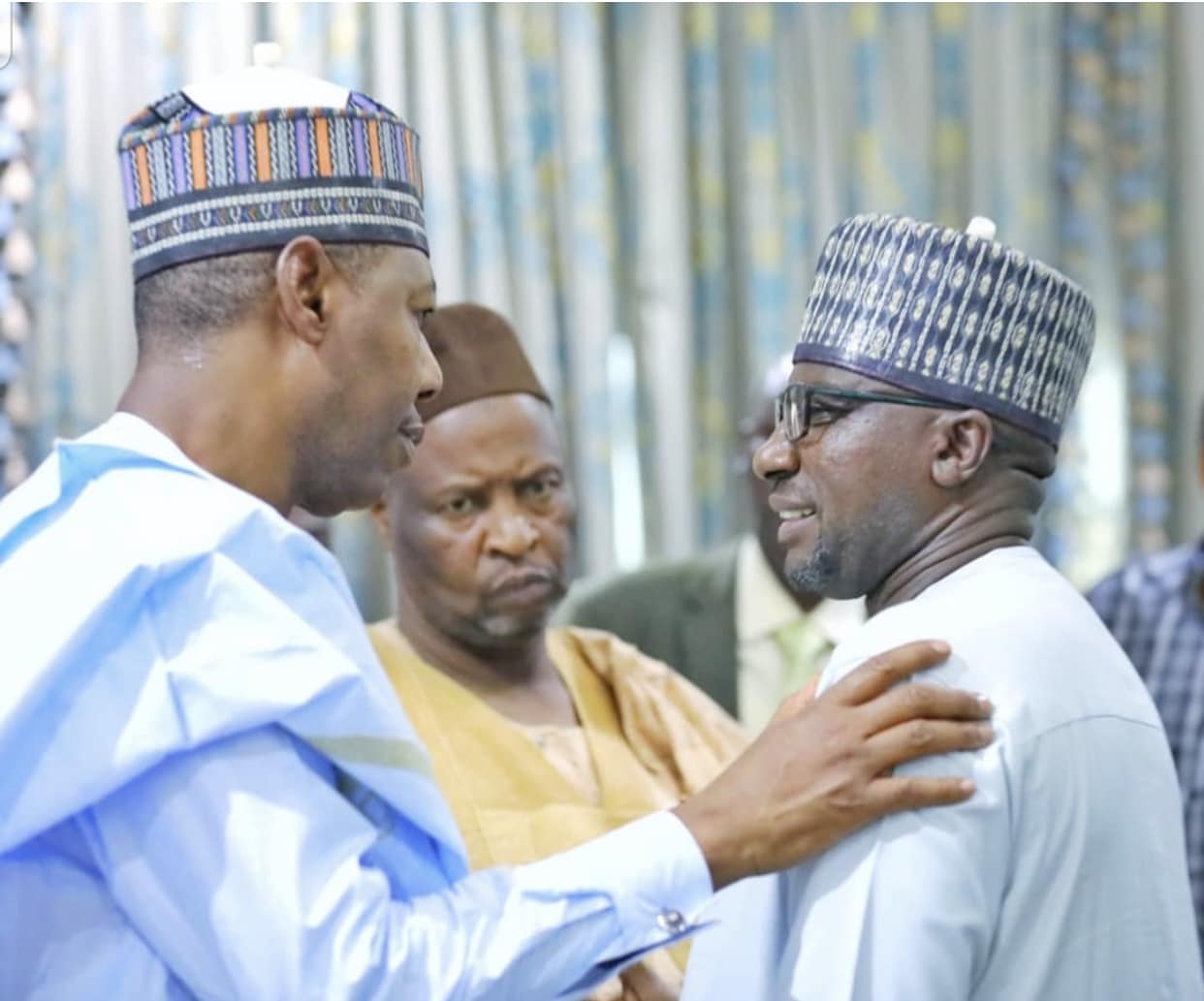
Mallam Isa Gusau, the spokesperson of the governor of Borno State, died two days ago in faraway New Delhi, India, after a protracted illness. Meanwhile, the Muslim Rights Concern (MURIC) has commiserated with Governor Babagana Umara Zulum.
In a statement issued on Saturday, 13th January 2024, by the group’s Executive Director, Professor Ishaq Akintola, MURIC urged the governor to take Gusau’s death in the spirit of the philosophy of death in Islam: ubiquitous, unavoidable and necessary end.
The human rights organisation also condoled the Shehu of Borno, Alhaji Abubakar Ibn Umar El-Kanemi, and the entire Borno Muslim Community.
Akintola described Gusau’s death as painful and a heavy loss. He also described the deceased as a devoted Muslim, a professional to the core, a humanist, an idealist and a principled family man.
He prayed for Allah’s forgiveness and al-Jannah Firdaus for Mallam Isa Gusau. He also prayed that members of the deceased’s family, friends and acquaintances would have the fortitude to bear the irreparable loss.

Tinubu appoints Ali Nuhu MD Nigerian Film Corporation
By Uzair Adam Imam
The appointment was disclosed in a statement Friday by the Special Adviser to the President ( Media & Publicity), Chief Ajuri Ngelale.
President Bola Tinubu has given his nod to the appointment of Ali Nuhu, aka the King of Kannywood, and ten other distinguished individuals to spearhead various agencies under the Federal Ministry of Art, Culture, and Creative Economy.
The appointments could be seen as a strategic move to foster growth and innovation in the arts, culture, and creative economy sector.
The recently appointed Chief Executive Officers are set to bring a fresh wave of leadership and expertise to their respective roles:
1. Tola Akerele: Takes the helm as the Director-General of the National Theatre.
2. Dr. Shaibu Husseini: Assumes the role of Director-General at the National Films and Censors Board.
3. Mr. Obi Asika: Appointed Director-General of the National Council for Arts and Culture.
4. Aisha Adamu Augie: Steps into the position of Director-General at the Centre for Black and African Arts and Culture.
5. Ekpolador-Ebi Koinyan: Appointed Chief Conservator of the National War Museum.
6. Ahmed Sodangi: Assumes the responsibility of Director-General at the National Gallery of Art.
7. Chaliya Shagaya: Takes on the role of Director-General at the National Institute of Archeology and Museums Studies.
8. Hajiya Khaltume Bulama Gana: Appointed Artistic Director of the National Troupe of Nigeria.
9. Otunba Biodun Ajiboye: Assumes the position of Director-General at the National Institute for Cultural Orientation.
10. Ali Nuhu: Takes charge as the Managing Director of the Nigerian Film Corporation.
11. Ramatu Abonbo Mohammed: Assumes the pivotal role of Director-General at the National Commission for Museums and Monuments.

Houthis threaten US and British Interests after overnight strikes
By Uzair Adam Imam
Yemen’s Houthi rebels, backed by Iran, declared that US and British interests are now “legitimate targets” following a series of overnight strikes on strategic places in Houthi-held areas.
The rebels’ Supreme Political Council issued a statement warning of retaliation, asserting that the armed forces would ensure the aggressors face consequences for their actions.
In response to the attacks, the council stated, “The joy of the aggressors will not be long, and our hand will be the upper hand, God willing.
“All American-British interests have become legitimate targets for the Yemeni armed forces.”
The overnight strikes, reported to have killed five people according to the rebels, came after weeks of Houthi attacks on Israeli-linked shipping in the Red Sea, in protest against Israel’s actions in its conflict with Hamas.
German government rejects “genocide” allegations against Israel at UN court
By Uzair Adam Imam
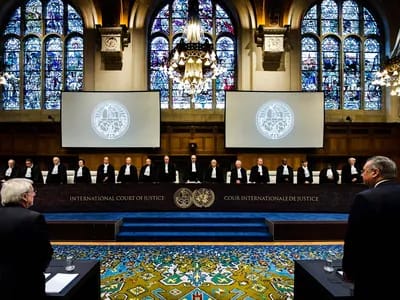
The German government strongly dismissed accusations of Israel committing “genocide” in Gaza during a statement on Friday at the UN’s top court.
Government spokesman Steffen Hebestreit stated that Israel was “defending itself” in response to “inhuman” attacks by Hamas on October 7.
Hebestreit highlighted Germany’s commitment to the UN Genocide Convention, showing its significance in preventing another Holocaust.
He firmly rejected any “political instrumentalization” of the Convention and acknowledged varying international opinions on Israel’s military operation in Gaza.
The statement clarified Germany’s position, decisively rejecting the accusation of genocide against Israel brought before the International Court of Justice (ICJ).
Hebestreit announced Germany’s intention to intervene as a third party under an article allowing states to seek clarification on the use of a multilateral convention.
South Africa initiated an emergency case at the ICJ, alleging Israel’s breach of the UN Genocide Convention and urging an immediate halt to the Gaza campaign.
Israel and the United States have dismissed the case, promising a robust defence.
While Germany maintains its historical responsibility for the Holocaust and supports the state of Israel, recent criticism has emerged regarding the Israeli campaign’s impact on civilians.
Foreign Minister Annalena Baerbock stressed the need for “less intensive” combat and increased aid flows.
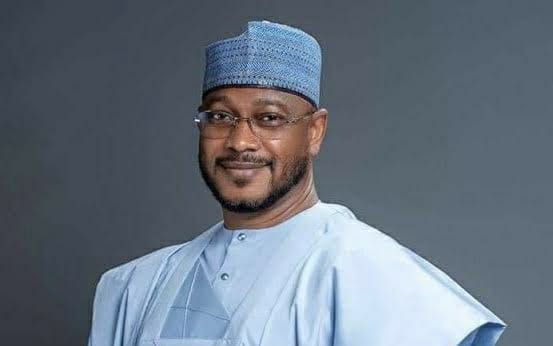
S’ court affirms Zamfara governor’s election victory
By Uzair Adam Imam
The Supreme Court has overturned the earlier decision of the Court of Appeal Abuja, which deemed the Zamfara governorship election inconclusive.
Hon. Justice Emmanuel Agim, delivering the lead decision, criticized the lower court’s judgment as “perverse and lacking evidential foundation.”
The verdict brings a sense of affirmation to Governor Lawal, who expressed his delight in a statement released by his spokesperson, Sulaiman Bala Idris.
Lawal sees the Supreme Court’s decision as a reflection of the people’s desire for positive development and progress in Zamfara.
Governor Lawal stated the importance of unity and collaboration for achieving sustainable development in the state.
He stated, “I am thrilled to have received affirmation of my election by the Supreme Court today. This verdict will boost our morale in fulfilling our campaign promises.”
The governor sees the victory as a collective decision made by the people of Zamfara during the governorship election held in March last year.
He urged all residents, including opposition parties, to unite and work together to rebuild and restore the state. Lawal highlighted his administration’s commitment to liberate Zamfara from the shackles of poor governance.
He called on stakeholders to actively collaborate, stating that the success of their collective efforts depends on unity and cooperation.