

Revisiting the FG’s decision on Togo, Cotonou degree certificates
By Ukasha Rabiu Magama
The issuance of fake certificates, both within Nigeria and abroad, is not a new phenomenon. Many institutions globally face accusations of awarding certificates to undeserving candidates. Therefore, the case of Cotonou should not be singled out or become a focal point of public discussion.
While many institutions accused of such scandals in Nigeria vehemently deny the claims to protect their prestige, instances of fake certificate awards are prevalent. The consequences of counterfeit certificates awarded by Nigerian institutions are evident across various sectors, including the military, medical profession, education, agriculture, engineering, commerce, and politics.
The detrimental impact is reflected in Nigeria’s current challenges, such as a compromised democratic atmosphere, a corrupt educational system, unqualified medical personnel, an unorganised defence system, and widespread insecurity.
The proliferation of WAEC, NECO, and JAMB miracle centres in Nigeria’s corrupt educational system contributes to the emergence of fake police and military officers, incompetent leaders, and escalating security challenges.
Banning Cotonou and Togo degree certificates might not be optimal, considering that Nigerian institutions must be held accountable. Fake certificate issues extend beyond international borders, with corruption being a pervasive challenge in Africa. Eliminating corruption is a formidable task, and scrutiny is warranted not only for the exposed journalist but also for individuals who acquire certificates through illegal means in Nigeria.
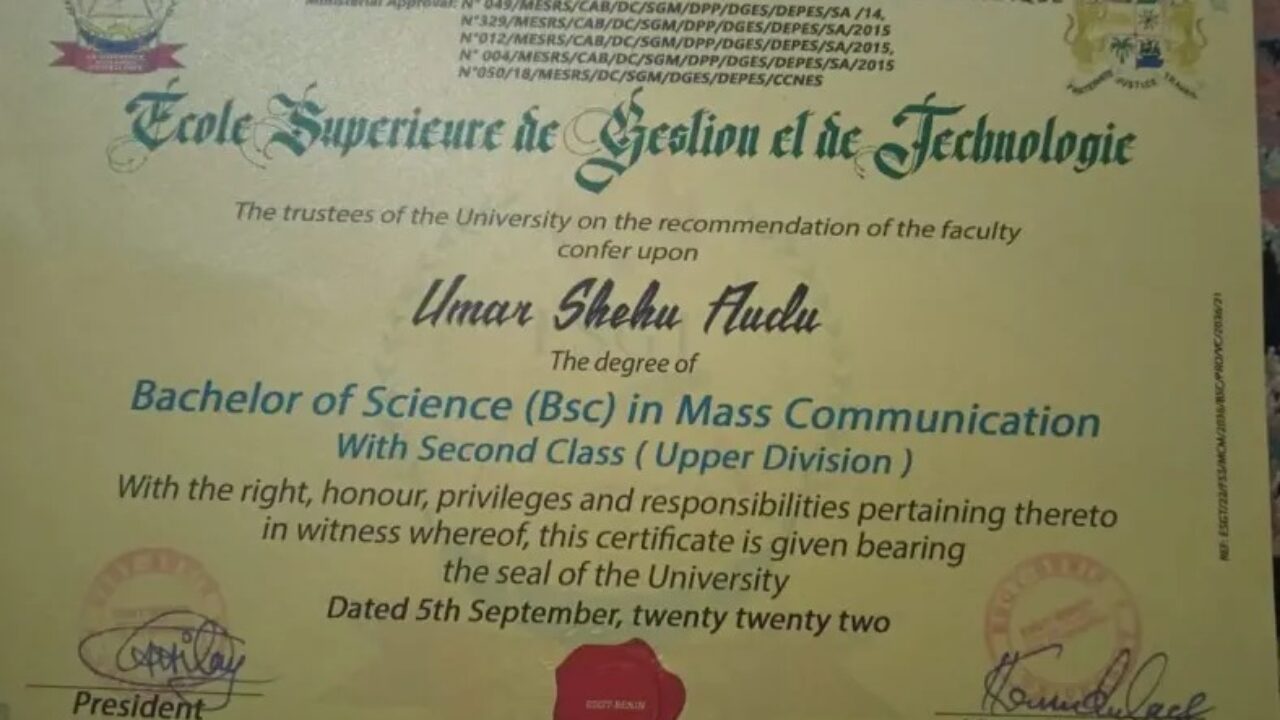
It is imperative for authorities to investigate how the journalist obtained his certificates in just six weeks and to allow the implicated institutions to present their case. Acknowledging the evident disparities among the three countries, Benin Republic and Togo have three three-year first-degree systems, unlike Nigeria, which has a maximum of 4-5 years.
Globally, the minimum time required to acquire a degree certificate is three years. Also, in Cotonou and Togo, this standard isn’t compromised. Meanwhile, not everyone who went to school or graduated from the suspended institutions bought certificates, and not every school in Togo or Benin Republic was involved in buying, selling, or awarding fake certificates.
Therefore, there is a need for the federal government of Nigeria to reverse its decision to suspend the degree programs in Togo and Cotonou and or arrest the journalists and the management of EGST University involved in such ungodly acts to face the wrath of the law. The allegation of buying, selling, and awarding fake certificates is not only peculiar to the Benin Republic and Togo but has also been alleged here in Nigeria.
In recent years, Ahmadu Bello University Zaria, Lagos State University, Imo State University, and the University of Jos were accused of selling and awarding fake certificates to undeserving candidates. The point here is, why did the federal government of Nigeria fail to sanction or suspend those institutions if it wanted to curb corruption in its educational system? Therefore, addressing this issue requires a comprehensive approach and a fair examination, not just suspending innocent institutions and maintaining the global standard in awarding degree certificates.
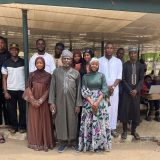
To this end, the Students Union Government of the Institute Superirieur de Formation Professionelle are here to draw the attention of the federal government of Nigeria to reverse its decision to suspend Togo and Cotonou degree programs. On the other hand, it calls on the government to thoroughly investigate whether the said journalist followed a legal process in obtaining his degree from the accused certificates.
Ukasha Rabiu Magama wrote an opinion of Adamade Peter Adamade, National President of ISFOP University’s Alumni.
Muslim women must acquire digital skills now
By: Ibrahim Suleiman Ibrahim
In today’s consistently evolving digital world, the pursuit of digital/ICT skills has become increasingly important for individuals and communities alike. This is particularly relevant for Muslim women, who often face unique challenges in balancing their religious and family values with their career choices, hence, making them to be left behind in the digital landscape.
In this article, we will explore the importance of creating awareness among Muslim communities about the need for Muslim women, especially the married ones, to pursue digital/ICT skills.
One of the primary concerns of Muslim women is the compatibility of their careers with their religious values and family life. Most jobs in our contemporary secular societies often raise ‘Sharee’ah’ concerns—which mostly revolve around free mixing and intimacy with ‘non-mahrams’, prolonged unavailability in their matrimonial homes that often impede performance of domestic responsibilities, compromising the Islamically mandated mode of dressing for Muslim women, and so on, making it challenging for some educated Muslim women to identify fulfilling careers that align with their religious values and beliefs.
God so kind, the recent advancements in the ICT sector has now alternatively offered a wealth of opportunities for Muslim women to pursue careers that are both fulfilling and compatible with their ‘Deen’ and family life, but unfortunately, most Muslim women lack sufficient awareness of those opportunities.
It is quite essential for Islamic scholars and Muslim elites to be aware of the recent advancements in the ICT sector and to consider enlightening their communities about the potential benefits of digital/ICT skills for Muslim women. By promoting awareness and understanding, these leaders can help Muslim women make informed decisions about their careers and contribute to the overall empowerment of the community, without compromising their religious values and beliefs.
Importantly, pursuing digital/ICT skills can also lead to remote job opportunities that offer flexibility and work-life balance. These jobs allow women to work from their homes, enabling them to demonstrate their supportive roles in their marriages, while still advancing their careers. Some of the skills that can lead to remote job opportunities include web development, copywriting, social media management, digital marketing, graphic designs, virtual administration, data analytics and so on.
Furthermore, encouraging Muslim women to pursue digital/ICT skills can lead to greater empowerment and intellectual development. By acquiring these skills, Muslim women can supportively contribute to their families’ finances and also become more intellectually sound, which is in line with the principles of Islam that promote the pursuit of knowledge.
In conclusion, we are in an interconnected world where digital skills are increasingly relevant across all sectors. Muslim women lawfully deserve to be equiped with these skills so they can also participate more actively in the global economy and contribute to the advancement of their communities, within the limits of Sharee’ah.
There may be misconceptions within Muslim communities about the compatibility of digital/ICT careers with Islamic principles. However, creating awareness can help address these misconceptions and demonstrate how these skills can be utilized in ways that are consistent with religious values.
It’s therefore crucial for community leaders, including Islamic scholars and Muslim elites, to actively promote the value of digital/ICT skills for Muslim women. Their support and endorsement can greatly influence the attitudes and decisions of community members.
Ibrahim Suleiman Ibrahim is a Public Affairs Analyst. He can be reached via: suleimibrahim00@gmail.com

Celebrity status and its impact on the millennials
By Al-Jannat Mohammed
The distinction between one’s private and public life is becoming more and more hazy in a time when social media dominates. Celebrities, who were formerly admired for their abilities and accomplishments, now have to navigate a world in which the public is interested in every aspect of their lives.
The younger generation has been influenced by this culture of perpetual exposure, as they readily divulge personal information online, undermining the idea of privacy. The story of Nigerian actor, Yul Edochi, and his second wife is a compelling illustration of this phenomena, and offers a prism through which to consider the effects of this invasion of privacy.
Without a doubt, the emergence of social media has completely changed how people communicate, making it possible to share information instantly with anyone on the planet. The loss of personal boundaries that results from people voluntarily disclosing their private lives to the world is the drawback, though.
Because they are in the public glare, celebrities have been hardest hit by this cultural change. For example, Yul Edochi’s second marriage turned into a social media show, with every detail of their union, family dynamics, and personal hardships visible to everybody with an internet connection.
Beyond just celebrities, this tendency affects the younger generation as well, who have grown up in a time of continual communication. Many people reveal personal information about themselves online because they want to be validated and accepted by others.
The younger generation frequently compromises privacy in the chase of likes, comments and virtual acceptance, whether it be for relationship milestones or personal struggles. This raises questions about how such behaviour may affect people’s general well-being, self-esteem and mental health in the long run.
Although the loss of privacy is a complicated problem with wide-ranging effects on the society, there may be ways to lessen its effects. Above all, it is critical to teach the next generation the value of establishing and upholding limits. Giving people the skills to decide what parts of their lives are best kept private helps them feel more in charge of their own story.
Prioritising digital literacy education is important, with a focus on the lasting nature of online content and the possible repercussions of excessive sharing.
Social media sites can also be extremely important in encouraging responsible sharing. Pop-up reminders and privacy checklists are two examples of features that can be implemented to encourage users to reconsider sharing sensitive information and prevent impulsive sharing.
Platforms should also make investments in strong privacy settings so that users may decide who can see their content. Encouraging social media usage in a way that is balanced and respects one’s personal limits sends a strong message about how important privacy protection is.
In the end, the degradation of privacy in the era of celebrity culture is a complex problem that calls for cooperation from people, organisations, and digital platforms. Fostering a healthier connection with the digital world requires finding a balance between the advantages of connectedness and the maintenance of personal boundaries.
We may endeavour to create a culture that values and respects privacy in an increasingly connected world by embracing responsible sharing behaviours, encouraging digital literacy, and setting positive examples.
Al-Janat Mohammed is an NYSC corps member with PRNigeria in Abuja

FRSC van collides with car while chasing erring driver
By Uzair Adam Imam
In the Utako District of Abuja, a Federal Road Safety Corps (FRSC) Hilux Van was involved in a collision with a car on Tuesday as officials pursued an erring driver.
The car, driven by Bashir Bashir, was carrying his pregnant wife, Olabisi, to her office at the time of the incident.
Bashir recounted, “We were coming from Lugbe to work when the road safety officials attempted to stop a vehicle ahead of us.
“The driver didn’t comply, prompting the officials to chase after it. Unfortunately, our car was caught in between the FRSC van and the fleeing vehicle, resulting in a collision from behind.
“My pregnant wife, seven months along, was in the car and has been taken to the hospital,” he added.
Man remanded for allegedly raping co-worker to death
By Uzair Adam Imam
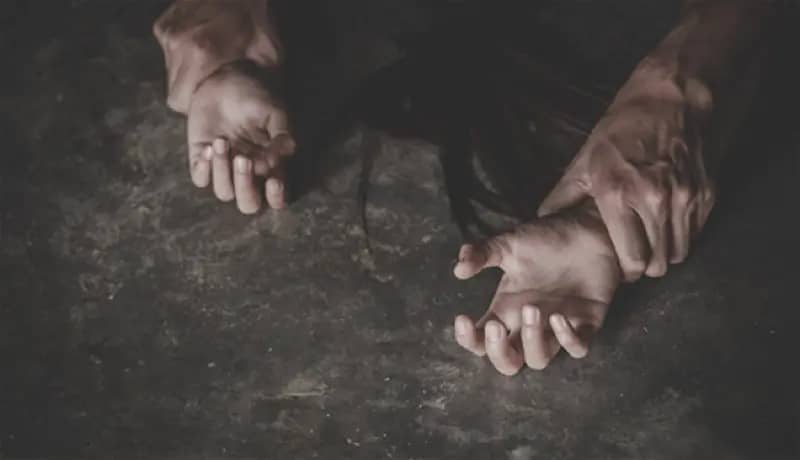
A 35-year-old man, James Emmanuel, has been remanded in prison by a magistrates’ court in Akure, Ondo State, for allegedly raping his co-worker, 55-year-old Deborah Abiodun, to death.
The incident took place on a poultry farm in the Oke-Odu area of Akure around 11pm on January, 2024.
According to the prosecutor, Inspector Anwana Josephine, the defendant allegedly raped Ms. Abiodun to death and then struck her with a stone on the forehead before dumping her corpse inside a waste pit.
Magistrate F.A. Aduroja adjourned the case to March 27th after ordering the remand of the accused.
NLC acknowledges economic realities, withdraws N200k minimum wage proposal
By Sabiu Abdullahi
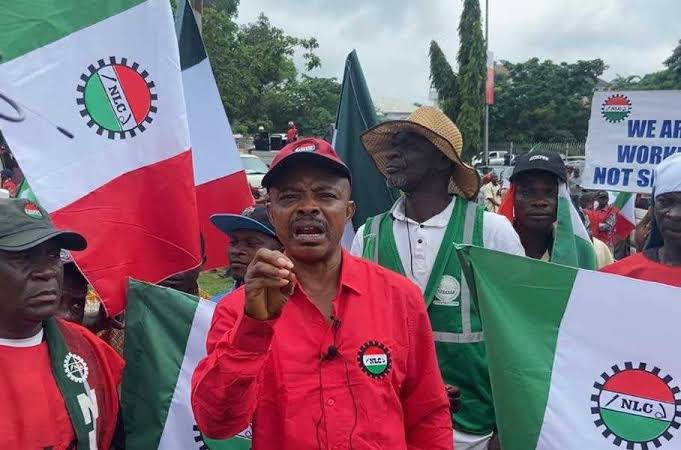
The Nigerian Labour Congress (NLC), in response to the current economic challenges facing Nigeria, has reevaluated its stance on the proposed N200,000 minimum wage.
The National Vice President of the NLC, Tommy Etim, clarified that the earlier proposed amount is no longer realistic, given the prevailing economic conditions in the country.
Etim’s statement comes in the wake of the inauguration of the Minimum Wage Committee by Vice President Kashim Shettima on Tuesday.
The NLC had initially proposed the N200,000 minimum wage when economic challenges were less severe.
According to Etim, the socio-economic landscape has significantly worsened since the N200,000 proposal, with the exchange rate and the devaluation of the naira playing crucial roles in the reconsideration.
He highlighted that the original proposal is no longer tenable, noting the need for a flexible approach in determining the new minimum wage.
Etim stated, “We are not going there with a fixed amount, but definitely not N200,000. By the time we get there, we will decide based on the socio-economic situation. That’s what we are going to base our national minimum wage discussion and negotiation on.”
The NLC’s acknowledgment of the evolving economic realities signals a pragmatic approach to the forthcoming discussions and negotiations regarding the national minimum wage.
Customs boss vows transparency, collaboration with PAC
By Sabiu Abdullahi
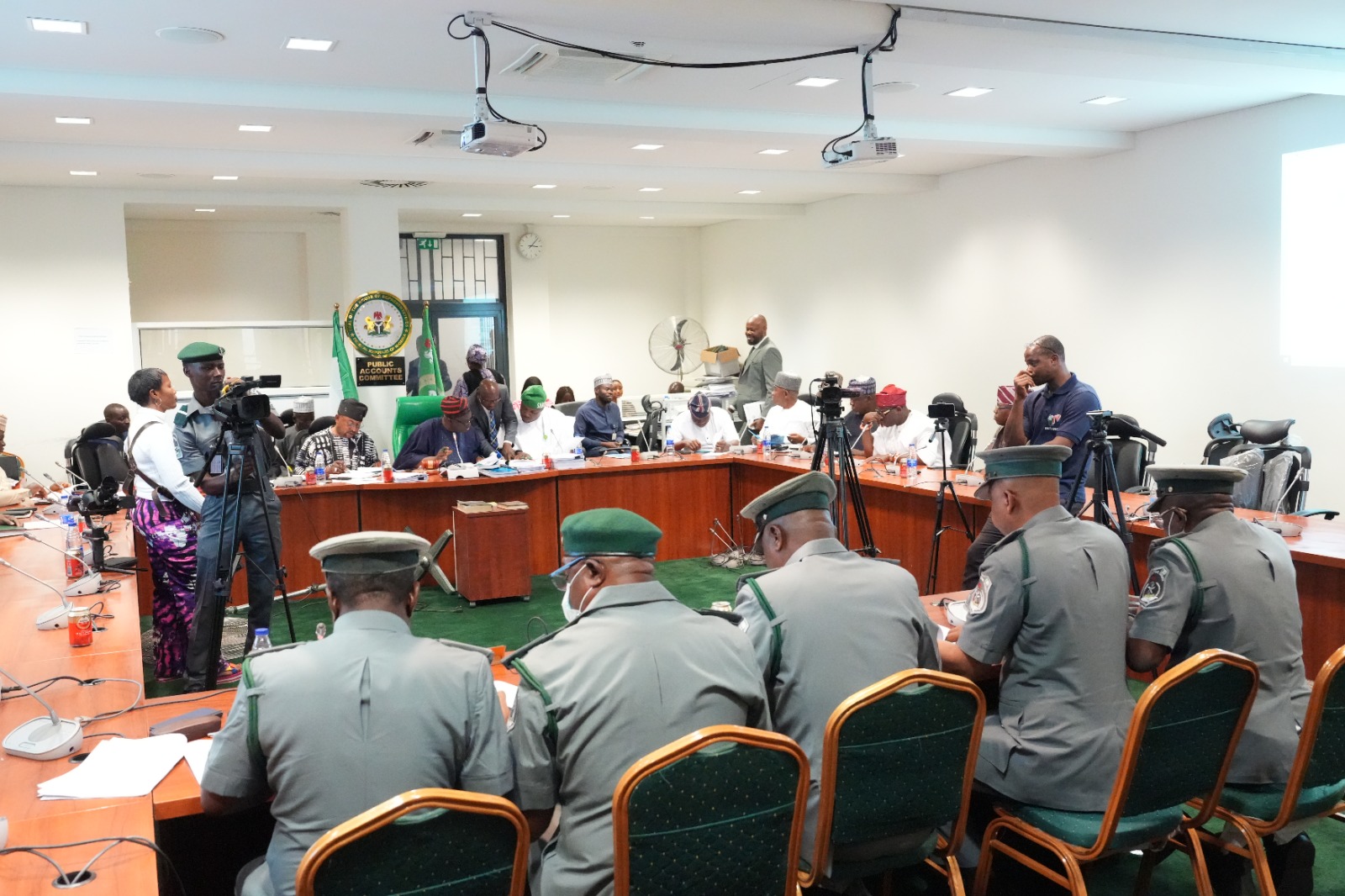
The Comptroller General of Customs (CGC), Bashir Adewale Adeniyi MFR, pledged collaboration with the House of Representatives Public Accounts Committee (PAC) during an appearance on Tuesday, January 30, 2024, in Abuja.
Addressing the committee, CGC Adeniyi highlighted the Nigeria Customs Service’s (NCS) longstanding use of integrated technology for revenue collection, involving over 20 commercial banks in a process spanning more than two decades.
He noted the contractual agreements with these banks, granting access to a technology platform facilitating seamless payments, directly remitted to the federation accounts.
Promising a commitment to transparency, CGC Adeniyi expressed readiness to collaborate closely with the Committee, stating, “Compliance is something we take seriously, and we will ensure that if there are any grey areas that need our service to foster efficiency, I am happy to mention that my team and I are prepared and will, in the most transparent manner, present statements to the committee.”
Chairman of the Public Accounts Committee (PAC), Bamidele Salami, offered advice to NCS, urging the consistent provision of audited statements of accounts and adherence to all legal requirements.
The collaborative effort between the Customs and the Public Accounts Committee signifies a dedication to transparency and accountability in financial matters within the Nigeria Customs Service.

The transfiguration “Ni Dan Rigasa Ne” phrase
By Abdullahi Yusuf
The phrase “Ni Dan Rigasa ne” (which means “I am an inhabitant of Rigasa”) was once notorious within the Kaduna metropolis, evoking a troubled history. Rigasa, a well-known community under the authority of Igabi Local Government Area of Kaduna State, boasts a dense population of over 3 million inhabitants, primarily from the Hausa tribe, making Hausa the predominant language of communication in the community.
In the past, the phrase “Ni Dan Rigasa ne” was akin to saying “I’m from O’block” in Chicago, United States. It connoted hailing from a place where violence was rampant, almost warning others to steer clear due to assumed tendencies for aggression. While certain notions about the community were stereotyped, these stereotypes held some semblance of truth, however generalised.
Due to Rigasa’s population density, a large number of out-of-school children roamed the streets. Some scavenged within different marketplaces, while a fortunate few were sent to learn skills. Many adolescents and young people in the community had been immersed in illicit activities, often engaging in violent altercations, causing harm to themselves and others while also perpetuating property destruction.
During this period, the term “Yan shara” was commonly used, referring to gangs of thugs armed with weapons, causing mayhem and inflicting injuries and damages. This unrest often served as an opportunity for robbery, leading to the theft of belongings from innocent passers-by.
Phone snatching was prevalent, and individuals lived in fear of being victimised in broad daylight. Such incidents resulted in injuries, disabilities, and even fatalities.
As a result, the community became daunting to outsiders, dissuading visits from people from other parts of the state due to the fear of potential unrest or falling victim to robbery.
“Yan hayi” was another term those living outside Rigasa used to describe the residents, signifying people residing in Hayin Rigasa. The word “Hayi” conveys “crossing,” and was derived from the fact that a river at the entrance of Rigasa had to be traversed before entering the community. During that era, being called “Dan Hayi” implied that one was unwise or unsophisticated.
These stereotypes gradually dissipated over time as Rigasa transformed into a burgeoning community with abundant, relatively affordable land. People from other parts of the state began to immigrate to Rigasa and construct houses. Consequently, Rigasa has become one of the most rapidly developed communities over the past two decades, a testament to its positive transformation.
Despite the aforementioned tumultuous events, the residents of the Rigasa community are among the most selfless individuals one could encounter. Their spirit of altruism and patriotism is unparalleled, and they channelled their unity towards overcoming adversities and shaping a brighter future for their community. Education served as the fulcrum for this positive transformation, marking the inception of their development journey.
Over two decades ago, a group of forward-thinking individuals came together to establish a forum to foster education and community development to promote success. The Rigasa Students Forum (S-Foris) was formed to orient, educate, and mentor the people within the community, including the younger generation and the elder populace.
S-Foris was instrumental in providing extramural lessons to students and introducing adult education to elderly individuals, particularly women who did not have the opportunity to acquire education earlier in their lives. The forum made significant strides in transforming the mindset of numerous youths in the community, achieving notable success.
Subsequently, other student bodies, such as the Rigasa Students Association (RSA) and Rigasa Old Student Association (ROSA), emerged with similar aspirations, continuing the trajectory of success.
Building on these achievements, the same group of individuals sought to elevate their advocacy efforts by expanding the scope of development-related initiatives. This led to the formation of the Rigasa Action and Awareness Forum (RAAF). RAAF operates as a pressure group, enlightening the community about various aspects of development and advocating for adherence to the rule of law. Moreover, the forum takes proactive measures to ensure that the government addresses the needs and concerns of the Rigasa community.
Due to the tireless efforts of a dedicated group, Rigasa can be considered a benchmark for positive change. The community boasts numerous talented individuals who excel across various domains of development. Academically, Government Secondary School Rigasa has produced a multitude of intellectuals who have excelled in academia. Moreover, developmentally, Rigasa is home to the leading youth civil society organisation in Kaduna, the Enhancing Community Action for Peace and Better Health Initiative (e-CAPH), headed by the vibrant young leader and prominent human rights advocate, Yusha’u M Abubakar. Additionally, the Village Debbo Care Initiative (VD Care), led by Samira Isah Modibbo, serves as another influential platform for women’s rights, among other organisations contributing to the community’s progress.
Before the 2023 election, during the voter registration exercise, RAAF played a pivotal role in mobilising citizens for registration and transfer, as Rigasa welcomed the addition of over 80 polling units. This effort led to mobilising over 10,000 additional votes within the community, presenting a significant political advantage considering the maxim “politics is a game of numbers.”
“Dan Rigasa” or “Dan Hayi” is no longer derogatory but a source of pride. Rigasa is now widely represented in learning institutions and governmental agencies across northern Nigeria. Rigasa youth have obtained prominent positions in government, excelled in business endeavours, and showcased their skills across various industries. The community has notably enhanced its security, becoming one of the safest locales in Kaduna State, fostering an environment where individuals can navigate without fear of robbery or threat to personal safety.
Amid these accomplishments, humanitarian services have also flourished. Zauren Al’umma, led by Idris Tumba, has emerged as a notable humanitarian organisation providing crucial aid to vulnerable individuals in diverse capacities, further accentuating the community’s spirit of benevolence.
Rigasa’s journey reflects a remarkable transformation, underscored by a commitment to education, civic engagement, and holistic community development. Rigasa people are fond of helping each other in an individual capacity and as an organisation.
I can confidently beat my chest wherever I find myself and proudly exclaim, “Ni Dan Rigasa Ne,” without fearing any stereotype or judgment. I am confident that Rigasa is now well-represented widely.
Abdullahi Yusuf is a graduate of Health Education, Bayero University Kano. He wrote from Rigasa, Kaduna, via abdoolphd@gmail.com.

Nigeria Customs enhances trade facilitation with WCO-Led PCA, AEO Diagnostic Mission
By Sabiu Abdullahi
The Comptroller-General of the Nigeria Customs Service (NCS), Bashir Adewale Adeniyi MFR, in a bid to fortify customs processes and mitigate risks, inaugurated a World Customs Organisation (WCO)-led Post Clearance Audit (PCA) and Authorised Economic Operators (AEO) Diagnostic Mission on Monday, January 29, 2024.
This is contained in a statement released and made available to journalists Tuesday by the spokesperson of the Nigeria Customs Service, Abdullahi Aliyu Maiwadah.
According to Maiwadah, during a two-week retreat at the Wells Carlton Hotel Conference Room in Abuja, CGC Adeniyi outlined the NCS’s commitment to efficient supply chains and meticulous post-clearance audits.
The focus is on enabling Small and Medium Enterprises (SMEs) to qualify for AEO status through tailored training, support, and incentives.
The initiative aligns with broader goals of inclusive growth, job creation, and poverty alleviation, ensuring societal segments benefit from trade facilitation and economic development opportunities.
The mission specifically addresses entry barriers for SMEs, considering Nigeria’s strategic position in the global trade framework and its role in the African Continental Free Trade Area (AfCFTA).
CGC Adeniyi stressed the significance of PCA and AEO in the successful implementation of AfCFTA, citing their role in refining customs procedures, strengthening compliance mechanisms, and promoting transparency for regional integration and economic progress in Africa.
Expressing gratitude to the World Customs Organisation and acknowledging the collaboration with stakeholders, including the WCO-led PCA, IMF, World Bank, and AEO Diagnostic Mission, CGC Adeniyi highlighted the dedication and expertise driving the initiative.
The Deputy Comptroller-General of Customs (DCG), Abdullahi Musa, welcomed participants, noting Nigeria’s standing as a hub for trade and investment. DCG Musa underscored the mission’s aim to enhance compliance mechanisms, facilitate trade, and contribute to broader WCO objectives for global border security and sustainable economic development.
DCG Musa extended appreciation to the World Bank Group and the International Monetary Fund for their support, displaying the dedication and expertise of all stakeholders involved in the two-week programme aimed at accelerating trade facilitation within the Nigeria Customs Service.
Dollar-Naira exchange rate and the life of Nigerian civil servants
By Ismail Namadi
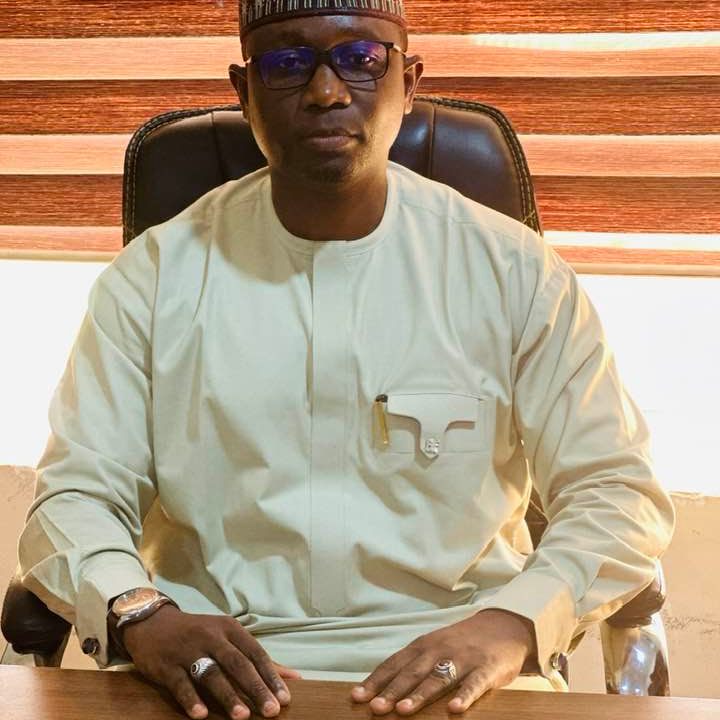
In 2014, $1 was equivalent to ₦200. At that time, one bag of 50kg rice was around ₦8,000 ($40), and the minimum wage was N18,000 ($90).
Comparably, in January 2024 (10 years apart), $1 is around ₦1,500. The Minimum wage is ₦30,000. A simple calculation is 18000/200 = $90; 30,000/1,500 = $20.
What does this simple calculation mean? In real terms, over the past ten years, despite the increase in the minimum wage from ₦18,000 to ₦30,000 per month, purchasing power has decreased by over 75%.
However, in 2014, the PMS pump price per litre was 87 Naira, while the current price in 2024 is ₦700 per litre.
The Nigerian budget in 2014 was ₦4.962 trillion, while in 2024, the budget is ₦28.77 trillion. These variables are paramount when considering minimum wage simply because they directly affect the lives of people in the country.
For example, the federal government removed the subsidy on petroleum products, which led to a skyrocketing price of general goods and services, making the lives of citizens, especially low-income earners, difficult to manage.
In addition, the dollar plays a significant role in our economy because we depend on foreign importation for consumable goods. The dollar is the only legal tender that we use to patronize foreign goods.
My advice to the federal government is that when it decides to review the minimum wage, it should consider the purchasing power of the naira so that the standard of living of Nigerian workers is improved.
Ismail Namadi wrote from Paderborn, Germany, via Ismailnamadi2006@gmail.com.