



Kano man in US celebrates daughter’s academic excellence
By Sabiu Abdullahi
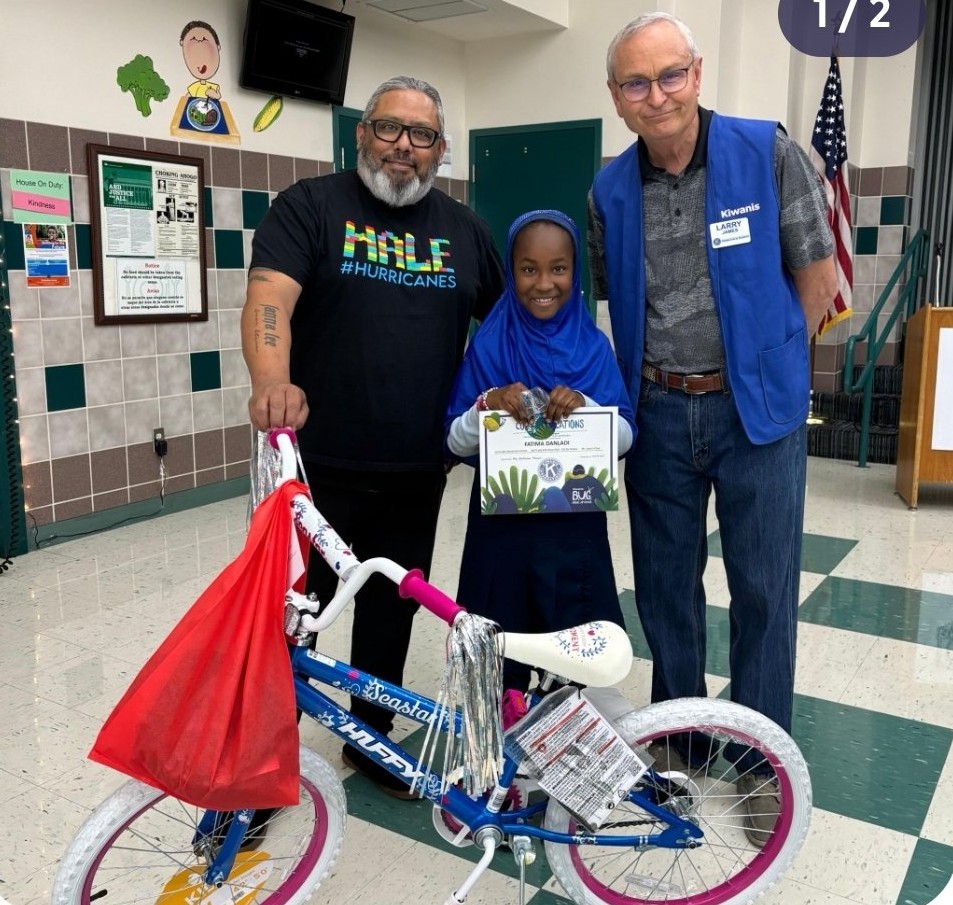
Fahad Danladi, a proud father from Kano, Nigeria, who resides in the United States, has taken to social media to celebrate his daughter Fariha’s outstanding academic achievements.
Fariha was rewarded with a brand new bike for her hard work and dedication to her studies.
Fahad, who was overjoyed by his daughter’s success, shared the news on Twitter, saying, “I’m beaming with pride to share that my 2nd daughter, Fariha Danladi, has been rewarded with a brand new bike for her outstanding academic achievements in school! Her hard work and dedication have truly paid off, and I couldn’t be more thrilled to see her excel. Congratulations, Fariha, on this well-deserved recognition!”
Fariha’s achievement is a testament to the importance of hard work and determination, and serves as an inspiration to her peers and the Nigerian community in the US.
Her family and community appeared to be proud of her accomplishments.

‘My boyfriend stabbed by a policeman bled to death because 4 hospitals rejected him’
By Uzair Adam Imam
An unimaginable tragedy occurred when 26-year-old Anosikwa Patrick was fatally stabbed by a police officer at Skymall in Ajah, Lagos, where he had gone to unwind with his girlfriend, Joy Ebere.
Recounting the horrific ordeal, Ebere lamented, “Perhaps he would have survived the injury, had the hospital he was rushed to attended to him.”
She described the harrowing sequence of events, stating, “Some minutes later, he was shouting for help… Upon hearing the commotion, I went outside and saw him in the pool of his blood.”
Despite frantic efforts to save him, Patrick was denied treatment by four hospitals, ultimately succumbing to his injuries on the way to General Hospital Marina.
In the midst of grief, questions lingered about the officer’s actions.
Ebere questioned, “Why would a policeman act that way?”
Meanwhile, Augustine, the deceased’s elder brother, expressed the family’s anguish and demand for justice.
The Lagos State Police Command, through its spokesman, SP Benjamin Hundeyin, assured the public that an investigation was underway, with the arrested policeman in custody.

EFCC sting operation nets 34 suspected currency fraudsters
By Uzair Adam Imam
In a recent crackdown, the Economic and Financial Crimes Commission (EFCC) has apprehended 34 individuals suspected of engaging in foreign exchange fraud.
These arrests were made on Friday, April 26, 2024, during a well-coordinated sting operation conducted at the Wuse Zone 4 area of the Federal Capital Territory, Abuja.
According to Dele Oyewale, the spokesman for the EFCC, the operation was prompted by credible intelligence indicating illicit sales of dollars in the area.
Among those detained are individuals identified as Usman Mohammed, Abdullahi Nasir, Abubakar Saleh, and others.
The EFCC’s efforts to purge and stabilise the foreign exchange market have been ongoing, leading to these recent arrests.
Following standard procedure, the suspects will undergo thorough investigations before being brought to court for prosecution.
This development shows EFCC’s commitment to combating currency-related crimes and ensuring the integrity of the financial system.

Why we recalled personnel from anti-graft commission — Kano Police
By Uzair Adam Imam
The Police Command in Kano State clarified that the recall of police officers from the Kano State Public Complaints and Anti-Corruption Commission (PCACC) is solely for the purpose of conducting a staff audit, contrary to speculations of political vendetta.
The Commissioner of Police, Usaini Gumel, explained to reporters in Kano that the recall aims to ascertain the precise number of police personnel seconded to the commission since 2015.
Gumel noted that the move is a response to numerous complaints received through the Command’s Complaint Response Unit (CRU), alleging highhandedness and deviation from assigned duties by the police attached to the commission.
“The exercise was simply a response to series of reports received through the Command’s Complaint Response Unit (CRU),” Gumel stated.
“They portrayed policemen attached to the commission as being highhanded and deviating from the expected role of providing static guard and other duties at the commission.”
Gumel further clarified, “For the purposes of clarity, members of the public are to note that the object of the ongoing staff audit is basically to address the litany of complaints as reported by sections of the media.”
He expressed that the audit became necessary to rectify anomalies in the commission’s operations, where police officers were reportedly involved in arrests and investigations, deviating from their original mandate.
“In summary the step is towards ensuring a better and effective service delivery by the policemen devoid of abuse of process in the interest of the people,” Gumel added.
The Commissioner also revealed that similar audits were conducted in the past, with officers returning to their duty posts upon conclusion.
The Inspector-General of Police (IGP) has approved the immediate return of some police officers providing guard duty at the commission who have undergone the audit process.
“Should the commission require more policemen for other duties than what has been expressly approved by the IGP, it should apply to IGP for approval and deployment,” according Gumel.

On bullying and mini skirt in our private schools
By Muhsin Ibrahim, PhD
The Lead British school management now has the situation under control. Therefore, the bully will be punished, and, generally, bullying will not continue, at least not in the egregious form most of us see in the trending videos. However, one thing will remain the same: the “Western-style” dress code.
It may shock you to know that some private schools in other cities, such as Kano, have similar miniskirts as uniforms for girls, including Muslim girls. It’s astonishing to see the girls in hijabs before and after school hours. I once wrote about a student I saw struggling to put on a long skirt soon after their school hours in Kano.
Honestly, as a Muslim parent, you are to blame. After all, these are private schools. What we consider decent dress does not hinder the wearer’s ability to learn. It’s a myth to think that a hijab or long skirt can impede learning.
If our governments (for example, in Kano, Katsina, Jigawa, etc.) cannot enforce a dress code on those private schools—for whatever reason—parents can and should.
It’s a shame that we still hold on to British and American traditions in many ways when they, too, have already changed with the times—based on the current realities.
Over there, police officers and soldiers can have beards, Sikhs can wear turbans, and women can wear hijabs. Even judges and lawyers don’t have to wear wigs anymore.
Nigeria and other former colonies, what are we waiting for?
Muhsin Ibrahim lives and teaches at the University of Cologne, Germany. He can be reached via muhsin2008@gmail.com.

Nigeria Customs Service reaffirms commitment to gender equality
By Sabiu Abdullahi
The Nigeria Customs Service (NCS) has reaffirmed its commitment to promoting gender equality in decision-making processes, combating gender discrimination and gender-based violence.
This dedication was reiterated at a capacity-building workshop on gender inclusivity co-organized by the World Customs Organization (WCO) and the NCS in Abuja on Monday, April 22, 2024.
According to the Comptroller-General of Customs, Bashir Adewale Adeniyi, “Our aim is to create a workplace where everyone has equal opportunities to grow and contribute to the service’s success, regardless of gender.”
He noted that the NCS is committed to addressing gender discrimination, harassment, and biases within its ranks and will work tirelessly to ensure that its policies and practices reflect this commitment.
The workshop brought together customs officials, gender experts, and stakeholders to discuss strategies for promoting gender inclusivity and addressing gender-based violence in the workplace.
The event demonstrated the NCS’s dedication to creating a more inclusive and equitable work environment where all employees can thrive and reach their full potential.
Acting Comptroller-General of Customs, Caroline Niagwan, represented the CGC at the event and indicated the need for clear policies and procedures to address gender discrimination, harassment, and biases within the NCS.
With this reaffirmed commitment, the NCS demonstrates its dedication to promoting gender equality and combating gender-based violence, creating a more inclusive and equitable work environment for all employees.
Crushed by Chickenpox: My journey of immunity, struggle, and healing
By Aisha Musa Auyo
I often dismiss the hearsay that everyone must be attacked by this virus once in their lifetime. It’s a superstition, I would reply to them. My sisters were all attacked by the virus, one after the other at a roll, all four of them. I was the one applying calamine lotion on them. We were all waiting for my turn, but I wasn’t infected. Very unusual, even the doctors would say. I must be immune to the chickenpox, I would boast.
After about 15 years, the virus knocked and crushed me to the point of losing hope of living again. From high fever, sore throat, muscle pain, dizziness, and general discomfort. My son was the one who contracted the virus, and obviously, I’ll be the one to take care of him. I did it with full confidence and carelessness that I was immune to the virus. However, I separated him from his siblings and classmates. His illness didn’t last for more than five days, and in a week, he was okay and mixing with everyone.
We travelled for Easter, and I was sick throughout the Easter break. It is Kano weather, I would say. All I do is lie down. Cooking and Tarawih during the last days of Ramadan became impossible for me, yet I didn’t go to the hospital. I deceived myself into thinking I’d get better when my body adjusted to the weather. Until one Tuesday, I felt so sick I couldn’t walk, couldn’t talk, and hated the sound of everything.
Then, one of my kids complained of heat rashes. I undressed him so I could bathe, and viola! Chickenpox rashes all over his body. I checked my other son and found the same issue, then I took a closer look at myself, the rashes were all over my body. I was so sick that I wasn’t paying attention to my skin. It then dawned on me that all three of us were infected by Haidar two weeks after his illness.
I made some calls and was told to stay at home, that we can infect the entire community by going to the hospital. The virus is very contagious. We stayed indoors, and medication was sent to us. We were told not to entertain visitors and not to go out till we were fully recovered and free from the virus.
“Lockdown II,” I thought to myself. We became prisoners in our house, and although the lockdown did give me a chance to rest and bond with the kids, it’s not anything I would hope for anyone.
My fever kept getting high, and I was told the virus punishes adults 50 times the way it treats kids.
My kids were active and eating after three days, but I wasn’t. The rashes were all over me, including my feet, palms, ears, scalp, lips, throat and tongue. Eating and drinking become difficult. These rashes are not only irritating to the eyes, they hurt like ant bite. I have to be recording my temperature every 3 hours just to see if everything is going well. I finished all the painkillers in the house. Sitting becomes difficult, and leaving my room becomes difficult, too.
I kept thinking something else must definitely be wrong with me; chickenpox could not be this hard. A malaria drug was prescribed for me. Since I wasn’t eating, the ulcer came back in full force. Then I learned that the rashes and scars do not go away. My world was crumbling, and I was crying like a baby. I can’t imagine living with these scars forever.
After nine days, the pain became bearable. I felt better and had the hope of living again. I was told I could still spread the virus even at that time, so I spent my Eid al Fitr at home, browsing and researching chickenpox and how to get rid of the scars.
I learned that the only immunity to the virus is being infected by it. Once you are infected, you will hardly get infected again. It happens once in a lifetime. Although some countries were able to eradicate it, most countries are still battling the virus.
Now and then, especially during the hot season, this virus will spread. It’s there to make sure everyone is immunized, meaning everyone is infected with it once in his lifetime. If it’s a choice, one would prefer to be infected at a younger age, as the virus is merciful to kids and merciless to adults, lol. I’ve come up with a few things to do when the virus strikes.
• As a parent, once you notice that such a contagious virus infects a family member of yours, kindly seclude your ward from the public. It starts with one person, and in less than a week, the whole committee can be infected. Kindly reject visitors by letting them know your condition. Do not travel till you are fully recovered. These teachings from our beloved Prophet Muhammad, peace be upon him. He emphasized the importance of quarantine, separating sick individuals from healthy ones, and avoiding contact with contagious diseases to prevent their spread, all of which are integral to Islamic rulings on managing infectious diseases.
• Chickenpox medications are over-the-counter meds. You don’t have to go see a doctor. Once you notice fever, headache, muscle ache, and rashes, know that it’s either chickenpox or measles. They’re contagious. By going to the hospital, one may infect the nurses, receptionist, and even the doctors. Send an immune person to get the drugs for you.
• Drink a lot of water and fluids. Those monster rashes drain one to the point of dehydration.
• You, as a healthy individual, should not feel bad when a person tells you not to visit due to the nature of their illness. Kindly understand that they have your best interest at heart. A colleague of mine is still angry with his Uncle because the uncle told him not to visit them as the whole family is infected with chickenpox.
• Chickenpox doesn’t sit well with heat, so make sure you stay in a well-ventilated space and do not wear clothes since you are indoors.
• Bathe at least thrice a day with room temperature water, and avoid hot or warm water.
• If possible, wash your hands with a hand wash every hour when you are not sleeping.
• Try your best not to forcefully scratch or remove the rashes when they’re drying. Allow your skin to shed them. This is easier said than done. Feeling a blister or bump on your skin and letting go isn’t easy. Let me not deceive you.
• Calamine lotion helps to soothe and dry the rashes.
• If the fever is high, try using a damp cloth over the patient and take painkillers according to the doctor’s instructions.
• After you are healthy and free of infection, sanitize the house and the clothes you use with hot water and disinfectants. This includes towels, bedspread and sofas.
• I was told the rashes and scars never disappear; some said it takes years before they disappear. One of my sisters was born with a fair complexion, but after a chickenpox infection, her complexion darkened. She never recovered her colour. As discouraging and sad as this may sound, one should not relax and allow the virus to ruin one’s looks and confidence. Aloe vera gel does wonders with consistency and patience.
• Honey, neem oil, or water infused with neem leaves also help a lot. Retinol creams are also very effective. But please don’t bleach your skin or use harsh chemicals on your body.
Aisha Musa Auyo is a Doctoral researcher in Educational Psychology, a wife, and a mother of three. She is a homemaker, caterer, and parenting/relationship coach.

119 inmates escape from Suleja prison after rainstorm
By Sabiu Abdullahi
The Nigerian Correctional Service (NCoS) FCT Command has confirmed that 119 inmates escaped from the Suleja Custodial Centre in Niger State on Wednesday night.
The incident occurred after a rainstorm destroyed parts of the facility, including its perimeter fence.
According to Samson Duza, the Public Relations Officer of the command, the service has activated its recapturing mechanisms and has already recaptured 10 of the escaped inmates.
He assured that efforts are being made to recapture the remaining inmates, with the help of sister security agencies.
Duza noted that many of the service’s facilities were built during the colonial era and have become old and weak.
He said the service is working to replace these facilities with modern ones, including the construction of six 3,000-capacity ultra-modern custodial centres in all geo-political zones in Nigeria.
The FCT spokesman urged the public to go about their businesses without fear or hindrance and to report any suspicious movements to the nearest security agency.
He assured that the command is on top of the situation and is working to ensure the recapture of all escaped inmates.
The public has been enjoined to look out for the fleeing inmates and report any information to the nearest security agency.
The incident has raised concerns about the state of correctional facilities in the country and the need for urgent renovation and reconstruction.
Lead British School saga: the slap or the dress?
By Dr. Fahad Ibrahim Danladi
Unfortunately, bigotry has permeated the fabric of our society, affecting some Nigerians. Recently, I was surprised to learn that the girls wearing miniskirts in the Lead British School, Abuja bullying video were Muslim students.
This incident highlights a concerning trend, also seen in Lagos, where students in private schools may be restricted from wearing modest attire that aligns with their religious beliefs.
In contrast, I’ve witnessed a more inclusive approach in the United States, where my children attend public school. Their schools accommodate diverse religious and cultural backgrounds by offering flexible dress code options.
For instance, my daughter’s elementary school has a uniform policy with various styles that cater to different religious and cultural needs. Similarly, my other daughter in middle school wears traditional Hausa dresses to school without issue.
In light of the Supreme Court’s ruling, it’s crucial for both private and public schools in Nigeria to adopt inclusive uniform policies that respect the two major religions in our country, promoting a culture of acceptance and understanding.

Artificial Intelligence (AI) has come to stay and co-evolve with us
By Mohammed Usman
Recently, the world has welcomed the advent of a rich, sophisticated, and yet unprecedented technological breakthrough with the potential to reshape the tapestry of human life. This breakthrough is referred to as “artificial intelligence” or simply “AI.” AI means the ability of a computer program to mimic the capability of the human brain.
Artificial intelligence, more than it was initially envisaged, has proliferated acceptance in almost all realms of life. Because, in a very short period, it has proven itself to be the tool for metamorphosing and mushrooming productivity, efficiency and effectiveness that no human beings would have ever dreamed of.
However, this breakthrough has recently been a heated debate among experts in various sectors of life, especially academia. Though the debate does not seem to conclude the horizon because of the weight each party has been proving in favour of its side, none can deny that this AI does not solely mimic the human brain’s capability. Still, it has made it evident that there is additional potential to do away with it.
Technology has made many people, especially youth, weak and reluctant to use their brains to think and be productive as long as this Al is at their disposal. They distrust the effectuality of their brains so long as they seek access to AI and find it. This is not only a challenge to the potentiality of youth but also to future generations at large.
A time can come, and God forbid, when people can be likened to pieces of objects that cannot do any simple task for themselves without the help of this Al. Deep and critical thinking, as well as cognitive capacity, will flutter away from those people.
Hence, the need for members of any given society, especially the youth, to limit the use of this technology can never be overemphasised. It must always be handled with care and suspicion since it has come to stay and co-evolve with them.
Governments at all levels must develop policies, rules, and regulations that govern the use of this technology, be it shadow, put it under control, and ensure that it does not damage its citizens in any way.
Mohammed Usman (Noble-Pen) wrote via mohammedusman5706@gmail.com.