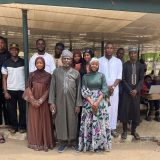

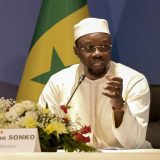

Shariah council declares no authority can hinder Muslims from practising Sharia
By Sabiu Abdullahi
The Supreme Council for Shariah in Nigeria (SCSN) has affirmed that no external power can prevent Muslims from observing Shariah.
The Secretary-General of SCSN, Nafiu Baba Ahmad, made the statement in response to a report recently submitted to former President Donald Trump by a United States congressional committee.
The report, presented by Riley Moore, representative for West Virginia’s 2nd congressional district, and Chris Smith, Chairman of the House Foreign Affairs Africa Sub-committee, investigated alleged persecution of Christians in Nigeria. It highlighted Shariah and blasphemy laws as key concerns.
According to the US lawmakers, “Blasphemy laws in Nigeria’s northern states are used to silence speech and dissent, target Christians and minorities, and justify so-called ‘convictions’ without due process.” The report also recommended repealing these laws, establishing a US–Nigeria security pact, and imposing penalties or visa bans on violators.
However, the Council rejected the claims, saying the report inaccurately portrayed Nigeria as a scene of “Christian genocide” and questioned the inherent rights of Muslims to practise Shariah.
“For clarity, Shariah constitutes a comprehensive way of life for Muslims, encompassing spiritual, moral, social, and legal dimensions. It is the divinely ordained framework through which Muslims regulate their personal and communal affairs,” the Council said in a statement.
The Council further emphasized that the Nigerian Constitution guarantees freedom of religion, allowing citizens to conduct personal matters according to their faith. Shariah courts operate lawfully within constitutional limits, serving only Muslims. Any attempt to criminalize or dictate how Shariah is practised, it added, undermines Nigeria’s sovereignty and constitutional order.
“The Council therefore rejects any external interference in Nigeria’s internal affairs. Nigeria is a sovereign, multi-religious nation with a plural legal system and complex security challenges. Simplistic and bias driven narratives imported from abroad do not advance peace or justice; rather, they risk inflaming tensions, deepening mistrust, and undermining peaceful coexistence.”
The Council also condemned the notion of a “Christian genocide” in Nigeria, calling it false and misleading. “The violence confronting the nation stems from terrorism, banditry, organized criminality, and governance deficits. The government appears either indifferent or incapable of resolving the security problem which has claimed the lives of Muslims and Christians alike,” the statement said.
It reiterated its condemnation of all killings, regardless of the victims’ or perpetrators’ identity, urging the government to decisively tackle insecurity.
“Finally, as Muslims observe this blessed month of Ramadan, the council calls on the Ummah to intensify prayers, supplications, and acts of righteousness, seeking Allah’s intervention for peace, security, justice, and unity in Nigeria. We urge all Muslims to remain law-abiding, steadfast in faith, and committed to peaceful coexistence with all Nigerians.”
“Nigeria belongs to all of us. Our faith is not negotiable, our Constitution is clear, and our sovereignty must be respected by other nations and protected by our government.”
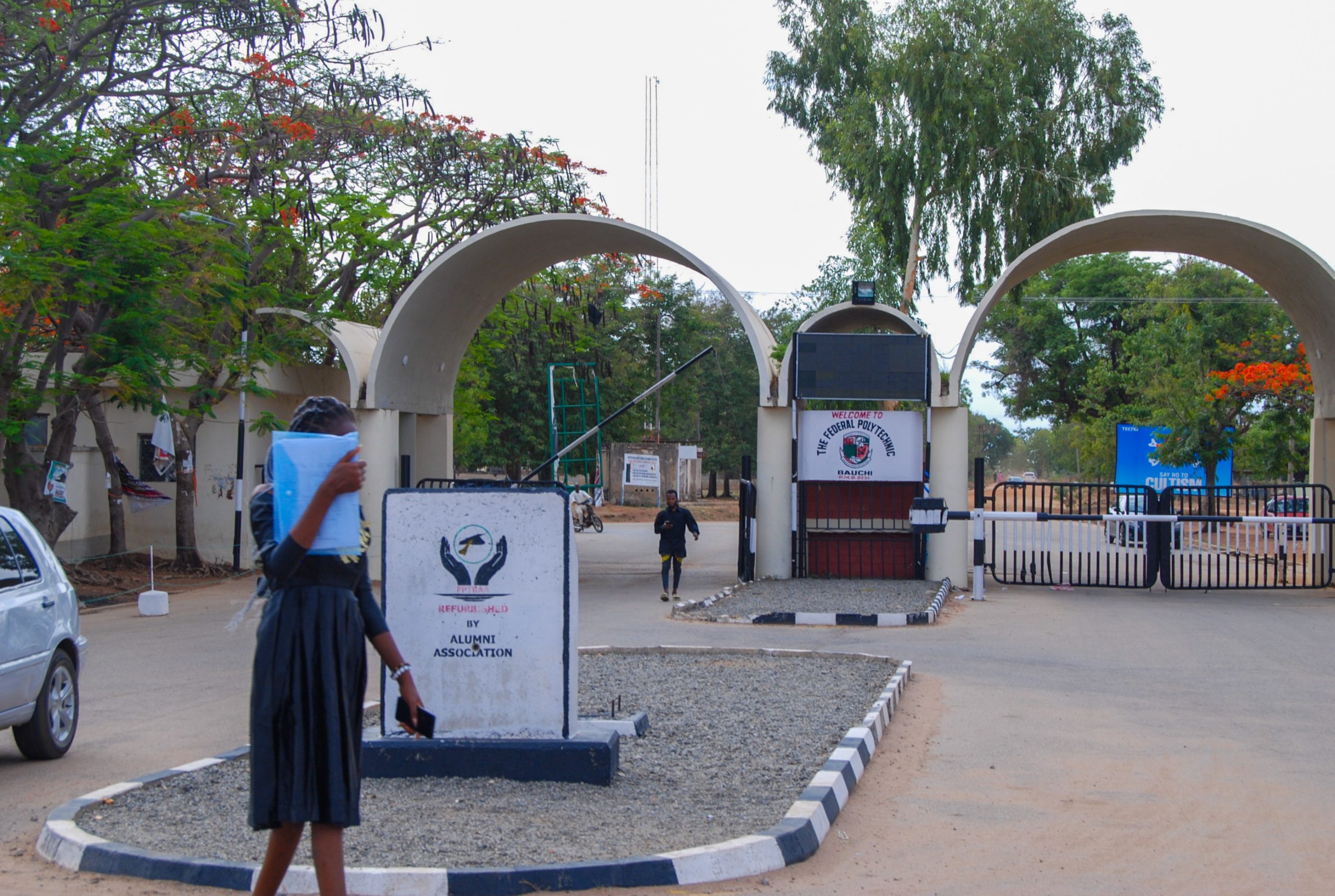
Controversy trails alleged Ramadan restrictions as Federal Polytechnic Bauchi breaks silence
By Sabiu Abdullahi
The Federal Polytechnic Bauchi has dismissed a circular circulating on social media which claims to impose restrictions on male and female students during the Ramadan period.
In a statement signed by Tanimu Ibrahim Gambo, ACEO, Public Relations, on behalf of the Registrar, the school management said the document is false and did not originate from the Office of the Registrar or any official channel of the school.
“The attention of the Management of the Federal Polytechnic Bauchi has been drawn to a malicious and misleading circular currently circulating on social media platforms, said to have been issued from the Office of the Registrar of the Polytechnic.”
The statement also rejected the claims contained in the document, stressing that they are unfounded.
“The said circular, which makes spurious claims regarding restrictions on male and female students during the month of Ramadan, is entirely false, baseless, and did not emanate from the Federal Polytechnic Bauchi or any of its officials.”
The institution further clarified its position on student interactions and religious inclusiveness. It explained that it remains a co-educational federal institution that allows proper academic and social engagement within laid-down rules. It also noted that it accommodates people from different religious and cultural backgrounds and does not enforce any single religious practice in its policies.
Management added that neither the Registrar nor any official of the Polytechnic would issue such a directive. It urged members of the public, including students, parents, and stakeholders, to ignore the circular completely. The statement described it as the work of individuals who intend to damage the reputation of the institution.
It also advised the public to always confirm information through the Polytechnic’s official communication channels.
Amnesty International condemns deadly mosque attack in Kebbi
By Sabiu Abdullahi
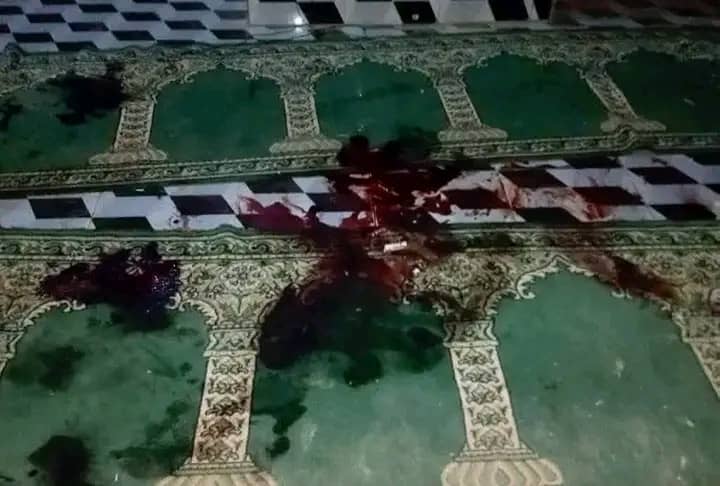
Amnesty International Nigeria has strongly condemned the killing of worshippers following an attack on a mosque in Didinkowa village, Maiyama Local Government Area of Kebbi State.
Gunmen, believed to be members of the Lakurawa group, reportedly stormed the mosque on the evening of Wednesday, February 25, during a ‘tafsir’ session held after the Ramadan fast. The assault left at least five people dead and 19 others injured, some of them critically.
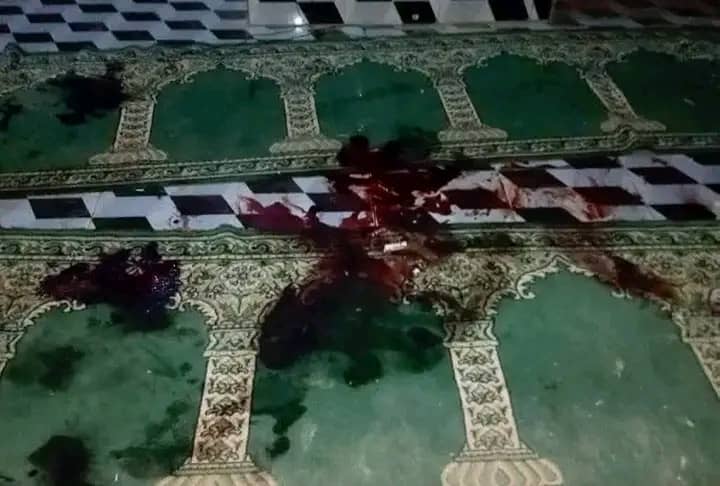
A witness recounted the scene after the attackers fled, saying, “there was pool of blood in the mosque after the attackers left.”
Reacting to the development, Amnesty International Nigeria expressed concern over the worsening security situation. The organisation said residents are now living in fear as attacks continue to threaten their safety.
The group criticised the Nigerian authorities for failing to address the persistent violence. It stated, “Consistently, the Nigerian authorities have failed to end these killings and protect people’s lives, property, liberty and physical integrity.”
Amnesty International Nigeria also referenced earlier assurances by Bola Ahmed Tinubu on ending insecurity, noting, “President Bola Tinubu claims he has repeatedly tasked security agencies to end the killing so that Nigerians can go to bed with their eyes closed, but clearly nothing has changed.”

Nigerian soldiers foil kidnap attempt on Enugu–Otukpo Road, rescue victims
By Sabiu Abdullahi
Troops attached to Sector 1 of Operation Whirl Stroke have prevented a kidnapping incident along the Enugu–Otukpo Road and rescued three victims without any loss of life.
The development occurred on February 25, 2026, when soldiers stationed at the Forward Operation Base in Otukpo were on a night patrol. They received credible intelligence that suspected kidnappers had intercepted an 18-seater Benue Links bus with registration number TYK 221 YK. The vehicle was said to be carrying four passengers alongside a minor when the attack happened.
Security operatives moved quickly to the location and tracked the suspects along their escape route. Their swift action forced the kidnappers to abandon three of the victims. Although there was no direct confrontation during the operation, troops recovered a mobile phone believed to belong to the suspects at the scene.
The Force Commander praised the soldiers for their resilience, alertness, and effectiveness. He noted that their timely intervention helped avert what could have developed into a serious security situation.
He also urged motorists to remain vigilant. According to him, drivers should take note of unusual situations such as a lack of vehicular movement within a two-kilometre stretch and stop when necessary to assess their surroundings. He further advised road users to report any suspicious activity to the nearest security post to enable a quick response.
The statement was issued by Ahmad Zubairu Zubairu, Lieutenant and Acting Media Information Officer, Headquarters Joint Task Force, Operation Whirl Stroke, on February 26, 2026.

JUST IN: INEC reschedules presidential election for January 16, 2027
By Sabiu Abdullahi
The Independent National Electoral Commission (INEC) has announced January 16, 2027, as the new date for Nigeria’s presidential and National Assembly elections. The commission also set February 6, 2027, for governorship and state houses of assembly polls.
The electoral body had earlier scheduled the presidential and National Assembly elections for February 20, 2027, while governorship and state assembly elections were to hold on March 6, 2027. However, the timetable was adjusted after the repeal of the Electoral Act, 2022 and the introduction of the Electoral Act, 2026.
The development marks a significant shift in the country’s electoral calendar, as preparations are expected to align with the revised legal framework. More details are expected to follow.
Kaduna residents stage protest, demand continuation of El-Rufai’s investigation
By Abdullahi Mukhtar Algasgaini
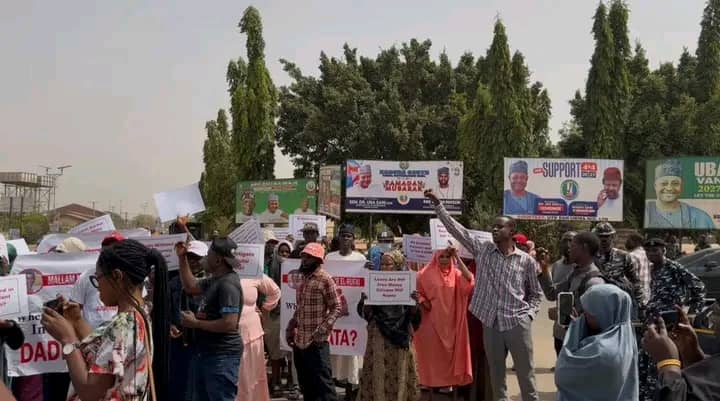
Hundreds of youths in Kaduna State took to the streets on Tuesday, calling on the government to prosecute former Governor Nasir El-Rufai over allegations of financial misappropriation during his tenure.
The protesters, who gathered at major junctions in the state capital, specifically demanded that the former governor be held accountable for the diversion of public funds. Among the allegations cited was the mismanagement of a ₦350 million loan obtained by his administration, which the protesters claim was unaccounted for.
The demonstration, organized by youth groups under the auspices of concerned citizens, also called on security agencies to disregard what they described as a counter-protest staged by a faction of youths allegedly sponsored to distract from the ongoing probe.
The protesters specifically named Bashir Saidu, Jafaru, and Hafiz Bayero as individuals sponsoring a separate, smaller protest aimed at diverting public attention from the investigation into El-Rufai’s administration.
The calls come amid growing pressure on the Kaduna State Government to ensure thorough investigation and possible prosecution of officials accused of financial crimes in the last administration.

APC replies ADC, denies role in Edo shooting incident
By Sabiu Abdullahi
The All Progressives Congress (APC) has dismissed allegations by the African Democratic Congress (ADC) linking it to a reported shooting involving ADC members in Edo State, describing the claims as unfounded and premature.
In a press statement signed by Felix Morka, National Publicity Secretary of the APC in Abuja on February 26, 2026, the APC said the opposition party had rushed to conclusions without allowing security agencies to investigate the incident.
“The African Democratic Congress (ADC) is, undoubtedly, its own nemesis. It needs no external help to achieve its political demise. The party is doing a good job crippling itself even before it has time to stand on its feet.”
The ruling party criticised the ADC leadership, accusing it of making reckless claims and disregarding due process.
“In its press statement of February 25, 2026, the ADC claimed that the APC was responsible for the shooting incident involving its members in Edo State. That is utterly delusional. Accusing the APC even before any investigation is carried out by law enforcement is particularly senseless, and shows the ADC as a party that lacks focus and without regard for the due process of law.”
The APC added that such allegations suggest that the ADC had assumed multiple roles in the matter.
“By its baseless conclusion, the party has declared itself to be the accuser, investigator, prosecutor, and judge in its own cause.”
The party questioned the ADC’s capacity to manage national issues, especially security concerns.
“Nigerians must wonder how a party that cannot manage a single incident with proper guidance, maturity, and in line with legal and constitutional process can be trusted to manage the complexities of Nigeria’s security environment.”
It also faulted the ADC’s reference to alleged acts of terrorism, describing the claim as irresponsible.
“The ADC’s reference to ‘cases of acts of terrorism by the ruling APC against our party’, in its presser, is reckless and unjustifiable.”
The APC maintained that such remarks show a lack of awareness of the country’s security challenges and the sacrifices of security personnel.
“It’s flippant accusation clearly shows that the ADC is out of touch with the prevailing realities of the country’s war on terror, and insensitive to the patriotic sacrifices of our troops in the frontlines in defence of our lives and liberty.”
While condemning political violence, the party called for a proper probe into the Edo incident.
“Make no mistake, violence of any kind in our political space is unacceptable and must be condemned by all well meaning Nigerians. Our great Party roundly condemns the reported shooting incident in Edo state. We call on police and other law enforcement authorities to carry out an expeditious investigation into the incident and bring the perpetrators to justice.”
The APC further suggested that investigators should examine internal issues within the ADC.
“Investigation of this incident should begin with a thorough scrutiny of the ADC, its leaders and members as prime suspects.”
It alleged that internal disputes within the ADC could be linked to the incident.
“Among other leads, law enforcement investigation should focus on widely reported violent clashes and confrontations among its factional leaders over control and access to certain meetings of the party.”
The party insisted it had no involvement in the incident and stated that it remains focused on recent electoral successes.
“To be clear, the APC has absolutely no role or responsibility in the unfortunate shooting incident. We are too busy taking stock of our recent big wins in the Federal Capital Territory (FCT) municipal elections, and the Rivers and Kano states constituency elections to pay any attention to a fringe and inconsequential meeting of ADC political wanderers in Edo state.”
The APC also took a swipe at the ADC’s performance in recent elections.
“The ADC should be just as busy trying to fathom its back-to-back dismal and disgraceful performance in previous and recent by-elections in the country despite its nuisance rants.”
The party expressed appreciation to voters and reaffirmed its commitment to governance under President Bola Ahmed Tinubu.
“We are grateful to Nigerians for the solid and growing support of our great Party. We particularly appreciate the electorate in the FCT, Kano and Rivers states for their eloquent vote of confidence in our Party, and in the visionary and transformative leadership of President Bola Tinubu, GCFR.”
It concluded by restating its focus on national development.
“Our Party and Mr President remain focused on building a stronger, more resilient and prosperous country for the good of all Nigerians.”
Fear of attacks forces Kwara communities to suspend night Ramadan prayers
By Sabiu Abdullahi
Worsening insecurity has disrupted religious activities in parts of Kwara State, as many Muslim faithful now avoid night congregational prayers during the ongoing Ramadan.
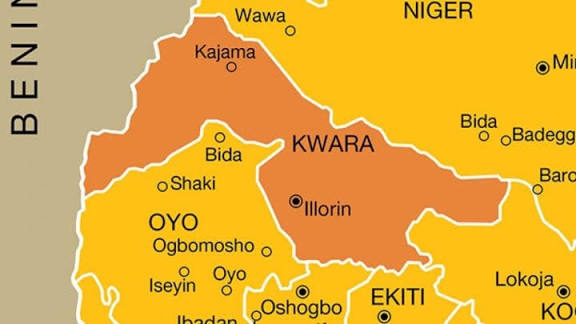
Investigations revealed that residents in Edu and Patigi local government areas have stopped attending Maghrib, Isha’i and Tarawih prayers in mosques due to rising security threats and restrictions on movement.
According to a report by SaharaReporters, communities affected include Gbugbu town, Kpanpkanragi village in Edu Local Government Area, as well as Gamalegi, Lataworo, Motokun and Agboro in neighbouring Patigi Local Government Area.
Residents said mosques that were usually filled during Ramadan evenings now witness low turnout. Many worshippers prefer to remain indoors because they fear possible attacks while returning home at night.
A source in Gbugbu explained that fear has altered long-standing religious practices.
“Everyone knows our mosques used to fill every night in Ramadan. But now people are afraid. Many families pray inside their homes because going to the mosque after sunset is risky,” the source said.
Another resident from Kpanpkanragi village linked the situation to repeated attacks in riverine areas of Kwara North.
“People have been attacked on roads and in nearby villages. Nobody wants to take chances anymore. Once it gets dark, people now avoid leaving their house. We all saw what happened in Gbugbu when the terrorists invaded the town during this Ramadan,” he said.
Locals also pointed to the curfew imposed in Edu and Kaiama local government areas as a major factor. Authorities introduced the restriction after recent attacks by armed groups in the region.
Residents said the curfew has made it difficult for people to gather for evening prayers, which are central to Ramadan observances.
One resident noted that the measure, though aimed at improving security, has affected religious life.
“The curfew means people must stay indoors early. Even those willing to attend Tarawih prayers cannot risk being stopped or caught outside. So mosques remain nearly empty at night,” he said.
In Motokun community, a worshipper described the situation as unusual.
“We have never experienced a Ramadan like this. Tarawih prayers used to overflow outside the mosque. Now only a few elderly people come, and even they leave quickly out of fear,” he said.
Residents blamed frequent incidents of killings, kidnappings and armed attacks in Edu, Kaiama and nearby communities for the growing panic. Many villagers now limit their movements even beyond the official curfew hours.
Meanwhile, a separate attack was reported in Dadinkowa town in Maiyama Local Government Area of Kebbi State, where suspected members of the Lakurawa group stormed a mosque during prayers.
Gunmen reportedly opened fire on worshippers, killing four people on the spot and injuring several others. Sources said the attackers arrived heavily armed and targeted the mosque directly.
The injured victims were later taken to nearby medical facilities for treatment.
Nigerian police intercept 1,520 packets of illicit drugs, arrest suspects
By Sabiu Abdullahi
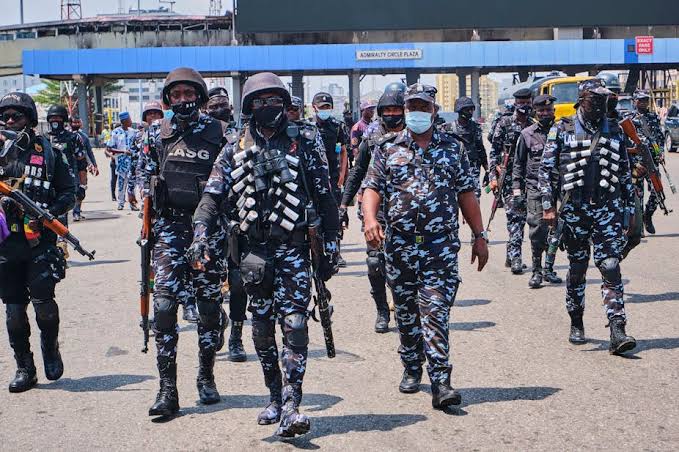
Operatives of the Delta State Police Command have seized a large consignment of illegal drugs and arrested several suspects in separate operations carried out across the state.
The command’s spokesperson, Bright Edafe, made this known in a statement issued on 25 February in Asaba. He said the operation formed part of ongoing efforts to tackle drug trafficking and violent crimes in the state. The Commissioner of Police, Aina Adesola, oversaw the exercise.
According to the statement, officers attached to the Eagle Net Special Squad intercepted a white J5 bus along the Asaba–Agbor Expressway near Northwest Filling Station on 13 February at about 10:30 p.m. The vehicle was stopped during a routine search.
A detailed inspection led to the discovery of 1,520 packets of Tramadol and Swinol tablets. The substances had been hidden beneath company machines inside the bus.
Police arrested the driver, Ebuka Dominion, 30, from Aguta Local Government Area of Anambra State, along with the motor boy, Emmanuel Terdule, 30, from Katsina-Ala Local Government Area of Benue State.
Investigators said early findings indicate that the drugs were meant for distribution. Further intelligence obtained during interrogation led to the arrest of Peter Akpan, 47, from Mbiaya in Uruan Local Government Area of Akwa Ibom State. He is believed to be the owner of the seized consignment.
Police authorities said efforts are ongoing to identify and apprehend other members of the drug network.
In a separate operation on 22 February at about 3:20 p.m., operatives of the Commissioner of Police Special Assignment Team arrested a 23-year-old suspect linked to a series of robbery incidents in Warri.
The suspect later took officers to a bush in the Jedo area of Warri. A locally made gun buried at the location was recovered.
Police said the suspect admitted to being a member of the Aye Confraternity. He also confessed to participating in several door-to-door robbery operations within the Warri area.
Authorities confirmed that efforts are ongoing to arrest other members of the gang.
The development comes amid rising concern over drug abuse in Delta State. Recently, community leaders raised alarm over the increasing rate of narcotics consumption among young people.
“We consider this development a matter of urgent public interest requiring coordinated and sustained intervention by all tiers of government and law enforcement agencies,” the elders under the aegis of the Aniocha–Oshimili Elders’ Association stated.
Data from the National Drug Law Enforcement Agency also shows the scale of the challenge. The agency’s Delta State Command reported last year that it seized illicit drugs valued at over N3 billion.
Tragedy in Kebbi: Gunmen kII four, injure several worshippers at Ramadan tafsir
By Abdullahi Mukhtar Algasgaini
A serene evening of religious devotion turned into a scene of horror in the Daɗin Kowa area of Maiyama Local Government Area on, when suspected bandits stormed a mosque and opened fire on worshippers attending a nightly Qur’anic Tafsir session.
According to eyewitnesses, the assailants, believed to be members of the Lakurawa gang, invaded the community just as the Islamic lecture was concluding. The gunmen, who arrived on motorcycles, reportedly surrounded the mosque and unleashed a hail of bullets on the congregation, sending worshippers fleeing in panic.
The attack left four people dead at the scene. Several others sustained varying degrees of injury and have been rushed to a nearby medical facility for urgent treatment. The names of the deceased have not yet been officially released as relatives work to identify their loved ones.
The incident has plunged the community into deep mourning. Residents described the attack as a senseless act of violence against innocent people engaged in peaceful worship during the holy month of Ramadan.
Security forces have cordoned off the area and launched a manhunt for the perpetrators. Meanwhile, local religious and community leaders have called for calm and urged the government to step up security measures to prevent further atrocities.
In the wake of the tragedy, prayers have poured in for the victims.