

UPDATED: Kuwait confirms crash of several U.S. military aircraft
By Sabiu Abdullahi
The Kuwait Ministry of Defence has announced that several American military aircraft went down on Monday morning, as authorities continue to investigate the incidents.
In an official statement released through the ministry’s spokesperson, the government confirmed that every crew member on board the affected aircraft survived.
“In a statement issued by the ministry’s official spokesperson, authorities said all crew members aboard the affected aircraft were successfully rescued.”
The spokesperson stated that emergency teams moved swiftly after the crashes. He said search and rescue operations commenced without delay. Medical teams evacuated the crews to hospital facilities for examination and treatment. He added that their condition remains stable.
The ministry also disclosed that it established direct contact with United States forces over the matter. It confirmed that both sides initiated joint technical steps in response to the crashes. However, officials did not state the exact number of aircraft involved. They also withheld details about the crash sites and the missions underway at the time.
The spokesperson said the appropriate authorities are continuing investigations to establish the cause of the incidents. He urged the public to rely on verified official information.
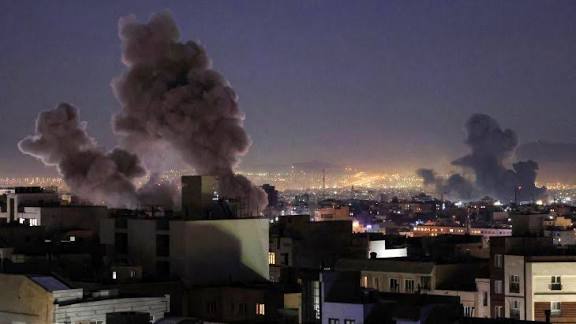
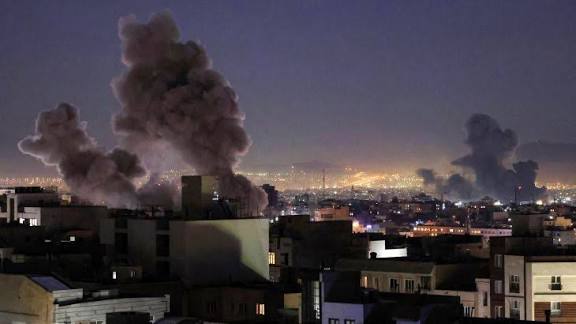
The crashes occurred amid heightened military confrontation in the region. After the United States and Israel carried out airstrikes on Iran that struck Tehran and other cities and resulted in the deaths of senior leaders, including Supreme Leader Ayatollah Ali Khamenei, Tehran promised retaliation.
Iran responded within hours. It launched multiple missiles and drones at American military installations across the Gulf.
The United States maintains forces and equipment in several Gulf countries. These include Kuwait, Bahrain, Qatar, and the United Arab Emirates. Iranian forces targeted bases in those nations in a show of reach across the Middle East.
Explosions were reported near the U.S. Fifth Fleet headquarters in Manama, Bahrain. In Kuwait, Al Salem Air Base came under attack. In Qatar, Al Udeid Air Base, the largest American military facility in the region, was also struck. Missiles targeted Al Dhafra Air Base in the United Arab Emirates.
The strikes triggered alarm across the Gulf region. Smoke rose over parts of affected areas, and warning systems activated at U.S. facilities.
The escalation has intensified fears of a broader conflict. Gulf states that host American forces have found themselves drawn into the crisis, despite not taking part in the initial strikes on Iran.
Suspected US fighter jet crashes near Kuwait base during Iranian missile assault
By Sabiu Abdullahi
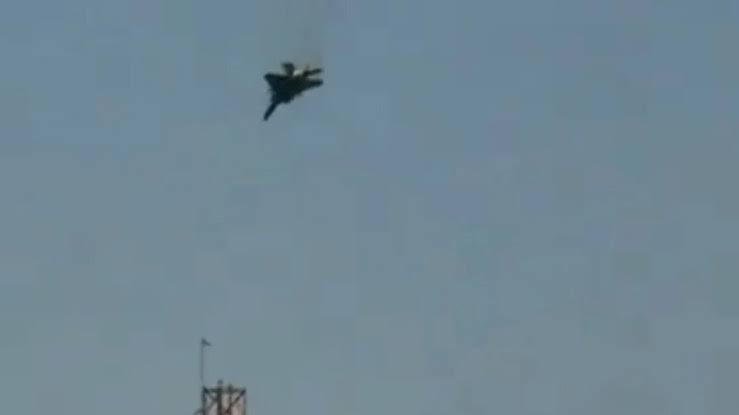
A fighter aircraft believed to be operated by the United States has crashed near a major American military installation in Kuwait amid Iranian missile attacks, deepening tensions across the Middle East.
Online footage that surfaced on Monday shows a military jet on fire before it descended rapidly and crashed in a desert area near the U.S. Ali Al Salem Air Base. The images show flames trailing from the aircraft as it lost altitude.
The video, later geolocated by CNN, indicates the aircraft went down roughly 10 kilometres from the facility.
Clips recorded by witnesses appear to show the jet losing stability in the air. Fire trailed from one of its engines before it entered a tailspin and fell toward the ground.
Initial reviews suggest the aircraft looks like either an F-15E Strike Eagle or an F/A-18 fighter jet. Authorities have not confirmed the exact type or ownership of the aircraft, according to CNN and The Telegraph.
Reports state that the pilot ejected safely and later received help from civilians at the crash site. There has been no official information on the condition of the weapons systems officer, who usually occupies the second seat in such jets.
Military authorities have not established the cause of the crash. Sources indicate that the aircraft may have been struck by an Iranian missile. Other possibilities include accidental fire from allied air defence systems or mechanical failure during combat operations.
The crash occurred at a time when Iran launched missile strikes against U.S. military targets in the region. The attacks marked a sharp escalation after recent confrontations involving American and Israeli forces.
U.S. officials have confirmed the first American deaths connected to the conflict. Three service members lost their lives, while five others sustained injuries in operations that started over the weekend.
President Donald Trump reacted to the fatalities and promised a response. He also warned that more casualties could occur as hostilities intensify.
Tensions increased further after Israel carried out strikes in Lebanon. Israeli authorities said the action followed cross-border attacks by Hezbollah after reports of the killing of Iran’s Supreme Leader, Ali Khamenei.
Officials in Washington and Kuwait have not issued a detailed statement on the aircraft incident. Investigations into the crash are ongoing.

Lamine Yamal sends message of sympathy over death of Ali Khamenei
By Sabiu Abdullahi
Young Barcelona star Lamine Yamal has reacted to the passing of Iran’s top religious figure, Ali Khamenei, with a message of condolence.
The footballer shared a brief statement in which he expressed support for the people of Iran and others affected by the loss.
“Heartfelt condolences to the Iranian people and all those grieving the loss of Ayatollah Ali Khamenei. Wishing you strength and peace in these sorrowful days. 🙏❤️”
The message has joined a growing number of reactions from public figures across the globe, as tributes continue to pour in following the reported death of the Iranian leader.

BUK Mass Communication student dies
By Kamal Alkasim
Hauwa Salisu Fagge, a 100-level student of the Department of Mass Communication at Bayero University, Kano (BUK), has passed away.
Her death was announced on Sunday by the President of the Mass Communication Students’ Association, Mustapha Ukkasha Abubakar, who described the loss as painful and heartbreaking for the department and the wider university community.
Hauwa was actively involved in campus media activities and worked with BUK FM, where she contributed to the morning news programme. She was widely regarded by her colleagues as a passionate and dedicated media enthusiast.
“Her demise is a painful loss to the Department of Mass Communication, her family, friends, and the entire university community,” the MACOSA president said while extending condolences to her loved ones.
The association prayed that Almighty Allah forgive her shortcomings, grant her Jannatul Firdaus, and give her family and friends the strength to bear the irreparable loss.
Military repels coordinated ISWAP attacks in Borno, kiIIs several terrorists
By Abdullahi Mukhtar Algasgaini
Troops of Operation HADIN KAI (OPHK) have successfully repelled a series of coordinated attacks by Islamic State West Africa Province (ISWAP) terrorists on multiple military positions in Borno State, inflicting heavy casualties and recovering a significant cache of arms and ammunition.
The failed assaults, which targeted Forward Operating Bases (FOBs) in the towns of Mayanti, Gajigana, and Gajiram, took place between the late hours of February 28 and the early morning of March 1, 2026. Military authorities described the wave of attacks as a sign of desperation from terrorist groups whose enclaves and supply routes are under sustained pressure from ongoing offensives.
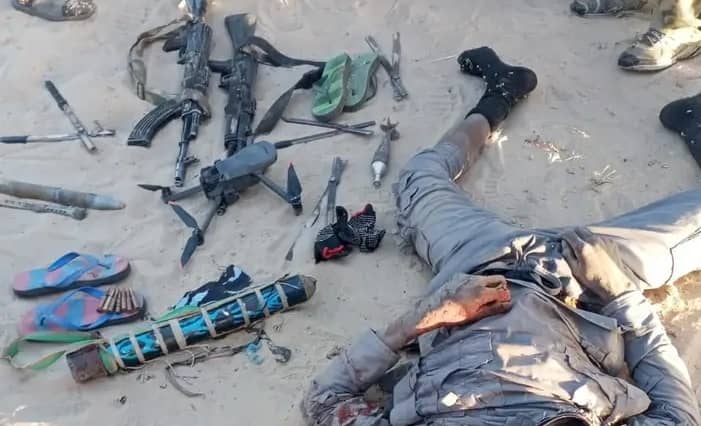
The most intense fighting occurred at FOB Mayanti late on February 28, where a large number of terrorists armed with heavy weapons attempted to overrun the position. Troops held their ground under heavy fire, and reinforcements successfully fought their way through ambushes and improvised explosive devices (IEDs) to rout the attackers. A subsequent sweep of the area revealed the bodies of five terrorists. Troops also recovered three PKT automatic anti-aircraft guns, two RPG-7 tubes, four AK-47 rifles, two FN rifles, and a large quantity of ammunition. Military sources confirmed blood trails indicated more terrorists were wounded and evacuated. One officer was killed in action during the fierce encounter.
Hours later, at approximately 1:15 a.m. on March 1, terrorists armed with PKT machine guns, rocket-propelled grenades, and armed drones launched a coordinated assault on FOB Gajiram. The attack was repelled by determined troops supported by Nigerian Air Force assets. Three terrorist bodies were recovered along their withdrawal route. Items abandoned by the fleeing fighters included four AK-47 rifles, five anti-tank bombs, three locally made mortar bombs, and one armed drone. Other recovered items ranged from barbed wire cutters and specialized ammunition to poisoned arrows. One wounded soldier was airlifted by a Nigerian Army Aviation helicopter for advanced medical care.
In related offensive operations under Sector 2, troops ambushed terrorist elements around Bulturam Corner and Dadingel in Gujba Local Government Area, neutralizing two fighters and recovering two AK-47 rifles. Separate patrols also led to the destruction of terrorist life-support structures in Kayawa Village and the arrest of two confessed ISWAP logistics suppliers. Items seized in those operations included motorcycles, drugs, and medical supplies intended for treating wounded terrorists.
Military authorities confirmed that all locations are firmly under control. The large scale of weapons recovered and the number of confirmed enemy losses are seen as further evidence of the degrading combat capability of ISWAP in the region.
Ummah Movement condemns U.S.-Israel strikes on Iran, warns of looming global war
By Uzair Adam
The Ummah Movement has condemned what it described as an unprovoked and premeditated joint military attack on the Islamic Republic of Iran by the United States and Israel, warning that the action could trigger a wider regional and global conflict.
In a statement signed by its National Amir, Prof. Muhammad Babangida, on Sunday, the group expressed shock over the reported simultaneous strikes carried out on Saturday, 28th February 2026.
The movement said it was saddened that U.S. President Donald Trump and Israeli Prime Minister Benjamin Netanyahu allegedly chose the holy month of Ramadan to launch what it termed “criminal aggression” against Iran.
It also referenced the ongoing war in Gaza, claiming that more than 70,000 lives had been lost in previous joint military actions.
According to the group, the attack on Iran was launched despite what it described as ongoing negotiations in Geneva, which it alleged were used as a cover for regime change.
The Ummah Movement said the action was capable of igniting a broader regional confrontation with “unlimited disastrous consequences.”
The statement further condemned what it called the assassination of Iran’s Supreme Leader, Ayatollah Kharana’i, and other senior officials.
“This is a cowardly act which sets a dangerous precedence in conflicts between nations,” the group stated, accusing the United States and Israel of disregarding international laws and conventions in pursuit of expansionist goals.
The movement called on the Nigerian Federal Government to publicly denounce the strikes and review any existing military agreements with the United States and Israel.
It also urged Muslim-majority countries in the Middle East to shut down U.S. military bases within their territories and expel American troops as a step toward restoring peace in the region.
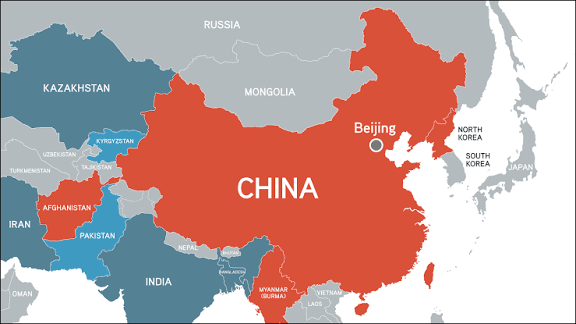
The group warned that failure by Muslim countries to act promptly could lead to a wider global confrontation, potentially drawing in Russia and China on the side of Iran, particularly if the conflict disrupts global fuel supplies in the Gulf.

Presidency denies claims of poison plot against Tinubu by Aso Rock kitchen staff
By Sabiu Abdullahi
The presidency has dismissed reports circulating online that kitchen workers at the Presidential Villa attempted to poison Bola Ahmed Tinubu or were arrested over such an incident.
Bayo Onanuga, Special Adviser to the President on Information and Strategy, rejected the allegation in a post shared on his X account on Sunday. He described the report as false and urged the public to disregard it.
The claim had alleged that some staff working in the kitchen at Aso Rock were involved in a poisoning attempt targeting the president.
Reacting to the development, Onanuga said:
“No Aso Rock kitchen staff arrested. No Aso Rock kitchen staff attempted to poison President Tinubu. Please ignore this fake news being disseminated by this video,”
He maintained that the story lacked any basis and should not be taken seriously.
Further details are expected as the situation develops.
Presidency denies claims of poison plot against Tinubu by Aso Rock kitchen staff
By Sabiu Abdullahi
The presidency has dismissed reports circulating online that kitchen workers at the Presidential Villa attempted to poison Bola Ahmed Tinubu or were arrested over such an incident.
Bayo Onanuga, Special Adviser to the President on Information and Strategy, rejected the allegation in a post shared on his X account on Sunday. He described the report as false and urged the public to disregard it.
The claim had alleged that some staff working in the kitchen at Aso Rock were involved in a poisoning attempt targeting the president.
Reacting to the development, Onanuga said:
“No Aso Rock kitchen staff arrested. No Aso Rock kitchen staff attempted to poison President Tinubu. Please ignore this fake news being disseminated by this video,”
He maintained that the story lacked any basis and should not be taken seriously.
Further details are expected as the situation develops.
China condemns killing of Iran’s supreme leader, calls for immediate end to hostilities
By Uzair Adam
The Republic of China has firmly opposed and strongly condemned the killing of Iran’s Supreme Leader, describing the attack as a serious breach of international norms.
A spokesperson for China’s Foreign Ministry made the statement on Sunday while responding to questions about the reported death of Ayatollah Ali Khamenei, who was said to have been killed during military strikes carried out by the United States and Israel in Tehran on Saturday.
According to the spokesperson, the attack represents a grave violation of Iran’s sovereignty and security, undermining the purposes and principles of the United Nations Charter as well as the basic norms guiding international relations.
China called for an immediate halt to the military operations and urged all parties to avoid further escalation of tensions.
The spokesperson also stressed the need for collective efforts to safeguard peace and stability in the Middle East and across the world. (Xinhua)

Gumi reacts to Khamenei’s death, says supreme leader “a lucky soul”
By Sabiu Abdullahi
Prominent Nigerian Islamic cleric, Ahmad Gumi, has reacted to the death of Iran’s Supreme Leader, Ali Khamenei, describing him as “a lucky soul.”
In a Facebook post, Gumi said Khamenei died in what he described as a jihad against those killing innocent women and children in Gaza and other places.
He stated that Khamenei’s blood would inspire change within the Muslim ummah, adding that the late leader stood firmly for justice and did not hide in bunkers.
Gumi also warned those he accused of being involved in Khamenei’s killing, saying time would reveal what they would live to witness in this world.
His remarks come amid ongoing global reactions following the reported death of Khamenei, which has sparked debate across political and religious circles.