


Shekau, notorious bandit leader, killed in rival ambush
By Abdullahi Mukhtar Algasgaini
A notorious bandit leader known as Shekau, operating around the Narewo River bank in Kachia Local Government Area (LGA) of Kaduna State, was ambushed and killed by a rival faction led by bandit leader Shumo.
The attack, carried out on March 5, 2025, was in retaliation for a previous assault by Shekau, who had reportedly seized Shumo’s weapons and killed several of his fighters.
Intelligence sources revealed that Shekau and some of his lieutenants were killed during the ambush.
The deceased bandits were later buried by individuals identified as Yellow Million, Baba Kusa, and an imam from Kabode village in Kachia LGA.
While bandit activities in Kaduna have significantly decreased due to the non-kinetic efforts of the state government and security agencies, ongoing rivalries among bandit factions have intensified, leading to multiple casualties in recent times.

CJN seeks judicial collaboration to take Nigeria out of FATF grey list
By Anwar Usman
The Chief Justice of Nigeria, Justice Kudirat Kekere-Ekun, has called on judges to play a significant role in the fight against financial crimes and ensure that the nation’s legal system does not become a facilitator of illicit financial flows.
She made this call in Abuja during a sensitisation programme on anti-money laundering, combating the financing terrorism, and countering proliferation financing risk assessment for the Judiciary.
This was contained in a statement issued on Friday by the Senior Special Assistant on Media to the CJN, Tobi Soniyi.
According to the statement, the CJN reiterated the need for collaboration between the judiciary, lawyers, law enforcement, and anti-money laundering agencies to ensure Nigeria’s removal from the Financial Action Task Force list of Jurisdictions Under Increased Monitoring, commonly referred to as the “Grey List.”
Kekere-Ekun stated that, “The success of any AML/CFT regime is based on the good rapport that exist among key stakeholders. The Judiciary, the Nigerian Bar Association, law enforcement agencies, anti-money laundering institutions, and financial regulators must work in concert to ensure a holistic and coordinated response to financial crimes.”
She further highlighted the negative impact of Nigeria’s continued presence on the Grey List, noting that it has imposed significant economic constraints, undermining investor confidence, financial transactions, and the broader economic outlook.
Kekere-Ekun expressed satisfaction with the workshop’s diverse participation, including key regulatory stakeholders, which she described as a reflection of the collective commitment to strengthening Nigeria’s AML/CFT framework.
On his part, the Deputy British High Commissioner to Nigeria, Mrs. Gill Lever, reaffirmed the United Kingdom’s commitment to supporting Nigeria in fighting against money laundering, noting that Nigeria loses over $16 billion annually as a result of money laundering.

If I were Ganduje: A call for reconciliation and statesmanship
By Samira Usman Adam
Politics is a game of interests, influence, and sometimes, survival. But above all, it is about leadership and leading people with wisdom, fairness, and strategic foresight. At this critical point in Dr. Abdullahi Umar Ganduje’s political career, one thing is clear: his ability to build more friends than enemies will define his legacy far beyond his tenure in office.
Just recently, Ganduje received a vote of confidence from the All Progressives Congress (APC) leadership, a significant gesture considering the turbulence surrounding his political journey.
This is not just a lifeline; it is an opportunity he must seize to prove himself as more than just a money monger, as critics often describe him. If I were in his shoes, my approach would be simple: mend fences, consolidate power through unity, and rewrite my political narrative.
Power is Fleeting, but Influence Lasts
One of politicians’ biggest mistakes is believing that power alone is enough to sustain relevance. The reality, however, is that power is temporary, but influence, built through meaningful relationships, lasts far longer.
Ganduje must realise that his current standing within the APC is not just about political loyalty but also about how he navigates relationships, particularly in Kano and at the national level.
If I were him, I would prioritise reconciling with those I have wronged, whether within the party, in Kano politics, or even in the opposition. Political grudges only create unnecessary enemies, and in a democracy, today’s enemy might be tomorrow’s ally. The greatest leaders recognise this and act accordingly.
Rewriting the Narrative: Beyond Money Politics
Ganduje’s name has been tarnished by allegations of corruption, with many reducing his political identity to financial controversies. Whether true or not, perception is powerful in politics. Now, with a renewed opportunity, he must take intentional steps to reshape how people perceive him.
If I were Ganduje, I would focus on key strategies:
1. Promote issue-based politics: Shift away from financial influence and instead foster discussions on governance, policy, and party unity.
2. Public Engagement and Transparency: Tackle concerns regarding governance and finances directly. The more open and accountable a leader seems, the more trust they can restore.
3. Legacy Projects: Even beyond active governance, supporting meaningful initiatives in education, infrastructure, and youth empowerment can reshape how history remembers him.
Building Bridges for Political Survival
At this stage, every political move must be calculated with the future in mind. As a former governor, Ganduje still retains considerable influence in Kano politics, but influence without consolidation amounts to little. If I were in his position, I would engage in high-level bridge-building, both within the APC and beyond.
• Reunite Factions Within APC Kano: The state remains politically divided, and without unity, APC’s strength in Kano could diminish.
• Engage with Political Opponents: There is nothing undignified about reconciling with former rivals. In fact, it exemplifies true leadership.
• Strengthen National Alliances: The political landscape is unpredictable, and having allies beyond Kano is crucial for long-term relevance.
Final Thoughts
The vote of confidence that Ganduje received is not merely a validation; it is an invitation to prove himself, to lead differently, and to transition from being perceived as a controversial figure to a respected statesman.
If I were him, I would spend the next phase of my career doing exactly that: making more friends than enemies, consolidating my influence, and ensuring that my name, when written in history, is associated with strategy, leadership, and reconciliation rather than controversy.
This is the opportunity of a lifetime. Will he take it?
Samira Usman Adam wrote via sammyranoh@gmail.com.

Borno: Education commissioner Wakilbe tours schools
By Rukayya Abubakar Othman
Commissioner of Education Engineer Lawan Abba Wakilbe continued his school supervision tour, visiting the Mafa, Dikwa, and Ngala Local Government Areas. He was accompanied by Bukar Sheriff Kime, Zonal Deputy Director of Monguno Zone, other educational board members, and the local education secretary.
Engineer Wakilbe commenced his tour at Ngom Primary and Junior Secondary School, where he also visited Government Day Secondary School, Vocational Enterprise Institute, Central Primary, and Junior Day Secondary School in Mafa local government.
During the visit, the Commissioner expressed concern regarding the low student turnout and the high absenteeism among teachers, emphasising the necessity for immediate improvement.
Engineer Lawal Wakilbe, during his visit to Dikwa Government Day Secondary School, Shehu Sanda, Central, Kalaa Garu Primary, and Junior Day Secondary School, inspected the completed teachers’ quarters and the ongoing construction of the Higher Islamic School.
During his visit to Dikwa, Engineer Lawan commended the attendance of teachers and students, and distributed learning materials and dignity kits to adolescent girls.
Commissioner Lawan Abba Wakilbe, on the second day of his visit to Gamboru, inspected Government Day Secondary School Gamboru, Gamboru Central, and Ndjamaina Primary and Junior Secondary School.
Engineer Wakilbe also inspected the Higher Islamic College Gamboru and Ladari Primary School. At Wulgo, heexamined the completed secondary school project, as well as the Primary and Junior Secondary School Wulgo.
The commissioner commented on the dedication of Ngala Education Secretary, Bulama Kole Bunu, and the Principal of Government Secondary School Gamboru, Mohammed Hamidu Talaki, during the distribution of learning materials and dignity kits to students.
This tour underscores the Borno State Government’s commitment to enhancing education quality and infrastructure across the state.

Nigerian universities struggle to access global funding due to financial secrecy—Athena Centre
By Sabiu Abdullahi
A report by the Athena Centre for Policy and Leadership has revealed that Nigerian universities rank among the least transparent globally, with none of the surveyed institutions making their financial records publicly accessible.
The findings were presented on Wednesday, March 5, in Abuja during the launch of two research institutes under the Athena Centre—the Athena Dr. Arthur Nwankwo Institute for Education and Intellectual Freedom and the Athena Prof. Olikoye Ransom Institute for Health and Social Equity.
According to the Transparency Survey Report titled “A National Embarrassment: Reforming Transparency in Nigerian Universities to Unlock Global Funding and Restore Credibility,” the study examined 64 universities across the country.
It found that none of them published their budgets, audited financial statements, or visitation panel reports on their websites.
Additionally, the report indicated that no institution disclosed details of its internally generated revenue (IGR) or how such funds were utilized.
Requests for financial information under the Freedom of Information (FOI) Act were either ignored or outrightly denied.
The event, which was attended by key figures including Dr. Angus Ikpe (representing the Minister of Health and Social Welfare), Dr. Ejeb A.U (representing the Minister of State for Education), former Senator Dino Melaye, and ex-Minister of Youth and Sports Bolaji Abdullahi, featured a keynote address by Osita Chidoka, the Chancellor of the Athena Centre.
Chidoka noted that financial secrecy remains a significant obstacle to the growth of Nigeria’s higher education sector.
“The time for excuses is over. Transparency is not optional—it’s the key to unlocking funding, restoring trust, and positioning Nigerian universities as credible players on the global stage.
“This culture of secrecy is driving away donors, blocking global partnerships, and starving our universities of much-needed funding.
“Global research consistently shows that transparent universities secure more research grants, partnerships, and international student enrollments.
“Universities should be role models of openness, accountability, and innovation, not fortresses of secrecy,” he stated.
Chidoka further noted that the Athena Centre, with the support of relevant stakeholders, plans to collaborate with the National Universities Commission (NUC) and other regulatory bodies to institutionalize transparency and governance reforms within the sector.

Kano police arrest NDLEA officers over alleged killing of teenage girl
By Uzair Adam
Two operatives of the National Drug Law Enforcement Agency (NDLEA) in Kano State have been arrested for allegedly shooting and killing a 19-year-old girl, Patience Samuel, in the Jaba Quarters.
The Daily Reality learned that the incident reportedly occurred on Wednesday at about 10:55 p.m.
According to intelligence sources quoted by Zagazola Makama, the Kano State Police Command arrested the officers in connection with the shooting.
Police personnel who visited the scene evacuated Samuel to Abdullahi Wase Teaching Hospital, where she was confirmed dead.
The arrested officials, identified as 23-year-old Nass Ridwan Usman and 26-year-old Sna Ismaila Yakubu, were both attached to the NDLEA’s Kano State headquarters.
Recovered from them were a motorcycle, a live round of ammunition, four empty shells of 7.62×51mm ammunition, and two knives.
The police have launched an investigation to determine the circumstances surrounding the shooting.
In a similar incident in November 2024, NDLEA officials were accused of killing Faisal Yakubu Hussaini in Dangi, the headquarters of the Kanam Local Government Area in Plateau State.
Residents alleged that the officers raided a lodge, fired gunshots to disperse the youth, and killed the victim in the process.

Senator Natasha suspended for 6 months by NASS
By Abdullahi Mukhtar Algasgaini
In a decisive move, the Nigerian National Assembly (NASS) has suspended Senator Natasha for six months following recommendations from the Ethics and Public Petitions Committee.
The suspension, which takes effect from March 6, comes after the senator stood up for her rights during a Senate session.
The committee has mandated that Senator Natasha must submit a written apology before she can resume her duties.
Additionally, her office will remain locked throughout the suspension period, and she is barred from entering the NASS complex. Her salaries, allowances, and security details have also been suspended for the duration of her penalty.
Furthermore, Senator Natasha is prohibited from representing herself as a senator in both local and international media during her suspension.
This development has sparked widespread debate, with critics labeling the punishment as excessive and indicative of deeper governance issues in the nation.
As Africa’s most populous black nation, Nigeria continues to grapple with political controversies, and this incident has further fueled discussions about transparency and accountability in its leadership.

Renowned Islamic cleric Sheikh Sa’eed Jingir passes away
By Sumayyah Auwal Usman
A respected Islamic scholar, Sheikh Sa’eed Hassan Jingir has passed away on Thursday after a protrated illness.
The funeral prayer for Sheikh Sa’eed Jingir is scheduled to take place at 2:00 pm on Thursday at the Unguwar Rimi town in Jos, Plateau State.Late Sheikh Sa’eed was a prominent member of Jama’atu Izalatil Bidi’a Wa’ikamatis Sunnah (JIBWIS), Jos.
He earned deep respect within the Muslim community due to his contributions to the Islamic faith and his role as a spiritual leader.

El-Rufa’i loyalists defect to SDP in Kaduna
BySumayyah Auwal Usman
In a dramatic political development in Kaduna State, prominent loyalists of former Governor Nasiru Ahmed El-Rufa’i have defected from the All Progressives Congress (APC) to the Social Democratic Party (SDP).
Key figures among the defectors, including founding members of the APC, former legislators, commissioners and appointees, formally announced their decision at the SDP national secretariat in Abuja.
Hon. Nasiru Maikano, who emerged as the interim chairman of the SDP in Kaduna State stated that “We have decided to leave the APC and join the SDP because we believe that the party aligns more closely with our vision for the future of Kaduna State.”
The recent defections of political figures from the APC to the SDP in Kaduna State have been interpreted by many political pundits as a reflection of the deteriorating relationship between Governor Uba Sani and former Governor Nasir El-Rufai.
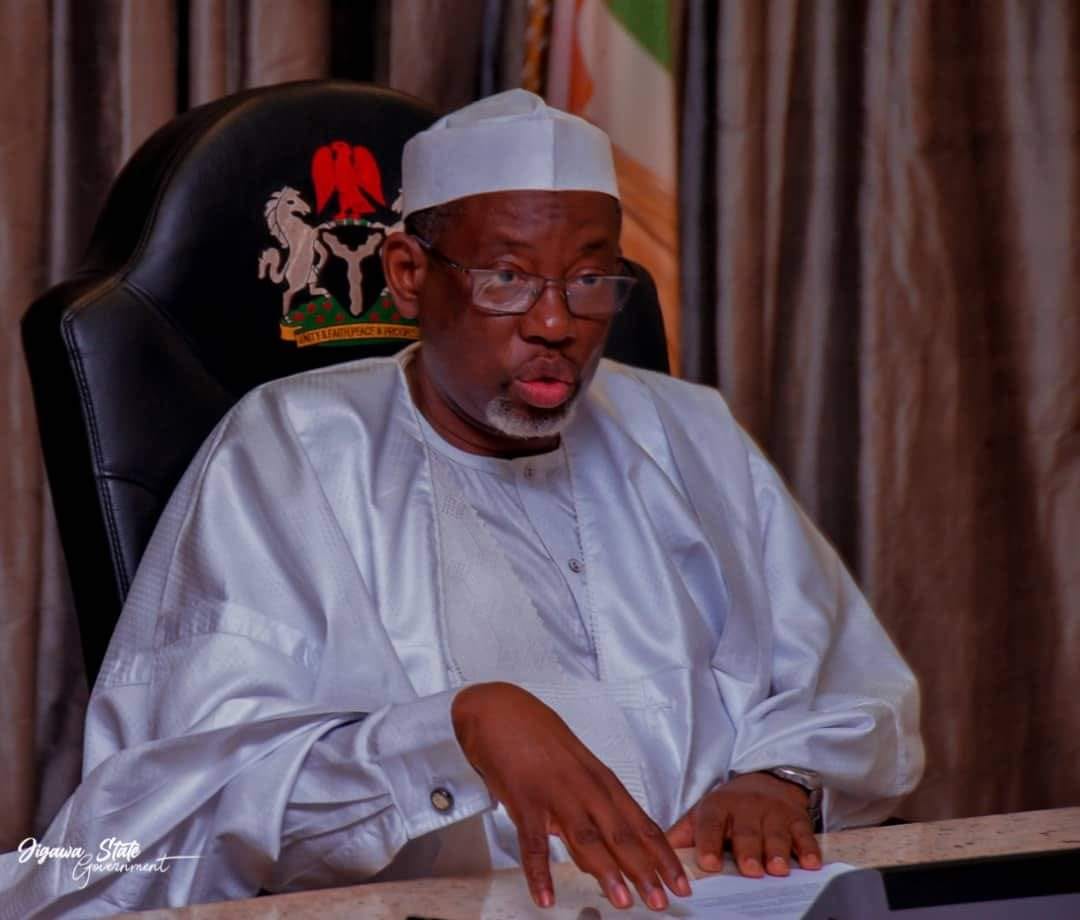
Letter to HE Umar Namadi on improving accountability in the N4.8b Ramadan Feeding Program
Assalamu Alaikum Your Excellency,
I trust this message finds you well. May Almighty Allah accept our ibadah and make us among those pardoned in this blessed month.
I am writing to express my concerns about the Ramadan Feeding Program, which began last week. It is imperative that thorough measures are taken to ensure that the entire N4.8 billion budget reaches the deserving people of our state.
It is evident that the program has been plagued by numerous issues, including a lack of proper hygiene during food preparation, insufficient nutritional quality, and the replacement of community members with individuals from different areas, among other concerns.
Your Excellency, you know that N4.8 billion is a substantial amount—funds that could have been allocated for infrastructure and human capital development. However, you used it to alleviate the economic burden on the masses. This makes it even more critical to ensure that the program is implemented with the highest level of transparency and efficiency.
In this regard, I urge Your Excellency to involve Community-Based Organizations (CBOs) in each local government area to enhance accountability and transparency in executing the program. A case in point is our neighboring state of Kano, whose population is nearly double that of Jigawa. They allocated N8 billion for their Ramadan Feeding Program, and anyone can attest to the high quality of the food distributed, as strict measures regarding safety, quality, and nutrition have been met.
Meanwhile, in Jigawa, some images have surfaced showing a lack of proper hygiene, inadequate nutritional content, and an overall lack of transparency in the process. Since you are already planning a visit, I urge you to take this opportunity to probe some of the concerns raised about the program. It would be unethical to ignore how such a massive sum is being managed.
I commend your unwavering commitment to improving the lives of the people of Jigawa. However, Your Excellency, do not allow these successes to overshadow critical issues in other initiatives under your leadership.
Recently, we heard claims from the Commissioner of Health that the people of Birnin Kudu were denied access to billions of naira meant for the health sector. These concerns warrant urgent investigation.
Your initiative, Gwamnati da Jama’a (Government and the People), is commendable. I urge you to take this open letter as a direct message from the masses, calling for necessary action.
As a journalist, my responsibility is to ensure that Jigawa excels in every aspect and that the government remains accountable. I sincerely hope that Your Excellency will take the necessary measures to address these concerns and maintain the trust and respect of the people you serve.
Muhammad Abubakar Tahir is a freelance journalist, PRNigeria fellow and PDGP fellow. He can be contacted atabubakarmtahir81@gmail.com.