



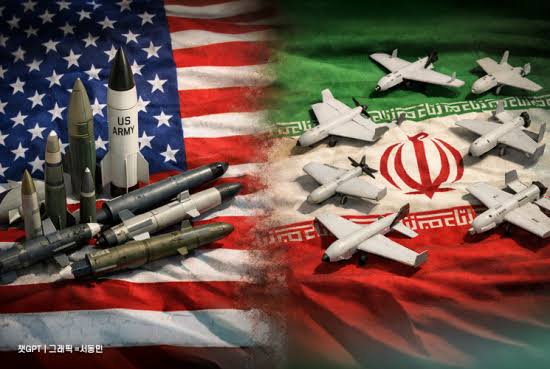
Greece, Germany reject military role as Iran signals prolonged war with Israel, U.S.
By Sabiu Abdullahi
Several European countries have stepped back from any direct military role in the deepening Middle East crisis, as Iran indicated it is ready for a prolonged confrontation with Israel and the United States.
The German government made it clear that it will not join any military effort to secure the Strait of Hormuz while the conflict persists. A government spokesperson stressed that the ongoing war involving Iran is not linked to the North Atlantic Treaty Organization (NATO).
“As long as this war continues, there will be no participation, not even in any effort to keep the Strait of Hormuz open by military means,” the spokesperson said as quoted by Al Jazeera.
Greece has taken a similar position. Government spokesman Pavlos Marinakis stated that Athens will not be involved in any military operation in the strategic waterway despite rising regional tensions.
The Strait of Hormuz remains a critical global shipping route. A large share of the world’s oil supply passes through it. Concerns have grown over possible disruptions as the conflict intensifies.
In the United Kingdom, Prime Minister Keir Starmer said Britain would avoid being pulled into a wider regional conflict. His remarks followed a warning by former U.S. President Donald Trump, who said NATO’s future could be affected if allied countries fail to offer military support.
Starmer said the UK is focused on safeguarding its citizens in the Middle East. He added that Britain will also take steps to protect its national interests and support its allies.
“We will not allow ourselves to be drawn into a broader conflict,” he said.
He also noted that the UK would continue to pursue diplomatic efforts aimed at restoring stability in the region.
Meanwhile, Iran’s Foreign Minister Abbas Araghchi said Tehran is prepared to sustain the confrontation for as long as necessary. He spoke during a weekly briefing at the foreign ministry.
“I think by now they have learned a good lesson and understood what kind of nation they are dealing with, one that does not hesitate to defend itself and is ready to continue the war wherever it may lead,” he said.
Araghchi added that the Strait of Hormuz is effectively restricted for countries Iran considers hostile.
“From our perspective, the strait is open, but it is closed to our enemies — those who carried out this aggression against us and their allies,” he said.
He also accused the United States and Israel of triggering the crisis by demanding Iran’s “unconditional surrender,” a condition Tehran has rejected.
The latest developments point to growing divisions among global powers. While some European nations are avoiding deeper involvement, Iran has maintained that it is ready to press on with the confrontation if the situation continues.
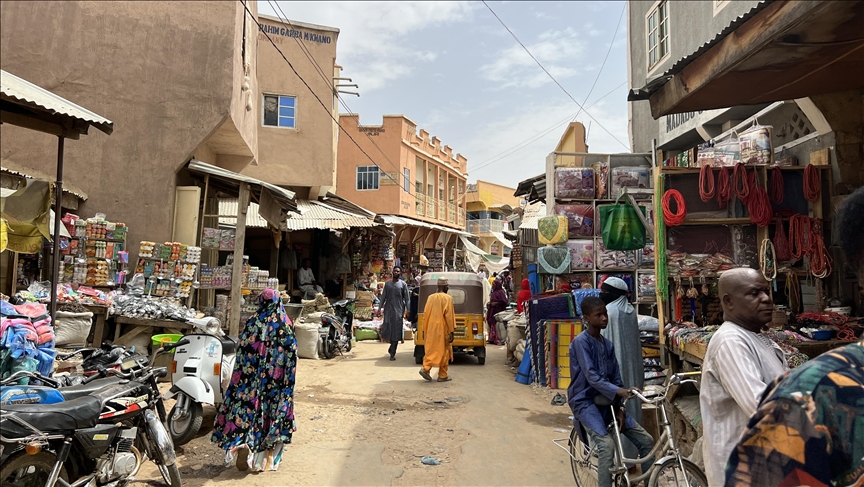
Gyaɗi-Gyaɗi Market Redevelopment: A Case of Exclusion and Coercion?
By Misbahu Muhammad
For decades, the bustling Gyaɗi-Gyaɗi Market has been more than a commercial hub; it is a community cornerstone, a source of livelihood, and for many, a family heritage. Today, that heritage is under threat as the Tarauni Local Government Council pushes forward a redevelopment plan that has left the very owners of the land feeling sidelined, silenced, and strong-armed.
The council’s vision for a modern market is not, in itself, contentious. Traders and landowners alike acknowledge the need for improved facilities, better sanitation, and enhanced security. The conflict lies not in the what, but in the how.
Landowners and stakeholders are excluded from the planning process. The architectural designs, the project scope, and the financial model were reportedly finalised without their meaningful consultation. The community, whose assets and futures are directly implicated, was reduced to mere spectators in a decision that reshapes their property and prosperity.
“They came with a completed plan and said, ‘This is what we are doing,’” recounted shop owners, whose families have owned plots/shops in the market for five decades “Our suggestions, our concerns about access, shop sizes, or temporary relocation were not entertained. It was presented as a take-it-or-leave-it decree, not a joint venture or partnership.”
The council’s proposed framework is a Joint Venture (JV) arrangement. While JVs can be equitable, landowners report having no alternative models to consider—no option for self-redevelopment through a cooperative society or banks, build-operate-transfer (BOT), no fair buy-out offer, and no room to negotiate the terms of the partnership. The proposed JV terms remain opaque, with fears that they heavily favour the government or its private partners, potentially leaving original owners with diminished stakes and control over their own land.
This singular, non-negotiable pathway has been widely interpreted not as an offer, but as an ultimatum.
The most alarming allegation from the developers is the use of coercive pressure. They claim government officials have insinuated or explicitly stated that failure to consent to the JV could lead to the revocation of their rights or the outright seizure of their land under the guise of “public interest” or “development control.”
“The message is clear: sign on our terms or lose everything. “This isn’t negotiation; it feels like legalised land grabbing. We are being forced to surrender our property rights under threat.” Currently, many landowners are panicking and have started selling their shops at giveaway prices to these rent seekers, willing to go to any lengths to grab the land.
This approach raises significant legal and ethical questions. The Land Use Act, which vests land administration with the state government, mandates due process and equitable treatment. Experts argue that excluding landowners from a process that affects their fundamental proprietary interests may violate principles of fair hearing and natural justice.
Redevelopment must be inclusive and transparent, presenting a single, non-negotiable contract under the implied threat of revocation; crossing that line. It undermines the trust essential to public-private collaboration and sets a dangerous precedent for urban development.
The Tarauni Local Government Chairman has been advocating for a one-for-one shop. This slogan in itself is ill-conceived, as it lacks an appropriate valuation of shops and a compensation mechanism. He always argued that the redevelopment is “for the greater good of all” and will “transform the area into a modern commercial zone and must be done even after his tenure.
As tensions rise, the path to a peaceful and prosperous Gyaɗi-Gyaɗi Market lies in genuine dialogue. Stakeholders are calling for:
- An immediate halt to the current coercive process.
- Full, transparent disclosure of the JV terms, partners, and financial projections.
- The creation of a truly representative committee of landowners to re-negotiate the redevelopment framework.
- Exploration of multiple development models, allowing landowners to choose the option that best secures their legacy and livelihood.
The soul of Gyaɗi-Gyaɗi Market is its people. Any redevelopment that severs that connection is no development at all. The Tarauni Local Government has an opportunity to correct course—to build not just a new market, but a renewed covenant of trust with the community it serves. The alternative is a legacy of conflict and resentment that no new building can ever hide.

How 8-year-old girl dies after falling on exposed iron rod at Kano construction site
By Uzair Adam
An eight-year-old girl, Siyama Idris, has died after falling on an exposed iron rod at an ongoing road and drainage construction site in Tudun Wada quarters of Nassarawa Local Government Area of Kano.
An eyewitness, Abdulrashid Yusuf, said the incident occurred on Saturday near Tudun Wada Primary School, where reconstruction and expansion of the road, including drainage construction, is currently ongoing.
Yusuf explained that the girl had been sent to a nearby provision shop to buy something for iftar when the tragedy happened.
According to him, residents usually cross the drainage through a makeshift wooden plank bridge because there is no proper pedestrian passage at the construction site.
“The girl was sent to buy something at a shop for iftar,” Yusuf said, noting that people in the area normally rely on a wooden plank, locally called gadar katako, to cross the drainage.
He said while attempting to cross close to the construction area, the girl slipped and fell onto an exposed iron rod used in the drainage structure.
“The iron rod was not covered. When she fell, it penetrated her stomach,” he said, adding that the child died at the scene before she could be rushed to a hospital.
Residents blamed the incident on poor safety measures at the construction site, questioning why dangerous materials such as exposed iron rods were left uncovered in an area frequently used by pedestrians, including schoolchildren.
They warned that open drainage edges and uncovered construction materials pose serious risks to residents and called on authorities to enforce stricter safety precautions at project sites.
The incident comes days after another accident on Friday when a teenage boy, believed to be about 15 years old, fell into a drainage along Badawa Road off Lamido Crescent shortly after Juma’at prayers.
The boy reportedly sustained injuries and had to break his fast while receiving treatment.
Residents have urged the authorities and contractors handling road and drainage projects in Kano to provide safer crossings and cover exposed metals to prevent similar incidents in the future.
Nicki Minaj threatens legal action against Nigerian X user over alleged ‘harassment’
By Sabiu Abdullahi
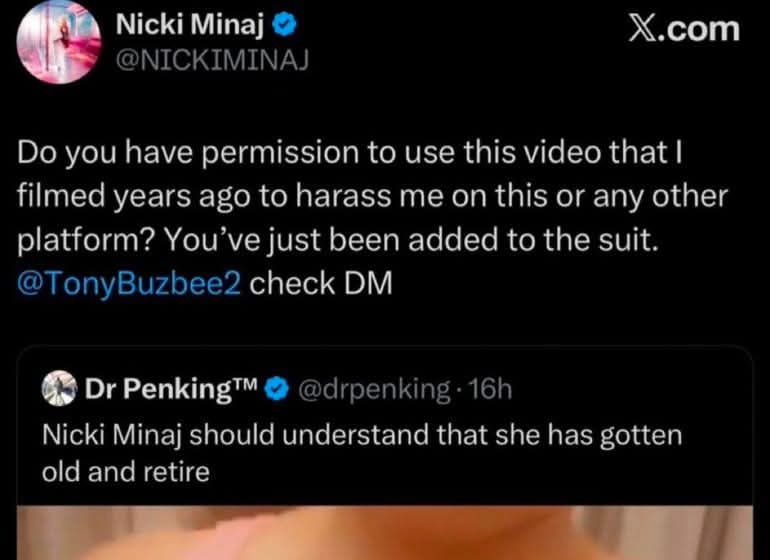
Popular rapper Nicki Minaj has threatened to take legal action against a Nigerian user on X, identified as Dr Penking, following a comment about her age and career.
The controversy started after Dr Penking shared a post suggesting that the music star should retire. In the post, he wrote, “Nicki Minaj should understand that she has gotten old and retire”.
The remark drew a response from the Trinidadian-American artiste, who described it as harassment. In a post that was later deleted, she questioned the use of an old video attached to the tweet and hinted at legal steps.
“Do you have permission to use this video that I filmed years ago to harass me on this or any other platform? You’ve just been added to the suit. @TonyBuzbee2 check DM,” she wrote.
Despite the threat, Dr Penking defended his position. He insisted that his statement reflected his personal opinion and fell within his right to free speech.
“Tell Nicki Minaj that My self and my team are ready and eagerly anticipating her papers,” he wrote.
“Freedom of speech and expression is supreme in all constitutions in the world and I have the right to express my opinion at all times.
“Is she old? Yes she is 43. There is nothing harassing about this. It is a publicly accessible information on Wikipedia.
“Should she retire? I think she should. That’s my personal opinion and I stand by it. You can agree or disagree.
“I will not be bullied or intimidated by Nicki Minaj or any other “celebrity.”
The exchange has triggered reactions across social media platforms. Many users have debated whether the rapper has a strong legal basis to pursue the matter.
One user argued that the case may not stand, stating, “Nicki Minaj deleted her post about suing him because she can’t win a case based on this post.
“It’s his opinion, he didn’t defame her, he is also not the one who posted the video, he only shared it from the original poster’s page.
“Her lawyer must have made it clear to her.”
Others pointed to possible legal complications, especially across jurisdictions. They noted that while Minaj is based in the United States, any legal action against a Nigerian citizen may require filing a case in Nigeria under laws relating to cyberbullying or defamation.
The situation continues to generate discussion about free speech and online conduct, as well as the limits of criticism directed at public figures.

Kano Govt Scraps Higher Education Ministry, Merges It with Education
By Muhammad Sulaiman
Abba Kabir Yusuf has approved the merger of the state’s Ministry of Higher Education with the Ministry of Education in a move aimed at strengthening coordination and accelerating reforms in the education sector.
The decision was announced in a statement on Sunday by the governor’s spokesperson, Sunusi Bature Dawakin Tofa.
According to the statement, the newly unified body will operate as the Ministry of Education, with a specialised Directorate of Higher Education established within the ministry to oversee tertiary education in the state. The directorate will be headed by a permanent secretary and supported by relevant personnel to ensure effective administration of higher education institutions.
The statement added that agencies previously under the Ministry of Higher Education, including the state Scholarship Board, will now be returned to the Ministry of Education. State-owned universities and other tertiary institutions will also be supervised by the Directorate of Higher Education under the restructured ministry.
The restructuring forms part of the government’s broader education sector reform agenda, which seeks to eliminate duplication of responsibilities, improve policy coordination across all levels of education, and reduce the cost of governance.
Governor Yusuf said the reform is intended to enhance efficiency, strengthen accountability, and improve the overall quality of education administration in the state.
He reiterated his administration’s commitment to implementing comprehensive reforms that will revitalise the education sector and create better opportunities for the younger generation.
The Office of the Secretary to the State Government and the Office of the Head of Service have been directed to ensure the immediate and smooth realignment of the affected ministries and their departments.
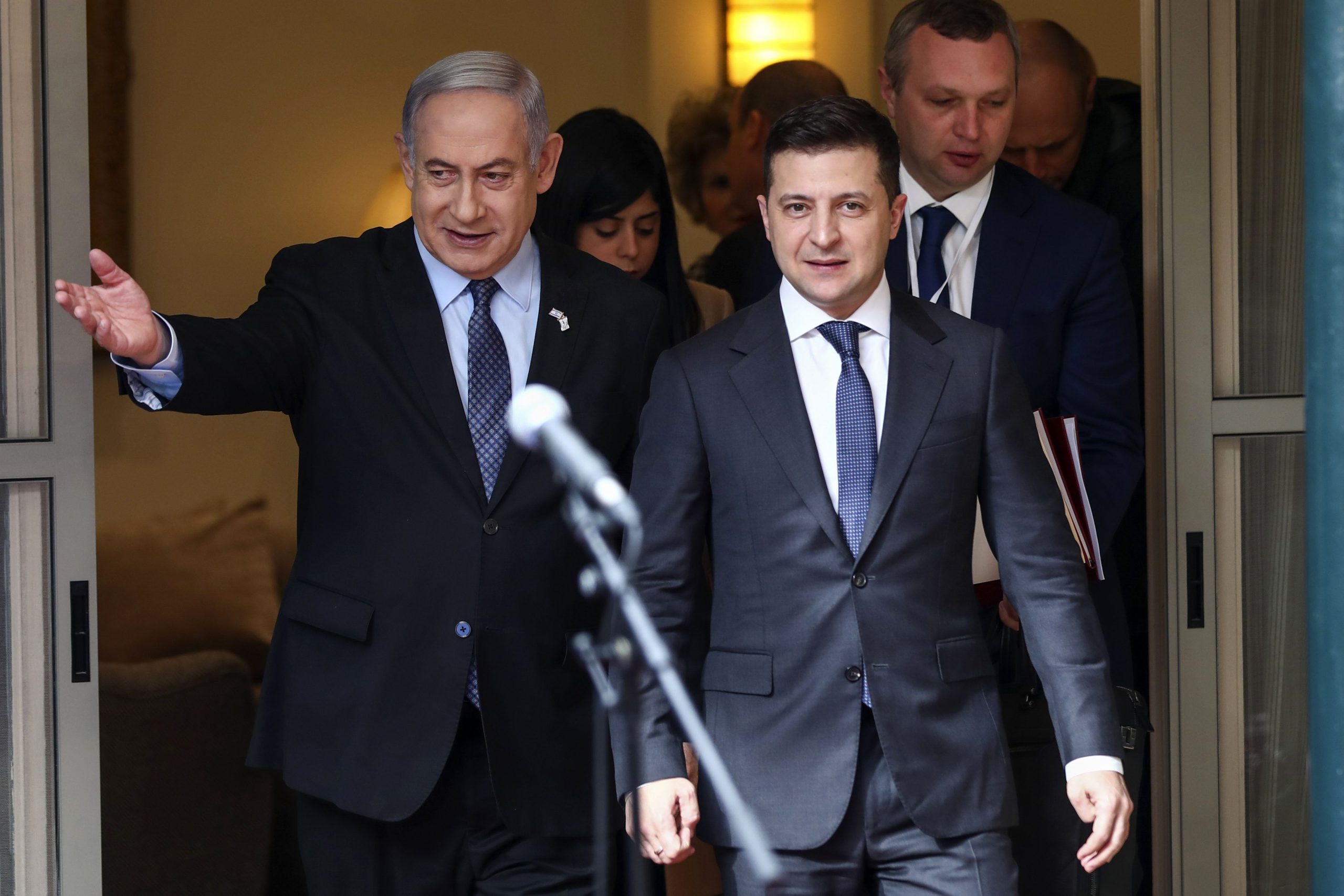
Iran declares Ukraine a ‘legitimate target’ over alleged drone support to Israel
By Sabiu Abdullahi
Iran has warned that Ukraine could become a target after Tehran accused Kyiv of providing drone assistance to Israel.
Ebrahim Azizi, who heads Iran’s parliamentary national security committee, made the claim on the social media platform X. He alleged that Ukraine had effectively joined the ongoing conflict.
“By providing drone support to the Israeli regime, failed Ukraine… has turned its entire territory into a legitimate target for Iran,” Mr Azizi wrote. He did not present evidence to support the allegation.
Ukraine has not officially confirmed any drone assistance to Israel. However, Kyiv has deployed military specialists to countries such as Qatar, the United Arab Emirates, and Saudi Arabia.
Earlier this week, Ukrainian President Volodymyr Zelensky said several countries had asked Ukraine to help counter Iranian-made Shahed drones. According to him, the requests came from 11 nations, including the United States and several countries in the Middle East and Europe.
Zelensky also met Reza Pahlavi, the exiled Crown Prince of Iran, in Paris on Friday. The meeting focused on the ongoing conflict involving Iran.
Iran’s envoy to Ukraine, Shahriar Amouzegar, dismissed Ukraine’s actions in the Middle East. Speaking to AFP on Saturday, he said: “As for the actions Ukraine is taking in the Middle East against drones, we essentially consider them nothing more than a joke and a showy gesture.”
Iran maintains close strategic relations with Russia. The two countries cooperate on military technology, intelligence sharing, and regional security matters.
Ukraine’s foreign ministry responded strongly to the threat from Tehran. Heorhii Tykhyi, a ministry spokesman, accused Iran of helping Russia attack Ukraine.
“The Iranian regime has been supporting the murder of Ukrainians for years by directly supplying drones and technology for Russia’s aggression against Ukraine.
“Hearing anyone from that regime threaten Ukraine while citing the right to self-defence enshrined in Article 51 of the UN Charter is absurd. It’s like hearing a serial killer justify his crimes by citing the criminal code.”
Iran-designed Shahed-136 drones have frequently struck Ukrainian cities since at least 2024. Russia initially relied on Iranian supply but later began producing the drones locally and upgrading the designs.
Since the United States and Israel began strikes on Iran on February 28, reports suggest the Kremlin has shared intelligence with Tehran. The information is believed to assist Iranian attacks on US military targets and personnel in the region.
Zelensky also accused Moscow of increasing its military support for Iran.
“Russia has started supporting the Iranian regime with drones. It will definitely help with missiles, and it is also helping them with air defence,” Mr Zelensky said on Wednesday.
Britain’s Defence Secretary, John Healey, also linked Russia to Iranian military operations in the Middle East. He said President Vladimir Putin may be influencing Tehran’s drone campaign against Western forces and their allies.
Mr Healey spoke after Iranian drones struck a coalition air base in Erbil in northern Iraq. British forces intercepted two drones, but others managed to hit the facility on Wednesday night.
“No one will be surprised to believe that Putin’s hidden hand is behind some of the Iranian tactics and potentially some of their capabilities as well,” the Defence Secretary added.
Meanwhile, Russia announced it had delivered 13 tons of humanitarian aid to Iranian authorities through Azerbaijan. The shipment followed instructions from President Vladimir Putin.
Officials in Moscow also confirmed frequent communication between Russian and Iranian leaders. Kremlin spokesman Dmitry Peskov said Putin remains in “constant contact” with Tehran’s leadership.
During a phone conversation with Donald Trump on Monday, Putin reportedly suggested moving Iran’s enriched uranium to Russia as part of proposals aimed at ending the conflict.
“This is not the first time it was offered. It hasn’t been accepted. The US position is we need to see the uranium secured,” a US official told Axios.
Russia has criticised the United States and Israel for attacking Iran. Moscow described the strikes as “the implementation of a long-cherished plan to violently overthrow the constitutional order of a sovereign state that Washington and Tel Aviv dislike.” It also called for an immediate end to the fighting.
However, analysts estimate that rising global oil prices linked to the conflict may bring Russia as much as $150 million in additional revenue each day. The International Energy Agency described the situation on Thursday as “the largest supply disruption in the history of the global oil market.”
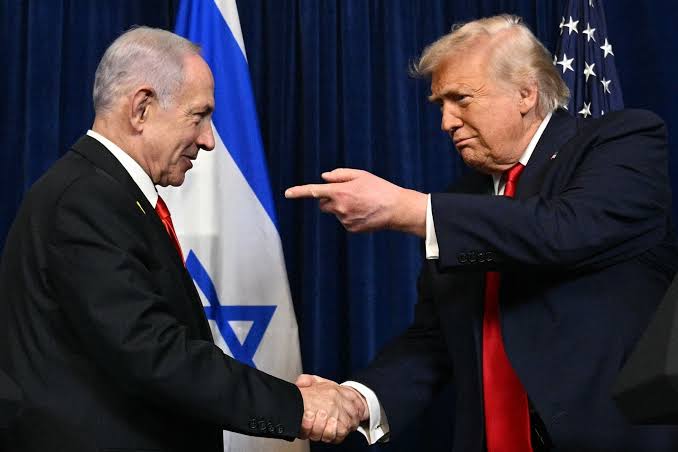
Iran threatens to ‘hunt down, kill Netanyahu’
By Sabiu Abdullahi
Iran’s Islamic Revolutionary Guard Corps (IRGC) has issued a threat against Israeli Prime Minister Benjamin Netanyahu, saying it will pursue him and kill him.
The threat appeared in a statement released on Sunday through Sepah News, the official website of the IRGC. In the message, the Iranian military body described Netanyahu as a “child-killing criminal” and warned that it would continue efforts to locate him.
“If this criminal, the killer of children, is still alive, we will continue working to hunt him down and kill him with all our strength,” the statement reads.
The development came as speculation circulated on social media about the Israeli leader’s health and whereabouts.
Israel’s prime minister’s office dismissed the claims. It said the reports spreading online were false and confirmed that Netanyahu was in good condition.
“These are fake news; the Prime Minister is fine,” the office told Anadolu Agency in response to claims circulating on social media that Netanyahu had been killed in retaliation for the strikes.
The rumours intensified after a video of Netanyahu circulated online. Some social media users claimed the clip showed him with “six fingers”.
The unusual detail raised suspicion that the footage might have been created with artificial intelligence. This added to the speculation about the Israeli leader’s condition and location.
The IRGC’s threat comes as the confrontation involving Iran, Israel and the United States continues. The conflict has now entered its 16th day.
On the morning of February 28, the United States and Israel carried out air strikes inside Iranian territory.
Iran responded with military action. Its forces launched ballistic missiles and drones toward Israel. The country also carried out missile and drone attacks against United States bases and targets in Bahrain, the United Arab Emirates, Kuwait, Qatar and Jordan.
Plateau LG polls: ADC holds primaries in 15 LGAs
By Anas Abbas
The African Democratic Congress (ADC) in Plateau State has conducted party primaries in 15 out of the 17 local government areas in preparation for the upcoming local government elections in the state.
Party officials disclosed that the exercise was part of the ADC’s strategy to select its candidates for the chairmanship and councillorship positions ahead of the council polls.
The primaries, according to the party, were carried out successfully across the affected local government areas.
The leadership of the party noted that members actively participated in the process, which they described as peaceful and transparent. They added that the exercise reflects the party’s commitment to internal democracy and grassroots participation.
However, the party is yet to complete the primaries in the remaining two local government areas; Mikang and Langtang. Officials assured that the process would soon be concluded in line with the timetable for the council elections.
The ADC also called on its members to remain united and committed as the party intensifies preparations for the local government polls in Plateau State.

NSCDC uncovers alleged baby factory in Owerri, rescues pregnant women, newborns
By Sabiu Abdullahi
The Nigeria Security and Civil Defence Corps (NSCDC) in Imo State says it has uncovered a suspected child-trafficking operation in Owerri, where five pregnant women and five newborn babies were rescued during a security raid.
Officials also arrested two suspects believed to be connected to the facility where the illegal activity allegedly took place.
The Imo State Commandant of the NSCDC, Basil Igwebueze, made this known on Saturday while speaking with journalists in Owerri about recent operations carried out by the command.
According to him, the suspects were identified as Tochukwu Ogaranya, 52, and Godwin Nnamdi, 47. Both men were apprehended at an orphanage located in the World Bank area of the state capital.
The News Agency of Nigeria reported that the commandant explained how the operation started. He said an officer of the corps noticed a pregnant teenager attempting to escape from the compound. The incident raised suspicion among security personnel.
“This prompted my officers to move into action at the orphanage, arrest the owner of the orphanage and rescue the pregnant women and newborn babies,” he said.
Igwebueze described child trafficking as a “heinous crime.” He warned that the corps would not allow such illegal activities to continue in the state.
He also praised residents who supplied information that helped security officials uncover the suspected operation. He urged members of the public to stay alert and report suspicious activities within their communities.
“If the residents of the state had not assisted us with the necessary information, the command would not have uncovered such a criminal act,” Igwebueze said.
However, the owner of the orphanage, Ogaranya, denied involvement in child trafficking. She maintained that the facility operates legally and has the required certification.
She explained that a 33-year-old woman identified as Chiamaka arrived at the orphanage while pregnant after she fled from a man who impregnated her in Abia State.
Ogaranya said she contacted the police about the situation. She added that officers indicated they would accompany the woman to Abia in order to apprehend the man responsible for the pregnancy.
According to her, workers later informed her that the woman had escaped from the orphanage premises.
She said the woman “scaled the fence of the compound and was later caught by the local vigilantes.”
Chiamaka, who is from Ikeduru Local Government Area of Imo State, also gave her account of the incident. She said someone introduced her to the orphanage but she could hardly identify the person.
She explained that the individual told her she could give birth at the facility and later sell the baby.
Chiamaka said she eventually felt uneasy about the arrangement. She decided to flee from the premises after she could no longer endure the situation.
She said she “scaled the fence and ran away for her dear life.”
Igwebueze stated that investigations are ongoing. He added that the suspects will be charged in court.
The commandant also reaffirmed the corps’ determination to combat child trafficking and other crimes. He urged residents to continue supporting security agencies with useful information.

Russia sends humanitarian aid to Iran amid war with US, Israel
Russia has delivered humanitarian assistance to Iran as tensions continue in the Middle East during the ongoing conflict involving the United States and Israel.
The development emerged from a statement shared by the Russian Embassy in Kenya through its official X account. The embassy indicated that Russia had become “the first country to send humanitarian aid to Iran” since the crisis intensified.
According to the statement, an aircraft transported medical materials meant to reach Iranian authorities through a neighbouring country. The embassy explained that the supplies were first delivered to Azerbaijan for onward transfer.
“An Il-76 aircraft delivered more than 13 tons of medical supplies to Azerbaijan which will assist in transferring it to the Iranian authorities,” the post said.
The embassy described the shipment as “first aid & medical supplies” intended to support civilians in Iran during the current conflict.
The humanitarian move follows earlier diplomatic engagement between Moscow and Tehran. Russian President Vladimir Putin recently sent a message to Iran’s new supreme leader, Mojtaba Khamenei, after his emergence as the country’s leader.
In a message released by the Kremlin and cited by Al Jazeera, Putin congratulated Khamenei and expressed confidence in his leadership at a time of mounting international pressure on Iran.
The Kremlin stated that the Russian president commended Khamenei’s potential to lead the country and referred to the legacy of his father. Putin said he believed the new leader would maintain the direction previously set for Iran.
Putin also said he was confident Khamenei would continue his father’s work “with honour” and unite the Iranian people “in the face of severe trials”.
He used the message to reiterate Russia’s close ties with Iran. Putin said Moscow would maintain its partnership with Tehran and added that he wished to “confirm unwavering support for Tehran and solidarity with our Iranian friends.”
The Kremlin statement came at a time when hostilities between Iran and the United States-Israel alliance continue to raise global concern.
Russia and Iran have strengthened cooperation in recent years. Their partnership covers areas such as energy, security coordination and diplomatic engagement on international matters.
The aid delivery also follows a decision by the United States to ease restrictions on Iran’s oil exports. Washington said the measure aimed to reduce pressure on global crude oil prices amid disruptions linked to the Middle East conflict.