

EFCC detains Hajj commission officials over alleged fund diversion
By Anwar Usman
The Economic and Financial Crimes Commission has detained two senior officials of the National Hajj Commission of Nigeria over alleged fraud linked to the 2025 Hajj exercise.
Anonymous sources at the EFCC reliability confirmed the arrests, noting that both officials were currently in custody.
“They are with us. We asked them to return the money they took, but they have yet to do so. That is why they remain in our custody,” a source stated.
In a statement signed by the commission’s Assistant Director of Information and Publication, Fatima Usara, on behalf of the Chairman and Chief Executive Officer, Prof. Abdullahi Usman, NAHCON emphasized its commitment to accountability and due process.
Although the commission neither confirmed nor denied the detention of its officials, it stated that it maintains an open and ongoing relationship with relevant government agencies, including anti-corruption and regulatory bodies.
“This cooperation is a standing principle of the commission’s operations and its belief in due process and the rule of law. The commission would not shield any staff or process found wanting,” the statement read.
Usara also appealed to the public and the media to avoid speculation, urging that due process be allowed to run its course.
“However, the commission respectfully urges the public and especially the media to exercise restraint on speculations and allow the appropriate authorities to conclude their work in accordance with established procedures, without subjecting perhaps innocent persons to indignity through media trials.”
The statement further added that “the commission remains focused on post-Hajj evaluations, addressing operational challenges, and strengthening measures to ensure even better service delivery in future Hajj operations”.
Efforts to reach the EFCC spokesperson, Dele Oyewale, for comments were unsuccessful as of the time of filing this report.

Kaduna commuters groan as Nnamdi Azikiwe Bypass project stalls
By Malam Aminu Wase
For yet another day, commuters along the Nnamdi Azikiwe Express Bypass in Kaduna were left stranded in long queues of traffic, lamenting the hardship occasioned by the snail-paced road construction. What ought to be a symbol of progress has instead become a nightmare for motorists, traders, and workers who rely on the route daily.
The project, awarded years ago to construction giant Dantata and Sawoe under the supervision of the Federal Government, remains far from completion. Instead of providing relief, the road has degenerated into a corridor of pain, littered with potholes, construction delays, and traffic disorder.
Residents and road users have accused both the Federal Government and the contractor of negligence and insensitivity to the plight of ordinary Nigerians. Every day, we waste hours here. Government officials don’t pass through this road, so they don’t care. The contractor is not even serious about the work.
The Nnamdi Azikiwe Bypass is a critical artery in Kaduna, designed to ease traffic pressure and promote economic activity. Yet, the slow pace of work reflects poorly on the government’s commitment to infrastructure delivery and raises questions about accountability in contract execution.
As things stand, Kaduna residents are left to bear the brunt of abandoned promises. If urgent measures are not taken to fast-track the project, the bypass will remain a monument of inefficiency, another reminder of how governance failures continue to suffocate the lives of ordinary Nigerians.

The need for female-only gymnastics and sports centres for Muslim women
By Ibrahim Suleiman Ibrahim
It is part of my dreams to one day establish a female-only sports & gymnastics centre that would be managed and run by females, where taking pictures and videos during training sessions would be strictly prohibited.
This is to disprove the ill-conceived notion promoted by mischief makers that northern Nigerian women, particularly the Muslim ones, are deprived of the freedom to engage in sports and fitness activities.
I’m honestly sick and tired of all the backlash Islam and Muslims are receiving, portraying us as people who do not give women freedom, as though the so-called freedom some other women are enjoying has earned them the needed value and respect from society.
Unfortunately, these critics don’t consider the position of Islam about free-mixing between opposite sexes, and also the kind of outfit that is morally due for a woman to be seen in by men who are not her ‘Mahrams'(Muslims will understand this).
It is worthy of note that what makes us religious people is the fact that we are neither freethinkers nor atheists. We have codes of conduct and laws enshrined in our religious scriptures, which we are obligated to abide by.
I don’t like how even some Muslims consider it absurd and barbaric that Muslim ladies are discouraged from participating in some of these secular-oriented sporting activities where women are mandated to appear in skimpy dresses, and intermingle with men indiscriminately.
At the slightest provocation, they make references to Arabian countries where secularism has almost eaten up the religious aura there.
I understand that situations might sometimes warrant us to compromise and adopt some secular practices (Darooraat), but giving full acceptance to those practices, despite their contradiction with our religious laws, while considering our religious laws as barbaric and extreme, is quite unbecoming of a Muslim.
Meanwhile, I implore religious organisations to begin investing in some of these necessary but non-Shariah-compliant things, such that we can have a halal version, and save ourselves this noise about us not depriving women of their rights.
It’s about time we began to think outside the box and come up with solutions to some of these problems.
Sports and gymnastics are necessary, and establishing a shari’ah-compliant atmosphere isn’t a bad thing.
Ibrahim Suleiman Ibrahim wrote via suleimibrahim00@gmail.com.

Customs, Shippers’ Council meet over B’Odogwu implementation
By Sabiu Abdullahi
The Nigeria Customs Service (NCS) has held a high-level consultation with the Nigerian Shippers’ Council (NSC) to address challenges surrounding the rollout of the Unified Customs Management System, popularly called B’Odogwu.
Concerns had been raised by freight forwarders and Licensed Customs Agents who complained about delays and demurrage linked to the new system.
This prompted a meeting on Monday, August 19, 2025, between the Comptroller-General of Customs, Bashir Adewale Adeniyi MFR, and the Executive Secretary of the Shippers’ Council, Dr. Akutah Ukeyima, at the Customs headquarters in Abuja.
During the discussions, Dr. Ukeyima conveyed feedback from stakeholders, stressing that operators were facing difficulties tied to system integration, documentation, and port logistics.
He highlighted the need for swift intervention to minimise financial losses and avoid disruptions in cargo clearance.
The Comptroller-General of Customs reaffirmed the importance of the project, describing it as a flagship under the Customs Modernisation Programme.
He noted that, “B’Odogwu, being a flagship project under the Customs Modernisation Programme, remains critical to achieving a transparent, technology-driven, and globally competitive clearance process.”
He assured stakeholders that the initial setbacks would be addressed through continuous engagement, phased improvements, and upgrades to the system.
Both agencies agreed on the need for sustained collaboration and pledged to continue consultations with shipping lines, terminal operators, and other stakeholders.
The NCS stressed that while transitional difficulties were expected in reforms of this scale, efforts were underway to reduce disruptions and shield operators from additional costs such as demurrage.
According to the Service, the B’Odogwu platform is designed to centralise Customs processes, integrate stakeholders into a single system, shorten clearance timelines, lower costs, improve compliance, and boost government revenue.
The Customs leadership urged stakeholders to support the implementation, provide constructive feedback, and partner with the Service in creating a modernised trade environment that enhances efficiency and competitiveness.
The statement was issued by Abdullahi Maiwada, PhD, Assistant Comptroller of Customs and National Public Relations Officer, on behalf of the Comptroller-General of Customs.
Gov Namadi sacks special adviser on NASS matters
By Uzair Adam
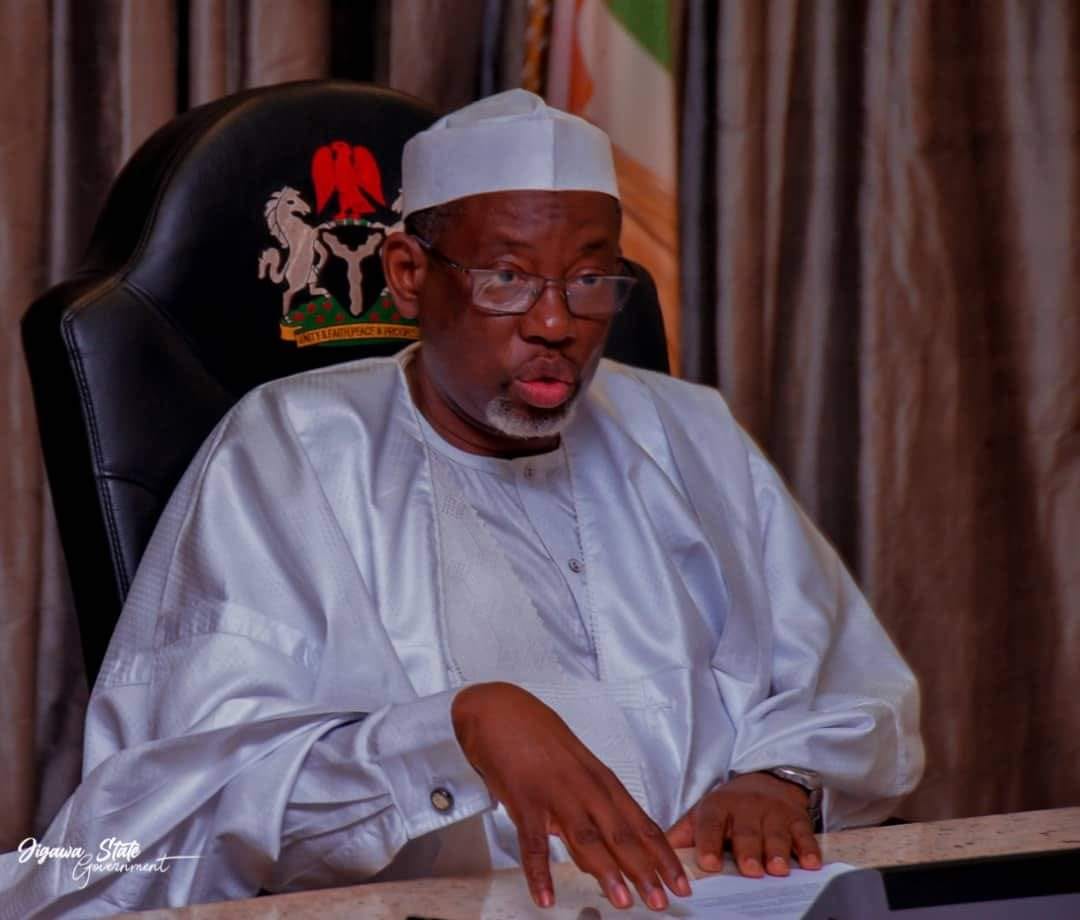
Jigawa State Governor Umar Namadi has relieved his Special Adviser on National Assembly Matters, Rabi’u Garba Kaugama, of his appointment.
Although no official reason was given for the decision, a statement issued on Tuesday by the Secretary to the State Government (SSG), Bala Ibrahim, said the removal takes immediate effect.
The statement added that all rights and privileges attached to Kaugama’s office have been withdrawn, and he is directed to hand over all government properties in his possession to the SSG’s office without delay.

Court freezes Mele Kyari’s bank accounts over fraud probe
By Uzair Adam
The Federal High Court in Abuja on Tuesday ordered the temporary freezing of four Jaiz Bank accounts linked to the immediate-past Group Managing Director (GMD) of the Nigerian National Petroleum Company Limited (NNPCL), Mele Kyari, following allegations of fraud.
Justice Emeka Nwite granted the order after the Economic and Financial Crimes Commission (EFCC) lawyer, Ogechi Ujam, moved an ex parte motion.
Ujam explained that investigations were still ongoing and more time was needed to conclude the process.
In his ruling, Justice Nwite held that the application had merit and should be granted. He adjourned the matter until September 23 for a progress report.
According to the EFCC, the affected accounts are registered under Kyari’s name and two other entities—Guwori Community Development Fund and Guwori Community Development Foundation Flood Relief.
The anti-graft agency alleged that the accounts contain over N661 million suspected to be proceeds of unlawful activities.
The commission further told the court that preliminary investigations revealed the funds were disguised as payments for a book launch and NGO activities, while the accounts were managed through Kyari’s family members acting as fronts.
The EFCC said the action became necessary to preserve the funds pending the conclusion of investigations and possible prosecution.

President Tinubu scraps 5% telecom tax, says NCC boss
By Abdullahi Mukhtar Algasgaini
The Executive Vice Chairman of the Nigerian Communications Commission (NCC), Dr. Aminu Maida, announced on Tuesday that the previously suspended 5% excise duty on telecommunications services has been completely scrapped by President Bola Tinubu.
Speaking at an interactive session with journalists in Abuja, Maida revealed he was present when the issue was raised with the President, who firmly rejected the tax.
“He said, ‘No, no, no, we cannot put this on Nigerians’,” Maida recounted. “I was very pleased when the bills came out and we saw his words were followed through.”
The contentious duty, part of a broader tax reform bill, had faced strong public opposition since its introduction in 2022, leading to its suspension by President Tinubu in July 2023.
Its full removal is now expected to ease financial pressure on subscribers and support wider growth in the crucial sector.

NCAA bans phones on planes, takes hard line on unruly passengers
By Abdullahi Mukhtar Algasgaini
In a significant shift from global norms, the Nigeria Civil Aviation Authority (NCAA) has ordered that all mobile phones and portable electronic devices must be completely switched off, not just on flight mode – during take-off and landing on all flights within Nigeria.
The directive was announced by the NCAA Director General, Capt. Chris Najomo, on Tuesday at a stakeholders’ meeting in Abuja.
The move ends the long-standing practice where passengers were permitted to use devices in airplane mode throughout a flight.
“All mobile phones, I repeat, all mobile phones and other portable electronic devices should be switched off during at least the critical phase of flight on all Nigerian airlines. Switched off,” Najomo stated.
“There’s nothing like anything like flight mode any longer. Must be switched off.”
The new rule requires Nigerian airlines to immediately amend their operations manuals to reflect this change and submit them to the NCAA for approval.
The phone ban is part of a broader crackdown on the growing trend of disruptive passenger behaviour at Nigerian airports. Najomo declared that the era of “business as usual” is over, warning that unruly passengers will face strict consequences.
He announced plans for public enlightenment campaigns, including radio and TV jingles, to educate travellers on their responsibilities.
The NCAA will also compel airlines to provide adequate training for their staff in conflict resolution.
“If you’re unruly, you’re unruly… It will not be as business as usual. I can assure you that,” Najomo emphasized.
Highlighting the security risks, Najomo announced that the NCAA will conduct mock response exercises next week at the Lagos and Abuja airports to test readiness.
The results of these drills will be made public.
“Aviation security personnel and law enforcement must be reinforced with training, professionalism, and clearly defined rules of engagement,” he said.
Supporting the DG’s stance, the Director of Consumer Protection, Michael Achimugu, noted that Nigeria’s handling of unruly passengers is already more humane than in many other countries, where such behaviour is “treated with extreme prejudice.”
He also referenced recent high-profile incidents, involving figures like Fuji musician KWAM1 and actress Comfort, stating that while the parties involved had learned their lessons, the events revealed systemic gaps that need urgent addressing.
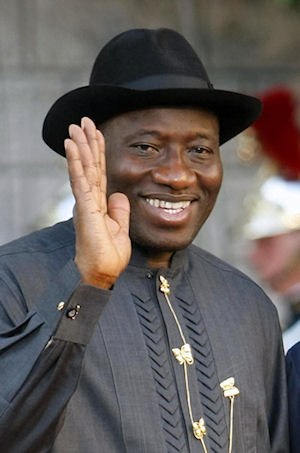
Jonathan’s PDP comeback: A Political revival or vote-splitting sabotage?
By Salisu Uba KofarWambai
The latest buzz in Nigeria’s political arena is nothing short of explosive: former President Dr. Goodluck Jonathan is reportedly set to return and contest under the platform of the Peoples Democratic Party (PDP). The revelation has sent shockwaves across the nation and beyond. But beneath the headlines, a critical question lingers — what is the real motive behind this sudden political twist?
Before the emergence of the African Democratic Congress (ADC) as a viable coalition platform for the opposition, Nigerians had grown increasingly frustrated with what they saw as a weakened opposition front. The PDP, once a vibrant counterforce, had been reduced to what critics call a “toothless bulldog,” accused of being manipulated by President Bola Tinubu through Nyesom Wike, a PDP member who openly works in favour of the ruling party and now holds a position in Tinubu’s government.
Wike’s influence, according to party insiders, has been anything but peaceful. His repeated interventions and internal disputes have reportedly destabilised the PDP, a strategy many believe cost the party dearly in the 2023 general elections. With the backing of the current administration, Wike has consistently won key legal battles, tightening his grip on the PDP’s power structure.
Recognising the deepening crisis, several PDP heavyweights, including the party’s last presidential candidate, Atiku Abubakar, abandoned the PDP ship, aligning under the ADC banner to form a credible opposition. This development was warmly received by many Nigerians disillusioned by the ruling APC’s economic policies, from the sharp devaluation of the naira to the painful removal of fuel subsidies, policies they say have deepened poverty nationwide.
Alarmed by the growing acceptance of the ADC among struggling Nigerians, the APC-led government appears to be dusting off an old playbook. Just as they allegedly did with the Kwankwasiyya movement in 2023, they now seem ready to field a high-profile figure to split the opposition vote. This time, the role is reportedly being handed to none other than Jonathan — a move seen by many as orchestrated to weaken the ADC’s momentum.
For political observers, the pattern is clear: divide the opposition, consolidate power, and keep the electorate distracted, all while avoiding a united front that could unseat the government in 2027. What stings for some Nigerians is the idea of Jonathan, once the principal, now accepting political direction from his former protégé.
Whether Jonathan’s alleged return is a personal decision or part of a calculated strategy by the ruling party remains to be seen. But one thing is sure: the stage is set for a high-stakes political drama, and Nigerians will be watching closely to see how and where this political gunshot will be fired.

Man discovers 8-inch knife lodged in chest for eight years after hospital visit
By Abdullahi Mukhtar Algasgaini
A 44-year-old Tanzanian man seeking treatment for pus discharge from his right nipple was stunned to learn he had been living with a large knife embedded in his chest for nearly a decade, doctors revealed in a recent medical report.
The patient, who had no major health complaints apart from the infection, recalled being stabbed multiple times during a violent altercation eight years ago. At the time, doctors sutured his wounds but lacked the equipment to conduct an X-ray. Since he reported no pain afterwards, further investigation was never pursued.
However, when the man visited Muhimbili National Hospital recently, an X-ray uncovered an astonishing sight—an 8-inch knife lodged near his ribcage. Miraculously, the blade had missed all vital organs.
Surgeons successfully removed the knife along with dead tissue and pus. The patient recovered well after a brief ICU stay and was discharged within 10 days.
Doctors described the case as “extremely rare,” noting that the body had formed a protective layer around the blade, preventing severe complications. The findings were published in the National Library of Medicine, highlighting the importance of thorough trauma assessments.