
Experts call for broader recognition of ulama in Nigerian politics
By Uzair Adam
Bayero University, Kano (BUK), on Tuesday hosted a landmark conference organised by the Faculty of History and Development Studies, exploring the historical and contemporary roles of ulama in Nigerian politics.
The event, themed “Ulama and Politics in Nigeria: Historical Perspectives,” attracted scholars, politicians, and religious leaders from across the country.
Professor Muhammad Wada, Dean of the Faculty of History and Development Studies at the university, explained that the central mission of the conference is to highlight the pivotal role of ulama—Islamic scholars—in societal development.
He stated that, “Over the years, through our research, we realised that ulama have played and continue to play an important role in various spheres of life, including politics and economics.
“This conference seeks to address widespread misconceptions about whether it is legitimate for ulama to be involved in politics,” Professor Wada added.
He further stated that the conference has received hundreds of abstracts from scholars of various fields, demonstrating the broad relevance of the topic.
“Historically, ulama have contributed to societal development, and they remain capable of doing so today.
“Their role goes beyond leading prayers or teaching religion; it extends to guiding the public in political and civic matters,” Professor Wada emphasised.
Professor Sani Umar, one of the keynote speakers, described the conference as “highly enriching and a model that should be held regularly to sensitise ulama and the public alike.”
He stressed that the discussions are not only relevant to Muslims but also to followers of other faiths, promoting mutual understanding and peaceful coexistence.
Umar further explained that the widespread perception that ulama should avoid politics is misguided, noting that true politics involves leadership, compassion, and care for the vulnerable—qualities inherent in the work of scholars.
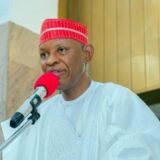
Speaking on the occasion, Sheikh Ibrahim Khalil, Chairman of the Council of Ulama, urged the public to recognise that politics is for everyone and that ulama, given their knowledge and moral grounding, are particularly well-suited to political engagement.
He called for more frequent conferences of this kind, at least twice or three times a year, and appealed to media professionals to disseminate these messages widely, including via social media.
The conference drew participation from ulama representing various Islamic sects, academics, and politicians, including Sule Lamido, the former Governor of Jigawa State.
Governor Abba Kabir Yusuf, represented by Professor Tijjani Muhammad, also attended, highlighting the significance of the event for both scholarship and governance.
The two-day conference will continue tomorrow with plenary sessions, providing a platform for rigorous discussion on the contributions of ulama to Nigerian society and politics.

Palestinian refugee turned Nobel Laureate: Omar Yaghi wins 2025 Nobel Prize in Chemistry
By Muhammad Abubakar
Omar Yaghi, a Palestinian-born scientist whose journey began in a refugee family in Jordan, has been awarded the 2025 Nobel Prize in Chemistry.
The Royal Swedish Academy of Sciences announced the honour earlier today, recognising his pioneering work in designing and developing new classes of materials that have revolutionised the field of chemistry.
Speaking to reporters while in transit between flights, Yaghi reflected on his humble beginnings: “My parents could barely read or write. It’s been quite a journey. Science allows you to do it.”
Born to Palestinian refugees who fled to Jordan, Yaghi’s journey to scientific excellence was far from straightforward. As a young student, he was drawn to the beauty of chemistry, a fascination that eventually led him to develop metal-organic frameworks (MOFs), materials now vital in energy storage, clean water production, and environmental sustainability.
Yaghi described his motivation as both artistic and intellectual: “I set out to build beautiful things and solve intellectual problems.”
For many across the Arab world, especially Palestinians, Yaghi’s achievement serves as an inspiring reminder that brilliance can arise from the most difficult beginnings.

Atiku accuses Tinubu government of institutionalising forgery, calls for investigation
By Muhammad Abubakar
Former Vice President Atiku Abubakar has accused President Bola Ahmed Tinubu’s administration of promoting forgery and deceit as instruments of governance, following the resignation of Uche Nnaji, Minister of Innovation, Science and Technology.
In a strongly worded statement on Wednesday, Atiku described Nnaji’s “voluntary resignation” as an attempt to cover up a scandal that exposes the “deep moral crisis” within the Tinubu government. He said Nnaji should have been dismissed and prosecuted for falsifying documents rather than allowed to quietly exit.
Atiku also faulted the Department of State Services (DSS) for clearing Nnaji despite alleged discrepancies in his records, accusing the agency of “failing in due diligence” and embarrassing the nation.
He linked the scandal to what he called a wider pattern of deceit that “begins from the very top,” pointing to longstanding controversies over President Tinubu’s own identity and academic credentials.
“When a man of questionable identity leads a country, deception becomes the standard of governance,” Atiku said, alleging that Tinubu’s personal history has “institutionalized falsehood in public service.”
The former vice president called for an independent and transparent investigation into the academic and professional records of all members of the Federal Executive Council, starting with the president.
Atiku concluded that Nigeria would continue to suffer “moral decay, economic ruin, and global embarrassment” unless integrity was restored to public life.

SSANU, NASU set for nationwide protest over unpaid allowances, salary arrears
By Anas Abbas
The Senior Staff Association of Nigerian Universities (SSANU) and the Non-Academic Staff Union of Educational and Associated Institutions (NASU) have declared a one-day nationwide protest for Thursday, October 9, 2025, over the Federal Government’s failure to address their long-standing demands.
Acting under the umbrella of the Joint Action Committee (JAC), both unions have directed their branches to hold joint emergency congresses on Wednesday, October 8, to mobilise members for the protest.
According to the directive, the protest activities will include peaceful marches within campuses, display of placards, and press briefings to draw public attention to their grievances.
The decision followed a comprehensive review of government actions during JAC’s meeting held on October 6, after the expiration of several ultimatums earlier issued to the Federal Government.
Among the unresolved issues are the alleged unequal disbursement of the ₦50 billion earned allowances, delay in renegotiating the 2009 FGN/NASU/SSANU agreements, non-payment of two months’ outstanding salaries, arrears of 25 and 35 per cent salary increments, and non-remittance of third-party deductions for May and June 2022.
JAC had earlier given a seven-day ultimatum to the government on September 15, which was later extended by another 14 days, expiring on Monday, October 6, without any concrete response.
In a circular dated October 6, 2025, and titled “Commencement of Protest Actions,” jointly signed by NASU General Secretary, Prince Peters Adeyemi, and SSANU National President, Comrade Mohammed Ibrahim, the unions instructed all branches to fully participate in the protest.
The circular stated, “Following the inauguration of the Joint Consultative Committee by the Honourable Minister of Education to look into the demands of JAC of NASU and SSANU, the committee met twice on Friday, 19th September 2025, and Monday, 6th October 2025 with little progress, as our demands remain unresolved despite the extension of the ultimatum.”
It added that all members in both federal and state-owned universities “are expected to strictly comply with this directive,” stressing that unity and total participation were crucial to the success of the action.
SSANU President, Mohammed Ibrahim, recently accused the government of insincerity, warning that the unions could declare an indefinite strike if their demands remain unmet.
“Ours will not be the ‘mother of all strikes’; it will be the grandfather of all strikes,” Ibrahim said. “When SSANU or NASU strike, you know what it means. We must take our destinies in our hands.”
He also lamented the worsening condition of non-academic staff in universities, describing them as “the worst hit financially, economically, and psychologically.”
Both SSANU and NASU have been in prolonged disagreement with the Federal Government over issues relating to staff welfare, funding, and the implementation of existing agreements, like Academic staff union of universities ( ASUU)

Saving a legacy: Urgent call to protect Umaru Musa Yar’adua University
By Dikko Muhammad, PhD
Dear Governor Malam Dikko Radda, PhD., with honour and regards befitting of your office and esteemed personality, the people imploring you to address the urgent matters of Umaru Musa Yar’adua University, Katsina, are your friends, not your foes. They don’t want to see the beautiful pumpkin planted about two decades ago uprooted by your administration. If that calamity, God forbid, would happen, it mustn’t happen under the administration of the most credentialed person in the history of our state.
Sir, UMYU isn’t just a mere state university. It was an ambition and a dream of our revered Malam Umaru Musa of blessed memory. UMYU is the culmination of the sweat and toil of many prestigious individuals from our dear state, impeccable individuals who embraced Malam Yar’adua’s dream and made it a reality.
Men and women who spent sleepless nights, travelled far and wide, to ensure that UMYU isn’t just a prestige project, but a strategic and need-based initiative that addresses the higher education deficit of our dear state and the Northern region. Many of these important individuals are alive today. Please, Sir, as they inch nearer to their graves, don’t make them feel that their labour is in vain. UMYU alone is a fulfilling mission for many of them.
Sir, forgive my repetition– UMYU isn’t just a mere state university. It’s a solution to our century-old gender gap in access to educational opportunity. It enables thousands of parents to educate their daughters to the level of degree certification at a time when interstate and intercity travel are becoming increasingly dangerous by the day.
When UMYU collapses, may Allah prevent that, it will sink with the dream of thousands of girls who aspire to become educated mothers, productive members of society, and contributors to the future knowledge-driven economy. You just need to look left and right in your own extended family to see the impact this university has already made.
Your Excellency, Sir, look into the posterity. It’s very long. And it remembers all. Save this system. The university workers are not asking for the impossible. They simply ask that you respect the law establishing this university. They’re only asking you to give the equivalent of whatever is obtainable in federal universities. This is enshrined in the laws that established UMYU.
I’m deeply sorry if I sound boring. I want to remind your esteemed person that at the point of inception, no state across the Northern region has invested resources in its university as UMYU. Billions have been spent on the training of staff. I am a product of UMYU. I got my first degree here. My teachers called me to join them and serve UMYU. The university has spent millions training me for my master’s and PhD degrees. The same happened to hundreds of others.
Unfortunately, the tasteless, unmotivated and uninspiring condition of service has frustrated many out of UMYU. Many others are awaiting the bond period to japa or to move to another university. In my faculty (pictured here), I know of more than 10 people who have left this institution with their PhD financed by UMYU. UMYU has failed to retain its most precious investment. It has also fallen short of attracting other people with the highest degrees into its corridors.
As tens of PhDs are leaving UMYU, the university can only attract people with a first degree or, at most, a master’s degree. In practical terms, UMYU is gradually positioning itself as a training ground while Katsina continues to be short-changed in the process.
Your Excellency, I may disagree with many of your policies. But I never doubted your resilience in moving our dear state forward. Please look into UMYU. Write your history on the footprints of time. You have all that is required to save the most important legacy of Malam Umaru Musa Yar’adua, a statesman, your political mentor, a person you hold dear and a man related to you in other equally important capacities.
Dikko Muhammad writes from the Department of English and French, UMYU. He can be reached via dikko.muhammad@umyu.edu.ng.

CAN rejects claims of Christian genocide in Nigeria
By Muhammad Abubakar
The Christian Association of Nigeria (CAN) has denied claims of a Christian genocide in Nigeria, calling such reports misleading and lacking a consistent pattern, as reported by The Guardian (Nigeria).
The claims gained attention after U.S. comedian Bill Maher and Senator Ted Cruz accused Islamist groups and Nigerian officials of persecuting Christians. Cruz even proposed sanctions through the Nigeria Religious Freedom Accountability Act.
At the same time, U.S. lawmaker Riley Moore urged the U.S. government to halt arms sales and label Nigeria a “Country of Particular Concern.”
In response, Nigeria’s Presidency denied any religious war, stressing that the violence affects all citizens regardless of faith.
CAN’s Director of National Issues and Social Welfare, Abimbola Ayuba, acknowledged widespread killings but said they were not targeted solely at Christians. He noted that both Christians and Muslims have fallen victim to terrorist attacks, adding that bullets “don’t look for a Christian or spare a Muslim.”
Ayuba cautioned against foreign interference and urged Nigerians to work collectively to end the insurgency through local institutions rather than seeking sympathy abroad.

FG set up another committee to quicken talks with university, poly unions
By Anwar Usman
The Federal Government has reconstituted and inaugurated the Mahmud Yayale Ahmed Federal Government Tertiary Institutions Expanded Negotiation Committee to expedite ongoing discussions with academic and non-academic unions across universities, polytechnics, and colleges of education.
In a statement issued on Tuesday by the spokesperson for the federal ministry of education, Folasade Boriowo, it was stated that the Minister of Education, Dr Tunji Alausa, has set up a new committee to harmonise all negotiation processes under one coordinated framework that reflects institutional memory and sector-wide inclusiveness.
Alausa explained that, unlike previous fragmented negotiations, the expanded committee will engage all unions collectively to achieve a comprehensive and sustainable agreement. “The membership of the committee has been carefully chosen to represent the full spectrum of the education sector, ensuring that no group is left behind,” he said.
The Minister stated that the committee has been given a well-equipped and functional secretariat to enable it to carry out its mandate effectively, adding that, “its inaugural meeting will be held at 2 p.m. Tuesday, 7th of October. He urged all academic and non-academic unions to cooperate fully and respond promptly to the committee’s engagements.”
According to him, President Bola Tinubu has given full political support to the process, with a clear directive that all negotiations be concluded swiftly, fairly, and in a spirit of civility and mutual respect.
Earlier, ASUU, in a bulletin released to its members on Monday, urged them to prepare towards a two-week warning strike set to commence on October 13.
The planned strike follows a two-week ultimatum issued by the union last week, calling on the Federal Government to proffer solutions to its unresolved issues, including the signing and implementation of the renegotiated 2009 ASUU-FGN Agreement.
In the fresh circular, ASUU National President, Prof. Chris Piwuna, complained about the government’s failure to provide any meaningful response to the union’s demands despite the ultimatum.

NCS schedules October 9 for online recruitment examination
By Anas Abbas
The Nigeria Customs Service (NCS) has scheduled Thursday, October 9, 2025, for the main online recruitment examination for shortlisted candidates in the Inspectorate and Customs Assistant cadres.
This was disclosed in a public notice released by the Service on Tuesday through its verified online platforms.
According to the announcement, applicants have been divided into three batches: A, B, and C. They are expected to log in to the official recruitment portal, using their National Identification Number (NIN) to confirm their batch, date, and examination time.
“The Main Online Recruitment Examination for all shortlisted Inspectorate and Customs Assistant Cadre applicants has been scheduled for Thursday, 9th October 2025,” the notice stated.
The Customs Service emphasised that strict adherence to the assigned batch and time was compulsory, warning that failure to comply could lead to disqualification.
Candidates were further cautioned against using calculators, mobile phones, or any other electronic devices during the test.
“Applicants are strongly advised against multiple logins or switching browser windows while taking the examination, as this may affect their participation,” the Service added.
The NCS also clarified that the upcoming examination was strictly for candidates in the Inspectorate and Customs Assistant cadres, noting that those under the Superintendent cadre would be scheduled for a later phase of the recruitment process.
“Only Inspectorate and Customs Assistant Cadre applicants are to take part in this stage of the examination. Applicants of the Superintendent Cadre are not to participate at this stage,” the statement concluded.

Senator Barau Jibrin is investing in you, by Binta Spikin
By Binta Spikin
Today is indeed a memorable and joyous day for students of the Federal University of Education, Kano. It marks the dawn of a new era in their educational journey, one defined by opportunity, compassion, and visionary leadership.
Senator Dr. Barau I. Jibrin, Deputy President of the Nigerian Senate, once again demonstrated his commitment to education and youth empowerment by awarding scholarships to every student of Kano North extraction in the university.
This gesture is not an isolated act of generosity. Within just a few weeks, Senator Barau has rolled out a series of educational interventions that have touched thousands of young lives across Kano State.
It began with the payment of scholarships to students of Bayero University, Kano, followed by those of Northwest University, Kano, and now, the newly upgraded Federal University of Education has joined the list of beneficiaries.
According to the Senator, the scholarships are his contribution toward developing human capital and building a knowledge-based economy that can enable Kano to compete with other regions and nations of the world. He emphasized that education remains the most powerful tool for empowerment and development, and that the youths of today are the builders of tomorrow.
He also commended President Bola Ahmed Tinubu for approving his proposal to upgrade the former Federal College of Education to a full-fledged University of Education,a transformative step for the advancement of teacher education and research in the region.
It is important to note that Senator Barau Jibrin is not just a political ally of President Tinubu, but also a leader whose style of politics is defined by optimism, humility, and human connection. His warmth and charisma are infectious.The scholarship announcement was a source of joy, but his presence itself,his genuine concern and the energy he brought left a lasting impression on everyone in attendance.
As I watched the event unfold, it became clearer to me that in Kano’s political landscape, Senator Barau Jibrin has emerged as a formidable force — a man whose political relevance stems not from rhetoric but from action. He is, without doubt, the one politician today with the vision, clout, and stamina to match the state government’s influence, especially in matters of youth development and education.
While the Kano state government struggles to justify a controversial scholarship programme, Senator Barau’s foreign scholarship initiative, which sent 71 Kano indigenes to study Artificial Intelligence in India, stands as a testament to his foresight. This is in addition to the numerous local scholarship schemes that have brought relief to both students and parents across Kano North.
His impact extends beyond academics. Recently, he launched the “Auren Gata” (Mass Marriage) Programme, which has been uniquely structured to ensure sustainability and happiness for the couples involved. A dedicated monitoring team has been set up to provide post-marital support and ensure that these unions thrive a rare approach that reflects thoughtful leadership and genuine care for community wellbeing.
In every sense, Senator Barau Jibrin, fondly known as Maliya is a game changer for Kano and the All Progressives Congress (APC) in the North. His strategies are deliberate, his projects are people-centered, and his commitment is deeply rooted in the desire to uplift the youth and empower the less privileged. He exemplifies a brand of leadership that is visionary, inclusive, and development-driven.
Senator Barau is a builder of people, not just of projects. His investment in education, youth, and social welfare is an investment in the future of Kano and Nigeria at large.
He is smart, strategic, and sincerely dedicated to human development — a man whose impact will echo for generations to come. Truly, Senator Barau Jibrin is not only investing in education; he is investing in you.

ASUU begins full mobilisation ahead of planned nationwide strike
By Uzair Adam
Barely a week before the commencement of its planned nationwide strike, the Academic Staff Union of Universities (ASUU) has begun mobilising its members across universities in the country.
The move follows what the union described as the federal government’s silence despite the 14-day ultimatum earlier issued to all relevant authorities, including the Minister of Labour and Employment, Maigari Dingyadi.
The Daily Reality gathered that ASUU had, last Monday, announced plans to shut down all public universities in Nigeria to press home its long-standing demands.
The union explained that the strike notice, which took effect from Sunday, September 28, 2025, would begin with a two-week warning strike before progressing to an indefinite industrial action should the government fail to act.
In a fresh letter dated October 5, 2025, and signed by ASUU President, Prof. Chris Piwuna, the union said it had no choice but to proceed with the planned strike due to the government’s failure to address the issues at stake.
Piwuna expressed disappointment over what he described as the government’s lack of meaningful engagement since the notice was issued.
“The National Executive Council (NEC) of our union, at its emergency meeting on September 29, 2025, after evaluating the results of the referendum conducted across our branches, resolved to give the government a 14-day ultimatum to resolve the issues contained in the renegotiated agreement transmitted since February 2025,” he said.
“It was further resolved that the union would embark on a two-week warning strike at the expiration of the ultimatum if government fails to take acceptable steps toward addressing the lingering issues.”
According to him, the resolutions were immediately communicated to the Ministers of Labour and Education as well as the Nigeria Labour Congress (NLC).
He lamented that a week after the ultimatum, “there has been no meaningful development worth reporting.”
“As we enter the final week of the ultimatum, I wish to thank members for their patience and understanding throughout this long and tortuous negotiation process, which has dragged on unjustifiably for over eight years,” Piwuna added.
He reaffirmed that the objective of ASUU’s current action is to compel the federal government to sign and implement the renegotiated agreement and meet other key demands affecting the university system.
The ASUU president called for total mobilisation of members nationwide to ensure unity of purpose, urging them to rely solely on instructions from their branch chairpersons and zonal coordinators.
“We are strong when we organise but weakened when we agonise,” he said. “Our union has always acted collectively in solidarity—this action will not be different.”