Uncategorized

We recovered over N145m in child support, debt disputes in 2025 — Kano Hisbah

By Uzair Adam

The Kano State Hisbah Board says it recovered more than N145 million for residents through mediation on child support and debt-related disputes in 2025, marking one of its most significant interventions in recent years.

The disclosure was made by the Deputy Commander of the board, Dr. Mujahiddeen Aminuddeen, in an audio briefing, where he outlined the agency’s activities across the state during the year under review.

According to Dr. Aminuddeen, a total sum of N145,406,409 was recovered from cases involving debt disputes and child support, ensuring that divorced mothers and creditors received what was due to them without the delays often associated with conventional court processes. He described the recovery as a major milestone in the board’s efforts to promote social justice.

“Hisbah has successfully recovered what belongs to some people. By the grace of God, the total reached N145,406,409,” he said.

Beyond financial mediation, the deputy commander explained that the board recorded a surge in demand for its counselling services in 2025. He said the counselling department handled 93,231 cases involving individuals seeking guidance on marital, family and personal issues during the period.

He further disclosed that the board received 12,446 complaints, out of which 1,908 cases were successfully resolved through reconciliation. For cases that involved criminal elements, Dr. Aminuddeen said 4,246 suspects were processed by Hisbah and handed over to the Nigeria Police Force for further investigation and prosecution.

The deputy commander also noted that Hisbah carried out nine major operations between January and December 2025, leading to 132 arrests. He explained that such operations were aimed at addressing activities considered harmful to public order and the moral values of Kano State, including a widely reported raid on an illegal gathering in Hotoro late last year.

Dr. Aminuddeen attributed the board’s achievements in 2025 to the cooperation and support of Kano residents, stressing that the agency’s work is guided by a sense of religious and moral responsibility. “This was not a small effort. Hisbah is the work of God,” he said, adding that public support played a crucial role in the successes recorded.

He reaffirmed the board’s commitment to mediation, counselling and collaboration with security agencies, noting that Hisbah would continue to prioritise social harmony, justice and the protection of vulnerable members of society across the state.

Plateau Governor Mutfwang defects from PDP

By Ibrahim Yunusa

Plateau State Governor, Caleb Mutfwang, has officially resigned from the Peoples Democratic Party (PDP), citing the need for purposeful leadership, clarity of direction, and improved service delivery.

In a letter dated December 29, addressed to the Chairman of the PDP in Ampang West Ward, Mangu Local Government Area, Governor Mutfwang expressed that the current political reality necessitated a shift in platform.

He wrote: “Given the realities of the moment and guided by my commitment to purposeful leadership, clarity of direction, and service delivery, I am compelled to seek an alternative political platform.”

Rumours of the governor’s potential defection had been circulated, with reports suggesting he had been in talks with the ruling, All Progressives Congress (APC).

His official exit from the PDP appears to confirm those earlier speculations.

Senate confirms Fani-Kayode, Omokri, 62 others as ambassadors

By Sabiu Abdullahi

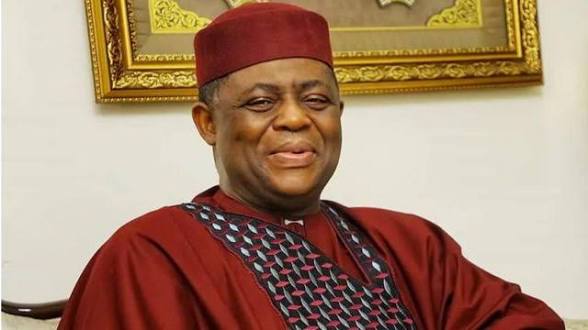
The Nigerian Senate has confirmed 64 ambassadorial nominees presented by President Bola Tinubu, among them former Minister of Aviation, Femi Fani-Kayode, and former presidential aide, Reno Omokri.

The confirmation took place on Thursday after the Senate adopted a report submitted by the Senate Committee on Foreign Affairs.

The committee stated that all nominees underwent screening and met the requirements for appointment.

This development came two days after the upper chamber approved three non-career ambassadorial nominees—Lateef Kayode Are from Ogun State, Aminu Dalhatu from Jigawa State, and Emmanuel Ayodele Oke from Oyo State.

Their confirmation raised the total number of approved ambassadors to 67.

Those cleared on Thursday included former Minister of Interior, Abdulrahman Dambazau; former Special Adviser on New Media to ex-President Goodluck Jonathan, Reno Omokri; former presidential aide, Ita Enang; and former senator, Grace Bent.

Also confirmed were former Chairman of the Independent National Electoral Commission, Mahmood Yakubu; former Governor of Enugu State, Ifeanyi Ugwuanyi; and former Governor of Abia State, Okezie Ikpeazu.

Altogether, the confirmed nominees consist of 34 career ambassadors and high commissioners, alongside 30 non-career ambassadors and high commissioners.

ES inspects newly revitalised NERDC Press

By Sabiu Abdullahi

The Executive Secretary of the Nigerian Educational Research and Development Council (NERDC), Prof. Salisu Shehu, has inspected the fully refurbished NERDC Press located at the Council’s South West Zonal Office in Jibowu, Lagos.

The press had been inactive for several years. Prof. Shehu had visited the zonal office on 10 May 2025, and he pledged to bring the non-functional printing facility back to life to improve its productivity.In early September 2025, the Council began the refurbishment work in fulfilment of that promise.

At the start of the repairs, the Press Manager, Mrs. Precious Iweha, praised the Executive Secretary for approving the intervention, explaining that “we have commenced work on the generator set and are currently servicing the Sord Z machine, Polar cutter machine, and one of the Gestener machines”.

She added that “we are grateful for ES approval of the repairs and servicing of the Printing Press. This initiative will ensure that the Council’s investments in plants, machinery, and infrastructure, will yield optimal results”.

After the completion of the project, the Executive Secretary visited the facility on Thursday, 4 December 2025, to assess the work done.

He expressed satisfaction with the progress recorded in his first year in office and gave an assurance that the revitalised press would be put to full use in line with its intended purpose.

The Head of the South West Zonal Office, Mr. Babatope Oloruntoba, and Mrs. Iweha commended the Executive Secretary for the achievement.

They described the successful revamp of the press as a significant milestone for both the NERDC Press and the Council as a whole.

NYSC extends 2025 Batch C registration over network glitch

By Anwar Usman

The National Youth Service Corps (NYSC) has extended the online registration for the 2025 Batch C prospective corps members by 48 hours, as a result of technical glitches experienced during the registration process.

This was disclosed in a statement signed by Director of Information and Public Relations of NYSC, Caroline Embu, saying the registration, earlier scheduled to close on November 9, will now end at midnight on Tuesday, November 11.

“The longer than usual time it is taking some PCMs to complete the registration is as a result of network issues.

“While Management regrets the inconvenience this might have caused our valued prospective corp members, we wish to assure all that we are working round the clock to resolve the issues and ensure they enjoy seamless registration,” she stated.

Kannywood expert honours late veteran actor Mallam Nata’ala

By Anas Abbas

A Nigerian academic, Dr Muhsin Ibrahim, who teaches Hausa language and culture at the University of Cologne, Germany, has written a touching tribute to the late Kannywood actor, Alhaji Mato Yakubu, popularly known as Malam Nata’ala (Mai Sittin Goma).

In the tribute shared on social media, Dr Muhsin described the deceased as a talented comedian whose unique performances left lasting memories among Hausa film audiences.

Alhaji Mato Yakubu featured in several Kannywood films, particularly in the Chamama comedy genre, alongside the late Rabilu Musa (Dan Ibro), before the establishment of the Arewa24 channel.

His fame, however, soared through the station’s popular drama series “Dadin Kowa,” where he earned the name Malam Nata’ala for his role as a “loud” but lovable traditional Qur’anic scholar (Alaramma) and a family man constantly mediating between his two quarrelling wives.

Recalling his struggles, Dr Muhsin wrote that the actor’s prolonged illness had earlier drawn public attention, prompting financial assistance from the Yobe State Government and the Government of the Republic of Niger.

The actor later appeared in a video expressing gratitude and looking healthier.

“Many thought his illness was caused by poverty. Some even laughed at the whole issue. Unknown to all, he would pass away a few weeks later,” Dr Muhsin wrote.

He concluded the tribute with prayers: “May Allah (SWT) forgive his shortcomings, ours and those of our loved ones, amin.”

The late Alhaji Mato Yakubu was widely celebrated for his humour and natural acting style, which endeared him to fans across Northern Nigeria.

Tinubu hails Sambo’s new title as Sardaunan Zazzau

By Abdullahi Mukhtar Algasgaini

President Bola Tinubu has congratulated former Vice President Namadi Sambo on his turbaning as the Sardaunan Zazzau.

The ceremony will be performed by the Emir of Zazzau, Alhaji Ahmed Nuhu Bamalli, on Saturday, October 11.In a press release, President Tinubu described the title as one of “great cultural and historical significance in Northern Nigeria.”

He stated that the honour reflects the Zazzau Emirate’s confidence in Sambo’s “wisdom, integrity, and commitment to society’s progress.”

The President praised the former Vice President’s exemplary leadership, humility, and dedication to national development.

He also commended the Emir for upholding the tradition of honouring individuals whose character embodies the Emirate’s values of unity and service.

President Tinubu wished Sambo success in his new role and urged him to continue guiding the younger generation and working with community leaders to advance peace and development in the country.

Maiduguri cleaner’s honesty in returning N4.8m error earns praise, calls for national honour

By Abdullahi Mukhtar Algasgaini

A cleaner at a tertiary hospital in Maiduguri, Faiza Abdulkadir, has been widely commended for her integrity after returning N4.8 million that was mistakenly transferred into her bank account.

Faiza, who earns a monthly salary of N30,000 and supports five children, discovered the error and immediately took steps to return the funds. She explained that she was motivated by her conscience and faith.

“When I confirmed it was genuine, I knew it wasn’t my money. I decided to transfer it back for my peace of mind and quest for paradise,” she said.

The incident, which initially caused her significant distress, has since drawn national attention.

Local residents and activists have hailed her as a role model and are urging the government to provide her with support and official recognition.

Calls for Faiza to receive a national honour are growing, and a fundraising effort has already gathered over N135,000 to assist her and her family.

Loneliness claims over 870,000 lives annually — WHO warns

By Uzair Adam

The World Health Organisation (WHO) has raised alarm over the growing threat of loneliness, revealing that more than 871,000 people die globally each year due to its effects.

In a report released on Monday, the WHO Commission noted that one in six individuals worldwide is grappling with loneliness — a condition that, along with social isolation, significantly impacts both physical and mental health.

The report outlined that loneliness raises the risk of strokes, heart attacks, diabetes, depression, anxiety, and suicide. It also has academic and economic consequences, with lonely teenagers 22 percent more likely to perform poorly in school, while affected adults struggle more with employment.

Beyond personal consequences, the commission said loneliness leads to major economic costs due to increased healthcare demands and lost productivity.

Co-chair of the commission, Vivek Murthy, described loneliness as “a painful, subjective feeling that many of us experience when the relationships that we need do not match the relationships that we have.”

He distinguished it from social isolation, which he defined as an objective state of having few social connections.

According to the WHO, one in three elderly people and one in four adolescents are socially isolated.

The report cited causes including illness, low income, poor education, lack of social opportunities, living alone, and excessive use of digital technologies.

Murthy highlighted that while human communication has traditionally included facial expressions, body language, and tone of voice, these elements are often lost when interaction is limited to phones and social media.

Sweden was highlighted as a model example in tackling loneliness.

The country has launched a national strategy to promote social connections in public spaces like shops, restaurants, and clubs.

Swedish Social Minister Jakob Forssmed revealed that prepaid cards are being introduced for children and teens to encourage participation in group leisure activities.

The country also plans to ban mobile phones in public schools to foster in-person interaction.

Studies referenced in the report suggest such efforts have improved social bonds, reduced cyberbullying, and improved sleep patterns among young people.

While acknowledging the benefits of digital tools, the WHO emphasised the need for physical spaces where people can connect without technological interference.

Murthy stressed, “Having places and spaces in our life where we can interact face-to-face with other people without the distraction of technology is very important.”

Tinubu’s healthcare reforms: A turning point or déjà vu?

By Oladoja M.O

In the annals of Nigeria’s healthcare odyssey, the narrative has long been marred by systemic inertia, infrastructural decay, and a pervasive sense of despondency. For decades, the nation’s health sector languished in a state of neglect, characterized by underfunded primary healthcare centers, a dearth of medical personnel, and an overreliance on foreign aid. The corridors of our hospitals echoed with the silent cries of the underserved, while policymakers offered platitudes devoid of actionable substance.

Enter the administration of President Bola Ahmed Tinubu in May 2023, heralding a paradigm shift that seeks to redefine the contours of Nigeria’s health landscape. At the heart of this transformation lies the comprehensive overhaul of the Basic Health Care Provision Fund (BHCPF), a mechanism previously crippled by bureaucratic bottlenecks and inadequate financing.

The reimagined BHCPF now boasts a projected infusion of at least $2.5 billion between 2024 and 2026, a testament to the administration’s commitment to fortifying the primary healthcare system. This financial renaissance is not merely a numerical augmentation but a strategic realignment aimed at enhancing service delivery at the grassroots.

The direct facility funding to primary healthcare centers has been escalated from ₦300,000 to a range between ₦600,000 and ₦800,000 per quarter, ensuring that resources are channeled efficiently to where they are most needed. Such fiscal decentralization empowers local health facilities, fostering a sense of ownership and accountability that was hitherto absent.

Complementing this financial strategy is an ambitious infrastructural agenda. The administration has embarked on a mission to double the number of functional primary healthcare centers from 8,809 to over 17,600 by 2027, a move poised to bridge the accessibility gap that has long plagued rural and underserved communities. These centers are envisioned not as isolated units but as integral components of a comprehensive emergency care system, ensuring a seamless continuum of care.

Human capital development forms another pillar of this transformative agenda. Recognizing the critical shortage of healthcare professionals, the government has initiated the training of 120,000 frontline health workers over a 16-month period, encompassing doctors, nurses, midwives, and community health extension workers. This initiative not only addresses the immediate workforce deficit but also lays the groundwork for a resilient health system capable of withstanding future shocks.

In a bold move to stimulate local pharmaceutical production and reduce dependency on imports, the administration has eliminated tariffs, excise duties, and value-added tax on specialized machinery, equipment, and pharmaceutical raw materials. This policy is anticipated to catalyze the domestic manufacturing sector, ensuring the availability of essential medicines and medical devices while fostering economic growth.

Public health initiatives have also received a significant boost. Nigeria has become one of the first countries to roll out the Oxford R21 malaria vaccine, a landmark development in the fight against a disease that has long been a scourge in the region. Additionally, the administration has launched targeted programs aimed at reducing maternal and neonatal mortality, focusing on 172 local government areas that account for a significant proportion of such deaths.

However, amidst these commendable strides, challenges persist. The sustainability of these reforms’ hinges on robust monitoring and evaluation frameworks to ensure transparency and accountability. The specter of corruption, which has historically undermined health sector initiatives, must be vigilantly guarded against. Furthermore, the success of these programs requires the active collaboration of state governments, civil society, and the private sector.

In conclusion, the Tinubu administration’s approach to healthcare reform seemingly represents a departure from the perfunctory gestures of the past. It is a comprehensive, well-funded, and strategically articulated plan that addresses the multifaceted challenges of the sector. While the journey towards a fully revitalized health system is fraught with obstacles, the current trajectory offers a beacon of hope. It is imperative that all stakeholders coalesce around this vision, ensuring that the momentum is sustained and that the promise of accessible, quality healthcare becomes a reality for all Nigerians.

Oladoja M.O writes from Abuja and can be reached at: mayokunmark@gmail.com