Technology

Social media addiction and its adverse effects on youths

By Mukhtar Garba Kobi

Communication is one of the fundamental means people command, caution and interact with one another. It is as old as human beings because the first created beings (Adam and Eve) communicated. Primitive generations used so many ways in sending signals or messages to other people. They include beating metal gongs, lighting fires on hills, blowing flutes, beating local drums, firing Dane-guns, intense ululations, especially during marriage ceremonies, etc. Moreover, communication passed through generations. More advanced platforms and channels are created to enable people to interact with fellows in far and near places with ease from their comfort zones. 

Every day, sophisticated communication gadgets are invented and taken to markets. The more advanced features are added to social media platforms, the easier messages and information are conveyed to target audiences. According to Global Digital Overview, Facebook has 2.910 billion users, Instagram has 1.478 billion, Twitter has 436 million, TikTok has 1 billion, and WhatsApp has 2 billion active users.

With smartphones and data, people interact live through video calls, share pictures, upload movable images and audio messages, and get instant replies. Yet, despite these developments, youths in Africa and other parts of the world are so addicted to social media that some could not spend 30 minutes without logging in instead of studying for a better future, assisting parents with chores, learning skills to be independents, etc.

Regrettably, some users enjoy chatting in darkness by offing light, not knowing the brightness from phones screens harm their eyes. An eye doctor working with Makka Specialist Hospital in Bauchi, Abba Salisu Abba, explained that the pupil constricts when the light is more than what eyes can accommodate. But when the light is too low or in the darkness, the pupil dilates to search for available light. He further revealed that frequent staring at a light could result in itchy, watery, reddishness of eyes and, if nothing is done, could lead to blindness.

Some parents purchase phones, laptops, and tablets primarily to aid studies of their wards without regular supervision; it is unknown to them that most of their wards use such devices for irrelevant chatting or streaming pornographic content in late hours.

These days, young ladies in recent years shamelessly upload videos of them on TikTok dancing seductively in half-naked dressings; the act pushes some youths to rape teens, work sexually for sugar mummies or pay to satisfy themselves in brothels. Unfortunately, hours spent interacting with friends on social media platforms by students are high compared to the short time given for their studies or research; that has contributed hugely to mass failure during exams. A student from the State Polytechnic even told me that he often sacrifices his meal money to buy data primarily for chatting with friends. Sadly, many lost their lives after applying for jobs advertised on social media. They were pushed to early graves by their employers in unspecified locations. 

Shallow-minded adults and teenagers who heavily use social media platforms tend to believe whatever they come across and easily influence peers, thereby influencing them to snatch phones, kidnappings, or do other criminal acts to possess what celebrities have been bombarding them with on social media platforms. Consequently, most people in Nigeria believe that building crime-free societies is a collective responsibility, but only a few contribute in that direction. Parents no longer check the kind of postings, comments, pictures being uploaded or whatever their children are doing on social media platforms but are good at condemning others.

In summary, it is sacrosanct upon parents to be acting as watchdogs over the activities of their teenage sons and daughters on social media platforms. Parents should be collecting their devices and keeping them from them for days to know the messages coming in or people they are interacting with; this would help them determine the best decision.

Social media laws should work on all and sundry irrespective of positions, backgrounds or influences. The law should provide punishment for users sharing violent content, abuse, or false accusation to innocent individuals or groups to serve as a lesson to others. Furthermore, posting educational content on social media should be encouraged and youths doing that need to be rewarded by authorities; doing so would significantly improve students’ academic performances, thereby leading to good results.

Mukhtar Garba Kobi Wrote from Bauchi State.

Nigeria’s abuse of creativity and intellectuality

By Sabo Ibrahim Hassan

The seemingly endless abuse of creativity and intellectuality in Nigeria is exponentially becoming pervasive. Perhaps this is one of the primary reasons we are yet to be promoted from the developing class to developed countries. Aside from other countless resources Nigeria is blessed with, humans’ can never be overemphasized. I am not more concerned about the figure; I am rather concerned about the productive aspect of the figure, capable of portraying our competing capacity as a nation.

An endowed nation like Nigeria should not have been where it is if things were managed appropriately. We are so blessed that an average Nigerian can do the unbelievable in terms of intellectual display. Still, because of our disregard for this special gift and lack of governmental support, we ended up losing our best brains to other countries.

Creativity means the use of imagination or original ideas to create something. On the other hand, intellectuality refers to the state or quality of being intellectual, whereas, according to Wikipedia, an intellectual is a person who engages in critical thinking, research, and reflection about the reality of society, and who proposes solutions for the normative problems of society. Only a head with no brain will argue how endowed my country is in this regard. In fact, it is not hyperbolic that an average Nigerian comparatively performs excellently.

Apart from the regrettable failure of the country to identify and tap from the potentials of its citizens, the way our leaders abandon several talented Nigerians is quite irksome. Take, for instance, the report of a boy by Channels TV, who built Nigeria’s first locally-made drone. Another young Nigerian made an electric transformer, another young man from Delta invented a mini flying aircraft without a school degree. Another report is of another young Nigerian by CCT, who built an electric-powered car.

Additionally, a 16-year-old Nigerian who converted his bicycle to a motorcycle as reported by the BBC, will not be left untold. These and many other examples will prove how blessed this nation is with brains. But, does the government empower and support these talents? I will leave this as an open question. Where are these innovative young guys? Don’t be surprised to hear that they are in their various communities wrapped by idleness since the government has no spirit of willingness, let alone be ready to support and promote them.

Another perspective on how the country abuses creativity and intellectuality is how countless dreams have been shattered by our unfavorable, challenging, and careless education system. Many graduates are not the very products of what they aspired to be. On the contrary, the system forced most Nigerians to study what they had never dreamt of or desired. This, in turn, has drastically affected our productivity, where many passionless and zestless graduates are continually added to the already super-saturated labour market.

For instance, ask many graduates about their initial dreams and listen to the wonders that will flow out of their hearts. The issue of requirements regarding a course of choice is an imperative factor contributing to this effect. But, notwithstanding, since our country is not the only nation with a requirements policy. Think about the creativity and enthusiasm of a person whose dream has been shattered.

Elsewhere around the world, custodians are working relentlessly to identify where the talent of its individuals lies, provide them with everything necessary and force their spirit to go along the most appropriate direction. The story is sadly different in my country. If we had utilized our manpower judiciously by doing all necessary to keep them, Nigeria would not have been the giant of Africa nominally, nor would it have been a superpower without power.

More lamentably is how Nigerian medical doctors keep increasing the workforce of countries such as the UK, USA, Canada and many more. Moreover, they are found to be among the best brains over there. The ‘Women and Men report 2021’ by the National Bureau of Statistics revealed that 39,912 doctors were available in Nigeria as of 2017. The number of doctors increased to 44,021 in 2018. But this number reduced drastically to 24,640 in 2019. Again, the president of the Nigerian medical association, Dr Francis Faduyile, also noted that the high rate of insecurity, unemployment, low remuneration, bad roads, and poor healthcare system are some of the reasons doctors are leaving the country in search of greener pastures. He noted that 75,000 Nigerian doctors were registered with the Nigerian Medical Association (NMA), but over 33,000 have left the country.  

It is needless to dwell on the causes of the emigration of these intellectuals. I will instead concentrate on the effects of this negligence and unwillingness by the government to support these brains through providing a healthy environment empowered with cutting-edge technology have on our development as a nation. For instance, a research report by the World Bank revealed that in the Human Capital Index, Nigeria ranks 150 out of 157 countries in the year 2020. Moreover, income inequality and disparity in economic opportunities remain high and have consequently affected the government’s efforts on poverty reduction.

Where on earth will a country that is blessed like mine will remain where my country is? Therefore, we need to stop this dragging attitude. It’s even mandatory if the country is seriously serious about its development. Until our government and other authorities do their work well, we will keep going irreversibly directionless.

Sabo Ibrahim Hassan sent this article via Ibrahimsabohaassan60@gmail.com.

Are you wasting time or wasting data – or both?

By Engr. Mustapha Habu Ringim

There is a significant thing for university students doing nothing at home, in their neighbourhoods, or going from one town to another town. Still, some of these students just waste their precious time on social media, which can be described as a “waste of data.” Thanks to the students’ lack of the mindset to learn a skill or handwork.

Learning skills will benefit them even after graduating from university. Therefore, the fruitful result is that they will become employed or employers, instead of moving up and down looking for an even non-existent job, just like everyone following events in Nigeria knows today.

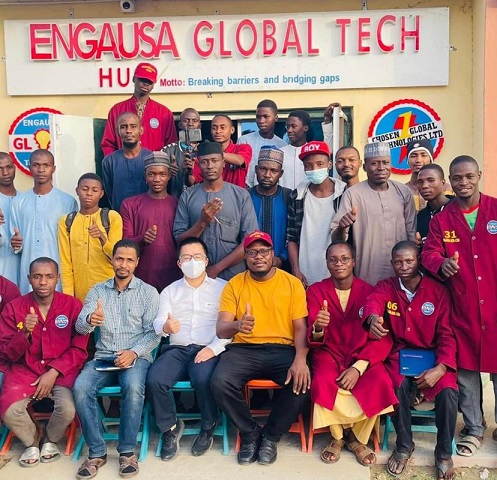
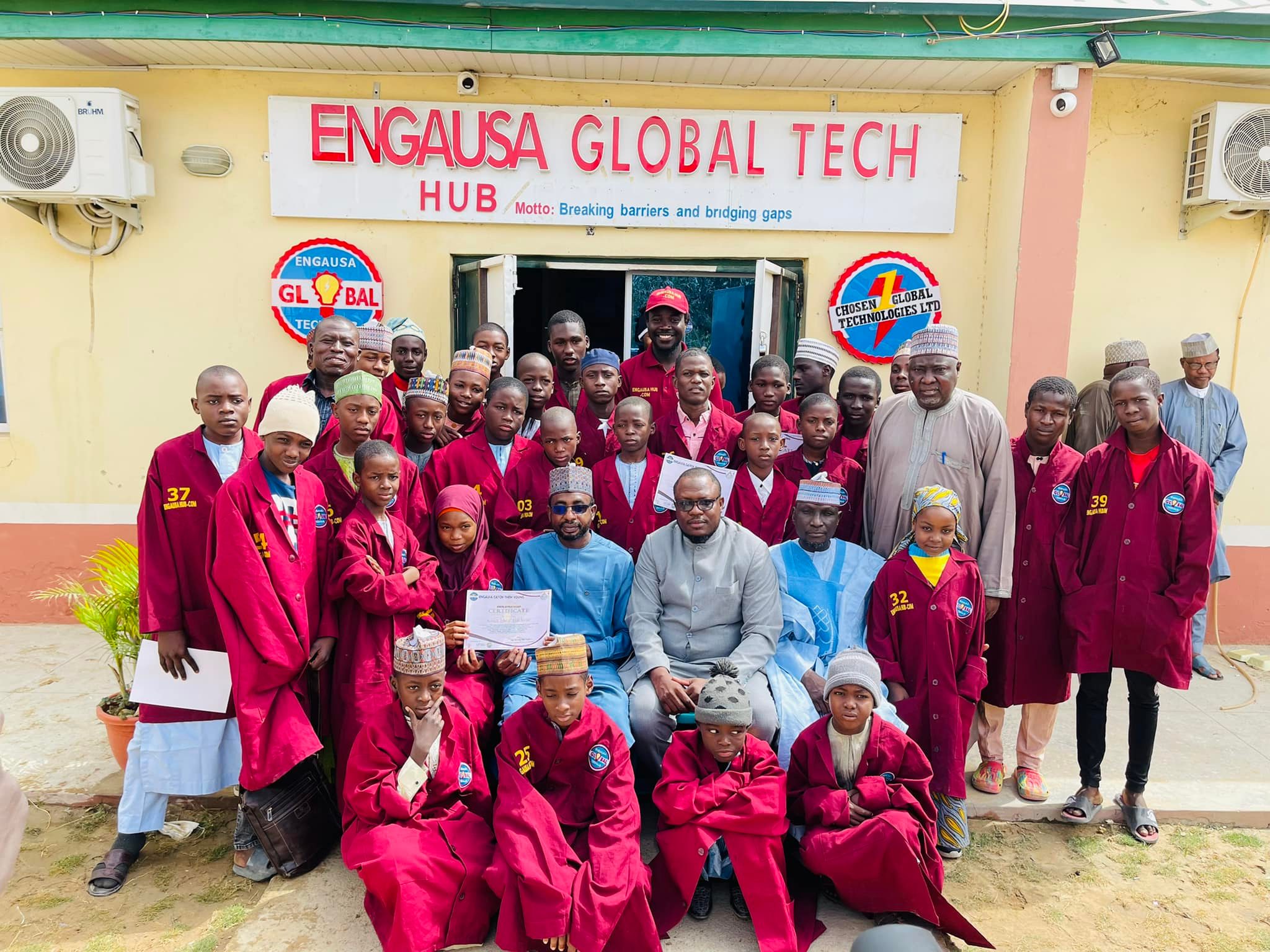
Engausa Global Tech. Hub hereby welcomes all enlightened students who have realised that we are now in the age of “Digital Technology”. Thus, because we know of such challenges and joblessness, we established EngausaHub.com, whose main aim is “Breaking Barriers and Bridging Gaps.”

Before suspending the ongoing ASUU strike, students can gain a lot. And even afterwards, what they must have learnt will benefit them, in and outside the university. In fact, it’s ridiculously unwise for a young person not to have where he acquires a modern skill or handwork. Otherwise, he would just be going to the university with an empty pocket, with nothing to buy anything they desire.

The universities themselves should have skills acquisition centres because it has become pervasive for graduates—sometimes, including master’s and PhD holders—to finish school and never get a job. They would just “enmesh” themselves in the so-called “Labour Market” without any fruitful result in the end.

Hence, I advise the ASUU, federal and state governments to establish vocational training centres in our universities and other tertiary institutions. Most of these sustainably developed countries also adopted this same method of getting exceptionally good young people. The Vice-chancellor of Skyline University, an Indian, confirmed this assertion to me when he recently paid us a familiarisation visit at ENGAUSA HUB. 

We seek Allah’s guidance.

Engr. Mustapha Habu Ringim is the Founder/CEO Engausa Global Tech. Hub, Kano. He can be reached via ringims@gmail.com or 070383224643. Their websites are www.engausahub.com and www.chosenglobalech.com.

31-year-old communication student develops new model to fight disinformation

By Aisar Fagge

Isah Nasidi, a young Nigerian PhD student of Mass Communication and a research fellow at the Premium Times Centre for Investigative Journalism, developed a new model called SAMCAV. First of its kind, the model aims to combat disinformation and discover the fourth typology of information disorder, which he called dil-information.

A statement sent to The Daily Reality reveals that Nasidi’s discovery was the outcome of the six-month research fellowship of the Kwame Kari-Kari Fact-checking and Research Fellowship, which selected 17 researchers from four West African countries to research information disorder.

The SAMCAV model links six elements of information disorder; Source, Agent, Message, Channel, Audience and Victim. These elements are involved in the production, distribution and consumption of information disorder.

According to the researcher, the model will help researchers and policymakers to know how disordered information flows and the effects it causes in society.

Moreover, the work discovers the concept of ‘dil-information’ as the fourth type of information disorder, which has never been considered as an independent typology separate from disinformation, misinformation, and malinformation.

Dil-information is defined as genuine information diluted with false information, misinterpreted or misrepresented with or without intent to harm. Terms like mostly true, half-true, mostly false and misleading are used to classify claims of this nature.

The research aims to set a research agenda for scholars working in this virgin area and help in policy making and developing mechanisms for solving the problem.

Isah Nasidi, an independent researcher and media consultant, is an indigene of Kano state. He bagged his first and second degrees in Mass Communication at Bayero University, Kano. He is currently a PhD student of Mass Communication, University of Nigeria, Nsukka (UNN), and the Secretary of Communication History Division of International Communication Association (USA).

Trust TV seeks collaboration with BUK Communication Faculty

By Ibrahim Siraj

The Faculty of Communication, Bayero University, Kano, is happy to collaborate with the newly launched Trust TV for the mutual benefit of the Faculty and the new television channel. Dean of the Faculty, Professor Mustapha Nasir Malam, said this while receiving a delegation from Media Trust Limited in his office on Thursday, January 27, 2022.

Trust TV is the latest addition to the list of products by the Media Trust Limited, owners of Trust newspapers. Launched six months ago and watched on StarTimes, free-to-air Nigcomsat and online, Trust TV is expected to be on DSTV soon.

While congratulating Media Trust on adding television to the Trust family, Prof Malam described the organization as an impressive success story looking at how it started a few decades ago and what it has become today in terms of readership, spread, facilities, staffing and corporate headquarters.

He said the launch of the TV channel has brought the need for a closer partnership between the Faculty and Media Trust and urged the delegation to identify specific areas of collaboration and their timeline to serve as the basis for developing and signing an MoU.

On his part, the general manager of Trust TV, Ibrahim Shehu Adamu, said the TV channel was set to fill an existing gap in the television ecosystem in the country, especially when it comes to reporting northern Nigeria.

“The North is not represented at the national level. Most of the television stations are southern-based. And sometimes, when it comes to telling the stories about the North, the perspectives are being skewed, and the stories are not told in the proper context.

Though Trust is a national medium, we feel we understand our constituency, our religion and our people, and we should be able to tell our stories better”. He said.

He added that the visit was meant to offer Trust TV the opportunity to tap into students’ potential, especially graduates who want to pursue a career in television broadcasting and those wishing to go on internships to enhance their skills. He said those services were needed to be able to drive the products.

Speaking earlier, the Editor-in-Chief, Naziru Mika’ilu Abubakar, applauded the long-existing collaboration between Media Trust and especially the Mass Communication department. He described the automatic job offer for best graduating Mass Communication students as a great success, adding that more areas of collaboration would be explored.

Trust TV is an all-English news and current affairs channel that concentrates more on documentary and investigative storytelling.

Chinese-based company, Hikvision, certifies 14 Engausa apprentices

Hangzhou Hikvision Digital Technology Co., Ltd., often shortened to Hikvision, is a Chinese state-owned manufacturer and supplier of video surveillance equipment for civilian and military purposes, headquartered in Hangzhou, Zhejiang. The Chinese government owns its controlling shares. 

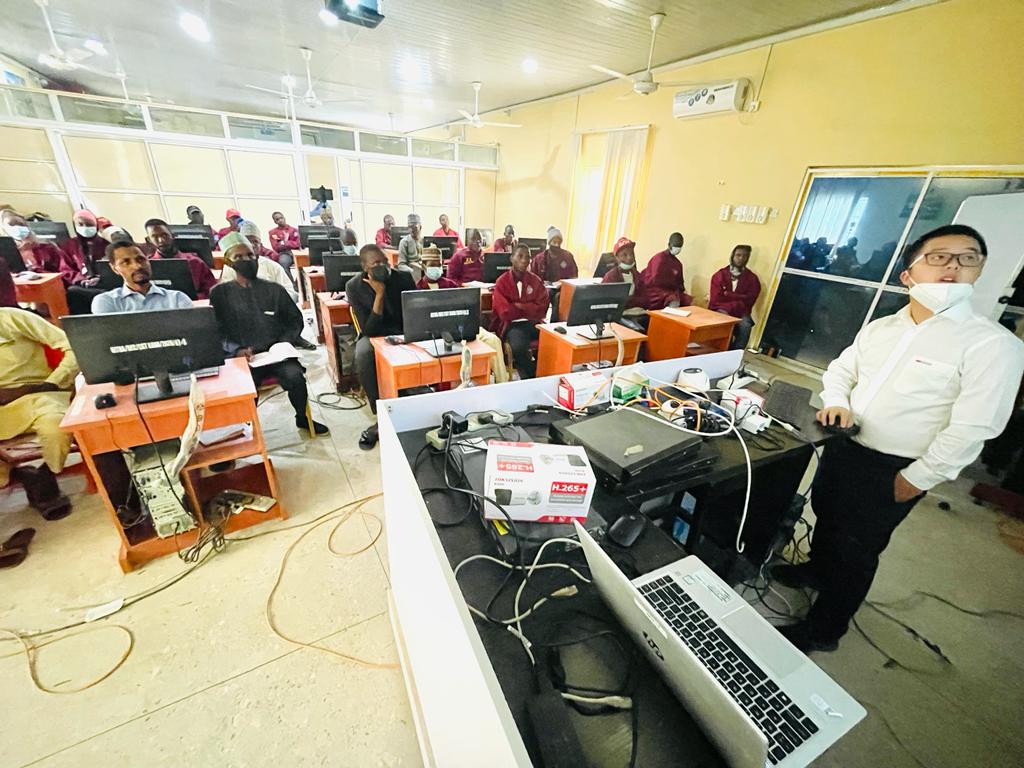
As part of the company’s mission to expand operations in northern Nigeria and Sub-Saharan Africa, Hikvision trained and rigorously assessed the theoretical and practical capabilities of 14 apprentices at the Engausa Global Tech Hub in Kano, Nigeria.

Impressed by the individual performance of the apprentice after the certification exams, the company has agreed to register Engausa Global Tech Hub as a Hikvision Training Academy, the very first training ever in northern Nigeria. 

We are joining the general public to congratulate these 14 Engausa apprentices that bagged Hikvision International Certification on CCTV tagged Hikvision Certificate Security Associate (HCSA-CCTV).

Recall that the founder/CEO of Engausa Global Tech Hub, Engr Mustapha Habu Ringim, has bagged a similar certification from Hikvision two years ago. And this makes a total number of 15 certified professionals in HCSA-CCTV. 

Just In: Nigeria kick-starts use of 5G network

By Hussaina Sufyan Ahmed

President Muhammadu Buhari, GCFR, has today, Tuesday, January 25, 2022, kick-started the National Policy on Fifth Generation technology, which is widely known as 5G technology, for the development of Nigeria’s Digital Economy.

He said this at the presentation of the national policy on 5G, approved at the Federal Executive Council meeting.

He also directed all security institutions to make use of the new technology to ensure an enhancement towards curbing the insecurity in the country.

He said that the Federal Government would ensure the nation’s well-being by taking full advantage of opportunities provided by the 5G.

The Daily Reality has gathered that the arrival and usage of the new technology will enhance Nigeria’s networking activities and equally make Nigeria compete in the technological race in the world.

Beware of Facebook, other hackers

By Abdulrahman Muhammad, PhD

A friend recently left Facebook after his friends were duped through his hacked Facebook account. The hacker took over the victim’s Facebook account and sent messages to the latter’s friends asking them to deposit money into an account and get double the amount deposited in two weeks!

Because of sheer trust and gullibility, they first transferred monies into the bank account given to them by the hackers before even contacting my friend via phone. A total of about 450000 naira was lost this way, one of the victims being a student.

Lessons:

1. A simple phone call to confirm the true source and authenticity of the message would have saved the victims the trauma of losing huge sums of money.

2. The susceptible can be found even among the educated. While working in New Bussa, a colleague excitedly showed me a text message from an ordinary number informing him that he had won a lottery in which he was a random passive participant. I warned him that it was fraudulent, but another colleague convinced him it was genuine. The most painful thing was that the fraudsters asked him to go to an ATM and called them from there so that they could instruct him on how to redeem his prize. He inserted his card into the machine and followed their instructions sheepishly, which led to the emptying of his bank account.

3. Even a smart person can be a victim if they are too trusting, careless and greedy. Nobody can double your money in two weeks. Haba! Be street-wise.

4. Some bankers seem to be collaborating with fraudsters. For example, when victims go to the bank and complain, the bankers say the bank account the victim transferred the money does not exist!

5. Some of us have not been duped only because we are too poor to be conned. Or, to put it more respectfully, we are not rich enough to be defrauded. Where is the money?

6. A simple test can expose hackers. Recently, a Facebook friend sent me a fraudulent solicitation message. I promptly suspected his account was hacked. Unfortunately, I didn’t have his mobile number, so I sent him a message via Facebook Messenger asking simple questions in Kanuri language. The hacker responded in English with wildly off-the-mark answers. I called his bluff, and he disappeared.

7. Any friend who wants to deposit money in my account is welcome, but they should get the correct account details directly from me through my mobile number. My bank account name is slightly different from my Facebook account name.

8. One can also use the Messenger voice call option to confirm the person’s identity soliciting for money.

God save us from fraudsters.

Dr Abdulrahman Muhammad wrote from Maiduguri, Borno State. He can be reached via abbakaka@yahoo.com.

Pantami: ‘FG spends N152bn on ICT projects’

By Uzair Adam Imam

The Minister of Communications and Digital Economy, Isa Ali Pantami, said that the federal government had spent N152bn on digitization projects in 2021 across the country.

Pantami disclosed this in Abuja Tuesday at the closing of the 2021 Service Wide capacity building programme on e-Government at the e-Government Training Centre.

He said the amount constituted the total sum approved by the NITDA for the CBN, the NNPC, the CAC, the Immigration Service and Customs, among other agencies.

Meanwhile, the Minister also assured Nigerians that the government would migrate to a paperless government by 2030.

He said they have put in place all the necessary measures to achieve the objective through the National Policy on Digital Nigeria.

DG NITDA, Kashifu Inuwa, visits ENGAUSA Hub, assesses its developmental ideas

By Engr. Mustapha Habu

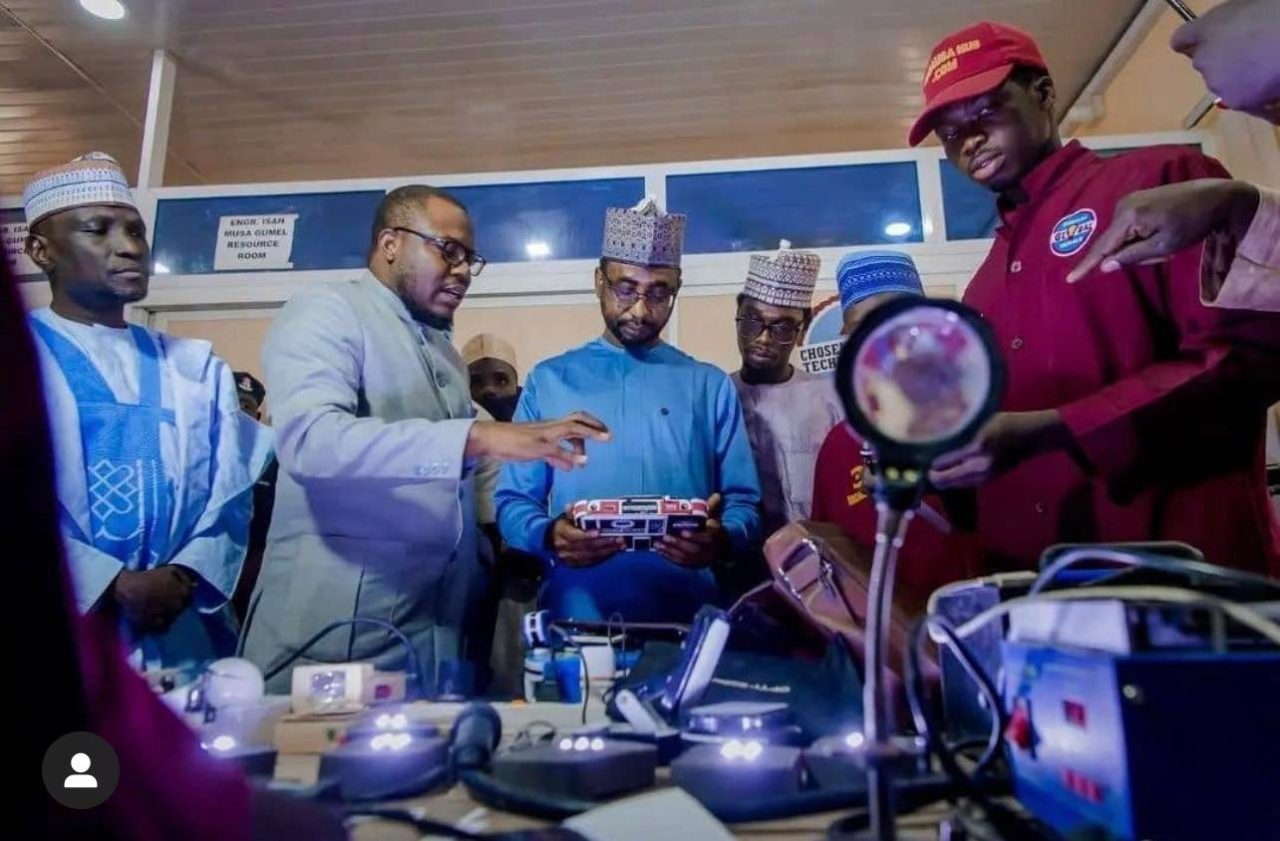
The Director-General, NITDA, Malam Kashifu Inuwa, paid an assessment visit to Engausa Global Tech. Hub to assess the level of development achieved by the Hub and the impacts of its initiatives after it emerged as a beneficiary of a grant from NITDA last year.

ENGAUSA had been able to train 313 young people within two years (2019-2020). However, after winning the grant, the number surges dramatically. Today ENGAUSA has successfully trained 800 young people in 2021. The NITDA, in conjunction with ENGAUSA, will therefore conduct an end-of-training event in January 2022.

Before the end-of-the-year break commenced, Malam Kashifu assessed the expertise of 50 primary and secondary school kids, who were trained under a theme titled ENGAUSA CARCH THEM YOUNG.

ENGAUSA presented to the DG what was being invented by young people and Almajiris at ENGAUSA HUB. He was also happy and surprised how they make inventions without having gone to higher schools—as some of them are dropouts with expertise in drawing and innovation of the modern time.

Others on SIWES from various universities and those that have not got the opportunity to further their education are already into robotics and the Internet of Things (IoT).

The Hub introduced other graduates out of the 60 who established their firms after getting trained at ENGAUSA Hub. The firms include THE D E-SERVICES, DASHERE ELECTRIC SERVICES, SD GLOBAL TECHNOLOGIES, and so on.

An outstanding mentee who invented a mathematics learning app called HausaMaths was also introduced to the DG. Another one also built a science and technology teaching app in the Hausa language called Bemitela.Africa.

The DG also met some young people employed by companies in Kano and Abuja, namely JETSON ENGINEERING (that deploys them to COSGROVE estate sites in Abuja), CHOSEN ONE GLOBAL TECH LTD, which has sites in Abuja, Kano, Kaduna, and other states in the northern part of the country.

ENGAUSA HUB presented some 10 Almajiris enrolled for the ENGAUSA CATCH THEM YOUNG and have followed the footsteps of the rest in areas of graphic design and innovation. One of the Almajiris has even been employed by ENGAUSA HUB for his outstanding performance. Alhaji Yahaya Yusuf Kwande (who is not from Kano) is the one who sponsored the registration of the Kano Almajiris.

The able DG of NITDA assured ENGAUSA HUB that his agency would collaborate with the Hub in promoting such developmental projects across the states in Nigeria.

As of the time of writing this, ENGAUSA is part of the Technology Incubation Center (of NBTI) established to work under the custody of the Federal Ministry of Science Technology and Innovation. We also have a branch on Rijiyar Zaki Gwarzo Road and other cities that we plan to collaborate with within Jigawa, Kaduna, and Abuja to enhance modern skills and ease learning initiatives.

Our door is open for anyone willing to collaborate with us in making this a reality.