Technology

SPECIAL REPORT: Arewa women and cyberbullying

By Uzair Adam Imam 

Cyberbullying against women is one of the lingering issues women face across social media spaces over time.

The menacing issue, however, has now escalated to become a global problem affecting women emotionally and chasing them away from online spaces.

The Daily Reality interviewed some women about the hazard. They recounted that the kind of messages they received from men were disgusting. 

The women decried that most of these disgusting messages often demand nude pictures or videos and propose love, irrespective of one’s marital status. 

This issue is most common on Twitter, Facebook, Instagram and WhatsApp, among other social media platforms. 

Zahra Madaki, one of the women interviewed, complained that social media is never an exciting place for women to go as cyberbullying exacerbates daily.

She stated, “Social media platforms such as Facebook and Instagram are very annoying nowadays. That’s why I decided to stop using them.

“Everyone is after love affairs. So, anyone will keep proposing for love as they see you online. It’s so annoying,” Madaki complained. 

On request for sex, pornography

According to Aisha Jibril, not her real name, women are victims of all naughty things on social media platforms today. 

She complained that some men request sex, and nude pictures or videos, as you begin to chat with them. The development, she said, distresses many women.

She stated, “there was a time someone on Facebook asked me if I ever watched pornography. I was shocked because, at that time, I didn’t know the meaning of the word. 

“I had to ask my elder sister what the meaning of the word was. Before I could respond to his earlier message, this man sent me a porn movie. 

“I shivered with fear that my phone nearly fell on the floor. I was terrified. I had never before that time had such an experience. I hardly slept that night,” Aisha said. 

Another source, Khadijat Muhammad Bah, also decried the menace, blaming men for being irresponsible in their relations with girls.

Bah said, “we ladies are seeing and reading all kinds of rubbish. Some men out there send nude pictures and always request nude photos.

“Some would insult and curse because you refuse to give them your contact. Some of them just want sex. 

“One day, I posted my picture on my story, and one guy said, ‘wow, those lips are for me’. And that was one reason that always stopped me from putting my picture on my story,” she lamented. 

According to a source who preferred not to be named, her sister once met someone on Facebook. Their relationship started as a friendship before the guy finally asked for sex, which later led to their breakup.

She said, “the guy kept pleading with her to come to his apartment. But she refused. We were surprised at how shameless this guy was.”

Someone keeps on disturbing me – Housewife

A housewife who spoke to The Daily Reality complained that someone kept disturbing her on social media.

The woman said she told the guy to stop chatting with her because she was married, but the guy turned a blind eye. 

She said, “This man started adding me to some irresponsible dating groups on WhatsApp. But, I thank God that through the help of my brother, we solved the issue and blocked the son of bitch afterwards.”

Another housewife complained that some men that chatted her up used to send her some porn photos, but she deleted them instantly.

She added, “these guys chat and comment on our posts anyhow. They tend to forget about our marital status. They forget that our spouses and relatives also see our online activity and would be sad to see such naughty and irresponsible comments under our posts. 

Cyberbullying: An unfortunate reality in dear need of mitigation

Dr Rukayya Aliyu, a senior lecturer at Bayero University, Kano, urged the technology firms that build these sites to act and make online spaces safe for women. 

Aliyu described the menace of cyberbullying as an “unfortunate incidence” in dire need of mitigation.

She stated, “Cyberbullying is an unfortunate incidence, but unfortunately, it is challenging to overcome because it happens on social media platforms, which are free and uncensored. 

“However, it can be managed to some extent with measures from the sites themselves, which can only be minimal.  The reality is regulation by the government might not be effective considering the lapses in regulating traditional media, to which the government has better control and access. 

Women ought to be responsible and mindful of their online activity 

Dr Rukayya also urged women to be mindful of what they post on social media platforms to avoid insults and indecent comments. 

She said, “on my take as a woman, it’s displeasing, but then fellow women should understand that most abuses come as reactions to our post and engagement with the platforms. Therefore, we should be responsible in our dealings and always be conscious that whatever goes on on any internet-connected platform is no longer personal. People have a right to their opinions. 

“If we don’t want to be abused or bullied, we ought to be responsible and mindful of our digital or cyber identities. However, we shouldn’t rule out that no matter how ‘decent’ or responsible our social engagements are, there are people who will still castigate, blackmail, abuse and bully us. 

“So before engaging, we ought to be conscious of the implications and be ready to surmount them through confidence and steadfastness in what we do,” Dr Rukayya added.

Social media giants fail women, Ofcom warns

By Ahmad Deedat Zakari

An investigation by the United Kingdom media regulatory agency, Ofcom, has shown that women are more prone to online attacks than men. 

According to the study, women are wearier of their online presence and prone to discriminatory, hateful and trolling content. They also feel less able to have a voice and share opinions online than their male counterpart. 

Ofcom then calls for technology firms that build sites and apps used by millions of people in the UK to act and make online space safer for women and girls.

Also, according to the study, women from minority ethnic backgrounds are more likely to be affected by their painful online experiences. 

“The message from women who go online is loud and clear. They are less confident about their personal online safety, and feel the negative effects of harmful content like trolling more deeply.

“We urge tech companies to take women’s online safety concerns seriously and place people’s safety at the heart of their services. That includes listening to feedback from users when they design their services and the algorithms that serve up content,” says Dame Melanie Dawes, Ofcom’s Chief Executive.

Kano based lawyers sue Pantami, MTN, others . . . demand 600 million damages

By Aisar Fagge

One of the leading telecommunication companies, MTN Nigeria Communication PLC, has been sued at Federal High Court for poor quality service delivery, invasion of privacy and nonchalant attitude towards genuine complaint of the plaintiffs’ request and therefore demands over 600 million naira as damages.

Nigeria Communication Commission (NCC) and Minister of Communication and Digital Economy, Prof. Isa Ali Pantami were also part of the suit for breach of statutory duty to protect the interest of the plaintiffs and ensure compliance with the Nigeria Communications Act, 2005.

The case was filed by the plaintiffs’ counsel, Barrister Abdulkarim Kabiru Maude and the defendants were served with about 150 pages of process on May 12, 2022, and were given 30 days to respond or face the wrath of the court.

According to the plaintiffs, Barrister Ishaq Abubakar Baba and Barrister Shamsi Ubale Jibril who is the staff of Kano State Polytechnic, on November 24, 2021, between the hours of 8:00 pm and 12 midnight, and also on December 13, 2021, around 7:40 pm and 8:45 pm, the MTN Nigeria PLC deprived them a business opportunity with their clients all because of their poor network service delivery which has caused them serious economic loss and mental injury.

In addition, the plaintiffs also complained of receiving disgusting unsolicited SMS from third parties which were allowed by the MTN. This constitutes a violation of their privacy of telephone conversation and telegraphic communication guaranteed to them by the Constitution of the Federal Republic of Nigeria, 1999 (as amended).

The counsel of the plaintiffs seeks “An order of this honourable court awarding the sum of N 50,000,000 (fifty million naira only) against the 1st defendant (MTN) in favour of the plaintiffs for invasion of their right to privacy . . . .”

“An order of this honourable court awarding the sum of N 500,000,000 (five hundred million naira only) to the plaintiffs as exemplary damages against the 1st defendant (MTN) for aggravating their damage through its act of continued . . . “, part of the process reads.

Gombe inventor develops ride-hailing app

By Muhammad Auwal Ibrahim

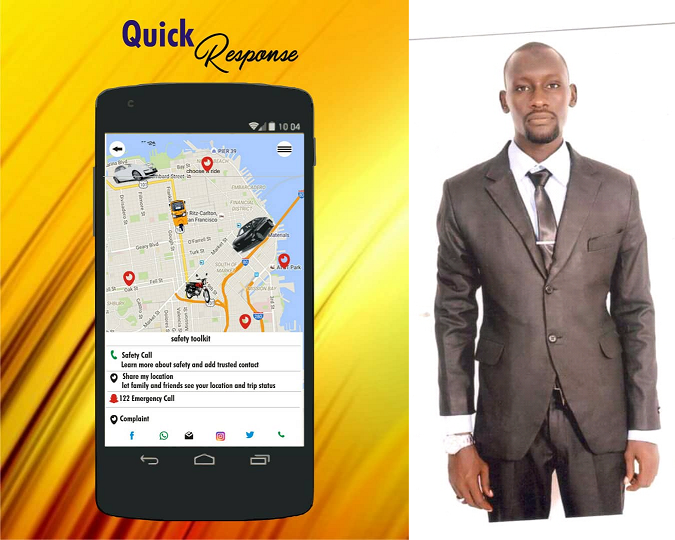
The business of the e-hailing company is no longer news in some Nigerian cities like Abuja, Lagos, Kano and Jos. Now, Abubakar Musa, Gombe indigenous inventor, has invented Gomba Ride, a ride-hailing app in Gombe.

The inventor stated this during an interview with our reporter today, May 12, 2022.

According to him, creating Gomba Ride is “to make life safe, secured and convenient for Nigerians. The purpose of life is to live for others. Anytime, everywhere, you and your family can book a ride at the comfort of your bed with just a click of a finger.”

Responding to how long it took him to develop this e-hailing app, Musa said “it was exactly 14 months” despite being a political scientist.

He added that his passion for science and technology made him build this app that will work in all the states of the federation and the Federal Capital Territory, Abuja.

“Since my childhood, I have had a passion for technological invention. Since then, I am always thinking of a possible way to take advantage of science and technology to ease people’s lives.

“As a political scientist by training, after my graduation, I devoted my time and energy to researching, reading inventory books and learning  ICT skills to come out with something new that can make life simple.”

He further explained that there are security measures to help curb the menace of kidnapping, raping and theft while on a ride.

“I programmed the app so that It will store the car plate number, image and phone number of the driver for easier tracking. The customer can share his location with trusted contacts to address kidnappings and other related crimes. The app stores the travel history of the customer containing the information of the car and driver, which can be accessed anytime. The app has a quick response section, where a customer can make a complaint via call, WhatsApp, email, Twitter and Facebook.”

Keke Gomba, Bike Gomba, Gomba L and Gomba X are the various vehicles one can choose for a ride.

Musa further solicited “observations, criticisms and recommendations” and prayed that “may the Almighty Allah bless our knowledge to continue to make life easier for people.”

The app will be available for download from Google and Apple stores on May 30, 2022.

Telecom firms write NCC, propose new prices for calls and data

By Ibrahim Nasidi Saal

Nigerians may have to pay more for calls and data as telecommunication companies proposed a new tariff increase of 40 per cent. They made this known in a letter sent to the Nigerian Communications Commission titled, ‘Impact of the Economic and Security Issues on the Telecommunications Sector’.

The telecommunications companies wrote the letter under the aegis of the Association of Licensed Telecommunication Operators of Nigeria to the NCC.

According to The Daily Reality sources, the Telcos have proposed the price floor of calls will increase from N6.4 to N8.95 while the price cap of SMS will increase from N4 to N5.61.

The Telcos noted that the increase in energy costs had impacted their operating expenses by 35 per cent, Our Source added. 

The Telcos, which include MTN, Glo, Airtel, and 9mobile, also said that the introduction of the recent excise duty of five per cent on telecom services had further increased the burden of multiple taxes and levies on the industry. 

The letter read in part:

 “As the commission may be aware, the power sector, under the supervision of its Nigerian Electricity Regulatory Commission of the power sector in November 2020, undertook a review of electricity tariffs to cater for the economic headwinds reported above.

“In view of the foregoing, ALTON considers it expedient for the telecommunications sector to undergo periodic cost adjustments through the commission’s intervention in order to minimise the impact of the challenging economic issues faced by our members.

“Upward review of the price determination for voice and data and SMS. Given the state of the economy and the circa 40 per cent increase in the cost of doing business, we wish to request for an interim administrative review of the mobile (voice) termination rate for voice; administrative data floor price, and cost of SMS as reflected in extant instruments.

“With respect to voice an SMS cost, ALTON respectfully requests the commission to consider a mark-up approach to address the upward price adjustment desirable for the industry. We have enclosed herein and marked as ‘Annexure 1’our proposal in that regard.

“For data services, we wish to request that the commission implements the recommendations in the August 2020 KPMG report on the determination of cost-based pricing for wholesale and retail broadband service in Nigeria. Excerpts from the report, are attached and marked ‘Annexure 2’ to provide a further illustration.

“In implementing the said recommendations, however, we recommend that the 40 per cent increase in the cost of doing business be factored in to arrive at a cost price per GB in view of the current economic situation.” 

WHO Calls for integrated response to end COVID-19,measles, others

By Abdullahi Abdullateef

The Regional Director of the World Health Organisation, Africa, Dr. Matshidiso Moeti, called for an integrated response in a bid to end the spread of Coronavirus and other vaccine preventable diseases including polio and measles.

Dr. Moeti disclosed this at a press briefing held on Thursday, April 28,2022. She said: “The rise in outbreaks of other vaccine preventable diseases is a warning sign. As Africa works hard to defeat COVID-19, we must not forget other health threats diseases.”

Noting that vaccines are at the heart of a successful public health response and as countries restore services, routine immunisation must be at the core of revived and resilient health system.

Furthermore, she commended Nigerian government’s efforts with its recent integrated approach doubling routine immunisation and COVID-19 vaccination for mothers and their babies . The approach offered simultaneous vaccination of mother which otherwise known as whole family approach giving access to mother to get vaccinated for COVID-19 and other disease like polio, measles as well as getting the routine immunization for their children.

Adding that mass vaccination campaigns boosted COVID-19 uptake between January and April the percentage of Africans fully vaccinated against Coronavirus rose to 17.1% from 11.1%.

According to reports, the Africa Continent continued to witness a surge in outbreaks of vaccine preventable diseases over the past years . Almost 17500 cases of measles were recorded in the Africa region between January and March 2022 representing a 400% in 2021. Twenty African countries reported measles outbreaks in the first quarter of this year, eight more than that in the first three months of 2021.

Speaking at the press conference, Dr. Benido Impowa stressed that routine immunisation had been a long practice in many African countries but stuck with the impact of COVID-19.

He maintained that WHO is working with African countries devise smart approaches so as to scale up both COVID-19 vaccination and ensure restoring and expansion of routine immunisation services.

Stop religious altercation, use social media to learn practical skills

By Aminu Mohammed

In the last few weeks, I have keenly observed discussions about bestie, comrade and recently altercation over interfaith dialogue by our youths on various Social media platforms, particularly Facebook. The debates seem amusing, even though the one on interfaith has generated more altercation between some Islamic scholars and their followers, leading to personal abuse. I am not against people using social media to crack jokes and have fun, but it will show a lack of seriousness when people waste time on meaningless arguments.

I shudder in disbelief, wondering if something is wrong with our youth. I still recall that just a few weeks ago, a Kaduna-bound train was attacked, with many people killed while scores are still in captivity. Yet, we have seemingly forgotten about them. Instead, we dissipate energy on trivial issues. Have we done enough by putting pressure on the government to rescue our brothers and sisters in captivity?

What about using social media to pressure our governments in the region to evacuate Almajiris off the streets and end such child abuse. What about encouraging our brothers to exhibit tolerance towards other sects rather than altercations?

We have many issues at hand, and we can use social media to compel the government to do our bidding. Still, we are more comfortable arguing over trivial matters and abusing those who do not believe in our ideology. Our Islamic scholars seem not to see the urgent need through their sermons to pressure the government to tackle poverty and Almajiri syndrome in the North.

Social media is a gold mine that has provided many opportunities for personal development and skill acquisition for career advancement. But are we utilising the massive opportunities in social media to improve our lives? Are we learning new skills every day to change our narrative and move to the next level? These are questions that we should be asking ourselves.

Many people worldwide are utilising the vast opportunities made available by social media to enhance their lives, acquire new knowledge and boost their income. I still recall a post made by Dr Muhsin Ibrahim on his Facebook page, lamenting how many graduates cannot use basic email to send letters or apply for jobs. One can acquire this knowledge by spending a few hours on YouTube, but our youth will rather spend hours on Facebook attacking one another over frivolities. Frankly, obtaining mere certificates is not enough in the current era. Practical skill is what differentiates between graduate A and graduate B.

Living in Germany in the last few years has exposed me to the notion that a certificate is not enough but practical skills that can help one deliver on the job. I have seen people finish graduate programmes here and struggle to get a job until they learn practical digital skills online.

In the last few months, I have observed that some people got jobs after learning digital skills for six months or more such as web development, app development, digital marking, and programming, among others. This is despite the fact that they completed their degree at the university here – in Germany. The reality is that companies are only interested in knowing if you have the practical skills to deliver on the job and not a simple certificate.

It is pertinent to note that some forward-thinking youths in the Southern part of Nigeria work remotely for international companies due to the acquisition of digital skills. Thanks to their skill, they live in Nigeria and still earn money in foreign currency.

I have decided to devote much time this year to acquiring digital skills for personal development and suggest that to whoever is interested. I will not hesitate to reiterate that our youth in Arewa should embrace digital skills to escape poverty. With your mobile phone, you can learn practical skills free online. There are various mediums to learn digital skills for free such as Google garage, Udacity, Udemy, Coursera, among others. In fact, I am currently learning a digital skill on Coursera.

Please, my brothers and sisters, I believe we can change the narrative. Our region is bedevilled by mass poverty because of the attitude and mindset of our people. An untrained mind will create and recreate poverty irrespective of the available opportunities. So, stop wasting your data on frivolities. Instead, use it judiciously for something meaningful.

Of course, not everyone will be interested in digital skills, but there are other vocational skills you can still learn by watching YouTube videos. For example, people learn how to bake cakes, cook, and do many things by watching videos on YouTube.

Likewise, you can improve your Islamic knowledge by reading good articles and books on various Islamic websites online rather than using social media negatively. The time is now for us to do the right thing and find a way to improve our lives and that of our families. May Almighty Allah accept our supplication in this month of Ramadan.

Aminu Mohammed is at the school of Sustainability, Christian- Albrechts- Universität zu Kiel, Schleswig Holstein, Germany. He can be reached via gravity23n@gmail.com.

SERAP gives FG 72 hours to unblock 72 million SIMs with NIN linkage issues

By Muhammadu Sabiu

President Muhammadu Buhari has been given a 72-hour deadline by the Socio-Economic Rights and Accountability Project (SERAP) to rescind the decision to block the mobile connections of 72 million Nigerians.

SERAP tells the president to order the Minister of Communications, Isa Ali Pantami, and the Nigerian Communications Commission (NCC) to immediately revoke the seemingly unlawful decision to prevent over 72 million active telecommunication subscribers from making calls on their SIMs.

Recall that the Federal Government ‘directed’ telecoms firms this week to stop outgoing calls on all unlinked lines after the verification deadline passed on March 31.

Over 72 million users have been prevented from making calls as a result of the directive.

SERAP, on the other hand, said that prohibiting people from making calls constituted an infringement on their right to free expression.

NITDA strengthens relationship with Google

By Ahmad Deedat Zakari

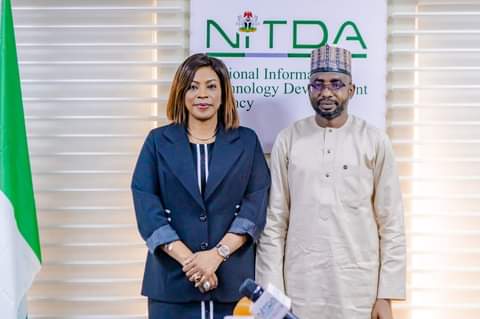
The Nigerian Information Technology Development Agency, NITDA, strengthens its relationship with Google West Africa. 

The NITDA Director-General, Kashifu Inuwa, made this known on Friday, April 8, 2022, while playing host to the Google West African Director, Juliet Ehimuan, in Abuja.

“If we can come together to strengthen the collaboration, we will eliminate duplication of efforts and working in silos,” He said.

 Mr Inuwa emphasized the importance of a good relationship between the two organizations and the aim of governmental regulations. 

“Together, we can achieve greater results. Governmental regulations are not to stifle or be an obstacle to your business; rather, it is to enable and unlock more opportunities and protect your business and our citizens,” He stated

Mr Inuwa also commended the effort of Google in the capacity building of Nigerians with a plan to train about five million Nigerians.  

Ehimuan, in her remarks, thanked NITDA for being one of Google’s major partners in the public sector with precedence of a great working relationship.

She confirmed the fact that Google has invested in a lot of capacity building over the years.

“Our initial estimate is to contribute directly and indirectly to create about 1.6 million jobs over time and work around device financing in partnership with telcos to make sure that people have access either through infrastructure or device data to gauge the digital world”, she disclosed.

According to Ehimuan, they will be about 300 million more internet users in Africa in the next five years, which will translate to more jobs and an enormous contribution to Nigeria’s Gross Domestic Product (GDP).

Publicizing privacy: How our personal information hunts us

By Sulaiman Badamasi (Mahir)

Social engineering (also known as human hacking) is the art of psychological manipulation of human beings to trick them into making privacy blunders to giving out delicate confidential information. The perpetrator (social engineer) digs background information of the potential victim to identify key necessary weak points and possibly gain the victim’s trust to use the information against them. Before the emergence of social media, it took social engineers a long, frustrating time to acquire as much information as possible about their targets.

However, the dawn of technology saw the 21st century as the swiftest ever in terms of information circulation. The world has appeared at a height where a single tweet (for example) reaches a billion people in seconds. Thus, information runs fast, businesses nurture, distances diminish, causes foster, coverage enlarges, relationships are created/strengthened, thus making us and our lifestyles more publicized and learned about.

Despite its tremendous impact on making life more relaxed, social media compels us to unconsciously reveal vital personal information about ourselves, families, friends, etc., which could be easily used against us. In other words, what you need to know about people to trigger any havoc on them and their close ones is almost certainly on social media. People’s personal info has become so plentiful that they have a copy of their voter card, national ID card, and driver’s license posted on social media.

Moreover, people reveal their workplaces, positions, type and colour of their vehicles, wives and children (by number, names & faces), schools where their children attend (including class, level, course, location), the colour of their children’s uniforms, favourite food, the interior of their rooms, the kind of electronic devices they own/use, current location, movement plans and means of transportation (motorcycle, car, truck, train, plane) with picture evidence. You know when they sleep/wake, to mention a few.

The recent #KanuTrain attack is a decent scenario of how our personal information can be used against us. The intruders appeared to have readily gathered background details of some of the passengers, including their sitting positions on the train and their social profiles. In a video interview, the killer of Hanifa, the primary school pupil who was allegedly abducted and murdered by her teacher, explained how he took his time, gathered adequate information, and built up his fraternity before executing the unfortunate assault.

The fact is, no ill group/individual strategizes and carries out a successful attack devoid of having sufficient information, which of course, we give generously. Without data, plans go wrong, and they (perpetrators) hardly take these risks nowadays. Repeated evidence has struck our screens on how ill-doers use human informants, drones, and social media accounts to gather information about target victims before carrying out attacks on them, including military bases.

Ethical hackers do not just attack or penetrate internet environments or webservers. Instead, they do footprinting and reconnaissance to know the strengths and identify weaknesses in the system they plan to attack and then exploit them.

Have you ever wondered how your profile pictures can be grilled to reveal more information about you? We often change profile pictures on several occasions. Let us assume you have been on Facebook for ten years and have changed your profile picture ten times (once each year). These ten naturally varying images can be processed using deep learning and natural language processing to understand, for instance, the rate at which you are ageing, how happy/angry/suspicious/innocent you are looking, how healthy or otherwise, to mention a few.

A 30-minute walkthrough of the pictures you have uploaded in the last five years reveals what calibre of people you do mingle with, the state of structure your house is in, the number of countries, states, or towns you have visited, conferences you have attended, how beautiful your wife looks like, which of your siblings/parents/children you love the most, and more. Do you know that a data scientist who knows where you have been going for one year or less can use that data to predict where you will possibly be going next?

All these can be used to perpetrate evils against you/us, thus, informing a possible abductor/kidnapper whether you look like someone who/whose family can afford a ransom payment. Knowing a lot about your family tells them of the softer target amongst them. Of course, they would find it easier to abduct that daughter of yours whose school name, picture, name, age, the colour of the uniform, time to and from school you have made available than you.

Unless we have underlying valid reasons to do so, making our private information and our families public could make them more vulnerable to unnecessary access. Life now looks as if the more your sensitive information is made private, the less you are prone to some unfortunate events.

So, beware!

Sulaiman Badamasi (Mahir) can be reached via sulaimanmahir@gmail.com.