Science

You can add some category description here.

Reasons why Dr. Ali Pate should be a Minister

By Isma’il Ahmad Misau

The APC-led administration of President Asiwaju Bola Ahmad has a plan of action (prioritized set of goals/agendum) that it determines to accomplish. It was in broad daylight that the President has blended and marketed his manifestos for the election under the banner of ‘Renewed Hope.’ During his campaign, President Tinubu outlined his strategies for building the finer Nigeria of our aspirations in an effort to win over the Nigerian voters. Yes, Nigerians voted for him massively and he won the election because they were supposedly pleased and convinced with his promises to make Nigeria a better place on earth. What follows is history. One month has passed since the reign of the Renewed Hope. What next? I guest, the formation of cabinet.

Nigerians are anxiously awaiting for President Tinubu’s cabinet one month after his inauguration. Nigerians are making predictions about the Ministers from all sides and aspects while taking various factors into account. Top politicians, including past Governors and Senators who are still in office, are vying for ministerial positions. 

Dr. Ali Pate is not on the list of top candidates for the ministerial position in Bauchi State, and no one is counting him. Unexpectedly, Nigerians learned of his resignation from GAVI, where he had been acting as the organization’s Chief Executive Officer until his resignation. He resigned to accept the ministerial office at President Tinubu’s request, which is an interesting aspect of the event. The occurrence that sparked various responses around the world. 

Dr. Ali Pate is a well-known physician, to those who are familiar with him as a stakeholder of global healthcare, his appointment as a Minister is not deserving of media attention. Even if the World Health Assembly, the top body for the world’s healthcare system, were to announce his appointment as it’s Director General or to be the CEO of the World Health Organization, the news would not come as even the slightest surprise because he is already qualified to hold any position that exist in the health sector due to his capacity, ability, capability, and competence.

It is true that whomever understands the way goes first. Dr. Ali Pate has held a variety of government posts throughout his career as a skilled healthcare professional, including Chief Executive Director of the National Primary Healthcare Development Agency and state Minister of Health in Nigeria. Prior to his voyage, the National Population Health Care Development Agency (NPHCDA) was utterly devoid of leadership and the laughing stock of Nigeria’s health industry. The National Programme on Immunization (NPI), which it amalgamated after being founded by Her Excellency, Haj. Maryam Abacha, was in charge of overseeing vaccination campaigns in Nigeria. Nigeria was alone in endangering billions of dollar worth of global polio eradication efforts. He grabbed the opportunity when President Umaru Musa Ƴar’adua (of blessed memory) named him to lead the agency. 

He invited the traditional rulers and integrated them as stakeholders since he is a versed leader. They are closed to the populace and adept at instructing them in a relaxed manner. That was how polio patients were identified and effectively treated. There was not a single index case of polio in Nigeria prior to his resignation.

He completely reinvigorated NPHCDA. It realigned it’s priorities and focus on the tasks it was truly created to complete. In order to combat the threat of unfathomably high maternal mortality rates in Nigeria, the National Population Health Care Development Agency (NPHCDA) introduced the innovative Midwifery Service Scheme by recruiting retired midwives from all over the nation to support underperforming antenatal clinics nationwide.

He expanded the system’s horizon past the bounds of preexisting structures. New approaches were created and the polio eradication mission was revived. “Nurturing Nigeria to be a nation of healthy people with equitable and affordable access to primary health care through a system that delivers quality, integrated services with the participation of all stakeholders,” was Dr. Ali Pate’s stated objective at the time.

Then-President Goodluck E. Jonathan appointed him as Minister of Health due to his outstanding abilities as a healthcare administrator, visionary, goal-setter, servant leader, and revivalist. He used his wealth and extensive knowledge to influence the system. 

In his capacity as the Minister of Health at the time, Dr. Ali Pate set the following core goals for himself to pursue: enhancing the provision of essential services at the front lines; focusing on the prevention agenda through immunization; health education; concentrating on clinical governance and raising the standard of care in the Nigerian health sector; and, finally, maximizing the potential of market forces to encourage innovation and advancements in the health sector. He started a new project after establishing the aforementioned goals, which was to save one million Nigerian lives by 2015.

For the second time in Nigerian history, Dr. Ali Pate resigned from his position as Minister with honor because he is a man of real values. The decision was due to some inconsistencies. He took the job of Professor of Public Health at Duke University.

Dr. Ali Pate worked for many international organizations at numerous capacities, including Senior Health Specialist and Human Development Sector Coordinator for the East Asia/Pacific Region, Senior Health Specialist for the African Region. He simultaneously held two distinct Executive Director positions of;  Director for Health, Nutrition, and Population, and Director of the Global Financing Facility for Women, Children, and Adolescents (GFF) at the World Bank Group. He also oversaw the distribution of USD 18 million in financial assistance across the globe to mitigate the effects of Covid-19. 

There were 304 applicants for the position of CEO of GAVI from multifarious and terrestrial breedings. Only three of them advanced to the last round. Fortunately, Dr. Ali Pate prevailed over the two other candidates. He was the only individual in the world who was black, African and from Nigeria, who remained from the start of the exercise to it’s conclusion. All preparations were done for his formal inauguration on 3rd August 2023.

Now that the Nigerian healthcare system has failed as a result of weak governance, lack of coordination, subpar health facilities, lack of human resources, inadequate finance and corruption, the President must appoint someone with foresight and focus who has knowledge of the Nigerian and international healthcare systems in order to reconstruct the system by addressing all these pressing artificial challenges.

Dr. Ali Pate is the only black person with overall features, virtues and reputations that would match the assignment of the Renewed Hope healthcare agenda, which focused on human resources, brain drain, health tourism, infrastructure, universal health care and health financing. This is true not only in Nigeria or Africa, but also globally.

Dr. Ali Pate, an astute visionary administrator and experienced physician who changed the global narratives of healthcare and made his marks as an administrative paterfamilias with uncommon zeal, will be in charge of managing Nigeria’s healthcare. Additionally, Nigeria is governed by President Bola Ahmad Tinubu, a full-fledged democrat whose actions were strategic and always calculated to produce results. Renewed Hope is doable if Dr. Ali Pate’s preferences are shared. 

President Bola Tinubu’s expression of interest to collaborate with individuals like Dr. Ali Pate demonstrated his willingness to address the problems plaguing Nigeria.

In conclusion, Dr. Ali Pate will do us a huge favor if he gives up his next position, the CEO of GAVI where he will bring home the groceries of $700,000, or 525 million Nigerian naira, to take a political seat with a salary of 2m, including allowances and everything, 60 million annually. This singular act demonstrates his patriotism and willingness to die for his nation. Behold, Dr. Ali Pate is among the greatest assets to Nigeria.

May Bola Ahmad Tinubu be successful. May Allah, the Almighty grant us Dr. Ali Pate as the Nigerian Health Minister, may He lead, strengthen, assist and uphold him to effectively implement the Renewed Hope agenda.

Isma’il Ahmad Misau: writes from Misau College of Health Science and Technology (MICOHEST).
Nigerian biofuel policy and incentive: 16 years after

By Bilyamin Abdulmumin

On Tuesday, at a meeting with the United States Assistant Secretary of State, Bureau of Energy Resources, Ambassador Geoffrey Praytt, at the State House, Abuja, President Bola Ahmed Tinubu reiterated Nigeria’s commitment to honouring all its obligations to climate change and the quest for clean energy.

The president further called for stronger and better ties with the United States as Nigeria and the rest of the world move in the quest for renewable and other clean energy sources. This revelation made by President Bola Ahmed Tinubu made it imperative to bring to the front a related issue: Nigerian Biofuels Policy and Incentives.

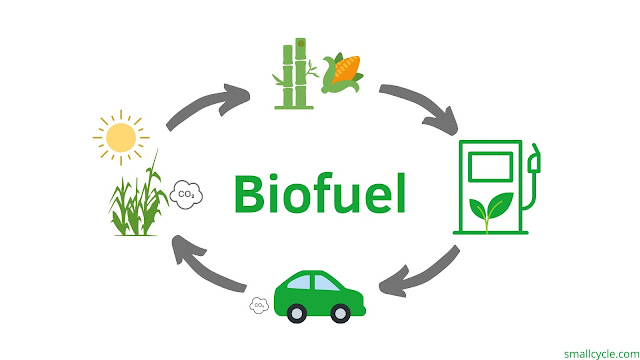
To contribute to the global fight against climate change, Nigeria implemented the biofuel policy and incentive in 2007. This policy aims to encourage bioethanol and biodiesel production as supplementary to conventional transportation fuel, which is unfriendly to the climate.

It provides several incentives for potential investors, creating a conducive environment for biofuel production, and promises to establish a Biofuel Commission along with a dedicated Research Centre for the development of the sector. However, 16 years after, limited progress has been achieved, with only a few Memoranda of Understanding (MoUs) between Nigerian states like Kebbi, Niger, Ondo, Kogi, and the Nigerian National Petroleum Corporation, NNPC.

The policy has considered one of the major challenges of the biofuel sector globally: the expensive cost of production compared to conventional fossil fuels. As such, a range of incentives was offered, such as tax holidays, withholding tax exemptions, waivers on import and customs duties, waivers on value-added tax, long-term preferential loans, insurance, and most importantly, creating market demand (a promising alternative that the policy overlooked however was the use of cheaper local technology, materials, and equipment). Despite these incentives, the success of biofuels in Nigeria hinges on the government’s political will.

According to the policy, the Federal Government is responsible for providing necessary infrastructure, amenities, and facilities to communities where biofuel companies operate. The State Governments are mandated by the policy to facilitate the procurement and utilisation of agricultural land by biofuel companies. Additionally, in collaboration with State Governments and biofuel companies, the Local Governments are expected to organise out-grower schemes and other cooperative initiatives.

The feedstock of biofuel is grains/sugar, and oils. So, this highlights the hope the biofuel industry holds for the Nigerian poor who rely on subsistence farming. Traditional farming practices in Nigeria have remained unchanged for centuries. But thanks to the policy, farming technology can be drastically improved by integrating agriculture with the energy sector by adopting biofuels, hence more wealth and prosperity. 

However, there is trouble in Paradise; biofuel feedstock brings about another major challenge: food vs energy conflict. But the policy did not keep a blind eye, as there were provisions for out-growers schemes for massive crop production. In Kebbi State, more than 5 000 hectares were procured for cassava cultivation.  Other measures put in place to counter food vs energy conflict include the development and adoption of transgenic varieties of the feedstock to be specifically customised for the efficient production of biofuels (a promising alternative to food that the policy didn’t capture is utilising second-generation feedstock, which is more abundant and cheaper, that is, waste lignocellulosic materials and underutilised agricultural and forestry).  

In effect, the biofuels mission holds dual benefits:  foster economic growth and inclusivity for farmers while addressing the pressing issue of climate change, which the president just reiterated. Dear FG, considering the immense potential of this policy, and against the backdrop of celebrated bold actions on critical issues you have been undertaking, please give this policy a second chance, summon new hope, and get it hit the ground running.

Bilyamin Abdulmumin wrote via bilal4riid13@gmail.com.

ABUTH delivers first IVF baby in northwest

By Ahmad Deedat Zakari

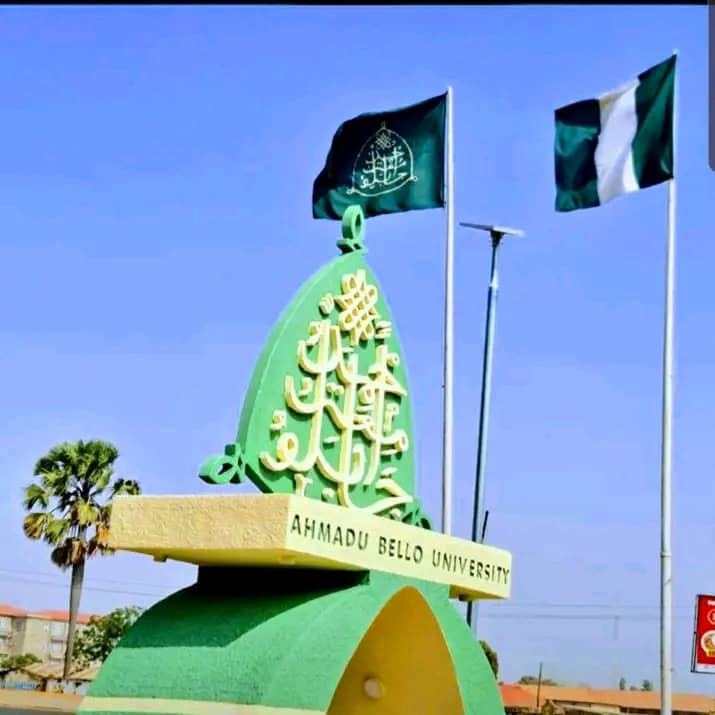
Ahmadu Bello University Teaching Hospital, Zaria has recorded an unprecedented milestone in the North-Western region of Nigeria as the university hospital successfully delivered its first invitro fertilization (IVF) baby.

Professor Adebeyi Adesuyun of the Department of Reproductive Medicine, disclosed this to newsmen on Friday. He said, “A male baby was delivered at 10:53am on May 16 with weight of 3kg.”

The Professor noted the cost implication of the milestone and further disclosed that it was a journey began by ABUTH about twelve years ago.”

Such delivery is costly and not available in the whole of the northwest region. ABUTH is the only public health facility that offers IVF. The journey did not start today; we have been on it for more than 12 years, but paucity of funds in getting the right equipment was our major hindrance,” he said.”

He also disclosed that the hospital has patients on their waiting list to receive the treatment.

AI Hackathon: Arewa Data Science Academy wins $800 prize

By Uzair Adam Imam

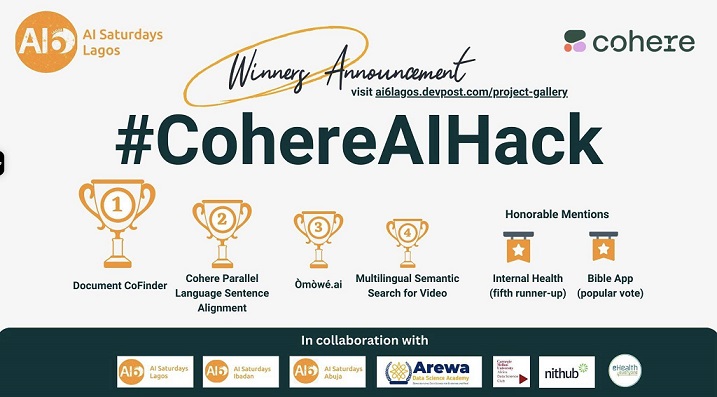
There was jubilation at the Arewa Data Science Academy on Sunday as their team emerged 2nd place in the just concluded Cohere AI Hackathon, winning a prize of Eight Hundred Dollars + Cohere AI Credit.

One of the team leaders, Dr Shamsuddeen H. Muhammad, relayed the exciting news on his Facebook account on Sunday.

Dr Muhammad added that the Arewa Data Science Team had competed against different teams and demonstrated skills and creativity in machine learning.

He stated, “I am happy to share that the Arewa Data Science team has won the competition at the Cohere AI hackathon and received a prize of 800 dollars and Cohere AI credits!

“Our fellows competed against different teams worldwide and demonstrated their skills and creativity in Machine Learning. Congratulations to the team on this achievement!”

Muhammed further stated that Arewa Data Science Academy is a free training program for Arewa youth who want to learn data science and machine learning.

He added that the academy “provides monthly stipends (N10,000) and free internet data (20GB) to our fellows to help them in their learning activities. 

“If you are interested in joining us, visit our website at: https://arewadatascience.org,” he stated.

Astronomical World: City Killer, Intelligent Beings and Earth Astrophysics

By Bilyaminu Abdulmumi

The first time I came face to face with a cosmic event was during the solar eclipse back in 2006. Before the event, the meteorologist announced it was coming, but while the naysayers kicked against it, the curious others, including myself, waited with bated breath. In Jega Kebbi State, a partial eclipse was experienced at about 9:40 am. The entire horizon slowly became dark for about an hour. In some other areas of the country, the eclipse was total darkness. Afterwards, the sky became clear and normal. Those who were asleep had only woken up to learn about it.

A couple of days back, on the 25th of March, another startling cosmic phenomenon took place; an asteroid passed between Earth and Moon’s orbits, specifically 175,000km away from Earth. According to astronomers, this is very close! The asteroid was nicknamed City Killer, indicating its potential to harm a city should it strike Earth on a habited area. But it was not as the name implies because, by God’s grace, the asteroid passed harmlessly as predicted.

Like all other cosmic events, the City Killer passage was discovered long before for possible action and announcement to the public, so people across the globe could follow the event live! The burning question here is, if Europe and other developed countries stand toe-to-toe proactively defending our Earth: in what part is Africa contributing? Are we stakeholders in these unfolding events?

The area of astronomy is both interesting and, at the same time, frighteningly complex; astronomy is an embodiment of epic proportions. Whenever something is referred to at the cosmic level, it is near impossible or almost infinite.

From what we learn from time to time from astrophysicists, the Sun is the centre of our solar system, and other planets, such as our Earth (and the 7 other known planets), rotate around it. To further complicate our life, the Sun is in constant spiral motion rotating around its axis, while the planets orbit around it!

The cosmic phenomenon would begin to go wild in our imagination when the concept of size and distance were brought up. The size of our Earth is about 12,800km, but compared to the size of the Sun of 1,400,000km, it is like comparing a dot with a circle. In addition, the distance between our Earth and the Sun is about 150 million km. Now imagine the size of our solar system!

The size of our galaxy (Milky Way) is mind-boggling. According to what astronomers told us, there are billions of solar systems in our galaxy. At this level, the distance is no longer measured in km but in light years. For instance, the distance between our star (Sun) to the closest Sun in our galaxy is about 4.25 light years. Light travels at the speed of 3,000km per second, so at this rate, it will only take light to travel from Borno to Lagos (a distance of about 1600km) about half a second. Now, this light that can travel in half a second from Lagos to Borno has to continue travelling for 4 years and 3 months to reach the next Sun close to ours. Pray! They told us there are billions of galaxies in the universe.

Because of this cosmos proportion, scientists such as Stephen Hawking believe that we can’t be the only intelligent in the universe. This view espouses that in one of the billions of galaxies in the universe, in one of the billions of solar systems in a galaxy, a celestial being like our Earth (bursting with intelligence) must exist. The universe is too vast to contain just one intelligence. The intelligent might be at par with us in terms of advancement, we could be way smarter than them, or the reverse may be the case. One astronomer said that it is scary anyhow one looks at the scenario: to say that we are not alone in the universe or we are alone.

The terrifying part of the multi-intelligence theory is, should the other intelligent locate us, what will be our fate? Are they going to destroy us in their search for raw materials just like we human beings are increasingly wreaking havoc on climate and habitat in exchange for raw materials (for technological advancements)? Or are they going to cooperate with us to add to our knowledge? It is equally frightening for the single intelligence theory: we are the only ones in this vastness of space. As much fantasy as the former theory looks, developed nations are not joking, as they committed a multi-billion dollar research centre in this direction: SETI (Search for Extraterrestrial Intelligence).

Unlike SETI, Earth astrophysics has been bagged. Earth doesn’t rotate on its axis for 24 hours to complete a cycle only but rotates around the Sun 365 days to complete a cycle. By God’s grace, the 24-hour cycle ensures night and day, while the 365 days cycle ensures seasons. The moon does similar; it rotates around the Earth in a month as a source of light for us, to keep time management, and to ensure Earth’s stability. Should the moon be trapped in the Earth’s shadow it will be a lunar eclipse, or should the moon pass between Earth and Sun hence blocking the Sunlight, we get a solar eclipse.

It is understandable for “people” to exhibit sheer amusement in the discussion of cosmic events. During the 2019 lunar eclipse, one deeply amused person asked: if our Earth rotates, why are we still in Nigeria? He appeared to mean that if the Earth actually rotates, then we should not be where we are now. Maybe we should be in Saudi Arabia by now!

Abdulmumin can be reached via: bilal4riid13@gmail.com.

Embracing 4th Industrial Revolution for socioeconomic growth in Nigeria

By Abba Ado

Investing in technology and the sciences will undoubtedly play a significant role in enhancing our socioeconomic development. The World Economic Forum reports that innovation is critical to the future well-being of society and the driving force of economic growth.

In the past, people used their energy, physique, and animals in different industries, such as agriculture, transportation, and communication, to attain economic growth. The emanation of the first industrial revolution (industry 1.0) came with a paradigm shift in various industries when people began to use steam engines instead of their bodies or animals. The second industrial revolution (industry 2.0) created a profound development with the discovery of electricity, unprecedentedly enhancing economic stability and growth.

Another remarkable achievement is the emergence of the Third Industrial Revolution 3.0; at this stage, digital computers were developed, which improved our communication sector and enabled people to store and share data. The Fourth Industrial Revolution (4.0) is an emerging epoch of industrialisation that will undoubtedly revolutionise every sector. Because industry 4.0 is a knowledge-based economy that requires manpower, creativity, and innovation, embracing industry 4.0 will significantly increase our economic development.

Despite some portable advancements in current technology, we desperately need to pertain to science and technology to be competitive and achieve a palpable objective in the outlook of the Fourth Industrial Revolution. The 4.0 Industry is an emerging technology that would revolutionise humanity in almost every aspect of our lives, including health care, agriculture, energy, and various industries. Moreover, the 4.0 industry uses the assortments of the physical, biological, and digital worlds to design and develop disruptive technologies to shape and alleviate numerous humanitarian crises. 

The fourth industrial revolution, otherwise called the “4.0 industry,” is a technological epoch encompassing artificial intelligence, automation, biotechnology, and the digital economy.

Artificial intelligence (AI) is a potential and multidisciplinary field that impacts various industries. According to Accenture’s estimation, clinical healthcare with AI applications will have a future increase of $150 billion in savings only in the healthcare sector by 2026. McKinsey reports that the global GDP of AI will be significantly boosted by 1.2% annually. Modern technology will emerge in the healthcare industry that can execute hospital services without human intervention. For example, timely automotive machines can accurately diagnose nefarious diseases like cancer and provide reliable treatment. Surgical robots are another AI approach that can effectively perform surgical tasks without medical doctors. 

Artificial intelligence in agriculture is another milestone development that will indisputably increase the rate of crop production. Innovative AI technology in agriculture can detect plant diseases, impoverished nutrients, and pests. In addition, automotive devices can be influential in quality harvesting. AI technology is a widespread approach applicable in numerous areas, such as renewable energy, climate change, and the financial sector. 

Biotechnology is another 4.0 industry with massive agriculture, biodiversity, and human diseases capabilities. Using a technique called “Clustered Regularly Interspaced Short Palindromic Repeats,” popularly known as “CRISPR Cas 9,” is a classical gene editing tool that paves the way for inserting or expelling genes of interest from an organism. This technological tool allows for rewriting plants’ “genetic composition” and disposing of unwanted genes from plants to improve plant growth. It produces genetically modified crops, thus addressing food security and production challenges. Also, CRISPR Cas 9 will probe into the human genome to decipher the onset of diseases and discover new treatments for different types of illness. Animal breeding is another integral part of biotechnology, with the aid of increasing biodiversity for economic growth. 

The digital economy will not only provide profits and economic growth, but it will also curtail the unemployment rate in Nigeria. Engaging the youth to leverage the digital economy will provide independent jobs to the citizens, and the gorgeous aspects of the digital economy are manageable, so an individual can start with zero capital and build a high-dividend startup. 

According to the International Business Machines (IBM) definition, “technology” is a field where human infusion is substantially reduced. Therefore, automation is an important part of economic growth and development. Automation machines can effectively perform a duty that humans can do; the era of automation will displace labour work in various industries. Self-driving cars are an example of automation that would help manage and prevent fatal car accidents. It can also be a substitute for vehicles or engines that require gasoline or diesel to tackle carbon dioxide emissions in the future. Automation will also play a role in business, climate change, and the energy industries. 

We must embrace “science and technology” as a significant economic growth and development source. Several studies have shown that R&D, incorporated into science and technology, is the primary driver of socioeconomic development. But, according to an essay written by Adamu Tilde titled “CBN’s Inconsistent Policies,” is this true? A quick response to Dr Sheriff Almuhajir. In this essay, he points out that “knowledge” is the ultimate goal for success in modern economic development.

Adamu adds, “There have to be deliberate, continuous efforts in producing and training skilled manpower with the required expertise to navigate the thorny terrain of the modern economy.” This would take decades.   But a journey of thousands of miles starts with a step. Let’s start with primary and secondary education. Until then, no amount of crying wolf about exclusion, unfair treatment, and harsh requirements would solve the sorry state of our economic development because the modern economy is not a respecter of sentiment. “You have to compete.” And the tool for the competition is knowledge.

Eventually, with the infatuation with the oil-based economy, the Nigerian government will neglect various other ways of economic growth. Therefore, the Nigerian government needs a paradigm shift in its economic policies. Capacity building in diverse sectors, such as artificial intelligence, agriculture, and the digital economy, can solve Nigeria’s economic problems and, at the same time, provide jobs for the youth. 

Accentuating science and technology programmes in our media and newspapers will entice the government to impose strategies that will hasten economic development and encourage the youth to engage in a knowledge-based economy. For the past centuries, when the world heavily relied on a material-based economy, war was the only way to gain wealth and economic development, and many countries invaded their neighbours to seize their resources. But we are in the 21st century, where knowledge cannot be halted. In his book Homo Deus: A Brief History of Tomorrow, Yuval Noah Harari asserts that “the current source of wealth is knowledge.” Bargaining on mineral resources such as gold, oil, and silver is no longer the best approach for economic growth; knowledge, which requires skills, creativity, and innovation, is one of the major sources of economic development. Therefore, our domestic media companies and newspapers should have a special programme or weekly column covering the importance of technology, research, and growth in economic diversification. 

Abba Ado wrote via abbaadomusa0@gmail.com.

Biases and microaggressions against Muslim female doctors

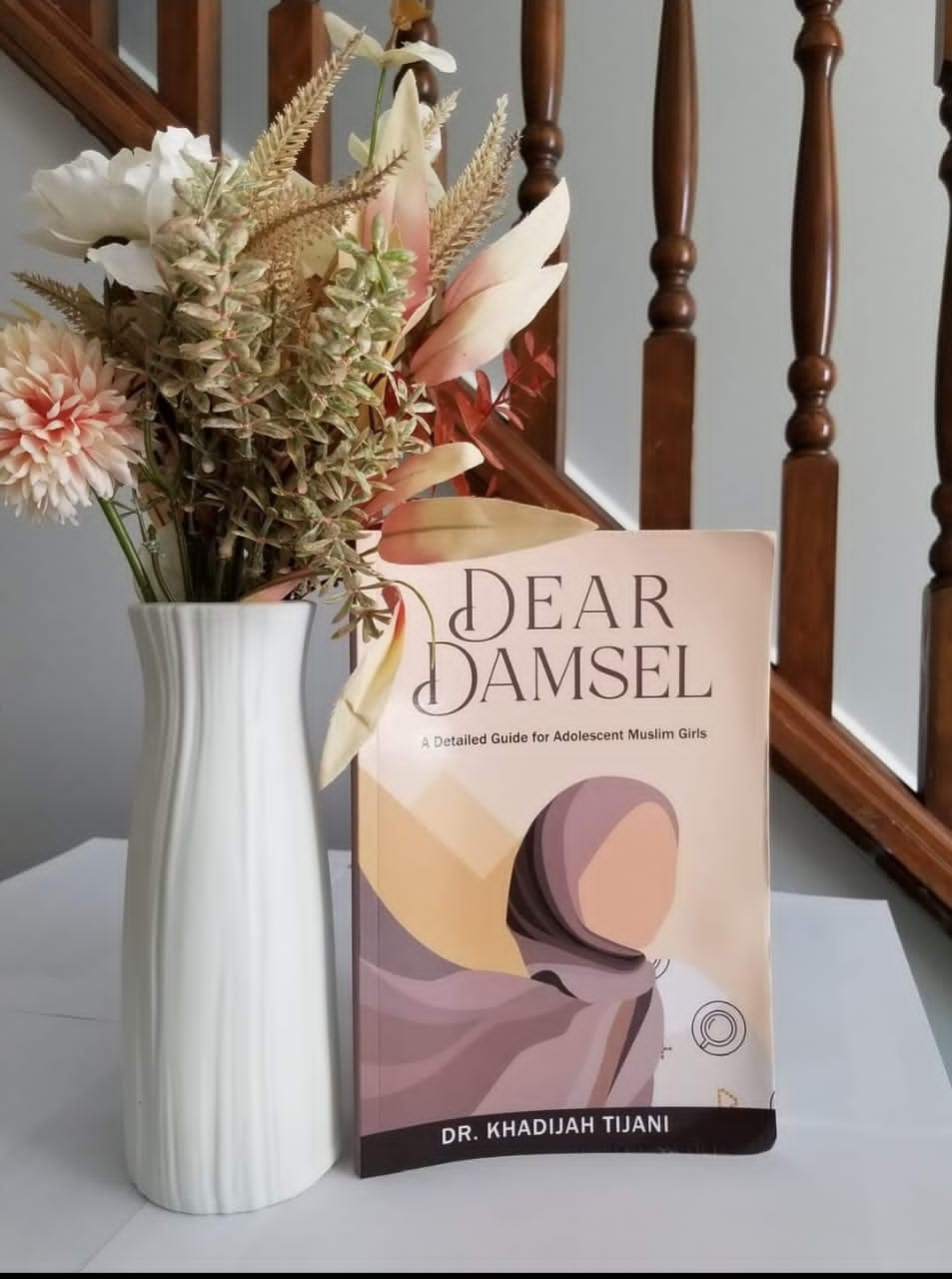
By Khadijah Tijani

Today is #InternationalWomensDay so I thought I should write about a not-so-popular topic.

This is a reality that many Muslim female physicians, including myself, face everyday, but people don’t seem ready for the conversation. When we try to bring up the topic, the same people who call themselves advocates of equity, justice and inclusion would only pay lip service to the issue and nothing is done about it eventually.

These biases are often rooted in stereotypes and misconceptions about Islam and Muslim women. For example, people believe that “All Muslim women are oppressed or subservient to men and therefore, therefore, they don’t belong in a prestigious profession like medicine.”

This is nothing but fallacy. The opposite is, in fact, the case. We have a long record of historical Muslim women who have excelled in the health field, even before the Western world started allowing women to learn about healthcare and medicine. The Prophet himself (peace be upon him) permitted women to be involved in healthcare. Neither the fathers nor the husbands of these women had any objections. We had women like Rufaydah Al-Aslamiyyah and Nusaybah bint Ka’ab who followed the early Muslims to the battlefield and provided care for the wounded soldiers.

Muslim women are encouraged to pursue careers like medicine because it fits our feminine nature. We are empathetic and resilient. We have seen a lot of young muslim women graduating from medical schools with excellent performance. We don’t want to waste those brains, do we? We want them to be helpful to the community and to the world at large.

These biases can manifest in several ways, such as assumptions that Muslim women cannot make decisions for themselves or that they cannot effectively communicate with male patients or colleagues or that they end up not practising medicine after all the educational investment. Muslim women are just like any other human being. Allāh has given us the ability to think critically and make decisions that can lead to the preservation of lives and limbs. We may have some limitations and boundaries, but nothing stops us from saving lives.

According to Khan et al. (2022) “gendered Islamophobia is prevalent in Canada and is premised on the stereotype that Muslim women are powerless victims of their religious tradition. Visibly identifiable Muslim women in health care professions are affected by gendered Islamophobia in the form of exclusion and discrimination, which can result in lack of safety, fear, decreased job satisfaction and burnout”. (Culled from Canadian Medical Association Journal).

Muslim women in medicine also face discrimination or stereotyping based on their appearance or religious practices. For example, a Muslim woman who wears a hijab may be perceived as less professional, or may face challenges in finding work or career advancement opportunities. Many have been forced to change the way they wear their hijabs, or even, remove it altogether!

Some patients or colleagues may have negative attitudes towards Muslim women who pray during work hours. This often leads to overt bullying and hurtful comments. While I was working in a particular hospital in Nigeria many years ago, it was hard for me to boldly take an excuse from my seniors when it was time for prayers. I had to sneak out and ask a fellow junior doctor to cover for me. In contrast, when I was in Saudi Arabia, prayer times were respected and each medical employee was allowed, and even encouraged, to pray at the right time.

Another common bias against Muslim women in medicine is the assumption that they are not proficient in English or that they are not familiar with Western medical practices. This happens when women from African and Asian countries travel to the West for further training. Muslim female physicians are often overlooked for certain positions or not being taken seriously in their work, unless and until we prove our worth beyond reasonable doubt.

These biases can have significant negative impacts on the careers and lives of Muslim women in medicine. They can lead to loss of opportunities, increased stress and burnout, feelings of isolation and exclusion, and finally, total loss of interest in the profession. These things shouldn’t be happening to us, considering the need for female doctors in the Muslim community. We need more female gynaecologists to take care of our women, but the journey is riddled with these biases we’re talking about.

You may begin to wonder…”but there are still many Muslim women doing just fine in their profession”. The truth behind their success is hidden under the sea like an iceberg. They won’t tell you how they had to reduce their hijab to a certain length so that they won’t be seen as extremists. They won’t tell you how they missed salah because the environment was not fit for praying. They won’t tell you how their marriage crashed (or almost crashed) because of an unsupportive spouse. They may also not tell you how they constantly regret the moments they were not available when their children needed them most.

It is important for the medical community to actively work towards addressing and dismantling biases against Muslim women in medicine. This can involve education and awareness training for medical professionals and staff, creating more inclusive workplace policies, and actively recruiting and promoting Muslim women in medicine.

Khan et al. (2022) opine that “Education about Islamophobia and gendered Islamophobia should be incorporated within existing anti oppression and transformative learning-teaching practices in medical education. Research and stronger institutional policies and practices are needed to mitigate the harmful impact of gendered Islamophobia on Muslim women in medical spaces.”

In conclusion, discrimination against Muslim female medical professionals is a real problem affecting Muslim communities in many parts of the world. Not all of us will be able to relocate to Islamic countries. Some of us may have to stay in our home countries or travel to the West to gain more knowledge and expertise. By addressing these biases, we can create a more equitable and just environment for all medical professionals, irrespective of religion, gender, or cultural background.

Khadijah Tijani is a medical doctor. She writes from London, Ontario and can be reached through askdoctorkt@gmail.com or @AskDoctorKT.

Emeritus Professor I.H Umar passes on

By Kabiru Isma’il

The renowned Nigerian Professor of Physics, Ibrahim Khalil Umar, aka I.H. Umar, died a few hours ago today.

I.H Umar was a Nigerian scientist of repute, and he had once been a University administrator. Wikipedia sources described that he was a Vice Chancellor of Bayero University, Kano, Nigeria, from 1979 to 1986. He held a B.Sc. in Physics and Mathematics from Ahmadu Bello University, Zaria, Nigeria, an M.Sc. in Physics from Northern Illinois University, USA and a PhD in Physics at the University of East Anglia, United Kingdom. In 1976 he became the first Nigerian academic in Physics to teach at Bayero University, Kano. In 1978 he served on the national constitutional assembly that drafted the Constitution of the 2nd Republic.

Between 1994 and 1997, the late I.H. Umar served as a Sole Administrator of the Federal University of Technology, Minna.

He also represented Nigeria at the Executive Assembly of the World Energy Council in 1990. He was a member of the Nigerian delegation to the International Atomic Energy Agency (IAEA) General Conference from 1989 and was appointed Director-General of the Energy Commission of Nigeria in 1989. He served as Chairman of the Board of Governors of the IAEA from 2000-2001. In 2004 he was the Director of the Centre for Energy Research and Training, where the first Nigerian research nuclear reactor is located.

In 2007, he was on the international advisory committee for the international workshop on Renewable Energy for Sustainable Development in Africa, held at the University of Nigeria, Nsukka in Nigeria.

I.H Umar was among the first five Professors in Nigeria to attain the Chair of an Emeritus Professorship from Bayero University, Kano, Nigeria.

May the Almighty Allah have mercy on him, amin.

The DNA tests tearing down marital homes

By Ibrahiym A. El-Caleel

Lately, some Nigerians from a section of the country have been facing big shocks in their lives. Fathers have been running DNA test on their children to ascertain whether they are theirs or not.

When they discover that the children are not biologically theirs, they run into depression and other social Illnesses. A separation follows and in extreme cases, it ends with a suicide.

It is the case of a man who spends decades investing his time, wealth and energy to bring up a child who DNA test confirms was never his. You can only imagine the emotional trauma and despair.

Kindly forgive me if I sound insensitive, but this shouldn’t really be shocking. Any society which swears not to see anything wrong with cross-gender intimate friendship and treats premarital sex lightly, then such society should keep warm palms to receive funereal stories like this. It is not rocket science.

As if it is not already five years, a conversation I once had with Mr Ola [not real name] is still fresh in my head. Mr Ola (a Muslim married man himself) told me that ahead of getting married, intending couples (in his exact words) “have to check and examine one another” to find out if they are compatible for marriage. He was talking about consummating a marriage before the marriage itself!

As a daring gentleman then, I asked him if personally he had that experience before his marriage, and he replied in the affirmative. I didn’t intend to sound offensive at all. But since he voluntarily shared this information with me after telling him I had just been engaged and my marriage was just five months away, I felt we were having some honest personal conversation.

I was glad he didn’t take any offense. I wanted to just verify if he meant what he said. If this is already happening in SOME Muslim marriages, then Allah’s aid is sought. You do not want to find out what is then happening in other non-Muslim home. Whatever the case might be, the DNA tests going on and the extreme cases of suicide give some hint and should be an opportunity to correct this misdeed.

There’s everything wrong with this kind of premarital examination. From an Islamic standpoint, everyone already knows it is an uncompromising HARAM (prohibition). No such examination is permitted under whatever context.

To begin with, Islam has already forbidden a non-exigent contact between a man and a woman who are marriageable (non-mahrams). This forbiddance comprises as low as a simple handshake between them or standing side-by-side for a picture or anything that looks simple to you. None of all these is allowed as far as Islam is concerned.

The so-called “premarital examination” as referred by Mr Ola above is simply adultery (read: fornication) as far as Islam is concerned.Subsequently, from the standpoint of critical thought, the presumptive advantages of this examination is insignificant when compared versus the evident disadvantages. These are at least two disadvantages:

a) If it becomes a norm within a society, then the unmarried chaste men and women within such society shall be placed in a difficult situation when they set forth to search for their potential spouses. Inter-societal marriages will become harder as well.

The doubting Thomases will have doubt on virtually everyone and this is not good for the society. There are truly men and women who will remain chaste even in the face of widespread moral corruption.

b) In this age of multiple dating among our youths, family lineage will be placed at high risk. The bloodlines will be jeopardized. With the possibility of multiple examinations already going on, it is easy for the finally selected husband to end up looking after the child of one of his co-suitors.

He will never find out about this till after the DNA test he will want to do some 25 years later. This is when he will hear a story that will touch his heart.

To curb this menace, we must go back to the Islamic way of doing things. We must respect the unambiguous boundaries set in respect to cross gender relationships.

Islam aims to shut the doors of this ordeal from the first step of hastening marriages and frowning at prolonged dating. Also, Islam prohibited a man to seek marriage where there is already another man who has been given a green light to seek marriage. Multiple actors are not Islamic. Multiple dating is not Islamic no matter how highly popular or famous a woman is.

Secondly, in the event that after marriage couples discover that their intimate capabilities are incompatible, then they should seek for a genuine medical aid. Ideally this should work. But if there is no medical solution, then Muslim marriages are not a “for better or worse” union.

The couple should separate honorably through a divorce. This is a maslaha (public good) for both the couple and our dear society. They should not stay in a marriage that is not working and then be engaged in extramarital affairs.

A premarital sex is a fornication which qualifies each of them to 100 lashes as hadd (punishment) before a Shari’ah Court. An extramarital sex is an adultery that will qualify each of them to execution through stoning as hadd (punishment) before a Shari’ah Court.

Therefore, a divorce is the best and honorable solution here. There is nothing shameful, blameworthy or asocial here. And woe onto him or her who scolds, slanders or gossips about this couple for truly finding a permissible way out of their predicament. Woe on to the slanderer and slanderess!

This is the Islamic way of dealing with issues. And this is the civilized and realistic way of dealing with issues to prevent depressing stories in the future. A husband should not be having a wife at home and a mistress or side-chick outside.

A wife shouldn’t be in a marriage at home and another relationship in a hotel. These two things will definitely provoke a DNA test someday, somewhere and somehow. The result will always be a heartbreaking. It will be more shameful and gossip-worthy than a divorce in the eyes of the slandering chiefs and slandering queens.

Keep intimate life strictly within a marriage. Never before a marriage nor outside a marriage. You owe yourself this honor. You owe your ancestors this trust. And you owe our society this sanity.

Ibrahiym A. El-Caleel writes from Zaria and is reachable via cleel2009@gmail.com

Climate Change: Flood washes away farms, destructs lives, properties in Jigawa

By Aisar Fagge

The heavy downpour has wreaked havoc in Jigawa communities, leading to the destruction of many houses, shops and prosperities worth millions of naira in the areas.

The rain that started Monday night, 1st August 2022, lasted for hours and had claimed the lives of yet to be identified a number of people, especially small kids.

The Daily Reality gathered that the communities affected included; Hadejia, Kafin Hausa, Kiri-Kasamma and some parts of Garun-Gabas, Tandanu and Bulangu of Jigawa state, respectively.

Our reporter gathered that the flood has also washed away many farms in the communities, and the development that the residents decried has struck terror in them.

Climate change that leads to flooding is one of the serious challenges rocking many countries, which affects people’s lives and health in various ways.

Victims of flooding

In another similar situation, a morning downpour in Bajoga town of Funakaye Local Government Area of Gombe State had claimed the lives of people and destructed houses and shops in the community.

Climate change: More floods in Nigeria

Experts have foresighted that there would be more floods in Nigeria in the next two months because of climate change.

The Director General/Chief Executive Officer of the Nigerian Meteorological Agency (NiMet), Prof Mansur Bako Matazu, has warned Nigerians to brace up for more rains in the next two months.

Mu’azu disclosed this on Channels Television’s Sunrise Daily programme on Monday, August 2nd, 2022, while speaking on flooding wreaking havoc across Nigeria in recent weeks.

However, Mu’azu also lamented that Nigerians keep cutting down trees and dumping refuses in drainage channels.

He added that the NiMeT CEO organisation had issued several advisories about flooding earlier, to which Nigerians failed to adhere.

In his words, Matazu said: “There will be increased rainfall intensity in the next two months or so. This is the most active period – July, August and September. We are going to see more floods.”

NEMA: 233 LGs in 32 states prone to flooding

No fewer than 233 local government areas in 32 states and the Federal Capital Territory have been predicted to experience flooding in 2022.

Flooded street

The Director-General, National Emergency Management Agency, Mr Mustapha Ahmed, raised the alarm Tuesday in Abuja.

Ahmed, who said the discovery was a result of the 2022 Seasonal Climate Prediction, stated, “Efforts must be made to mitigate and respond effectively to flooding.”