Politics

You can add some category description here.

Ganduje to Wike: You will lose 2023 presidential election

By Muhammadu Sabiu

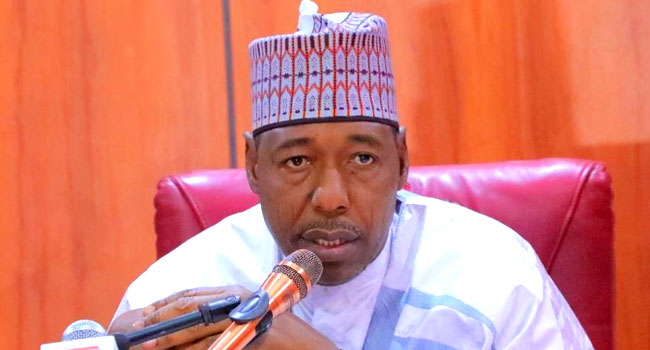
Governor Abdullahi Ganduje of Kano State has predicted that Nyesom Wike of Rivers State will lose the presidency in 2023.

Wike, according to Ganduje, would be a good loser because he is courageous.

He made the remarks while receiving the presidential candidate from the Peoples Democratic Party, PDP, in Kano.

Ganduje said, “So, you have come to see your brothers and sisters. Good. You are aspiring for the president of the Federal Republic of Nigeria. We see your efforts.

“And at the end of it, you’d lose, but you’ll be a good loser. I appreciate good losers because they have courage. And since you are doing it peacefully, you’ll live long to fight again. I congratulate you, Mr ‘Wise’ Wike. Thank you, and God bless.”

Recall that the Rivers State governor has recently shown his aspiration to govern Nigeria in 2023, noting that he stands a good opportunity to clinch power from the All Progressives Congress, APC.

2023 Elections: Only the living vote

By Ibrahim Mustapha Pambegua

As the 2023 general elections fast approach, so also the worsening of insecurity in the country. In preparation for the next year’s polls, aspirants from various political parties are emerging in numbers. This is what we call democracy in action.

However, the incessant killing in the country has raised a serious question. Have our desperate politicians ever pondered and assessed the threat posed by the insecurity for their 2023 ambition? It seems the country has been divided into two. One is being controlled by the terrorists and the other by the Nigerian government.

The sultan of Sokoto and other religious leaders have expressed fear of the likely conduct of the 2023  general elections. They based their arguments on the country’s deteriorating insecurity, with the government looking helpless. The recent attack on the Abuja-Kaduna train by suspected members of the Ansa-Ruddeen terror group has furthered indicated Boko haram expansionism. The terror group, which suffered a massive onslaught by our gallant soldiers and is presently in disarray, must have moved to northwestern states.   

The movement of Boko Haram to some northwestern states and part of Niger state did not come to many Nigerians as a surprise. Sometimes last year, the governor of Niger State, Abubakar Sani Bello, raised the alarm over the presence of Boko Haram in his state. The governor warned the deadly terror group is a few kilometres away from Abuja. The shocking statement from the governor, who happens to be the chief security officer of his state, must have forced the government to deploy security officers to scoop necessary intelligence gathering. But, I don’t think the government has acted on the governor’s claims or taken the urgent action required to arrest the situation. Now, Niger State is at the mercy of rapacious bandits cum Boko Haram who have continued to sack communities.

In the south-east, the security situation is not different from the north. The region has been battling with IPOB. Through its armed wing, the Eastern Security Network (ESN), the secessionist group has held some states to ransom. The group that assumed the state role has since declared Monday a work-free day and directed law-abiding citizens to remain indoors. Public places, banks and markets have to obey the draconic order for their own safety. Besides free day declaration, the arsonists have been attacking security formations and innocent people on a daily basis.  

There is no doubt that Nigeria is waging a survival war against the violent activities of non-state actors. While the country is gradually moving into a failed state with corpses littered its length and breadth, our politicians are busy scheming on how to be or remain in power. They don’t give a damn about the escalation of tension or how Innocent lives are being soaked into the ocean of blood. 

The above reminds me of the recent sermon by Sheikh Nuru Khalid, former Imam of Apo legislative quarters, Abuja. In his Friday sermon, the Islamic cleric advises Nigerians not to come out and vote in the 2023 elections unless the government agrees to protect them. There is nothing wrong with his sermon. However, he has just called the government’s attention to live up to its essential responsibilities. The primary function of government is to protect lives and properties. However, the government is no longer performing this constitutional duty.

It has become imperative to say nowhere is safe in the country. Our road, airport and rail station have been targeted and attacked by terrorists. Our rural communities that serve as the country’s food basket have become a ghost of their former selves.

Elections can only be conducted in a peaceful and secure environment. Evidence suggests that unless security improves, the country will go to poll with more corpses. There is no gainsaying the facts; dead people don’t vote. Elections are meant for the living. It is quite disturbing that most of the aspirants do not have the blueprint for tackling the insecurity that bedevilled the country.

When the Buhari administration came on board in 2015, it promised to secure the country. One year for the administration to go, it seems, security has worsened under its watch. For the 2023 elections to hold and the living to vote, the government should quickly stem the tide of growing insecurity in the country. This can be achieved through intelligence gathering, negotiation, massive bombardment, and unravelling the sponsors of these terrorists.

Ibrahim Mustapha Pambegua wrote from Kaduna state via chambasimeh@gmail.com.

Nigeria’s Labour Minister to declare for president amidst ASUU’s strike

By Ahmad Deedat Zakari

Nigeria’s Minister of Labour and Employment,  Chris Ngige, is set to declare his intention to contest the 2023 presidential election on Tuesday. 

This is coming amidst the two-month-old strike embarked on by the Academic Staff Union of Universities, ASUU.

Ngige, who has failed to resolve the lingering impasse between ASUU and the Federal Government, said on Saturday, April 16, 2022, that God has spoken to him regarding the presidency, and he will not disappoint his supporters. 

“The period of Lent ended last night; throughout the period, we communed with God. We did spiritual exercises and fasted. We talked to God and his angels, and God has talked back to us. God has spoken to me. I want to assure the people that I will not disappoint you,” he stated

Ngige added that he has the support of the trio of the APC, PDP and APGA in his ambition. 

“This journey is not for the APC alone. Our brothers and sisters in PDP and APGA  are in support. They know that I am more qualified than any other person from the South East. They will support me,” he said.

However, Ngige’s intended declaration does not go well with many, especially students who have been held at home by ASUU’s strike, which the Labour Minister has failed to resolve.

Maymunat Suleiman, a final year student of Chemistry at Federal University Lokoja, expressed her dismay regarding Ngige’s presidential bid during an interview with The Daily Reality.

“A presidential candidate who doesn’t take education seriously. These politicians only care about themselves and their families. I don’t see myself voting for that kind of candidate,” she said. 

Another student, who preferred to remain anonymous, described Ngige’s presidential bid as a joke that should not be taken seriously.

He further decried the minister’s poor management of the ASUU’s strike, which has kept students in public universities from school.

Ganduje’s directive pushes Kwankwaso to resign as commissioner 

By Uzair Adam Imam 

The Kano State Commissioner for Rural Development, Musa Ilyasu Kwankwaso, has resigned to contest for the House of Representatives in the 2023 general election. 

Kwankwaso resigned barely hours after Governor Abdullahi Umar Ganduje gave political appointees wishing to run for elective offices 24 hours to quit.

The Daily Reality learnt that Kwankwaso wishes to contest for membership in the House of Representatives representing the Kura, Madobi and Garun Malam federal constituency.

In a statement Sunday by his Chief Press Secretary, Governor Ganduje has directed all his political appointees that want to contest for elections in 2023 to resign.

The governor said all appointees are given between now and Monday, April 18, to tender their resignation.

The statement partly read: “Governor Abdullahi Umar Ganduje directed all political appointees running for elective offices in the forthcoming 2023 general elections to resign from their respective positions.”

2023: Kwankwaso declares presidential ambition next week

By Uzair Adam Imam 

The two-term governor of Kano, Engr Rabi’u Musa Kwankwaso, said he had concluded plans to formally declare his political ambition next week.

Kwankwaso, who has been nursing the ambition over the years, would contest for president on the New Nigerian Peoples Party (NNPP) platform.

Speaking at a news conference on Friday, Mr Kwankwaso said he consulted widely on his plan, and the responses were positive.

“I have been consulting widely with friends and Nigerians of diverse interests, and the outcome has been positive. 

“I will be informing Nigerians of my political ambition sometime early next week,” he said.

Kwankwaso also acknowledged the successes recorded by his new political party at its recently-concluded membership registration. 

He added, “the support for the NNPP had been overwhelming going by the responses recorded at its recently-concluded membership registration drive.”

Letter to Nigerian Muslims

By Muhammad Rabiu Jibrin (Mr J)

I write this letter to you as a Muslim brother and a citizen who is deeply concerned about the gory happenings in this country and who prays for its betterment. It is undeniable that the trying time Nigerians live is uncalled-for. It is not what the citizens prayed for when voting for their leaders. Thus, it indicts the leadership system of all the three arms of government in the country, unfortunately

Should the government have worked holistically towards curbing the menace, the situation couldn’t have been worst like this. But, would the inferno ignite due to our leaders’ carefree attitudes, which seem to have been politicising virtually everything, be left consuming the spirit and the fabrics of our dear nation?

Truth be told, even a responsible and serious government can’t fight a politically created conflagration of multiple fronts alone, let alone a government with a lackadaisical attitude. Therefore, as Muslims of the ravaging county, we all have a role to play individually or collectively.

As we observe this blessed month of Ramadan, which has the best nights therein and in which the glorious Qur’an was revealed, we need to cry hard for God, the Almighty, to come to the rescue of our nation.

We must look inward and outward and return to God, the Most Merciful, the Most Powerful, the Compassionate and the Absolute Compeller. We should desist from committing sins and repent from our misdeeds. We should give to charities, recite the glorious Qur’an, supplicate and intensify prayers to God to see to the end of this mess.

Religious scholars should use their influence during tafsir, and Imams during their Juma’a sermons should pray immensely on this matter. Let Him choose for us the rightful leaders of all cadres. Let God the Almighty leave us not with our wisdom and selfish wishes and choices.

We can’t fold our hands, legs crossed, witnessing the downfall of this country under the watch of our leaders whom we entrusted but failed us. So let us all wake up from our slumbers and do the needful at the right time.

May we be governed by leaders who love us more than how we love them, leaders who prioritise our societies’ interests over their interests, leaders who think about giving their leadership account on the Day of Reckoning, amin.

Muhammad Rabiu Jibrin (Mr J) wrote from Gombe via muhammadrabiujibrin@gmail.com.

On interfaith

By Dr Babayo Sule

The revolution in social media, no doubt, made life fascinating for the present generation in information dissemination and data assembling but most importantly, in harnessing dialogue among inter-cultural and diverse complex groups cutting across the universe unprecedented. Many societies are positively utilising the leverage of social media to develop their political and socio-economic sectors individually and collectively. However, in Nigeria, social media is dangerously setting us on the path of collapsing our values and tolerance and it is ambitiously threatening to magnify ignoramus into the regalia of scholarship while scholars are being relegated to objects of caricature. This is anticipated in the warnings of Daniel J. Levitin in his Weaponised Lies: How to Think Critically in the Post-Truth Era and Nicole A. Cooke’s Fake News and Alternative Facts: Information Literacy in a Post-truth Era, that the era of honest ideas and truth is fast passing and this is palpable more in our environment where things are twisted deliberately for sentiment or personal agenda. This has manifested in the recent development in national issues where the bedevilling monster of insecurity is becoming worrisome. The high level of ignorance in understanding, interpreting, comparing and linking issues in Nigeria bordering religion, politics, economy and other social issues is nauseating. This is evident in the use and abuse of the term ‘Interfaith’ by social media interlocutors. 

The two Arabic terms are mixed up unconsciously by itinerant merchants of social media but most surprising, by even some religious Sheiks either deliberately or out of ignorance. The term ‘Wahdatul Adyan’ (unification of religions) in the Arabic language can never be the same as ‘Hiwar Al Adyan’ (interfaith dialogue). Unification of religion means collapsing of faith to become one while interfaith dialogue means debates, comparative studies and discussions of understandings as well as the relationship among followers of a different faith. The word ‘Hiwar’, dialogue, was mentioned three times in the Qur’an 18:34; 18:37 and 58:1.

How can Islam, for example, collapse and become one with Christianity when Islam philosophises the unity of Allah (SWT) while Christianity accepts the doctrine of ‘Trinity’ or how can Islam unite with Judaism that does not believe in Jesus Christ and Prophet Muhammad (SAW), at least, the current version of it? Or how can Christianity unite with Judaism that does not believe in Jesus Christ? Can Islam ever accept any form of law besides the Shari’ah principles? 

A scholar, popularly known as ‘Digital Imam’ made some utterances on escalating insecurity situation in a delivered sermon which eventually led to his removal. The crux of the matter is that I am not in support or opposing what the Imam uttered in his furious outburst. Many messengers have their philosophy, style, methodology and perspective of conveying messages based on their training, background, experience and the environment. How or why the Imam decided to deliver the message in the mode he did was not the main concern here. Some may see it right while others may see it as unfit and all are right in their perception. I am not in defence or support of the Imam and his words nor am I his spokesperson but some misperceptions, distortions and misrepresentations of the term ‘interfaith’ need to be cleared to avoid the created confusion. However, the annoying aspect of the issue is the way the ‘message’ was totally ignored and the messenger is being crucified on account of being what they called ‘Interfaith’. 

And what is interfaith? Is it a polytheistic process or a pronouncement that will disqualify one from Islam? Does interfaith has a basis from the religious roots and branches? Is our education level annihilated to the extent that our social media pedestrians could not understand what it is or is learning Islamic scholarship withering away to the level of misunderstanding Islam or misusing it? What is the link between sermon on insecurity and participation of Digital Imam in interfaith? Interfaith means dialogue among the various Abrahamic religions of Judaism, Islam and Christianity to promote peaceful co-existence and to understand more the philosophy of each other to avoid sustained mutual hostility. The Merriam Webster Dictionary defines interfaith as activities involving persons of different religious faith. Going by this definition, who is not involved in activities with persons of different faiths in Nigeria?

Islam is a religion that by virtue of its philosophy encourages logic, wisdom and reasoning. It challenges its believers to ponder on signs and symbols of the divinity and unity of Allah and the truthfulness of the religion. Allah (SWT) dialogues with His Angles on the wisdom, logic and the reason for creating the weak Adam (AS) and placing him on earth despite the weakness and the vulnerability to sins (Q. 2 verses 30-35). If Allah (SWT) wishes, He will simply create without consultation or dialogue and made the Angels prostrate compulsorily without any resistance or disobedience by Satan but for His prior knowledge of all, He wanted it that way. Is there no lesson for mankind in it to understand that reasons and logic are used in dialogue to convince?

Allah (SWT) in many places commands that believers should reflect and find faith in Islam not follow what is bequeathed to them by their ancestors presenting to them logical arguments, scientific facts, miracles and points of pondering. Prophet Nuh (AS) engaged his people in peaceful interfaith dialogue to convince them to believe in his religion for 950 years using alternative views and arguments (Q.7 verses 59-64; Q.10 verses 71-73; Q.11 verses 25-49; Q.21 verses 76-77; Q.23 verses 23-30; Q.25 verses 37; Q.26 verses 105-122; Q.29 verses 14-15; Q.37 verses 75-82 and Q.71 the complete chapter).

What about Prophet Ibrahim (AS)? He could have argued forcefully with the divine support and protection and ridiculed his people for worshipping idols that they had created with their hands but instead, he chose the path of wisdom and logic and the power of peaceful dialogue to make them understand particularly being careful of the presence of his father among the idolaters. Several Qur’anic chapters and verses (Q.2 verse 258; Q.14 verses 35-41; Q.19 verses 41-50; Q.21 verses 51-73; Q.26 verses 69-104; Q.29 verses 16-27; Q.37 verses 83-113 and Q.43 verses 26-31).

In all the chapters and verses above, Ibrahim (AS) used a superior dialogue with wisdom, chosen soft words and logic to explain his faith before the idolaters. Then take the instance of Musa (AS) who had not only debates with the Pharaoh and his people but went the extra mile in the demonstration of faith and interfaith dialogue under the command of Allah (SWT) in the Pharaoh’s palace. Many chapters and verses (Q.7 verses 103-173; Q.10 verses 75-93, Q.11 verses 96-99; Q.17 verses 101-105; Q.20 the complete chapter; Q.25 verses 35-36; Q.26 verses 10-68; Q.27 verses 7-14; Q. 28 verses 1-50 and several others too numerous to mention all here). It should be noted that Prophet Musa (AS) dialogued with his people profusely in convincing them against Shirk (polytheism) after he rescued them from Pharaoh using logic and wisdom (Q.2 verses 40-61; Q.7 verses 137-141 and Q.20 verses 83-97) and Prophet Musa (AS) also dialogue and went into a voyage of discovery with Khidr (AS) (Q.18 verses 60-86). 

Other Prophets (AS) dialogued in what is closer to interfaith with their people which time will not allow for all of them to be enumerated here but some few cases are still necessary. Prophet Ilyas (AS) dialogued with his people and showed them a reason to desist from worshipping a lamb as mentioned in Q.37 verses 123-132. Prophet Yusuf (AS) also convinced his inmates’ partners and his people of the unity of Allah (SWT) through an interfaith dialogue (Q.12 verses 37-41). Prophet Isa (AS) was shown the path of dialogue by Allah (SWT) when he was asked if he is behind the instigation for people to worship him when he responded beautifully, respectfully, logically and scientifically in this way (Q.5 verses 116-120) and he also tried and convinced his disciples on the miracle and powers of Allah (SWT) when they challenged him for manna (Q.5 verses 112-115) and elsewhere (Q.19 verses 30-33), Prophet Isa (AS) dialogue with his people to convince them while in his infancy that his mother Maryam (AS) was innocent and that he was a miracle of Allah (SWT). 

The most astonishing aspect of those who wanted to confuse interfaith with unity of faith is their lack of acumen in understanding ‘Asbabul Nuzul’ (purpose of revelation of Qur’anic verses) otherwise they would have saved their ignorance before the public humiliation. One of the outstanding characteristics of the Makkan chapters and verses of the Glorious Qur’an is the dialogue between the Prophet (PBUH) and Makkan infidels to scientifically show them the logic and reason of worshipping Allah (SWT) alone and the dirtiness of idolatry. These chapters and verses are too many to mention here. When Christians from Najran (Nazareth), a place near Madina in those days, heard the preaching and teaching of Prophet Muhammad (PBUH) on Jesus Christ, they approached the Prophet (PBUH) for interfaith dialogue and that was the reason for the revelation of Q.3 verses 33-83 as mentioned by Al-Ghazali in his book ‘Asbabul Nuzul’ and also as narrated by Imam Ibn Kathir in his ‘Tafsir’ (Qur’anic exegesis or commentary). 

The Prophet (PBUH) did not only engage in interfaith dialogue but he agreed that Muslims under threat and vulnerability can seek shelter in other places of different religions when necessary. He asked his companions to migrate to Ethiopia where a Christian king was ruling, Najjash (Negus). The Makkan oligarchs, Abu Jahl and Abu Sufyan sent a delegation to King Negus to convince him to return the Muslim believers to Makka so that they could persecute them until they revert to idolatry. They went to the king with gifts and presents but he rejected their request.

The representatives of Makkan infidels adopted emotional manipulation by telling King Negus that Prophet Muhammad (PBUH) and his followers were also saying evil things about Mary and Jesus Christ (AS). The king summoned Muslims to his palace and questioned them. One of the companions, the Prophet’s cousin, Ja’afar Bin Abi Talib, explained to him their idolatry and decadent situation before the emergence of Islam and went ahead to recite before him the Surah Maryam Q.19 verses 16-40. The scholars of history like Ibn Hisham and Ibn Kathir reported that king Negus and his people wept on hearing these verses which was the reason for revealing Q.5. verses 82-85. Later. King Negus converted to Islam and the Prophet (PBUH) prayed for him from Madina which served as the juristic justification for ‘Salatul Gha’ib’. 

Apart from the above views on interfaith dialogue, many companions of the Prophet (PBUH) were reported in authentic hadiths by Bukhari and other reporters and scholars of the history of engaging Jews in Madina, Christians and pagans in interfaith dialogue using the Qur’an and other sources heard from the Prophet (PBUH). Ibn Taymiyyah, one of the medieval Islamic respected scholars devoted an entire book of two volumes in interfaith dialogue with Christians titled Al Jawabul Sahih li man Baddala Dinal Masih (Answer to those who Altered the Religion of Jesus Christ). Besides, contemporary Islamic jurists have their views on interfaith dialogue. For instance, Ismael Raji Al Faruqi characterises dialogue as Da’awah which includes preaching Islamic teachings, promoting virtues and avoiding vices and providing comprehensive knowledge to understand the purpose of life. 

The Christians and Jews are addressed with respect in the Qur’an ‘as people of the book’. The Prophet (PBUH) was reported to have been visiting the ill in Madina irrespective of their faith (Tirmidhi). The Prophet was sympathetic, patient and understanding with people of other faith. He never imposed Islamic laws on them. Abu Hurairah narrated that once a group of Jewish scholars came to the Prophet (PBUH) and declared that one of them committed adultery. The Prophet (PBUH) judged the matter using the Jewish scriptures and not Islamic laws (Al Tabari).

In essence, most Islamic jurists agreed that Islamic teachings are not in favour of eliminating the preaching of other faiths. Islam is, instead, in favour of counterbalance as a means of creating a harmonious environment instead of confrontation. This is mentioned in the Quran (Q.22 verse 40). It is based on this that the power of Qur’anic dialogue challenged the entire universe to produce its like or to ponder on the saved corpse of Pharaoh Menerpter as a sign of miracle of Islam and the Glorious Quran open for a challenge by those interested. An attempt to do so earned Islam valuable converts such as Professor Mike Moore, Professor Maurice Bucaille, Professor Gerald Dirk, Dr Gary Miller and many famous global scholars of various fields of human endeavour. 

The question to ask ourselves is, if not because of the flavour and the assistance of interfaith dialogue, how could the gallant intellectuals armies of Islam confront the entire world with intellectual discourses of comparative knowledge? The blessed Sheikh Ahmed Deedat, Sheikh Dr Zakir Naik, Dr Abu Ameenah Bilal Philips and other ones who stand tall in the hall of fame of comparative religion and remain unchallenged by all religions when it comes to dialogue and reasons. How many hundreds of thousands or millions have they converted to Islam successfully? Could those against interfaith serve Islam in this capacity? What about the blessed Adnan Oktar aka Harun Yahya who solely demolished Darwinism and Marxism by the mighty power of his Islamic dialogue pen?  Have we forgotten our own, Sheik Auwal from Jigawa State who has been busy propagating Islam in America? What about the blessed Sheik Hussaini Yusuf Mabera? What about the good work of the Da’awah Institute of Nigeria in bridging the gap of knowledge closer to what even a layman can comprehend? Please what is the name of what they are doing? What about Nigerian Inter-Religious Council? What is it and who are the members? It is a civil society of interfaith dialogue and action involving the supreme spiritual leader of Islam, his Eminence, the Sultan of Sokoto and the Chairman of the Christian Association of Nigeria (CAN), other distinguished scholars of Islam and Christianity just for the information of the misguided interfaith antagonists. 

It is frightening that the Nigerian Ummah is gradually drifting towards Al Qaradawi’s description of extremism and Abdulkadir Oudah’s ignorant followers and incapable scholars. Al Qaradawi in his book, Islamic Awakening Between Rejection and Extremism warned that extremism is an uncalled duty to Islam by ignorance which has six symptoms including bigotry and intolerance, commitment to excessiveness, uncalled for austerity, severity and harshness, thinking ill of others and Takfir stage which is the dangerous one. Abdulkadir Oudah in his view argues that Islam and Muslims are suffering from the comity of ignorant followers and the inaction of incapable scholars aided by amoral leadership.

The debates on interfaith by some scholars wrongly and the perception of ignorant followers exhibited this fear and it is tilting towards the symptoms of extremism warned by Al Qaradawi which we must be cautious of. Of course, some of the views may not lack relevance to late Dr Yusuf Bala Usman’s postulation of the manipulation of religion in Nigeria but it is shameful and uncalled for. Saying an opinion or a view before the public must have a moral burden. Ibn Qayyim Al Jawzi in his book Ilamul Muqi’ina an Rabbil Aalamin exponentially exposed us to the intricacies of those who can speak on Islamic issues and fatwas and the chain of authorities that can qualify one to be among them. I don’t think the interfaith interlopers qualified to be among the ones listed by Ibn Qayyim.

I am not in any way in convergence with Digital Imam on that fateful sermon. It is wrong to advocate for a boycott of the election in a democratic clime. It is an unpatriotic, irreligious and social disservice.  We differ completely in this perspective. Instead, I am an unrepentant advocate for voting and election and a transparent one for the better. In an era where the leaders failed glaringly but their failure is not instilling remorsefulness in them to desist from power scramble, how could the voters sacrifice their legitimate opportunity to vote? In essence, I am calling on Nigerian voters not only to vote but to vote a protest vote on target. To identify candidates on their own, sponsor them, vote for them and guard their votes to succeed for better governance without regarding any party (parties that lack ideology or even principles) do not matter in developing democracies more than individuals in elections. 

Based on the above observation, I am suggesting the following as remedies against this detrimental degeneration that will consume us if we are not careful.

1. The Digital Imam and other religious leaders should invoke the saying of Allah (SWT) in delivering their messages Q. 16 verse 125 “call to the way of your Lord with wisdom and goodly exhortation, and reason with them in the best manner possible. Surely your Lord knows best who has strayed away from His path, and He also knows well those who are guided to the Right Way”. 

2. People should desist from throwing themselves into the arena of knowledge and scholarship based on anecdotal stories and emotions while those who know but are trying to divert the subject matter or discussions should fear Allah (SWT) and relay that which is the truth because “Not a word does he utter but there is a sentinel by him, ready (to note it)” (Q.50 verse 18) and “And do not pursue that of which you have no knowledge. Indeed, the hearing, the sight and the heart – about all those [one] will be questioned” (Q.17 verse 36). 

3. Matters should be dealt with accordingly instead of manipulated. Matters of security discussed by a cleric should not be dismissed away for trivialities such as interfaith. Interfaith is a different subject matter so also a sermon and issues of insecurity why lump them unnecessarily?

4. The social media abuse should be checked by authorities before another Tunisian model is engineered deliberately out of ignorance or sentiments. Government has the legal duty to do so. In an era where wise people are using social media for business, we are busy abusing it for the promotion of ignorance.

5. A strong Shura committee is needed to check fatwas and online scholars that are incapable of judging a simple matter or need rigorous scholarship training before their views can see the light of the day. 

6. Ahlul zikr should kindly intervene and educate our Ummah on critical issues to avoid misperceptions, distortions and misrepresentations of facts that can drag our youth into ideologies that will throw our society into further disaster.

Dr Babayo Sule is the H.O.D International Relations, Faculty of Social Sciences, Federal University of Kashere, Gombe State.

Sheikh Nuru Khalid: The way they and I see it

By Bilyamin Abdulmumin

The nation has woken up with yet another round of controversial news, as the committee to the National Assembly mosque, Apo legislative quarters Abuja, deemed it fit to suspend the renowned Islamic cleric Sheikh Nuru Khalil before sacking him later. The committee cited incitement and lack of showing remorse as reasons for the suspension and the final sacking, respectively.

Last week’s Friday prayer sermon the Sheikh delivered was the action that earned him the sack. In the sermon, reeling from the Abuja-Kaduna train attack tragedy, the Sheikh supported a boycott of the upcoming 2023 general election should the government fail to protect the lives of Nigerians. This message immediately went viral to generate a heated debate among the public on social media.

Those who support the message have some reasons. Because it was just history that repeated itself; before the 2015 general election, Nigeria, especially the North, was literally on fire. Amidst the chaos majority of the northern Islamic clerics openly criticized the government of the day – PDP, while drumming support for the opposition – APC.

Fast forward, seven years later, the table has turned. The APC is in charge, and similar to the eve period of the 2015 general election, the insecurity is threatening the country again. So, for this category of view, what is good for the goose should also be good for the gender.

Some try to strike a balance. According to these people, the Sheikh’s sermon was right, but they argue that leadership comes with responsibility. So, a leader with a large audience has both privilege and responsibility. Some of these responsibilities are eschewing opinion, unlike any ordinary person who doesn’t mince words. In other words, the Sheik should have a tread with caution. 

Some categories look at it from the extremism tendency. According to them, some extremists, such as Muhammad Yusuf, the Boko haram leader, started as a spokesperson to the masses. First, he became a fierce critic of the government, but later, when his antics escalated to insurgency, those masses clapping for him became the most victims in the end.

Some sought to politicize the controversy. According to them, the Sheikh has pitched a tent around the opposition – PDP, so they claim he has been a critic of the Buhari government for the last seven years. These critics sealed their arguments with the allegations that the Sheikh was appointed an Imam at a mosque built by Atiku Abubakar, a new Jumu’at Mosque behind the Central Bank Nigeria (CBN) Quarters, Abuja.

The peculiarity of any argument is that if anyone is allowed to explain his view, one will somehow see a reason for their claim. The above four viewpoints on the same thing are good examples.

By and large, if there is anything this raging debate achieved, it is one thing: it made Nigerians forget the series of other pressing issues like the ASUU strike, fuel scarcity, the naira to dollar depreciation, VP Osinbajo, Minister Pantami, and Farooq debates, even the plight of the actual victims of the attack (may theirs be a speedy release, harmless). One Nigerian coined this scenario: “one rising issue after another makes Nigerians forget their suffering; Nigerians live for the moment.”

Bilyamin Abdulmumin is a PhD candidate in Chemical Engineering at ABU Zaria. He is also an activist for a better, informed society.

Quest for Jigawa: zoning, unity and 2023 elections

By Umar Farouk 

Power brokers and political gladiators begin to fracture the peace and unity of Jigawa State and polarise its youths for their personal interests and idiosyncrasies. This challenge is further compounded by a misguided view of amalgamation by some segments of Jigawa as more of a historicized occurrence without any barefaced or hidden advantage to the state; a mindset that further promoted deliberate demonstration of impunity, as well as superiority by one group or zone against the other.

But to dramatize this superiority complex, the point people did forget is that never should one be so foolish to believe that you are stirring admiration by flaunting the qualities that raised you above others. By making them aware of their inferior positions, you are only sowing the seed of bitterness and envy that will hunt you back in ways you might not imagine.

Regardless of what others may say, it has plundered the socio-economic affairs of the nation to a sorry state; an occurrence that stems from an unknown leadership style described by analysts as neither ‘system nor method based’ without anything exemplary or impressive. While this appalling situation unfolds in our political space, the global leadership stage is littered with telling evidence about leaders that have demonstrated leadership sagacity and professional ingenuity that our leaders have refused to replicate their resourcefulness on our shores.

Having discovered the challenge threatening the continued existence of Jigawa State, it becomes imperative to say that whatever might be the failure, we must as a state begin to return to where we came from and what we were known for. But whatever measure we may want to use in tackling this challenge can only succeed if it probably puts in place steps that will guarantee leadership restructuring.

Catalyzing the process of building the Jigawa of our dreams that is laced with good leadership will among other demands require sincere and selfless leadership, a politically and economically restructured polity brought by the consciousness that can unleash the social, economic and political transformation of the state while rejecting the present system that has bred, inefficiency, a primitive capital accumulation that socially excluded the vast majority of our people.

Above all, to completely put things right, the state government must recognize our position, for Jigawa to be a society of equal citizens where opportunities are equal, a personal contribution is recognized and rewarded on merit regardless of town, zone or political affiliations.
The best hope we have is to use the 2023 general elections to stop politicians that cannot draw a distinction between politics and leadership. And in its place, enthrone leaders that will align their aspirations with the people and compel leaders to stick to their campaign mandates, preventing them from reneging when elected into power. 

Yes, politics and politicking are about the quest for power. Indeed, one of the major attributes of politics is the acquisition and devolution of power. In a democracy, one of the recognized processes of getting representation and power is through an election. The purpose of an election is to get power. Thus, any person or party desirous of electoral victory must carry the electorates along by effective stakeholders’ engagement which includes consultations, program exposition; interest aggregation and consensus building which among other things is for the purpose of ensuring equity and allaying fears of oppression and domination.

No doubt, the issue of power devolution has been a very knotty issue in Jigawa state politics. Similarly, zoning as a tool for power-sharing has been a very contentious one. The major advocates of zoning or rotational leadership are the people from Hedejia Emirate Zone. Thus, the canvassing for power shift should demonstrate and implement it in their zone.

For me, the concept of zoning or power rotation may sound mossy, and it may not be ideal for our situation fraught with fear of domination, distrust, apathy and immaturity.

Democracy is about people, their representation and not power-sharing. It may have many variants depending on the people, their culture, history and political ideology.

Clearly, adopting zoning practice may not eliminate the monolithic over-centralized system that brings tyranny, mediocrity, impunity and a winner-takes-all mentality among other things. Carrying everybody along will reduce apathy – something that has been identified as the bane of our local politics. I must advise that as a matter of necessity, we should eschew the if-not-my-zone-nobody-else-should-lead mentality and work for the success of Jigawa State.

Our people must shun disunity, disorganization, sentiment and politicians who once they get into office would bring unprecedented hardship, chaos and hopelessness. As I believe, we all want, hope and pray for one thing – a state where peace, stability, fairness, equity and love shall reign supreme.

May Almighty Allah Bless Jigawa state, ameen.

Umar writes from Jigawa, he can be reached via 08081058283.

Pantami and the bitter taste of politics (II)

By Aminu Nuru

As a man of God in power, Pantami has been anticipated to promote justice and fairness to all, doggedness in executing the rule of law and consistent due process while amicably working to advance his ministry. Unfortunately, however, some of his decisions, actions and inactions shatter this goodwill, clearly undermining what he should – or was expected to – represent.

Given the above, it is fair to say that Pantami’s reputation as an ambassador of the faithful and clergies in the corridor of power is being tarnished and marred with shameful inadequacies that are not worthy of emulation. From the onset, it is important to state that some of those rumpuses may not be disassociated with Pantami’s status of being the first Imam of Jumma’a cum notable Islamic cleric to be a member of Nigerian’s apex council of power execution. However, some of them are avoidable if he had approached and dealt with specific issues differently and wisely.

Barely a few weeks after his appointment as Minister, Pantami’s name began to trend in what seemed to be his first scandal in office. Pictures of some luxurious apartments were shared on social media with the allegation that he owns them. Perhaps, other Ministers occupied better, polished and more luxury apartments, but nobody cared to nail them down for their exotic preferences despite being in the same shoes as him. This should tell Pantami that his colleagues may be excused and get away with so many other things while he would not. This is obviously because of his antecedents as an Islamic cleric.

One would think this politically-driven furore would be an eye-opener to Pantami and should guide his future decisions and endeavours henceforth; it should dawn on him that things will never be the same for him again; that certain things about his life and that of his family, relatives and even close friends would be twisted and become a source of gossip on the cyberspace from now. Therefore, he should thread carefully

But Pantami appears not to appreciate the complexities of his new reality. If not, why would someone as blessed as Pantami allow his name to linger in a scandal of dubious professorship appointment (promotion) by the Federal University of Technology, Owerri? Let’s assume that the fuss generated by the position is a work of his foes and mischief-makers, and there’s nothing wrong with it. Still, the ensuing controversies are not suitable for his image as an Islamic cleric.

It is such a shame that a man of his calibre would allow his love for title to overshadow his conscience. If I were Sheikh Pantami, I would get rid of this appointment to save what remains of my image. And after my tenure as minister, I will go back to university to become a legit professor, proving my capability to be one. But because of what seems to be an untamed ego, Pantami will not succumb to the voice of ethical and moral principles and do that. On the contrary, he remains adamant and shows no sign of withdrawing the appointment sooner or later.

The Academic Staff Union of Universities (ASUU) opposes the appointment vehemently. But, in what seems to be a reprisal move to frustrate its struggle, NITDA, an agency under Pantami’s ministry, discredited ASUU’s proposal of UTAS. This came after NITDA’s earlier proceedings showed that UTAS passed the integrity test with 93% aggregate.

In another twist, Pantami’s Ministry of Communication and Digital Economy fails to complete its initiation of NIN-SIM enrolment and verification, which should curtail digital-related crimes in the country. This single policy, if fully executed, will be one of the most significant legacies of Pantami’s stewardship. Yet, just this morning, several media outlets reported that the exercise, which deadline was earlier scheduled to be January 2021, has been extended yet again for the tenth time. Again, this shows weakness and a lack of political will and patriotism.

Before coming to office, nobody would believe that Pantami would be engaged in an unfortunate political twist like this. It is now clear that Pantami is becoming more partisan and a career politician; his status as a strict technocrat in the corridor of power has noticeably changed now. In fact, political moles carrying his posters which bear the inscription “Digital 2023”, were sighted at the just concluded national convention of the All Progress Congress (APC). It will not be a surprise if Pantami contests in the forthcoming general election.

While it is within his constitutional right to do so, he should bear in mind the embodiment of the institution he represents and the challenges ahead. He should know that he is in politics and public service to set, among other things, precedence for others to follow. I hope that he will face, manage and swallow the bitter taste of politics with wisdom, courage and ethical and moral principles. I hope that his decision and indecision will not further generate unfortunate controversies. I hope that he will remain steadfast to his religion while promoting the rule of law, due process and good governance for Nigerians.

Aminu Nuru wrote from Bauchi. He can be contacted via aminuahmednuru@gmail.com.