Politics

You can add some category description here.

APC dismisses speculation over 2027 presidential running mate

By Sabiu Abdullahi

The All Progressives Congress (APC) has dismissed reports suggesting a possible replacement of Vice President Kashim Shettima as President Bola Ahmed Tinubu’s running mate ahead of the 2027 general elections.

In a press statement issued and signed by the APC National Publicity Secretary, Felix Morka, CON in Abuja on January 26, 2026, the ruling party said it had observed increasing media attention around what it described as unfounded claims concerning the vice president’s position on the party’s future presidential ticket.

The APC noted that while the reports initially appeared subtle, they later escalated with the mention of specific individuals alleged to be under consideration as replacements for Vice President Shettima.

Reacting to the development, the party stated that “the stories are purely speculative, untrue and utterly baseless.”

The APC warned media organisations against providing platforms for what it called rumour merchants and unreliable sources, urging journalists to exercise caution and responsibility in their reporting. According to the party, such narratives were designed only to create tension and confusion within the political space.

The statement further reminded the public that political activities remain restricted under existing laws and electoral guidelines. It stressed that the party’s current priority is governance, with full support for President Tinubu and Vice President Shettima as they pursue the administration’s Renewed Hope Agenda.

The APC said its focus remains on policies and reforms aimed at economic transformation, national prosperity, and improved living standards for Nigerians.

The party also advised ministers, senior government officials, and party leaders to avoid comments or actions that could fuel unnecessary speculation. It urged them to concentrate on effective service delivery and to strengthen public confidence in the achievements of the Tinubu-led administration.

Extreme winter storm claims at least 10 lives, leaves nearly one million without power across US

By Sabiu Abdullahi

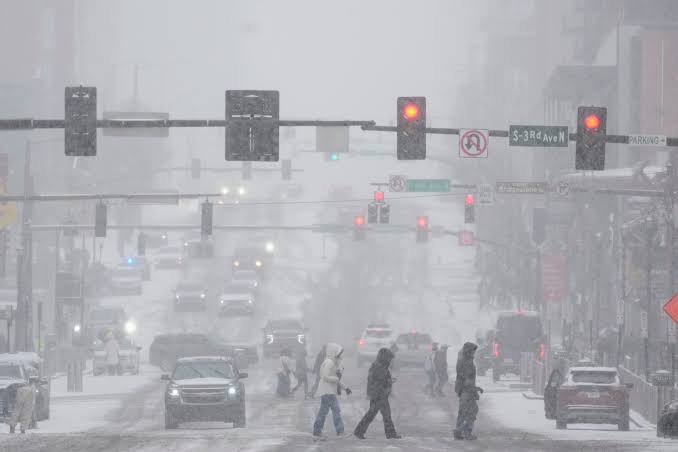
A powerful winter storm sweeping across the United States has claimed at least 10 lives and caused widespread disruption, with authorities urging residents to stay off roads as freezing conditions continued into Monday.

According to a report by Al-Jazeera, at least 20 states, along with the US capital, Washington, DC, declared states of emergency after snow, sleet and freezing rain knocked out electricity to nearly a million people. Power outages, flight cancellations and dangerous travel conditions affected large parts of the country.

As the storm moved east and south, forecasters warned that a trailing Arctic air mass could push temperatures to dangerously low levels for several days. The US National Weather Service (NWS) said Americans should expect similar conditions to continue into Monday morning.

In New York City, Mayor Zohran Mamdani confirmed that five people were found dead outdoors over the weekend during subzero temperatures. While he did not directly link the deaths to the storm, he told reporters there was “no more powerful reminder of the danger of extreme cold”.

Texas authorities reported three deaths, including that of a 16-year-old girl who died in a sledding accident. In Louisiana, the state’s Department of Health said two people died from hypothermia.

PowerOutage.com data showed that more than 840,000 customers were without electricity as of Sunday night. The worst-hit areas were mostly in the southern United States, where the storm strengthened on Saturday. Tennessee recorded more than 300,000 homes and businesses without power after ice brought down power lines. Louisiana, Mississippi and Georgia each reported over 100,000 outages.

Officials warned that the loss of electricity posed a serious risk, especially in the South, where extreme cold is less common and temperatures could break records, according to the NWS. Residents were advised to remain indoors due to hazardous conditions.

Air travel also faced major disruptions. Several major airports in New York, Philadelphia and Washington, DC, cancelled nearly all flights scheduled for the day.

Meteorologists explained that the storm resulted from a stretched polar vortex, a system of cold, low-pressure Arctic air that can expand and send frigid temperatures across North America. Scientists said such events may be linked to climate change, although natural climate variability also plays a role.

The NWS warned that heavy ice could lead to “long-duration power outages, extensive tree damage, and extremely dangerous or impassable travel conditions”, particularly in states not accustomed to severe winter weather.

Authorities also cautioned that life-threatening cold could persist for up to a week after the storm, especially in the Northern Plains and Upper Midwest. Forecasts show wind chill temperatures dropping to as low as -45 degrees Celsius (-50 degrees Fahrenheit), levels that can cause frostbite within minutes.

Kwankwaso and the cost of fighting godsons 

By  Ibrahiym A. El-Caleel

Senator Rabiu Musa Kwankwaso should be competing on the national stage with contemporaries such as Senator Bola Tinubu, Alhaji Atiku Abubakar, and other Class of 1999 political actors. By pedigree, experience, and longevity, Kwankwaso has clearly outgrown Kano politics, and he does not need to prove it again in 2027. However, he appears stuck in state-level politics. 

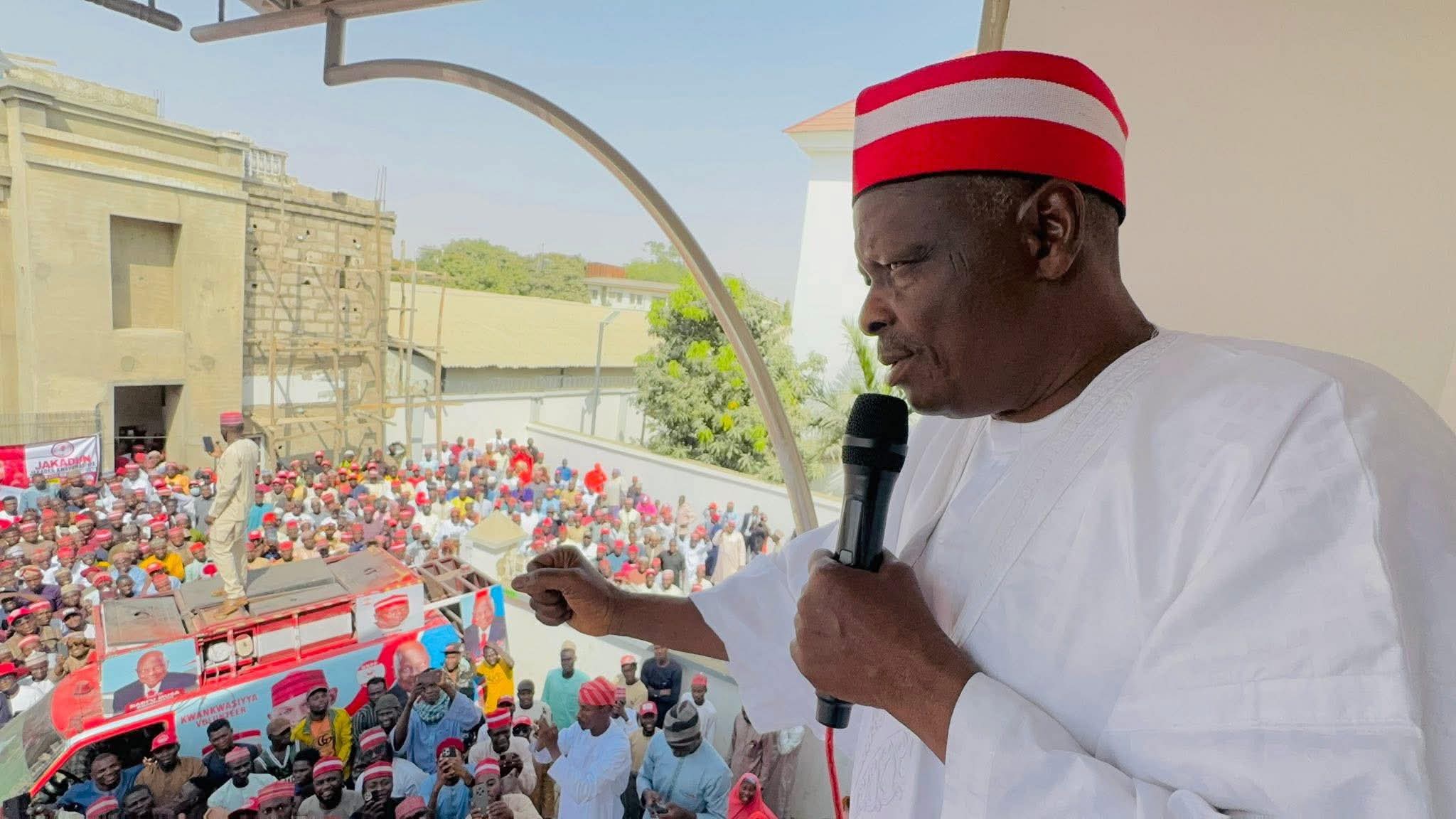
Kwankwaso is at odds with the two successive Kano governors after him, both of whom are his protĂ©gĂ©s: Dr Abdullahi Ganduje and the incumbent, Engr Abba Kabir Yusuf. He says they have “betrayed” him. There was a show of electoral force at his residence in Kano this afternoon. A large number of people trooped into his Miller Road residence in what he later called a “solidarity visit”.  

These developments indicate that Senator Kwankwaso is once again positioning himself for state-level dominance rather than advancing a national ambition in 2027. Ideally, Kwankwaso should defeat Governor Abba through a candidate he anoints for #KanoDecides2027. But a deeper question remains: should the 2027 ambition of a politician of Kwankwaso’s stature be focused on unseating a “betraying” godson at the state level, when Kwankwaso’s contemporaries have either honourably retired from politics or are positioning themselves for the presidency? 

Who exactly would Kwankwaso replace Abba with, and what assurance does he have that a newly installed godson would not eventually “betray” him, just as Ganduje and Abba did? At this point, there is little reason to believe the outcome would be different. The current godsons around him are likely to use his influence to rise and then assert their independence once in office. There is no clear indication that they would be more submissive than their two elder political siblings, Ganduje and Abba. How do you keep doing the same thing repeatedly while expecting a different result? 

There is also a genuine political risk. What if Abba Yusuf, like Ganduje before him, survives the onslaught and secures a second term? This is not an endorsement of electoral malpractice, but a recognition of Nigeria’s political realities. Kano’s 2019 gubernatorial election demonstrated how powerful interests can intervene decisively; Dr Ganduje ultimately retained office despite glaring indications that he lost at the polls.

If a similar outcome were to occur in 2027 and Governor Yusuf were to proceed to a second tenure, would that not constitute a second public humiliation for the godfather? What explanation would suffice then? That yet another protégé has matured enough to build political alliances strong enough to neutralise Kwankwaso’s influence? At that point, the narrative shifts decisively: from betrayed mentor to diminishing power broker.

On the other hand, if Senator Kwankwaso succeeds in unseating Governor Yusuf and installing another loyalist, what exactly would he be celebrating at the end of the day? That Kwankwasiyya has simply replaced Kwankwasiyya? That a godfather has prevailed over his own godson? Such victories may satisfy the logic of control, but they do little to expand political influence, strengthen institutions, or advance democratic culture. At best, they amount to an internal power rotation within the same political family, offering no clear gain to the broader society.

Ultimately, this debate goes beyond personalities. Do we really need a political model anchored on godfathers, covenants, and lifelong loyalty to patrons? Has Buhari’s repeated endorsement of anointed candidates meaningfully improved governance or political culture in the North? Has Tinubu’s entrenched godfatherism in the South West translated into measurable social or institutional progress? Until we seriously examine the long-term costs of political baptism, loyalty tests, and patronage politics, it remains difficult to argue that godfatherism is the most viable model for a modern democratic society.

 Ibrahiym A. El-Caleel wrote via caleel2009@gmail.com.

2027 Guber Race: Can Senator Buba Shehu win Bauchi?

By Zayyad Mohammed 

As Nigeria inches closer to the 2027 general elections, the political temperature across the Northeast is steadily rising. Of the six states in the region, the All Progressives Congress (APC) currently governs four, Borno, Gombe, Taraba, and Yobe,while the People’s Democratic Party (PDP) controls Adamawa and Bauchi. For the APC, reclaiming Bauchi is not merely a state contest; it is a strategic necessity in consolidating dominance in the Northeast.

Political analysts often remind us that all politics is local. Nowhere is this truer than in Bauchi State, where history, identity, and grassroots connection frequently outweigh elite credentials and federal influence. As the race for 2027 gathers momentum, the central question is not just whether the APC can win Bauchi, but who within the party has the capacity to deliver that victory.

Within the Bauchi APC, the contest is shaping up as a high-stakes battleground involving heavyweight figures: Minister of Health, Professor Muhammad Ali Pate; Minister of Foreign Affairs, Ambassador Yusuf Maitama Tuggar; Senator Shehu Buba Umar of Bauchi South; and former NAPIMS Managing Director, Alhaji Bala Wunti. Each brings distinct strengths, yet Bauchi’s political history suggests that not all strengths translate into electoral success.

Bauchi’s politics is unique, even by Nigerian standards. Since 1999, power has changed hands regularly after eight years, as seen in the transitions from Adamu Mu’azu to Isa Yuguda, and later to Mohammed Abdullahi Abubakar. This swinging pattern reflects a politically conscious electorate shaped by the enduring NEPU legacy, the sensitive Katagum–Bauchi balance, and an unwavering demand for grassroots leadership.

While Professor Ali Pate boasts international exposure and technocratic depth, his political challenge lies at home. Among many Bauchi voters, he is perceived as distant from local political struggles, earning the nickname “Wakilin Turawa”, a subtle but powerful reflection of weak grassroots resonance. Similarly, Alhaji Bala Wunti is widely regarded as competent and capable, yet Bauchi APC’s recent history with political newcomers raises red flags. In 2023, Air Vice Marshal Saddique Abubakar emerged suddenly to clinch the party ticket, only to suffer a resounding defeat at the polls. A similar pattern played out in 2015 when M.A. Abubakar rode the Buhari wave to victory but failed to secure a second term in 2019.

Ambassador Yusuf Maitama Tuggar, though a seasoned political actor, faces another challenge which is common in Bauchi politics: perceived aloofness from the grassroots. In a state where political success depends on daily engagement with local realities, distance; real or imagined, can be costly.

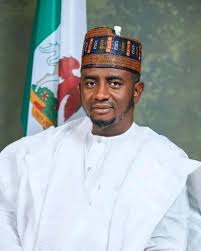
Against this backdrop, Senator Shehu Buba Umar stands out as a politically grounded contender. Several critical factors tilt the scale in his favour. Notably, all Bauchi governors since 1999 have emerged from Bauchi South, aligning squarely with Senator Buba’s constituency. The enduring Katagum–Bauchi political factor further strengthens his position, as does his deep-rooted grassroots network across the state.

More importantly, Senator Buba is widely viewed as the only aspirant within the APC with the political reach and local acceptance required to confront and defeat an incumbent party. His long-standing engagement with party structures, traditional institutions, and grassroots actors has earned him the quiet support of many political stakeholders. In Bauchi, where elections are often won long before polling day through alliances and local trust, this advantage cannot be overstated.

It is therefore unsurprising that many observers believe the APC leadership, at state, national, and presidential levels, may ultimately rally around Senator Buba Shehu Umar. In a highly competitive state like Bauchi, emotion must give way to strategy, and strategy demands choosing a candidate who aligns with the state’s political realities.

For the APC, winning Bauchi in 2027 is part of a broader objective: securing all six Northeast states in both the gubernatorial and presidential elections. Achieving this requires a deliberate, state-by-state approach that prioritizes grassroots candidates and addresses genuine local agitations. In Bauchi, the choice of governorship candidate will not only determine the fate of the state election but could significantly influence the party’s presidential performance.

As history has repeatedly shown, Bauchi does not reward political experiments. It rewards familiarity, structure, and  grassroots connection. In that equation, Senator Shehu Buba Umar appears not just as a contender, but as the APC’s most viable pathway to victory in 2027.

Zayyad Mohammed writes from Abuja, 08036070980, zaymohd@yahoo.com

Jigawa at a turning point under Governor Umar Namadi

By Ahmed Usman

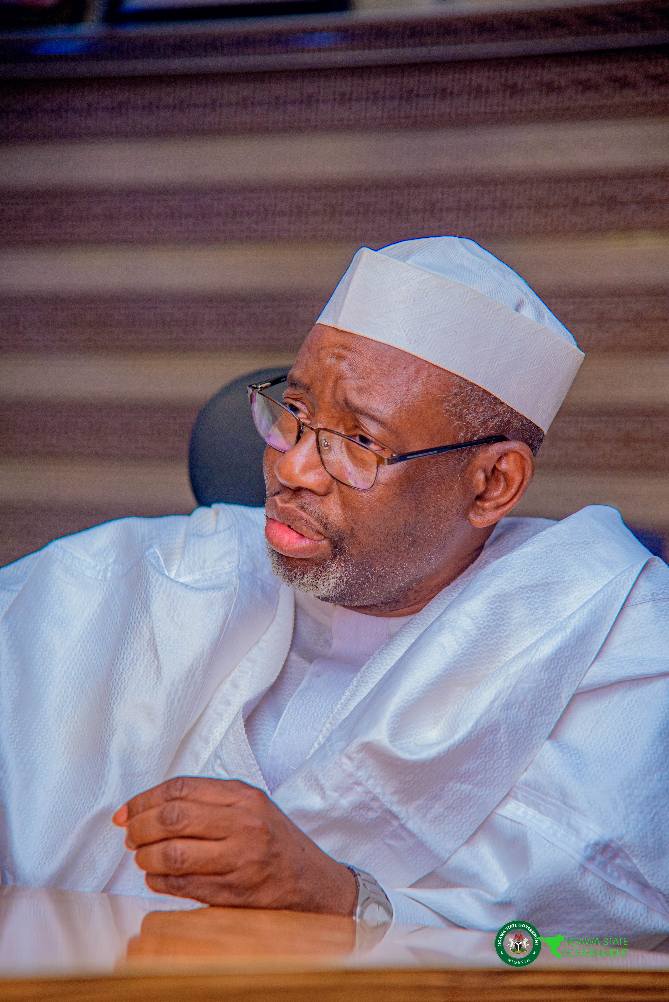
Away from political noise and headline-grabbing theatrics, Jigawa State under Governor Umar Namadi is pursuing a disciplined development path; one that prioritises agriculture, human capital, and long-term economic foundations.

In Nigeria’s political culture, analysts have long relied on improvised metrics to judge elected officials: the first 100 days, the first year, or the widely appealed 18-month threshold, said to be the point when a new administration needs to settle, understand its responsibilities, and develop its own identity separate from the previous government. Yet in practice, Nigerian governments often have only two effective years to deliver results before politics and electioneering reclaim the agenda. 

The remaining two years are usually taken over by political campaigns, party struggles, and early preparations for the next election. By that measure, the administrations sworn in May 2023 have crossed the decisive midpoint, and any government unable to clearly articulate its policy direction, measurable outcomes, and long-term vision at this stage must confront uncomfortable questions about competence and priorities.

This moment offers a useful lens through which to reassess Jigawa State, a place often dismissed by outsiders as economically marginal or politically inconsequential. For decades, Jigawa was viewed through a narrow lens of poverty rankings and limited industrial activity. With agriculture providing livelihoods for nearly two-thirds of households and with relatively low levels of urbanisation, critics frequently argued that the state lacked the structural foundations to become economically competitive. Such narratives, however, ignore a fundamental truth about development: transformation often begins quietly, long before it becomes visible in national headlines. Under Governor Umar Namadi Danmodi, Jigawa is now presenting evidence of such a shift, deliberate, methodical, and quietly disruptive.

I do not write as a political pundit but as a citizen who cares deeply about his locality, a state too often stereotyped and misunderstood. Jigawa has long been caricatured as peripheral, yet today it provides an unlikely case study in how disciplined governance can chart a new economic course. What makes this transformation compelling is not bombast or political spectacle, but the understated way the administration communicates, through actions, policies, and investments rather than theatrics. The government speaks not in rhetoric but in results that are gradually reshaping the state’s economic and social landscape.

That message is clearest in the administration’s approach to agriculture. Recognising that Jigawa’s comparative advantage lies in its fertile land and large smallholder base, Danmodi has pushed aggressively to modernise the sector. Irrigation expansion, improved access to inputs, and strengthened value chains are already raising yields and market access. Given that Jigawa possesses nearly 150,000 hectares of land suitable for irrigated agriculture, this strategy is not only rational but transformative, positioning the state as a future food production hub in northern Nigeria. These efforts may not dominate front-page news, but they represent the kind of foundational work that changes economic destinies.

That same quiet logic underpins reforms in education, perhaps the most consequential area for a state where literacy remains below the national average. From classroom renovations and teacher training to curriculum enhancement, these interventions reflect a long-term commitment to human capital rather than a search for quick political points. In a region where poor educational outcomes fuel cycles of poverty, ignoring such structural issues would be far more costly than confronting them.

Equally important is the administration’s effort to build an economy that is less dependent on federal allocations. In a country where many states survive almost entirely on monthly revenue from Abuja, Jigawa’s pursuit of internally generated revenue, industrial growth, and investment-friendly reforms reflects an understanding that true development requires financial independence. The state’s infrastructure push, spanning rural electrification, road construction, and urban renewal, is designed to support this transition. Reliable electricity, particularly, is indispensable for revitalising small and medium enterprises, which account for the lion’s share of non-oil employment in Nigeria.

These economic initiatives intersect meaningfully with reforms in healthcare and social protection. For a state grappling with high maternal and infant mortality, investments in primary healthcare centres, vaccination programs, and emergency response systems signal a welcome shift toward preventive, not reactive, governance. Jigawa’s emerging life-cycle social protection model, supporting individuals from pregnancy through childhood, youth, and old age, offers an unusually holistic approach in a country where social safety nets are often fragmented or nonexistent. Together, these policies communicate a consistent message: development is possible only when people are healthy, educated, and economically empowered.

Taken as a whole, the administration’s work sends a subtle but powerful signal. It suggests a government not merely managing day-to-day affairs but intentionally laying the groundwork for what the state could become. This is the essence of Jigawa’s quiet revolution: a governance model that prioritises structure over spectacle and competence over performative politics. It is a reminder that some of the most meaningful transformations are neither loud nor dramatic; they are steady, disciplined, and anchored in long-term vision.

For years, sceptics argued that Jigawa lacked the capacity to catch up with more industrialised states. But development rarely follows a straight line. It accelerates when leadership aligns with strategy, when investments target the roots rather than symptoms of underdevelopment, and when political ambition is tempered with economic realism. 

Under Danmodi, Jigawa is beginning to suggest that its future will not be determined by its past reputation but by its present choices. These choices, rooted in economic transformation, human capital development, and institutional stability, show a state no longer content to survive but ready to shape its own future.

This is why the story of Jigawa today matters. It is a reminder that progress does not always announce itself with fanfare. Sometimes, it emerges quietly, through the steady accumulation of policies that, taken together, signal a shift too significant to ignore. Under the right leadership and with the right priorities, even a state long written off by pessimists can begin to rewrite its place in the Nigerian economy. And in Jigawa, that rewriting has unmistakably begun.

Ahmed Usman wrote via ahmedusmanbox@gmail.com.
Abba Atiku Abubakar joins APC as Atiku says decision is personal

By Muhammad Abubakar

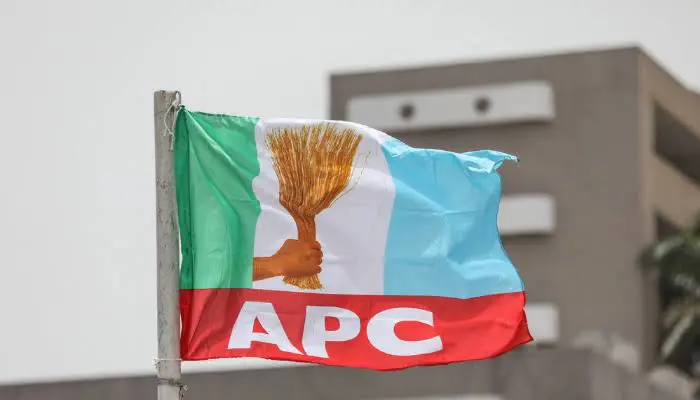
Abba Atiku Abubakar, son of former Vice President Atiku Abubakar, has joined the ruling All Progressives Congress (APC) to mobilise support for the re-election of President Bola Ahmed Tinubu.

Abba Atiku was received Thursday evening in Abuja by the Deputy President of the Senate, Barau Jibrin, and the APC National Vice Chairman (North East), Mustafa Salihu.

He also announced the renaming of his political group to Haske Bola Tinubu Organisation, a body originally founded in 2022 as the Atiku Haske Organisation.

Reacting, Atiku Abubakar described his son’s decision as entirely personal, noting that such choices are normal in a democracy, even within families.

While reaffirming his democratic principles, he criticised the APC over what he described as poor governance and worsening economic and social conditions, pledging to continue working with others to offer Nigerians an alternative path to relief, hope, and progress.

Happy Birthday, Her Excellency, Dr. Mariya Mahmoud Bunkure

Today, 15th January 2026, we celebrate an accomplished public servant and a distinguished leader — Her Excellency, Dr Mariya Mahmoud Bunkure, Honourable Minister of State for the Federal Capital Territory (FCT), Abuja.

As you mark another year of life and purpose, we reflect not just on the passage of time but on the profound impact of your service. Since assuming office, you have brought a unique blend of compassion, resilience, and an unwavering commitment to the “People’s First” mandate to your role.

Dr Bunkure, you have redefined public service in the FCT, demonstrating that leadership is truly about touching lives and building sustainable legacies. Your integrity, accessibility, and work ethic continue to inspire many.

We pray that Almighty Allah continues to grant you sound health, divine wisdom, and renewed strength as you discharge your responsibilities to the nation with distinction.

Happy Birthday, Ma.
May the years ahead be filled with success, fulfilment, and a lasting legacy.

Signed
Dr Saifullahi Shehu Imam

In defence of Kwankwaso and the scholars who stand with him

By Muhammad Sani Ilyasu

I woke up to a video circulating on social media by a former Kano State anti-corruption czar, giving his opinion about scholarship beneficiaries on why they had no moral right to identify with Kwankwasiyya. It is important to clear the air. Much of what is being said comes from people who were never inside the scheme and never lived the consequences.

Let me state this clearly and upfront: I do not identify with Kwankwasiyya. I disengaged from the movement in 2020. What follows is not partisan advocacy. It is testimony.

Criticism of Rabiu Musa Kwankwaso and scholars associated either rightly or wrongly with his ideology has become fashionable. But much of that criticism is detached from the lived realities that shaped those associations, especially the horrible experience of Kano State scholarship beneficiaries. I write as one of them.

Yes, the scholarships were funded with Kano State resources. But at no point—none that I can recall—were beneficiaries compelled to support Kwankwaso politically. There was no loyalty test, no ideological oath, no expectation of political repayment. In fact, many scholars openly opposed him. I personally recall frequent debates with colleagues who were supporters of Ibrahim Shekarau, many of whom never gave Kwankwaso any credit for the scholarship. Most of us were indifferent, credit was never the issue.

The lesson however came in 2015. That was when Abdullahi Ganduje assumed office—and when all of us, including Kwankwaso’s fiercest critics among the scholars, learned the brutal difference between right and privilege. Tuition payments were halted. Upkeep allowances disappeared. Return-ticket funds were withheld. Scholars were stranded and pushed into destitution in foreign countries.

Some waited over eight years to receive their certificates after the scheme was abruptly terminated. In some cases, parents died without ever seeing the academic fruits of sacrifices they had made.

As if that were not enough, scholars were publicly discredited—labeled products of “substandard universities,” their academic legitimacy questioned to justify administrative neglect. Throughout this period, Kano State went silent.

Religious leaders. Business elites. Civil society organizations. The same voices that now moralize and gaslight scholars looked away. The only “crime” of the scholars was that Kwankwaso started the program.

If, as some critics claim, the scheme was merely a vehicle for siphoning public funds, a simple question remains unanswered: why was Kwankwaso never prosecuted—and why were scholars punished instead? Why were entitlements withheld if the beneficiaries were not the accused?

What makes the silence more damning is that this neglect extended beyond foreign scholars. Until the return of a Kwankwasiyya-led government, even undergraduate scholars sent to private universities within Nigeria—and to Egypt and Cyprus—were denied certificates. For postgraduate students, the delay was damaging. For undergraduates, it was life-shattering: no certificate meant no employment, no future.

In all those years, only one political current consistently raised the issue and demanded settlement: Kwankwasiyya. This is the context critics conveniently ignore.

What they now describe as “indoctrination” or “blind loyalty” was, in reality, a rational response to abandonment. You cannot withdraw education, dignity, and future—then later shame people for gravitating toward the only structure that acknowledged their suffering.

That is not principled criticism. It is double standard. Scholars were not pushed toward Kwankwaso by manipulation. They were pushed there by neglect and even for those of us who have long moved on, that historical truth remains intact—uncomfortable, inconvenient, and undeniable.

Gaslighting scholars for the choices they made under abandonment is not moral courage.
It is hypocrisy.

Muhammad writes from Baltimore Maryland and can be reached at msaniiliyasu@gmail.com.

We recovered over N145m in child support, debt disputes in 2025 — Kano Hisbah

By Uzair Adam

The Kano State Hisbah Board says it recovered more than N145 million for residents through mediation on child support and debt-related disputes in 2025, marking one of its most significant interventions in recent years.

The disclosure was made by the Deputy Commander of the board, Dr. Mujahiddeen Aminuddeen, in an audio briefing, where he outlined the agency’s activities across the state during the year under review.

According to Dr. Aminuddeen, a total sum of N145,406,409 was recovered from cases involving debt disputes and child support, ensuring that divorced mothers and creditors received what was due to them without the delays often associated with conventional court processes. He described the recovery as a major milestone in the board’s efforts to promote social justice.

“Hisbah has successfully recovered what belongs to some people. By the grace of God, the total reached N145,406,409,” he said.

Beyond financial mediation, the deputy commander explained that the board recorded a surge in demand for its counselling services in 2025. He said the counselling department handled 93,231 cases involving individuals seeking guidance on marital, family and personal issues during the period.

He further disclosed that the board received 12,446 complaints, out of which 1,908 cases were successfully resolved through reconciliation. For cases that involved criminal elements, Dr. Aminuddeen said 4,246 suspects were processed by Hisbah and handed over to the Nigeria Police Force for further investigation and prosecution.

The deputy commander also noted that Hisbah carried out nine major operations between January and December 2025, leading to 132 arrests. He explained that such operations were aimed at addressing activities considered harmful to public order and the moral values of Kano State, including a widely reported raid on an illegal gathering in Hotoro late last year.

Dr. Aminuddeen attributed the board’s achievements in 2025 to the cooperation and support of Kano residents, stressing that the agency’s work is guided by a sense of religious and moral responsibility. “This was not a small effort. Hisbah is the work of God,” he said, adding that public support played a crucial role in the successes recorded.

He reaffirmed the board’s commitment to mediation, counselling and collaboration with security agencies, noting that Hisbah would continue to prioritise social harmony, justice and the protection of vulnerable members of society across the state.

Plateau Governor Mutfwang defects from PDP

By Ibrahim Yunusa

Plateau State Governor, Caleb Mutfwang, has officially resigned from the Peoples Democratic Party (PDP), citing the need for purposeful leadership, clarity of direction, and improved service delivery.

In a letter dated December 29, addressed to the Chairman of the PDP in Ampang West Ward, Mangu Local Government Area, Governor Mutfwang expressed that the current political reality necessitated a shift in platform.

He wrote: “Given the realities of the moment and guided by my commitment to purposeful leadership, clarity of direction, and service delivery, I am compelled to seek an alternative political platform.”

Rumours of the governor’s potential defection had been circulated, with reports suggesting he had been in talks with the ruling All Progressives Congress (APC).

His official exit from the PDP appears to confirm those earlier speculations.