Politics

You can add some category description here.

An open letter to the chairman of Hadejia Local Government

Dear Honourable Yaro Abba Ari,

I write to you as a deeply concerned indigene of Hadejia Local Government Area, more specifically, a resident of Dubantu Quarters. I do so with a strong sense of responsibility and hope, believing that your esteemed office, under your capable leadership, will give due attention to the pressing issues that have plagued our community for quite some time.

First and foremost, I would like to sincerely commend your administration for the developmental strides made in various parts of the local government area. These achievements reflect your commitment to progress and service delivery. However, I am compelled to draw your immediate attention to some ongoing challenges that continue to affect the people of Dubantu Quarters — challenges that, if not addressed, may further deteriorate the well-being and safety of our community.

The first major issue of concern is the worsening condition of the drainage systems in Dubantu Quarters. Every year, particularly during the rainy season, our community suffers from excessive waterlogging and flooding. Rainwater, due to the absence or blockage of proper drainage, flows freely over the roads and into homes, causing significant disruption and damage. The situation has unfortunately become a recurring crisis that leads to the destruction of properties and, in the worst cases, loss of innocent lives. Residents live in constant anxiety as heavy rains turn roads into rivers, making movement dangerous and threatening the safety of families.

Secondly, I would like to bring to your kind attention the growing security and social concerns in specific parts of Dubantu Quarters — particularly areas that remain in complete darkness at night due to a lack of public lighting infrastructure. These dark zones have become gathering points for immoral and misguided youths, who often engage in illicit activities such as the abuse of toxic substances — including syrul (codeine cough syrup), ganja, and other harmful drugs. These activities not only endanger the lives of the individuals involved but also pose a significant threat to the safety and peace of law-abiding citizens, especially during the night hours.

Despite numerous efforts by responsible members of the community to curb this growing menace, their attempts have been largely ineffective due to the absence of necessary support, tools, and enforcement capabilities. The community is doing its best with the limited resources at its disposal, but the situation clearly calls for strong governmental intervention. 

As a result, and in the spirit of community development, I humbly and earnestly appeal to you to take the following specific actions:

Reconstruction and proper maintenance of Drainage systems in Dubantu Quarters will help ensure that rainwater is channelled correctly, reducing the devastating impact of seasonal flooding and safeguarding the lives and properties of the residents.

Installation of solar-powered Street lights in critical dark areas within Dubantu Quarters. Improved lighting will not only enhance visibility and security but will also deter criminal and immoral behaviour that currently thrives under the cover of darkness.

Collaborative Engagement with Law Enforcement Agencies and Community Leaders to Develop and Implement a Strategic, Community-Driven Solution to the Issue of Drug Abuse. This should include awareness campaigns, youth sensitisation programs, and the creation of positive alternatives that engage our young people in meaningful and productive activities.

Your timely intervention in these matters will go a long way in alleviating the hardship currently faced by the residents of Dubantu Quarters. Moreover, it will serve to reaffirm the trust and confidence that the people of Hadejia Local Government Area have placed in your leadership.

We remain optimistic that you will treat these concerns with the urgency and seriousness they deserve, and that your office will take immediate steps to implement lasting solutions.

Thank you very much for your time, attention, and anticipated positive response.

Yours sincerely,

Garba Sidi

An Indigene of Hadejia Local Government Area

sidihadejia@gmail.com

Bauchi’s unique politics and its swinging character

By Zayyad I. Muhammad 

Bauchi is one of the few states, perhaps the only one, in northern Nigeria that has consistently upheld a politics rooted in independence. The people of Bauchi are known for their distinct political culture: no candidate, political party, or ideology can be imposed on them. Incumbency holds little sway, and public or political office holders often fail to win elections.

From the days of the Northern Elements Progressive Union (NEPU) in the First Republic, to the politics of the Second Republic, and even the cult-like support for Muhammadu Buhari in more recent times, Bauchi has carved out a political identity that is both unique and enduring.

A review of Bauchi’s electoral history, particularly in gubernatorial contests, reveals a striking pattern of political independence that many analysts regard as unmatched in Nigeria. 

For instance:

In 1979, they elected Tatari Ali as Governor under the National Party of Nigeria (NPN) against their kinsman within the North East, in the person of Alhaji Ibrahim Waziri of the GNPP.

In 1992, they elected Alhaji Dahiru Mohammed Deba as Governor, alongside Alh Ibrahim Tofa of NRC, against the popular candidature of MKO Abiola 

Somehow in 1999, after a rerun election, PDP managed to win, and Adamu Mu’azu got elected as Governor, but later lost the bid to win senatorial elections after serving for 8 years as Governor. 

In 2007, Mal. Isa Yuguda won as Governor under ANPP against the incumbent PDP when Yar’Adua was president. 

In 2011, the state aligned with the opposition APC to produce Mohammed Abdullahi Abubakar as Governor, but lost his re-election bid despite being the sitting governor to the Present Governor Bala Mohammed of the PDP.

This pattern speaks volumes:

Abuja or any ‘interest’ cannot and has never dictated the governor’s emergence in Bauchi state. Imposing candidates rarely work. Incumbency does not guarantee re-election. High-profile public and political office holders have little impact. Governors have lost re-election, senatorial bids, and attempts to anoint successors in several Cases. The swinging nature of Bauchi politics is one of its most intriguing features

Equally remarkable is the background of those elected. Since 1999, Bauchi governors have consistently emerged from modest or unexpected circumstances- ‘Zero level, so to speak. Governors Adamu Mu’azu, Isa Yuguda, Mohammed Abubakar, and the present Bala Mohammed all came from zero disposition, meaning they did not hold a position or office for at least two years during the election period. This trend illustrates the state’s openness to merit and its resistance to political imposition.

Looking ahead to the 2027 elections, it appears to be the state with the highest number of contestants so far. 

1. Mohammed Auwal Jatau – the current Deputy Governor of Bauchi State

2. Muhammad Ali Pate – the current Minister of Health

3. Dr. Nura Manu Soro – Ex-Finance Commissioner and President Tinubu campaign Coordinator. 

4. Ambassador Yusuf Tuggar, current minister of foreign affairs. 

5. ⁠Senator Shehu Buba, a serving senator from the APC 

6. ⁠Alhaji Bala Wunti, former MD of NAPIMS

7. ⁠RTD Air Marshal Sadiq, former APC gubernatorial candidate 

8. ⁠Senator Halliru Jika, former senator 

9. ⁠Dr. MUSA Babayo, former chairman of TETFUND 

10. ⁠Senator Dahuwa Kaila, a serving senator, among numerous others. 

With such a lineup and Bauchi’s long history of voter independence, the 2027 elections promise to be as competitive and unpredictable as ever.

Bauchi’s politics remain firmly anchored in progressive and populist traditions. Candidates without a clear vision or strong grassroots connection are regularly rejected at the polls, and 2027 is likely to uphold that tradition.

Only time will tell.

Zayyad I. Muhammad writes from Abuja via zaymohd@yahoo.com.

The passing of Muhammadu Buhari: A political loss for both APC and ADC

By Zayyad I. Muhammad

The passing of former President Muhammadu Buhari marks not just the end of an era but also a significant political loss for two of the three key political parties in Nigeria, the ruling All Progressives Congress (APC) and the rising coalition force, the African Democratic Congress (ADC).

For both parties, Buhari represented more than just a former head of state; he was a political symbol with immense influence. His mere presence at a campaign rally, no matter how brief, would have carried tremendous weight, particularly among his loyal base, which is estimated to be over 12 million strong. These supporters, often described as a “cult-like” following, have remained fiercely committed to him since his early political days under the Congress for Progressive Change (CPC) and the Buhari Organisation. However, the number may have decreased by now.

In recent times, many former CPC loyalists and Buhari-era political operatives have appeared to find a new home in the ADC, reshaping its structure and lending it a dose of national relevance. This quiet but strategic realignment has positioned the ADC as a potential beneficiary of some of the Buhari political legacy, especially in northern Nigeria, where his influence remains deeply rooted. However, a good number of the CPC bloc and the Buhari Organisation have remained in the APC.

Had Buhari lived to make even a symbolic appearance at an APC campaign event, it would have significantly dampened the ADC’s momentum and reinforced the APC’s claim to his enduring political capital. Conversely, had he chosen to lend his image, even silently, to the ADC, it would have sent shockwaves through the APC, raising questions about its hold over his base.

Now, with his passing, both parties are left in a competitive vacuum, each scrambling to appeal to the millions who revered Buhari for his perceived integrity, simple lifestyle, and northern populist appeal. The political battlefield is wide open, and neither the APC nor the ADC can confidently claim to be the rightful heir to Buhari’s legacy.

However, President Bola Ahmed Tinubu may have gained an early edge. His respectful and dignified handling of Buhari’s death, marked by prompt tributes, state honours, and symbolic gestures, may resonate with many of Buhari’s followers. In Nigerian politics, such symbolic acts are never underestimated. They signal alignment, loyalty, and shared values, all of which matter deeply to a base that is emotional, ideological, and still seeking a new political anchor.

As the 2027 election cycle approaches, the real question becomes: Who will inherit the Buhari political machinery? The answer may shape the future of both the APC and ADC, and by extension, Nigeria’s political landscape.

 Zayyad I. Muhammad writes from Abuja via zaymohd@yahoo.com.

The afterlife of a conspiracy: Why facts alone cannot bury “Jibril of Sudan”

By Ibraheem Muhammad Mustapha

The passing of former President Muhammadu Buhari on July 13, 2025, presents a fascinating and troubling paradox for the information ecosystem. Instead of closing a chapter, it appears to have reopened a well-worn, debunked narrative that the “real” Buhari died during his medical trip to London in 2017, and was replaced by a clone or body double named “Jibril” from Sudan. 

As a fact-checker who has previously addressed and debunked this claim, this moment is a sobering litmus test for me and other fact-checkers, as it poses an elementary question of whether classical fact-checking is effective. My analysis leads me to a disquieting conclusion: we are not merely fighting a deficit of information, but a surplus of emotionally resonant, identity-affirming mythology.

Motivated Reasoning and the Psychology of Belief

To grasp the tenacity of the “Jibril” theory, we must first dispense with the simplistic notion that its believers are merely ignorant or unintelligent. The phenomenon is far more complex, rooted in predictable and well-documented psychological mechanics. The primary force at play is what political scientists Milton Lodge and Charles Taber have extensively studied as motivated reasoning. This framework posits that humans, especially in politically charged contexts, behave less as impartial judges and more as motivated attorneys seeking to arrive at a conclusion that aligns with their pre-existing beliefs and identities. For Nigerians whose political identity was defined by opposition to or deep disappointment with the Buhari administration, the “Jibril” narrative was never a hypothesis to be tested; it was a conclusion to be defended.

This dovetails seamlessly with the basic cognitive dissonance theory as was first postulated by Leon Festinger in the 1950s. From the perspective adopted by Festinger, an individual suffers great mental discomfort when they hold contradictory beliefs or are confronted with new information that challenges their existing beliefs. For a citizen who felt alienated, disenfranchised, experienced worse economic conditions or insecurity under a leader they may have once supported or hoped would succeed, the psychological stress is immense. It is far less dissonant to embrace a radical conspiracy that the “real,” competent Buhari is gone than to accept the more painful and complex reality that his administration, for a host of intricate reasons, fell short of expectations. The “Jibril” theory, therefore, is not a failure of logic but a psychological coping mechanism, a path of least resistance to resolve an otherwise unbearable internal conflict.

The Power of Narrative and the Poverty of Facts

Furthermore, fact-checkers fundamentally misunderstand the nature of the battle when we arrive armed with a dossier of facts and data to a war of narratives. Human cognition is not optimised for data points; it is wired for stories. The “Jibril” theory is a masterclass in narrative potency. It contains a villain (the cabal that orchestrated the switch), a victim (the Nigerian populace), a tragic secret (the president’s death), and a mystery to be solved. It transforms the believer from a passive citizen into a heroic truth-seeker, possessing gnosis —a secret, elevated knowledge unavailable to the deluded masses. In contrast, what does the truth offer? It offers the mundane and often unsatisfying complexity of economic policy, security logistics, and bureaucratic inertia. The conspiracy narrative is simply a better, more emotionally gripping story. It provides a scapegoat, assigns clear blame, and creates a sense of intellectual superiority in the believer.

For its most ardent believers, “Jibril” is a symbol of how distant, disconnected, and unrepresentative Buhari’s government felt. Claims that he no longer spoke Fulfulde fluently or looked physically different were not weighed as forensic evidence; they were experienced as embodied metaphors of alienation.

 The Core Crisis is Institutional Distrust

This entire dynamic is supercharged by a catastrophic collapse of institutional trust, which I see as the true Achilles’ heel of fact-checking as a profession. Our work as fact-checkers is predicated on the assumption that a trusted, authoritative third party can adjudicate truth claims. The “Jibril” case demonstrates the collapse of this assumption. The theory gained traction in an environment of profound distrust in public institutions. When citizens do not trust the government to tell the truth about policy or the economy, why would they trust it to tell the truth about the president’s identity? The fact-check is DOA (Dead on Arrival) because the source is already deemed compromised. Therefore, in an environment of deep-seated cynicism towards government, media, and experts, any attempt at debunking is easily reframed as part of the cover-up. Hence, the more forcefully an official source denies a conspiracy, the more it can convince believers that the conspiracy is real. This phenomenon was documented by researchers Brendan Nyhan and Jason Reifler, who identified the backfire effect: each denial is interpreted as a sign of panic from those trying to hide the “truth.” President Buhari’s own need to address the rumour in 2018 (“It’s the real me, I assure you”) was, for many believers, served not as a refutation but as high-level confirmation that they were indeed onto something big.

Reassessing the Role of the Fact-Checker

Therefore, I am forced to reassess our role as fact-checkers and the efficacy of our traditional methods. The “Jibril of Sudan” case study demonstrates that reactive debunking is akin to trying to unring a bell. The path forward must be a paradigm shift towards what social psychologist William J. McGuire pioneered as Inoculation Theory. Rather than merely correcting falsehoods after they have taken root, we must pre-emptively “vaccinate” the public by exposing them to weakened forms of misinformation and deconstructing the manipulative techniques being used. The goal is to build cognitive antibodies against emotional manipulation, conspiratorial thinking, and logical fallacies.

Also, we need to learn how to fight a narrative war, not a Factual Skirmish, because we cannot defeat a powerful story with a list of facts. We must counter it with a more compelling, truthful narrative. This involves storytelling that explains complex realities in an accessible and empathetic way.

Then we need to embrace the method of empathy before evidence. The first step in engaging a believer is not to present a fact-check but to acknowledge the underlying grievance. A conversation that starts with, “I understand the frustration with the country’s direction that leads people to seek drastic explanations,” is more likely to open a door for dialogue than one that starts with, “You are wrong, and here’s why.”

Lastly, the ultimate antidote to misinformation is trust. This is a generational project, not a short-term fix. It requires sustained efforts from the media, government, and civil society to operate with transparency, accountability, and a genuine commitment to public welfare.

The persistence of the “Jibril of Sudan” theory, even in the face of death, is not an indictment of our work as fact-checkers. It is a diagnosis of a deeper societal condition where trust has eroded, and narratives have become more powerful than reality. It signals that the core battle is not over facts, but over trust. Until we can begin the long, arduous work of rebuilding faith in the institutions that serve as arbiters of reality, we will remain locked in this frustrating cycle. The work of a fact-checker, I now believe, must evolve from being a mere verifier of claims to becoming an architect of a more resilient, critical, and trust-based information ecosystem.

No, Mr President, it is UniMaid

By Zailani Bappa

In the last few days, we have been engaged in a debate over whether it was right or not for President Bola Ahmed Tinubu to rename the University of Maiduguri (UNIMAID) after the late President Muhammadu Buhari. I want to add my voice to this as well.

I am a staunch fan and supporter of the late President, and I cherish his exemplary qualities, which are truly uncommon among our present-day crop of active politicians. I respect him alive and in his death. I am also a graduate of UNIMAID.

Despite the above, I strongly disagree with Bola Ahmed Tinubu’s decision to rename my alma mater after President Muhammadu Buhari at this time. The move, to my understanding, is self-serving, dishonest and, obviously, unpopular. And if the President has to do it, there are so many other things available to manipulate for achieving political ambition. 

Just imagine renaming the University of London, or the Oxford University or the Harvard University to another name at this hour. These names have become top brand symbols worldwide and are synonymous with the excellence the Universities are demonstrating.

So is UNIMAID. Its service of excellence has become synonymous with this name for more than five decades. Universities with names of persons, such as Ahmadu Bello University and Bayero University, built their present reputation from the outset, along with those names.

In truth, if President Bola Ahmed Tinubu wanted so desperately to seize the demise of President Muhammadu Buhari to advance his political opportunities in the Northern part of Nigeria ahead of the upcoming elections, he should have renamed the University of Ibadan or the University of Lagos after the late President which will prove to the Northerners more of his nationalistic and unbiased posture. 

After all, the latter of the above Universities was reportedly saved from this kind of unwholesome political decision by his active participation when it was to be renamed after the late MKO Abiola. I will sign and urge everyone to sign the petition currently circulating, which opposes this highly offensive decision.

Buhari: Corruption hater, insecurity fighter, and agricultural transformer

By Sale Rusulana Yanguruza 

When a leader and loved one passes away, we often reflect on their legacy, the meaning of their life, the impact they made during their lifetime, and the significant contribution they made to society. Upon receiving the sad news about the demise of the immediate former President Muhammadu Buhari, what quickly came to mind was his honourable and distinguished efforts to end insecurity, eliminate corruption, and transform the agricultural sector in Nigeria.

His love for Nigerians prompted him to contest in three elections, and he lost the first two. The losses made him shed tears, but he still contested again. He didn’t give up and strived in 2015; he won and was declared the winner of the presidential election. On corruption, Buhari wasn’t just a fighter against corruption in Nigeria; he was a leader who despised untrustworthy individuals. A president who came to office with a unique energy aimed to end his enemy,”corruption”, and politicians who loot citizens’ property.

When Femi Adesina was granted an interview immediately after Buhari’s demise was announced, he boldly said, “Buhari was as clean as a whistle. Nobody can accuse him of anything that has the slightest affinity to corruption.” Adesina’s words imply that Buhari was incorruptible, as no one could accuse him of corruption; his life was a testament to his integrity. While Buhari saw corruption as a disease that was drastically hampering and tempering development in Nigeria, he stated, in his words during an anti-corruption speech in 2016, “If we don’t kill corruption, corruption will kill Nigeria.”

No one can doubt Buhari’s assertion that corruption must be eradicated before Nigeria can develop. However, unfortunately, during his first tenure, Buhari made significant efforts to ensure that all stolen assets by politicians were returned to Nigerians and implemented measures to prevent further occurrences. Yet, as time went on, Buhari was said to be poised, which led him to spend about three months abroad during his first tenure as the president of Nigeria. That story paved the way for a lot of rumours, which people spread, saying he had died, but with God’s grace, he was back and continued with his activities, finished his tenure, and sadly, today, he has met his maker.

Buhari has backed his commitment by putting in place some necessary measures, such as the Treasury Single Account (TSA), the Whistle-Blowing Policy, and the establishment of the Presidential Advisory Committee Against Corruption, to combat the systemic theft of public resources and, by extension, its pernicious effects on human rights and development. Yes, Buhari is known for Mai Gaskiya, which earned him votes in 2015. He was the first president who made leaders who had stolen the country’s finances fear him when he was declared president of the Federal Republic of Nigeria in 2015, beating the incumbent president, Goodluck Ebele Jonathan.

 Looked at Buhari and Boko Haram

When Buhari was elected, before his swearing-in as President of the Federal Republic of Nigeria on May 29, 2015, he met with the President of Chad, Idriss Déby, to discuss collaboration on ending insecurity, particularly from Boko Haram in Borno State. Buhari didn’t stop there; he took an official visit to Niger to discuss the issue with the president, aimed at addressing the Boko Haram problem. As Vanguard reported on June 1, 2015, the visit by the newly inaugurated Nigerian leader to Niamey was directed and aimed at decapitating the head of the group as a final solution to the insurgency that had wreaked havoc on the country’s North-East region.

Do you know that Buhari’s first trip as president of Nigeria to an outside country was about insecurity? 

Chad and Niger were Buhari’s first foreign visits outside Nigeria after he was sworn in as president, with the matter of insecurity bedevilling the region, particularly in the northeast. In his inaugural speech in 2015, Buhari said, “The most immediate challenge is Boko Haram insurgency. Progress has been made in recent weeks by our security forces, but victory cannot be achieved by basing the Command and Control Centre in Abuja. The command centre will be relocated to Maiduguri and remain until Boko Haram is completely subdued. But we cannot claim to have defeated Boko Haram without rescuing the Chibok girls and all other innocent persons held hostage by insurgents. This government will do all it can to rescue them alive.”

To support Buhari’s statement, when I attended the Town Hall Meeting organised by News Central Television in Maiduguri, Professor Babagana Umara stated that the Chibok Secondary School, where the girls were abducted, had reopened and is running actively, with Teaching and learning currently taking place in the school.

Undoubtedly, all this was part of the efforts put in by the former President of Nigeria, President Muhammadu, who gave his attention and good synergy to end it. Without a doubt, the long-standing insecurity in the region was drasticallyreduced. Though Boko Haram has carried out some recent attacks, one cannot deny the fact that the former President was at the forefront in reducing it in the region during his tenure.

Is Buhari an Agricultural Transformer? 

Buhari has always been a president who advocated for Nigerians to take agriculture very seriously. President Buhari stated this while delivering a lecture on Tuesday in Abuja at the launch of the National Young Farmers Scheme, a program designed by the National Agricultural Land Development Authority (NALDA). The program aims to spark greater interest among young people in farming.

According to the President, agriculture remains the backbone of the Nigerian economy, being the largest contributor to the nation’s Gross Domestic Product (GDP). Although the advice was intended for Nigerians, today our youth have largely accepted the President’s advice and returned to farming, which they were previously unable to do.

Legacy is not leaving something for people; it’s leaving something in people.” – Peter Strople

Rest in perfect peace, Baba.

Sale Rusulana Yanguruza wrote via salesaifullahi931@gmail.com.

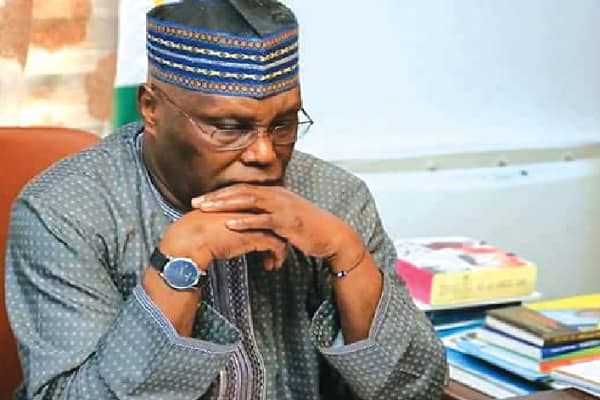
Atiku quits PDP over irreconcilable differences

By Ibrahim Yunusa

Former Vice President of Nigeria, Atiku Abubakar, has officially resigned from the People’s Democratic Party (PDP), marking a significant political shift ahead of the 2027 general elections.

The resignation was contained in a letter dated 14th July, 2025, and addressed to the PDP Chairman in his Jada Ward, Adamawa State.

Atiku, who served two terms as Vice President and contested the presidency under the PDP in both 2019 and 2023, is allegedly left the party due to internal crises and increasing allegations of anti-party activities as key reasons for his departure.

The PDP, once Nigeria’s leading opposition party, has struggled in recent times with internal divisions, weakening its political strength.

Atiku’s exit is viewed as a major blow to the party’s stability.

Recently the former Vice President confirmed has aligned with a new political coalition involving aggrieved members of APC and other parties, with a consensus to adopt the African Democratic Congress (ADC) as their new platform moving forward.

Buhari: The Last March of a General

By Usman Abdullahi Koli, ANIPR 

Muhammadu Buhari, former President of Nigeria, is no more. For a moment, I felt very shocked and touched. Not because I expected him to live forever, but because I had never honestly imagined a Nigeria without him somewhere in the background watching, guiding, deciding, or simply being present. I asked myself why the end of some lives feels heavier than others. Perhaps it is because those lives were never ordinary. Buhari’s life was one of service, controversy, silence, and symbolism. Now that the chapter is closed, what remains is the long shadow of his presence, a legacy that will be remembered, questioned, and reflected upon for years to come.

Buhari was never a man you could ignore. You were either with him or against him. I, more often than not, stood in opposition. I challenged his approach to national security, criticised his handling of the education system, and voiced strong concerns about his oversight of Nigeria’s crude oil sector and economy. My criticisms were never born out of malice, but out of conviction. I believed, and still do, that our country deserves better. I thought it was our duty to demand it.

Yet, amid my disagreements, I never lost sight of the man behind the decisions. In 2020, during the #EndSARS movement, when the nation was boiling with fear and fury, I felt compelled to offer a different perspective. I wrote an article titled “Calming the Tide: Buhari’s Antidote.” In that piece, I tried to humanise him. I described him as a lanky man, often caught smiling with his teeth in full view, yet known for the signature frown that defined his public image. Something was striking about how he carried himself in his flowing babban-riga, standing tall and firm like the general he once was, even in the calm of civilian leadership.

Buhari’s story began long before he entered Aso Rock. As a young man, he embraced the uncertainties of military life. He rose through the ranks with grit, ultimately becoming a general in the Nigerian Army. He ruled Nigeria first as a military leader and returned, decades later, as a civilian president. His reemergence was not merely a political move; it was deeply personal. He saw his return as a duty to complete a mission he once began in uniform. Whether he succeeded or fell short, Buhari believed in his cause, and that belief fueled his resolve.

He was undeniably a man of sharp edges. His stubborn adherence to principle often came at a cost. He preferred silence when the nation needed clarity and stood firm when compromise was necessary. His integrity, once lauded, became the subject of scrutiny. Some wounds were self-inflicted; others were inherited from the complexities of leadership. Regardless, they will shape how history remembers him.

Despite it all, Buhari remained anchored in a modest way of life. He never sought extravagance. He governed in the way he understood best—that is, through order, discipline, and restraint. These traits, while admired by some, alienated others. Yet, behind that stoic exterior was a man deeply invested in the idea of service, even if the methods failed to reflect the expectations of many.

The end of a life always casts a different light on it. Legacies are never truly complete until the final chapter has been closed. Buhari’s legacy will be debated in homes, classrooms, and political circles for years to come. But today is not for judgment. Today is for remembrance. For the man, not just the president. For the soldier who once stood on the frontline, and for the leader who walked through the dust of Daura into the marble halls of national power.

At over eighty, he still had something to give. Not in speeches or policy, but in presence, in counsel, in memory. Nigeria needs his wisdom, perhaps now more than ever.

I mourn him, not because I always agreed with him, but because I respected the weight of the burden he carried. He did not lead perfectly. But he led. And in many ways, he led with sincerity.

Now he is gone. But his footprints remain on the battlefield, in the ballot box, and in the hearts of those who watched, waited, and sometimes wept. His story is one of contradictions, courage, convictions, and consequences. But above all, it is a Nigerian story.

Rest in peace, General Muhammadu Buhari. The march is over. The bugle has sounded. And history, in all its fullness, will remember you.

Usman Abdullahi Koli wrote via mernoukoli@gmail.com.

Debunking the Claims: A closer look at governance and opposition in Katsina State

By Ahmed Abdulkadir

It was with a mix of curiosity and concern that I came across an article published by The Daily Reality on July 12, 2025, titled “How the Lack of Strong Opposition Masks the Government’s Failures in Katsina.” The write-up was emotionally charged, laced with sweeping generalisations and unverified claims against the administration of Governor Dikko Umar Radda. But beyond the passion and provocative headline lies the need for a more measured and fact-based perspective—one grounded in reality rather than rhetoric.

Let us take a closer look at the major allegations raised in the article and critically examine them with verifiable facts and thoughtful context.

The “Failure” of a PhD Holder? A Misplaced Premise

One of the more glaring assertions in the article is the idea that Governor Radda’s possession of a PhD was oversold during his campaign and that his government has since failed to meet expectations. But such a claim is not only simplistic—it is unfair.

Yes, Governor Radda holds a doctorate degree, a fact that underscores his academic pedigree. However, governance is not a matter of titles or certificates—it is about policies, programs, and political will. The proper question should be: What has he done since assuming office in May 2023?

So far, the Radda administration has rolled out programs in agriculture, healthcare, and security reform. For instance, his data-driven community development model now guides the distribution of fertiliser, agro-support, and loans, ensuring that those who truly need support get it. His collaboration with the Bank of Industry for interest-free loans to MSMEs is unprecedented in the state. His administration has also launched the Health Insurance Scheme for Retirees—the first of its kind in Katsina’s history.

If there are areas needing improvement, no doubt. But to write off the administration as a “failure” just two years into a four-year mandate without a balanced assessment is more political than logical.

Insecurity: Who Really Bears the Blame?

The article devotes significant attention to the security situation in Katsina State. It laments the rising tide of banditry and communal violence, laying the blame squarely on the state government’s shoulders.

There is no denying the pain and fear that many communities in Katsina face. Attacks in places like Yargoje and Faskari are fresh scars in our collective memory. But to understand the security challenge in Katsina, one must first recognise that it is a national crisis, not a localised failure.

Security in Nigeria is under the exclusive control of the Federal Government. The police, the military, and the intelligence agencies all answer to Abuja. Governors, including Dr. Radda, are often described as “chief security officers” in name only—they command no troops, control no weapons, and fund security operations from limited state budgets.

That said, the Radda administration has not folded its arms. It has recruited and trained community vigilantes, equipped local security outfits, and created a Directorate of Humanitarian and Social Support to cater to victims of banditry and displacement. These interventions may not be silver bullets, but they reflect proactive governance in a highly constrained security architecture.

Education: A Long Road, not a Quick Fix

Another issue raised in the article is the high number of out-of-school children in Katsina. On this point, the critics are absolutely right. Katsina ranks among the states with the highest rates of out-of-school children in Nigeria. But what they failed to mention is that this is not a new problem, nor one created by the Radda administration.

The roots of the educational crisis in Katsina go back decades. Years of underfunding, weak infrastructure, socio-cultural barriers, and insecurity have combined to undermine education in the state. What matters now is what the current government is doing to address it.

Governor Radda has begun the process of improving school enrollment, especially for girls. New schools are being built in underserved areas. He has introduced teacher recruitment and training initiatives. And there are plans underway to integrate Qur’anic education with formal curriculum to bridge the gap between Almajiri and Western education.

Is it enough? Not yet. But progress is being made—step by step.

Opposition Politics: Is There Really a Vacuum?

Perhaps the most politically charged claim in the article is that Katsina suffers from a lack of effective opposition, which allows the government to operate without scrutiny. This is an old and recurring lament in Nigerian politics, especially in states where the ruling party dominates.

Yes, the All Progressives Congress (APC) won the 2023 governorship with a comfortable margin. Yes, the party also secured all three Senate seats and most House of Assembly positions. But to interpret this dominance as the death of opposition politics is disingenuous.

The PDP remains active in Katsina. The SDP fields candidates. Civil society voices are alive and well. In fact, the very article in question—published without censorship—is evidence that dissenting voices are being heard.

If opposition parties are underperforming, the responsibility lies with them to reorganise, re-strategise, and connect meaningfully with the grassroots. Democracy is not sustained by the volume of complaints but by the quality of alternatives.

A Balanced View, not a Biased Verdict

In conclusion, while the concerns raised by Daily Reality are important and deserve public discourse, their presentation lacks balance and fails the test of objectivity. The article reads more like a political broadside than a serious critique of governance. It ignores nuance, omits progress, and assumes malice where complexity exists.

Katsina State, like much of Nigeria, is grappling with real challenges—security, education, healthcare, and youth unemployment. But it is also a place where honest efforts are being made to build a better future. The truth, as always, lies somewhere in the middle, not in the extremes of praise or condemnation.

Governor Radda may not have achieved everything yet, but his administration has not been idle, incompetent, or indifferent. Let us hold him accountable, yes—but let us also be fair, factual, and future-minded in our assessments.

Ahmed Abdulkadir is the Board Chairman of Katsina State Radio and Television Services.

How the lack of strong opposition masks the government’s failures in Katsina 

By Muhammad Isyaku Malumfashi

One thing I despise about Katsina’s political realm is the absence of a strong and formidable opposition that will tackle the government’s dormancy and make them very focused and renaissance-like toward their responsibilities by using both envious and constructive criticism against those in power, so that at least the citizens may witness democratic dividends seen in some states.

But for the opposition to hold hands and keep mute without holding those in power accountable for any misfortune is unhealthy, and that’s the reason why we are here. Many citizens have questions about the power, but they are afraid to ask due to threats of arrest or intimidation by those close to the power. Perhaps some would disguise themselves in the name of advice to convince you not to oppose this failed government led by the so-called PhD, but they will not prove to you that what you said about the government is not true.

It’s a good thing to advise one to be cautious and watchful of his tongue, but it’s cowardice to intimidate him with arrest or cite the quibbles of his words without pointing out the error in them. The present Katsina government at all levels has become a failure despite the boasting made about the ‘educational qualification’ of the governor during the campaign and even after in his first year of office.

The governor made it clear that he would work with only ‘educated people’ because he is a PhD holder. His academic position was also used to deceive people into believing that Katsina would have a governor for the first time who had attained such a high level of education, unlike his predecessors, who were only master’s degree and diploma holders. People believed that the highest level of education equates to good governance until Governor Radda spent two years in office with nothing to show, or at least outshine or perform better than his predecessors.

That’s when we realised that a secondary school leaver may do better than a PhD in governance because it’s not about the qualification but fear of God, experience, integrity, and honesty. This administration of a PhD holder has not endangered any sector in Katsina. Take the security issue first, which is the most pressing issue in the state.

During the campaign, the governor made it clear that even if it’ll cost him not constructing a single gutter, he’ll eliminate insecurity in the state. We were happy to hear that and even began to see some desirable steps toward actualising that by distributing ammunition to citizens, launching the Katsina State Security Watch Corps, and arresting and killing many people found sabotaging the fight against insecurity. But what happened along the way?

The emphasis was later shifted to politics; the bold promise of no negotiation with bandits at the weak point was broken, and we saw negotiations made in some local governments when it was apparent that the bandits breached many trusts that had been placed in them by the previous government after the talks, and the insurgency escalated. It’s only during Radda that we’ve seen the worst of banditry, especially in my hometown of Malumfashi.

Initially, they only attacked villages, but later they expanded their attacks to cities. People are no longer safe. The son of our immediate local government chairman has been in bandits’ captivity for months now. My sibling, a sister of the same father and the same mother, was kidnapped in the same area where the ex-chairman lived while in office, and his child was abducted.

Many people inside Malumfashi were kidnapped; some were killed, and some had ransom paid to release them. Even today, I woke up seeing the sad news of the death of a PDP leader in Malumfashi from bandits. It’s under this government that dozens of villages in Malumfashi were evacuated due to banditry, and a whole brigadier general from Tsiga was kidnapped and spent more than 50 days in their hands before gaining freedom after millions were paid to them as ransom.

And a first-position winner from Katsina of the National Qur’anic Competition (Musabaqa) held in Kebbi was also kidnapped with his parents along their way back to Faskari from Katsina, where the governor gave him prizes and gifts, but was not able to ask security to escort him home despite the apparent danger of their town. And the governor made a blatant lie in a video, which I saved for my unborn children to remind them that ‘he’s the one feeding every family whose head is kidnapped in the state.’ This is not just a capital lie but a grievous one.

If you take education, you still have nothing to show. The previous government was paying WAEC and NECO for every student in government schools who passed the qualifying exams. Still, this government of ‘PhDs’ paid only NECO to every student, even if he or she passed both WAEC and NECO last year. Katsina’s NECO result was released late last year, after many schools had concluded their admission processes, and the pass rate was very low. Katsina was ranked among the three lowest-passing states in the NECO exam last year.

The governor employed thousands of teachers and a few from the health sector. I agreed, but he did not tell us how many thousands have retired in every sector every year and how far along the replacement process is. No school will go without seeing a shortage of teachers, and the same goes for clinics.

How long did it take him to implement the 70k minimum wage, and has it been implemented 100%? You’ll hardly see a civil servant who saw an increase of up to 50k in his salary, like in other states. What was the cause of his dispute with the university staff about the minimum wage implementation, and how many times did they reject his low implementation of minimum wage for them?

The tertiary school fees were raised when many students were dropping out due to the high cost of education, even though the governor is now earning more than his predecessor because of the removal of subsidies. His predecessor did not increase the school fees, but PhD did. In his just two years in office, he claims to have spent more on security than the previous government did in 8 years, yet there has been no clear difference between the two governments in their success against banditry in the state.

Only these two crucial areas are sufficient to condemn this Yan Boko government, but the lack of opposition in Katsina is giving the governor the confidence to speak badly about the coalition. 

Coalition/opposition has come to stay in Katsina, and no man born of a woman can stop it.