Opinion

Call for Accountability: Reallocating priorities in Gombe State budget allocation

By Muhammad Umar Shehu

The recent budget allocation by Governor Inuwa Yahaya of Gombe State has sparked concerns among citizens, particularly regarding the disproportionate allocation of funds. While a significant portion of ₦43.130 billion is earmarked for constructing a new governor’s residence, high court, and house of assembly complex, only ₦10 billion is allocated for road construction. This disparity raises questions about the state’s priorities and resource allocation strategy.

It is disheartening to witness such a large sum allocated to luxurious infrastructure projects while essential infrastructure like roads receives comparatively meagre funding. This allocation pattern reflects a misplaced sense of priorities and neglect of critical needs in the state.

As responsible citizens, it is imperative that we hold our leaders accountable and challenge decisions that do not align with the people’s best interests. We cannot afford to stand by idly while our state resources are mismanaged and squandered on unnecessary projects.

The people of Gombe deserve transparency and accountability in governance. We must demand greater scrutiny of budgetary allocations and ensure that public funds are effectively used to better our communities.

There is an urgent need to reallocate priorities to address pressing needs such as infrastructure development, healthcare, education, and poverty alleviation. Our leaders must be reminded of their duty to serve the people and prioritise projects that have a tangible impact on the lives of ordinary citizens.

As concerned citizens, we must unite and advocate for a more equitable distribution of resources to meet the needs of all residents of Gombe State. Together, we can hold our leaders accountable and work towards a brighter future for our state.

May Gombe State and Nigeria as a whole prosper and thrive. Amin.

Muhammad Umar Shehu wrote from Gombe via umarmuhammadshehu2@gmail.com

Prominent clerics who made my days during 1445 A.H Ramadan (III)

By Isma’il Hashim Abubakar 

Shaykh Musal Qasiyuni was the third among the scholars whose lessons I listened to throughout Ramadan. I was attracted to his lessons almost two decades ago, much by the accent and the tone of the hymns with which he and his audience opened and closed the lessons, and they were, to me, at the start, more of an esoteric language.

Qasiyuni’s zeal for the preservation of norms and values, the eradication of vices and immoral ventures, and his expression of concern toward the plight of the masses are evident in his lamentation of how things have turned in Muslim societies, which portrays him in the same reformist and activist light that Salafis are often depicted.

Malam Qasiyuni condemned the attempt to incorporate medical tests among legal requirements that must be presented before marriages are contracted. However, he acknowledged that the tests are essential, safer, and more sustaining for the marital union and the future of the couple’s family. The scholar’s point is if leaders are encouraged to pad new legislations into injunctions of marriages, which are already comprehensively sanctioned by Islam, a time would come when leaders would smuggle harmful laws which would only strangle legitimate marriages and pave the way as well as promote promiscuous associations between men and women as it has been normalised in not only western but also many Muslim countries.

In this year’s Ramadan, like the previous years, Qasiyuni had painstakingly treated sensitive themes that have remained the bonds of sectarian contention among the major Sunni Muslims, particularly between Sufi brotherhoods to which he belongs and their Salafi counterparts. These include the concept of bid’a and the central thematic components that revolve around it, such as litanies, liturgical actions, and performances like maulud anniversary and awrad. Qasiyuni offered an extremely polemical and revisionist interpretation of these themes while seeking to legitimise them in line with his Sufi conception and practice.

The hallmark and motive of all these elucidations are an attempt to arrive at a conclusion on which among the many strands of Sunni Islam is on the right path and, hence, most deserving of salvation. In this case, Qasiyuni was more flexible and accommodating as he expanded on the prophetic report, foretelling and warning about the sectarian fragmentation that Muslims would experience. He argued the report has all it takes to be exploited by each of the strands of Sunni Muslims, and going by the letter and spirit of the Hadith, which points to the vast majority as one of the yardsticks for identifying the most authentic and righteous group which merits salvation, according to Qasiyuni, Sufis would have more legitimate claims that conform with what obtains in reality. 

Interestingly, however, Qasiyuni dismissed this sectarian conclusion favourable to his theological understanding of Islam and appraised that rather than interpret the Hadith from a creedal point of view, which of course has been the dominant method of scholars for centuries, the Hadith should better be seen from the viewpoint of meritorious virtues, conducts and manners such as kindness, truth, selflessness, humility, resilience, which the Prophet (SAW) and his companions had exhibited throughout their lifetimes. In this way, members of each sect and Islamic societies, including not only the Salafi competitors but peripheral and marginal sects like Shia, can be regarded as a salvaged group in Qasiyuni’s opinion. 

Although this view sounds too malleable and points to the degree of Qasiyuni’s broad-mindedness and tolerance, it shall remain problematic and challenging to accept for several reasons, one of which is the consensus among Muslims that creed and beliefs take precedence over all actions and since even non-Muslims could exhibit the virtues outlined by Qasiyuni, downplaying the creedal substances and theological aspects as prime barometers for assuming the status of righteousness and uprightness as far as Islam is concerned, is unacceptable.

The love and affection of Muslims toward the Prophet SAW are meeting points which, according to Qasiyuni, should be the basis for Muslim unity and common solidarity, but also the mirror which shall reflect in the relations among Muslims and have common solidarities irrespective of their sectarian differences. Moreover, Qasiyuni stressed that Muslims must respect and love anyone or anything that connects to the Prophet, no matter to what small degree and anyone who hates it is condemned and wretched.

One point that shall remain problematic in Qasiyuni’s unification theory is the Shiite doctrine of hatred toward the Prophet’s companions would automatically disqualify them and remove them from the umbrella of unity which the great Qadiri Shaykh is advocating.

Like Dr Rijiyar Lemo, Qasiyuni also vehemently challenged those who cast doubt on Hadith and accused some of the Prophet’s companions and famous collectors of Prophetic traditions. Qasiyuni’s reaction to this issue seems to be a rejoinder against his brother Abduljabbar, who is still languishing in jail for stirring loud controversy about this issue. Interestingly, Qasiyuni himself mentioned Mustafa al-Sibā’ī’s masterpiece, al-Sunnah wa Makānatuhā fī al-Tashrī’ al-Islāmī as a concerted response and healing answers to all those who nurture any scepticism around the Sunnah or the process of its compilation and transmission.

Although still having a few issues to disagree with the Ahlussunnah proper, like the fate of the Prophet’s uncle, Abū Tālib, the Kabara cleric used this year’s Ramadan season to repeatedly stress his loyalty to Sunni Islam and refute Shiism, which then debunks the widespread rumour that the man had gravitated to the Shiite camps.

Even if on sectarian grounds one disagrees or even refuses to listen to Qasiyuni, one cannot deny that the text he teaches during Ramadan, which is unanimously accepted by the Sunni Muslim world, is a robust inspirational source of reverence to Prophet Muhammad (SAW). 

Northern Nigeria is indeed blessed with so many scholars; the ones highlighted in this article (parts 1, 2 & 3) are just a drop from the ocean. They offer a significant representation of how the Ramadan season is made distinct and unique through disseminating Islamic knowledge. I highly regret not getting the opportunity to closely and regularly listen to more scholars such as Shaykh Umar Sani Fagge, Shaykh Isa Ali Pantami, Shaykh Ibrahim Maqary, Shaykh Muhammad bin Usman, Professor Salisu Shehu, and above all, my teacher Professor Muhammad Kabiru Yunus. But while I was too lethargic to listen to them all, I still wished Professor M.K Yunus’s tafsir recordings were available for public consumption. 

May Allah reward these scholars abundantly and elongate their lives to keep benefitting the Ummah.

Isma’il writes from Rabat and is reachable via ismailiiit18@gmail.com.

Adam A. Zango and matters arising in Kannywood

By Usman Abdullahi Koli, ANIPR

Adamu Abdullahi Zango, also known as Prince Zango, is a famous Kannywood figure. Adam has been acting in Hausa films for over 20 years. Zango is a multi-skilled individual who acts, sings, produces, and directs films while introducing new faces to the screens. However, despite his immense contributions, he has been a victim of accusations, controversies, and rumours, but they all turned out to be a bunch of false claims in the end. 

One of the major problems dragging the Hausa film industry back is enmity. No matter how talented an actor is, if he is not in the circle of those who consider themselves owners of the industry or if his stardom is at its peak, he is always regarded as worthless. An adage states that “united we stand, divided we fall.” The level of unity and support for one another in Kannywood is below expectations. 

Perhaps only in Kannywood do actors receive financial support when they come out crying in videos, exposing what they are going through. Such behaviour is contrary to other entertainment industries, where actors and actresses frequently check on colleagues and offer helping hands without disseminating the act on social media.   

Some years ago, in his philanthropic effort to give back to society, Zango promised to give out millions of Nairas to orphans in Kaduna. People from the industry and outside started saying he could only make promises without implementing them. This, among other factors, contributed immensely to the current reality Zango is facing in the industry. People don’t usually appreciate him or keep quiet about issues that affect him directly, turning his life into a topic of discussion every single time. 

Adam did not have the opportunity to attend higher education, but his zeal to actualise the ambitions of young people inspired him to sponsor a high number in Kaduna, Jos, and Kano States. The possession of assets, valuables, and material things by all those who work in WhiteHouse Family, an entertainment venture owned by Zango, is a testimony that he is full of kindness, selflessness, open-mindedness, and what he has never made him proud. 

What Zango is currently going through I don’t see it as depression, as claimed by many. There are people he wholeheartedly helped and trusted but turned against him. Additionally, he is facing a lot of trouble on social media from those who dislike him and are always fabricating lies about him. Yes, silence is not gold. He is supposed to speak up in his defence since no one is willing to stand up for him. The best one could do for the woman he loves is to marry and confide in her. What kills faster than a bullet is a betrayal from a life partner, and the bond of trust ends without a second thought. 

Many accused Zango of frequent marriages and serving his wives with hot breakfast (divorce) in short periods. As revealed by him, the truth of the matter is that most times, the failure of wives to be submissive, respectful, and faithful is glorified by our religion. Zango has been hiding the facts about what led him to divorce his wives from public space, but the ranting from near and far is unbecoming and unbearable. He has decided to let the hen out of the cage. Keeping some issues hidden is better, as exposing them is like adding salt to an injury. 

Furthermore, most of the films produced by Zango were created by local writers, not copies of Bollywood or Hollywood stories. The movie contributed to portraying real Hausa norms and values, cultures and traditions, dressings and foods, shelters and festivals while maintaining the religious injunctions. The languages used are authentic Hausa, along withidioms, styles, and proverbs, making it easier for children to learn. 

Despite dressing in Western attire in some movies, Zango still maintains the moral compass of Hausa and Islam. Factually, nobody can boldly point out where Adam is seen in a fantasy scene with women in films. Other characters have done worse than Zango in movies and feel that doing so is normal, without minding the repercussions on their families or people who took them as role models. By the way, who is morally upright in Kannywood? 

In summary, I have been an advocate for Kannywood, as I have written about misunderstandings between Rarara and former Governor Ganduje and the decision of MOPPAN to dismiss Rahama Sadau, among other topics in the Hausa entertainment industry. It should be noted that stakeholders and characters in Kannywood should see themselves as one family because commendation to one affects the rest and vice versa. People need to reciprocate kindness with kindness. Fans and mentees of artists should learn to respect each other by supporting themselves and resolving issues through dialogue. 

Adam Zango needs to control himself, especially in moments of anger, and stop making decisions at those times. He has faced worse situations before and stood firm. He can do it again. Let him consult relatives and trusted friends before taking any bold steps in his life. Finally, as a celebrity and a mirror to a limitless number of people, Adam Zango should ignore the negative comments, criticisms, and disrespectful and abusive words of followers on social media platforms. If he gives them no time to reply, they will have no choice but to stop. 

Kannywood has never had a gifted actor like Adam Zango in its history. He should cherish his God-given talent, be more focused and optimistic, and keep pouring out the best in him in both acting and music. Anything related to his personal life should be private, as antagonists always look for weak points or where he does wrong to attack him. He should remember that he is a son, father, and someone others admire. His words and actions, whether good or bad, would be replicated by them. 

Usman Abdullahi Koli wrote via mernoukoli@gmail.com.

Prominent clerics who made my days during 1445 A.H Ramadan (II)

By Isma’il Hashim Abubakar 

Dr. Bashir Aliyu Umar was the second teacher whose tafsir I did not miss not only this year’s Ramadan but also many years ago. I had the privilege of attending the tafsir personally several times, which was conducted at Al-Furqān Mosque at GRA, Kano before I left Nigeria five years ago. Dr. Bashir’s erudition and dexterity in addressing contemporary issues that were paraded to him while using sophisticated jurisprudential techniques are enough credentials to attract listeners and students like me.

Additionally, I personally cherished the tafsir session because whenever I heard Malam Sa’idu Harun, the recitation assistant (mai jan baki), it reminded me of Shaykh Ja’far’s tafsir which always proved unique with the recitation of Malam Sa’idu. Dr Bashir’s tafsir would appeal to intellectuals and listeners with a background in Western education. 

Dr Bashir explained verses which mention scientific and universal phenomena excellently and more lucidly. Atheists would find the correct answers to many of their questions and clear up many misconceptions through the exegetical exercises undertaken by Dr Bashir. Drawing on a view of the late Shaykh Isa Waziri on a similar issue, Dr. Bashir, in one of his tafsir sessions, argued that Nigerians are likely robbed of divine bounties similar to what befell the inhabitants of Saba’. 

Dr Bashir is an extraordinarily easygoing and calm person, so much so that at times, he allowed his recitation assistant to decide which question he would respond to either due to its substance or when there was no time and the recitation assistant was eager to fill the venue with his sonorous voice. 

I was surprised, however, when during the closing session of this year’s tafsir on the 28th day of Ramadan, Dr Bashir refused to answer a question about the legal status of bleaching in Islam, which, according to the questioner, has been said to be lawful by some scholars. Dr Bashir’s refusal to respond to the question elicited the interest of the audience to unanimously thundered “Allahu Akbar”, which left a suggestion that the answer to the question was well known to everyone and it might have just been posed to trigger needless, belated controversy. Unlike many scholars, Dr Bashir does not bother to ask new converts if they were forced or they willingly chose and decided to embrace Islam. 

One of the unique episodes with which Dr Bashir’s final tafsir has been characterised for some years is the courtesy visit of his nonagenarian father to bless the occasion and, at times, make sobering reflections on some of the clerical trajectories of his scholar-son. To my knowledge, only Dr Bashir is continuously lucky to have his aged and royal figure father appear during his tafsir and publicly endorse his son’s venture.

Isma’il writes from Rabat and is reachable via ismailiiit18@gmail.com.

Prominent clerics who made my days during 1445 A.H Ramadan (I)

By Isma’il Hashim Abubakar 

No doubt, the holy month of Ramadan is a special season that always reactivates our religious consciousness and hikes the level of our spirituality. As Nigerians are passing through unprecedented inflation and increase in prices of commodities, this year’s Ramadan came with a hope that it offered an opportunity for Muslims to use the medium for deep reflections, improvement and promotion of piety and righteousness, but also to devote their time for supplications so that Allah would take them out of the woods and mess they have been grappling with over the years.

One interesting feature of Ramadan season is the commitment of Muslim scholars to deliver religious lessons and to, in a more concentrated fashion, bring the Muslim public closer to Islamic teachings in such a way that they would graduate from Ramadan school with paperless certificates that attest to their participation in one month course for reform of faith and creed, learning and relearning of worship and liturgical formulas and practice, refreshing minds with Islamic history and so on.

Although a few scholars teach books apart from the Qur’anic text, including works on some themes such as traditions and biography of Prophet Muhammad (SAW), interpretation and exegesis (tafsir) of the Glorious Qur’an, the queen of heavenly scriptures and the apex Islamic text, is the dominant exercise that makes the month unique and the best of all other months. Returning to the Qur’an during Ramadan is a universal custom for Muslims, but Nigeria’s religious sphere annually unveils a scintillating atmosphere that other Muslim climes would hardly rival. Pairing a male chief Mufassir and a female recitation assistant (mai jan baƙi) seems to be a strange feature of this year’s tafsir, which elicits so many brouhahas.

As an age-old exercise, tafsir in Hausaland has seen several transformations and shifts both during pre-colonial and contemporary eras, which saw the emergence of hundreds of mufassirun (interpreters of the Qur’an) of varying calibres and credentials. However, the post-independence era has never seen an eloquent, erudite and versatile interpreter of the Islamic scripture like the prominent cleric, the late Shaykh Ja’far Mahmud Adam, who was assassinated in 2007 while leading dawn prayer in his mosque in Kano. Even by accounts and confessions of his critics, opponents and detractors, Shaykh Ja’far was proven and credited to have excelled all his peers and contemporaries in analyzing and expounding the verses of the Glorious Qur’an. His annual Ramadan tafsir at Ndimi Mosque in Maiduguri was a matchless and extraordinary religious conference that reawakened Muslims and renewed and revived Muslims’ interest in the Qur’an and the process of making meaning out of it. 

When Shaykh Ja’far exited the scene in a historic and memorable manner, having been assassinated by unknown gunmen, which enhanced his posthumous popularity and brought millions of Muslims to his camps, many young and upcoming scholars adopted his method of tafsir and not only sought to replicate his path but also rose to earn his popularity, prominence and influence. 

However, God destined that Shaykh Ja’far’s friend and longtime colleague, Dr Muhammad Sani Rijiyar Lemo, would be unanimously accepted to succeed the former in especially the Ndimi Mosque tafsir conference, which later relocated to Bauchi due to persistent insecurity in Maiduguri. Rijiyar Lemo’s erudition was vouched for by no other person more than Shaykh Ja’far himself, who during his lifetime repeatedly mentioned Rijiyar Lemo as a colleague on whom he relied in many respects, particularly in matters pertaining to Hadith authentication, the area in which Rijiyar Lemo specialized.

Interestingly, as sources informed me, when Rijiyar Lemo finished his PhD in Madina in 2005, he intended to stay in Saudi Arabia to work with a research and publication centre. Still, Ja’far prevailed upon him to return to Nigeria to engage in the Da’awah arena, insisting that he would be more useful at home than in Saudi Arabia. It must be a form of karama that Ja’far would successfully persuade a friend to come back to Nigeria, not knowing that he would be his successor within two years in many of his religious engagements.

Rijiyar Lemo’s relocation to Masallacin Gwallaga in Bauchi provided a fertile ground for him to effectively continue with the tafsir exercise and his method, which radically differs from his predecessor’s and makes his rendition more favourable to advanced students of Islamic knowledge. Perhaps one does not have to conduct further research when invited to present tafsir elsewhere and could just have to listen to and summarize the exhaustive tafsir rendered by Rijiyar Lemo. I have made it one of the few lessons I rarely miss within and outside Ramadan. 

Besides the main task of interpreting the verses of the Qur’an, answering questions at the beginning of the conference and leading the session of conversion to Islam by giving the testimony to new converts by the scholar, one of the top themes which Rijiyar Lemo’s tafsir focused on this year was stressing and underscoring the position of Sunnah as an essential component of Islamic legislation. Rijiyar Lemo’s defence for Sunnah came at a time when the year witnessed simmering misunderstandings and social media exchanges about the position of prophetic reports in some popular Hadith collections and the degree of their authenticity. This debate was ignited earlier by Abduljabbar Nasiru Kabara, who was imprisoned after he failed in the historic debate, which then silenced his impasse and briefly paused discussions on the matter. The matter returned, it seems when after he visited Iran to deliberate the plight of Palestinians, Dr. Ahmad Gumi prodded and stirred the discussions through his utterances, which were interpreted by many as a continuation of the task of condemnation of Sunnah which Abduljabbar Kabara started.

Rijiyar Lemo’s response was complemented by a mention of several references for readers, such as Mustapha al-Sibā’ī’s masterpiece and grand defence for Sunnah titled “al-Sunnah wa Makānatuha fī al-Tashrī’ al-Islāmi’ī“. Needless to say, hearing the names of new books is among the countless benefits of listening to Rijiyar Lemo’s tafsir in particular and other Islamic lessons in general. From all indications, Rijiyar Lemo has the ambition to publish an excellent tafsir of the Qur’an before or immediately after interpreting the whole Qur’an in Bauchi or Kano, where he also replaced Shaykh Ja’far at Usman Bin Affan Mosque, Gadon Kaya.

Ismail Hashim Abubakar, PhD, wrote from Morocco. He can be reached via abuarqam89@gmail.com.

OBITUARY: In memory of Saratu Daso, a Kannywood actress of eminence

By Habibu Ma’aruf Abdu

On Tuesday, April 9, 2024, the Kannywood community was shaken by the death of veteran actress Saratu Giɗaɗo, also known as Daso, at the age of 56. Her unexpected departure peacefully in her sleep on the final day of Ramadan plunged the Hausa film industry and the general public into a state of deep sorrow and disbelief.

Reflecting on the sudden death, a Kannywood scholar, Dr Muhsin Ibrahim, said: “The demise of Hajiya Saratu Giɗaɗo (Daso) really shocked me. In the beginning, I thought it was ‘fake news’. She was so alive a few hours ago.

“I have positive thoughts that she has received Allah’s mercy. She passed away while tirelessly soliciting help for orphans so that they too can celebrate Eid like other children…” he added.

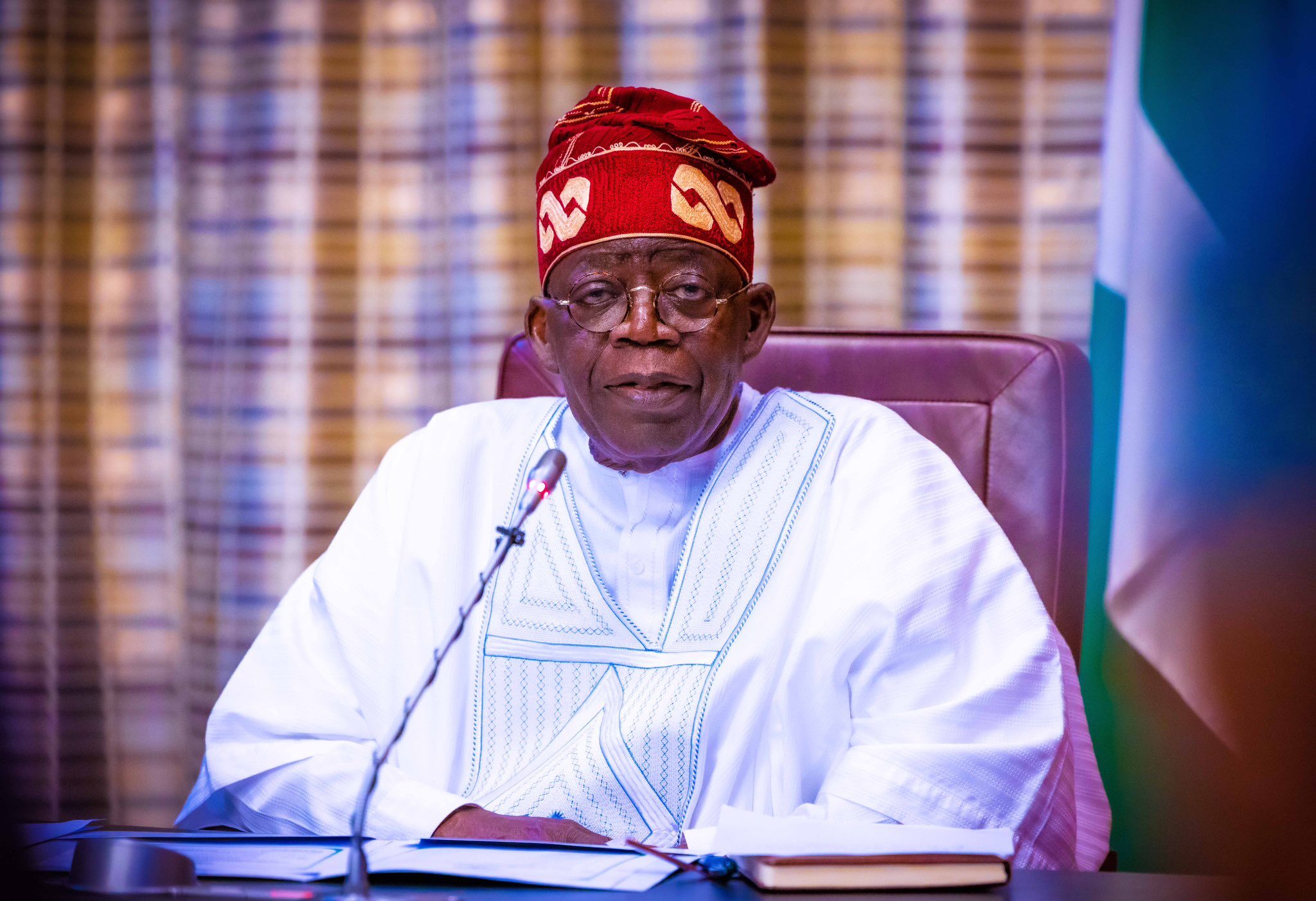
Saratu Daso was undoubtedly one of the greatest, most successful and influential Hausa film stars of all time. When the news broke that she had died, a barrage of condolences instantly flooded the social media platforms. There was an unprecedented outpouring of grief from Kannywood personnel and the public alike. Thousands of people attended her funeral prayers, and many politicians paid homage to her, including the president of Nigeria, Bola Ahmed Tinubu

In a press release, the president describes the 56-year-old actress’s passing as saddening for the entire nation, which she honoured through her talent as a thespian.

The former governor of Kano state and presidential candidate Rabi’u Musa Kwankwaso also paid a condolence visit to console the family of the deceased actress.

Renowned for her captivating wit and acting prowess, the late Daso made her film debut in the year 2000 with the Sarauniya movie Linzami Da Wuta. She appeared in more than 100 films throughout her illustrious career, which spanned over two decades. Some of her notable works include Sansani, Mashi, Fil’azal, Daham, Dan Zaki, Gabar Cikin Gida, and Yar Mai Ganye.

Daso is famous for playing various roles in various film genres. She excelled in the portrayal of a dubious and aggressive elderly woman, which became her trademark. The fire she breathed in that role made her stand out among other elderly female actresses of her time.

“I’m often portrayed as a villain, and I know the nitty-gritty of villainous performances in films. I can act in various roles, but I enjoy villainous ones the most. Yet, I’m always ready to play any character if assigned to me,” she told BBC Hausa in an interview.

However, she was quite different in real life from the characters she depicted on screen. She was sweet and jovial. She once remarked, “I’m not aggressive. I’m very kind in real life. In fact, I’m such a taciturn.” Her kindness is one of the things that left a lasting impression on people within and outside the film industry. 

Actor Baballe Hayatu described her as “a good woman of great wit and charm”, while Alhassan Kwalle, chairman of the Kannywood Actors’ Guild, attested to her calm demeanour, stating, “We lived with her peacefully”.

Social media influencer and politician Maryam Shetty also wrote about her interactions with the late actress, saying, “…Daso was always a delight both on and off-screen. In 2016, I had the pleasure of meeting her at the Emir’s palace in Kano (where she was a constant face). We shared a lighthearted moment joking about our shared name.”

Similarly, another Facebook user, Hauwa Barde, affirmed Daso’s humility, noting that “…she would always reply if you commented under her post.”

An alumnus of Kaduna Polytechnic, Daso initially worked as a classroom teacher before joining the film industry. She could speak fluent English and was among the pioneering actors to star in Jammaje’s ‘Kannywood films in English.’ The genre’s promoter, Malam Kabiru Musa Jammaje, mourns the actress, reminiscing about their collaborations.

Jammaje explained: “I worked with her in our Jammaje Productions’ first film, There is a Way, as well as in Light and Darkness and In Search of the King. At one point, we even discussed the possibility of her teaching at Jammaje English Academy, although the plan never materialized”.

Saratu Daso’s legacy extended beyond her acting career; she served as Jakadiya (a traditional female protocol officer) for the 14th emir of Kano, Muhammadu Sanusi II.

She was also a dedicated philanthropist. Every Friday, she cooked food to share with orphans and her neighbours. The videos, where she gave iftar meals and advocated for orphans during the month of Ramadan, have been widely shared on social media as a tribute following her death.

Finally, as a Kannywood film reviewer, I believe that the history of the film industry would be incomplete without mentioning Daso’s contributions. Her departure leaves a void that will be difficult to fill. She will forever be remembered as a great actress of eminence who died during the blessed month of Ramadan while fasting, earning the praises of all and sundry. May Allah bestow His mercy upon her soul.

Habibu Maaruf Abdu wrote from Kano via habibumaaruf11@gmail.com.

Celebrating Fatherhood: The essential pillar of Islamic family values 

By Muhammad Isyaku Malumfashi

The importance of fathers in raising and nurturing children is profoundly emphasised in Islamic teachings. Yet, in contemporary times, there seems to be a prevailing tendency among some to overlook fathers’ significant contributions and role in their children’s lives, often overshadowed by the accolades bestowed upon mothers. This imbalance warrants a closer examination and a reaffirmation of fathers’ vital position within the Islamic family framework.

Within the teachings of the Quran, the holy book of Islam, and the authentic Hadiths of Prophet Muhammad (peace be upon him), numerous references underscore the pivotal role of fathers in their children’s lives. One such verse from the Quran states: “And We have enjoined upon man [care] for his parents. His mother carried him, [increasing her] in weakness upon weakness, and his weaning is in two years. Be grateful to Me and to your parents; to Me is the [final] destination” (Quran 31:14).

This verse encapsulates the essence of filial duty toward both parents, highlighting the unique sacrifice and nurturing provided by the mother during pregnancy and infancy, yet equally emphasising the obligation to express gratitude and care towards both parents. The Hadiths further elucidate this principle, with Prophet Muhammad (peace be upon him) emphasising the importance of honouring and respecting fathers alongside mothers.

Prophet Muhammad (peace be upon him) is reported to have said, “He is not one of us who does not have mercy upon our young ones and does not honour our elders.” This profound statement encapsulates Islam’s holistic approach to familial relationships, emphasising compassion and respect for all members, including fathers.

Furthermore, the Quran emphasises the importance of maintaining kinship ties, which inherently include honouring and supporting one’s parents, including fathers. Surah Al-Isra, verse 23, states: “And your Lord has decreed that you not worship except Him, and to parents, good treatment. Whether one or both of them reach old age [while] with you, say not to them [so much as], ‘uff,’ and do not repel them but speak to them a noble word.”

This verse underscores the obligation to treat both parents with kindness and respect, regardless of their circumstances. It highlights the significant role fathers play in the family dynamic. It admonishes any disrespect or neglect toward parents, emphasising the importance of maintaining a dignified and compassionate attitude toward them.

In light of these Islamic teachings, it becomes evident that the role of fathers is not to be understated or overlooked. Fathers serve as the bedrock of the family structure, providing guidance, support, and protection to their children. They instil values, morals, and principles that shape the character and identity of their offspring.

Moreover, fathers serve as role models for their children, imparting invaluable lessons through actions and words. They offer strength, stability, and wisdom, providing inspiration and guidance for their children to emulate.

In today’s rapidly changing society, where the traditional roles and dynamics within families are evolving, it is imperative to reaffirm the importance of fathers in the upbringing and development of children. Children should be encouraged to recognise and appreciate the sacrifices and contributions made by their fathers, alongside their mothers, towards their well-being and upbringing.

It is essential to foster a culture of respect, gratitude, and support towards fathers, recognising their integral role in shaping the future generations of Muslims. By upholding the teachings of Islam regarding familial relationships and honouring both parents, we can strengthen the fabric of our families and communities, ensuring harmony, stability, and prosperity for generations to come.

In conclusion, fathers hold a sacred and irreplaceable position within the Islamic family framework. Their role in raising and nurturing children is indispensable, as emphasised by the Quranic verses and authentic Hadiths of Prophet Muhammad (peace be upon him). Therefore, it is incumbent upon us to acknowledge, appreciate, and support fathers in their noble endeavour of raising righteous and virtuous children, for they are indeed the cornerstone of every family.

Muhammad Isyaku Malumfashi with the Ramadan dose.

Nigeria’s out-of-school children situation is disheartening

By Abdullahi Adamu 

The description recently by Senator Comrade Adams Oshimole, again at his best, advocating for good funding and monitoring of Universal Basic Education of the ever-rising number of out-of-school children across Nigeria as a “time bomb” is a repetitive sound bite. The reality of a large population of uneducated Nigerian youths has been a talking point for decades and is still rising. It is a pointed reflection of the incompetence, neglect and utter lack of vision of successive federal and state governments.

Talk is cheap; Senator Adam urged the state governments and the elite, including FCT, to take the necessary extraordinary measures immediately to defuse the deadly incendiary situation they created.

UNICEF adds that one in three children in Nigeria is out of school, totalling 10.2 million at the primary level and 8.1 million at the junior secondary school level. It said one in every five out-of-school children in the world is in Nigeria. These statistics are depressing; state governors can no longer afford to nurture another generation of illiterates.

The worst and increasingly incorrigible offenders are the Northern states and the region’s elite. Over 60 per cent of the total is in the North.

Out-of-school children are a social and serious security problem for us. I want to say that there are more than 20 million out-of-school children because the 20 million we are talking about are possibly only in basic education, that is, primary school and junior secondary school; what about those who have finished junior school and are unable to go back to Senior Secondary School? 

“We must be talking about 30 million out of school. That is a vast population and is a major issue. This is one issue that the state and federal government must take seriously,” Senator Lawan said.

Education is the key to Nigeria’s development. Oshiomhole stressed that Nigeria appears to be failing in its national plan for growth due to the lack of basic education. “It is not right for us to boast of an ultra-modern government house and have the most dilapidated schools and even employ teachers not to pay them.”

We have angry and hungry people in the classroom; they can’t be nice to our children, and when they show no kindness to those children, those children grow up without care, without feeling, and believing that society is uncaring.

This is a call to the government to embark on a comprehensive and radical educational curriculum review across Nigeria and prioritise skills rather than old-fashioned theories and colonial educational system expansion to help human economic growth, skills acquisition, and small-scale industry expansion.

The government must take a close look at what is happening to our children in Nigeria and the opportunities they are missing out on because they lack education. 

We need to look towards communities—leaders, parents, teachers, and caregivers—and together, find the best strategies to ensure that all children enroll in school, have access to continuous learning, and emerge with quality skills that equip them for a prosperous future. The situation has even worsened since then, up to 2023.

The government also need to ensure that children are safe when they are in school – no child should be afraid to enter a classroom – afraid their school might be attacked or that they will be kidnapped. And no parent should fear sending their children to school.”

In 2021 alone, there were 25 terrorist attacks on schools. A total of 1,440 children were abducted, while 16 children were killed. In March 2021, about 618 schools were shut down in Sokoto, Zamfara, Kano, Katsina, Niger and Yobe states over the fear of attack and abduction of pupils and members of staff.

Nigeria’s education system can be transformed through adequate funding.

Abdullahi Adamu wrote via nasabooyoyo@gmail.com.

Governor Abba K. Yusuf’s admin under scrutiny: Mismanagement and controversies rock Kano

By Umar Sani

Governor Abba Kabir Yusuf’s tenure in Kano State has been marked by a series of controversies and challenges, with the most recent scandal surrounding the Ramadan feeding program shedding light on broader issues of governance, priorities, and accountability. As we delve into the intricacies of these matters, it becomes evident that there are systemic failures that need to be addressed urgently to restore public trust and ensure effective governance in Kano.

The Ramadan feeding program scandal serves as a microcosm of the larger issues plaguing Governor Yusuf’s administration. This program, which is meant to provide essential support to the less privileged during the holy month of Ramadan, has instead been tainted by allegations of corruption, mismanagement, and inhumane practices. Reports indicate that resources allocated for the program have been misappropriated, with food meant for the needy ending up in the hands of those who are already well-off. Furthermore, there have been disturbing revelations of substandard food being distributed, posing health risks to the recipients.

Such egregious mismanagement not only squanders public funds but also undermines the intended purpose of welfare programs, which is to alleviate poverty and provide a safety net for society’s most vulnerable members. It reflects a blatant disregard for the welfare of the people and a failure to uphold the principles of transparency and accountability in governance.

However, the issues plaguing Governor Yusuf’s administration extend beyond the mismanagement of specific programs. There are deeper underlying problems related to governance, priorities, and political dynamics that must be addressed comprehensively.

One key issue is the misplacement of priorities. Despite the pressing need for investment in critical sectors such as healthcare, education, and infrastructure, resources have been diverted towards superficial endeavours associated with Governor Yusuf’s political agenda. The phenomenon of Abba Gida Gida, characterized by flashy projects and grandiose gestures, has overshadowed genuine efforts to address the socio-economic challenges facing Kano State.

The emphasis on political symbolism over substantive governance reflects a fundamental disconnect between the government and the governed. Instead of focusing on initiatives that have a meaningful impact on people’s lives, Governor Yusuf has prioritized activities that serve his political interests and consolidate his power base. This shortsighted approach not only undermines the credibility of the government but also exacerbates the suffering of the ordinary citizens who bear the brunt of poor governance.

Moreover, Governor Yusuf’s close association with the Kwankwasiyya political movement has further complicated governance in Kano State. While political alliances are a common feature of Nigerian politics, the tight grip of Kwankwasiyya on the state’s affairs has stifled dissent and marginalized opposing voices. This monopolization of power has created a culture of impunity where accountability is sacrificed at the altar of political expediency.

The entrenchment of Kwankwasiyya in Kano’s political landscape has also fueled factionalism and polarization, undermining efforts to foster unity and inclusivity. Instead of governing for the collective good, Governor Yusuf has been preoccupied with consolidating his grip on power and silencing dissenting voices within his own party and the opposition.

Furthermore, the lack of effective checks and balances has enabled corruption and malfeasance to thrive unchecked. The absence of independent oversight mechanisms has emboldened corrupt officials to exploit public resources for personal gain, exacerbating the state’s economic woes and widening the gap between the rich and the poor.

To address these challenges and chart a path towards genuine reform, Governor Yusuf must demonstrate a commitment to transparency, accountability, and inclusivity in governance. This requires a paradigm shift away from political patronage and towards evidence-based policymaking that prioritizes the needs of the people above partisan interests.

In addition, there is a need for robust institutions and mechanisms to curb corruption and hold public officials accountable for their actions. This includes strengthening anti-corruption agencies, empowering civil society organizations, and promoting a culture of transparency and accountability across all levels of government.

Moreover, Governor Yusuf must prioritize investments in critical sectors such as healthcare, education, and infrastructure to improve the quality of life for all citizens. This requires prudent resource management and strategic planning to ensure that public funds are utilized efficiently and effectively to address the most pressing needs of the population.

Furthermore, Governor Yusuf should endeavour to build bridges across political divides and foster a spirit of inclusivity and cooperation in governance. This means reaching out to opposition parties, civil society groups, and other stakeholders to solicit their input and support in addressing the state’s challenges.

Ultimately, the road to meaningful reform in Kano State will require courage, vision, and a genuine commitment to the principles of democracy, good governance, and social justice. Governor Yusuf has a historic opportunity to leave a positive legacy by addressing the root causes of the state’s problems and charting a new course towards prosperity and progress for all its citizens. However, this will require bold leadership and a willingness to challenge the status quo in pursuit of a brighter future for Kano State.

Umar Sani wrote via umarhashidu1994@gmail.com.

It is time to redesign Hajj management in Nigeria

By Zayyad I. Muhammad 

Hajj management in Nigeria is facing two main problems. Firstly, funding is tied to the dollar; once the dollar’s value fluctuates against the naira, the hajj fare becomes uncertain. This is currently happening. The second problem relates to flight schedules to and from Saudi Arabia, etc. These problems are twofold, so to speak, and should be collectively tackled by both the National Hajj Commission of Nigeria (NAHCON) and state Hajj commissions.

The solution to these problems could be as follows:

Firstly, the Nigerian hajj fare should be tied to or pegged to the Saudi Riyal. The Riyal is stable due to the country’s strong economic fundamentals and prudent financial management. Additionally, apart from pegging the Nigerian hajj fare to the Saudi Riyal, the National Hajj Commission of Nigeria should study the Malaysian hajj management model.

In Malaysia, the Hajj has a funding management system called the Tabung Haji. Research on the Malaysian system of hajj management indicates that it involves several components. The Tabung Haji (Pilgrims’ Fund Board) plays a crucial role in managing the financial aspects of Hajj for Malaysian pilgrims.

Malaysian Muslims intending to perform Hajj must make regular contributions to Tabung Haji. These contributions accumulate over time and cover expenses such as transportation, accommodation, and other logistical needs associated with Hajj. NAHCON also implements a similar savings scheme, albeit with limited success. It’s time for NAHCON to redesign the Hajj Savings Scheme in collaboration with banks and other financial institutions, particularly those offering Islamic banking services.

The new scheme should allow intending pilgrims to enter into an investment plan for more than one year. As pilgrims deposit funds into their accounts, the bank or financial institution would invest the money for a period ranging from 2 to several years. By the end of this period, pilgrims would have accrued enough funds for the Hajj fare, along with additional profits. This approach would streamline the process for both pilgrims and commissions, providing ample time for planning.

Taking a clue from the Malaysian Tabung Haji, it manages its funds through various Shariah-compliant investment instruments, such as equities, real estate, and sukuk (Islamic bonds). The returns from these investments sustain Tabung Haji’s operations and cover the costs of Hajj for Malaysian pilgrims.

In addition, the Malaysian Tabung Haji has achieved remarkable success by offering diverse Hajj packages customised to meet the needs and preferences of Malaysian pilgrims. These packages encompass a range of services, including luxury accommodation in Makkah and Madinah, transportation, meals, and guidance.

Moreover, Tabung Haji extends financial assistance to eligible Malaysian pilgrims who may require support to undertake the Hajj journey. This assistance may comprise subsidies for Hajj expenses or loans to cover pilgrimage costs, which can be repaid in instalments.

The National Hajj Commission has demonstrated commendable efforts over its three decades of existence. However, the current instability in the exchange rate between the dollar and the naira underscores the need for the commission to consider pegging the hajj fare to the stable Saudi Riyal. Additionally, NAHCON should revamp the Hajj Savings Scheme to offer long-term, Halal investment options for intending pilgrims. This approach would contribute to a more organised and financially sustainable hajj management system.

To achieve these goals, NAHCON should establish a diverse team comprising individuals from various sectors to assist in redesigning the Hajj Management System, particularly the pilgrim savings scheme.

Zayyad I. Muhammad writes from Abuja via zaymohd@yahoo.com.