Opinion

The impact of climate change in Nigeria

By Talent Bassey Akpan

Climate change is one of the most pressing issues facing the world today. Nigeria is particularly vulnerable to its effects due to its diverse ecosystems, economic reliance on agriculture, and significant population density. The changes in climate patterns have profound implications for Nigeria’s environment, economy, and public health, making it crucial for the country to understand and address these challenges effectively.

In Nigeria, climate change has led to erratic weather patterns, manifesting in extreme floods and prolonged droughts. Since the late 20th century, rainfall patterns across the country have become increasingly unpredictable. For instance, while some regions experience heavy rains resulting in severe flooding, others suffer from acute water shortages and drought, particularly in the north.

The fluctuations impact agricultural output, as farmers rely on predictable rainy seasons for planting and harvesting. Consequently, food security becomes compromised, increasing food prices and poverty levels.

Agriculture is the backbone of Nigeria’s economy, employing a significant portion of the population and contributing substantially to the GDP. However, climate change severely threatens agriculture, disrupting the growing conditions essential for crops and livestock. Changes in rainfall patterns can lead to crop failures while rising temperatures can reduce yields for staple crops like maize, cassava, and rice.

The situation is exacerbated by the fact that many Nigerian farmers employ traditional farming methods, leaving them ill-equipped to adapt to these rapid changes. As agricultural productivity declines, rural communities are further marginalized, leading to increased migration towards urban centres and creating additional strain on city resources.

The health implications of climate change in Nigeria are also far-reaching. Heatwaves, rising temperatures, and poor air quality can contribute to an increase in respiratory and cardiovascular diseases. In addition, changing weather patterns can spread vector-borne diseases, such as malaria and dengue fever, as the habitats for mosquitoes and other carriers expand.

Food insecurity and malnutrition resulting from agricultural decline may also lead to increased susceptibility to diseases and weakened immune systems, particularly among children and vulnerable populations.

In conclusion, the effects of climate change in Nigeria require a multifaceted approach, combining immediate action with long-term strategies. Efforts must include investment in climate-resilient agriculture, enhancement of water management practices, and promotion of sustainable land use. Furthermore, community awareness and education should be prioritized to prepare residents for potential climate impacts.

As Nigeria continues to grapple with the challenges posed by climate change, concerted efforts from the government, civil society, and international partners are essential to safeguard the future and ensure a sustainable environment for future generations. It is imperative for all stakeholders, including the citizens, to engage actively in combating this pressing global issue.

Talent Bassey Akpan wrote from Mass Communication, Bayero University, Kano.

Can the Mandela Washington Fellowship Conference reshape Africa’s economic development?

By Lawal Dahiru Mamman 

Africa boasts an abundance of resources, with its vast landscapes from north to south and east to west teeming with diverse natural and mineral riches. These treasures have the potential to revolutionise the lives of its citizens. The continent’s human capital is equally impressive, harbouring 18.3%—approximately 1.5 billion—of the global population, making it the world’s second-most populous continent.

In truth, these natural resources gifted to Africa have not been fully harnessed for the benefit of its people. In some cases, resources in regions have ignited conflicts and even war, leaving people in bemoanable poverty and deprived of basic necessities like food and water, which are essential for human survival. This is in sharp contrast to the supposed envious rapid developments cities should be undergoing for urban and economic renaissance.

Ghana’s first president, Kwame Nkrumah, an enthusiastic advocate for the continent’s unity and independence, captured this problematic state of African nations when he said, “Africa is a paradox,” not without rhyme or reason but because “Her (Africa) earth is rich, yet the products that come from above and below the soil continue to enrich, not Africans predominantly.” 

Considering this age-long reality, leaders have repeatedly converged, deliberated, and mapped out strategies for development. Among many of these, Africa Agenda 2063 – a deliberate framework for socioeconomic transformation adopted by the African Union (AU) in 2015—and the African Continental Free Trade Area (AfCFTA)—an economic agreement aimed at creating a single unified market for Africa—remain the most talked about in the present. 

Little progress has been made with these well-thought-out agreements for nearly a decade. Recently, the Mandela Washington Fellowship Alumni Association of Nigeria (MWFAAN) announced its intention to host a ‘Pan-African Legacy Conference’ in the Federal Capital Territory (FCT), Abuja. 

The conference will commemorate the 10th anniversary of the Mandela Washington Fellowship, a brainchild of former United States President Barack Obama to enhance U.S.–Africa relations, particularly among young people. Since its inception, the fellowship has sent over 7,200 young Africans to the U.S. for six weeks of professional development and cultural exchange. 

Themed “Shaping Africa’s Future through the AfCFTA and Agenda 2063” aims to chart a path for the next 10 years, focusing on economic development in Africa. It will bring young people closer to decision-makers to bridge the gap between the African Continental Free Trade Area (AfCFTA) and youth entrepreneurs. It will also ensure access to trade opportunities across Africa and unite the government, nonprofit sector, and business leaders to create a comprehensive framework for sustainable development.

A ruckus has been raised in the fullness of time for youth to participate actively in governance for Africa’s development. This conference is a deliberate attempt by young people to engage policymakers and industry experts in solving our age-old predicament: failing to cater to our rapidly growing population.

Could this gathering sew the Gordian knot, freeing Africa from the shackles of stagnation and retrogression and guiding her towards prosperity? Tempus Omnia Revelat—the future holds the answer. 

As Kwame Nkuruma astutely observed, “It is clear that we must find an African solution to our problems and that this can only be found in African unity. Divided, we are weak; united, Africa could become one of the greatest forces for good in the world.”

If the Mandela Washington Fellowship Alumni Pan-African Legacy Conference will be a point of unity that proffers solutions and moves us towards economic liberation, so be it.

Lawal Dahiru Mamman writes from Abuja and can be reached via dahirulawal90@gmail.com.

Port Harcourt Refinery: What President Tinubu should do!

By Zayyad I. Muhammad

The 60,000 barrel-per-day Port Harcourt refinery has officially resumed operations after years of inactivity. This marks a significant milestone in Nigeria’s efforts to revitalise its oil and gas sector. As one of the country’s oldest refineries, with a history spanning 59 years, the Port Harcourt facility is now expected to load at least 200 trucks of petroleum products daily, easing supply constraints, reducing dependence on imported fuels, and introducing a new price regime to compete with the 650,000 barrels per day Dangote refinery. 

Nigeria’s four state-owned refineries have long been entangled in corruption, mismanagement, and relentless pipeline attacks by organised oil thieves. These issues have not only crippled their operational capacity but also forced the country to rely heavily on imported petroleum products, despite its status as a major oil producer.

As the old Port Harcourt refinery has resumed processing crude, with Warri and Kaduna expected to follow soon, an important question arises: Should Nigeria continue with the traditional model of absolute state control and management of its refineries? This outdated approach has proven ineffective, plagued by inefficiencies, corruption, and underperformance.

This presents both a challenge and an opportunity for President Bola Ahmed Tinubu to revamp Nigeria’s refinery management system and introduce reforms to ensure long-term production and efficiency.

When all four state refineries are fully revived and operational, as anticipated, President Tinubu’s government has three viable options for reforming the management of Nigeria’s four state-owned refineries. One approach could involve retaining ownership of one refinery while granting it full autonomy to manage its operations independently, cover its expenses, and remit dividends to the government.

Another option is to lease one of the refineries to an oil company or a group of investors interested in petroleum product refining, ensuring it operates efficiently under private-sector expertise. Lastly, the government could fully privatise one refinery, distributing shares among the federal government, host communities, and Nigeria’s 36 states. This inclusive approach would address diverse stakeholder interests while ensuring effective management.

However, discussions about Nigeria’s refineries are incomplete without addressing the critical issue of managing the country’s extensive 5,120-kilometre oil pipeline network and the Nigerian National Petroleum Corporation Limited (NNPC Ltd.). While the engagement of local communities by NNPC Ltd. has started yielding positive results, significant challenges persist.

The most pressing issues include frequent illegal tapping by oil thieves, sabotage, encroachments on pipeline rights-of-way, delays in detecting leaks, and equipment failures caused by the inaccessibility of certain locations. Compounding these problems is the reliance on outdated methods of pipeline management, which hinder the system’s efficiency and responsiveness.

To address these challenges, adopting advanced technologies is essential. Systems like SCADA (Supervisory Control and Data Acquisition), Fibre Optic Cable (FOC) networks, and tools such as “go-devils,” scrapers, or smart pigs can revolutionise pipeline management. These technologies provide real-time monitoring and early warning systems, enabling swift responses to potential threats or damages, even in remote and inaccessible areas. By integrating these solutions, Nigeria can significantly enhance the security and functionality of its pipeline network, ensuring a more reliable and efficient oil and gas sector.

The revival of the Port Harcourt old refinery and the anticipated return to operation of the Warri and Kaduna refineries are commendable achievements. However, the Tinubu administration must critically evaluate and adopt a new, feasible, profitable, and masses-friendly approach to managing these refineries.

The traditional model of state absolute control has consistently failed, resulting in inefficiencies, corruption, and financial losses. It is time for a transformative strategy that ensures the refineries operate sustainably while delivering maximum benefits to the Nigerian people.

Zayyad I. Muhammad writes from Abuja, zaymohd@yahoo.com.

CBN assures banking sector’s stability amid economic challenges

By Uzair Adam

The Central Bank of Nigeria (CBN) has assured that the country’s Deposit Money Banks (DMBs) remain resilient amid ongoing internal and external economic challenges.

CBN Governor Yemi Cardoso made this known on Tuesday in Abuja while presenting the communiqué from the 298th meeting of the Monetary Policy Committee (MPC).

Cardoso stated that the MPC commended the sustained stability of the banking system despite various economic headwinds.

“Key financial soundness indicators, such as the Capital Adequacy Ratio (CAR), Non-Performing Loan ratio (NPL), and Liquidity Ratio (LR), continue to reflect the strength of the sector,” he said, adding that the CBN will maintain close monitoring to ensure banks adhere to regulatory thresholds and remain healthy.

The MPC also highlighted the CBN’s ongoing efforts to deepen financial inclusion, aiming to enhance the effectiveness of monetary policy transmission.

Addressing inflation, Cardoso noted that data from the National Bureau of Statistics (NBS) revealed a rise in headline inflation to 33.88% in October, up from 32.70% in September.

On a month-on-month basis, inflation increased to 2.64% in October from 2.52% in the previous month.

Food inflation climbed to 39.16% in October from 37.77% in September, while core inflation rose to 28.37%, compared to 27.43% in the preceding month.

Despite the inflationary trend, the MPC observed a slight moderation in the prices of farm produce and commended the Federal Government’s efforts to boost productivity in the agricultural sector.

On economic growth, Cardoso disclosed that Nigeria’s Gross Domestic Product (GDP) grew by 3.46% year-on-year in the third quarter of 2024, driven by both the oil and non-oil sectors.

The non-oil sector expanded by 3.37%, while the oil sector recorded a 5.17% growth.

Additionally, Nigeria’s external reserves increased to $40.88 billion as of November 21, up from $40.06 billion at the end of October, providing enough to finance 17 months of imports.

Open Letter to the Governor of Kano State: There is a need for a balanced executive council composition

Your Excellency, sir, I want to use this opportunity to draw your attention to the trend followed by your predecessors: forming a composition of the state executive council that is not all-inclusive and fails to address the need for every local government to be well-represented in accordance with the principle of federal character establishment. 

The negligence or oversight of this administrative arrangement has become a typical setback, leading to the marginalisation of Warawa L.G.A. since its establishment by law in 1991. This undermining of not only its human capacity development but also the general welfare of its indigenes is evident in the few developmental projects the state has executed so far.

Sir, none of your predecessors on record has ever given us fair representation or equal opportunity through appointment to serve as a state executive council member, either as Commissioner or Special Adviser, since the establishment of Warawa Local Government. Your Excellency, your administration’s adoption of a similar trend is a significant setback to your performance indicators for good governance and fulfilling your campaign promises.

Among the twenty-four (24) Commissioners and about thirty-two (32) Special Advisers you appointed and cleared before the State Assembly, none is an indigene of Warawa L.G.A. Not only that, Your Excellency Sir, so far, all of your political appointments for the various positions of heads of respective Ministries Departments and Agencies (MDAs) ranging from about (7) Director General DGs, (44) Managing Directors MDs and Deputies, Executive Directors EDs, (5) Executive Secretary ES, and even Project Coordinators none is an indigene of Warawa L.G.A. 

Your Excellency Sir, only if you imagine having a similar composition of Federal Executive Council members at the Federal level without Kano State having any ministerial position designated (not even minister of state). 

At the same time, another state gets two or more. It appears disheartening that this recurring marginalisation is so severe that a ward from another L.G.A. will have two or more appointees and even an additional appointment as head of some MDAs. In contrast, Warawa ends up with none as a constitutionally recognised L.G.A.

Except for state constituency allocation and the ongoing 5 km entrance road projects, road developmental projects are not sponsored by the state as obtainable in other L.G.A that are well represented in the Council and beyond. Warawa L.G.A is autonomous like every other Local Government Area. The constitution and electoral act made it mandatory that no single election into the office of the executive governor of Kano state would be declared conclusive without the votes of this administratively neglected local government area.

For this reason and beyond, in the principle of justice, fairness, and equity, we call upon you to address the issue by giving us a fair and equal opportunity to develop this resourceful local government area. Our interest is to be part of this administration’s history written in gold, as we were part of the struggle that brought it on board.

Thank You.

Yours Sincerely,

Engr. Ismail Abdu Garba

Engr. Ismail is a lecturer, research scholar, and member of the Kwankwasiyya Scholars Assembly (KSA). He is also the Chairman of the Warawa Education Election Campaign Committee for 2019 and 2023. He can be contacted via madaarie@gmail.com.

Double blessings: A tribute to Prof. Salisu Shehu

By Isma’il Hashim Abubakar, PhD

In one month, our mentor, leader, teacher, and father, Professor Salisu Shehu, the Vice Chancellor of Al-Istiqamah University Sumaila, Kano, and Deputy Secretary-General of the Nigerian Supreme Council of Islamic Affairs, received two distinguished honorary awards in recognition of his years of exemplary leadership, meritorious services, and contributions to the development of Islamic education.

The National Association of Teachers of Arabic and Islamic Studies (NATAIS) conferred one of these awards on Professor Salisu Shehu in a grand ceremony on November 16, 2024, at the Federal College of Education, Yola. The event was part of the Association’s 41st Annual International Conference. 

The note of the Association’s highest Merit Award, inscribed on the crest presented to our beloved mentor, reads, “For your Exemplary Leadership and Contributions Towards the Islamic Propagation and Development in Kano State and Nigeria at Large.” 

Coincidentally, the Bauchi State Qur’anic Recitation Competition in Jama’are presented the second award to the professor on the same day. Like its peer, this award recognises and celebrates the role played by our mentor in the dissemination of Islamic knowledge, societal enlightenment, and mentoring of the upcoming generation. 

Interestingly, however, this second award is both a reward of excellence and a turbaning ceremony of Professor Salisu Shehu as Khadimul Qur’an (Custodian of the Qur’an), the highest title that connotes the peak one attains in promoting the knowledge of Islamic Scripture. The note of the award reads, “Islamic Knowledge Award presented to Prof. Salisu Shehu, V.C, Al-Istiqamah University, Sumaila, Kano State, for his tireless efforts in spreading Islamic knowledge, guiding our community, and inspiring a new generation of Muslims to embrace their faith.Congratulations Khadimul Qur’an”.

For hundreds of mentees and millions of Muslim followers of Professor Salisu Shehu, these esteemed awards clearly testify to the commitment and devotion for which the Professor has been known over the decades. This reputation is justified by his successes in various positions, including his position and duties at Bayero University Kano, where he taught before becoming the founding Vice Chancellor of Al-Istiqamah University Sumaila.

Professor Salisu Shehu displayed an inimitable commitment to modifying the establishment of the Centre of Continuing Education establishment at Bayero University. The centre grew from strength to strength, eventually transforming into the Institute of Continuing Education (ICE) and finally to the School of Continuing Education (SCE). 

Professor Salisu Shehu was appointed as the first head of this centre, which started from scratch. He led a tenacious staff team, some of whom were younger colleagues he mentored or guided, to develop and upgrade this academic centre into a formidable educational unit of Bayero University. The place has already transformed from a diploma-awarding body to a degree-awarding school within one of Nigeria’s leading and most prestigious learning institutions.

Professor Salisu Shehu is a man in whom one can have confidence and a guarantee of success in any project or mission he undertakes or participates in. His years as the National Coordinator of the International Institute of Islamic Thought (IIIT) can, without much ado, testify to and validate this claim. Space will not allow us to marshal the achievements this Institute recorded when Professor Salisu Shehu headed it. 

The same can be said of various other capacities and ranks in which he served and holds, such as being the first  North-west Coordinator of JAMB organised for the visually impaired as the chairman of the Bauchi State Qur’anic Recitation Competition Committee (2007-2011); his role as the Executive Secretary of the Islamic Forum of Nigeria; Deputy Secretary-General, Nigerian Supreme Council of Islamic Affairs (NSCIA) and a host of other duties including imamship and delivery of sermons and Islamic lessons.

Besides all these, our distinguished scholar is also an effective mediator; all Nigerians can proudly vouch for his accomplishments. Northern Nigerian Muslims still remember the Professor’s role in facilitating the remarkable debate between some scholars and Abduljabbar Kabara, who shook the religious polity in Kano with his utterances that were considered highly aberrational. 

Nigerian citizens and their counterparts of the Niger Republic, as well as their posterities, will remain forever indebted to Professor Shehu and his colleagues among religious leaders who intervened and brought about an understanding that averted war between two neighbours.

As our mentor was conferred these honours by both NATAIS and the Bauchi State Qur’anic Recitation Competition Committee, we pray that he will continue to receive more recognition and blessings in his life. More importantly, however, we pray that these recognitions are precursors to Divine recognition and honour by Allah on the Day of Judgement in the Hereafter.

Isma’il writes from the Advancing Education and Research Centre (AERC) in Rabat and can be reached at ismailiiit18@gmail.com.

Dr Radda’s entrepreneurial crusade: A cautionary tale

By Ibrahiym A. El-Caleel

Dr. Dikko Umaru Radda won the 2023 Katsina State gubernatorial elections and has since taken office. However, he seems to struggle with the transition from CEO of the Small and Medium Enterprises Development Agency of Nigeria (SMEDAN) to his new role. He keeps lecturing the youths on entrepreneurship, telling them that there are no jobs. He would always tell them why being a worker is a misfortune in today’s world. Surprisingly, he is never caught on tape talking about the key role of the government in entrepreneurship.

This society has normalized throwing jibes at salaried workers. People who despise salaried employees behave as if they are the next smartest people on earth since Albert Einstein while in reality, there is nothing spectacular in this. It is a tepid argument, and when Nigerian leaders do it, it reflects their reluctance to take responsibility for the economic challenges we face.

One significant reason for the current suffering of Nigerians is the systemic push of workers into poverty. Despite advancements in technology, automation, and artificial intelligence, no national economy thrives without the contributions of workers. Even if entrepreneurs automate production and supply chains, consumption remains a human necessity. Who will buy the products? Machines? No, it is people- primarily workers- who drive consumption. So, when anyone is throwing jibes at these employees, I usually imagine what planet they come from.

Let us return to Dr Radda and other Arewa leaders who always want to deliver free lectures on entrepreneurship. It is crucial to note that no business thrives in a commercially toxic environment. How have these Arewa leaders been able to create a conducive environment for business? They have always been in the business of blame games and never taking leadership responsibility seriously. This is exactly why it is easy today for President Tinubu and his Tax Boys to tell them they are rejecting his proposed VAT sharing formula because they have lazied around for too long, earning more Federal Account Allocation Committee (FAAC) than they actually deserve.

We have vast fields of arable land, yet companies like Nestle who need maize and soya beans prefer to set up their factories in Lagos. We have cattle that FrieslandCampina and Promasidor would ordinarily obtain fresh milk from through modern animal farming processes. However, these companies are based in Lagos because the north is either faced with farmers-herders clash on Monday, or fighting bandits on Tuesday, or discovering Lakurawa by Wednesday. Which multinational company will waste its time, energy and resources building a business in such an environment? This is why they prefer to be based in South-West, then buy these raw materials from up north and transport them for processing and ship some of it back to the north for consumption.

I will not discuss why 19 northern states believe they are okay with this type of poor electricity supply over the years. Your Kano and Kaduna textiles are dead; reptiles now live where we had textile machines and very many workers running shifts. Even on the planet Saturn, they are aware that no development happens without electricity in this modern age. But since Arewa leaders know an alternative way to do this, let us keep waiting for the miracle. I am sure it is very close to happening. Sokoto is just an inch away from advancing like South Korea, since Kaduna is already competing with Silicone Valley!

The other day, Dr Radda’s tape was virally circulated. He was still talking about workers, and how an Indomie Joint vendor earns better monthly income than them. The irony is that on 23 November, 2024, Daily Trust wrote a report that this type of business is crumbling. They cited that the astronomical rise in the prices of egg, milk, noodles and bread is telling on the business. Nigerians can no longer afford this. These food items have become a luxury to the who used to consume them. It is a pointer to the fact that people are getting poorer.

This was not always the case in Nigeria. Workers began suffering after Buhari did his trial and error economics for eight solid years, and now Tinubu is here to shut down the economy finally so that everyone can go and rest in their graves. Otherwise, ten years ago (2014 to be specific), a salaried worker on a minimum age of N18,900 could afford to buy a 50kg bag of foreign rice at N7,500 which he could feed his family for at least three months. He would still have the remainder of this salary which will at least cover his transportation to work. The political class destroyed this. The same political class which Katsina state governor belongs to.

In my opinion, the governor should realize that it is no longer the SMEDAN days. All Nigerians cannot be entrepreneurs. In every real national economy, the workers are always far more than the entrepreneurs. The earlier he and members of his social class come together to chart a sustainable economic plan for the north, the better for all of us. The South-West governors who have created economically viable environment are not begging their citizens to go into entrepreneurship. The citizens are identifying the opportunities already. When you put your house in order, you don’t need to tell anyone to start a business. People will naturally see the opportunities. This is why the South-West is ahead. It is not magic. They are deliberate about developing their environment, and this is a good one. Had other leaders developed their regions in a similar manner, we would not be fighting over the VAT sharing formula.

Arewa’s economic recovery starts from reviving the New Nigeria Development Company (NNDC) Limited to be what the Sardauna of Sokoto, Sir Ahmadu Bello meant it to be. Arewa governors should give politics a break and focus on governance by revitalizing the NNDC and truly investing in that company. NNDC was a big dream to save this region from the economic mess it has found itself today.

Sardauna was visionary and NNDC actually delivered on its objectives for decades before the Arewa governors class of 1999 to date decided to watch it die a slow and painful death, folding their arms and waiting for oil royalties from the newly found Kolmani oil in Gombe or Bauchi State. Arewa leaders should wake up and save this region. It is their responsibility. It is not the responsibility of Tinubu or FG or anyone. But your Excellency, please, allow workers to face their predicament. They were never in this situation until your political class decided to make them poor through extreme taxation and careless policies that spiked inflation to all record high. Therefore, if you cannot help them, you do not need to add insult to their injury.

El-Caleel writes from Kaduna State

A life well lived: Celebrating Alhaji Lalo’s century of love and legacy 

By Hafsat Lalo

“I might have just seen my father for the last time,” was the message I sent to my husband on WhatsApp as I sat in the car that was to take my niece, Fatima and me to Kano a day before I travelled to Japan. My husband responded, “Why, nobody knows; life is not in our hands.” I told him that Baba was very old, though he was very strong, and I wouldn’t be surprised if he lived another year. We both prayed for him, leaving the conversation there. 

Earlier that morning, I went into Baba’s room to say goodbye. As I entered, I was met with the familiar scent of the room, his unmistakable charisma and the aura that has always surrounded him. I could have sensed his presence even if he were not in that room. 

Baba was sitting on the couch wearing a brown jallabiya, having just performed his Fajr prayer. I greeted him; his calm demeanour contrasted with the wave of emotions inside me. He asked, “Kin fito?” (Are you ready to leave?). I nodded. After a brief silence, I said, “Baba, ka yafe min” (Father, please forgive me). Another silence followed, and both of us were lost in our thoughts. I thought about how this might be the last time I saw him. I don’t know what he was thinking, but I am sure he understood what I was implying. 

He asked, “A yafe miki?” (Should I forgive you?). I replied affirmatively, almost crying at this point. He said, “Toh Na yafe miki, ki je ki rike karatun Qur’ani da sallah a kan lokaci”. Those were his exact words.

It was no coincidence that he had given me a prayer mat (darduma) as a gift two days earlier. He mentioned he was planning to give me a prayer mat and a Qur’an. He handed me the prayer mat and gave me N2500 to buy the Qur’an, explaining that he had asked for the price and intended to buy it himself but hadn’t had the chance to stop on his way home. It took him a while to locate the money from his pocket. So I told him to leave it since I had money, but he insisted.

At the time, I didn’t fully grasp the significance of the prayer mat and the promise of a Qur’an. They seemed like Baba being Baba – I had received similar gifts from him before. In 2019, my younger sister brought me a prayer mat and Riyadussalihin, which Baba had asked her to give me. I gave out the prayer mat when I was getting married, but I still have the Riyadussalihin. It wasn’t until the day he died, as I was about to pray Asr that I noticed the prayer mat I was about to use was the very one he had given me. The realisation hit me very hard, and I again broke down in tears, sitting there and thinking about that one last encounter. I began to reflect deeply on their meaning. I realised they were no ordinary gifts—they were symbols of his life, the values he held dear, and a message to keep faith at the centre of my life, no matter how far I am from home.

Baba’s love for the Qur’an was unwavering throughout his life. Even as recently as five years ago, he remained a student of the Qur’an despite his age. He would stop at the market with my elder brother to learn the Qur’an. He also had teachers who came to the house in the evenings to teach him. His relentless pursuit of knowledge, even in his later years, was a testament to his humility and passion for learning.

Baba ensured that we all had access to (Western) education, something he was not privileged to have. I remember how he would often call and ask me to translate the news on TV for him. While I was doing it, I would see him looking at me with the pride of a father who was able to give his daughter what he couldn’t have.

As I was overwhelmed by these thoughts, I couldn’t help but think back to the day Baba passed away—a day that started like any other but carried an inexplicable heaviness. I had woken up unusually sad after seeing a picture of Baba at the hospital at around 2:30 am. I couldn’t go back to sleep after. The morning came, but I had no appetite and was in a foul mood. I couldn’t eat.

The hours dragged on, clouded by unease, until that message from Ahmad came: ‘Baba ya rasu.’ When I read it, time seemed to stop, and my body went numb. It wasn’t just the news of Baba’s death; It was the fact that the message brought back the pain of losing my mom. It felt as though I had lost both of my parents all over again, and I cried for the two people who brought me into this world and shaped who I am. 

Baba, your death has torn me apart, and the fact that I wasn’t there with you in your final moments will haunt me forever. But I promise to hold on to your final gifts; no matter where life takes me, I will hold on to them. Being your daughter is the second most incredible honour of my life. Thank you for leaving us a good name and a legacy of integrity, Baban Umma. May Allah grant you eternal rest, forgive your shortcomings and grant you the highest rank in Jannah. 

He left behind a remarkable family: six wives, three of whom are deceased, 50 children (nine of whom are deceased), 116 grandchildren, and 55 great-grandchildren.

Hafsat Lalo wrote from Japan via hafsahlalo@gmail.com.

The challenges of integrating Almajiri traditional schools into mainstream education

By AbdulMajid Haruna

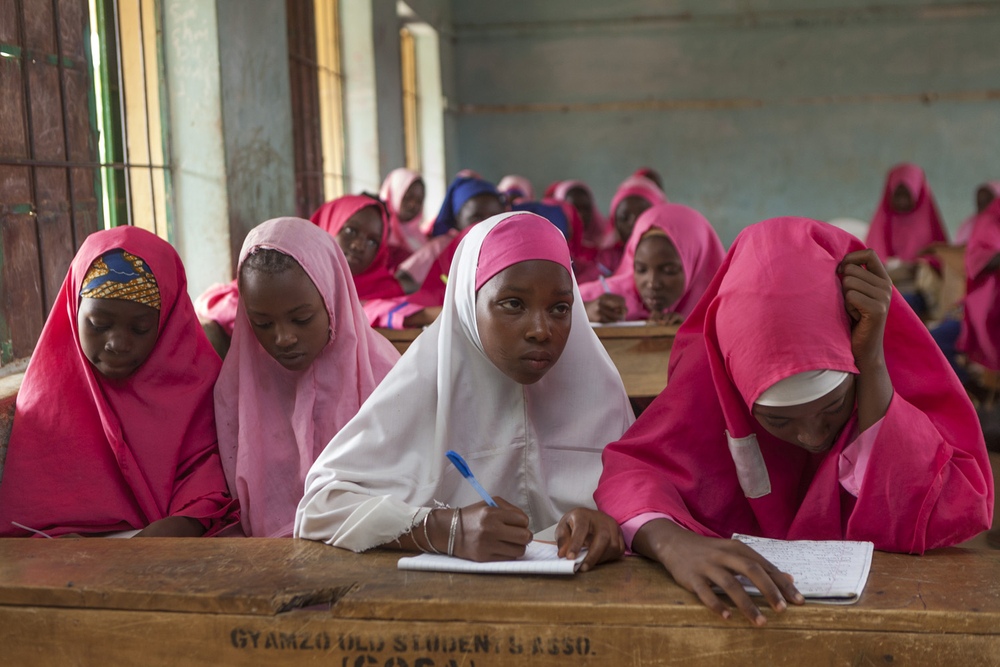
Several policies on education span across four decades, and yet Nigeria is still grappling with the menace of out-of-school children. Recent statistics from UNESCO projected a figure hovering around twenty million, with a significant portion of the children being the Almajiri Quranic students. 

Issues such as inconsistent government policies, poor implementation, inadequate funding, and limitations in terms of the scalability and scope of interventions provided by non-state partners and international donors have hindered efforts to address the problem. However, cultural and religious resistance remains a significant barrier.  

The classical system of Quranic Almajiri education imbibes Islamic teaching that every Muslim must acquire religious knowledge. However, culturally, the system aims to instill self-reliance and a sense of responsibility in the social and moral training of the child through hardship, toil, and hunger.

Sufism, the doctrine on which the system was founded, frowns at self-indulgence and believes asceticism and humility to be the hallmarks of a seeker of knowledge. This sentiment was echoed in the Weekend Triumph Newspaper of August 26, 1989, by Abdulkareem A. Bello, who describes the system as “the old wine in an old bottle”. 

In this article, Samaila Ado, an Almajiri in the Kano municipality, was reported to have said, “Our deplorable and wretched condition is a symbol of selflessness and humility.” According to Samaila, a true Almajiri is not concerned with worldly gains but rather is busy preparing for eternal life, which is more paramount.

Historically, the system had flourished owing to the support from the state’s public finances, the local community, and the philanthropic efforts from elites that catered to the modest needs of the children. During this time, the Almajiri scholars were artisans who, during their lecture-free hours, engaged in farming, fishing, well construction, production, masonry, trade, and tailoring. Most were farmers of the iconic Northern Nigerian cotton and groundnut pyramids. Some engaged in leather tanning and shoe and bag making in the old Sokoto empire. 

Sadly, however, the system has failed to adapt to the realities of the twenty-first century, with the modern Quranic Islamiyyas overshadowing the traditional Tsangayas and the Western secular education providing the safest route to climb up the socio-economic ladder. But more worrisome is the report that said six out of ten Almajiri pupils never find their way back home, and many lose their lives through street violence, ritual killing, kidnapping, disease and hunger.

Over the years, Integration has proven difficult due to the inadequacy of our policies. A careful analysis of the failure of Jonathan’s Almajiri integrated Model Schools by the Former Director of the Universal Basic Education Commission, Professor Ahmed Modibbo Mohammed, at Arewa House In Kaduna revealed that the lack of sensitisation and mobilisation of the nation affected the level of buy-in leading to a decrease in support and acceptance of the new system.  

Qualitative assessment research corroborated this analysis, carried out among Almajiri communities in Adamawa State. It demonstrated that including secular subjects was one of the major reasons parents did not welcome the program. 

Time and again, our policymakers have underplayed the subtle but widespread sentiment among the Islamic traditionalists who fear the new order poses the danger of erasing the cultural identity of the people. In a 2021 report published by The Resource Centre for Human Rights and Civic Education (CHRICED), Sheikh Bakura Assusaawi was remarked to have said: “Every Islamic scholar had gone through the system which shows us that there is indeed a great benefit in that system which we cannot afford to lose. There is no other help apart from helping the religion, and when we all neglect to do that, there is never a way forward.”

This allegiance to the old system and aversion towards Western education is rooted in the early events of the 20th century. On October 9, 1902, Fredrick John Lugard replaced Arabic & Hausa-Ajami (Hausa written with Arabic alphabets) with English & Romanized Hausa as the official language of Northern Nigeria. 

This single act in history changed the region’s educational scholarship trajectory. Not only did it render the rich knowledge produced in Ajami in the fields of humanity, science, and social science by the preeminent Sokoto caliphate obsolete and dying, but it relegated those proficient in this script to the background because to be “literate” and “employable” means to speak English and to write in the Roman script.

Tragically, the British also failed to recognise the Almajiri schools and abolished their state funding, tagging them as mere religious schools. This linguistic displacement brewed an identity threat in the people’s social psyche, igniting disdain and antagonism for the new system introduced by the colonial state and the Christian missionaries. 

Unfortunately, a century gap is still not enough to change the thought patterns of the Almajiri community. A recent story shared by a Twitter user about his late colleague’s son aptly drives home my point: 

The colleague had died, and the possibility of sponsoring the child’s education was hanging in the balance because the grandmother was standing in the way. She wanted the son to be enrolled in an Almajiri Quranic school instead of a secular Western school. 

The Twitter user was baffled because the grandma wouldn’t budge even when it was suggested that the child attend a formal school on weekdays and the Almajiri school on the weekends.

Many juxtaposing factors remain underpinning enrolment in traditional Almajiri education, barring socio-religious commitments and an aversion to Western education. These include rural-urban migration in search of greener pastures, disbanded families due to divorce or the death of the breadwinner, poverty, irresponsible parenting, and bad governance. 

Integration begins by fixing the stated problems, but reorienting society to the limitations of this age-long conservative approach to Islamic scholarship takes precedence.  Ever since the pilot scheme of 1964 to modernise Islamic schooling in the Northern Nigerian government headed by Sir Ahmadu Bello that ran successfully for few years before coming to a halt after his assassination, subsequent education policies namely Universal Primary Education (1976), National Primary Education Commission (mid-1980s), Universal Basic Education Act(2004) and Ministerial Committee on Madrasa Education (2009) which led to the establishment of President Jonathan’s Almajiri Model Schools have suffered detrimental setbacks.

Policies are cathedrals in the grand scheme of things; reality is the quicksand sinking them to the bottom. The government and relevant stakeholders must develop the political will to implement policies to their very ends. Most importantly, they must engage in intensive enlightenment, mobilisation, and re-orientation of the populace through the mass media, town hall meetings, and active involvement of the traditional Ulamas and leaders. 

AbdulMajid Haruna is an education thought leader and an inclusive education advocate primarily focused on vulnerable Almajiri children. He can be reached via abdoulmajeed570@gmail.com.

Lakurawa as a diversionary tactic

By Prof. Abdussamad Umar Jibia

For nearly a decade, the North West geopolitical zone of Nigeria has been suffering from the menace of banditry. The bandits who live in the vast forest spanning several states in the Northwest and North-central zones started as cattle rustlers before metamorphosing into fully pledged armed robbers. They attack communities, schools, travellers, etc. Wherever they go, it is a story of killing, kidnapping, rape, arson and other unprintable atrocities. 

Bandits lack the civility of the erstwhile armed robbers. In those days, armed robbers only sought money and valuables like jewellery. Once they had them, they were satisfied and would leave without dropping blood. That is not the case with bandits. When they visit a community or block travellers on highways, they usually start by killing some before kidnapping others. 

Payment of ransom is not a guarantee of getting the kidnapped victim freed. They may collect ransom from relatives and still kill the victim. There are many examples. 

Bandits’ locations and leaders are well known to the Government and members of the communities in which they operate. Many of them serve as the de facto government in their domain of operation. This is not a story I am telling from one of those video clips circulating on social media. Some of my blood relatives have been going to work on the farm of the bandits’ kingpin, who is in charge of their area. 

To agree to live under the protection of an “officer”, the de facto rural government of Jibia and Batsari, a village has to send its elders with some money to go and beg for him to accept them. You may wish to go back to my writeup on “Submission to bandits authority”.

However, an “officer” is not the only bandit leader known to the government and the people. There are more deadly and more popular “officers”. One of them is Ado Aleru, who killed dozens of villagers in Katsina State and told the BBC Hausa service that he doesn’t kidnap; he only kills. Asked to give the number of people he killed, he said it is too large to remember.

Another officer is Bello Turji, who, among other crimes, once burned a passenger bus with 30 people in it days after opening fire on a village market that claimed 60 lives in Zamfara state. He is popular because he speaks frequently to the public. That, however, doesn’t make him the deadliest.

Dogo Gide is another “officer” who was notorious for, among other things, the abduction of 90 students and teachers of FGC Yauri, 11 of whom he married off in the process. 

Among the many popular “officers” is Dankarami, who publicly confessed to killing many combined troops of Nigeria and Niger Republic in addition to kidnapping and killing many innocent citizens in Katsina and Zamfara state. 

The above crime leaders and several others in their category are still alive and active.

The Buhari administration made the first blunder in dealing with the menace of banditry. The federal government under Buhari asked governors of the affected states to strike a peace deal with the bandits. Peace agreements were sealed between some state governments and bandits in 2016 and 2019; in both cases, the latter reneged. 

Unlike what some of their sympathisers would want us to believe, the bandits are not freedom fighters but pure criminals and stark illiterates. The only thing that would make them drop their weapons is a continuous flow of cash from the Government, the kind of cash they make from their criminality. That is unrealistic for a Government struggling to pay its civil servants a paltry minimum wage. Hence, the peace deals were failed under Buhari.

Bandits’ sympathisers who gave Buhari the wrong advice have found their way into the Tinubu Government. The first indication of that is what a young Islamic scholar revealed early this year. The scholar alleged that, under the financial influence of unnamed federal defence officials, some Islamic scholars are campaigning for not just amnesty for bandits but their appointments into public offices by the government. He alleged that he was among those invited to participate in the campaign but refused.

As far as we know, the federal government did not deny Sheikh Koza’s claims. If he had lied, he would have been arrested and asked to name the defence officials. Neither of those things happened.

Then came the kidnap and murder of the Emir of Gobir. With the public outcry that followed, the Federal Government had to show its will to fight banditry. Thus, the Minister of State of Defence and service chiefs were asked to move to Sokoto and end banditry. However, despite the budget, since the movement of the minister and service chiefs to Sokoto, the only bandit of note who was killed/arrested by the Government is Halilu Sububu. Banditry business has continued as usual, even with the presence of our nation’s security heavyweights.

For example, as reported by national dailies, the Funtua-Gusau highway was blocked by bandits on several occasions during this period with no consequences. For frontline local Governments in Katsina state, the attacks became worse. The only place considered safe in my local Government area was Jibia town, the local government headquarters. However, since the so-called “Operation Fansan Yamma” started, Jibia town has lost its safety as bandits attacked, killed and kidnapped with impunity.

As Nigerians were waiting anxiously for the expected miracle due to the presence of security chiefs, the Lakurawa issue came up. According to sources, Lakurawa is a group with similar ideologies to Boko Haram. They have a total number of just 250 in Nigeria and no cases of frequent attacks on communities. Lakurawa militants are said to have been in Nigeria for some years at the instance of some Kebbi communities who sought their protection against bandits. 

The question here is, why is the issue of Lakurawa now being brought up when we have a more serious problem to solve? Lakurawa are obviously not as dangerous as the bandits, and their presence in Nigeria has been linked to the failure of the government to protect citizens from bandits.

From day one, the approach of this and immediate past governments has made Nigerians believe they are not ready to end banditry. If they are now talking about some Lakurawa instead of our real problem, why should we not think they are using it to divert our attention?

My advice to President Tinubu is to remember that he was elected by Nigerians. Ribadu, Badaru, Matwalle or Christoper Musa did not contest and win an election. The president is responsible for appointing his aides, continuously monitoring them, and ensuring they are doing the right thing.

That the officials mentioned above are Northerners is immaterial.

Professor Abdussamad Umar Jibia wrote via aujibia@gmail.com.