Opinion

The Southeast is no less a burden

Ahmadu Shehu, PhD.

As we continue the inconvenient conversation on Biafra and what it portends for the Southeast and our country, I find the need to clarify some insinuations raised in the troupes of comments and rejoinders that trailed my previous articles. But, before proceeding, I must commend many southeasterners for their dispassionate contributions and insightful perspectives.

However, although critical, some of the comments have missed salient truths that need further explanation. This will help our generation avoid past mistakes committed mostly by overzealous politicians, leading to avoidable wars and near-disintegration of our dear country.

There is this illusion that conflates southern Nigeria, particularly the Niger Delta, with the Southeast or “Biafra”. The truth is that the people of the Niger Delta region (let alone the southwest) do not align with the Southeast in politics and administration. For the information of our youth, the first secessionist war in Nigeria was fought between Niger Delta activists under the leadership of Isaac Adaka Boro and the Nigerian forces led by Chumeka Ojukwu, who later became a secessionist himself.

The three phases of Ojukwu’s career: from a defender of Nigeria’s unity at the battlefield to a rebel against his own country and later a senator and presidential candidate for the very country he fought to disintegrate should tell discerning minds that there are many faces to the idea of Biafra, none of which is the common interest of the Igbo people.

Please permit me to be blunter here. As far as our contemporary political and economic realities are concerned, the Southeast is only hiding behind the shadows of other regions in the south to claim prosperity. In other words, when our Igbo brothers call the northerners parasites, lazy or Abuja-dependent, they are actually borrowing the glory of the Niger Delta, and probably Lagos State, to abuse others. Because in reality, the contributions of the Southeast in the so-called feeding the nation is not as significant as they may like us to believe.

If you doubt this, let’s ask a few questions on the most critical sectors of the Nigerian economy. Since 90% of Nigeria’s foreign income depends on crude oil, what is the contribution of the Southeast in the two million barrels Nigeria makes per day? Very little is the answer. For, out of the nine oil-bearing states in Nigeria, Imo and Abia are the only southeastern states, accounting for an abysmal 1.6% and 0.68% of the total crude oil produced in the country. This is very negligible, as far as the numbers in this sector are concerned.

The Nigerian GDP, which is the bedrock of the economy and the source of non-oil revenue, primarily comes from agriculture. What is the contribution of the Southeast to agricultural production? The numbers are even more insignificant here. It is unfortunate that except for the oil-spilt Ogoni land, the Southeast is Nigeria’s least agriculturally viable region. Most states and local councils in the Southeast are not food sufficient.

By the nature of its geography, the Southeast sits on one of the country’s most infertile, erosion-prone lands. It is also the smallest and most overpopulated region leading to congestion and resource scarcity. It is no coincidence, therefore, that no one buys farm produce from there. Conversely, we see tons of raw food and livestock being transported daily to feed the region.

Some people may argue that the economic strength of the Southeast lies in its profoundly robust revenue base generated from industries and MSEs. They further postulate that the region contributes the most to the Nigerian revenue basket, albeit without evidence. Well, all the regions of the federation contribute their fair share to the federation tax revenue. However, the evidence available proves that the Southeast is neither the highest contributor nor is it self-reliant.

According to the National Bureau of Statistics, Southwest and South-South have the highest IGR per capita, and the Southeast is at par with North-Central, followed by Northwest and Northeast. None of the five southeastern states appears close to the top ten high revenue-generating states. Like any other northern state, none of the southeastern states – despite the 12% derivation funds – is wealthy enough to pay salaries without the federation account. Thus, one may ask: what kind of entrepreneurship and economic prosperity we are talking about here?

The fallacy behind the overestimated economic contribution of the Southeast is just one of the many problems. For instance, more than once, our country’s unity and cohesion are put on dangerous edges, thanks to the secessionist tendencies of the Southeast. Instead of forging ahead and pursuing alliances and friendships countrywide, the region and some of its people have continued on the path of division and segregation. The hatred propagated against anything and anyone perceived to be anti-Biafra has been phenomenal.

Furthermore, the Southeast is the main culprit in destroying Nigeria’s image and dignity in the international community. The Nigerian passport, which commanded respect a few decades ago, has become a suspect document worldwide. This unfortunate degradation of national identity and pride is the handwork of Nigerian drug pushers, physical and internet scammers, illegal migrants and human traffickers, most of whom are known to be southeasterners.

The same people are dealers and distributors of fake, contraband medications and drugs in all the nooks and crannies of this country, particularly in the North. This has always been an open secret and has been made even more vividly evident by the recent successes of the Nigerian Drug Law Enforcement Agency (NDLEA). The dangers these portend to our national development and global recognition is unquantifiable.

Therefore, if the above is true, claiming that the North is a mere burden on the Nigerian federation is absurd. For some, this might be based on ignorance, while for others, it is a deliberate attempt to malign and stereotype the region for reasons best known to the perpetrators of these dangerous narratives. But, whatever the motive is, we must recognize that all the federating units cause shared burdens to our national growth and development.

Since the North’s limitations and other regions have been overstretched in our national discourse, I believe it is equally important to remind our brothers in the Southeast that they are no less a burden than the other regions. As Nigerians, we should prepare to share both the positive and negative consequences of the actions and inactions of our fellow citizens. But, this is only possible when all parties acknowledge their limitations and are ready to embrace one another. Nigerians are siblings of a single family that are more alike than different. The earlier we accept this truth, the better.

Dr Ahmadu Shehu is a nomad cum herdsman, an Assistant Professor at the American University of Nigeria, Yola, and is passionate about the Nigerian project.

2023 Elections: Kano politics so far…

By Salisu Uba Kofar-Wambai

Kano politics is unique, unmatched and unparalleled in all its ramifications. The uniqueness begins from its genres of political communication. The encapsulation of comedy, funny utterances and other rhetorics in the body politic define Kano politics since the First Republic. One can authoritatively posit that the Kano political propaganda through name-calling and other techniques cannot be found anywhere in the world.

The other philosophy and unequalled precept that distinguish its politics is radicalism and politics of ideology. It is the home of Malam Aminu Kano, the renowned masses emancipator and the leader of Nigeria’s democracy of doctrine and dogmas. The ideology taught by the past generation of Kano politicians is always passed from generation to generation. This will explain why, no matter the circumstances, our governors must work harder than other governors of Nigeria to win the electorate’s support. Every governor is struggling to wipe the history of their predecessor in projects executions even when the politics of corruption and deception take centre stage nationwide. Many didn’t know this secret of Kano distinct way of politics. It is our talisman.

However, you can’t superimpose a candidate in Kano politics no matter who you think can control and influence public opinions. There are easy swings in loyalty; therefore, it is the electorate that decides their fate. The maxim of collecting any candidate’s money and vote your choice on election days is attributed to Malam Aminu Kano. It is still very relevant in Kano politics.

Looking at the two camps of Kano political heavyweights today will be an interesting analysis. APC, as a ruling party, is a powerful force to reckon with. It has encompassed renowned politicians like Malam Ibrahim Shekarau, Senator Kabiru Gaya and what have you. The party has become an escaping ground of many seasoned politicians who cannot stand Engr. Rabiu Kwankwaso’s kind of power grip in the PDP.

Although these sets of politicians are not relevant to the APC’s camp, they’re not happy with the way, and manner Governor Abdullahi Ganduje’s government is run, especially the land matters and prioritization of projects that only serve the interest of the governor to earn his mighty 10 per cent. Let alone how the APC chairman and his cronies run the party as if they’re military dictators. There is nothing like internal democracy. And the chairman’s utterances have become a source of worry and grief to those party followers who want to see the sustenance of the party’s success come 2023.

Now that the struggle for 2023 has started and the politicians have already beat the drum, APC faces a threat and an uphill task on who will take after Ganduje. One can easily fathom and decipher from the hottest exchange of politicians how tough the politics will be.

So far, the top contenders are the deputy governor, Nasiru Gawuna, who remains mute, and the commissioner for local government affairs, who’s considered to be Ganduje, and his wife’s anointed son, who is doing all the talks for the deputy governor. The seconder is  Kano North senator and chairman senate committee of appropriations, Barau I. Jibril.

However, the recent outburst by Dr Hafsa Ganduje alias Goggo, the governor’s wife, who let the cat out of the bag, bluntly showed the governor’s support. So it lies with the deputy governor’s camp even though the commissioner of the information spun her statements where he said: she wasn’t understood, her utterances were twisted. The other contenders are AA Zaura and Barrister Inuwa Waya.

It seems the governor is caught between the devil and the deep blue sea. It is an undeniable fact that Senator Barau is the man of the moment. His political machinery is increasingly gathering momentum, and he’s believed to be the man who can challenge PDP Kwankwasiyya political movement in popularity and funds wise. But the governor seems not to be with him. And Gawuna has no political and economic wherewithal to fight for the Kano seat. Nobody will argue this. So, if the governor mistakes the gubernatorial candidate, it is at his own risk, for his sworn enemies may likely grip on to power, and he knows the consequences.

However, the meeting of Shekarau, Gaya, Barau and some reps like Shaaban Sharada and Abdulkadir Jobe says a lot. They all felt that they were relegated and marginalized to mere party members during the recently conducted local government party executives positions elections and the upcoming Saturday state executive party positions contest. It is a clear pointer that the party is facing severe intraparty wranglings. And such tussles can quickly become an undertaker of the ruling party.

As the opposition party, PDP is facing its kind of internal disputes between the Kwankwasiyya political movement and the Aminu Wali’s camp, former minister of foreign affairs, one of the remaining PDP founding fathers and member of the PDP board of trustees. There have intense struggles with who will control the party at the state level. Wali’s camp is accusing Kwankwaso of total domination of the party and blaming him of anti-party activity during the 2019 general elections when Atiku Abubakar contested for presidency. On the other hand, Kwankwasiyya is equally boasting their number of supporters, the popularity of their grand leader, Rabiu Kwankwaso, the former Kano state governor.

As things keep on twisting by day, we wait to see how far the gum will be shot into the air.

Salisu Uba Kofar-Wambai wrote from Kano. He can be contacted via salisunews@gmail.com.

The Igbo Presidency!

By Mohammed Zayyad

The debate that the presidency moves to the South in 2023 has gained momentum. Also, presidential hopefuls from the North, like Atiku Abukar, Sule Lamido, Senator Bala Mohammed, Senator Rabiu Musa Kwankwaso, are also effectively playing their games.

The calls for power to shift to the South have further triggered permutations and realignments in the polity. Both the Peoples Democratic Party (PDP) and the All Progressive Congress (APC) have strong candidates from the South. But these candidates have their respective baggage, and the parties have internal squabbles that must be resolved.

The APC has its stronghold in the Northwest, Southwest, Northeast and Northcentral – four of the nation’s six geopolitical zones. The PDP has strong structures in the six zones with a stronghold in the Southeast and Southsouth. However, the APC has moved into the Southeast in full force. Before the 2015 elections, nobody had ever thought that the APC would someday have even a ward councillor in the Southeast. But, today, the party has two state governors, senators, House of Representatives members, state house of assembly members, local council chairmen, councillors and formidable party structures in all the five southeastern states.

Come 2023, the APC has no reasons to retain power in the North, but there is strong politicking by some governors and other bigwigs to maintain power. This will mean the APC contravening the unwritten agreement between the North and the South on power rotation. In any case, the APC does not have a strong presidential candidate from the North. This is a big plus to the presidential hopefuls from the South, or Southeast, in particular. Furthermore, the Southeast has a strong case to present based on a plank that the Southeast is the only geopolitical zone in the South that has not produced a President or vice president on any political party platform since 1999.

If APC picks its presidential candidate from the South, especially Southwest, the PDP may attempt to outwit this by looking to the North for its presidential candidate. This, as well, will put the  PDP in a catch-22 situation on how to explain this to the South, especially the Southeast and the South-South, why the North again, after eight years of the North being in power.

PDP has good candidates in their own ‘rights’ from the Southeast and South-South. Enugu State Governor Ifeanyi Ugwuanyi, Peter Obi from Southeast and Governor Nyesom Wike from the South-South. Obi does not have friends in the North and has never tried to pull an appeal from the region, directly or by proxy.  His deportation of other Nigerians to their states when he was governor of Anambra state was used against him in the North during the 2019 campaign, and it worked.

For Wike, his words, ‘Rivers is a Christian state’ will be used against him in the North like Governor El-Rufai’s Muslim-Muslim ticket in Kaduna can be used against him (El-Rufai). This is how local politics impact a candidate’s wider political opportunities. Some young people in the north are also campaigning for  Enugu State Governor Ifeanyi Ugwuanyi. Still, the IPOB issue will be a significant hindrance in the North, but it is not insurmountable. Advocates of secession appear not to understand Nigeria. There are massive inter-marriage, friendships, business links and political alliances, among other ties, between many northerners and many Igbos.

Some nationalistic politicians from the Southeast have started to convince other Nigerians to support the region to produce the Nigeria president of Southeast extraction in 2023.  The bigwigs’ forefront presidential hopefuls are Governor David Umahi,  Orji Uzor Kalu, Governor Ifeanyi Ugwuanyi, Rochas Okorocha, Chris Baywood Ibe, Ken Nnamani, Minister of State for Education, Dr Chinedu Nwajiuba, Sen Osita Izunaso and many others. Of course, these politicians have their political baggage and controversies. However, people like Chris Baywood Ibe are new faces without any political baggage and controversy-free.

A thorough understanding of how Nigerian politics works is paramount in achieving the political goals of a group, a region, or individuals. There are so many conflicting interests in Nigeria. Still, there are always windows for alliances, give-and-take, a hand of friendship, and convincing others to support a particular political cause or an individual’s.

For the 2023 presidency, the Southeast should present a candidate with a new face, no controversies, no political baggage and who has friends and is well-known across the Niger. For both the APC and the PDP, it will be an opportunity to reunite Nigeria and rekindle the historical political alliance between the north and the southeast while maintaining the partys’ current national. The Igbo presidency is possible through the spirit of one Nigeria.

Zayyad I. Muhammad writes from Abuja. He can be reached via zaymohd@yahoo.com.

Boko Haram Origin: The fact, the fiction and the singularity of story in David Hundeyin’s “Cornflakes for Jihad” and more

By Aminu Nuru

 “The most dangerous untruths are truths moderately distorted”. – George Lichtenberg

It is not uncommon that some public commentators and analysts could be mischievously deceptive in their narratives and analyses of history to accomplish an end. They could quote historical facts, mix them with fiction, and frame narratives to promote a single story. In some cases, they deliberately relegate and ignore some significant events or points to suit the writer’s bias. Recent writings on the origin and rise of Boko Haram demonstrate how some writers distort facts to frame narrative and promote bigotry.

For instance, if one can closely study the framing of Boko Haram and how it is brazenly becoming one-sided, then one can say that the whole history is rewritten to massage and satisfy the ego of some group’s bigotry. It is not farfetched to say that some of these bigots will soon claim that the generality of the Muslim North endorsed and supported Boko Haram and Nigerian Christians were the only targets and victims of the group’s deadly attacks. Why would I make such a sweeping projection with every sense of finality? To respond to this question, let’s go back to 2013.

While speaking at the 14th meeting of the Honorary International Investor Council (HIIC) held at the Banquet Hall of the Presidential Villa on June 22, 2013, former Nigeria’s President, Goodluck Jonathan, a Christian, disclosed that the Boko Haram sect had killed more Muslims than Christians in Nigeria. This is not just hearsay but a verifiable fact that is naked in vision to people that are not be-clothed with hatred, ethnic and religious jingoism.

However, the Christian Association of Nigeria (CAN) couldn’t swallow this fact and, therefore, issued a statement to disagree with him vehemently. In a press statement credited to the Northern chapter spokesperson, Elder Sunday Oibe, CAN said that Jonathan’s assertion was “misleading and unacceptable”. They further stated that,

“We want to believe that the president was misquoted; we don’t want to believe that with the security apparatus and report from security intelligence network at his disposal, he made this assertion. If it is true that Mr President actually made this assertion, then, we are highly disappointed and sad at this veiled attempt to distort the fact as it concerns the activities of the Boko Haram sect. The purported statement by the President is highly disappointing considering the facts that Christians, churches and their businesses have been the major targets of Boko Haram” (Sahara Reporters, June 23, 2013. http://saharareporters.com/2013/06/23/northern-can-disagrees-jonathan-says-boko-haram-has-killed-more-christians-muslims)

For CAN, the Boko Haram crisis was/is “religious by nature” – the familiar we-versus-them religious clashes and conflicts in Nigeria, although in different outlooks and techniques; it is a plot by some Muslims to reduce the populations of Christians in Nigeria and crackdown their businesses. Since then, CAN sympathisers subsequently frame their narrative of Boko Haram from this angle. An article titled “Cornflakes for Jihad: The Boko Haram Origin Story” by David Hundeyin, widely shared on social media in the last few days, aimed to promote this kind of narrative. Unfortunately, the author skillfully filled the article with half-truths and a mixture of facts and fiction to push the CAN’s sentiment. Hundeyin is practically siding with his former religion.

Firstly, Hundeyin makes an effort to link Sheikh Abubakar Mahmoud Gumi with the origin of Boko Haram. Many people think that Hundeyin’s “Cornflakes for Jihad” is the first futile effort by an “investigative” journalist, analyst, historian or whatever to make this manipulative effort. However, Andrew Walker’s thesis, “Eat the Heart of the Infidels: The Harrowing of Nigeria and the Rise of Boko Haram” (Oxford University Press, 2016), preceded it in that exercise. Therefore, it is not likely to be a false accusation if it is argued that Hundeyin copied the idea of featuring Gumi in discussing Boko Haram, almost verbatim, from Walker. From the arguments of Sheikh Gumi’s “influence” in the “political” realm of Nigeria to his “friendship with Ahmadu Bello”, to pioneering the “propagation of Wahabism” in post-independent Nigeria, to his contribution in the creation of Izala and his “Saudi connection” are equally and loudly echoed in Walker’s thesis.

For both Walker and Hundeyin, Sheikh Abubakar Mahmoud Gumi championed the Sunni/Salafi/Izala movement in Nigeria. Therefore, any account of the origin and rise of Boko Haram – a so-called Sunni/Salafi-fundamentalist terrorist group – must be traced back to him. Albeit impliedly, their submissions suggest that there would be no Boko Haram if Gumi did not “disrupt” the Sufi order and influence of Qadiriyya and Tijjaniya in Northern Nigeria. They claim that Gumi’s campaign of a corrupt-free practice of Islam inevitably gave birth to the radical movements in Northern Nigeria. This is to say, although without explicitly stating it in their works, every Sunni/Salafi-based movement in Nigeria, whether moderate or violent, must have had their inspirational source from Gumi. On the link between Boko Haram founder, Muhammed Yusuf, and Sheikh Gumi, Walker writes: “The title of Yusuf’s book deliberately echoes the titles of similar treatises by Sunni preachers, like Sheikh Gumi’s “The Right Faith According to the Sharia”, perhaps in order to lend his ideas credence…the two clerics share a revulsion for secularism..” (Walker, 2016:144).

This line of argument is even less faulty in logic and spirit of “balanced story” than what Hundeyin further orchestrated in his article. According to Hundeyin, Sheikh Gumi admonished Muslims, particularly his Sunni/Salafi followers, to reject a non-Muslim as a leader and advocated “for insurrection against a Christian Nigerian President” and, of course, his Christian followers. In the successive paragraphs that supported this claim, Hundeyin apprises his readers on the “consequence” of Gumi’s propagation; he states that after Gumi’s death, a Sunni/Salafi-indoctrinated group, which bears the name “Boko Haram”, toed to the path of his admonishment to carry weapons against Nigerian Christians, killing and bombing them in their churches. He wittingly makes reference to the bomb blast at “St. Theresa Catholic Church”, Madalla that “killed 37 people”, and other subsequent “killings of Christians” in Jos and Damaturu.

The implication of this narrative on an outsider, who does not know the context of Boko Haram terrorism in Nigeria, is that s/he would begin to see Sheikh Gumi as “problematic” and a source of Boko Haram’s inspiration and violent extremism. Secondly, a non-pragmatic reader may also assume that the group only targets Nigerian Christians in their series of attacks in the country. Hundeyin’s article aims to peddle that twisted narrative for no reason other than the writer’s hatred for the Muslim North (Arewa) and their Islamic culture. In one of his previous tweets, he heedlessly says that: “The world will be a significantly better place when Arewa culture completely dies off and is replaced with something fit for human civilisation” (David Hundeyin/Twitter, November 29, 2020).

In the spirit of fair analysis, it is expected that an impartial analyst would compare the socio-religious ideas Gumi propagated in his lifetime and the ideologies of Boko Haram. But this would not sell out Hundeyin’s bigotry, and so he ignored that vital aspect. The core centre of Boko Haram dogmatic tenets is a war against “western-styled” education, democracy and civil service. On the other hand, Sheikh Gumi was both a product and proponent of western-styled education; he worked with the government as a civil servant and received salaries from the state resources. As he proudly opined in his autobiography, “among [his] children were army officers, civil servants, medical doctors, an engineer…lawyers, teachers and workers in finance houses and private businesses. There was hardly any profession in which [he] did not have representation from [his] family” (Gumi with Tsiga, 1991:202).

Gumi was also pro-democrat, as evidence from his recorded preaching suggested so. He is famously quoted to have said, “siyasa tafi sallah”, which could loosely mean “politics is more significant than prayers”. This was the extent Gumi had gone to support democracy in Nigeria, and believe me, Shekau would not hesitate to call him “taghut” – an idolatrous tyrant. He had also worked closely with the Christian Head of States. They had a cordial relationship and respect for each other: Ironsi invited him to lead a delegation to North Africa and the Middle East to carry goodwill messages of his new regime; Gowon appointed him Chairman of the Nigerian Pilgrims Board and gave him “all the necessary support, although he himself was a Christian”; with Obasanjo, he could “freely talk” and express his mind on relevant socio-political issues (Gumi with Tsiga, 1991:203).  However, Hundeyin willfully refuses to draw this analogy to give a sense of what Achebe called “a balanced story”. Instead, he purposely portrays Sheikh Gumi on the wrong page in the book of terrorist origin in Nigeria.

Contrary to the insinuation of Hundeyin moreover, the truth of the story is that Boko Haram did/do not target Christians only. In fact. Nigerian Muslims suffer(ed) more causalities than Christians in the Boko Haram conflict. Hundeyin refuses to mention the main enclaves of Boko Haram activities and the population ratio of Muslims and Christians there. Stating this factual data will indeed not favour his intended, warped story. The reality is that Muslims have the predominant population in Borno, Yobe and Adamawa States. Arguably, the cumulative of all Boko Haram killings of innocent people would show nothing less than 70% of Muslim casualties.

On a specific, direct attack on religions, Hundeyin only mentions the bomb blast at St. Theresa Catholic Church, ignoring similar incidents on August 11, 2013, at a mosque in Konduga where 44 people were killed and on November 28, 2014, at the central mosque in Kano where 120 people were killed (BBC Hausa, 2013, 2014). It is understandable if Hundeyin re-echoes the bomb blast at St. Theresa Catholic Church in his article; it is a show of solidarity to his ex-religion. However, what is faulty and even worrisome is the selective exemplification of the direct attacks on religions by the Boko Haram insurgents. A reader who is unacquainted with the details of Boko Haram attacks on places of public worship would feel that churches and Christians were the only victims.


Scenes from Kano Central Mosque Bomb Blast. Source: The Eagle Online


To further promote this half-truth, Hundeyin moves on to tell us how a Salafi/Sunni preacher was directly linked with the funding of Boko Haram. I will neither attempt to exonerate Sheikh Yakubu Musa nor believe those serious allegations in toto without reading or hearing the Sheikh’s version of the story. However, my problem here is with Hundeyin’s failure, which is intentional, to mention the Salafi/Sunni preachers that fought Boko Haram vehemently and even paid the ultimate price with their lives. It is on record that at the early stage of the Boko Haram crusade, Salafi scholars debated Mohammed Yusuf. In Bauchi, for instance, Ustaz Idris Abdulaziz Dutsen-Tanshi, a Salafist to the core, invited and challenged Muhammed Yusuf at his mosque and in the presence of his followers; so also a young Isa Ali Pantami – the then Imam of ATBU Juma’at mosque.


Imam Idris Abdulaziz debating Muhammed Yusuf
Imam Isa Ali Pantami Debating Muhammed Yusuf

These Salafists continued to be critical of Muhammed Yusuf and his sect. They consistently delivered lectures to denounce his fatwa. Sheikh Ja’afar Mahmoud Adam, an unapologetic Salafist, was particularly vocal in his public censure and condemnation of Boko Haram. Unlike Hundeyin, Walker states this fact in his book:

“In 2007, Yusuf ’s former teacher, Sheikh Ja’afar Mahmud Adam, himself an ardent Salafist, had gone on record to denounce the group and warn that these ideologues were heading for a violent confrontation with the state” (Walker, 2016:148).

For many, Sheikh Ja’afar was the spiritual successor of Sheikh Abubakar Mahmoud Gumi. Some influential people requested and later attempted to transfer his annual Ramadan Tafseer to Gumi’s preaching base, Sultan Bello Mosque, Kaduna. He conducted his annual Ramadan Tafseer in Maiduguri, the early and central territory of Boko Haram terrorism. During his Tafseer sessions, Sheikh Ja’afar was not reluctant to criticise Yusuf and his new sect. On April 13, 2007, a day to general elections in Nigeria, and barely 48 hours after delivering a talk in Bauchi on Islamic views on thuggery, violence and widespread killing of innocent souls, Sheikh Ja’afar was murdered in Kano while observing Subh prayer and “it is thought to be members of Yusuf’s sect” (Walker, 2016:148).

Another prominent voice among Salafists in the fight against Boko Haram was Sheikh Muhammad Auwal Albani, Zaria. But, unfortunately, he was also killed in cold blood. In a video released to the public, Muhammed Yusuf successor, Abubakar Shekau, took responsibility for the assassination (Sahara Reporters, February 20, 2014, http://saharareporters.com/2014/02/20/bo-haram-leader-claims-responsibity-killing-kaduna-cleric-sheikh-albani-threatens).

Hundeyin has ignored all these facts about Salafi preachers in Northern Nigeria but brought a single dubious claim to frame a narrative that would deceive an uncritical, vulnerable audience. His motive is clear: he wants to rebrand the entire population of Salaaf and the Muslim North as pro-terrorist, supporting the killings of Christians in Nigeria. It is rather unfortunate that this is where the discussion is heading, and it is a wake-up call to those of us that witnessed and had a first-hand experience of the Boko Haram crisis to begin to write our counter-narrative. If we don’t write it, others will write for us. And before we retrieve our consciousness, we will be afloat in a sea of half-truths and stereotypes on Boko Haram, Islam and the North.


Aminu Nuru wrote from Bauchi. He can be contacted via aminuahmednuru@gmail.com.

El-Zakzakys and half freedom

By Najeeb Maigatari

It has been more than a couple of months since the leader of the Islamic Movement in Nigeria (IMN), Sheikh Ibraheem Zakzaky (H) and his wife, Malama Zeenah, were acquitted and discharged of all charges filed against them, after spending almost six years in illegal detention.

The couple who were arrested in December 2015 had been languishing in the custody of the State Security Service before later being transferred to Kaduna Correctional facility in early December 2019, with inadequately treated life-threatening gunshot injuries and numerous health complications.

It could be recalled that in July 2019, the couple had to be granted bail to urgently travel to India to attend to their failing health that kept deteriorating as days went by, an effort which was, unfortunately, deliberately frustrated by security agents which resulted in the couple prematurely aborting the trip without receiving medical attention.

Now that the couple is acquitted of all charges filed against them by the Kaduna State government, justice demands that they be allowed to attend to their health wherever they choose to go, without undue frustrations whatsoever. But on the contrary, since their aborted medical trip, the couple’s passport and other documents that will allow them to travel are reportedly withheld by agents of the State Security Services and are nowhere to be found.

In an exclusive interview with Press TV on 29th September, the Sheikh pointed out that an attempt to procure new ones proved abortive as the couple were told ‘passport flagging order’ was placed on them, meaning they could not leave the country, for no reason.

It is public knowledge that Nigeria’s health care is criminally under-equipped, debilitated, with an inadequate workforce. As a result, after carefully reviewing the couple’s health condition, many doctors have advised that they best be treated outside the country where health care facilities will be available.

The deterioration in the couple’s health condition is so glaring as the Sheikh could be seen limping and his wife confined to a wheelchair as they exited the court premises last couple of months. This is due to a lack of access to proper medical attention in their years in illegal detention.

The Sheikh and his wife have suffered enough already: six of their children were extrajudicially killed in the pace of fewer than two years, over a thousand of his followers were killed and buried in mass graves and hundreds of others killed while peacefully protesting against his illegal detention. Therefore not allowing them to travel at the moment is tantamount to rubbing salt in their wounds.

Injustice to one is an injustice to all. And, for peace to reign, clergymen, well-meaning individuals, and all people of conscience should please urge the government to allow the ailing Sheikh (H) and his wife attend to their health, especially as the Sheikh has in the face of unnecessary provocations, demonstrated an immeasurably disagreeable height of self-restraint and peacefulness.

The Sheikh and his wife are now free; they have not committed any crime as the Kaduna State High court ruled. Therefore, the right to be allowed to attend to their health outside the country is inalienable as enshrined in the constitution; it is a flagrant violation of their fundamental rights as citizens of the country.

If anything, the government should, for the good of the nation, try to maintain the fresh breath of air in the streets of Abuja and other cities considering the existential security crisis ravaging the country; it’s therefore unwise of the government to create yet another. One thing is sure: if Sheikh Zakzaky (H) is not allowed to attend to his health, those streets will soon be littered with the Sheikh’s unrelenting, indefatigable followers.

Najeeb Maigatari wrote from Jigawa State and can be reached via maigatari313@gmail.com.

IPOB and the myth of the rising sun

By Tahir Ibrahim Tahir (Talban Bauchi)

We went on a trip a while ago to Jama’are local government in Bauchi state for the turbaning ceremony of my cousin as the Ubandoman Jama’are. Jama’are is a 2-hour journey from the Bauchi metropolis. On our way there, we ran into a pothole, and we got a twisted tyre. After our event, we proceeded to Azare, another local government in Bauchi, a 30 minutes drive from Jama’are, hoping that we would get a tyre to replace our damaged one. We were directed from one shop to the other, and each time we arrived at any of the shops, we met them all locked up. We got the puzzling explanation that one of the shop owners lost his father and that he and all his brothers had gone for the burial. They meant that Igbos owned all the shops, and they were the only ones that sold the size of tyres we were looking for. We had to manage the twisted tyre all the way back to Bauchi because Chinedu’s uncle had died, and nobody else sold proper tyres in Azare, a whole local government, deep in the North East!

At Emab plaza in Abuja, I dare not step in to buy even a memory card, and my ‘customer’ NG, who is Igbo, would jokingly hound me for not telling her that I was coming to buy a phone! She was a shop attendant to her brother, who is a friend of mine. He had opened new outlets, and she became the CEO of the Emab division. I dare not buy what she sells from elsewhere. I’m off the hook and free to spend my money at any other shop, only if she doesn’t have what I’m looking for. My relationship with my Igbo friend’s shop is not less than 15 years old!

There’s a car service place at Wuse 2, on the famous Adetokumbo Ademola Crescent in Abuja. They usually get your tyres checked, balanced and aligned, and all that car check routine. An Igbo guy, Pat, hangs around there; when you have to get a new tyre, Pat is there, ready to get you all the brands, from Korea to Japan, China, France — you name it, and he’s got it. So Pat is the go-to guy even when I’m far away in Bauchi, and I need to get the accurate market prices of tyres from different brands. This is a ‘customership’ that has spanned over 15 years as well!

So goes with the guy at the Barbing Salon. Chike is about the nicest hairdo guy I have ever known. Courteous, cheerful, hardworking and good at his job. For the entire corona lockdown year, I left my clipper with him. Finally, a good one year after, I hop into town, and there is my clipper, safe and sound. It was serviced and polished, looking even newer than I left it. Chike’s courtesy leaves you scraping through your pockets to get something for him, aside from the shop’s charges. From working in his Oga’s shop, he had moved to his own place, with a few of the other barbers he worked it.

Igbos own an estimated 60% of land, property and businesses in Abuja. There is no denying them being industrious, hardworking and very enterprising. They are all over the country, handling numerous firms and bossing most of the trade they engage in. That is why it is super difficult to understand the meaning, purpose and direction of the Indigenous People of Biafra (IPOB). Biafra is all over Nigeria, and it is just silly to try to corner it to a cranny as small as Niger State! If you alienate yourself from Nigeria and create your own country, do you expect to keep all the businesses all over Nigeria and get patronage from Nigerians? Isn’t this a money-wise, pound foolish idea? The whole concept of self-determination and the attendant superiority complex is eating up the UK now – albeit they may not accept it publicly. It is the same trap that awaits Biafra, should it see the light of day.

The Nigerian army recently rolled out Operation Still Water, an ember months programme, to maintain security during the festive period. It is a continuation of the previous operations such as Crocodile Smile, Python Dance, and so on. In the midst of it, popular actor Chiwetalu Agu was arrested at Upper Iweka Road, Onitsha, Anambra state, for inciting public members and soliciting support for IPOB. He was donning an IPOB attire when he was arrested. The army denied maltreating him, as was widely reported. A video surfaced later, which gave a snippet of what their interaction with him was like. He said that the Sun showing on his cloth was a rising Sun and that the colour combination was just coincidental and didn’t signify IPOB. He said he was educated enough to know where to go to and where not to go to. He squarely denied IPOB and said he had nothing to do with it. So many Igbos are coming out of their shells to deny IPOB and publicly give their activities a dressing down.

The Igbos we relate with every day are not the ones that IPOB represent, right? So the barbaric activities of the group need to be clamped down by the Igbos themselves. They must make it clear that the narrative of that movement is not theirs and is not in their own interest.

Joe Igbokwe’s house was razed in his hometown of Nnewi, Anambra state. Dr Chike Akunyili was killed in the Idemili North local government of Anambra state. A fire that seems to rage on from a distant neighbour’s residence clearly indicates that your own house is not insulated from the same kind of fire. A proverb in Hausa says, “If you see your neighbour’s beard in flames, you must hurry and rub your own with water.”

The tiny flame that started in Borno has spread like cancer to the entire North. South easterners should not allow this in their backyard. The earlier the Igbos rise against this so-called rising Sun, the better for us all. We have a risen Sun to be grateful for already. There is no need to go looking for more Sun. The heat would definitely be unbearable!

Tahir is Talban Bauchi can be contacted via talbanbauchi@yahoo.com.

Igbonomics in Northern Nigeria

By Ahmadu Shehu, PhD.

My previous article titled If there was Biafra generated debates around Biafra’s disadvantages (and advantages) to the Igbo people. Many of these comments were very insightful, and in line with the thoughts I presented. While I cannot respond to all the commentators, I will briefly address the most salient rejoinders. But, once again, let me quickly state that this conversation does not target the Igbo as an ethnic group. Instead, I aim to provide an outsider view to these pressing issues of national unity on which all Nigerians share equal rights and responsibilities to tell ourselves the home truth.

Some commentators say that the article was biased as I only focused on the disadvantages and neglected the “obvious” advantages the Igbo will gain from Biafra. However, I do not see a single demographic, economic, geographical or even political advantage the Igbo will gain by simply seceding from Nigeria. That is the thesis of the previous article. In fact, the post-exile writings of Odumegwu Ojukwu, the architect of Biafra himself, buttress this point.

The most critical observations from many prominent Igbo elites and friends claim that as much as the Igbo people enjoy Nigeria’s unity from both economic and political perspectives, we should equally be thankful to the southeasterners for the jobs they create for other Nigerians. In other words, the Nigerian market saturated by Igbo traders is also lucky to have the Igbo money as capital for the employment of other Nigerians.

Well, this claim might seem valid at face value. Still, it may not be entirely accurate when Igbonomics – a term I use here to refer to the economic strategy of the Igbo people – is subjected to a critical view. In the said article, I noted that one of the weaknesses of the southeastern economic model is that it is closed to other Nigerians. The resentment the Igbo folks have against the majority of Nigerians do not allow “strangers” from any region of the country to freely establish or run businesses in Igboland. That is why most Igbo billionaires today were made one hundred per cent in and by other regions of this country, but not the other way round. There is hardly a non-Igbo billionaire made by or in the southeast.

This xenophobia is not only applied against the Hausa-Fulani northerners or the Yoruba south-westerns but also their closest cousins, the Niger-Deltans. This approach is based on three exclusionist strategies of Igbonomics: First, the market and product, and indeed the value-chain must strictly remain an Igbo affair. Second, other regions’ markets, their products and value-chains must be proportionately shared with the Igbos. Third, to drift public attention from this ongoing reality, maintain the victim card by crying louder than the bereaved – the real victims of marginalization. While the first two tenets are lawful but greedy, the third is a clear case of hypocrisy. Here is a simple example to foreground this scenario.

The Igbo form the largest group of Nigerians in the diaspora. Since Nigeria is an import economy, the Igbo people in diaspora serve as business agents for their brethren in Nigeria. Therefore, the import business is basically an Igbo – Igbo transaction. Here in Nigeria, these goods are transported mainly to the southeastern markets, such as Abba and Onitsha. Instead of Lagos or Port Harcourt, most Igbo traders, who are widely dispersed across the nooks and crannies of this country, buy their goods mostly from Igbo distributors in the southeast. Another Igbo – Igbo transaction.

Up here in the north and other parts of the country, the Igbo employ strictly Igbo artisans, mostly from their own villages or communities in the east, and in some cases, the so-called northern Igbos. From sales girls and boys to messengers, marketers and suppliers, the Igbos domiciled in the north only trust their own ethnic brothers regardless of the opportunities employing locals might portend to their businesses.

For instance, you find a single Igbo shop owner in a village. By the following year, s/he has brought two, three or four Igbo artisans, thereby growing in population, manipulating the resources and seizing the business opportunities further away from the local people.

In most cases, the deal is that a separate business in the same line is established for the younger artisan, expanding further the grip of the Igbos in that line of business in the communities they are domiciled. Thus, the profits, gains and resources of the business in any of these communities become an Igbo affair entirely. Therefore, in this arrangement, the Igbo create jobs primarily for themselves while other sections of Nigeria serve as their consumers.

While the Igbos living in the north own properties and investments in the region, they return their proceeds to their homelands. Thus, I can bet my last penny that Igboland has more properties and investments built from profits and wealth acquired outside the Igboland than those made from the businesses run within the Igboland. Moreover, I had said earlier that businesses domiciled in the southeast largely depend on the larger Nigerian market to thrive.

Therefore, it should be clear from the foregoing that Igbonomics in the north is an Igbo economic affair that largely – if not only – benefits the Igbos. The brutal truth is that the Igbo are NOT marginalized in Nigeria. Instead, they are playing a victim card to maintain the economic status quo. While the various sections of this great country have a lot to thank one another for, none of these sections should claim any superiority. Neither should any of these play a gimmick of marginalization. We are equals in the hands of God and our country.

Dr Ahmadu Shehu is a nomad cum herdsman, an Assistant Professor at the American University of Nigeria, Yola, and is passionate about the Nigerian project. You can reach him via ahmadsheehu@yahoo.com.

Celebrating Governor Bala Mohammed at 63

By Sulaiman Maijama’a

What aspect of life deserves celebration, and what parameters do people use in deciding whose life is worthy of celebration? Becoming a celebrity? No! Obtaining a university degree? No! Getting married? No! Accumulating wealth? No! To give you a clue, who cares to celebrate a person whose life has no impact on their fellow beings? Only people of thought who see beyond the surface; whose life is inspiring and motivating; whose track record speaks volumes, deserve this celebration!

It is not how much but how good. Not the quantity but the quality. It was, however, narrated in an authentic tradition, our beloved Prophet (peace be upon him) said that “the best of human beings is the one whose life is elongated and his deeds are good, and the worst, on the other hand, is the one who is privileged to live long, but his works are bad.”

Governor Bala Mohammed of Bauchi State has had a good fortune to join the cadre of the chosen few, spared to witness sixty-three (63) years of existence on earth and, most importantly, serving humanity throughout the journey. This is, coincidently, coming few days after the Federation of Nigeria celebrated her 61st  independence anniversary.

Born on October 5th, 1958 in Duguri to the royal family of the District Head of Duguri in Alkaleri Local Government Area of Bauchi State, little Bala Mohammed, as it is with tradition in Northern Nigeria, was enrolled in Qur’anic school where he was well trained, given strictly regimented orientation germane to Islam, in order to toughen him up to face the realities of life early. He, after that, had his primary education in Alkaleri from 1965 to 1971 and started his secondary school from 1972 to 1976.

Coming from a Royal Family, Bala Mohammed began to exhibit leadership traits in his teenage age by being so dutiful to his elderly, generous to people, and affectionate to younger ones. His selflessness in serving humanity, devotion to duty and sense of humour made him beloved to his family, friends and all people, thereby making him attractive like a magnet, and his name echoing in their village.

In 1979, Bala Mohammed went to the famous University of Maiduguri and obtained his First Degree, graduating with BA in English in 1982. Upon graduation, in 1983, he worked as a journalist with The Democrat as a reporter and later News Agency of Nigeria (NAN). After that, he rose to the pinnacle of journalism as the editor of The Mirage Newspaper.

Mohammed later quit journalism and joined the civil service as an administrative officer from 1984 to 2000. He bowed out of public service as Director of Administration in the Nigerian Meteorological Agency. He then took a Political Appointment as a Senior Special Assistant to Governor Isa Yuguda from 2000 to 2005. He was also Director of Administration at the Nigerian Railway Corporation from 2005 to 2007.

Bala Mohammed ventured into partisan politics in 2007 when he was elected to the Senate representing Bauchi South Senatorial District under the All Nigeria People’s Party (ANPP). As a lawmaker, he was among the pre-eminently vibrant members who stood firm to ensuring that positive policies and programmes were made in the interest of their constituents.

In 2010, Senator Bala Mohammed put party politics aside for the country’s interest and moved the “Doctrine of Necessity” motion on the floor of the Senate, which gave way for the then Vice-President Goodluck Ebele Jonathan to emerge as Acting President. Bala then was a senator under a defunct All Nigerian People’s Party (ANPP), but he stood for Jonathan, who was in the People’s Democratic Party (PDP). Consequently, President Goodluck Jonathan appointed him minister of the Federal Capital Territory (FCT), despite being a member of the ANPP.

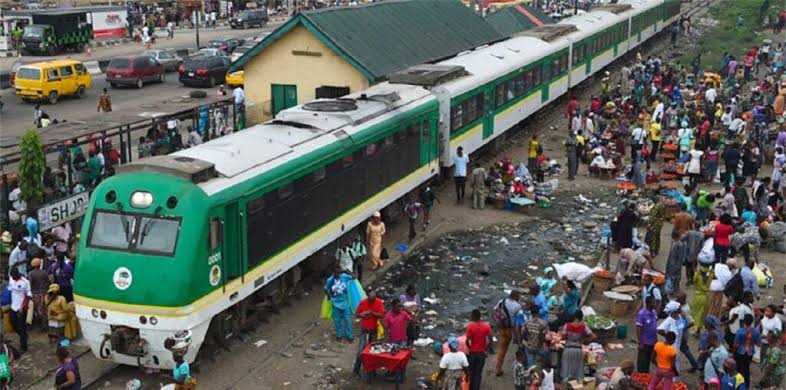
As FCT Minister, Bala Mohammed brought extensive reforms to the FCT. He sanitized the land administration of the FCT and expanded the airport roads of Abuja. He built many roads, including the Kubwa expressway expansion. He also built the rail track from Abuja to Kaduna and Idu rail station from the $500m loan that the Nigerian government secured from China. In addition, he introduced the land swap policy that used the land as a resource to fast track infrastructural development in the FCT.

In 2018  Senator Bala Mohammed emerged as the Peoples Democratic Party governorship candidate for Bauchi State and was elected as the governor in 2019.

Ever since he came on board as the Executive Governor of Bauchi State, the state has been undergoing an extraordinary and unprecedented metamorphosis in infrastructural development, health, education, agriculture, among other sectors.

In the area of infrastructure, Bauchi State has witnessed what could have taken others long to complete within the two years of Bala Mohammed’s led administration. The governor has completed over twenty (20) road projects with an aggregate of 286.7 kilometres long. This excludes the recently awarded massive projects across the state. Today, Bauchi State is a gleaming new city with roads and 12-hour uninterrupted streetlights.

Beyond constructing roads, the governor has procured 251 vehicles and 1000 Keke Napep through Kaura Economic Empowerment Project. This has greatly impacted positively on the transportation industry in the state.

As the saying goes, “health is wealth” Senator Bala has renovated 126 primary health care centres in less than two years, constructed 12 new world-class hospitals and a primary health care centre in Dorawar Dillalai, Bauchi. Additionally, many general hospitals across six local government areas are currently under renovation. The governor also actualized a Molecular Laboratory in the State for testing of COVID-19, Lassa fever, Yellow fever and other hemorrhagic diseases.

In Education, Governor Bala Mohammed, in less than two years, has constructed over 270 new classrooms and renovated over 405 across the state. In addition, these projects were expanded into hard-to-reach areas of the state to ensure that quality education isn’t the prerogative of only urban dwellers.

On the other hand, in July 2020, under the leadership of Governor Bala Mohammed, Bauchi State became the first and only state in the North-Eastern region of Nigeria to domesticate the VAPP Act since it was enacted. The VAPP Act is the single law that transcends the criminal and penal code in guaranteeing justice and protecting the rights and properties of victims of sexual and gender-based violence across the country.

Please show me your Governor; here is mine!  Dear my Governor, do not relent, do not give up and do not listen to predators and political gladiators who do not mean well for our state, whose aim is to distract you from taking the state forward. The sky is not your limit; even the orbit is limitless.

Fatan alkhairi, Allah Ya qara tsawon kwana da rayuwa mai albarka, ameen.

Nigeria at 61: A giant with challenging crises amid opportunities

By Terhemba Wuam, PhD

As Nigeria marks its 61st anniversary of independence, its citizens are stuck in general anomie of despondency. This is due to general insecurity in the country, rising unemployment and high cost of living.

It is also an age of anxiety, with many measures of Nigeria’s socio-economic progress painting a picture of a nation in great distress. Nigeria’s economy has been stagnant, growing at less than 1% cumulatively during the past six years, far below population growth of 2.6%. It also has about 40% of the population of about 200 million living below the poverty line.

The country is equally beset by security and political challenges. Boko Haram insurgents still operate in the North-East. In the North-West, bandits are overwhelming the security forces. In North-Central Nigeria, deadly clashes between farmers and herders continue. And separatist and irredentist agitations resonate in the South-East and the South-West of the country.

Despite these problems, Nigeria has made substantial socio-economic progress, at least since 1999 when it returned to democracy after decades of military rule. It is also a country with huge resources that have yet to be fully tapped. The biggest of these is Nigeria’s educated citizens. The country had a literate population of less than 5% at independence. Now, more than 60% of the population is literate. Also, enrolment into tertiary education keeps increasing.

The past 60 years
A review of the past six decades shows that the Fourth Republic, which took off in 1999, has been Nigeria’s golden era in terms of economic and social indicators. This reality is, however, a difficult one to present to the millions of unemployed who are out of work and struggling to cope with inflationary pressures on food and other basic livelihood requirements.

Since 1999, Nigeria’s economy has grown more than sevenfold. A big chunk of this is explained by the rebasing of the economy in 2014. It was found that the economy was 60% bigger than previous estimates.

Before 2014, Nigeria had been using the 1990 prices and the composition of the economy to determine its size. Yet, a lot had changed since then. For example, telecommunications had grown substantially with the introduction of mobile telephony. Nollywood, Nigeria’s movie industry, has also expanded and morphed into a more professionally organised and run sector.

Nigeria moved from lower-income to lower-middle-income status, based on national income per head of population, during the Fourth Republic. That’s based on World Bank rankings. Other countries in this category include Algeria, Egypt, Kenya, Tunisia, India, Iran and Ukraine.

Economic difficulties
Nigeria’s economic difficulties started in the mid-2010s. Nigeria’s economic fortunes are closely aligned with oil prices which showed a sharp decline between 2014 and 2016.

The World Bank has described the 70% drop during that period as one of the three biggest declines since World War II, and the longest lasting since the supply-driven collapse of 1986.

In response, Nigeria’s economy, which had recorded an average growth rate of 6.68% between 1999 and 2015, has plunged in and out of negative figures since 2016. Within this period, it entered recession twice. Cumulative growth since 2016 has averaged below 1%.

Nigeria has taken steps to reduce its reliance on oil. These measures include the revival of the agricultural sector as well as reducing government reliance on oil revenues by tax revenue from other sources. These have yet to pay off. And the COVID-19 pandemic has aggravated the economic downturn, plunging more people into unemployment and poverty.

Nigeria’s government has invested in agriculture and has articulated economic programmes for other sectors, progress has been hampered by inflationary pressures, low oil prices and a weak currency. The government’s inability to arrest the security crises in several states has also affected agricultural productivity. Other factors include the government’s inability to articulate a clear economic agenda for the country. In addition, its monetary and fiscal policies favouring dual exchange rates, and restrictions on foreign trade through border closures have limited recovery and growth.

A national call to action
Nigeria requires a national leadership with the understanding and capability to set the tone and direction for national growth and development. This must incorporate all citizens, irrespective of ethnic or geopolitical affiliations in a grand vision of collective dynamic growth.

A lack of such political leadership denies the country the possibility of meaningful growth and critical citizenry.

Nigeria remains a country of great potential. Her fountain of possibilities can be found in its growing population of educated citizens. The population of the educated at this very moment in the country’s history is at the threshold or point of national acceleration. An example is the country’s burgeoning tech ecosystem largely driven by young people. It is at a point conterminous with those of the Asian Tigers before their rapid transformation to the developed world and high-income status.

All the fundamentals are indicative of a country at the point of a great leap forward, the role of an enlightened and well-educated population is crucial to that process.

Despite limitations in the education sector, Nigeria has more than 190 universities, the largest university and tertiary education sector in Africa. The country churns out millions of graduates annually, creating the most educated workforce on the continent.

This growth represents both a challenge and an opportunity. It will be a challenge and a huge economic burden if productive opportunities are not found for their engagement. Gainfully employed, these educated millions can be harnessed to drive Nigeria’s economic growth, thus promoting social stability.

Political leadership
Nigeria challenge is not that its political leadership has been corrupt, but that it has had limited ability to govern the country effectively. Nigeria needs a modern political administration where the state is not about maintenance of the status quo and the mere allocation of existing economic values for project and self-aggrandisement.

The state should be reoriented and directed purposely towards a more expansive interpretation with a focus on rapid economic growth and the provision of public goods that empower citizens to become meaningful actors in the overall positive transformation of their society.

Such purposeful action by the national leadership, who must be clearly reformist, is required to alter the trajectory of poor economic growth. It is also required to foster sustained productivity gains in the country’s economy to generate growth to average 6%-10% annually. Such growth is what will enable Nigeria to triple and possibly quadruple its economy within the next 10-15 years in a repeat of the first 20 years of the Fourth Republic.

Inevitably, a growing economy represents the best pathway toward addressing many of the social and economic challenges Nigeria now faces in its seventh decade of independence.

Dr Terhemba Wuam can be reached via terhembawuam@yahoo.com.

That essay, Cornflakes for Jihad!😃

By Ibrahim A. Waziri

To most non-Muslims researching and writing about Boko Haram, the problem generally begins with Muslims and Islam in Northern Nigeria and, to some degree, across the globe.

To them, BokoHaram is synonymous with the issues of ontology and epistemology of Islam. That is why their narrative of it can encircle Shehu Dan Fodio, Late Sheikh Mahmud Gumi or even Ahmadu Bello Sardauna, the Premiere of Northern Region, during Nigeria’s first republic. They also do find its bits of ideological nuggets in the earliest of the Islamic literature!

But to most Muslims or their sympathisers, Boko Haram is a persistent story of fringe, rebellious elements among the larger Muslim population across history. These elements are primarily rigid and resistant to any contemporary interpretation of the Islamic canons, which goes with the present circumstances and gives maximum peace, harmony and cooperation among Muslims; and between them and non-Muslims.

The non-Muslim researchers generally point to Islam as the source of the problem. The Muslims point at Khawarijism (rebellion) against any Muslim broad social consensus (like Nigeria as it is presently constituted), at a particular point, as the problem.

The non-Muslims argue that the problem is profoundly historical. So they travel back the archives and exhume positions, at one time, of individuals, such as Sheikh Daurawa, Sheikh Gumi, Sheikh Dahiru Bauchi, Sheikh Auwal Albani, Sheikh Jaafar Mahmud, etc., to drive home their points.

While the Muslims are inclined to reject such a notion, arguing that social consensus is a transitional thing by nature, and Muslims embody the concept of Transition Personalities most. [Transition person as a concept is sufficiently delineated by Stephen Covey, in his, The Seven Habit of Effective People].

That, it is embedded in Muslims traditions and part of their essential social jurisprudence, that what is a norm today may not necessarily be the norm tomorrow. And that, the internal problem of the Muslim communities are those fringe elements who do not reflect the power of transition and acknowledge the value of consensus building, with new variables that new situations always present.

The very recent article by a certain David Hundeyin making waves through social media, Cornflakes for Jihad, also reflects the usual sentiments identified with many non-Muslims types of research about BokoHaram.

Apart from the basic factual errors it contains – which Abdulbasit Kassim diligently pointed out – it also concluded with logic barren childish conspiratorial arguments that send us millennia backwards in our struggle searching for the appropriate problem definition, analysis and solution recommendations on the issues of BokoHaram.

Contrary to the essay’s claims against Ahmed Idris Nasiruddeen (NASCO), Nasiruddeen has lived a life of a pious Muslim who was using his wealth to help Muslim friends, associates and organisations.

Of course, as any other friend or associate one might have helped, they too are naturally transitioning personalities (not necessary in the positive sense) living in a transitional world. One can help a person or an organisation, for a specific general reason or objective, only later in life for them to shift their objectives, metamorphosing into something different.

The fact that the NASCO conglomerate was once allegedly accused of financing terrorism (by whoever) does not mean it intentionally did that. Likewise, Sheikh Yakubu Musa was once allegedly accused of funding terrorism (by whoever) does not mean he is guilty.

Until we begin to look at the ontology and epistemology of issues around BokoHaram in this kind of light, our analysis about it will always leave undesired dangerous results born of misdiagnosis. We may begin to indict people like Alhaji Aliko Dangote and Abdussamad Isiyak Rabiu (BUA) because we are likely to find that the Imams, Mosques or organisations now or in the future they have once helped are enmeshed in terror wave of related accusations. Then we will begin to write warped essays like Cement or Sugar for Jihad.

Writing informed public commentaries or being a sound public intellectual is beyond the ability to flawlessly and flowerily write essays, making endless references to a large swathe of literature and records. No. It requires multidisciplinary insights, a great deal of patriotism, a deep sense of intuitive social measurement, appreciation of people and cultures from both etic and emic perspectives, history, and sound ability in social system projections.

Indeed, one cannot have a Nigeria of great value today or in future if they have a large heart sufficient enough to accommodate Ahmadu Bello, Sheikh Gumi, President Buhari, BokoHaram founder, Muhammad Yusuf and Abubakar Shekau, lumping them as the same people, who worked or are working, to turn Nigeria into an absolutely imaginary Islamic state.

Ibrahim A. Waziri writes from Zaria, Kaduna.