Opinion

Kwankwaso/Obi ticket – A nice combination nobody should have thought about

By Muhammad Sulaiman Abdullahi, PhD

Many good things should have happened to Nigeria, but such good things were and are still averted by Nigerians who feel threatened by others. Our collective psyches teach us to be myopic and to lack reason. These make us promote selfishness, ethnic chauvinism or even other material gains at the expense of the best public interest.

Now that Kwankwaso/Obi ticket has been ethnically killed, I am happy that it didn’t come to fruition. It would have been disastrous to the nation as Peter Obi supporters are turning into something else. Now that it didn’t happen, it left some issues to ponder, especially on our reasoning that it shouldn’t have even been thought of in the first place. It left us with no hope as to the politicians we see, who are a sort of “young” blood, compared to those whose actual age, patriotism, source of wealth and health status are all not certain.

All of us in the North, without a doubt, believe that Dr Rabiu Musa Kwankwaso is far better than Obi. They are not comparable in whatever capacity, from academic credentials to practical experience, national spread, political platform and even patriotism. However, one irony about the ticket was that the way Northerners believe in Kwankwaso is similar to how South Easterners believe that Obi is better. They think that Obi is the only answer. In their bid to justify that, they reduced Kwankwaso to pieces, saying he was over-ambitious. This is where they woefully failed. This was what made the thought of bringing the ticket even more worrisome.

Obi’s supporters shouldn’t be blamed, as the country is programmed this way. People only know and promote people they are so much close to, naturally. What will happen if this natural knowledge is mixed with bitter secessionists’ sentiments and arrogance that beclouded their thought of anything if not theirs?

There are some reasons why Kwankwaso shouldn’t have even thought of Obi. Perhaps Kwankwaso did that out of nationalism and as another way of garnering support from the other end. Still, one thing Kwankwaso failed to realize was that Obi’s candidature was no longer his own. It has long been hijacked by a fake Christiandom, Obidients/OBiafrans and other disgruntled politicians from the other end. First, however, let’s consider some points here.

The way Nigeria is, a country with such a vivid religious divide, with Muslims as the majority and Christians with a significant number, the Christians must feel offended if they do not feature as number two, if not number one in the country. In this case, someone may say that democracy is, to some extent, a hoax. If not, why shouldn’t the majority carry the board all the time? But in Nigeria’s situation, Christians are many, and they would feel somehow alienated by the APC’s Muslim/Muslim ticket.

Therefore, it will be a miscalculation for anyone to ask Obi to deputize instead of being the lead. Christians may not take it lightly. They have already fought the Muslim/Muslim ticket and failed, and now the only option left for some of them shouldn’t be tempted or played with. Therefore, looking at it from this angle, it was a terrible idea right from the beginning. Reuben Abati confirmed this in an interview when he opined that, during one of their talks about Kwankwaso/Obi, he asked one question! And the answer to that question, given to him by the NNPP representatives, convinced him that the Kwankwanso/Obi arrangement was dead on arrival.

He asked them, is it fair that after a Northener – and maybe a Muslim – finishes his eight-year tenure, another Northerner will rule again immediately? He said the Kwankwanso/NNPP representatives responded that that is not an issue to worry about. This is their point of reasoning which should be understood.

Another point is regional affiliation. This doesn’t give much, but many Southerners may prefer to have someone healthier than Bola Tinubu, not minding his religion the way the Northerners do. Here, Obi as the lead may be more appealing to them.

On the other hand, there is an issue of the Igbo presidency. Igbo politicians have been too stubborn, divisive and too regional in their approaches to national discourse. They always create problems for themselves, of which Obi’s candidature is part. You can’t disown your country, engage in a series of treasonable felonies, condone crimes, support terrorism against your nation, and then think you would be trusted.

The idea of rallying behind Obi as the only source of salvation is another mistake made by the Igbos. It will make them more stubborn or more alienated. If Obi fails – which will likely happen, some of those overzealous OBiafrans who now threaten all who talk against Obi will surely be more stubborn and restless. And the mainstream politicians would put them aside as they know they are inconsequential.

Now that the ticket has been killed, most commentators agree that it wouldn’t change anything even if it had happened. The real fight is seen to be between the two giants. Now both camps should sheath their swords and forge ahead.

Kwankwaso and his supporters should continue to aim high. Merging with anyone among the two major parties cannot produce a result, and going alone is not the solution. Madugu and his team should think within and outside the box and develop a real solution.

As for Obi’s real supporters, the real Obidients, they should learn tolerance and know that Nigeria is not Imo, Abia or Enugu. Two states’ votes in the North can equal the total number of states in the South-East region. This is based on the latest voter statistics released by the Independent National Electoral Commission (INEC), which shows that the North has more voters registered in the continuous voter registration that ended last Sunday.

Therefore, these OBidients, including the OBiafrans, should be more civil, tolerant and open-minded. They should interact well with others, show decorum in their manners, and not allow the OBiafrans to lead them.

Dr Muhammad can be reached via @muhammadunfagge (Twitter) or email: muhammadunfagge@yahoo.com.

Abdalla Uba Adamu has double professorships! Seriously? (I)

By Prof. Abdalla Uba Adamu

Pilot: The journey, the chrysalis

Right, it is time to address this issue. I am blessed and honoured to have variously been acknowledged and hailed as a ‘double professor’, ‘dual professor’, the only one from northern Nigeria, etc. How’s that even possible?

The first professorship was in 1997 (Science Education and Comparative Higher Education, to give it its full title), and the second one was in 2012 (Media and Cultural Communication). Two totally different disciplines. I delivered an inaugural lecture for each in 2004 and 2014, respectively. Further, I am both a Member of the Nigerian Academy of Education (MNAE) and a Member of the Nigerian Academy of Letters (MNAL) – a cross-over that is quite rare in Nigeria. A close friend says I am nuts to have two professorships. It’s okay; we used to call him nuts, too, when we were kids. I admit, though, it does take a bit of nuttiness. However, the whole ‘double professor’ thing came about by happenstance, thanks to the innovative, courageous Prof. Abubakar Adamu Rasheed, Vice-Chancellor, Bayero University Kano from 2010 to 2015, now Executive Secretary, National Universities Commission from 2016. Here is the whole backstory to the opera in one season of three episodes!

S01EP01: Liftoff

As a senior high school student, I had a target: to become a professor by 40. Given that I was born in 1956, that gave me up to 1996 to do my gig, exit stage left and hopefully seek new directions. Right from elementary school, I had wanted to work in a university after a visit to the house of then Malam Sani Zahradeen in 1966 on the old campus of Bayero University. Awed by the splendour of the house (and quite frankly, the wonderful breakfast I was offered), I decided right there and then the University will be my abode. I was ten at the time.

After going through the grind of schooling and finishing at Ahmadu Bello University, a degree in Science Education (Biology/Physiology) saw me getting employed as a Graduate Assistant in July 1980 at Bayero University Kano. The clock had started ticking – I had seventeen years to contact. I felt like I was in a cryogenic sleep capsule bound for a planet in the Betelgeuse star system, a mere 500 light-years from Earth. A confession, though. Education was not my preferred choice of Faculty at employment. It was the Faculty of Science. Made attractive by a blind ambition to become a research scientist – not a teacher. Plus, many top-notch teachers from the Department of Biological Sciences, ABU, my alma mater, had migrated to BUK during the period. I wanted to continue being their students because of their brilliance (fondly remembered, included Dr Shotter). But as fate would have it, I was employed in the Department of Education.

I did everything necessary to progress through the system, getting a DPhil at Sussex (courtesy of the Commonwealth Scholarship Commission) and a Fulbright Senior Scholar residency at the University of California, Berkely, US. I also became a Resident Fellow at the Rockefeller Foundation’s Bellagio Center near Lake Como in Italy. Beautiful view, wonderful neighbourhood, made only grisly by the fact that the Italian dictator Benito Mussolini (1925 to 1945) and his wife (or was it mistress?) Claretta Petacci were executed at Dongo, near the Lake, in 1945. A gruesome tourist attraction whose grimness does not take away the timeless beauty of the area.

Finally, after submitting all the necessary papers for assessment, I was conferred first Associate Professor of Science Education and Comparative Higher Education in 1994, and with more publications, full tenured Professor of Science Education in 1997. I was 41. Missed the mark by a year. Due to the weird BUK politics at the time, the professorship was only announced in 2001 but suitably backdated to its proper date, October 1997. I immediately wanted to give my inaugural lecture, but I was asked ‘join the line’ of others who were to present – all six of them. Eventually, I was asked to come and give mine after three years. I did so on April 24, 2004. It was the seventh in the university. I had wanted it on my birthday, but considering that April 25, 2004, was a Sunday, I settled for Saturday.

When I reached the point of being promoted and awaiting results back in 1996, I found myself interrogating the rest of my life. At that time, university lecturers retire at the age of 65. So that meant I had about 25 years to retire in 2021 – a futuristic date then. I had also crossed all the t’s and dotted all the i’s in Education, at least as far as I could see. I found myself deeply involved in alphabet soup agencies – you know, USAID, DFID, UNICEF, NPEC, UBEC, WB, etc., mostly talking loudly and saying nothing. I simply can’t see myself day in and day out enmeshed in this process of eventually recommending things to the government through reports nobody bothered to read. If I didn’t find something to do, there was every chance of me becoming truly nuts.

Prof. Abdalla Uba Adamu wrote from the Department of Information and Media Studies, Bayero University Kano, Nigeria. He is, among many other things, the former Vice-Chancellor of the National Open University of Nigeria (NOUN). He can be reached via auadamu@yahoo.com.

As climate change responds with terrifying brutalities…

By Nura Jibo

A year ago, I analysed climate disaster scenarios that happened within one week, which affected the entire world virtually. I then narrowed and streamlined my analysis by including some flood flashpoints in Nigeria, including Hadejia, Ringim and Auyo in Jigawa State.

Some office sit-tight professors, including one architect who resided in the UK for a long time, responded to my take with archaic and obsolete climate data. They vehemently descended on my double-decker analysis like wounded lions! But I forgive them because lots of them have lost touch and are never up-to-date with what is happening in the climate change world.

Moreover, some hardly attend UN-COPs or even care to read or research how climate dynamics and their attendant consequences affect Mother Earth. Instead, theirs is to sit in the office, review old literature(s) (emphasis mine), and take a vantage from there. They often think this can make them appear original.

Now it is the beginning of the first week in August 2022. And the news, videos and photos that were and are sent to me on a daily basis vindicated my flood projection(s) in certain Nigerian states such as Jigawa.

For example, a childhood friend from Hadejia (name withheld) sent me a picture of a flooded market segment in Hadejia. He then said, “Nura, kaga abin nan fa daka fada akan Hadejia ina ga zai zama gaskiya“. Meaning: Nura, it appears that what you said about Hadejia(referring to my assertion on flooding in Hadejia) will be true.

I then laughed it off and let go!

The rest now lies on the residents and inhabitants of that town. They either decide to move to the highlands along Malam Madori Road and expand Hadejia along that axis, or they should continue to live with their thinking and be lost in oblivion.

Nonetheless, I sincerely commiserate with the victims of this first phase of the flood. May Allah help their situations in this country with hopeless, very unserious and dangerous politicians and political leaders.

Nura Jibo wrote via jibonura@yahoo.com.

Insecurity: President Buhari and other governors should learn from Bello

By Ahmad Deedat Zakari

It is no longer news that the security situation in the country is pathetic and worrisome. Even the blind can see that the country is held to ransom by forces that challenge the state’s monopoly of violence. It is appalling that governments at various levels have failed in their primary objective of protecting the lives and properties of citizens. Terrorism and other atrocious crimes are being perpetuated wantonly and daily.

However, the Kogi State Governor, Alhaji Yahya Bello, is doing something different and commendable. In a Nigeria stuck with a replete of security challenges, Bello seems to be a shining example worthy of emulation by the president and his brother governors. This explains the relative peace we enjoy in Kogi, although it shares borders with about ten states in the country. Even while the country’s capital is under siege by terrorists and bandits, the same can not be said of Kogi State, which is about two hours drive from Abuja. 

Other state governors have to learn that as chief security officers of their states, the responsibility of protecting the lives and properties of people in their state falls on their shoulders. As much as collaboration is necessary between the states and the federal government on internal security issues, there is apparent incompetence of the highest order on the side of President Muhammadu Buhari.

For example, whenever there is a security challenge in Kogi State, the governor actively engages locals and traditional rulers in the area of the security breach to proffer solutions. This has proved effective in curtailing crimes. Although every state has its peculiar security problem, it is high time the governors realized this and came up with creative solutions like Bello is doing. 

Although many Nigerians have realized President Buhari is a grand failure, it would still do the country immense good if the president adopts Bello’s carrot and stick approach to security. Bello queries and suspends government officials and traditional rulers complicit in security infractions.

Bello similarly rewards the officials who do the needful in forestalling attacks and maintaining peace. But, sadly, the president only expresses shocks and issues empty threats that are never backed with actions. He honestly needs to learn from Bello, his political son and acclaimed mentee.

Ahmad Deedat Zakari wrote from Kogi State via ahmadzakari111@gmail.com.

Commercial banks capital requirements and underdeveloped population: Regulation vs emotional sentiment

By Idris Mukhtar, PhD.

This write-up seeks the correct the perception of some people about the Commercial Banks’ operations and the Central Banks’ regulations.

A banking operation is a business like any other business. They collect money from those that have a surplus and channel it to those that are in deficit with the sole aim of making positive returns. In this sense, the business has to respect the law of demand and supply, which basically determines the prices. Human beings are rational in nature; thus, they try to avoid anything that could bring them dissatisfaction in favour of the things that could bring them satisfaction.

Basically, peoples are the owners of commercial banks. They invest their personal net worth in banks with the sole aim of making profits and avoiding disasters. However, because of the high-risk nature of the banking operations (i.e., dealing with money, complicated mode of operation, and the important roles these institutions play in economic development), the government, through Central Banks and other regulatory agencies, makes certain regulations with the aims to make their operations smoothly and to safeguard the investors’ money. The government regulates the banking system by setting a minimum Liquidity Requirement, Minimum Capital Requirements, Non-Performing Loans threshold, Maximum Expense vs Revenue (efficiency ratio) Requirement, Concentration Ratio, etc.

Based on the above, to ensure fairness to all (developed or underdeveloped) within a given jurisdiction, these regulations must be made equal among the banks in a particular category (i.e., International banks, National banks, Microfinance banks, etc.) by considering several factors. 

For example, regulators set the minimum Capital requirements for international banks differently from national banks or microfinance banks just to make sure fairness is achieved uniformly within the country. No particular region, segment, or people will be given preferential treatment over the other. In setting these regulations, due to the nature of banking operations, any preferential treatment because of the underdevelopment of the region will set that region or people preferred in the disadvantage stage because investors will definitely not find it easy to risk their capital in a high-risk region that did not have stringent regulations that could safeguard their money.

Because of the rationality of the consumers who are the capital providers to the banks, if the regulations are enforced in a particular region due to the so-called reason that the region is not advanced and the economic life is difficult in such a way that will temper with investors interest (i.e. attaining a positive return and avoiding negativity) to protect their personal wealth invested, they will run away from that region in favour of the region that has an adequate regulation to safeguard their hard-earned money. 

No one will stay in the region, which will cause them to lose money unless few. (even these few could only stay if they believed they could get a higher profit/interest rates by charging high markup on loans and advances to cover the high risk they took by staying in an area in which there is a high risk of defaults). This will cause economic hardship, a high rate of crime, terrorism, and continued deterioration of the conditions in such a region.

If we look all over the world, due to the loan default expectation, any region that proves to be economically more prosperous enjoys the teaming number of investors trooping to such a region for investment even though the gain is lower because of the competition. That is why the profit/interest rate on loans charged to borrowers in developed nations is much lower compared to what is charged in developing or underdeveloped nations that have lower ratings or high credit risk (this is basic as per as risk management is concerned), i.e., in Nigeria commercial banks charges between 20%-25% on loans while in the US or the UK the rate is lower than 5% per annum. What explains this scenario is simply, in comparison to US or UK, Nigeria is a high-risk country disturbed by a high rate of corruption, insecurity, terrorism, etc. which scare any rational investor away unless he could be compensated by charging a high-interest rate that will worsen the economic situations of the borrowers.

To me, the way forward for a less economically developed region to compete with another region is to continue educating its younger ones gradually. Research shows a positive correlation between education, low corruption, terrorism, and improvement of economic conditions. With a good and quality education, businesses will thrive, people will prosper, income will improve, and well-to-do members of the region or investors from outside will invest their surplus funds in such a region because of the expectation of positive gains on their investments and good business models that will ensure non-default in the loans.  

Any enforcement by the regulators on the people’s right to the investment of their personal wealth (i.e., calling for the government to enforce peoples invest their wealth in a region with a high risk of default in such a way that they will incur losses just because the government wants help that region or the region is less developed) is an illusion and will do more harm to the region than good in future. In the end, instead of that region prospering because of that policy, it will end up deteriorating.

Dr Idris Mukhtar wrote from Jeddah, Saudi Arabia, via mukhtaridrisu@gmail.com.

The spirit of 1993 upon Nigeria again

By Lawan Bukar Maigana

“I will not and cannot ignore the religious concerns and ethnic sensitivities of our people. Taking them into due consideration is an important part of good and able governance. But religion, ethnicity, and region cannot always and fully determine our path. To forge ahead as a nation toward development and prosperity, we must break free of old binds. We must recalibrate our political calculations to where competence and fairness matter more than reductive demographics.”

That was vintage Bola Ahmed Tinubu, the Presidential candidate of the All Progressives Congress (APC), making a passionate case for his choice of running mate and Nigerians to look at the bigger picture of loyalty, dedication, competence, good governance, and to, for once, ignore the petty details of individuals’ personal choice of how to worship God.

Tinubu, in that historic statement he signed on July 10, to announce Senator Kashim Shettima as his running mate ahead of the 2023 election, urged Nigerians to look back at the days of the country’s glory where ethnicity and religion matters little and, United voters on June 12, 1993, to vote for the fantastic duo of Late Chief MKO Abiola and Babagana Kingibe, in what has been described as the most credible election in the country’s history.

The announcement of Shettima did not come to any keen observer of Nigerian politics as a surprise. It had been coming for a long time and even with the organized opposition to the choice of a Muslim running mate, Tinubu had no choice at all because if he had to stand the best chance of winning the election and pick a very loyal and committed person who is also competent to serve as Nigeria’s Number Two Citizen, it had to be Shettima. A few other names were mentioned in the days before the announcement, but it was obvious that Shettima ticked all the boxes and Tinubu is smart enough not to punish a very deserving person based on the con-incidence of his religion.

In Shettima, a serving Senator from Borno Central, ‘The Jagaban’ will have a dependable, loyal, charismatic, diligent, articulate, purposeful, visionary, and intelligent ally as his Deputy.

A leader is always expected to be courageous, fearless, committed to his belief, and stand by his conviction no matter the consequences. Shettima was extremely vocal and consistent in fighting for Tinubu to get the ticket to the party and there was never a time he waivered or relented. Tinubu has also doubled down on his choice of Shettima as his running mate despite the groundswell of opposition against it by career rabble-rousers who will always wail no matter what happens. Though Shettima is on record to have repeatedly said he never supported Tinubu during the primaries for the self-centered aim of being on the ticket but for the common good of all, the fact that the two great men took turns to fight for each other and stood by each other at difficult moments means there will be remarkable chemistry and spirit of camaraderie that will overwhelm the Presidential Villa to Nigeria’s advantage if they win…

And to clear the air on all the misconceptions, propaganda, and lies about the so-called Islamisation agenda, we all know Tinubu has no history of religious bigotry or extremism. This is a man who married a Christian and in their decades of living together supported his wife to become a pastor in the largest church in Nigeria and also allowed his children to practice Christianity freely. It was also Tinubu as Lagos state governor who released Missionary schools to their original owners, a feat that has proven difficult in other states up till today. How can a man who literally ‘Christianised’ his own family and allowed Christians to have their way in Lagos to ‘Islamise’ Nigeria?

As for Shettima, he is on record to have protected the Christian community in Borno state from the wickedness of Boko Haram terrorism when he served as governor. He spent over a billion naira to rebuild all the churches destroyed by the demons, sponsored the highest number of Christians to the Holy Land in Jerusalem, and appointed a good number of them into important positions in government. So he did not only stand up to the terrorists, he fought them to a standstill even as they tried to kill him and his family. How on earth would such a man want to be part of the so called Islamisation agenda?

For Shettima, accepting Tinubu’s offer was merely a call to duty that he could not say no to even though he never lobbied or campaigned for it.

This is how his running mate, Tinubu, in that memorable statement, captured the essence of Shettima’s appointment and the value he would bring to the ticket, and governance if they win: “Senator Kashim Shettima’s career in politics and beyond shows that he is eminently qualified not only to deliver that all-important electoral victory but, also, step into the shoes of the Vice President. As a man with the talent, maturity, strength of character, and patriotism he has my implicit confidence and faith.”

On the needless emphasis on Shettima’s faith, Tinubu further wrote: “I am aware that many will continue to focus on a particular detail, the question of his faith. However, if we truly understand the challenges upon us as a nation, then we must also see the imperative of placing competence in governance above religious sentiment.”

“In 1993, Nigerians embraced Chief MKO Abiola and a fellow Muslim running mate, Babagana Kingibe, in one of our fairest elections ever. The spirit of 1993 is upon us again in 2023. As such, the ticket we present today represents a milestone in our political history. It symbolizes our party’s determination to be a leading light among political parties in Africa,” he added.

In 1993, Abiola and Kingibe called their ticket ‘Hope 93.’ Thirty years later, Nigerians will indeed have a realistic hope of robust, outstanding, and qualitative governance in these two excellent gentlemen, if they win the election.

Indeed, the spirit of 1993 is here . . .

Lawan Bukar Maigana writes from Wuse District Abuja and can be reached via:Lawanbukarmaigana@gmail.com

Book Review: ‘Economic Diversification in Nigeria: The Politics of Building a Post-Oil Economy’

By Abdulhaleem Ishaq Ringim

Economic Diversification in Nigeria by Zainab Usman is an in-depth analysis of Nigeria’s political economy that presents an apt delineation of the interplay of politics, institutions and policymaking in the process of economic development. Zainab’s is an attempt at instituting a diagnostic exercise to identify(beyond prevailing conventional narratives) major impediments to sustained development.

By repudiating ‘resource course’ and ‘backward neopatrimonilaism’ as the causal roots of Nigeria’s economic underperformance, the book presents a thesis that centres on challenges to economic diversification in resource-rich countries as the major impediment to economic transformation and development.

The author did a great job at identifying pathways to achieving economic transformation and establishing the state’s role in guiding the process but argued that the efficacy of the state’s guiding interventions remains a function of its institutional capacity which in turn depends on its political character.

Hence, to deconstruct Nigeria’s peculiar political character and its implications for economic transformation, the book deployed carefully designed frameworks for the analyses. Central among these analytical templates is the political settlement framework, which defines the influence of the distribution of political power on policymaking for development.

Per Zainab’s model, economic transformation, especially in resource-rich countries like Nigeria, depends on a kind of political settlement that distributes power among elite formations to ensure the emergence of a stable political coalition. This is why even while Nigeria has witnessed periods of semi-steady economic growth in her national life, such has never been adequate enough to usher in sustained development.

As an “Intermediate” State, Nigeria’s breed of political settlement is characterized by the formation of unstable political coalitions and cyclical political crises (especially in political transition periods). This has ensured that the country is always in crisis management. And the resulting policy and reform orientation has always assumed a manner that prioritizes short-term macroeconomic stabilization over long-term structural economic transformation.

The author, however, believes that such a political configuration is not immune to change. She explained that certain “critical junctures” determine whether a prevailing political configuration will change or persist. At these junctures, elites are constrained to take certain policy actions. And the economic outcomes of such policy actions depend on whether the assumed policy direction takes a stabilization or transformational orientation.

Using this framework, the author analyzed two subnationals, Lagos and Kano, to demonstrate the complex interplay of politics and policymaking and its influence on economic outcomes. The analyses mainly focused on critical junctures for both states and the resulting policy orientation and outcomes in relation to their contrasting political settlements. Lagos presented itself as a model for economic transformation while Kano a microcosm of Nigeria as it is.

The book concluded with recommendations on how Nigeria’s political settlement can be balanced by institutionalizing “zoning” as a power-sharing agreement, adopting a shared vision for transformation, and addressing market failures while emphasizing the imperative of building a post-oil economy. I find the book very interesting. It presents thought-provoking arguments and indeed updates our mental models on the challenges of economic diversification in Nigeria’s context.

Not that I agree with every postulation. In fact, I can’t entirely agree with the relegation of culture as an outcome of economic development rather than a determinant. Culture precedes economic activities(not to talk of development) in global historical trends, so I believe it cannot be an outcome of what it fundamentally precedes as far as existence is concerned.

As I posited some weeks back (linked), I belong to the school of thought that considers culture as a significant determinant of economic development alongside geography and climate. However, I believe culture itself is a product of nature, geography, climate and the environment.

I believe that at every point in human history, the culture of any people is determined and constituted by a combination of the powerful and inter-generationally persistent ‘cultural legacies’ the people have inherited over time (mostly developed in response to geographical and climatic determinants) and the cultural aspects developed as a result of the influence of [mostly unpleasant] environmental changes and the need to adapt to them.

Hence, I believe nature, geography, climate, and environmental changes determine the cultural compatibility and disposition(positive or negative) of any people towards development. Therefore, I have not seen enough reason to forgo Varoufakis, Gladwell and others on geographical and cultural determinism regarding economic development.

Nonetheless, the book is a masterpiece!

Change Begins with Engausa Hub: Breaking barriers to digital skill acquisition

By Haruna Muhammad Inuwa

Nigeria is a great country. A country with great potential and great people. A giant of Africa and, of course, the most populous black country in Africa. Foreigners from other parts of the time – well, for some that have not travelled well – sometimes confuse Africa and Nigeria. This is because they tend to generalise that every black individual coming from Africa is from Nigeria. This is how dominating our great country has been!

In 2018, on March 10, President Muhammadu Buhari launched a national orientation program tagged “Change Begins With Me”. In the speech, he challenged Nigerians to realise that the change they want to see begins with them and that personal and social reforms are not a theoretical exercise. So, he practically says that for a developing country like Nigeria, everyone must get to work and realise their potential for the needed change we have been seeking. This must be a national assignment from Kano to Calabar, Lagos to Maiduguri. 

Embarking on a sacred expedition of bringing change in any society requires one to be passionate about their ideals. They must first identify a problem within. They must be willing to walk the talk. They must be willing to sacrifice a lot of time and resources. They must be believers in the change they wish for. Change is brought about so ordinary people can do extraordinary things. Hence, an ordinary citizen called Engr. Mustapha Habu Ringim founded Engausa Global Tech Hub. 

The Engausa model emerged as a one-size-fits-all solution in a society with system-wide problems. However, the approach is more interesting because it is skill-driven. Engausa Hub aims to empower these youths with digital skills in a community with battalions of unemployed youths. Engausa advocates teaching digital skills using home-based languages for accessible communication and understanding. From the city of Kano, Engausa Global Tech Hub is becoming a focal point of attraction to many university graduates, undergrads, Almajiris, and even those with natural talent and innovative ideas to be developed, managed or commercialised.

The Engausa story is inspiring because it centres on shaping the way things work and changing the narratives of our society. All thanks to the relevant authorities, who support the innovative activities of the Engausa Hub, the National Information Technology Development Agency (NITDA) and Technology Incubation Centre Kano. During the recent graduation of 1353 students who were rigorously trained in programming, video editing, blogging, graphics design and software development, social media literacy, and digital marketing, the DG of NITDA, Kashifu Inuwa, happily commended Engausa Global Tech Hub for this significant paradigm shift in the digital ecosystem.

Engausa Global Tech Hub thrives on breaking barriers and bridging gaps. So far, the hub has graduated over 1700 technology apprentices with over 50 innovation-driven enterprises owned and managed by the Engausa graduates. Statistically, the hub is turning into a school where you don’t need a college degree before earning a living. Many Engausa graduates are now managing their business; others work in private sectors or are independently freelancing.

Engausa Global Tech Hub seeks collaboration and partnership to expand its operations to other northern Nigerian states because a generational change can only be actualised.

Haruna Muhd Inuwa wrote from Lagos via diamondmuhd@yahoo.com.

ASUU Strike: who is to be blamed?

By Muhammad Abubakar

I believe that the government are entirely to blame for the incessant ASUU strike. This is because it’s their responsibility to provide all that the ASUU members need and pay them handsomely. The government should look into this so long as they want the development of this country. It’s widely known that if there are no teachers in the nation, there will be nothing in that nation but quite a bunch of problems. And ignorance will continue to increase rapidly — which we are not praying for.

A popular saying has it that “Teachers are the backbone of the society”. So, if this is true, why won’t they be respected by all and sundry?

Whoever knows how negatively this strike affects the students (the biggest victims), he would sympathise with them.

“Education is the passport to the future, for tomorrow belongs to those who prepare for it today.” This Malcolm X’s saying implies how bleak our future is!

Truth be voiced out, I completely don’t know the specific role those politicians, who are elected as the leaders of our dear country play in their respective offices. This is because they reluctantly failed to offer a helping hand to the students of public universitie out of the mess they are in. Why are they acting like this? Is it because of the fact that most of their children are not studying here in Nigeria, but rather abroad? In other words, is it they are not part of the victims of all this menacing issue? The answer is ‘yes’ I guess!

Indeed, we should pay attention to this issue. It’s clear now that there is no any public university student that is not affected negatively. For example: a student who supposed to have graduated since last year, as written on his/her ID card, is unfortunately still in the same position. Although I’m a higher level student, frankly speaking, it baffles me whenever I think about this. Why is our country like this for goodness sake?

The government should, therefore, do the needful and fulfill the demands of the ASUU members for the strike to stop. We hold the government responsible for whatever happen to us, our behaviour, our wellbeing and our development. They should also remember that we are also their children and one day, we may become leaders of the country and their children and other family members may be under our care!

ASUU, FG, what happens to students after the strike?

By Fatima Usman

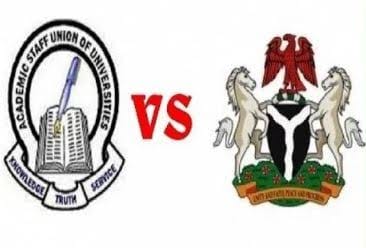
The saying, “when two elephants fight, the grass gets to suffer,” is nothing but a fact. But unfortunately, in the case of the Academic Staff Union of Universities (ASUU) and the federal government (FG), the students are always at the receiving end, and students suffer the consequences of the fight.

At last, ASUU members will get paid and return to classes. What then happens to the students?

In 2020, when ASUU embarked on a strike that lasted for a good nine months coupled with COVID19, what did the students get in return after everything? Nothing! We only got expired rent, a disrupted academic calendar, and some items stolen from our various lodges.

After the 2020 strike, we never knew that another bigger one would await us soon. However, on February 14, 2022, another strike loomed again with the same demands the government failed to fulfil for nine months. This time around, only God knows our fate; five months strike and still counting, yet no positive response.

The Federal Government does not care about whether the poor masses get a quality education. They deny us our right to education by not providing enough equipment that students are supposed to use, not enough classes for lectures, and the teachers do not get well paid.

The ASUU strike has done more harm than good to the students. Some students don’t always get to serve their father’s land due to the age limit placed on NYSC. Once a student is 30 years they can no longer go for the one-year compulsory service. So many disadvantages come with embarking on this strike.

Because of these endless strikes by ASUU and the negligence of the Federal Government, we now have more cybercrime everywhere (Yahoo-Yahoo!), and some girls are now into prostitution as a means of survival.

We want to be compensated too after everything by increasing the age limit one can do the one-year compulsory service if we can’t get other compensation. At least this should be done.

Fatima Usman is a 300-level student of mass communication at IBB University, Lapai. She can be reached via usmanfatima499@gmail.com.