Opinion

When students become customers: the business of private education

By Malam Ibrahym El-Caleel

A widely circulated video showed an altercation between a staff of the Maryam Abacha American University of Nigeria (MAAUN) and a father to one of the students of the school.

It is a 33-second-long video that doesn’t allow for proper evaluation of the incident except for the audacious comment the student made at the tail-end of the video, in support of her father, saying, “Ba fa kyauta mu ke zuwa karatu makarantar ba. Kuɗi muke biya”. Meaning, “we aren’t studying in this school free. We pay money”.

The school has rightly issued a press release to say it has set up a committee to investigate what happened, and it demands to have the full video of what happened to ease its investigation since a 33-second video will barely help you take an informed position on this. Best wishes to them in their investigation, but let’s talk about the broader picture.

The girl’s raw comment about the money they pay to the school is a bitter lesson in business. The girl sees herself as a customer of MAAUN, not a student, and this is largely the philosophy of most private institutions of learning and their patronisers. It is an entrepreneurship first, then any other thing, like being a school or a university. And therefore, what we see in businesses would happen there since profit is the overall aim. Please, I am not tearing down private institutions. I am discussing business here.

“The customer is always right”

In the early 1900s, Harry Gordon Selfridge, the founder of Selfridges department store in London, popularized the saying that, “the customer is always right”. To be fair to Selfridge, he popularised this business philosophy to protect the buyer. Prior to this philosophy, what existed was the philosophy of “Caveat emptor”, which protects the seller and which means: “Let the buyer beware.”

“Caveat emptor” is simply saying that the buyer is fully responsible for checking product quality, condition, and suitability before purchase. Therefore, once the buyer pays for the product, they cannot hold the seller accountable even if they discovered the product to be defective. Even if you return the defective product to the seller, he’d simply say “Caveat emptor!”, meaning “you should have checked before paying!”.

This is where Selfridge popularised “the customer is always right” philosophy. The aim is to prioritise customer satisfaction even when the customer may be at fault. It is a philosophy aimed at keeping the customer happy or satisfied so as to have a sustainable business into the future. This builds trust and loyalty in business, and this is why it is widely practiced by businesses today.

Customers and some business leaders decided to abuse this nice philosophy. Customers saw it as an edge to abuse employees of the business they are patronising. Business leaders decided to make customers the “kings” and “queens” who are always right, placing them far below the employees who help them drive the business. This is why it is easy for the girl to make reference to how they are the thin line between that staff and joblessness. It is the reason why you, the reader, equally shouted at the bank staff you met at the customer service desk the other day. The bank as an institution with corporate headquarters somewhere in Lagos didn’t serve you well, but you are here in faraway Numan threatening, harassing and abusing an innocent 24-year-old girl you met at the bank’s help desk.

Customer is always right!

I was hungry in Barnawa some months back when I decided to walk into Market Square to get some food. A man, who should most likely be in his 50s, walked in after me. The attendant was serving the people who came ahead of him as per first come, first serve. Suddenly, this man took offence and began passing harsh comments on this lady. It was a whole lot of psychological abuse, making even s3xist comments. He wasn’t yelling at me, but I felt the pain. That young lady didn’t respond in kind, but coldly prepared his meal and handed it over. The customer is always right.

Only business leaders can reorient the customer on this. While you need customers to maintain your cash flow, you equally need your employees. And this is what the consumer goods giant, P&G, seems to be better at.

The P&G CEO between 1948-1959, Redwood Deupree, remarkably said: “If you leave us our money, our buildings and our brands, but take away our people, the Company will fail. But if you take away our money, our buildings and our brands, but leave us all our people, we can rebuild the whole thing in a decade.” This is a 187-year old company, teaching you the value of people in a business. Your people are your most important assets.

But unfortunately, most businesses today have thirst for short-term gains and barely have any interest in building a corporate culture that will sustain it into the future. When a company is overly thinking about finance, then it ‘worships’ everything that relates to the bottom line. It is ready to throw its most resourceful employees under the bus just to gain today’s profit. No plan for the business of the future.
First Class or 2.1: Jigawa’s bright minds deserve place

By Muhammad Abubakar Tahir

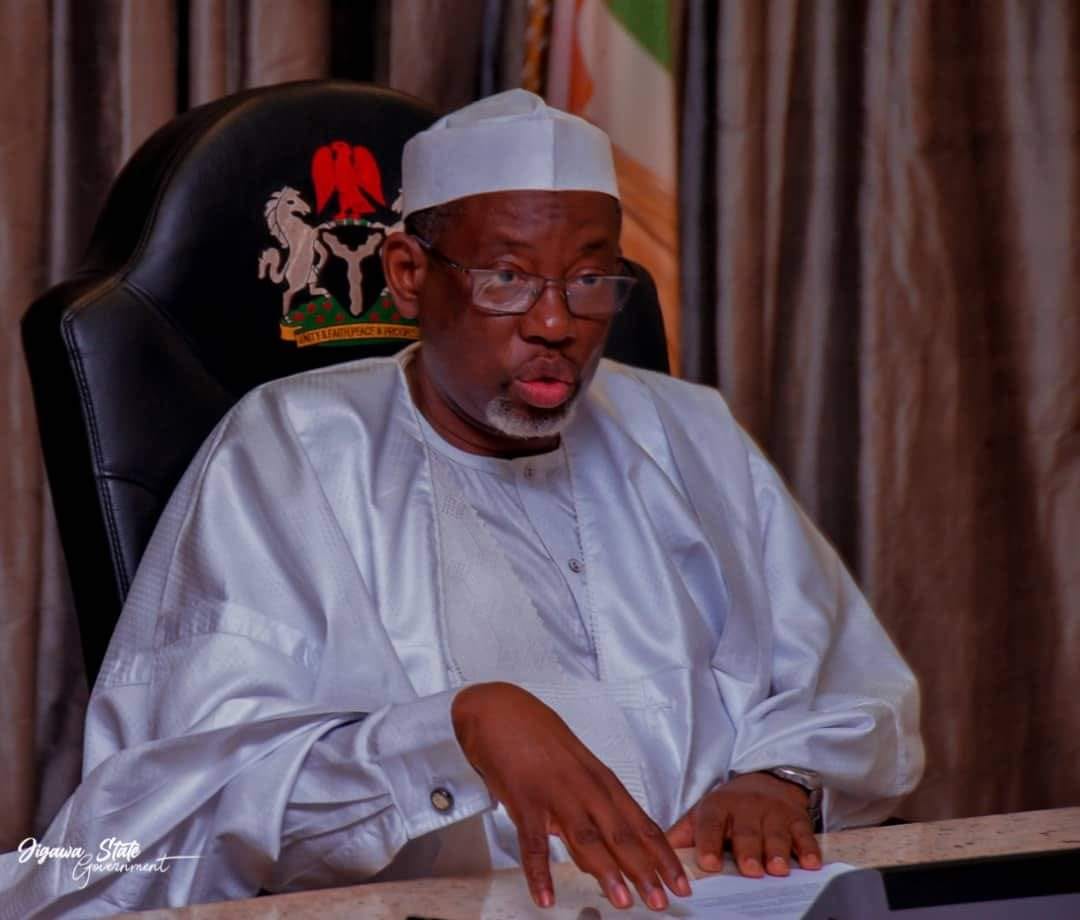
Jigawa State has, in recent years, earned praise for its progressive policy of offering automatic employment to university graduates who finish with First Class degrees. It is a remarkable gesture, one that highlights the state government’s commitment to education, excellence, and the future of its youth.

However, as commendable as this initiative is, it also calls for reflection. The state government must review the policy to ensure that other brilliant and hardworking graduates are not left behind, particularly those with a Cumulative Grade Point Average (CGPA) between 4.0 and 4.49.

These students, though officially classified as Second Class Upper (2.1), have equally demonstrated distinction, resilience, and intellectual depth. In some disciplines — especially the technical and science-based ones — attaining a First Class degree is extraordinarily demanding. 

Yet many of these students, with CGPAs slightly below the First-Class cut-off, are as competent and deserving of opportunities as their peers who crossed the 4.5 mark. Around the world, employers and institutions recognise this nuance. Graduates with Second Class Upper degrees are widely regarded as strong performers and are eligible for both public- and private-sector roles. 

They also qualify for prestigious international fellowships and postgraduate scholarships. Indeed, scholarship programmes such as Chevening, Commonwealth, and several others typically set their minimum CGPA requirement between 3.5 and 3.7 on a 5.0 scale — comfortably within the Second Class Upper range. 

This shows that the global academic and professional community values not only top-tier excellence but also consistent, well-rounded performance. It is on this basis that Governor Mallam Umar Namadi is urged to broaden the scope of Jigawa’s First-Class employment initiative. 

By extending consideration to graduates within the 4.0 to 4.49 range, the government would not only promote fairness but also maximise the state’s pool of talent. Such an inclusive policy could be designed to include a fair, transparent screening process that rewards skill, creativity, and innovation — qualities not confined to a single grade level.

A similar example can be seen in neighbouring Kano State, where the government recently introduced a domestic scholarship scheme that also accommodates Second Class Upper graduates. Many beneficiaries of that programme come from humble backgrounds, and their stories have shown how such policies can transform lives and families. 

Jigawa State can take inspiration from this model and adapt it to its own development priorities. Governor Namadi has already demonstrated a listening and compassionate leadership style, particularly through his swift interventions during last Ramadan when he responded to citizens’ needs with empathy and urgency. 

Extending opportunities to deserving 2.1 graduates would further strengthen public confidence in his administration and reinforce his image as a people-centred leader who believes in inclusive governance.

History will not forget him if he heeds this call. His legacy will be remembered not just for rewarding excellence, but for redefining it — by recognising that excellence wears many shades. That brilliance sometimes exists just a decimal point below a First Class.

In the end, what truly defines a visionary leader is not only how he uplifts the best but how he ensures that no capable hand is left idle when there is work to be done for the good of the state.

Muhammad Abubakar Tahir is a journalist based in Hadejia, Jigawa State. He can be reached via abubakarmtahir81@gmail.com.

Two physical proofs of Allah’s existence

By Tijjani Muhammad Musa

Many atheists, agnostics, freethinkers and others like them, their biggest tool of argument is to demand real, empirical evidence to show them of Allah’s Existence. Challenging any who believes in Allah as the Creator of the universe to give them something they can see, possibly touch, as a vital criterion or condition, not just for them to acknowledge God’s Existence, but also for them to accept Islam or any other religion, for that matter.

Many scholars would engage them in deep scholarly discussions, citing all kinds of examples and pointing to various creations and phenomena, both physical and abstract, to depict Allah SWT’s presence. Still, the atheists would bring up counter-submissions to keep themselves on their side of the argument. And on several occasions would reject all efforts to prove to them, through logic and reasoning, the existence of a Supreme Creator and Being as the architect of man’s existence.

One of such encounters had the atheist explaining away the Quran as nothing ingenious or miraculous beyond the Arabs’ known prowess for poetry, memorisation and oral transfer of information from generation to generation. Thereby negating and dismissing a fundamental point to note about the man through which the contents of the book were revealed. 

Prophet Muhammad SAWS in himself is the ultimate, undeniable, physical evidence of Allah’s existence to any who doubts that. For the duration of his life in Arabia, in the 6th century and beyond, his prophethood stands to show any denier of God’s existence (atheists, etc) that he was not on his own, but had someone behind his doings. And who is that? Muhammad SAWS gave all the answers; Allah Subhanahu Wa Ta’ala (SWT)

Actually, I’m not pointing at the poetic eloquence, memorisation capacity or storytelling prowess of the Arabs, because the Rasool SAWS was not a poet, nor the Quran a story book and his mission was not just for the Arabs, but drawing our attention to the inability of the Prophet SAWS to read or write. He was al-ummiy. That singular fact is enough to prove to anybody that the source of all his information in the Quran must be someone or something or from somewhere beyond all human dimensional existence.

And, being truthful, he did put forward the claim that he is a messenger from God (Allah) Almighty. Sent with a divine creed, a book, which he kept track of its revealed verses, in bits and pieces, verses by verses, paragraphs by paragraphs, chapters by chapters (114 of them) for 23 whole years. An ILLITERATE! That in itself is way beyond comprehension, even for a genius who was engaged in all facets of daily human activities

And again the CONTENTS of the Quran, in various fields of knowledge from within and outside of man, from within and outside the earth, from our atmosphere into outer space, from how the earth formed to its sustainance, from atoms to fingerprints, to insects, to animals, their anatomy and much more.

On the scientific knowledge front in biology, embryology, geography, medicine, physics, mathematics, aviation, space travel, oceanography, agriculture, sociology, drone war, moral ethics, future predictions, relativity of time, communication, etc. A person, uneducated or taught or discipled by any human, cannot produce such a vast amount or array of knowledge in an era when research and documentation were virtually non-existent amongst his people. It’s simply IMPOSSIBLE!

Again, consider his predictions about the advent of Ad-Dajjal, the computer, the internet, AI, the digitalisation of life, and much more. Information science knows next to nothing about. Only through trial and error does science stumble upon one small piece of knowledge after another, confessing to not knowing anything about virtually everything. A case of the blind walking in the dark, searching for something he knows not of. Even with light, only what he stumbles upon will he show.

There’s even a security code woven into the structure of the book’s contents, using the odd number 19 to mathematically safeguard the revelation from ever being corrupted, from the time of the Messenger till the end of time. Again, the book presents a challenge for anyone to bring a chapter like one in the book; if there’s any doubt about its source being from Allah! No one has yet met up. Yet, atheists will keep hyping science this, science that. What does science know? Almost nothing compared to what’s contained in the Quran, wAllahi.

How can all that knowledge across various aspects of human endeavours come from someone who was unlettered, only to be proven correct by science over the past 1400+ years and to this day? Who dares to claim such a feat, such a possibility? A man who could not differentiate A from Z or 1 to 10? Yet Muhammad SAWS attributed it all to whom? Not to himself, but to Allah SWT alone. Now, ask yourself, why would he do that? Still, some people will come and say that because they cannot see God, then He AWJ does not exist.

What more? The proof of his prophethood, THE HOLY QURAN, is here for all to see, touch, read, challenge, debunk and more for its authenticity. The Rasool didn’t say it was his making, but that it was Allah SWT’s revealed verses. And just because you want to be what… You choose to dismiss such living proof that its author is non-existent!? Aren’t atheists amazing? They have always wanted physical proof and evidence of Allah AWJ’s existence. Well, then, Prophet Muhammad SAWS is it, for one. Even if they have never seen him, at least they have heard of him. 

And if that’s not good enough for any, the Holy QURAN didn’t just fall from the sky, right? How did it come into existence, out of the blue or from an abracadabra spell?

Tijjani M. M. wrote from Kano, Nigeria.

The quiet decline of memory and the increasing challenge of brain diseases in Nigeria

By Mujahid Nasir Hussain

Every human brain tells a story: of love, memory, and motion. Yet, for many Nigerians, these stories are being erased silently by diseases that steal what it means to be human. Alzheimer’s disease, Amyotrophic lateral sclerosis (ALS), Parkinson’s disease, and other neurodegenerative disorders are creeping into our society, affecting not only the elderly but, increasingly, middle-aged adults as well. Their signs often begin subtly: a forgotten name, a misplaced key, and a trembling hand, until the symptoms grow into something that shatters families and identities alike.

I am writing this piece after World Mental Health Day (October 10) to raise awareness about these devastating but often misunderstood brain disorders, and to emphasise why Nigeria must invest in research that explores the molecular roots of neurodegeneration. Behind every fading memory is a biological story waiting to be told; one that may hold the key to prevention, treatment, and hope.

Globally, neurodegenerative diseases are among the fastest-growing causes of disability and death. According to the World Health Organisation, over 55 million people currently live with dementia, and nearly 10 million new cases are recorded each year. Alzheimer’s disease accounts for about 60–70% of these cases. The burden is not only medical but also social and economic, as families face the heartache of caring for loved ones who may no longer recognise them.

In Africa, the crisis is quietly intensifying. A report by Alzheimer’s disease International estimates that by 2050, over 12 million Africans could be living with dementia, a staggering increase that health systems are unprepared for. In Nigeria, accurate statistics are scarce, but hospital reports and community surveys show a growing number of undiagnosed neurodegenerative cases among the elderly. Unfortunately, in many communities, symptoms of neurodegeneration are still seen through the lens of superstition. Some families attribute forgetfulness to witchcraft or punishment from the gods. As a result, patients are hidden away, untreated, and stigmatised, even when medical help could improve their quality of life.

But beyond the surface symptoms lies a world of molecular complexity. In every neuron, RNA and proteins work together in precise harmony, regulating gene expression and cell responses to stress. These molecules form small, dynamic structures known as RNA–protein assemblies that constantly change shape and function in response to the brain’s needs. When this spatio-temporal regulation is disrupted, the way these structures behave across time and space is disrupted, it can cause proteins to misfold and clump together. These toxic clumps interfere with brain cell function, triggering the gradual degeneration that characterises diseases like Alzheimer’s and Parkinson’s. Think of it like a city whose garbage collectors suddenly go on strike. Waste piles up, streets become impassable, and normal life grinds to a halt. That’s what happens inside the brain when these molecular systems fail. The result is memory loss, confusion, speech problems, tremors, and ultimately, the loss of independence.

Sadly, this understanding of disease mechanisms has not yet translated into practical awareness or local solutions in Nigeria. Our health sector remains focused on infectious diseases like malaria, tuberculosis, and HIV, which are undeniably urgent but overshadow chronic illnesses that also deserve attention. Neurodegenerative conditions receive very little research funding, and only a handful of Nigerian universities have well-equipped neuroscience or molecular biology laboratories. This lack of infrastructure makes it difficult for scientists to explore how environmental, nutritional, and genetic factors specific to African populations contribute to neurodegeneration.

We cannot afford to ignore this any longer. With Nigeria’s population ageing rapidly, the number of people at risk of dementia will rise sharply in the next decade. Families and caregivers already face immense emotional and financial strain. A 2023 study published in Frontiers in Public Health noted that dementia caregiving in Africa often leads to burnout, poverty, and social isolation, especially among women who bear most of the burden. This is more than a medical issue; it is a public health and human rights concern.

Raising awareness is the first step. Nigerians need to understand that persistent memory loss, tremors, or difficulty performing everyday tasks are not normal parts of ageing. They may signal conditions that require medical attention. Community health workers should be trained to identify these early signs, and hospitals should include basic neurological screening as part of routine check-ups for older adults.

The second step is research. As a physiologist, I believe that Nigeria’s greatest untapped potential lies in our young scientists and natural resources. There is growing evidence that certain plant-derived compounds, including those found in Habbatus Sauda (black seed) and other indigenous herbs, have neuroprotective properties. Exploring how these natural products influence RNA–protein interactions could open pathways to affordable treatments tailored to our local context. If supported, Nigerian research could not only advance understanding but also drive innovation in neurodegenerative disease therapy.

Finally, there is the matter of policy. The Nigerian government and health agencies must recognise brain health as a national priority. We need a National Brain Health Initiative, one that funds research, trains neurologists, supports caregivers, and integrates neuroscience into medical education. Just as we have campaigns for malaria and maternal health, we should have campaign awareness for dementia, Parkinson’s, and other neurodegenerative diseases. Without deliberate action, the human and economic costs will be overwhelming in the coming decades.

Our brains define who we are. To lose them is to lose ourselves, and yet millions are slipping away unnoticed. This World Mental Health Day, let us broaden the conversation beyond depression and anxiety to include the silent epidemic of neurodegenerative diseases. Let us replace stigma with understanding, neglect with action, and fear with hope. Nigeria must awaken to this reality — that the future of our nation depends not only on the health of our hearts and bodies but also on the preservation of our minds.

Mujahid Nasir Hussain is a physiologist and an explorative researcher in biomedical sciences with a particular focus on Molecular mechanisms underlying neurodegenerative disorders.

ICAN: Beyond achieving professional qualification

By Sunusi Abubakar

The primary aim of the Institute of Chartered Accountants of Nigeria (ICAN) is not just about producing accountants; it is about shaping the accounting profession through certified professionals who are fair, accountable, and upright. The profession itself is ultimately built on integrity, honesty, and confidentiality.

To many, passing rigorous ICAN examinations is final, but in reality, it is just a mark of resilience, dedication, and discipline. The true essence of becoming a chartered accountant lies in what one can do after achieving the qualification.

Until I became a chartered accountant, I realised that ICAN was never just about exams: it was about preparing me for continuous learning, growth, and responsibility.

According to Merriam-Webster, a professional is defined as “someone who has specialised training, practices in a recognised occupation, and upholds the standards and ethics of that field.” Going by this definition, one can see that professional life doesn’t require only certification but also continuing professional development to meet the demands of the profession.

Becoming a chartered accountant is a way forward to lifelong learning. One has to continue reading from basic accounting knowledge to Artificial Intelligence, Data Analytics, and Sustainability Reporting. One has to attend ICAN’s Mandatory Continuing Professional Development (MCPD) and enrol in short courses or seminars on tax reforms, IFRS updates, and auditing standards. A professional needs to specialise in key accounting areas such as forensic accounting, risk management, or corporate finance, and earn global certifications such as ACCA, CFA, CPA, CIMA, or CIPFA.

As AI becomes a necessity for accountants, professionals need to leverage it by developing both digital and technical skills. Learning data analytics tools like Power BI and Tableau is essential. Professionalism is not just about a certificate but about the value a professional adds in reality. A professional is expected to know everything within the scope of his profession. Leadership, skills, and global exposure are what make one a true professional.

ICAN is just a foundation, but continuous learning makes an accountant truly relevant and competitive.

Sunusi Abubakar, ACA, wrote from Gangare Quarters, Birnin Kudu, Jigawa State.

Nigeria’s health sector and the need to review

By Abdullahi Adamu

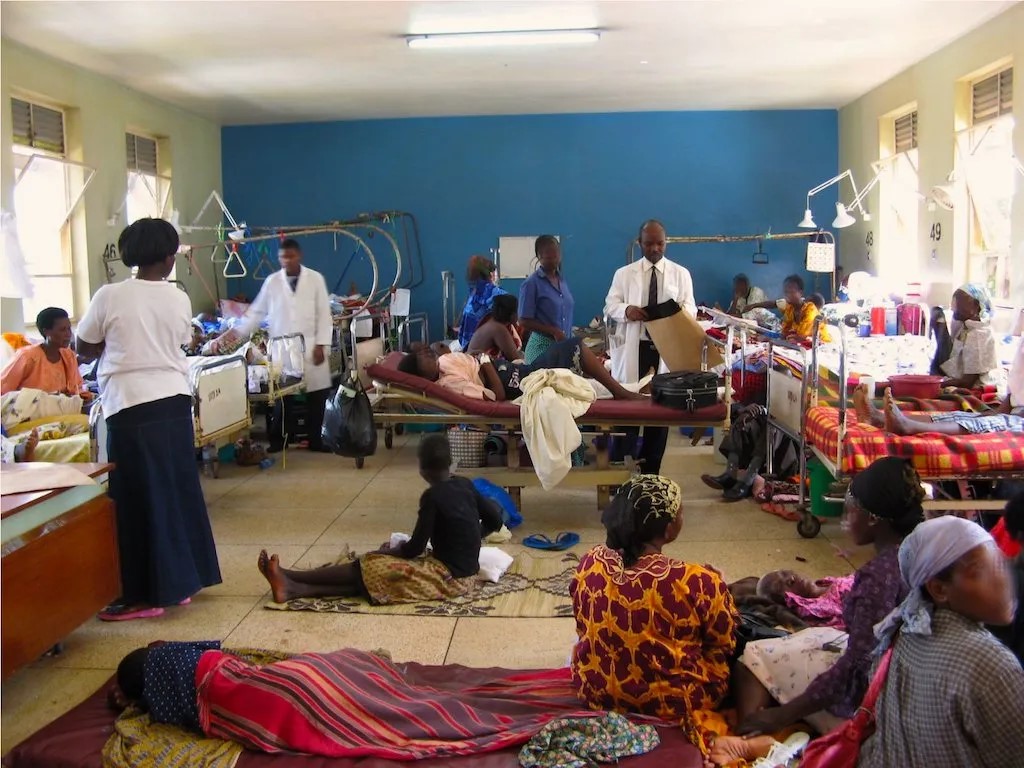
Poor health facilities in Nigeria stem from severe underfunding, causing inadequate infrastructure, outdated equipment, drug shortages, and breakdowns in essential services like electricity and clean water. This affects rural and primary healthcare centres most, where facilities are dilapidated and staff insufficient. A shortage of medical professionals and brain drain overloads the system, leading to increased medical tourism and poor outcomes. Healthcare access is severely limited due to various systemic factors. 

Misconceptions about primary health care and poor leadership have hindered the health system, which hasn’t aligned its structures to achieve universal health access. Improving financial access alone won’t suffice without comprehensive primary health care reform to fix system flaws, deliver quality, efficient, acceptable care, and ensure sustainability and growth for the health system and country. A primary health care movement of government health professionals, the diaspora, and stakeholders is needed to drive this change and overcome political inertia.

In 2014, the National Health Act established the Basic Health Care Provision Fund (BHCPF) to address funding gaps hampering effective primary healthcare delivery across the country. The BHCPF comprises 1% of the federal government Consolidated Revenue Fund (CRF) and additional contributions from other funding sources. It is designed to support the effective delivery of Primary Healthcare services, provision of a Basic Minimum Package of Health Services (BMPHS), and Emergency Medical Treatment (EMT) to all Nigerians.

Despite the provisions of the BHCPF, the report’s findings expose the precarious state of healthcare in Nigeria, where access to and utilisation of health services remain marred by systemic challenges across states.

Public health facilities in all 36 states and the FCT are deficient, and the experiences of community members seeking care at these facilities are consistently awful.

Primary Health Care (PHC) is the foundation of the healthcare system in Nigeria and serves as the level at which non-emergency, preventive health issues are addressed. But sadly, many PHC centres in the FCT are poorly equipped and lack well-trained personnel.

 Kulo PHC was built with solid infrastructure and equipped with solar panels as part of a 2019 federal initiative aimed at strengthening primary care in hard-to-reach areas. Today, that promise lies in ruins. The solar panels are now dysfunctional—some stolen, others damaged by harsh weather and lack of maintenance. At night, the clinic plunges into darkness, leaving staff to work by torchlight or with dying cell phone batteries.

Three patients on life support at Aminu Kano Teaching Hospital were reported dead following an interruption to the hospital’s electricity supply by Kano Electricity Distribution Company.

The basic causes of Nigeria’s deteriorating health care system are the country’s weak governance structures and operational inefficiencies.

In 2014, the National Health Act established the Basic Health Care Provision Fund (BHCPF) to address funding gaps hampering effective primary healthcare delivery across the country. The BHCPF comprises 1% of the federal government Consolidated Revenue Fund (CRF) and additional contributions from other funding sources. It is designed to support the effective delivery of Primary Healthcare services, provision of a Basic Minimum Package of Health Services (BMPHS), and Emergency Medical Treatment (EMT) to all Nigerians.

Despite the provisions of the BHCPF, the report’s findings expose the precarious state of healthcare in Nigeria, where access to and utilisation of health services remain marred by systemic challenges across states.

Public health facilities in all 36 states and the FCT are deficient, and the experiences of community members seeking care at these facilities are consistently awful.

The Basic Health Care Provision Fund (BHCPF) was poorly implemented in 13 states.

The basic causes of Nigeria’s deteriorating health care system are the country’s weak governance structures and operational inefficiencies

Abdullahi Adamu wrote via nasabooyoyo@gmail.com. 

Is fighting His Excellency Namadi like fighting the Hadejia Emirate?

By Garba Sidi

The strategy used to support His Excellency, the Governor of Jigawa State, Malam Umar Namadi, made his emergence seem like a golden opportunity, especially for the people of Hadejia. That’s why people from this region, regardless of political affiliation, united in full support behind him.

In fact, it got to the point where anyone who didn’t support him was branded as someone who didn’t care about Hadejia’s interests. Youths and other residents were mobilised in large numbers to vote overwhelmingly for him, resulting in a decisive defeat for his opponent. All this was done with the hope that having “their son” in power would finally bring the kind of development other governors had brought to their own regions.

BUT DID IT BRING GOOD RRSUL?

The general assumption is that if a governor comes from a certain area, that area should naturally receive more projects, opportunities, and attention than others. Unfortunately, in the case of Malam Umar Namadi, this has not been the reality.

Right from the appointment of commissioners, things started to take a different turn. Prominent politicians from Hadejia—those who invested their money, time, and energy into mobilising support—were sidelined. Instead, individuals who contributed nothing to the campaign were brought in and handed key positions. These new appointees now operate as they please, whether their actions are right or wrong.

This understandably caused frustration among the loyal politicians, many of whom withdrew, allowing their protégés to take to social media to criticise the government openly. Their anger is rooted in the fact that they were abandoned, while others who made no sacrifices are now enjoying the fruits of power.

Even in terms of developmental projects, Hadejia has not seen any significant attention that reflects the governor’s origins. For instance, the Specialist Hospital that the former governor and the Current Minister of Defence, Badaru Abubakar, initiated has been abandoned under the current administration, despite the region’s urgent need for it, particularly due to the high incidence of kidney-related diseases. Patients are frequently referred to Federal Medical Centre Nguru, Rasheed Shekoni Specialist Hospital, Dutse and Aminu Kano Teaching Hospital.

So far, the government has no tangible project it can point to as a benefit for the people of Hadejia, despite their overwhelming support. Ironically, the previous governor—who isn’t even from Hadejia—executed more meaningful projects there. Clearly, “Kwalliya ba ta biya kuɗin Sabulu ba”.

WHO IS CRITICIZING MALAM UMAR NAMADI’S GOVERNMENT?

Some supporters of Governor Malam Umar Danmodi claim there is a grand conspiracy to sabotage his government, supposedly because it originates from Hadejia. They even suggest that people from other regions, aided by unpatriotic elements within Hadejia, are driving the opposition. But that narrative is misleading. And the critics of this government can be broadly categorised into three groups:

THE POLITICIANS.

These are politicians who worked tirelessly and spent their resources to bring this administration to power. After the victory, they were cast aside. Their disappointment and frustration have led them to form alliances and challenge the government.

LOYALISTS OF THE FORMER GOVERNOR.

While not necessarily politicians, these individuals are close to the former governor. They took offense when Malam Umar began probing the previous administration and took actions perceived as targeting their benefactor. In retaliation, they began opposing the current government, criticizing its every move and encouraging others to do the same.

THE COMMON PEOPLE.

These are ordinary citizens who feel betrayed. Despite numerous announcements of new projects and the release of funds, they see little to no work on the ground. They witness government officials living lavishly while their schools lack teachers, hospitals lack doctors and medicines, and basic infrastructure is crumbling. These are the same citizens whose votes made this government possible, and now they are rightfully speaking out. So, is it a crime for the people of Hadejia to fall into any of these groups?

Some people are trying to twist the narrative, making it seem like the government is being attacked simply because it’s from Hadejia. But the reality is this: it’s the government being critized, not the region.

WHAT’S THE SOLUTION?

There is still time for reflection and correction. The administration should reach out to the neglected politicians from Hadejia who worked hard for its victory. Offer them a sincere apology and reintegrate them into the fold. Once that happens, their supporters will follow suit, and the political tension will ease.

Likewise, the faction loyal to the former governor and now Minister of Defense, Badaru Abubakar, should be approached with humility. Apologize where necessary, stop discriminating against his allies, and rebuild that bridge. Doing so will reduce hostility from that quarter.

Lastly, address the real issues affecting the people: poor healthcare, teacher shortages, and neglected infrastructure. Let the people see and feel the benefit of the support they gave. Prove to them that they made the right choice.

CONCLUSION

No one fights their own child. The people of Hadejia do not hate Malam Umar Namadi. They are simply disappointed by the neglect and lack of attention he has shown them—despite the overwhelming support they gave him when he needed it most.

Once he wakes up to this reality and takes action—not just words—to correct his course, the people will forgive and support him again.

May Allah guide us to do what is right.

I wrote the Article in Hausa, and I used ChatGPT to translate it into English.

CBN, diaspora dollars and Nigeria’s economic lifeline

By Abdulrasheed Musa Kofa,

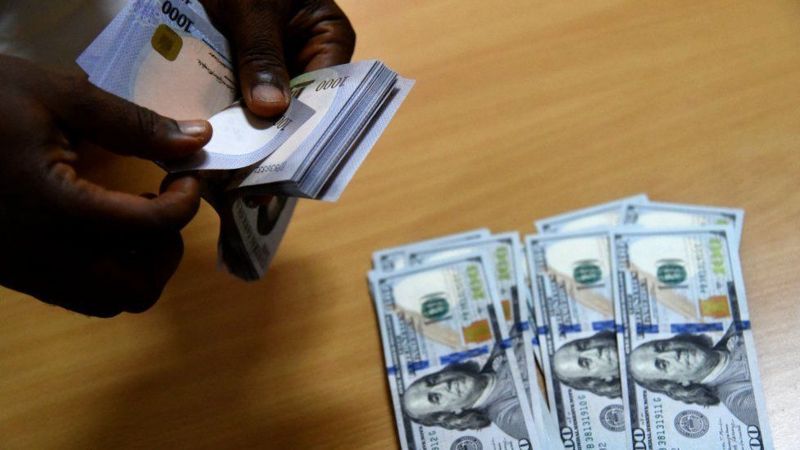
For years, Nigeria has leaned on its diaspora as a hidden anchor of survival. Beyond emotional ties and cultural nostalgia, Nigerians abroad have sent home billions of dollars, cushioning households and helping many weather difficult times. 

Yet the story of remittances has largely been one of consumption, not sustainable growth. Much of the money vanished into daily survival, often through informal routes, while the vast potential of structured diaspora capital for national development remained untapped.

The Central Bank of Nigeria (CBN) now seems determined to rewrite that story. In recent months, it has introduced policies aimed not only at boosting inflows but at transforming remittances into a formal, investment-driven engine of stability. 

With tools such as the Non-Resident Nigerian Ordinary and Investment Accounts (NRNOA/NRNIA), the Non-Resident Bank Verification Number (NRBVN), and tighter International Money Transfer Operator (IMTO) guidelines, the apex bank is signaling a bold shift—from remittances as household lifelines to remittances as capital for growth. 

Its ambition of attracting $1 billion in monthly diaspora remittances is more than a target; it is an audacious declaration that Nigeria seeks to become a global hub for diaspora investment.

At the heart of this strategy are the NRNOA and NRNIA. The former provides a regulated, convenient channel for everyday remittances in naira and foreign currencies, cutting out the costly informal networks that once dominated. 

The latter, the NRNIA, goes even further by creating structured pathways for diaspora investments in mortgages, pensions, insurance, and Nigeria’s financial markets. By guaranteeing full repatriation of proceeds under existing rules, the CBN is deliberately courting trust. 

And in a global financial system where trust is the ultimate currency, such assurances matter greatly. The challenge of access has also been tackled. For years, the requirement of physical presence made securing a BVN impossible for many Nigerians abroad. 

The new digital Non-Resident BVN finally removes that barrier, even though it comes at a cost of about $50. While some may balk at the fee, the opportunity far outweighs the price of exclusion. For a diaspora community long fenced out, this is a long-awaited doorway in.

The IMTO reforms reflect similar pragmatism. By restricting services to inbound transfers and ensuring payouts in naira, the CBN is protecting liquidity while keeping inflows within the formal economy. 

Allowing operators to quote exchange rates on a willing seller–willing buyer basis introduces transparency and competitiveness, drawing more Nigerians away from shadowy parallel markets. The exclusion of fintechs from IMTO licensing has sparked debate, but the regulator may be betting on stability over experimentation in a sector that demands strict oversight.

Early signs suggest the measures are bearing fruit. Official reports showed a $553 million inflow in July 2024—the highest on record—representing a 130 percent year-on-year surge. Confidence is shifting gradually towards formal systems. 

Sustained, such inflows could strengthen Nigeria’s fragile foreign exchange reserves, deepen liquidity in capital markets, and lower the high cost of remittances that continues to exceed the global average. Yet the most profound shift is not numerical but philosophical. 

These reforms are about more than chasing dollars; they are about redefining the relationship between Nigeria and its diaspora. Rather than treating remittances as acts of charity or family duty, the CBN is positioning them as instruments of nation-building. 

Nigerians abroad are being asked to see themselves not merely as senders of money, but as strategic investors in the country’s future. The stakes could not be higher. With more than 15 million citizens abroad, Nigeria sits at the heart of Sub-Saharan Africa’s remittance economy. 

In some years, diaspora inflows have even surpassed oil revenues. If only a fraction of this wealth is converted into productive, long-term capital, Nigeria’s financial landscape could be reshaped. But success will depend on more than policy design. 

It will require political stability, investor protection, and unwavering consistency in government signals. The diaspora will not risk hard-earned savings in a system that shifts with every gust of political wind.

CBN’s reforms are bold and timely. But their success now rests on trust and execution. If they work, the narrative of remittances will shift—from consumption to capital, from emergency relief to structural development. 

The target of $1 billion monthly may well be achieved, but more importantly, it represents a shared vision where remittances become investments in Nigeria’s prosperity. The choice before the diaspora is stark: to keep sending money informally and watch it disappear into short-term survival, or to embrace formal channels and help lay the foundations of a stronger, more resilient Nigeria. 

The government has laid down the rails. It is now for Nigerians abroad to decide whether their remittances will remain fleeting lifelines or become the enduring engine of a nation’s growth.

Abdulrasheed Musa Kofa is a PRNigeria Fellow. He can be reached via: musaabdulrasheed83@gmail.com.

Sheikh Lawan Makama: A legacy Qur’an and community service

By Kamal Alkasim

As I embark on writing about the history of our community, I am compelled to share the remarkable story of Sheikh Lawan Makama. His life’s work has had a profound impact on thousands of students, including myself, through his tireless dedication to teaching the Qur’an and founding a prestigious Islamic college.

We affectionately called him ‘Baban Makaranta’ (Father of the School) because of his unwavering presence and guidance. He would often be seen at the school, writing on the Allo (wooden slate) for students, mentoring teachers, and caring for us like a father.

When I spoke to one of my teachers and his son, Shehu Lawan Makama, about his father’s legacy, he shared a profound insight: ‘In our family tradition, every child is expected to teach in school before pursuing any business venture.’ This legacy lives on through the Ma’ahad Sheikh Lawan Makama, a renowned college for Qur’anic studies in our community, Kofar-Ruwa.

The college offers a comprehensive curriculum, with morning and afternoon sessions focused on Qur’anic studies, followed by evening classes on Hadith and Islamic theology. The quality of education in our community is a testament to the excellence of his school. Sheikh Lawan Makama’s impact extends beyond the classroom, as his commitment to community service has left an indelible mark on our society.

Sheikh Lawan Makama’s contributions to community services were multifaceted. His children would often lead Islamic events, including Ramadan prayers in various mosques. As students, we would attend school during the day and participate in community services in the evenings.

Growing up in a family that values the Qur’an, I had the privilege of attending many of these events. Sheikh Lawan Makama instilled in us strong moral values and good habits, emphasizing the importance of integrity and character. His reputation was such that if someone from his school misbehaved, the community would say, “This isn’t the habit of Sheikh Lawan Makama’s students.” His legacy is built on the principles of good character, and those who know him can attest to this.

Sheikh Lawan Makama’s family reflects his commitment to the Qur’an. All 16 of his children are Qur’an reciters, and thousands of students have memorized the Qur’an through his school. The students who lived in his house were treated like family members, receiving food, clothing, and care. One of my classmates shared that they felt no difference between themselves and Sheikh Lawan Makama’s biological children.

As someone who values documenting history, I aim to preserve Sheikh Lawan Makama’s legacy accurately, ensuring that future generations can learn from his remarkable life and contributions. May God bless him with knowledge, wisdom, and eternal peace.

Kamal Alkasim wrote from Kano, via kamalalkasim17@gmail.com.

From export hype to empty stomachs: A response to Mr Tanimu Yakubu, the DG of the Nigeria Budget Office

By Nazeer Baba

For context, Mr Tanimu, in defence of the economic freefall under the current administration, claimed that the naira has bounced back to dominance as a result of Nigeria’s non-oil commodity exports. In reality, however, non-oil exports accounted for only about 9% of Nigeria’s total exports between Q1 2024 and Q4 2024, while mineral fuels, mainly crude oil, maintained their traditional dominance with 91% of export volume. In other words, nothing has fundamentally changed in Nigeria’s dependence on a major oil-exporting economy.

Yes, non-oil exports indeed rose from $2.696 billion in H1 2024 to $3.225 billion in H1 2025—a 19.62% growth. Much of this was driven by the naira devaluation, which makes our commodity cheaper in the foreign market at the expense of Nigerians. Another reason is the climate challenges that disrupted cocoa production in major producers like the Ivory Coast and Ghana, temporarily creating space for Nigerian cocoa. But this is both an incidental and a policy blunder.  

The more urgent question is how this growth affects the key aspects of development. Poverty, unemployment, and inequality, especially for the 133 million Nigerians living in multidimensional poverty? As the economist Amartya Sen argued, real development should be gauged by what happens to these three dimensions. Unemployment

The official unemployment rate fell to 4.3% in Q2 2024, down from 5.3% in Q1. But this decline has little to do with any job boom under President Bola Tinubu. Instead, it is the product of a statistical adjustment. In the past, the NBS only counted those aged 15–64 who worked at least 20 hours per week as employed. Under the new guidelines, anyone 15 years or older who worked for pay—even for just a single hour in a week—is now considered employed. At best, this is a manipulation of numbers.

For young people, the reality is harsher. Unemployment among 15–24-year-olds was 6.5% in 2024 under the new formula, but under the previous methodology, it had peaked at 53.4%. The World Bank confirms this paradox: low official unemployment rates coexist with widespread poverty. Millions are “employed” but still trapped in poverty. Job quality, not misleading headline numbers, is what truly matters. Today, most Nigerians endure insecure, informal, and underpaid work.

Poverty

Nigeria has long been an economy under strain, but the shock of 2024–2025 has been unprecedented. Over 54% of Nigerians now live in extreme poverty, surviving on less than $2.15 per day. Rural poverty is staggering at 75.5%, while urban poverty stands at 41.3%. According to Reuters, by August 2025, an estimated 33 million Nigerians are facing acute food insecurity. Inflation, naira devaluation, fuel subsidy removal, recurrent floods, and internal displacement have left two-thirds of households unable to afford food.

Inequality

Nigeria’s inequality gap has never been wider, despite being Africa’s largest economy. With abundant human capital and vast resources, Nigeria has the economic potential to lift millions out of poverty. Yet the wealth distribution remains grotesquely skewed. According to Oxfam, the combined wealth of Nigeria’s five richest men $29.9 billion, could end extreme poverty nationwide. Meanwhile, over 5 million Nigerians are at risk of hunger and starvation. More than 112 million people live in poverty, yet the richest Nigerian man would need to spend \$1 million a day for 42 years to exhaust his wealth. His annual earnings alone could lift 2 million people out of poverty for a year. This is the textbook case of an economy trapped in extreme inequality.

Policy Recommendation

If Nigeria is serious about reversing this deterioration, the government must move beyond statistical gimmicks. A realistic policy response would be to mandate a Commission that directly links export earnings to job creation and poverty reduction. This means:

1-Mandating that a percentage of non-oil export revenues be reinvested into agro-industrial value chains to generate decent jobs.

2-Expanding targeted social protection programs funded from windfall oil revenues to cushion the poorest households against inflation and food insecurity through deliberate and direct cash transfers.

3- Enforcing progressive taxation on extreme wealth to finance healthcare, education, and rural infrastructure. Areas where inequality is most glaring.

Without policies that directly address poverty, unemployment, and inequality, Nigeria’s so-called “export-led rebound” will remain nothing more than a statistical illusion.

Nazeer Baba wrote from Abuja, Nigeria, via Babanazeer29@gmail.com.